
Poland: PGE Capital Group to carry out wind farm projects with support from the EIB
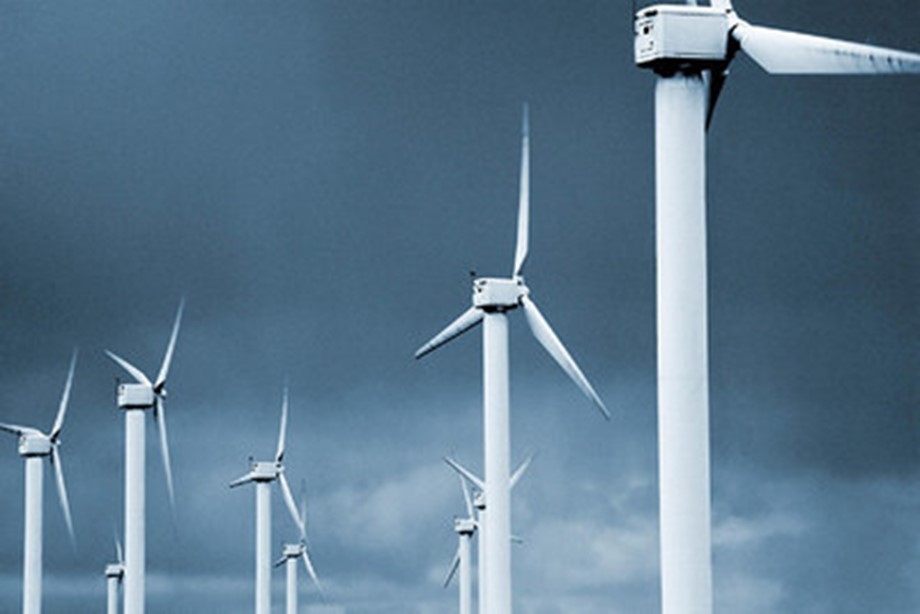
– New onshore wind farms with a combined capacity of up to 97 MW will be located in northern Poland
– Tangible commitment by PGE to invest in renewable sources of energy will help to decarbonise the energy sector in Poland
PGE Polska Grupa Energetyczna has entered into a credit agreement with the European Investment Bank (EIB) for up to PLN 272.5m (approx. EUR 64m), with the purpose of financing the construction of new onshore wind farms on the Baltic coast in Poland. The three wind farms called Starza, Rybice and Karnice II (combined into the Klaster project ) will have a combined installed capacity of up to 97 MW.
The credit provided by the EIB is one of the elements helping to secure new sources of financing for the green capital expenditure programme to be pursued by the PGE Capital Group. The agreement provides for the co-financing of the onshore wind farms construction project to be implemented by PGE Energia Odnawialna – a company belonging to the PGE Group and dedicated to renewable sources of energy. The EIB will provide PGE with a dedicated credit line for a period of up to 17 years and for an amount that represents around 50% of the project cost. The funds acquired under the credit agreement will be allocated for the financing of projects which are 100% eligible under EIB’s climate action objective (i.e. the three wind farms).
During the credit negotiation process PGE presented its plans for changes in the energy mix, emphasising its commitment to actions aimed at energy transition and planned investments in zero-emission energy sources. The EIB will maintain an active dialogue with PGE on its corporate decarbonisation plan and seek ways of further supporting it.
“Our annual generation of electricity from wind has increased from 0.1 TWh in 2011 to over 1 TWh, and we are not finished yet. With support from the EIB, we are close to completing our investment projects related to new onshore wind capacity. Our ambition is to reach a 25% share in this country’s generation of power from renewable energy sources in 2030. We want to achieve this objective thanks to, among other things, the implementation of successive green investment projects. Our first 1 GW wind farm on the Baltic coast is to be completed by 2026, and our offshore project is to provide further capacity of 1.5 GW by 2030. That year is also the planned deadline for making available up to 2.5 GW from photovoltaics” – said Henryk Baranowski, President of the Management Board of PGE Polska Grupa Energetyczna. EIB Vice-President Lilyana Pavlova, who oversees operations in Poland and Cohesion countries, commented: “We welcome PGE’s investment plans and its commitment to developping a more sustainable power generation portfolio via a dedicated renewable energy programme. The planned investments will contribute to the gradual decarbonisation of the Polish energy sector. This transformation will undoubtedly bring huge benefits to Poland’s economy and to its citizens thanks to a healthier environment.”
Capital expenditures on the construction of the Klaster wind farm complex are estimated at PLN 545m (approx. EUR 128.2m). The wind farms are located in the north-west of the Zachodniopomorskie province, in the districts of Kamień Pomorski and Gryfice, at a distance of between 3 and 13 km from the Baltic Sea shoreline. Construction operations began in February 2019 and, according to the plans, commercial operations should commence before the end of the first half of 2020. After the project is completed, the combined installed capacity of the wind farms operated by PGE will increase by 18% to about 650 MW, which will strengthen the PGE Group’s position as Poland’s leader in the generation of power from renewable energy sources.
“The green investment projects in our portfolio contribute to Poland’s gradual achievement of climate neutrality. Each such project is a separate investment challenge, but also related to financial engineering, leading our Group towards changes in its fuel mix. In our long-term efforts aimed at the gradual diversification and decarbonisation of our power generation portfolio, we know that we can rely on the European Investment Bank, our reliable partner supporting projects that transform the energy sector”, added Emil Wojtowicz, Vice President for Finance in PGE Polska Grupa Energetyczna.
At the time of its execution, the agreement between PGE and the EIB was the first energy project approved after the adoption of the Bank’s new energy lending policy.
The project will contribute to the diversification of the energy mix in Poland and to the EU renewable energy target of 32% by 2030.
Poland: EIB Group and Europejski Fundusz Leasingowy join forces to support financing for SMEs, micro-enterprises and female entrepreneurship
– Securitisation of a leasing portfolio worth PLN 2.1 billion (approximately EUR 490 million) will unlock PLN 3.1 billion (approximately EUR 723 million) of additional funds for Polish companies
– The transaction is guaranteed by the EIB Group thanks to the Juncker Plan
– One third of the new leases benefiting from the Juncker Plan will be dedicated to women-led businesses
The European Investment Bank Group (EIB Group), formed by the European Investment Bank (EIB) and the European Investment Fund (EIF), has participated in a synthetic securitisation in Poland originated by the leasing company Europejski Fundusz Leasingowy (EFL), a member of the Crédit Agricole (CASA) Group. The transaction supports new financing to SMEs, mid-caps and micro-enterprises in Poland. It is also expected to promote female entrepreneurship.
The transaction is guaranteed by the European Fund for Strategic Investments (EFSI), which is the financial pillar of the Juncker Plan. StormHarbour acted as arranger for EFL and Crédit Agricole CIB advised Crédit Agricole Group.
The EIB Group has provided EFL with a guarantee covering both the senior and mezzanine tranches of a PLN 2.1 billion (approximately EUR 490 million) SME portfolio. The mezzanine tranche of PLN 314 million (EUR 73 million) benefits from the support of the Juncker Plan under the EIB’s mandate with the European Commission. The risks relating to the senior tranche of PLN 1.76 billion (EUR 410 million) is covered by the EIF under its own funds.
The mezzanine tranche supported by the Juncker Plan will promote female entrepreneurship in Poland. A target of 33% of the new financing made available by EFL under the guarantee provided by the EIB on the mezzanine tranche will be dedicated to women entrepreneurs and women-led businesses.
EIF Chief Executive Pierluigi Gilibert said: “The EIF is delighted to be participating in the EIB Group’s synthetic SME securitisation agreement in Poland to support Polish SMEs. The Fund’s experience in mobilising investment, together with the Bank and the support of the Juncker Plan, gets validation by this new transaction with a trusted partner. By releasing regulatory capital through the securitisation of leases, EFL will enhance its capacity to provide SME financing at improved terms.”
EIB Vice-President Lilyana Pavlova, who oversees operations in Poland and Cohesion countries, commented: “Supporting small and medium-sized enterprises as drivers for economic growth is a core objective of the EIB Group. Promoting companies with strong female participation is equally important in order to foster a healthier and more dynamic business environment. By making sure that a relevant part of the new financing benefits female entrepreneurship, the EIB and EFL will contribute to the further development of the Polish economy.”
EFL Chief Financial Officer Paweł Bojko said: “This is the first synthetic transaction for EFL and we are very proud that after closing our first ever cash securitisation in 2017, we were able to explore another niche of the securitisation market this year. We appreciate the EIB Group’s trust in EFL and we are proud to pursue common goals for social aims in Poland, such as supporting SMEs and facilitating gender equality in business. The transaction will benefit not only the company itself but will also strengthen the CASA Group as a whole, helping to further develop the Group’s activities in Poland.”
European Commissioner for the Economy, Paolo Gentiloni, said: “With this collaboration, the European Union is helping micro-enterprises and small businesses in Poland to grow and create new jobs. With the backing of the Investment Plan guarantee, the agreement will see PLN 3.1 billion in new financing. I am especially pleased that a third of that money will be channelled towards women-led companies. This is a great initiative at national level with EU support.”
Additional information about the transaction
Thanks to the additional credit capacity generated by the EIB Group’s participation in the operation, EFL will contractually commit to generate four times the amount of the guaranteed portfolio in new EFSI eligible financing of new projects undertaken by Polish companies.
This will translate into new financing made available to final beneficiaries for a total amount of up to PLN 3.1 billion of new SME financing, equivalent to EUR 723 million, of which PLN 1.76 billion (EUR 411million) made possible by the EIF and PLN 1.26 billion (294 million EUR) by the EIB. Such additional funding will improve the companies’ access to finance and trigger new investments, thereby contributing to employment, innovation and economic growth.
The operation will support women entrepreneurship: businesses with more than a 50% share of female ownership and for which more than 50% of the company’s managers are women; or women leadership: businesses for which both the executive management and, when there is one, the board/investment committee consists of more than 50% women.
The transaction is EFL’s second securitisation transaction conducted with the participation of the EIB Group, and the first one guaranteed by the Juncker Plan.
The previous operation between the EIB Group and EFL, in the form of a Senior Tranche true sale securitisation, was signed in November 2017 and all the funds have been allocated to beneficiaries. About 80% of the allocations were made in Cohesion regions in Poland and 60% went to micro-enterprises. It is expected that the new operation will have a similar uptake.
This is also the fourth synthetic SME securitisation transaction in which the EIB and the EIF are jointly participating in Poland.
Poland: EIB boost for research and development
– A EUR 305m loan agreement with the Polish government will help national scientific centres in Warsaw and Krakow fund projects in both early-stage and applied research activities- Fifth EIB loan of this kind in less than ten years, backed by Horizon 2020, The EU Framework Programme for Research and Innovation
Good news for researchers and scientists in Poland. The European Investment Bank (EIB) and the Ministry of Finance have signed an agreement to finance in the years 2019-2020 wide-ranging research programmes promoted by the National Science Centre (NSC) in Krakow and the National Centre for Research and Development (NCRD) in Warsaw. The EIB loan is supported by the European Commission under the InnovFin Science initiative in the framework of Horizon 2020.
The EIB will provide a EUR 305m loan (equivalent to approximately PLN 1.3bn) to the Ministry of Finance, who will use it to complement the government funding granted by the Ministry of Science and Higher Education to the two centres to finance R&D activities of public or private entities. The National Science Centre, located in Krakow, supports basic research and projects undertaken by researchers at different stages of their career in all fields of science, technology and humanities. The National Centre for Research and Development (NCRD), located in Warsaw, supports applied research and development projects and innovation activities in Poland.
Vazil Hudak, EIB Vice-President in charge of operations in Poland, said: “Fostering innovation is one of the priorities of the EU bank. With this new agreement, we will ensure that funding for research and development in Poland benefits both early-stage and applied research, addressing the overall needs of Poland’s scientific and business community. More affordable funding along the entire value chain of research and development means that Poland will move forward towards a knowledge-based economy”.
Jerzy Kwieciński, Minister of Finance, Investment and Development said: “The meaning of projects implemented jointly with the Bank is growing, especially in the field of research and development, health care and social area, which reflects priorities of the Government’s policies. Those investments in these fields will, in a long-term perspective, improve competitiveness of the Polish economy”.
Carlos Moedas, European Commissioner for Research, Science and Innovation, said: “With this agreement the European Commission shows its continuous support to research institutions and their aim to strengthen Poland’s science base for both fundamental and applied research activities. The €305 million loan will help to create the future Polish innovative products and services.”
Additional information about the agreement
The National Science Centre (NSC) in Krakow and the National Centre for Research and Development (NCRD) in Warsaw are responsible for financing projects procured on a competitive basis and carried out by public and private bodies. It is estimated that approximately 20 000 researchers annually will obtain at least some funding from the grants distributed by the two institutions. This corresponds to 15% of the total R&D workforce of the country, for a two-year period.
This is the fifth EIB loan of that kind in support of the two centres’ activity since 2011, bringing the total value of the EIB financing to EUR 1 760m for the five operations (equivalent to approximately PLN 7.5bn).
More generally, the Bank has supported the Polish science sector through 20 operations since 2004. The latest one was signed in July this year between the EIB and the Polish Finance Ministry to support the activity of the Polish Academy of Sciences with a EUR 170m loan for the years 2019-2020. In that case too, the EIB loan complemented financing by the Ministry of Science and Higher Education.