
Talanx strengthens its business in core market Poland through ten-year bancassurance agreement
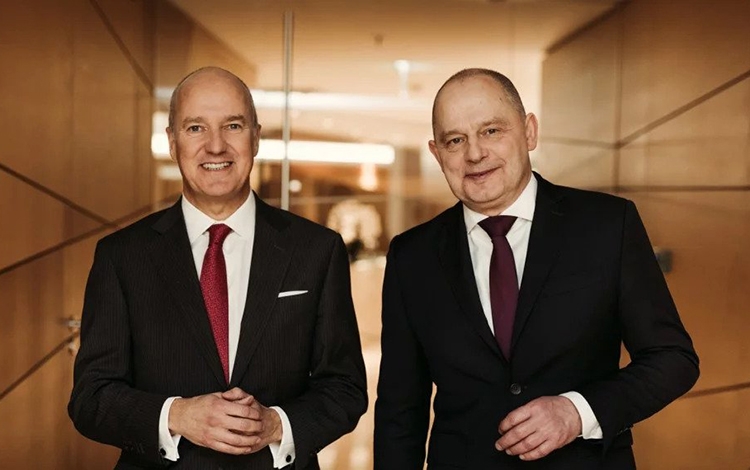
Ten-year cooperation between Europa Group and Bank Millennium through bancassurance agreement
Europa Group expands portfolio in life protection and non-motor business in Poland by growing its footprint in the bancassurance sector
The Retail International division of the Talanx Group is strengthening its presence in the core market of Poland. Europa Group, a subsidiary of HDI International AG, and Bank Millennium are concluding a ten-year exclusive bancassurance agreement. As part of the transaction Europa Group is acquiring 80 percent of the shares in a company owned by the bank for the sale of life protection and non-motor products. By entering into this cooperation Talanx is further strengthening its position in its core market Poland. The partnership is expected to launch in the second half of 2023.
The partnership with Bank Millennium will help Talanx to realise its strategic objectives by growing further in life protection and non-motor business. The Group will also grow its footprint in the bancassurance sector and accelerate its digitalisation.
“We are very pleased to strengthen our cooperation with Bank Millennium and to extend and solidify our existing relationships through this joint initiative. The transaction solidifies our strategic position of Europa Group in Poland. We are convinced that the partnership will contribute to further profitable growth for the Retail International division as a whole and our Polish operations in particular,” comments Dr Wilm Langenbach, the member of the Board of Management of Talanx AG with responsibility for the Retail International division and Chief Executive Officer of HDI International AG.
“Through the cooperation with Bank Millennium and its strong distribution network, serving roughly four million customers, we are systematically expanding our relations with a valuable bancassurance partner in Poland,” adds Christian Müller, the member of the Management Board of HDI International AG responsible for business in Europe. “We intend to combine the vast experience of the two organisations and look forward to our continued successful collaboration.”
The partnership will enable Europa Group to grow its bancassurance business as it expands the product and channel offer to customers of Bank Millennium.
“Expanding our relationship into a strategic and long-term cooperation with Bank Millennium creates a strong foundation for the stability and successful development of Europa Group companies. We significantly increase the scale of operations on the Polish market and build a solid base for profitable business growth. The strengthening of our financial condition and the tightening of the business relation with Bank Millennium will translate into the enhancement of the insurance offer for the bank’s customers, so that it provides the highest possible value and protection of life and property in today’s turbulent times”, stresses Artur Maliszewski, president of the management board of Europa Group.
“Bank Millennium has been cooperating with Europa Group for more than 15 years and I am very satisfied to announce the enhancement of this cooperation today. Combining unique experience and strengths of both companies will result in providing a competitive offer of selected insurance products and improvements in distribution channels. Progressing digitalisation and changing expectations of clients made a long-term partnership an important element also in terms of focus on technology developments. I am sure we will jointly deliver major value proposition improvements for our clients,” said Joao Bras Jorge, President of the Management Board of Bank Millennium S.A.
The ultimate consideration is still subject to certain closing adjustments and expected to amount to approximately PLN 500 million (EUR 104 million). A (performance-based) review mechanism to reflect potential outperformance and underperformance in respect of jointly targeted business goals has been agreed as part of the overall partnership.
Bank Millennium, a subsidiary of the Portuguese Banco Comercial Portugues, was established in 1989 and employs over 6,900 people. Measured by total assets, Bank Millennium is the seventh-largest bank in Poland. Insurance products are sold through a network of 635 branches and through internet and mobile bank platforms. In 2022 its total assets amounted to around PLN 111 billion (EUR 24 billion).
HDI International AG, responsible for the international retail and SME business within Talanx Group, has been represented in the Polish market by Europa Group since 2012. The Europa Group consists of the companies Europa Non-Life (Towarzystwo Ubezpieczeń Europa SA) and Europa Life (Towarzystwo Ubezpieczeń na Życie Europa SA). In 2021 Europa Group generated a gross premium volume of altogether EUR 138 million with market shares of 1.7 percent in life and 0.6 percent in non-life business. After 3Q 2022 Europa Group’s share by gross written premiums in the bancassurance sector was estimated at 8 percent in life and 6 percent in non-life segment. HDI International is additionally active on the Polish market with Warta, the second-largest insurer in Poland.
Talanx intends to finance the transaction from existing funds. The acquisition is expected to close in the first half of 2023. The transactions are subject to approval by the relevant supervisory authorities.
Poland: EIB to support Ryvu Therapeutics’ discovery, research and development of new cancer treatments with €22 million

Ryvu Therapeutics, an innovative biotech company, receives EIB financing to accelerate the development of new therapies to treat severe blood cancers and solid tumours, including further clinical development of the flagship project RVU120.
The funding is guaranteed by the European Fund for Strategic Investments, the financial pillar of the Investment Plan for Europe.
The European Investment Bank (EIB) is providing €22 million (above 100 million polish zlotys) in financing to Ryvu Therapeutics, a Polishclinical-stage drug discovery and development company focusing on novel small molecule therapies that address unmet medical needs in oncology. The funding is being provided under the EIB’s venture debt instrument, which is tailored to the specific financing needs of high-growth innovative companies. The European Fund for Strategic Investments, part of the Investment Plan for Europe, is backing this funding with a guarantee.
The EIB’s support will help Ryvu finance its development pipeline of new cancer treatments from discovery through to clinical trials. Ultimately, Ryvu aims to address the clinical limitations of current treatments in oncology and provide patients with access to innovative therapies for haematologic and solid tumours.
EIB Vice-President Teresa Czerwińska said: “Financing projects within the field of research, development and innovation is one of the EIB’s top priorities and is especially relevant today, as the world suffers from the health crisis caused by the pandemic. Support for innovative companies like Ryvu specialising in advanced biotech research is clearly needed and we are delighted to assist this ambitious company, which has a notable drug discovery and development track record. The EIB’s investment will strengthen Ryvu Therapeutics’ research, development and innovation capacity and competitiveness for the wider social benefit.”
Innovation, research, digital economy and the development of human capital are top priorities for the EIB Group. In 2021, the EIB Group’s overall financing for innovation, digital transformation and human capital projects reached €20.7 billion worldwide, of which €1.5 billion went to Poland (up from €1.2 billion in 2020).
“We are very pleased to receive funding from the European Investment Bank, which plays such an instrumental role in providing financial support to innovation-driven companies like Ryvu that seek to develop new and potentially life-saving medicines,” said Pawel Przewiezlikowski, Chief Executive Officer of Ryvu Therapeutics. “We would like to thank the EIB for their collaboration, as this funding will help Ryvu continue to advance our clinical-stage oncology pipeline, including RVU120 in clinical development for the treatment of hematologic and solid tumours, as well as earlier stage projects.”
Valdis Dombrovskis, Executive Vice-President of the European Commission for an Economy that Works for People, said: “I welcome this investment by the EIB, backed by the Investment Plan for Europe, in Polish company Ryvu Therapeutics. It is great news for Europe’s competitiveness and its location as a research hub for innovations that change and save people’s lives. The additional funding will go towards the discovery, research and development of innovative therapeutics to treat cancer patients. This investment will also support the regional economy and create highly skilled jobs in the process.”
Ryvu Therapeutics is already one of the main employers of highly qualified researchers in the biotech field in Poland. With research and development (R&D) activities based in Kraków, the additional investment in Ryvu will contribute to the creation of new highly skilled jobs and encourage economic growth in the region.
Commerzbank expects revenue burden in Poland

Negative one-off effect of €210m to €290m expected at mBank in third quarter due to legislation on “credit holidays” for private mortgages
Operating result of Commerzbank to be impacted by corresponding amount
Bettina Orlopp: “Thanks to the continued good development of our operating business, we still expect a net result of more than €1 billion for the financial year. This is under the condition that there will be no further significant deterioration in the economic environment, for example due to further shortages in the gas supply.”
Commerzbank still expects a net result of more than €1 billion for the financial year 2022 despite an expected revenue burden at its Polish subsidiary mBank. This outlook is under the condition that there will be no further significant deterioration in the economic environment and that no material additional provisions for the Swiss Franc loan portfolio at mBank will be necessary.
mBank had previously announced that, in the third quarter of 2022, it expects to book negative revenues in the range of PLN 1.0 to PLN 1.4 billion (currently approximately €210 million to €290 million) as a result of possible deferrals of interest and repayment of private real estate financing (“credit holidays”) introduced by new legislation. Commerzbank’s third quarter operating result is expected to be burdened by a corresponding amount, which will be booked as negative revenues predominantly in “Other net income from financial instruments”.
The new legislation in Poland allows private borrowers to skip monthly payments for current mortgages loans up to eight times by the end of 2023. mBank expects that 60% to 80% of currently assumed eligible borrowers will make use of this option. Commerzbank will consider legal action against this unusual measure, which is granted to all borrowers regardless of their financial position.
The “credit holidays” are part of the measures taken by the Polish Government to respond to the consequences of high inflation and rising interest rates. The Polish National Bank had recently raised the key interest rate to 6.50%. In the second quarter, Commerzbank already expects additional compulsory contributions of around €83 million at mBank for the Institutional Protection Scheme.
“mBank is one of Europe’s most modern banks and a growth engine for our Group. Unfortunately, the new legislation in Poland causes considerable one-off burdens. However, thanks to the continued good development of our operating business, we still expect a net result of more than €1 billion for the financial year. This is under the condition that there will be no further significant deterioration in the economic environment, for example due to further shortages in the gas supply,” said Bettina Orlopp, Chief Financial Officer of Commerzbank.
Investment Plan for Europe: Nexera receives EIB financing to develop the high-speed internet connection in lower population density areas in Poland
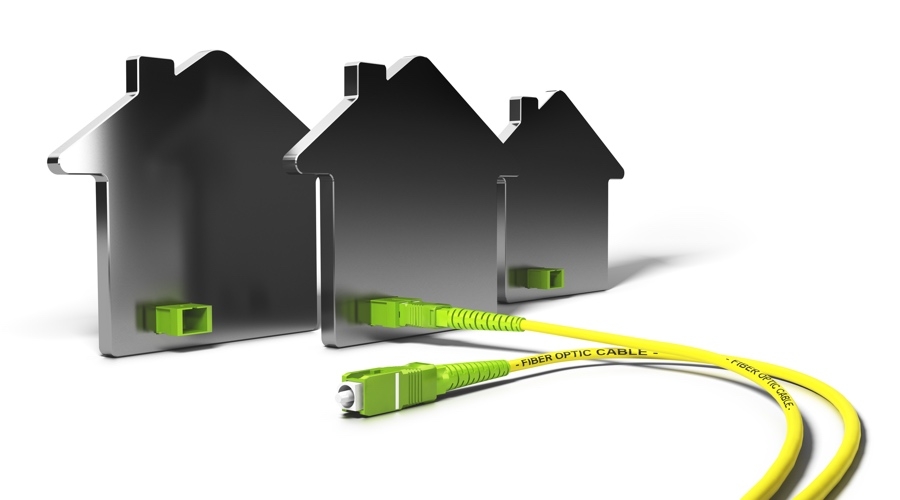
The EIB will lend up to PLN 325 million (€73 million) for a project to develop fibre-to-the-home (FTTH) infrastructure in five Polish regions
Around 530 000 households and 1 400 schools will be connected thanks to the EIB loan
The project is guaranteed under the European Fund for Strategic Investments
Lower population density areas in Poland will gain a better internet connection and access thanks to the deployment of very high capacity network broadband services under a project financed by the European Investment Bank (EIB).
The EU bank has agreed to lend up to PLN 325 million (approximately €73 million) to Nexera to finance the rollout of a fibre-to-the-home (FTTH) access network in less densely populated areas of five Polish regions, or voivodeships (Warminsko-Mazurskie, Kujawsko-Pomorskie, Mazowieckie, Lodzkie and Swietokrzyskie). These regions are located in central and north-eastern Poland.
The project is backed by a guarantee from the European Fund for Strategic Investments (EFSI), the financial pillar of the Investment Plan for Europe. Nexera will also benefit from national and EU public subsidies, awarded to it following the Digital Poland contest, or Program Operacyjny Polska Cyfrowa (POPC), for the provision of co-financing for the design, construction and operation of FTTH networks in Poland. The subsidies will be used to partially fund the required investments.
Nexera is a vehicle majority owned by the infrastructure fund Infracapital. The EIB loan is part of a wider financing effort totalling PLN 1.010 billion (approximately €227 million), with the participation of other senior lenders (BGK, ING, PKO BP and Santander).
In terms of the final scope, Nexera plans to deploy a FTTH network that will pass more than 700 000 addresses including households, businesses and schools in the five regions by 2025, including in relation to the POPC. In this context, it is estimated that the EIB loan will help Nexera to connect around 530 000 households and 1 400 schools by 2023.
EIB Vice-President Teresa Czerwińska, who oversees EIB activities in Poland, said: “This project will contribute to reducing the gap between Poland and the rest of the European Union in terms of regular and ultrafast broadband coverage. The EIB identifies the green and digital twin transitions as key areas of investment in order to ensure a sound recovery after the COVID-19 pandemic. We are pleased in particular to support Nexera in its effort to deploy modern connectivity in less densely populated areas of Poland. Enhancing and democratising digitalisation is also a way to strengthen cohesion in Europe.”
Paweł Hordyński, Nexera CFO, said: “Nexera is a relatively small regional organisation of slightly over 20 people but the secured debt financing puts us among the largest companies in the country. This is definitely a success story in the Polish market and we emerge as a reliable organisation with enormous potential backed by leading financial institutions.”
“Our success is founded on a robust business plan, realistic and effective corporate strategy and innovative ways of working in our organisation that are part of the agility model that has largely become a benchmark for other operators in the market,” adds Jacek Wiśniewski, Nexera CEO.
European Commissioner for the Economy Paolo Gentiloni said: “I welcome this financing agreement between the EIB and Nexera, which is backed by the Investment Plan for Europe. It will help provide a better internet connection to many households, schools and businesses in less populated areas. This is great news for Poland’s digital transition and the connectivity of its citizens.”
Poland: EIB and BNP Paribas Leasing Services join forces to support small and mid-sized companies and invest in climate action
European Investment Bank and BNP Paribas Leasing Services sign €200 million loan that aims to facilitate financing for small and mid-sized companies in Poland.
The loan will support the lending activities of BNP Paribas Leasing Services, which has committed to earmarking a minimum of 20% of its EIB-backed portfolio to climate action.
The large majority of the financing is expected to benefit Polish cohesion regions, thereby strengthening the social and economic foundations of less well-off regions in the European Union.
The European Investment Bank (EIB) and BNP Paribas Leasing Services, a subsidiary of BNP Paribas Bank Polska, have signed a loan agreement of €200 million to back lending to small and mid-sized businesses (SMEs and midCaps) in Poland. The operation builds on the EIB’s successful track record in supporting companies of this size through loans to financial partner institutions. It addresses a clear gap on the Polish market: according to an EIB poll, 12% of companies in the country find it hard to get external financing. In addition, every fifth smaller business in Poland was rejected when applying for a bank loan in 2020. The EU average is significantly lower.
The large majority of BNP Paribas Leasing Services’ new lending will go to cohesion regions, thus helping to reduce disparities in Europe. In addition, some 20% of the EIB financing will contribute to the fight against climate change. Possible green investments include the financing of photovoltaic installations, electric and hybrid vehicles, heating pumps and charging stations for electric vehicles. These investments will contribute to Poland’s objective to reduce greenhouse gas emissions and will help achieve the target set in its Energy Policy until 2040.
“Poland has a large and diversified economy that is relatively resilient to economic shocks,” said EIB Vice-President Teresa Czerwińska, who is in charge of operations in Poland. “Still, 16 of its 17 districts are qualified as cohesion with comparatively low gross domestic product per capita. Building a more climate-friendly economy also requires significant investments. EIB funding to BNP Paribas Leasing Services will encourage a green approach and enhance access to finance for local small and medium companies on better terms, such as reduced interest rates and longer maturities.”
Rafał Piskorski, Director General of BNP Paribas Leasing Solutions, said: “The Polish leasing market is recovering very fast after COVID-19 lockdowns froze many investments in 2020. We are very happy to be able to distribute EIB funding to our customers, as it will encourage them to invest even more and create the foundations for much-needed economic growth. We are happy to contribute to green finance, which is a very important factor to make our economy more sustainable and socially responsible.”
The operation will be structured as a loan to BNP Paribas Leasing Services under a parent guarantee of BNP Paribas Bank Polska. It will be complemented by collateral in the form of EIB bonds. This is the first time that EIB bonds will be used as financial collateral. This design can provide EIB financial partners with a valuable alternative to classic collateral, which might thus be used for other funding operations.
EIB Group in Poland in 2020: strong support for COVID-19 response and for green recovery
Total financing reached €5.2 billion
One third of the financing contributed to build resilience against the pandemic
41% of the funds supported climate action and environmental sustainability, making 2020 a record year for EIB green investments in Poland
Financing for innovation included projects in renewable energy, mobility and biotech
In a year heavily marked by the COVID-19 pandemic, the EIB Group confirmed its strong support to the Polish economy, providing €5.2 billion of overall financing to the country’s public and private sectors. Volumes delivered in 2020 were largely in line with the trend of the previous years, a sign that the country responded swiftly to the pandemic and continued to invest in the future despite the forced downturn.
Loans granted by the European Investment Bank (EIB) amounted to €4.6 billion, while the European Investment Fund (EIF) provided €660 million in guarantees and equity investments to small and medium-sized businesses and mid-caps. In absolute terms, Poland was the fifth biggest recipient of EIB Group financing among the 27 EU Member States after Italy, France, Spain and Germany.
This overall financing represents around 1% of Poland’s GDP, making the country the first recipient of EIB Group financing on a “per GDP basis” among the 15 largest EU economies.
“If anything can be learnt from the past year, it is that emergency action can and must be accompanied by investments in the future. It is indeed significant that in 2020 the EIB Group not only maintained a high level of support to the Polish economy, but it also managed to invest around one third of its funds into COVID-19 related response initiatives and around 40% into climate action and environmental sustainability. We scaled up our green financing and we will continue to do so this year, while helping the public and private sectors to cope with the pandemic. A green recovery and support for innovation are two goals shared by Poland and the EIB” – said EIB Vice-President Teresa Czerwińska, who is in charge of operations in Poland.
“A sustainable development and climate action are very important goals for Poland. The Covid-19 pandemic has shown clearly that we also have to invest much more in the digital area. Development of cutting-edge technologies will be crucial in the process of digitalization of our economies and will help our citizens in their work and various social activities. I encourage the EIB to back Poland in financing our digital projects” – said Tadeusz Kościński, Minister of Finance, Development Funds and Regional Policy.
COVID-19 response
The EIB provided support to the government’s Anti-Crisis plan to fight the pandemic and its economic and social consequences, with a EUR 650m loan to the Ministry of Finance for COVID-19 financing, which was signed in September. A milestone was the first operation in December with the development fund Polski Fundusz Rozwoju (PFR), which saw the EIB engaged in a bond buying operation for PLN 500m (€110 million) to support the Financial Shield Program, a key nationwide initiative that aims to protect employment and ensure access to financing during a period of severe economic disruption. A second bond buying operation for PLN 2 bn was signed in early February 2021.
Other operations included loans to Small and Medium-sized Enterprises (SMEs) and to municipalities. A EUR 10 m loan to Scope Fluidics came in support of the biotech sector, contributing to research on diagnostics, including for infectious diseases like COVID-19.
Overall EIB Group financing for projects and initiatives linked to the pandemic response in Poland corresponded to about one third of the total financing to the country last year.
Green recovery, energy transition and mobility
The EIB scaled up its financing in support of Poland’s energy transition. Two major operations were signed with Pomerania Wind Farm, a local subsidiary of the Lithuanian group Ignitis Renewables, and with the German developer company wpd AG, for the construction of on shore wind farms. The latter project was financed jointly with Landesbank Baden-Württemberg (LBBW) and received the backing of the European Fund for Strategic Investments (EFSI).
The EIB also signed its first operation to build solar plants with Energy Solar Projekty, a subsidiary company of the Energy and Infrastructure SME Fund managed by the Lithuanian-based investment management company Lords LB Asset Management.
Two operations signed last year are helping to create around Wroclaw an ecosystem for the production of electrical vehicle batteries. In March, the EIB signed a €480 million loan agreement with LG Chem Wroclaw Energy, the Polish subsidiary of the LG Chem Group, for the construction and operation of highly automated and innovative manufacturing facilities for advanced lithium-ion (li-ion) cells and batteries for battery-powered electric vehicles (BEVs). In June, the Bank signed a €125 million loan with Umicore, the Belgian-based global materials technology and recycling group, to finance the greenfield production facility for cathode materials that will be supplied to battery manufacturers of high-tech lithium-ion batteries, including LG Chem.
The EIB continued to finance the sustainable development and revitalization plans of Polish cities and regions. In 2020, 17 cities and regions received EIB loans, for PLN 4.4 billion (equivalent to approximately €1 billion) in aggregate. The first EIB loan to a Polish city below 100.000 people (Ostrow Wielkopolski) was signed in September thanks to a joint financing scheme launched with BGK that will be followed by more such loans under a new PLN 700m programme for small and medium municipalities approved at the end of 2020.
Within its urban financing, the EIB also supported environmental-friendly public transport in cities, including the metro in Warsaw, tramways in Krakow and commuter trains in the Tri-City (Gdansk-Gdynia-Sopot). National rail networks PLK and PKP Cargo also received backing.
Overall, in 2020, climate action and environmental sustainability projects reached 41% of the total EIB group financing in Poland (record year).
EFSI: Poland part of the success story of the Juncker Plan
Poland has also been an important recipient of funds under the European Fund for Strategic Investments (EFSI), the main pillar of the Investment Plan for Europe (Juncker Plan), a joint initiative of the EIB and the European Commission running between 2015 and 2020.
As of 31 December 2020, approved financing under EFSI reached €4,2 billion (of which €276 million in 2020), which are expected to trigger €21,9 billion of mobilised investments. This made Poland rank fifth among EU countries in terms of funds received. The EIB Group looks forward to making the most of InvestEU, the successor of EFSI under the European budget 2021-2027.
Poland: EIB lends up to EUR 10 million to Scope Fluidics to develop diagnostics equipment for infectious diseases
The Polish medical technology company develops innovative and real-time tests
that can be used also for COVID-19
This is the first operation in Poland under the Infectious Diseases Financing Facility
of Horizon 2020, the EU Research and Innovation programme for 2014-2020
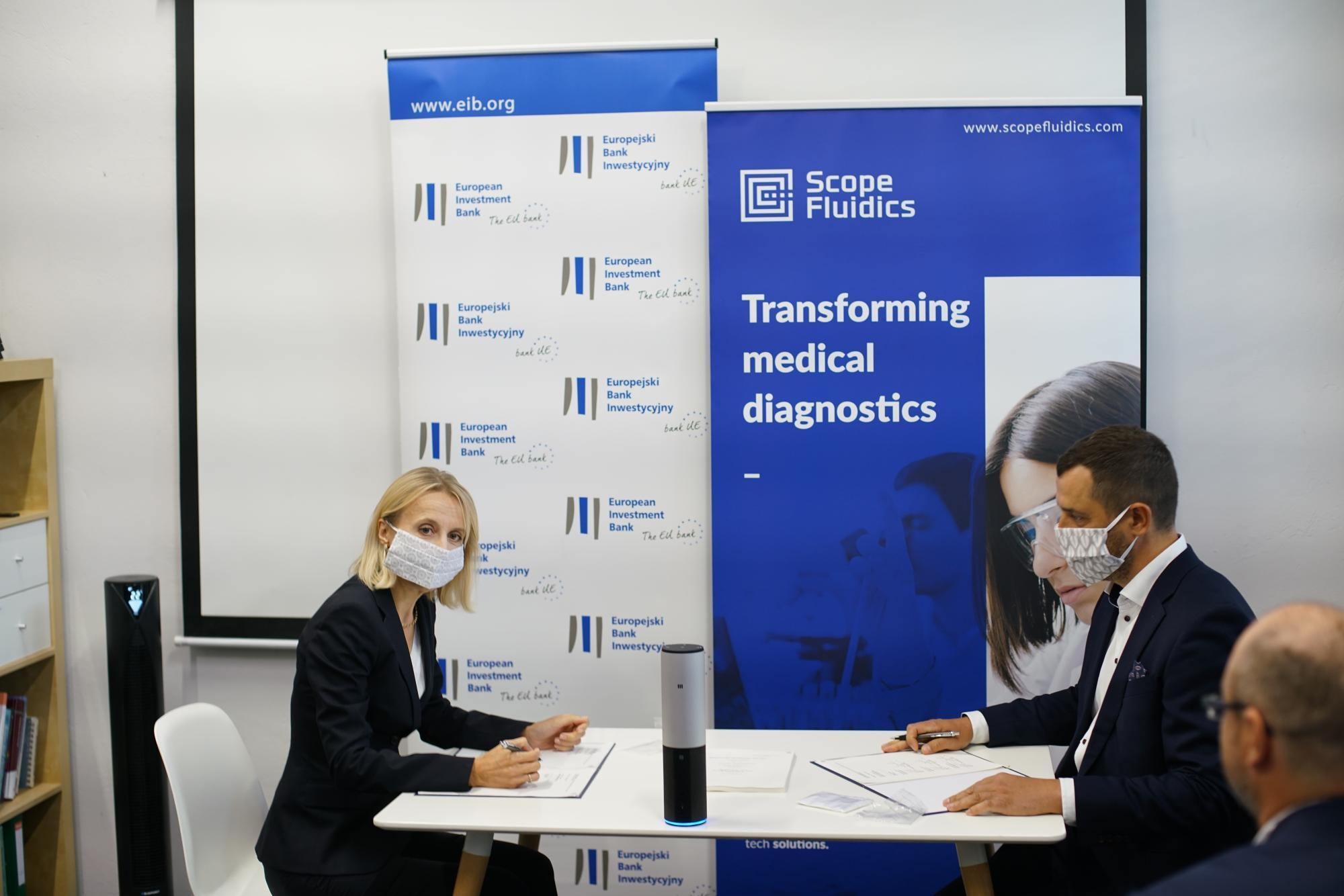
The European Investment Bank (EIB) has agreed to lend up to EUR 10 million to Scope Fluidics, a Polish medical technology company developing innovative products in the field of medical diagnostics. Scope Fluidics uses microfluidic technologies (involving the manipulation of small quantities of test samples within a disposable diagnostic cartridge) and focuses on rapid characterization of antibiotic resistance of bacteria and on ultra-fast detection of bacterial and viral pathogens (including COVID-19).
The EIB financing will support the company’s efforts to develop new, efficient and affordable methods for detection of pathogens causing infectious diseases, including COVID-19. Apart from striving to aid the fight with COVID-19 pandemic, Scope Fluidics’ team is also focused on the Antimicrobial Resistance (“AMR”), which is one of the gravest threats to global health. Testing a broader range of infectious diseases may significantly increase the standard of care and the effectiveness of prevention of complications in the evolving pandemic.
By sustaining the company’s further clinical trials that will allow the commercial launch of the system, the EIB helps address a market gap in available financing options for innovative players active in developing new vaccines and drugs, innovative medical and diagnostic devices or novel research infrastructure for combatting infectious diseases (ID). The project has also the potential to foster growthin this sector and create new jobs in Poland and in the EU for highly skilled people and in the field of research and development.
The financing comes from a joint European Commission and EIB initiative – the Infectious Diseases Finance Facility (IDFF) – backed by the Horizon 2020, the EU Research and Innovation programme2014-2020. It will be the first project in Poland under the IDFF. To date, 14 operations have been signed in Europe under IDFF for a total amount of EUR 372m.
The agreement was signed today in Warsaw by prof. Teresa Czerwińska, EIB Vice-President, who oversees operations in Poland, and prof. Piotr Garstecki, co-founder and chairman of the Board at Scope Fluidics.
“I am delighted to sign today the first EIB loan to a Polish company under the Infectious Diseases Financing Facility, which is part of the European InnovFin programme”, said prof. Teresa Czerwińska. “By investing in this project, the Bank will provide a relevant contribution to the scientific advancement in the field of diagnostic equipment for infectious diseases, including COVID-19. This has the potential to unlock new paradigms for disease diagnostics and antimicrobial resistance.” Teresa Czerwińska added: “This operation timely follows the agreement last week with the Ministry of Finance for a EUR 650 million EIB loan to help the government fight against COVID-19. As the EU bank, we think it is important to support Poland’s efforts against the pandemic at all levels”.
“The Scope Fluidics team has created a modern PCR|ONE system that detects dangerous bacteria and viruses in a breakthrough time of 15 minutes. Our recent efforts focused on the rapid detection of the Covid-19 virus have given the PCR|ONE project an additional importance and business dimension – in line with the global effort to combat the pandemic. Today’s agreement with the EIB is a great joy for us – our goal is to change modern medical diagnostics into faster, more informative and accessible, in order to gain a real impact on improving the quality and effectiveness of modern medicine. On behalf of the entire Scope Fluidics team, I would like to thank EIB for the trust of such an experienced institution” – says prof. Piotr Garstecki, CEO of Scope Fluidics. “EIB will be an important partner for us, with extensive experience in financing European lifescience ventures, including companies from the molecular diagnostics industry. The agreement concluded today aims to support the commercialization of the systems we develop, including increasing the intensity of activities in the PCR|ONE project’s Early Access Program. We have joined the group of companies such as Stat-Dx, Curetis and Mobidiag, which have also obtained similar funding from EIB in recent years” – adds Prof. Piotr Garstecki.
Mariya Gabriel, Commissioner for Innovation, Research, Culture, Education and Youth, said: “Diagnostic tests are essential to enable front-line health workers to make the diagnosis quickly and accurately, as well as to reduce the risk of further spread of viruses, including the coronavirus. This is a very important element of the Coronavirus Global Response strategy. With this loan to Scope Fluidics the EU is making one step closer to finding solutions to fight the coronavirus pandemic. I am also very pleased that, through the Infectious Diseases Finance Facility, we are supporting for the first time a company based in Poland to carry out this very promising project.”
Poland: EIB supports Poland in the fight against COVID-19
€650 million made available to the Polish Ministry of Finance to support the country’s efforts in combating the pandemic
The aim is to strengthen Poland’s emergency response system and pandemic preparedness, with a focus on health and civil protection
The EIB will be able to finance eligible projects fully rather than its standard maximum of 50%
The European Investment Bank (EIB) and the Polish Ministry of Finance have agreed today on a financial support programme to cope with the consequences of COVID-19. The EU bank will lend €650 million to help the Polish government cover expenses and investments related to the ongoing pandemic.
The aim is to strengthen Poland’s emergency response system for the COVID-19 crisis as well as increase its mid and long-term pandemic preparedness. The EIB financing targets schemes in the health and civil protection sectors, which are under the greatest stress.
Healthcare projects can include the purchase and supply of medical and non-medical equipment, the reconfiguration of healthcare facilities and services, drug supply and production, as well as the co-financing of COVID-19 research. Civil protection programmes might involve infrastructure and equipment, including for communication and awareness-raising campaigns, hygiene and disinfection measures, examinations, screening, quarantining and other official measures imposed to prevent the spread of infectious diseases.
The EIB and the Ministry of Finance also agreed that the Bank would finance eligible expenditures in full rather than the standard maximum of 50% of project costs applied to most Bank-approved projects.
“The EIB funding agreed today with the Ministry of Finance means that Poland is better equipped to fight the pandemic and can invest more resources in upgrading its level of responsiveness in both healthcare and civil protection,” said Prof Teresa Czerwińska, EIB Vice-President, who oversees operations in Poland. “Helping the country to be more resilient to pandemics is part of our mission to ensure balanced regional development and cohesion in Europe. In unity, there is strength: as coronavirus remains present in our societies, we should continue to consolidate our support packages by topping up national resources with European funding.”
“The European Investment Bank has been supporting the government’s activities for many years,” said the Polish Finance Minister Tadeusz Kościński. “This loan is a good example of the Bank’s support in an area that is currently a priority for the Polish authorities. The agreement was made possible thanks to the set of measures prepared and implemented by the Bank, which allowed to effectively support EU Member States in the fight against the unprecedented crisis”.
This financing is made possible by repurposing the last tranche of a €1.35 billion Structural Programme Loan (SPL) granted to Poland under the EU programming period 2014-2020. SPLs are part of the financing instruments the EIB uses to supplement the structural and investment funds allocated to EU countries in the EU budget. In the wake of the COVID-19 crisis, the Polish government and the EIB have agreed to dedicate the unused part of the current SPL to co-financing the country’s response to the pandemic.
Poland: Solid EIB Group activity in 2019 paves the way for continued support this year, as the economy struggles with coronavirus
– The European Investment Bank Group’s financing amounted to €5.4 billion last year, driven by investments in infrastructure and environment and showing increasing support for small and medium-sized businesses
– In the first months of 2020, the EIB has signed new loans for renewable energy and sustainable transport projects, supporting Poland in its climate transition
– In light of the COVID-19 emergency, the EIB Group is ready to intensify its support for the Polish and European economy
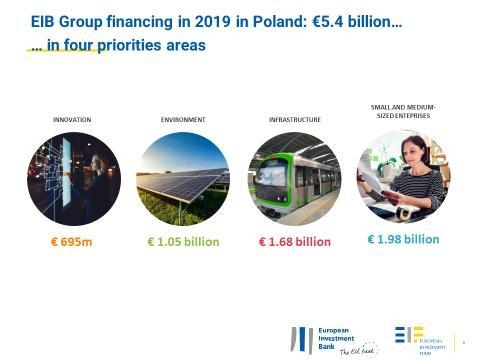
With €5.4 billion of overall financing 2019 was a strong year for the European Investment Bank (EIB) Group in Poland. The Group’s activity was 13 % higher than in the previous year and in line with the trend of the past five years. Loans granted to public and private counterparts by the EIB amounted to €4.3 billion, while the European Investment Fund (EIF) provided €1.1 billion in guarantees and equity investments to small and medium-sized businesses and mid-caps.
Poland was the fifth biggest recipient of EIB Group financing among EU countries, after Italy, Spain, France and Germany. This financing represents more than 1% of Poland’s GDP, making the country the second largest beneficiary among countries with a population above 10 million after Greece. This shows the impact of the EU bank’s operations.
In the first few months of 2020, new operations were signed in renewable energy production, with a €60 million loan to Pomerania Wind Farm (a subsidiary of the Lithuanian Ignitis group), and in sustainable transport. A €480 million loan to LG Chem for the construction of electric-vehicle batteries in Wroclaw was announced today.
“Last year, the level of activity of the EIB Group in Poland was once again significant. The EU bank financed important projects in all sectors of the economy, with a particular focus on infrastructure and environment, and with record volumes of loans and guarantees to small and medium-sized businesses. We take these positive results as a motivation to continue to support the Polish economy as it faces the daunting task of fighting the coronavirus crisis,” said EIB Vice-President Teresa Czerwińska, who is in charge of operations in Poland following her appointment to the EIB Management Committee on 1 March. Teresa Czerwińska added: “We will work tirelessly with all our public and private partners in Poland, so that we continue to finance projects that help the Polish economy to be more resilient to shocks and more prosperous in the longer term. The EIB stands ready to further support SMEs, who are the most vulnerable economic actors in times of social and economic lockdown. The package announced last week of up to €40 billion for European SMEs is a first step in our commitment. We will do everything we can to combine national and European efforts and I trust that by working together we will overcome the coronavirus crisis, in Poland as well as in Europe.”
“2019 was another year of very good cooperation between Poland and the EIB Group,” said the Minister of Finance, Tadeusz Kościński. “This is confirmed by figures, with €5.4 billion of financing provided to Polish enterprises, national and local government bodies. This ranks Poland 5th among EU countries. EIB Group financing supported, among others, railway upgrade projects, renewable energy, access to finance for SMEs, scientific research programs and hospitals modernization projects. Last year, the role of Poland as the Bank’s shareholder also increased. We strengthen our contribution to the management of the Bank. I hope and I am confident that the Bank will continue its support, including its commitment to tackle the challenge of COVID-19 today. ”
2019 results overview Infrastructure and environment
Projects related to infrastructure needs attracted €1.68 billion, while projects with a direct climate action and environment component received €1.05 billion of financing. Taking all projects in aggregate, climate action accounted for 31% of the EIB Group’s financing, in line with the Group’s global level.
In many cases, EIB support improves the country’s infrastructure, while at the same time facilitating the transition to a more climate-friendly environment. For example:
– Railways attracted the biggest part of EIB loans for transport projects in Poland in 2019 (€738 million), more than roads (€617 million). In particular, the EIB financed the modernisation of 195 km of PLK railway lines between Poznan and Szczecin (E59), as part of the Baltic-Adriatic corridor upgrade.
– Cleaner energy projects also received solid backing. The EIB supported the upgrade of municipal heating networks in Bydgoszcz, Lublin and Opole, to make them more energy efficient, and signed a €64 million loan to finance the construction by PGE of three onshore windfarms on the Baltic coast for a combined capacity of 97 MW.
Small and medium-sized business
A combination of EIB credit lines (for approximately €1 billion) as well as EIF guarantees and equity investments (for approximately €1.1 billion) provided a record amount of around €2 billion in fresh financing to Polish SMEs and mid-caps. The EIB Group lends to SMEs mainly via partnerships with Polish banks, leasing companies and other financial institutions. It lends to those financial intermediaries who, in turn, on-lend to their clients with attractive rates and maturities, making access to finance easier for small business. Part of those loan agreements, with partners including mBank and BNP Paribas Polska, will support dedicated energy efficiency programmes carried out by SMEs.
The EIB also financed SMEs directly. The bank signed a €50 million loan with the diary company Mlekpol to upgrade its production and storage facilities. The operation was backed by EFSI.
Innovation, research, health
Projects with a strong innovation component received €695 million. Around €480 million were invested in science, supporting the early-stage research and applied R&D projects of national science and research centres in Krakow and Warsaw, and the education and research programmes of the Polish Academy of Science. A €45 million loan was signed with the specialty chemicals company PCC Rokita for its modernisation programme, including a new Centre for Innovation. The EIB also signed a €30 million loan with Mabion, the first biotech company in Poland to receive EIB backing.
University hospitals in Gdansk and Lublin received a €91 million loan for the modernisation and extension of their facilities, via an agreement with the Ministry of Finance. This operation followed two direct loans signed in 2018 with university hospitals in Warsaw and Poznan, showing the readiness of the EIB to support the healthcare sector in Poland.
European Fund for Strategic Investments (EFSI):
Poland also ranks fifth among EU countries in terms of loans received under the European Fund for Strategic Investments (EFSI), which is the financial pillar of the “Juncker Plan”. This plan, launched by the European Commission and the EIB in 2015, helps attract public and private investments into projects by taking on a higher risk than is usual for EIB lending activity. As of 31 December 2019, there were 73 approved EFSI transactions in Poland amounting to €3.9 billion. They were expected to mobilise €21 billion of total investments.
Poland: Ignitis Group borrows EUR 60m from EIB for its first wind farm project
– The Lithuanian utility will carry out the project through its subsidiary Pomerania Wind Farm
– New onshore wind farms with a combined capacity of up to 94 MW will be located near the Baltic coast in northern Poland.
– The operation, backed by the Investment Plan for Europe, will help decarbonize the energy sector in Poland and improve the energy mix.
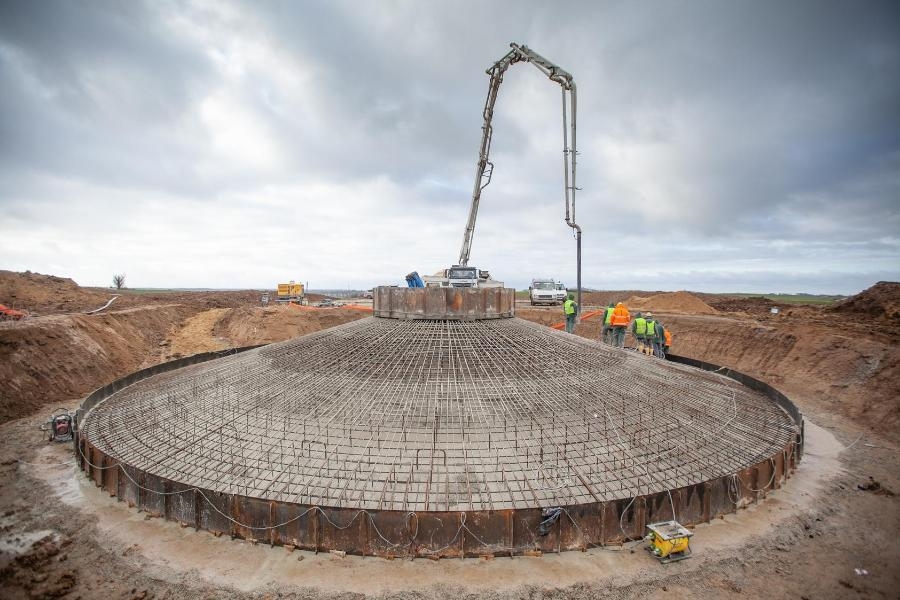
More windfarms will see the light near the Baltic coast in Poland. The European Investment Bank (EIB) has signed a loan agreement with Pomerania Wind Farm sp.z o.o., a subsidiary of Ignitis Renewables, which is part of Ignitis Group, a large-scale Lithuanian energy company. The EIB has agreed to lend PLN 258m (approx. EUR 60m) for the construction and operation of a medium-size onshore windfarm, consisting of 29 turbines, with a total installed capacity of 94 MW. The loan will cover around 47 % of the project investment costs. The EIB financing is supported by the European Fund for Strategic Investments (EFSI), the main pillar of the Investment Plan for Europe, in which the European Commission and the EIB are strategic partners.
The wind park is located in the Pomeranian Voivodship, approximately 50 km from the coastline of the Bay of Gdansk, in the municipalities of Dzierzgon and Stary Targ. Works have already started in July last year, and the project is expected to be operational in the spring of 2021. The wind park has an expected capacity of 300 GWh of electricity, potentially supplying around 75,000 households with the clean energy generated by the project, on an annual basis.
EIB Vice-President Teresa Czerwińska commented: “There is huge potential for generating energy from renewable sources in Poland, and this project is yet another example of how wind farms can contribute to the country’s energy mix and sustainable development. The EIB has considerable expertise in financing wind energy around the world. With our new Energy Lending Policy, we are committed to supporting even more such projects and we are happy that this particular project is very much in line with our climate objectives”.
Dominykas Tučkus, Board Member and Head of Business Development at Ignitis Group, said: “Sustainable development through the implementation of renewable energy projects not only in Lithuania but also abroad is top priority for the Ignitis Group in its Strategy 2030. Through these projects, we aim to increase our competitiveness and make a significant contribution to accelerated decarbonisation of energy sector”.
Paolo Gentiloni, European Commissioner for the Economy, said: “I warmly welcome that EIB financing under the Investment Plan is facilitating the construction of a new wind farm in Poland. Thanks to EU support, around 75,000 Polish households stand to benefit from clean energy. This is a tangible example of what the European Green Deal means concretely for Polish citizens. With every investment of this kind, we take another step closer to our goal of making the European Union climate neutral by 2050.”
Ignitis Group is an international energy company and one of the largest energy groups in the Baltic region. Its’ mission is to make the world more energy smart. Group companies produce, distribute and supply energy, as well as develop smart energy solutions. Ignitis Group gives priority to green energy, aiming to become the region’s main competence center for new energy and a leader in distributed energy solutions in the Baltic Sea region and beyond.
Additional information about the EIB commitment for renewable energy sources:
In 2019, the EIB invested around EUR 4bn in renewable energy projects around the world, of which €945m for onshore wind farms. The new Energy Lending Policy, approved by the EIB Board of Directors in November 2019, is likely to trigger more investments in this sector. Based on recent dramatic cost reductions, the share of renewable energy technologies will increase substantially. Wind and solar power, in particular, are projected to represent the majority of low-carbon energy sources by 2050.
The EU has agreed to reduce greenhouse gas emissions by 2030 by at least 40% from 1990 levels. In this context, the EU climate and energy framework includes a binding target of at least a 32% share of renewables in the final energy mix by 2030. This is likely to translate into a share of around 60% of renewables in the electricity energy mix by 2030, with around 30% from variable sources (wind and solar).