
Diana Shipping Inc. Reports Fourth Quarter Net Loss of $14 Million
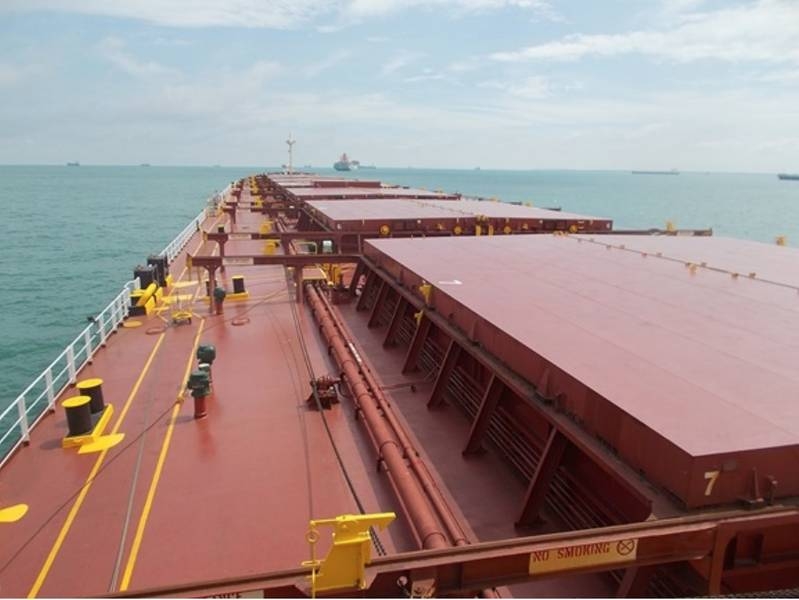
Diana Shipping Inc., a global shipping company specializing in the ownership of dry bulk vessels, Friday reported net loss of $14.0 million and net loss attributed to common stockholders of $15.4 million for the fourth quarter of 2019, including a $6.5 million impairment loss and $3.3 million loss from sale of vessels. This compares to net income of $2.9 million and net income attributed to common stockholders of $1.5 million reported in the fourth quarter of 2018.
Time charter revenues were $51.5 million for the fourth quarter of 2019, compared to $62.9 million for the same period of 2018. The decrease in time charter revenues was mainly due to decreased revenues due to the sale of two vessels in December 2018 and six vessels in 2019 and decreased average time charter rates that the Company achieved for its vessels during the quarter.
Net loss for 2019 amounted to $10.5 million and net loss attributed to common stockholders amounted to $16.3 million, including a $14.0 million impairment loss and $6.2 million loss from sale of vessels. This compares to net income and net income attributed to common stockholders of $16.6 million and $10.8 million, respectively, for 2018. Time charter revenues were $220.7 million for 2019, compared to $226.2 million for 2018.
Diana Shipping Inc. Reports Net Loss of $1.3 Million
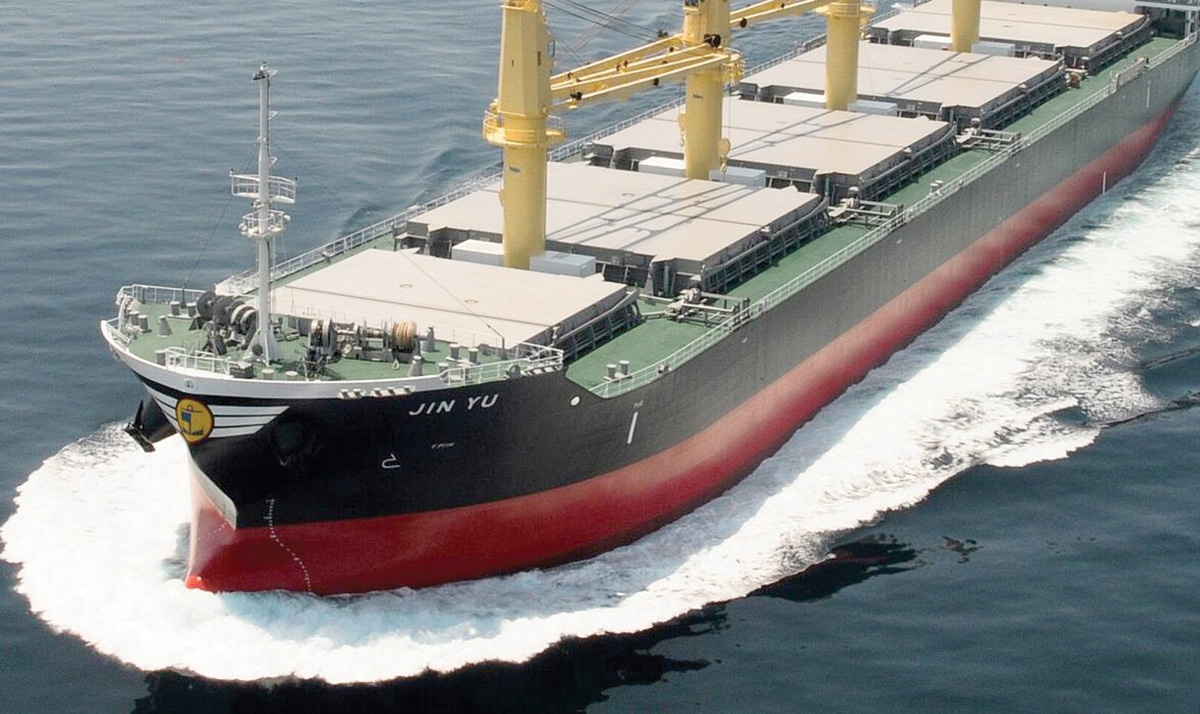
Diana Shipping Inc., a greek global shipping company specializing in the ownership of dry bulk vessels, reported a net loss of $1.3 million and net loss attributed to common stockholders of $2.7 million for the second quarter of 2019, including a $2.8 million impairment loss. This compares to net income of $2.0 million and net income attributed to common stockholders of $0.5 million reported in the second quarter of 2018.
Time charter revenues were $55.4 million for the second quarter of 2019, compared to $53.4 million for the same period of 2018. The increase in time charter revenues was due to increased average time charter rates that the Company achieved for its vessels during the quarter and was partly offset by decreased revenues due to the sale of two vessels in December 2018 and three vessels in the first half of 2019.
Net income and net loss attributed to common stockholders for the six months ended June 30, 2019 amounted to $1.7 million and $1.2 million, respectively, including a $7.5 million impairment loss. This compares to a net loss and net loss attributed to common stockholders of $1.1 million and $4.0 million, respectively, for the same period of 2018. Time charter revenues were $115.7 million for the six months ended June 30, 2019, compared to $101.8 million for the same period of 2018.
Full Report
Performance Shipping Inc. Minimizes Second Quarter Net Loss
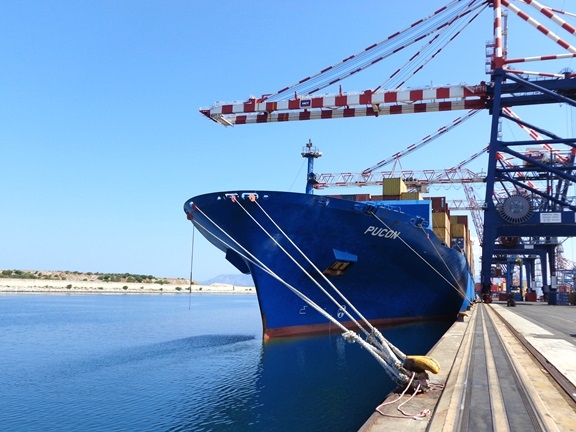
Performance Shipping Inc. a global shipping company specializing in the ownership of vessels, reported a net loss of $1.6 million for the second quarter of 2019, compared to a net loss of $42.3 million for the same period of 2018. The loss for the second quarter of 2019 includes $0.3 million of impairment charges of one vessel, while the loss for the second quarter of 2018 includes $15.6 million of impairment charges of one vessel and $19.0 million of aggregate loss on sale of three vessels.
Time charter revenues were $4.5 million for the second quarter of 2019, compared to $6.3 million for the same period of 2018. This decrease was primarily due to the decrease in size of the Company’s fleet, and was partially offset by the increased time charter rates achieved as a result of improved market conditions.
Net loss for the six months ended June 30, 2019, amounted to $1.7 million, compared to a net loss of $46.2 million for the six months ended June 30, 2018. The loss for the six months ended June 30, 2019 includes $0.3 million of impairment charges of one vessel, while the loss for the six months ended June 30, 2018 includes $15.6 million of impairment charges of one vessel and $16.7 million of aggregate loss on sale of six vessels. Time charter revenues for the six months ended June 30, 2019, amounted to $10.0 million, compared to $14.3 million for the six months ended June 30, 2018.
As of July 28, 2019, the Company had 36,277,660 shares of common stock issued and outstanding.
Full Report
Deutsche Bank reports net loss driven by transformation charges in the second quarter of 2019
Christian Sewing, Chief Executive Officer, said: “We have already taken significant steps to implement our strategy to transform Deutsche Bank. These are reflected in our results. A substantial part of our restructuring costs is already digested in the second quarter. Excluding transformation charges the bank would be profitable and in our more stable businesses revenues were flat or growing. This, combined with our solid capital and liquidity position, gives us a firm foundation for growth.”
Second quarter and first half 2019 highlights
— Second-quarter net loss of 3.1 billion euros after strategic transformation charges of 3.4 billion euros– Substantial portion of expected transformation charges now taken– Large majority of transformation charges have no impact on capital position— Second-quarter net income would have been 231 million euros and pre-tax profit 441 million euros excluding transformation charges— Revenues down 6% or 5% if adjusted for specific items1; revenues essentially flat or growing in more stable businesses (Global Transaction Banking, Private & Commercial Bank and Asset Management) if adjusted for specific items1— Continued volume growth in the first half year– Loan growth of 14 billion euros– Net asset inflows of 20 billion euros– Assets under management up 88 billion euros— Noninterest expenses of 7.0 billion euros and adjusted costs2 of 5.7 billion euros. Excluding transformation charges, in the second quarter:– Noninterest expenses down 3%– Adjusted costs down 4%– 6th consecutive quarter of year-on-year adjusted cost reduction ex-bank levies— Capital position remains robust: Common Equity Tier 1 ratio of 13.4%— Substantial progress on strategy execution– Cash Equities positions exited/system shutdown initiated– Negotiation of Prime Finance/Electronic Equities sale on track– Over 900 employees given notice or informed their role will be eliminated— As at 30 June 2019, businesses to be transferred into the Capital Release Unit accounted for (pro forma):– Leverage exposures of 250 billion euros– Risk weighted assets of 65 billion euros
Financial impact of strategic transformation charges
As a result of its announced restructuring, Deutsche Bank (XETRA: DBKGn.DB / NYSE: DB) reported a net loss of 3.1 billion euros in the quarter. Charges related to strategic transformation, including the impact of a lowered outlook on business plans, were 3.4 billion euros.
Excluding these charges, net income would have been 231 million euros versus 401 million euros in the prior year period.The bank reported a loss before income taxes of 946 million euros including 1.4 billion euros in pre-tax transformation-related charges. Excluding these charges, pre-tax profit would have been 441 million euros versus 711 million euros in the second quarter of 2018.
Strategic transformation charges of 3.4 billion euros comprised Deferred Tax Asset (DTA) valuation adjustments of 2.0 billion euros, plus 1.4 billion euros comprising 1.0 billion euros of impairments on goodwill3 reflecting a lowered outlook on business plans, and 351 million euros of impairments on software and provision for existing service contracts. The large majority of these charges have no impact on Common Equity Tier 1 capital.
For the first six months of 2019, the bank reported a loss before income taxes of 654 million euros and a net loss of 2.9 billion euros, primarily driven by transformation-related charges in the second quarter of 2019. Excluding these charges, first-half pre-tax profit would have been 733 million euros, and first-half net income would have been 432 million euros. In the first six months of 2018, profit before tax was 1.1 billion euros and net income was 521 million euros.
Execution of Deutsche Bank’s transformation strategy is underway. In the first six months of 2019 the bank reduced leverage exposures in business to be transferred to the Capital Release Unit by 38 billion euros and risk weighted assets by 9 billion euros. Negotiations are on track for the sale of Prime Finance and the Electronic Equities platform to BNP Paribas. In Cash Equities, Deutsche Bank has exited positions and the shutdown of systems is in progress. Over 900 employees have either been given notice or informed that their role will be eliminated since the announcement of the transformation strategy.
Revenue share of more stable businesses is growing
Net revenues were 6.2 billion euros in the quarter, down 6% on a reported basis compared to the prior year quarter and down 5% excluding specific items1. These items contributed a positive 109 million euros in the quarter, versus a positive 194 million euros in the prior year quarter.
Revenues in the Corporate & Investment Bank (CIB) were 2.9 billion euros, down 18% year-on-year, while revenues in the Private & Commercial Bank (PCB) were down 2%, or essentially flat if adjusted for specific items1. Revenues in Asset Management were up 6% year-on-year.
Revenues in more stable businesses – Global Transaction Banking, the Private & Commercial Bank and Asset Management – made up 65% of revenues in the quarter. These revenues were down 2% on a reported basis and up 1% adjusted for specific items(Specific revenue items, 2nd quarter 2019 versus 2nd quarter 2018).
Full Report
Pyxis Tankers Inc. Reports Net Loss of $2.3 Million
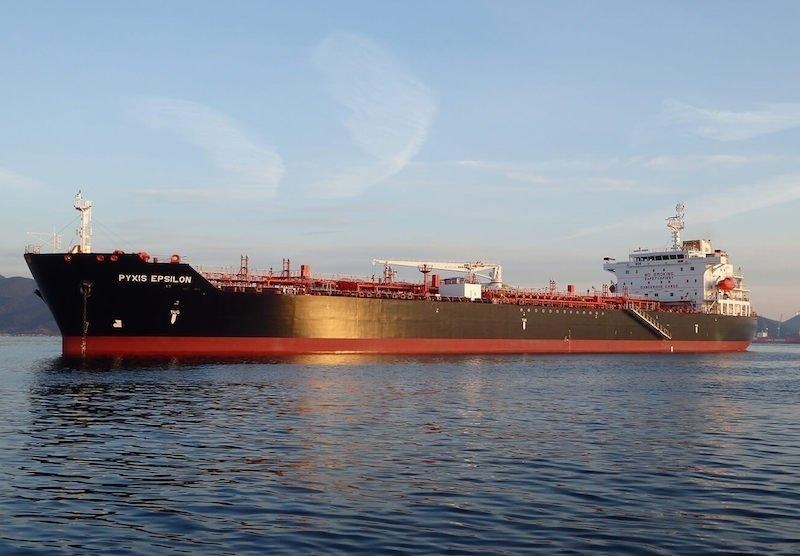
Pyxis Tankers Inc. an emerging growth pure play product tanker company, today announced unaudited results for the three months ended March 31, 2019.
Summary
For the three months ended March 31, 2019, our time charter equivalent revenues were $4.8 million which contributed to a net loss of $2.3 million, or a loss per share (basic and diluted) of $0.11 and our Adjusted EBITDA (see “Non-GAAP Measures and Definitions” below) was $0.5 million.
Valentios Valentis, our Chairman and CEO commented:
“Our operating results for the first quarter of 2019 reflected the contribution from the short-term time charters of our medium-range product tankers (“MR”) which we had entered into during the fourth quarter of 2018 as well as continued cost discipline. The average TCE for our MR’s was approximately $12,700 during the quarter. The continued underperformance of our smaller tankers reduced our improving fleet-wide results for the period.
During Q1 2019, our eco-modified MR, the Pyxis Malou, completed her 10th year special survey, including installation of a U.S. Coast Guard approved ballast water treatment system. This major dry-docking was completed within a total of 28 days of off-hire and at a total cost of $1.4 million, including the environmental upgrade. Upon re-delivery from the shipyard, the vessel was employed under a short-term time charter which expires in the Fall, 2019. During the most recent quarter, we took the opportunity to fix two of our younger MR’s operating under time charters at a rate of approximately $15,400/day/vessel for one year with a charterer’s option to extend for an additional year at $17,500/day/vessel starting in the second quarter 2020. The Pyxis Delta will finish her time charter shortly, and we would expect it, along with the Pyxis Malou and the two Handysize tankers, to operate in the spot market upon completion of their existing charters since we believe rates will improve in the second half of this year. As of May 17, 2019, 43% of remaining days of 2019, excluding optional periods, are covered with our MR’s at a gross rate of approximately $15,000/day.
We believe that we may see a sustainable improvement in vessel earnings based upon the positive fundamentals of supply and demand growth, plus incremental demand for the MR sector with the start of IMO 2020 regulations. Continued world-wide demand growth for refined petroleum products of 3% or more per annum should outpace the declining orderbook for MR’s, especially after vessel scrapping and delays in new build deliveries. The distribution of new compliant low-sulphur fuels through the massive global network of ports and marine storage facilities should increase ton-mile demand and expand trading routes for MR’s. The possibility of arbitrage opportunities within our sector would be icing on the cake.
During the first quarter of 2019, we continued to focus on the efficiency of our operating structure, with our fleet-wide daily operating expenses of $6,022 per vessel, an improvement of 1.4% over the same period in 2018. Total daily operational costs, which include management fees and General and Administrative expenses, for our eco-efficient MR’s continued to be competitive within our sector at approximately $7,580/day.
Going forward, we plan to continue to focus on providing a safe and efficient means of transporting refined products for our customers under a strategy of mixed chartering vessel employment. We plan to continue to explore avenues for growth, strategically and through capital formation. We are optimistic about the near-term prospects for our sector and the Company, and look forward to taking advantage of the various opportunities as they arise to enhance shareholder value.”
Full Report
Performance Shipping Inc. Reports First Quarter Net Loss of 0.2 million
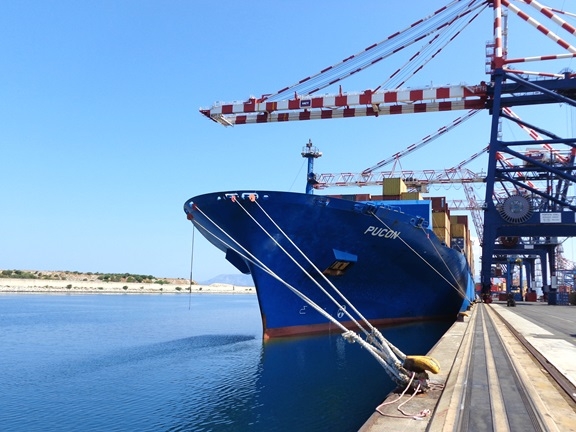
Performance Shipping Inc., a global shipping company specializing in the ownership of containerships, reported a net loss of $0.2 million for the first quarter of 2019, compared to a net loss of $3.9 million for the same period of 2018.
Time charter revenues were $5.5 million for the first quarter of 2019, compared to $8.0 million for the same period of 2018. This decrease was primarily due to the decrease in size of the Company’s fleet, and was partially offset by the increased time charter rates achieved as a result of improved market conditions.
As of May 9, 2019, the Company had 26,753,851 shares of common stock issued and outstanding. The Company has been advised by the Nasdaq Stock Market LLC (“Nasdaq”) that its common shares, which trade on the Nasdaq under the symbol “DCIX,” have regained compliance with the minimum bid price requirements under Nasdaq Listing Rule 5450(a)(1).
Full Report