
OceanPal Inc. Reports Third Quarter Net Loss of $3.4 Million
OceanPal Inc., a global shipping company specializing in the ownership of vessels, reported a net loss of $3.4 million and a net loss attributed to common stockholders of $3.9 million for the third quarter of 2023. Time charter revenues for the same period were $3.9 million. This compares to net income of $1.1 million and net income attributed to common stockholders of $403 thousand for the third quarter of 2022. Time charter revenues for the same period were $5.1 million.
Net loss for the nine months ended September 30, 2023, amounted to $2.0 million and net loss attributed to common stockholders amounted to $3.9 million. Time charter revenues for the same period were $13.1 million. This compares to net income for the nine months ended September 30, 2022, of $2.2 million and net income attributed to common stockholders of $216 thousand. Time charter revenues for the same period were $13.4 million.
View Full Report
Swiss Re reports a net loss of USD 285 million for first nine months of 2022

Ad hoc announcement pursuant to Article 53 LR
Property & Casualty Reinsurance (P&C Re) net loss of USD 283 million; combined ratio of 106.1% and normalised1 combined ratio of 96.2%
Life & Health Reinsurance (L&H Re) net income of USD 221 million
Corporate Solutions net income of USD 356 million; combined ratio of 93.1%
Return on investments (ROI) of 1.6%, reflecting negative mark-to-market impacts on listed equity investments; Q3 recurring income yield increased to 2.8%
Very strong capital position with a Group Swiss Solvency Test (SST) ratio of 274% as of 1 July 2022
Swiss Re reported a net loss of USD 285 million for the first nine months of 2022, driven by a USD 442 million net loss in the third quarter. While P&C Re was impacted by Hurricane Ian and an increase in small- and mid-sized claims in the third quarter, L&H Re and Corporate Solutions continued to deliver strong results and remain on track to meet their full-year targets.
Swiss Re’s Group Chief Executive Officer Christian Mumenthaler said: “The first nine months of this year were marked by a confluence of events affecting Swiss Re’s financial performance: from turbulence in the financial markets, to an increase in natural catastrophe claims, surging inflation and the war in Ukraine. While P&C Re has been significantly affected by these headwinds, all other businesses are performing well and are on track to reach their 2022 financial targets.”
Swiss Re’s Group Chief Financial Officer John Dacey said: “We have bolstered reserves by USD 0.7 billion over the past 12 months to address the impact of economic inflation. Rising interest rates are already helping to compensate for this impact, with the recurring contribution from our fixed-income portfolio rising by around USD 100 million in the third quarter alone. Most importantly, despite the challenges this year, we have maintained our very strong capital position and remain committed to our capital management priorities.”
Group results reflect headwinds
Swiss Re reported a net loss of USD 285 million and a return on equity ROE of –2.1% for the first nine months of 2022, compared with a net income of USD 1.3 billion and an ROE of 6.6% for the same period last year. The decline was mainly driven by significantly lower investment results, large natural catastrophe claims of USD 2.7 billion as well as first-quarter reserves of USD 283 million related to the war in Ukraine.
Net premiums earned and fee income for the Group rose 1.3% to USD 32.4 billion in the first nine months of 2022 compared with the same period last year. Growth was negatively affected by adverse foreign exchange developments, while at stable foreign exchange rates, the increase amounts to 5.2%.
Very strong capital position and rising recurring investment income
Swiss Re’s ROI of 1.6% was affected by negative mark-to-market impacts on listed equity investments. Credit impairments remained low. The recurring income yield increased to 2.4% for the first nine months of 2022 from 2.2% for the same period last year, benefiting from targeted reinvestments in the rising interest rate environment. In the third quarter, the recurring income yield rose to 2.8%, while the fixed income reinvestment yield reached 4.1%.
Swiss Re’s capital position remained very strong, with a Group Swiss Solvency Test (SST) ratio of 274% as of 1 July 2022.
P&C Re results impacted by natural catastrophe claims in Q3
P&C Re reported a net loss of USD 283 million for the first nine months of 2022, compared with net income of USD 1.5 billion in the same period in 2021, impacted by natural catastrophes and lower investment results. Large natural catastrophe claims of USD 2.5 billion in the period were higher than expected and mainly relate to Hurricane Ian, floods in Australia and South Africa, hailstorms in France as well as a series of other smaller events around the world.
The business also absorbed a negative impact from prior-year events, driven by reserving actions on economic inflation and a large prior-year loss in specialty. Moderate strengthening in the liability segment was in line with the previous year and mostly offset by redundancies in other areas.
Net premiums earned increased slightly to USD 16.6 billion, supported by continued price improvements. Calculated at stable foreign exchange rates, the increase of net premiums earned amounts to 4.4%.
The combined ratio was 106.1% for the first nine months of 2022 due to significant natural catastrophe losses and economic inflation impact. On a normalised basis, the combined ratio was 96.2%. Due to an increase in small- and mid-sized claims, driven mostly by economic inflation, the business is unlikely to reach its normalised combined ratio target of less than 94% in 2022.
L&H Re profitability rebounds
L&H Re reported a net income of USD 221 million for the first nine months of 2022, compared with a net loss of USD 32 million for the first nine months of 2021, as COVID-19-related claims decreased from USD 1.2 billion to USD 608 million. While the first quarter of 2022 was still strongly impacted by COVID-19-related claims, the business returned to profitability in the second and third quarters, supported by a large transaction and despite significantly lower investment results this year.
Net premiums earned and fee income remained largely unchanged at USD 11.2 billion for the first nine months of 2022 compared with the prior-year period. Calculated at stable foreign exchange rates, the increase of net premiums earned amounts to 4.0%.
L&H Re is on track to reach its net income target of approximately USD 300 million for 2022.
Corporate Solutions continues strong performance
Corporate Solutions reported a net income of USD 356 million in the first nine months of the year, compared with USD 425 million in the prior-year period. The continued solid result confirms improved resilience of the underlying business and was achieved despite reserves related to the Ukraine war and large natural catastrophe losses of USD 187 million, mainly relating to Hurricane Ian and flooding in Australia. In addition, the Business Unit benefitted significantly less from favourable prior-year development and absorbed lower investment income compared with the first nine months of the prior-year period.
Net premiums earned increased by 4.6% to USD 4.1 billion for the first nine months of 2022, driven by new business growth in selected focus portfolios along with continuous earn-through of previously realised rate increases, partly offset by the reduction in premiums as of the third quarter, following the sale of the ElipsLife business. Calculated at stable foreign exchange rates, the increase of net premiums earned amounts to 9.2%.
Corporate Solutions’ combined ratio of 93.1% for the first nine months of 2022 is well on track to reach the full-year target of less than 95%.
iptiQ continues to grow its business
iptiQ’s gross premiums written increased 25% to USD 650 million in the first nine months of 2022, with growth being achieved across all regions.
Outlook
As disclosed on 18 October 2022, Swiss Re is unlikely to reach its Group ROE target of 10% in 2022. Nevertheless, Swiss Re remains confident in the mid-term outlook and committed to its goal of boosting US GAAP Group ROE to 14%2 in 2024.
Swiss Re’s Group Chief Executive Officer Christian Mumenthaler said: “While we are disappointed that the Group ROE target is unlikely to be reached this year, we remain confident in our mid-term outlook. In this volatile environment, risk aversion and the need for protection will continue to increase. Our strategy and very strong capitalisation put us in a favourable position for the upcoming renewals amid rising prices and constrained market capacity. We remain committed to drive profitability and create value for our shareholders, clients and employees, as reflected in our 2024 financial targets.”
View More
Diana Shipping Inc. Reports First Quarter Net Loss of $1.3 Million
Diana Shipping Inc., a global shipping company specializing in the ownership of dry bulk vessels, reported a net loss of $1.3 million and net loss attributed to common stockholders of $2.7 million for the first quarter of 2021. This compares to a net loss of $102.8 million and net loss attributed to common stockholders of $104.3 million reported in the first quarter of 2020, including a $93.1 million impairment loss. Loss per share for the first quarter of 2021 was $0.03 compared to loss per share of $1.21 in the same quarter in 2020.
Time charter revenues were $41.1 million for the first quarter of 2021, compared to $43.8 million for the same quarter of 2020. The decrease in time charter revenues was due to the decreased ownership days compared to the prior year period, resulting from the sale of vessels. This decrease was partly offset by increased average time charter rates that the Company achieved for its vessels during the quarter and a better utilization rate.
Diana Shipping Inc. Reports 2020 Net Loss of $134.2 Million on Impairment Loss
Diana Shipping Inc. a global shipping company specializing in the ownership of dry bulk vessels, today reported a net loss of $7.4 million and net loss attributed to common stockholders of $8.9 million for the fourth quarter of 2020, including a $1.9 million impairment loss. This compares to a net loss of $14.0 million and net loss attributed to common stockholders of $15.4 million reported in the fourth quarter of 2019, including a $6.5 million impairment loss and $3.3 million loss on sale of vessels.
Time charter revenues were $42.7 million for the fourth quarter of 2020, compared to $51.5 million for the same quarter of 2019. The decrease in time charter revenues was mainly due to the decrease in ownership days resulting from the sale of two vessels in 2020 and also due to decreased average time charter rates that the Company achieved for its vessels during the quarter.
Net loss for 2020 amounted to $134.2 million and net loss attributed to common stockholders amounted to $140.0 million, including a $104.4 million impairment loss and $1.1 million loss on sale of vessels. This compares to a net loss of $10.5 million and net loss attributed to common stockholders of $16.3 million for 2019, including a $14.0 million impairment loss and $6.2 million loss on sale of vessels. Time charter revenues were $169.7 million for 2020, compared to $220.7 million for 2019.
View Full Report
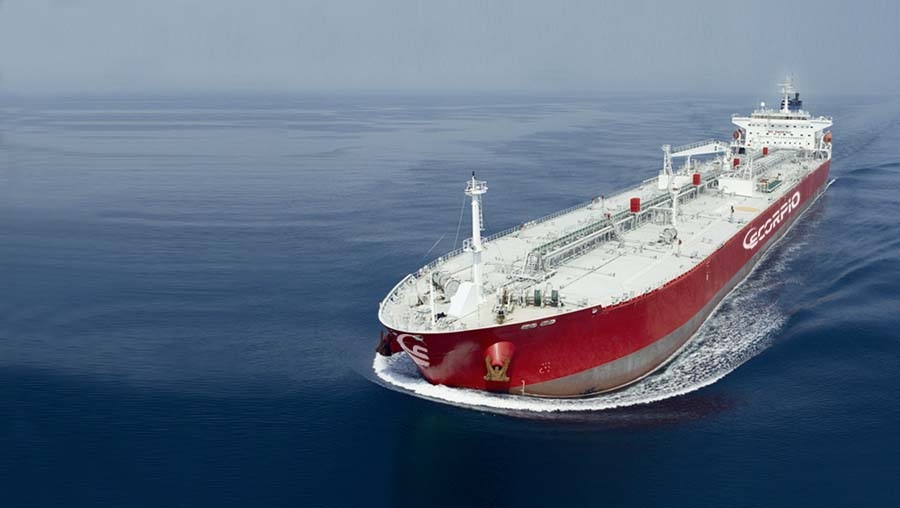
Scorpio Tankers Inc. Announces Fourth Quarter Net Loss of $76.3 Million and Declaration of a Quarterly Dividend
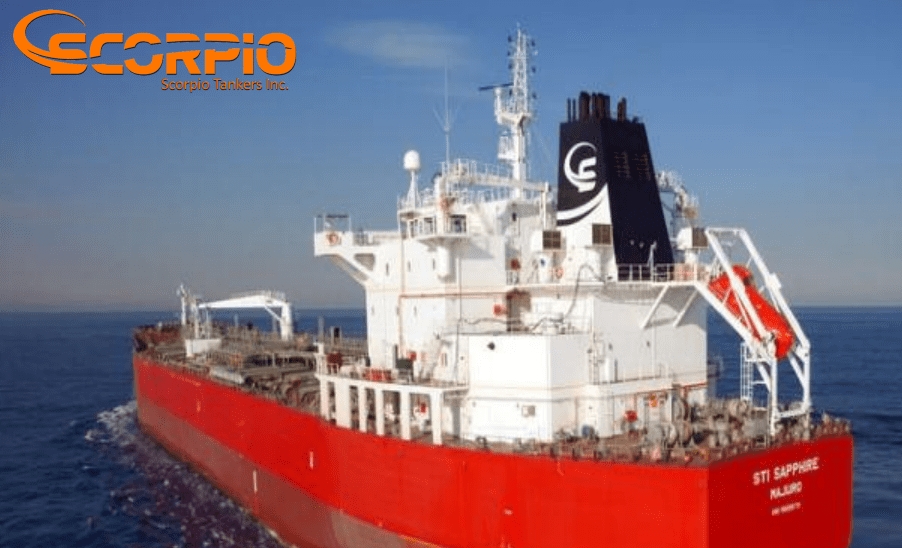
Scorpio Tankers Inc. reported its results for the three months and year ended December 31, 2020. The Company also announced that its Board of Directors has declared a quarterly cash dividend of $0.10 per share on the Company’s common stock.
Results for the three months ended December 31, 2020 and 2019
For the three months ended December 31, 2020, the Company had a net loss of $76.3 million, or $1.41 basic and diluted loss per share. For the three months ended December 31, 2020, the Company had an adjusted net loss (see Non-IFRS Measures section below) of $56.6 million, or $1.04 basic and diluted loss per share, which excludes from the net loss (i) $2.8 million, or $0.05 per basic and diluted share, of losses recorded on the extinguishment of debt during the period, which resulted from the refinancing of certain credit facilities and lease financing arrangements, and (ii) impairment charges of $16.8 million, or $0.31 per basic and diluted share.
For the three months ended December 31, 2019, the Company had net income of $12.0 million, or $0.22 basic and $0.21 diluted earnings per share. For the three months ended December 31, 2019, the Company’s adjusted net income (see Non-IFRS Measures section below) was $12.8 million, or $0.23 basic and diluted earnings per share, which excludes from net income a $0.7 million, or $0.01 per basic and diluted share, write-off of deferred financing fees.
Results for the year ended December 31, 2020 and 2019
For the year ended December 31, 2020, the Company had net income of $94.1 million, or $1.72 basic and $1.67 diluted earnings per share. For the year ended December 31, 2020, the Company had an adjusted net income (see Non-IFRS Measures section below) of $114.0 million, or $2.09 basic and $2.02 diluted earnings per share, which excludes from net income (i) a $1.0 million, or $0.02 per basic and diluted share, gain recorded on the Company’s repurchase of its Convertible Notes due 2022 during the third quarter of 2020, (ii) $4.1 million, or $0.07 per basic and diluted share, of losses recorded on the extinguishment of debt during the year, which resulted from the refinancing of certain credit facilities and lease financing arrangements, and (iii) impairment charges of $16.8 million, or $0.31 per basic and $0.30 per diluted share.
For the year ended December 31, 2019, the Company had a net loss of $48.5 million, or $0.97 basic and diluted loss per share. For the year ended December 31, 2019, the Company’s adjusted net loss (see Non-IFRS Measures section below) was $47.0 million, or $0.94 basic and diluted loss per share, which excludes from the net loss a $1.5 million, or $0.03 per basic and diluted share, write-off of deferred financing fees.
Declaration of Dividend
On February 17, 2021, the Company’s Board of Directors declared a quarterly cash dividend of $0.10 per common share, payable on or about March 15, 2021 to all shareholders of record as of March 2, 2021 (the record date). As of February 17, 2021, there were 58,093,147 common shares of the Company outstanding.
Summary of Fourth Quarter and Other Recent Significant Events
Below is a summary of the average daily Time Charter Equivalent (“TCE”) revenue (see Non-IFRS Measures section below) and duration of contracted pool voyages and time charters for the Company’s vessels thus far in the first quarter of 2021 as of the date hereof (See footnotes to “Other operating data” table below for the definition of daily TCE revenue):
Below is a summary of the average daily TCE revenue earned by the Company’s vessels in each of the pools during the fourth quarter of 2020:
• In January 2021, the Company entered into a note distribution agreement with B. Riley Securities, Inc., as sales agent, pursuant to which the Company may offer and sell, from time to time, up to $75.0 million of additional aggregate principal amount of its 7.00% Senior Unsecured Notes due 2025 (the “Senior Notes due 2025”). Since its inception, the Company has issued $7.6 million aggregate principal amount of Senior Notes due 2025 under the program, resulting in $7.4 million in aggregate net proceeds (net of underwriters commissions and expenses). See “Distribution Agreement of Additional Senior Notes due 2025” below for additional information.• The Company has committed financing to increase liquidity by approximately $20.8 million, consisting of:• $18.9 million from the refinancing of two vessels (after the repayment of existing debt).• $1.9 million from the drawdown of financing for a scrubber that has been previously paid for and installed (i.e. there are no additional payments needed in order to drawdown these funds).• All of the above funds are expected to be drawn down before the end of the first quarter of 2021.• The Company is also in discussions with financial institutions to further increase liquidity by up to $61.2 million in connection with the refinancing of 15 vessels.• In addition to the above, the Company has $20.0 million of additional liquidity available (after the repayment of existing debt) from previously announced financings that have been committed. These drawdowns are expected to occur at varying points in the future as these financings are tied to scrubber installations on the Company’s vessels.• The Company has $204.1 million in cash and cash equivalents as of February 17, 2021.• The Company recorded an aggregate impairment charge to certain of its vessels and goodwill of $16.8 million as of December 31, 2020. Under IFRS, impairment losses are calculated as the excess of a vessel’s carrying amount over its recoverable amount. Recoverable amount is the higher of an asset’s (i) fair value less costs to sell and (ii) value in use. Value in use is determined by discounting the estimated future cash flows of each vessel to their present value using a discount rate that reflects the risks specific to the asset. At December 31, 2020, the Company’s value in use calculations for certain of the MRs in its fleet were below their carrying amounts which resulted in an impairment charge of $14.2 million. The recoverable amount of goodwill is tested in a similar manner, and the Company’s testing of the carrying value of its goodwill relating to its LR1 reportable segment (which arose from the Company’s acquisition of Navig8 Product Tankers Inc. in 2017), resulted in an additional impairment charge of $2.6 million.
Distribution Agreement of Additional Senior Notes due 2025
In January 2021, the Company entered into a note distribution agreement (the “Distribution Agreement”) with B. Riley Securities, Inc., as sales agent (the “Agent”), under which the Company may offer and sell, from time to time, up to an additional $75.0 million aggregate principal amount of its Senior Notes due 2025 (the “Additional Notes”).
Any Additional Notes sold will be issued under the Indenture pursuant to which the Company previously issued $28.1 million aggregate principal amount of the Senior Notes due 2025 on May 29, 2020 (the “Initial Notes”). The Additional Notes will have the same terms as (other than date of issuance), form a single series of debt securities with and have the same CUSIP number and be fungible with, the Initial Notes immediately upon issuance, including for purposes of notices, consents, waivers, amendments and any other action permitted under the Indenture. The Senior Notes due 2025 are listed on the New York Stock Exchange (the “NYSE”) under the symbol “SBBA.”
Sales of the Additional Notes may be made over a period of time, and from time to time, through the Agent, in transactions involving an offering of the Senior Notes due 2025 into the existing trading market at prevailing market prices.
Since inception of this program, the Company has sold 302,566 Additional Notes for aggregate net proceeds (net of underwriting commissions and expenses) of $7.4 million.
Diluted Weighted Number of Shares
The computation of earnings or loss per share is determined by taking into consideration the potentially dilutive shares arising from (i) the Company’s equity incentive plan, and (ii) the Company’s Convertible Notes due 2022. These potentially dilutive shares are excluded from the computation of earnings or loss per share to the extent they are anti-dilutive.
The impact of the Convertible Notes due 2022 on earnings or loss per share is computed using the if-converted method. Under this method, the Company first includes the potentially dilutive impact of restricted shares issued under the Company’s equity incentive plan, and then assumes that its Convertible Notes due 2022, which were issued in May and July 2018, were converted into common shares at the beginning of each period. The if-converted method also assumes that the interest and non-cash amortization expense associated with these notes of $2.9 million and $13.9 million, during the three months and year ended December 31, 2020, respectively, were not incurred. Conversion is not assumed if the results of this calculation are anti-dilutive.
The Company’s basic weighted average number of shares outstanding were 54,265,313 for the three months ended December 31, 2020. There were 55,117,113 weighted average shares outstanding including the potentially dilutive impact of restricted shares, and 59,100,976 weighted average shares outstanding under the if-converted method. Since the Company was in a net loss position, the potentially dilutive shares arising from both the Company’s restricted shares, and under the if-converted method, were anti-dilutive for purposes of calculating the loss per share. Accordingly, basic weighted average shares outstanding were used to calculate both basic and diluted loss per share for this period.
The Company’s basic weighted average number of shares outstanding were 54,665,898 for the year ended December 31, 2020. There were 56,392,311 weighted average shares outstanding including the potentially dilutive impact of restricted shares, and 61,182,447 weighted average shares outstanding under the if-converted method. The calculation of diluted earnings per share for this period was calculated by including the potentially dilutive impact of restricted shares. The calculation of diluted earnings per share under the if-converted method was anti-dilutive on the basis that under this computation, the interest and non-cash amortization expense associated with these notes of $13.9 million is assumed to have not been incurred.
COVID-19
Since the beginning of calendar year 2020, the outbreak of COVID-19 has spread throughout the world and has resulted in numerous actions taken by governments and governmental agencies in an attempt to mitigate the spread of the virus. These measures have resulted in a significant reduction in global economic activity and volatility in the global financial and commodities markets (including oil).
Initially, the onset of the COVID-19 pandemic resulted in a sharp reduction of economic activity and a corresponding reduction in the global demand for oil and refined petroleum products. This period of time was marked by extreme volatility in the oil markets and the development of a steep contango in the prices of oil and refined petroleum products. Consequently, an abundance of arbitrage and floating storage opportunities opened up, which resulted in record increases in spot TCE rates during the second quarter of 2020. These market dynamics led to a build up of global oil and refined petroleum product inventories. In June 2020, the underlying oil markets stabilized and global economies began to recover, albeit at a slow pace. These conditions led to the gradual unwinding of excess inventories and thus a reduction in spot TCE rates. Spot TCE rates have remained subdued ever since, as the continuation of the unwinding of inventories, coupled with tepid demand for oil, have had an adverse impact on the demand for our vessels.
We expect that the COVID-19 virus will continue to cause volatility in the commodities markets. The scale and duration of these circumstances is unknowable but could have a material impact on our earnings, cash flow and financial condition in 2021. An estimate of the impact on our results of operations and financial condition cannot be made at this time.
$250 Million Securities Repurchase Program
In September 2020, the Company’s Board of Directors authorized a Securities Repurchase Program to purchase up to an aggregate of $250 million of the Company’s securities which, in addition to its common shares, currently consist of its Senior Notes due 2025 (NYSE: SBBA), which were issued in May 2020, and Convertible Notes due 2022, which were issued in May and July 2018. No securities have been repurchased under this program since its inception through the date of this press release.
Essar Shipping third quarter net loss widens to Rs 182 crore
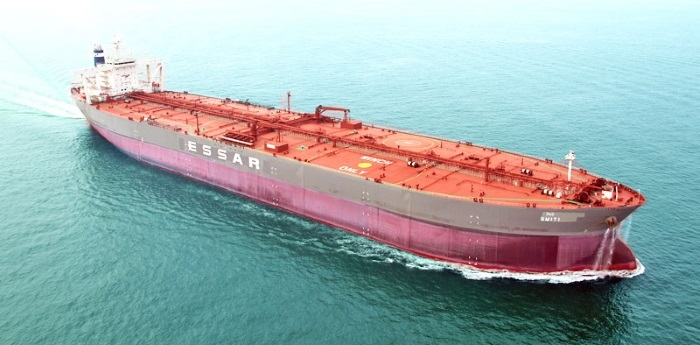
Essar Shipping on Monday said its consolidated net loss widened to Rs 181.88 crore in the third quarter ended December 2020.
The company had reported a loss of Rs 95.29 crore in the corresponding quarter a year ago, it said in a regulatory filing.
Its total income from operations in the December 2020 quarter declined to Rs 103.02 crore, against Rs 387.62 crore in the year-ago period.
The firm’s total expenses stood at Rs 284.85 crore, compared to Rs 469.54 crore in the same period of previous fiscal.
The company said its board has approved appointment of Sumit Agarwal as additional director (Non-executive) on the Board of the company with immediate effect.
The board also approved appointment of Natesan Srinivasan (Non-Executive – Independent Director) as Chairperson of the Board with immediate effect.
Source: PTI
Diana Shipping Inc. Reported Net Loss of $13.2 Million For the Third Quarter of 2020
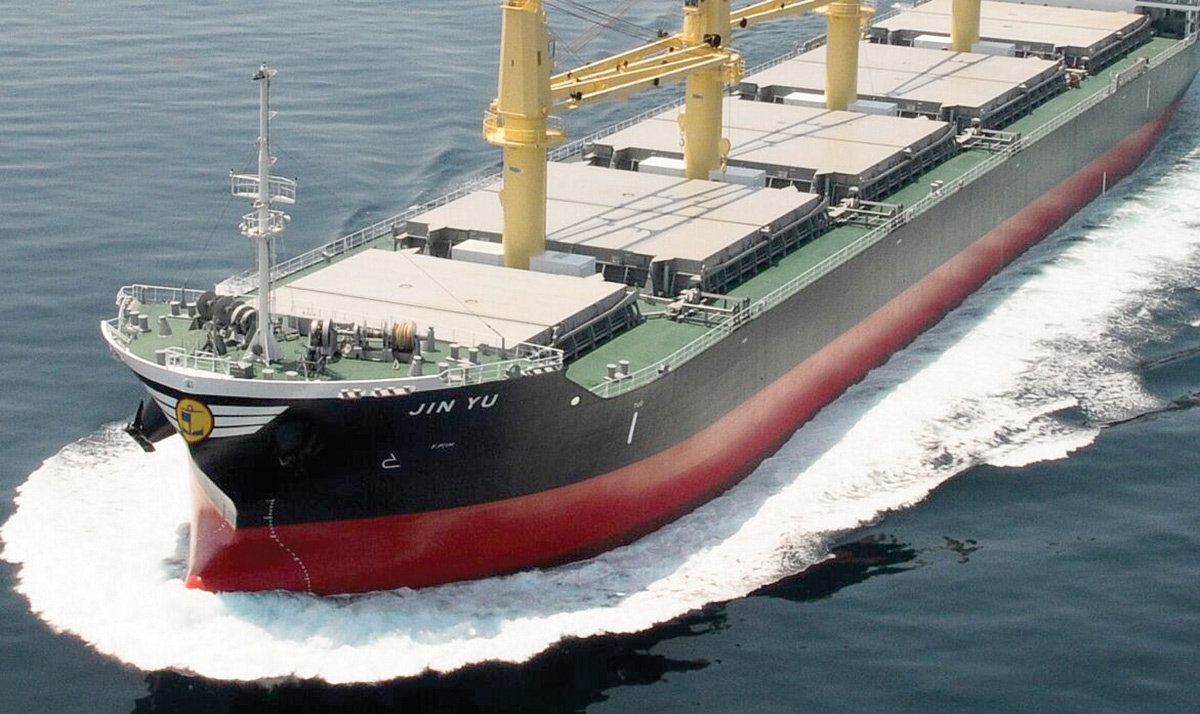
Diana Shipping Inc., a global shipping company specializing in the ownership of dry bulk vessels, reported a net loss of $13.2 million and a net loss attributed to common stockholders of $14.6 million for the third quarter of 2020, including a $6.8 million impairment loss which resulted from the agreement to sell the vessels Sideris G.S. and Coronis. This compares to net income of $1.8 million and net income attributed to common stockholders of $0.3 million reported in the third quarter of 2019.
Time charter revenues were $42.3 million for the third quarter of 2020, compared to $53.5 million for the same period of 2019. The decrease in time charter revenues was mainly due to the decrease in ownership days resulting from the sale of six vessels in 2019 and two vessels in 2020 and also due to decreased average time charter rates that the Company achieved for its vessels during the quarter.
Net loss for the nine months ended September 30, 2020 amounted to $126.8 million and net loss attributed to common stockholders amounted to $131.1 million, including a $102.5 million impairment loss and $1.1 million loss on sale of vessels. This compares to net income of $3.4 million and net loss attributed to common stockholders of $0.9 million for the same period of 2019 including a $7.5 million impairment loss and $2.8 million loss on sale of vessels. Time charter revenues were $127.1 million for the nine months ended September 30, 2020, compared to $169.2 million for the same period of 2019..
EuroDry Ltd. Reports Nine-Month Net Loss of $5.6 Million
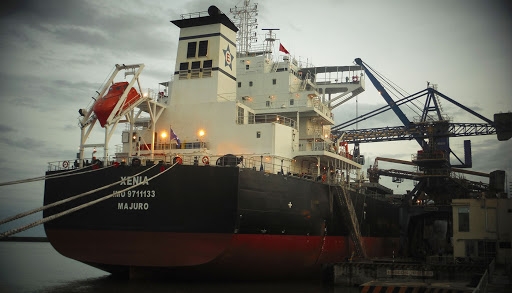
EuroDry Ltd., an owner and operator of drybulk vessels and provider of seaborne transportation for drybulk cargoes, announced yesterday its results for the three and nine-month periods ended September 30, 2020.
Third Quarter 2020 Highlights:
• Total net revenues of $6.8 million. Net income of $0.5 million; net income attributable to common shareholders (after a $0.4 million dividend on Series B Preferred Shares) of $0.1 million or $0.06 earnings per share basic and diluted. Adjusted net income attributable to common shareholders1 for the period was $0.1 million or $0.05 adjusted earnings per share basic and diluted.
• Adjusted EBITDA1 was $2.8 million.
• An average of 7.0 vessels were owned and operated during the third quarter of 2020 earning an average time charter equivalent rate of $11,873 per day.
• The Company declared a dividend of $0.4 million on its Series B Preferred Shares. The dividend will be paid in-kind by issuing additional Series B Preferred Shares.
Nine Months 2020 Highlights:
• Total net revenues of $15.9 million. Net loss of $5.6 million; net loss attributable to common shareholders (after a $1.2 million dividend on Series B Preferred Shares) of $6.7 million or $2.97 loss per share basic and diluted. Adjusted net loss attributable to common shareholders1 for the period was $6.1 million or $2.70 adjusted loss per share basic and diluted.
• Adjusted EBITDA1 was $1.8 million.
• An average of 7.0 vessels were owned and operated during the first half of 2020 earning an average time charter equivalent rate of $8,927 per day.
Aristides Pittas, Chairman and CEO of EuroDry commented: “During the third quarter of 2020, EuroDry benefited from gradually improving charter markets as a result of the re-opening of most economies after the pandemic-related lockdowns. Since the beginning of October and during early November, the market rates have given up some of the gains, but they remain at satisfactory levels given the increased economic uncertainty due to the second wave of the pandemic and renewed economic lockdowns, especially, in Europe.
Thus, we expect that the drybulk markets will be affected in the near term by the state of the world economies as influenced by the COVID-19 pandemic, and, in the medium term, by the low fleet growth due to historically low orderbook. Consequently, we anticipate that trade developments will be the key factor influencing the rates our vessels will earn.
To better exploit the above market trends, we are focused on reducing our capital costs and creating additional liquidity via selected debt refinancings and repayment of more expensive funding instruments in our balance sheet, and using any excess funds to renew or expand our fleet. We also continue to evaluate opportunities of using our public platform to consolidate other fleets as we believe this can offer significant appreciation potential to our shareholders and flexibility to partners joining our public platform.”
Tasos Aslidis, Chief Financial Officer of EuroDry commented: “Comparing our results for the third quarter of 2020 with the same period of 2019, our net revenues decreased by about $0.9 million, due to the lower time charter equivalent rates our vessels earned as compared to the third quarter of 2019. Operating expenses, including management fees and general and administrative expenses increased by approximately $0.4 million as compared to the third quarter of 2019. This increase is mainly due to increased supply of stores and spare parts for our vessels in 2020 compared to 2019 and increased crewing costs, the latter resulting from difficulties in crew rotation due to COVID-19 related restrictions. Still, we believe that we maintain one of the lowest operating cost structures amongst the public shipping companies which is one of our competitive advantages.
Adjusted EBITDA during the third quarter of 2020 was $2.8 million compared to $2.2 million achieved for the third quarter of last year. Finally, as of September 30, 2020, our outstanding debt (excluding the unamortized loan fees) is about $52.1 million versus restricted and unrestricted cash of about $3.7 million.”
1Adjusted EBITDA, Adjusted net income/(loss) and Adjusted earnings/(loss) per share are not recognized measurements under US GAAP (GAAP) and should not be used in isolation or as a substitute for EuroDry’s financial results presented in accordance with GAAP. Refer to a subsequent section of the Press Release for the definitions and reconciliation of these measurements to the most directly comparable financial measures calculated and presented in accordance with GAAP.
Third Quarter 2020 Results:
For the third quarter of 2020, the Company reported total net revenues of $6.8 million representing a 11.3% decrease over total net revenues of $7.7 million during the third quarter of 2019 which was the result of the lower time charter rates our vessels earned in the third quarter of 2020 compared to the corresponding period of 2019. The Company reported net income for the period of $0.5 million and net income attributable to common shareholders of $0.1 million, as compared to a net loss of $0.4 million and a net loss attributable to common shareholders of $0.8 million for the same period of 2019. For the third quarter of 2020, a gain on bunkers resulted in positive voyage expenses of $0.4 million for the period as compared to voyage expenses of $0.7 million in the same period of 2019. Losses on derivatives of $0.2 million and drydocking expenses of $0.1 million contributed to the result for the quarter as compared to losses on derivatives of $0.6 million and drydocking expenses of $0.7 million during the third quarter of 2019. Depreciation expenses for the third quarter of 2020 amounted to $1.7 million compared to $1.6 million for the same period of 2019.
Interest and other financing costs for the third quarter of 2020 amounted to $0.6 million, compared to $0.8 million for the same period of 2019. Interest during the second quarter of 2020 was lower due to the lower average outstanding debt and the decreased Libor rates of our loans during the period as compared to the same period of last year. For the three months ended September 30, 2020, the Company recognized a marginal loss on three interest rate swaps and a $0.2 million realized loss on FFA contracts as compared to a loss on derivatives of $0.6 million for the same period of 2019, comprising of a $0.5 million loss on FFA contracts and a $0.1 million loss on one interest rate swap.
On average, 7.0 vessels were owned and operated during the third quarter of 2020 earning an average time charter equivalent rate of $11,873 per day compared to 7.0 vessels in the same period of 2019 earning on average $12,088 per day.
Adjusted EBITDA for the third quarter of 2020 was $2.8 million compared to $2.2 million achieved during the third quarter of 2019.
Basic and diluted earnings per share attributable to common shareholders for the third quarter of 2020 was $0.06 calculated on 2,279,730 basic and diluted weighted average number of shares outstanding, compared to basic and diluted earnings per share of $0.35 for the third quarter of 2019, calculated on 2,254,830 basic and diluted weighted average number of shares outstanding.
Excluding the effect on the income attributable to common shareholders for the quarter of the unrealized loss / (gain) on derivatives, the adjusted earnings per share attributable to common shareholders for the quarter ended September 30, 2020 would have been $0.05 compared to adjusted loss of $0.26 per share basic and diluted for the quarter ended September 30, 2019. Usually, security analysts do not include the above item in their published estimates of earnings per share.
First Nine Months 2020 Results:
For the first nine months of 2020, the Company reported total net revenues of $15.9 million representing a 19.1% decrease over total net revenues of $19.6 million during the first nine months of 2019, as a result of the lower time charter rates our vessels earned in the first nine months of 2020 compared to the same period of 2019. The Company reported net loss for the period of $5.6 million and net loss attributable to common shareholders of $6.7 million, as compared to a net loss of $1.4 million and a net loss attributable to common shareholders of $2.9 million, for the first nine months of 2019. Vessel operating expenses were $8.7 million for the first nine months of 2020 as compared to $8.0 million for the first nine months of 2019 due to increased supply of stores and spare parts for our vessels in 2020 compared to 2019 and increased crewing costs resulting from difficulties in crew rotation due to COVID-19 related restrictions. Depreciation expenses for the first nine months of 2020 were $4.9 million compared to $4.8 million during the same period of 2019.
Interest and other financing costs for the first nine months of 2020 amounted to $1.9 million compared to $2.7 million for the same period of 2019. This decrease is due to the lower average outstanding debt and the decreased Libor rates of our loans in the current period compared to the same period of 2019. For the nine months ended September 30, 2020, the Company recognized a $0.5 million loss on three interest rate swaps and a $0.3 million loss on FFA contracts as compared to a gain on derivatives of $0.3 million for the same period of 2019, comprising of a $0.6 million gain on FFA contracts and a $0.3 million loss on one interest rate swap.
On average, 7.0 vessels were owned and operated during the first nine months of 2020 earning an average time charter equivalent rate of $8,927 per day compared to 7.0 vessels in the same period of 2019 earning on average $10,750 per day. In the first nine months of 2020, two vessels underwent special survey for a total cost of $1.8 million, as compared to two vessels that underwent special survey in the first nine months of 2019 for a total cost of $1.6 million.
Adjusted EBITDA for the first nine months of 2020 was $1.8 million compared to $6.5 million achieved during the first nine months of 2019.
Basic and diluted loss per share attributable to common shareholders for the first nine months of 2020 was $2.97, calculated on 2,271,542 basic and diluted weighted average number of shares outstanding compared to $1.31 basic and diluted loss per share for the first nine months of 2019, calculated on 2,248,182 basic and diluted weighted average number of shares outstanding.
Excluding the effect on the loss attributable to common shareholders for the first nine months of the year of the unrealized loss on derivatives, the adjusted loss per share attributable to common shareholders for the nine-month period ended September 30, 2020 would have been $2.70 compared to a loss of $1.13 per share basic and diluted for the same period in 2019. As previously mentioned, usually, security analysts do not include the above item in their published estimates of earnings per share.
View Full Report
ABN AMRO reports net loss of EUR 395 million in Q1 2020
ABN AMRO reports net loss of EUR 395 million in Q1 2020
Net loss marked by high impairments due to Covid-19, oil prices and market developments
Supporting clients in response to Covid-19 crisis; several measures implemented
Services maintained through digital offering and video banking while working from home
Strong operational performance; net interest income held up well and fees were up
Costs were lower, benefiting from continued cost management
Strong capital position; CET1 ratio of 17.3% under Basel III and around 14% under Basel IV
Review underway to ensure we deliver on our strategic pillars; update after the summer
Priorities include navigating Covid-19 crisis, CIB review and AML activities
Robert Swaak, CEO, comments:
“Covid-19 is first and foremost a crisis of personal health, but it is also having a significant impact on the economy. In line with our purpose ‘Banking for better, for generations to come’, we are supporting our clients wherever possible. Our strategic investments in IT and digital services in the past years have enabled us to continue serving clients without interruption. We are in close dialogue with our clients and have been implementing several support measures, including automatic deferral of interest and principal payments.
At the FY 2019 results, we announced a review of Corporate & Institutional Banking’s (CIB) activities. Although in the past few years some progress has been made in improving returns, this has not resulted in the required profitability. Also, the risk profile of parts of CIB is not fully aligned with that of the bank. The ongoing CIB review is a short-term priority for me and we will share the outcome in August.
My priorities in the coming period, in addition to the CIB review, are to navigate the Covid-19 crisis and to focus on anti-money laundering activities (AML). In addition, we will review our strategy to ensure we deliver on our three strategic pillars going forward and will provide an update after the summer, also addressing operational efficiency, financial targets and capital.
Impairments were very high (EUR 1.1 billion) due to two exceptional client files and significant upfront collective provisioning for sectors immediately impacted by Covid-19 and oil prices. As a result, we reported a net loss of EUR 395 million over the first quarter. Net interest income held up in the current environment, fees were higher and costs were lower, benefiting from continued cost management. The resulting ROE was a disappointing -8.7% and the cost/income ratio was 67.6%. Our capital position remains strong, with a Basel III CET1 ratio of 17.3% and a Basel IV CET1 ratio of around 14%, comfortably above the regulatory minimum requirements.
It is a challenging, yet exciting time to start as the CEO of ABN AMRO. ABN AMRO is a well-recognised player in Dutch society, with a strong brand and a solid capital and liquidity position. The bank has strong fundamentals and the priorities we need to address are clear. Building on our strategy and strong market positions, I am determined to deliver results in the years to come.”
Scorpio Bulkers Inc. Reports First Quarter Net Loss of $124.7 Million
Scorpio Bulkers Inc., reported its results for the three months ended March 31, 2020.
The Company also announced that on May 11, 2020, its Board of Directors declared a quarterly cash dividend of $0.05 per share on the Company’s common shares.
Share and per share results included herein have been retroactively adjusted to reflect the one-for-ten reverse stock split of the Company’s common shares, which took effect on April 7, 2020.
Results for the Three Months Ended March 31, 2020 and 2019
For the first quarter of 2020, the Company’s GAAP net loss was $124.7 million, or $18.12 per diluted share, including:
a non-cash loss of approximately $89.1 million and cash dividend income of $0.4 million, or $12.88 loss per diluted share, from the Company’s equity investment in Scorpio Tankers Inc.; and
a write-down of assets held for sale of approximately $17.0 million, or $2.47 per diluted share, related to the classification of two Ultramax vessels and one Kamsarmax vessel as held for sale.
Emanuele A. Lauro, Chairman and Chief Executive Officer, commented “Our first priority is to ensure the safety of our seafarers and shore staff during the COVID-19 pandemic. Beyond that, we have strengthened our balance sheet by vessel sales and sale leasebacks, we have reduced our capital expenditures by adjusting our scrubber installation schedule, we have reduced our quarterly cash dividend, and we have sold a portion of our shareholding in Scorpio Tankers for net proceeds amounting to $42.7 million. At present, we do not expect to sell any more vessels beyond those assets previously announced as held for sale. We expect to retain our remaining holding of 2.16 million shares in Scorpio Tankers. While the dry bulk market is weak at present, we are confident that rates will strengthen over the remainder of the year and have not hedged or time chartered any of our forward days. We are optimistic about the future of our Company.”
For the same period in 2019, the Company’s GAAP net loss was $3.5 million, or $0.51 per diluted share. These results include a non-cash gain of approximately $15.0 million and cash dividend income of $0.5 million, or $2.30 per diluted share, from the Company’s equity investment in Scorpio Tankers Inc. and a write-down of assets held for sale of approximately $7.5 million, or $1.11 per diluted share.
Total vessel revenues for the first quarter of 2020 were $40.8 million, compared to $50.4 million for the same period in 2019. Earnings before interest, taxes, depreciation and amortization (“EBITDA”) for the first quarter of 2020 was a loss of $100.1 million and EBITDA for the first quarter of 2019 was $25.3 million, respectively (see Non-GAAP Financial Measures below).
For the first quarter of 2020, the Company’s adjusted net loss was $107.7 million, or $15.65 adjusted per diluted share, which excludes the impact of the write-down of assets held for sale of approximately $17.0 million relating to the classification of two Ultramax vessels and one Kamsarmax vessel as held for sale. Adjusted EBITDA for the first quarter of 2020 was a loss of $83.1 million (see Non-GAAP Financial Measures below).
For the first quarter of 2019, the Company’s adjusted net income was $4.0 million, or $0.60 adjusted per diluted share, which excludes the impact of the write-down of assets held for sale of $7.5 million. Adjusted EBITDA for the first quarter of 2019 was $32.8 million (see Non-GAAP Financial Measures below).
TCE Revenue
TCE Revenue Earned during the First Quarter of 2020 (see Non-GAAP Financial Measures)
Our Kamsarmax fleet (which includes both scrubber fitted and non-scrubber fitted vessels) earned an average of $9,316 revenue per day.
Our Ultramax fleet (which includes both scrubber fitted and non-scrubber fitted vessels) earned an average of $8,713 revenue per day.
Voyages Fixed thus far for the Second Quarter of 2020, as of the date hereof
Kamsarmax fleet (which includes both scrubber fitted and non-scrubber fitted vessels): approximately $7,149 revenue per day on average for 64% of the days. Ultramax fleet (which includes both scrubber fitted and non-scrubber fitted vessels): approximately $4,076 revenue per day on average for 69% of the days.
Cash and Cash Equivalents
As of May 8, 2020, the Company had approximately $100.8 million in cash and cash equivalents, excluding proceeds from the sale of 0.5 million shares of Scorpio Tankers Inc. for which the trades are expected to settle on May 12, 2020.
Recent Significant Events
COVID-19
The outbreak of the novel COVID-19 virus (“coronavirus”) that originated in China in December 2019 and that has spread to most developed nations of the world has resulted in the implementation of numerous actions taken by governments and governmental agencies in an attempt to control or mitigate the spread of the virus. These measures have resulted in a significant reduction in global economic activity and extreme volatility in the global financial markets. A significant reduction in manufacturing and other economic activities has and is expected to continue to have a materially adverse impact on the global demand for raw materials, coal and other bulk cargoes that our customers transport on our vessels. This significant decline in the demand for dry bulk tonnage may materially and adversely impact our ability to profitably charter our vessels. When these measures and the resulting economic impact will end and what the long-term impact of such measures on the global economy will be are not known at this time. As a result, the extent to which Covid-19 will impact the Company’s results of operations and financial condition will depend on future developments, which are highly uncertain and cannot be predicted.
Quarterly Cash Dividend
In the first quarter of 2020, the Company’s Board of Directors declared and the Company paid a quarterly cash dividend of $0.20 per share totaling approximately $1.5 million.
On May 11, 2020, the Company’s Board of Directors declared a quarterly cash dividend of $0.05 per share, payable on or about June 30, 2020, to all shareholders of record as of June 15, 2020. As of May 11, 2020, 7,247,580 shares were outstanding.
Reverse Stock Split
In April 2020, the Company effected a one-for-ten reverse stock split of the Company’s common shares, par value $0.01 per share, reducing the number of outstanding common shares from approximately 72.5 million shares to approximately 7.2 million shares. The Company’s authorized common shares was approximately 31.9 million as of April 7, 2020.
IMO 2020
In April 2020, the Company reached an agreement with its counterparties to postpone the delivery of exhaust gas cleaning systems, or scrubbers, on thirteen of its vessels until at least 2021 at no additional cost to the Company. This is expected to delay the payment of between $20.0 million and $25.0 million of expenditures until 2021 at the earliest. Please see the revised estimated installation and payment schedules below.
Investment in Scorpio Tankers Inc.
In May 2020, the Company sold 2.25 million shares of Scorpio Tankers Inc. (NYSE: STNG) for aggregate net proceeds of approximately $42.7 million, of which the trades of 0.5 million shares are expected to settle on May 12, 2020. Following the completion of these sales, the Company will continue to own in aggregate approximately 2.16 million common shares of Scorpio Tankers Inc.
Vessel Sales
In March 2020, the Company entered into agreements with unaffiliated third parties to sell the SBI Jaguar and SBI Taurus, 2014 and 2015 built Ultramax vessels, respectively, and the SBI Bolero, a 2015 built Kamsarmax vessel, for approximately $53.5 million in aggregate. Delivery of the SBI Jaguar and SBI Taurus to their buyers took place in April 2020, while the delivery of the SBI Bolero is expected to take place in May 2020.
It is estimated that the Company’s liquidity will increase by approximately $18.3 million upon the completion of all three sales and after the repayment of associated outstanding debt. The Company recorded a loss of approximately $17.0 million in the first quarter of 2020 related to the sales and expects to write-off $0.3 million of deferred finance charges upon the repayment of the related debt in the second quarter of 2020.
$67.3 Million Lease Financing
During March 2020 and April 2020, the Company closed the transactions to sell and leaseback two Ultramax vessels (SBI Cronos and SBI Achilles) and one Kamsarmax vessel (SBI Lynx) to Ocean Yield ASA. As part of the transaction the Company agreed to bareboat charter-in the SBI Cronos for a period of nine years, the SBI Achilles for a period of ten years and the SBI Lynx for a period of 12 years. The Company has several purchase options during the charter period of each agreement, as well as a purchase option for each vessel upon the expiration of the relevant agreement.
$12.5 Million Credit Facility
This credit facility was repaid in full and terminated upon the closing of the sale and leaseback transaction concerning the SBI Cronos under the $67.3 Million Lease Financing in March 2020.
$27.3 Million Credit Facility
This credit facility was repaid in full and terminated upon the closing of the sale and leaseback transaction concerning the SBI Achilles under $67.3 Million Lease Financing in March 2020.
$12.8 Million Credit Facility
This credit facility was repaid in full and terminated upon the closing of the sale and leaseback transaction concerning the SBI Lynx under $67.3 Million Lease Financing in April 2020.
$38.7 Million Credit Facility
This credit facility was repaid in full and terminated in April 2020 due to the sale of the SBI Jaguar.
$85.5 Million Credit Facility
The Company repaid approximately $11.1 million of this credit facility in April 2020 due to the sale of the SBI Taurus.
View Full Press Release here