
EIB and UNICEF partner to help improve access to quality education and protect children from climate change
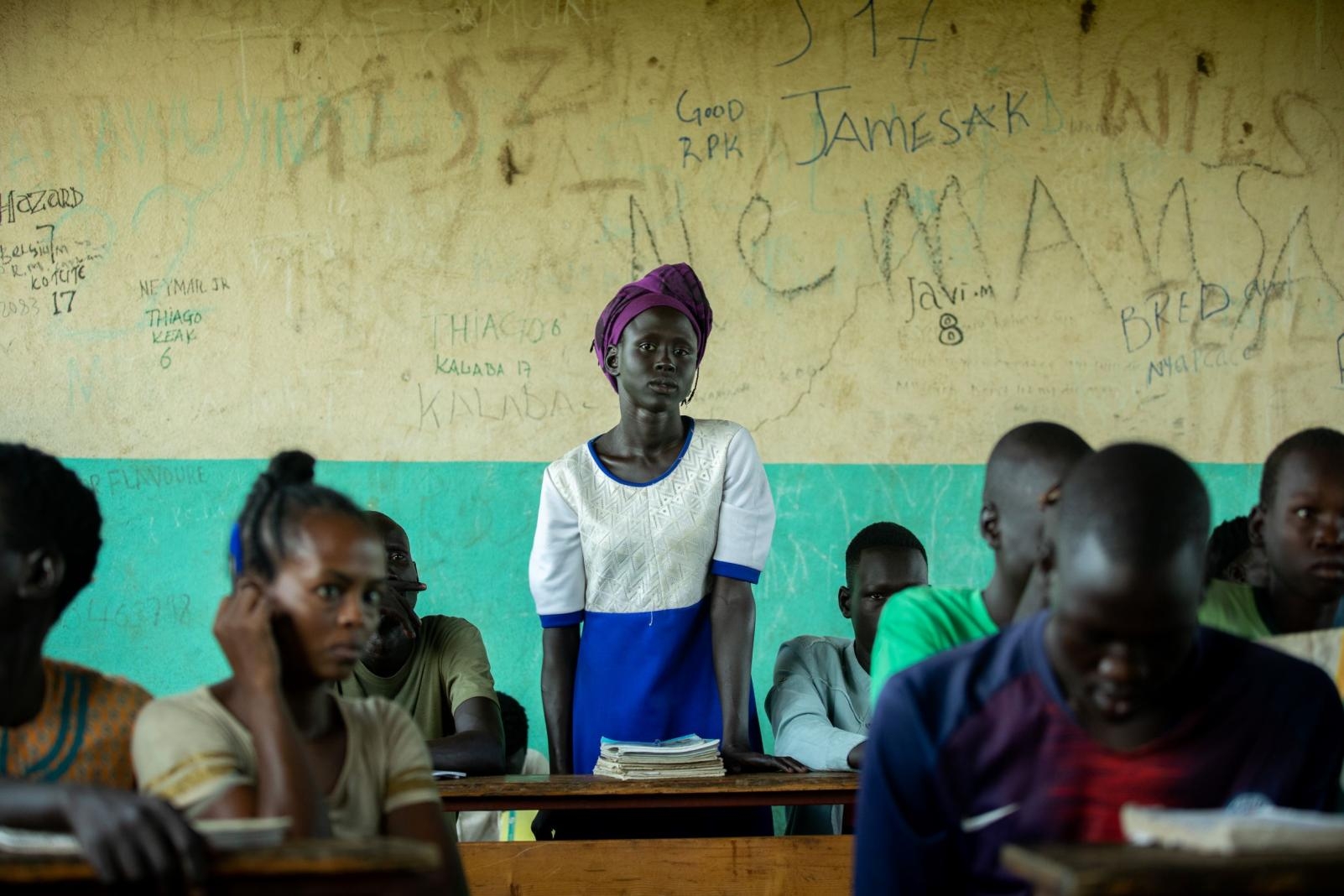
The European Investment Bank (EIB) and UNICEF today announced a new partnership aimed at increasing access to quality education and reducing the impact of climate change on children.
Under a Memorandum of Understanding (MoU) signed by EIB Group President Werner Hoyer and UNICEF Executive Director Henrietta Fore, the two institutions committed to jointly investing in quality education and skills training for the most vulnerable children. EIB and UNICEF will also scale-up community-based climate adaptation initiatives in schools and health facilities.
Nicolas Schmit, Commissioner for Jobs and Social Rights, said: “The social agenda of this European Commission aims for a more certain future for our children and young people. We want to protect them from poverty and make sure they have access to the skills and training they need to navigate the green and digital transitions. Nobody should be left behind. I welcome today’s agreement between the EIB and UNICEF which captures that very same ethos.”
To improve children’s climate resilience and access to health services, quality education and safe water, EIB and UNICEF will promote financial innovation including impact investments aimed at boosting financing for development across private and public actors.
The two institutions will also look to help vulnerable groups gain better access to services around the EIB’s sustainable infrastructure investments, such as those in water, sanitation and hygiene projects. Pilot projects will soon be initiated in countries across Europe, Central Asia and Southern and Eastern Africa.“Supporting education, providing decent jobs and tackling climate change are of great importance for young people globally. These are also strategic priorities of the EU Bank”, said EIB Group President Werner Hoyer. He continued “Leveraging the well-known expertise and operational capacity of UNICEF, the EU Bank will contribute to improve inclusive and equitable quality education for children and young people worldwide and promote lifelong learning opportunities”.
“Around 10 million young people reach working age every month and must be equipped with the foundational skills they need to succeed,” said UNICEF Executive Director Henrietta Fore. “By working with the EIB we can help make sure that children and young people have the digital, business and entrepreneurial skills needed to thrive in today’s market.”
Piraeus Bank commits to collective action on climate change, along with other banks
Piraeus Bank remains a pioneer in the banking sector, and following the signing of the Principles for Responsible Banking in New York, it now participates in the “Collective Commitment to Climate Action”, along with other banks that have signed the Principles. The 31 banks from around the world, participating in this joint action and representing total assets of USD 13 trillion, pledged to harmonize their portfolios and boost the financing for sustainable development required to limit the rising of average global temperature close to 1.5 degrees Celsius.
Piraeus Bank’s CEO Mr. Christos Megalou, stated that “Just as Piraeus Bank has played a leading role in shaping the Principles and their implementation framework, it will now lead in terms of applying them. We will integrate the Principles into our policies, set goals, and participate actively in the “Collective Commitment to Climate Action”, strengthening the Bank’s positive impacts on the environment and society”.
These 31 UNEP FI member banks, commit to create and promote products and services, as well as develop relationships with all stakeholders, and contribute to the necessary transition of the economy, so that it no longer burdens climate.
Specifically, the Banks commit to:
– Focus their efforts on the most carbon-intensive and climate-vulnerable sectors within their portfolios- Engage and work with clients on their transition to a low-carbon, climate-resilient economy- Work together for developing know-how and methodologies to measure climate targets- Engage with governments, scientists and other entities, to create roadmaps on achieving carbon emissions reduction in different economic sectors- Set and publish sector-specific targets for portfolio alignment, no later than 3 years’ time since signing- Announce the measures to be taken from each bank, in order to succeed in transitioning to a low-carbon economy, since the first year of implementation- Disclose all progress related to achieving the set targets.