
Ping An Unveils “Ancient Tree Guardian Action” at UN Climate Change Conference (COP30)

Ping An Insurance (Group) Company of China, Ltd presented its biodiversity protection project, “Ancient Tree Guardian Action”, at the 30th session of the Conference of the Parties (COP 30) to the United Nations Framework Convention on Climate Change (UNFCCC), held in Belém, Brazil. This initiative deeply integrates insurance coverage, technology, and social welfare to establish a sustainable protection system for ancient and notable trees in China, demonstrating the innovative efforts of a Chinese enterprise in tackling climate change and preserving biodiversity.
Innovative Approaches to Overcome Challenges in Ancient Tree Conservation
China harbors a rich heritage of ancient trees, with around 5.08 million specimens recognized for their ecological, historical, and scientific significance. These venerable trees, however, face serious threats from climate change, pest infestations, and insufficient maintenance funding. Since ancient trees are widely scattered and their value is difficult to quantify, insurance companies must dedicate extensive resources to individual inspections and ongoing monitoring. This demand places a heavy burden on underwriting capabilities, making it hard for traditional commercial insurance models to offer comprehensive protection.
To tackle this challenge, Ping An introduced an innovative “Insurance + Technology” model, integrating cutting-edge technologies such as big data, artificial intelligence, and the Internet of Things (IoT). This model combines assessments of ancient tree growth, geographical location, and historical risk data to enable multidimensional evaluation. Building on this, Ping An launched Guangdong’s first ancient-tree insurance in 2023, creating a full-chain model “pre-disaster prevention, in-disaster emergency response, and post-disaster compensation” mechanism. As of October 2025, the project has provided over RMB 700 million (approximately USD 98 million) in risk protection for more than 55,000 ancient and notable trees nationwide.
Shifting From Post-Disaster Compensation to Pre-Disaster Prevention through Technology-Enabled Protection
The application of technology is a key characteristic of Ping An’s ancient tree protection program. Ping An uses IoT, environmental sensors, and wireless communications to monitor crucial indicators such as soil moisture, air quality, and tree health, 24/7. All data is uploaded to the cloud in real time, where an intelligent management system enables visualization and dynamic alerts, providing caretakers with precise, science-based guidance for tree maintenance.
Ping An has also developed its proprietary “EagleX” system, which integrates remote sensing, meteorological monitoring, big data, and AI analytics to track extreme weather, floods, typhoons, and other natural hazards in real time. The system issues timely alerts when major risks are detected, extending insurance services from post-disaster compensation to pre-disaster prevention and significantly reducing the likelihood of damage to ancient trees.
Empowering Communities and Fostering Green Economic Growth Through Public Initiatives
Beyond providing financial security, Ping An actively engages in a range of public welfare activities, including educational programs on ancient trees and photography exhibitions, to raise public awareness of biodiversity conservation. In 2025, Ping An launched an eco-tourism campaign titled “Travel with Ancient Trees,” creating distinctive tourism routes centered on ancient trees. This initiative was promoted to 250 million registered users through Ping An’s “Auto Owner” app. While spreading ecological knowledge, the campaign also stimulates the growth of local green economies.
Promoting Biodiversity Conservation Through Green Finance
Ping An’s “Ancient Tree Guardian Action” forms a vital part of its green finance strategy. In addition to safeguarding ancient trees, Ping An provides insurance coverage for carbon-sequestering ecosystems, including forests, grasslands, wetlands, and marine environments. By the end of 2024, Ping An’s Carbon Sink Insurance had expanded to cover 18 provinces and municipalities nationwide, providing robust financial backing for ecological preservation.
In recent years, the Group has expanded both the depth and breadth of its green finance initiatives, advancing coordinated efforts across green insurance, banking, and investment. As of June 30, 2025, Ping An’s green investments totaled RMB 144.482 billion (approximately USD 20 billion), green loan balances reached RMB 251.746 billion (around USD 35.3 billion), and premium income from green insurance for the first three quarters amounted to RMB 55.279 billion (about USD 7.7 billion).
Looking ahead, Chen Yao, General Manager of the Brand Department at Ping An Group, stated: “Ping An will persist in promoting innovation within green finance. The Group aims to create a wider range of green insurance and investment products, collaborating with international partners to support sustainable development and the preservation of our environment.”
PPA S.A.: Port of Piraeus: A pioneer in raising awareness and taking action for Climate Change
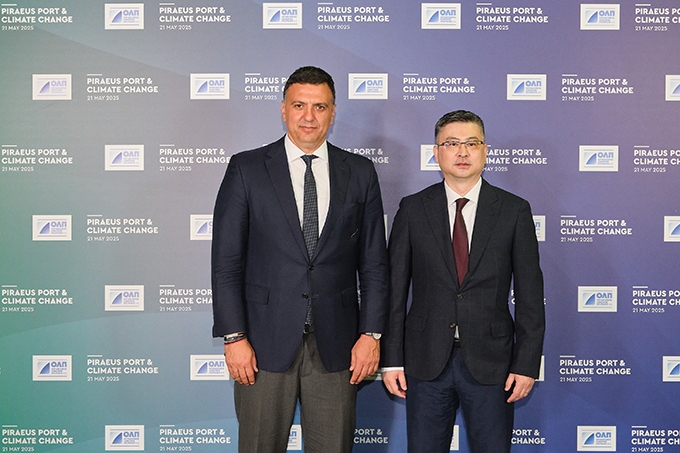
The tangible and immediate response of the Port of Piraeus to the major challenge of Climate Change was presented at a conference titled “The Port of Piraeus and Climate Change,” held yesterday at the PPA’s Stone Warehouse.
In the presence of representatives from the Government, Local Authorities, major stakeholders of the maritime sector and the scientific community, the Management of PPA S.A. presented the first comprehensive study of its kind in Greece, aiming at the resilience and sustainability of port infrastructure, as well as the actions that make the Port of Piraeus a pioneer in climate awareness and preparedness. The study was developed in cooperation with a consulting – research company and a specialized team from the Academy of Athens.
The Minister of Maritime Affairs and Insular Policy, Vassilis Kikilias, in his remarks said: “I know the consequences of the climate crisis – I experienced them in the harshest way in our country over the past few years. The entire Mediterranean basin is also experiencing these consequences, and unfortunately, this phenomenon is expanding — both across more sectors and more countries — causing significant problems. First and foremost, in the safety of citizens; secondly, in their infrastructure and property; and thirdly, in critical infrastructure such as our ports. I want to say that, in our view, the impossible must become possible: we must create a stronger framework for both protection and forecasting, based on these steps, so that we can rise to the occasion in the face of climate change”.
Additionally, the Deputy Minister for Climate Crisis and Civil Protection, Kostas Katsafados, stated that: “For the first time in Greece, one of Europe’s most important ports -the Port of Piraeus- is undertaking a holistic and scientifically substantiated assessment of the impacts of climate change and that the State supports efforts towards this direction”.
The Mayor of Piraeus, Yiannis Moralis, the Mayor of Perama, Giannis Lagoudakos, the Deputy Mayor of Piraeus, Dimitris Karydis, the Deputy Regional Governor of Piraeus, Stavroula Antonakou and Alexandros Koulidis, an official from the Ministry of Environment also delivered their greetings.
The actions that were necessary in order for the Port of Piraeus to adapt to Climate Change were presented by the Deputy CEO of PPA S.A., Panagiotis Tsonis. As he noted, “ports are called upon and are obligated to play a leading role in addressing climate action.”
The renowned Physicist, Secretary General of the Academy of Athens, and National Ambassador for Climate Change, Professor Christos Zerefos, spoke on the challenge of Climate Change. He emphasized that “the climate crisis is unfolding at a pace faster than previously estimated, and an increase in extreme weather phenomena is expected “.
The CEO of PPA S.A., Su Xudong welcomed all the attendees and commented that “today’s event highlights the importance of collaboration for the effective promotion of the sustainable development”.
As part of the conference, the Special Study on Shielding and Adapting to Climate Change for the Port of Piraeus was presented, with its main objective being the analysis of the port’s vulnerability based on current climate models. Related presentations were delivered by Ms. Chrysanthi Kontogiorgi, Deputy Head of the PPA’s Property and Environmental Services Department; Mr. Ioannis Kapsomenakis, Researcher at the Academy of Athens’ Center for Atmospheric Physics and Climatology Research; Ms. Eleni Gouvatsou, Civil and Environmental Engineer at the Environmental Consulting Company ADENS S.A.; and Ms. Stella Kaimaki, also a Civil and Environmental Engineer at ADENS S.A.
Climate change and La Niña driving losses: the natural disaster figures for 2022

Natural disasters responsible for high losses across the world
Provisional estimates for overall losses approximately US$ 270bn, less than in extremely costly 2021
Insured losses of around US$ 120bn similar to last year – again exceeding the US$ 100bn mark
Hurricane Ian was by far the costliest natural disaster in 2022: roughly US$ 100bn in losses, of which some US$ 60bn was insured
Devastating floods in parts of Asia and Australia, exacerbated by La Niña and climate change
“Climate change is taking an increasing toll. The natural disaster figures for 2022 are dominated by events that, according to the latest research findings, are more intense or are occurring more frequently. In some cases, both trends apply. Another alarming aspect we witness time and again is that natural disasters hit people in poorer countries especially hard. Prevention and financial protection, for example in the form of insurance, must therefore be given higher priority.”
Thomas BlunckMember of the Board of Management
2022 natural disasters in figures
With overall losses of around US$ 270bn (previous year US$ 320bn) and insured losses of roughly US$ 120bn (previous year US$ 120bn), 2022 joins the recent run of years with high losses. Overall losses were close to the average for the last five years, while insured losses were significantly above average (2017–2021: US$ 97bn). The continued high level of insured losses is impacting insurers at a time when they are having to deal with both high inflation rates and a shrinking capital base due to rising interest rates. In contrast, the positive effect on investments from higher interest rates will only come in time.
“Two factors should be kept in mind when considering the 2022 natural disaster figures. Firstly, we are experiencing La Niña conditions for the third year in a row1. This increases the likelihood of hurricanes in North America, floods in Australia, drought and heatwaves in China, and heavier monsoon rains in parts of South Asia. At the same time, climate change is tending to increase weather extremes, with the result that the effects sometimes complement each other”, explains Ernst Rauch, Chief Climate Scientist at Munich Re.
Hurricane Ian was responsible for more than one third of overall losses and for roughly half of insured losses worldwide. This powerful tropical cyclone made landfall on the west coast of Florida in September with wind speeds of almost 250 km/h (150 mph). Only four other storms on record have been stronger when making landfall on the US mainland, while some others were of a similar strength to Ian. According to provisional estimates, it caused overall losses of around US$ 100bn, of which US$ 60bn was insured (not including NFIP2). In terms of insured losses adjusted for inflation, Ian was the second-costliest tropical cyclone on record after Hurricane Katrina in 2005.
Severe storms like Ian fit in with the anticipated consequences of climate change: most researchers do not expect an increase in the overall number of tropical cyclones as a result of global warming. However, they do anticipate a rise in the proportion of particularly severe cyclones with exceptionally heavy rainfall.
The year’s second-costliest and greatest humanitarian disaster was severe flooding in Pakistan resulting from record-breaking monsoon rainfall. In the month of August, rainfall there was between five and seven times heavier than usual. Accelerated glacier melt as a result of the high temperatures significantly increased the flooding. At least 1,700 people were killed. Direct losses are estimated to be at least US$ 15bn – an enormous amount given the size of the country’s GDP. Almost nothing was insured and countless people lost all their belongings. Researchers estimate that the intensity of an event of this kind has already increased by half because of climate change, compared to a world without global warming, and that it will continue to rise in the future.
For insurers, the second-costliest single natural disaster in 2022 was flooding in the southeast of Australia in February and March. In the states of Queensland and New South Wales, extreme rainfall led to countless flash floods and severe river flooding. Numerous residents had to be rescued from their homes by boat or helicopter. The floods also affected the major population centres of Brisbane and Sydney. Of the overall losses of approximately US$ 6.6bn, just under US$ 4bn was insured. In October, torrential rainfall again resulted in disastrous flooding in the southeast of the country. However, losses were not as severe as those at the start of the year. Overall, floods in Australia caused losses of US$ 8.1bn last year, of which US$ 4.7bn was insured.
Natural cycles play an important role in Australian flood risk, as torrential rainfall is much more likely during La Niña years. However, researchers now believe that climate change is additionally influencing the intensity of the rainfall. The same is true for bushfires and heatwaves, which tend to occur in El Niño years, the opposite phase to La Niña.
View more
Guy Carpenter launches ground-breaking European Wildfire Risk Score

Guy Carpenter & Company, LLC, a leading global risk and reinsurance specialist and a business of Marsh McLennan (NYSE: MMC) has announced the launch of a Wildfire Risk Score designed to help clients manage their exposure to the evolving risk of wildfire across Europe. The solution builds on the approach successfully deployed in the U.S. and adds an additional peril geography to Guy Carpenter’s climate advisory offerings.
Clients are now able to produce two scores, one for properties at risk across Europe and one for risk to forestry for the Nordic region. In addition, various climate change scenarios can be applied to modify the risk scores based on a series of variations over time ranging from near current climate to an increase of +3.0 degrees.
Wildfire Risk Score enables clients to generate risk scores ranging from ‘Very Low’ to ‘Extreme’ instantaneously for all properties in their European portfolio. These scores can be used to assess portfolio exposure levels and potential wildfire accumulation risks, or to support underwriting decisions at the individual risk level. Further, the data can be applied to climate change-related regulatory reporting requirements.
Available through GC AdvantagePoint®, Guy Carpenter’s global risk analysis and visualization platform designed to transform data into actionable insights, Wildfire Risk Score can be integrated into a company’s existing workflows via API.
Commenting on the launch, Dr. Jessica Turner, Managing Director, Catastrophe Advisory, Guy Carpenter, said: “The evolving threat posed by wildfire across Europe requires companies to adopt a data-driven approach to adequately assess their current and future exposures. This ground-breaking European Wildfire Risk Score will allow our clients to gain a more accurate understanding of both current risk and in a warmer world. The launch forms part of Guy Carpenter’s wider goal of supporting better underwriting and enhancing our industry’s resilience to a rapidly changing climate.”
Global construction industry faces mounting climate change and sustainability challenges as economies build their way to recovery: Report

With the infrastructure boom set to fuel global economic growth over the next decade, the construction industry must address the mounting pressures associated with climate change and the race to net zero greenhouse gas emissions (net zero), according to a report published today by Marsh and Guy Carpenter, both businesses of Marsh McLennan, the world’s leading professional services firm in the areas of risk, strategy and people.
The report, Future of Construction: A Global Forecast for Construction to 2030, written with Oxford Economics, a global leader in economic forecasting and analysis, provides a view on the future of construction as the industry recovers from the unprecedented effects of COVID-19 and the key drivers shaping its future over the next decade.
According to the report, global construction output is expected to grow by 6.6% in 2021 and by 42% by 2030, driven largely by government stimuli and the demand for residential construction. As the sector grows, however, so too does the risk of greater pollution and waste, the report warns. Construction and the wider built environment currently accounts for around 40% of the world’s global greenhouse gas emissions.
Climate change and the race to net zero are arguably the greatest challenges that face the construction industry, according to the report. The need to radically reduce the amount of carbon embedded in new construction will drive the growth of a deconstruction industry that reuses huge existing urban stockpiles of construction materials, the report predicts.
The reports states that in 2020, environmental, social, and governance (ESG)-related capital for infrastructure grew 28%, which was largely due to a flow of fundraising into sustainability-related strategies. Given that significant equity is usually allocated to infrastructure by major construction companies and developers using their own corporate balance sheets, opportunities exist for those companies that develop new technologies, designs, and processes.
Richard Gurney, Global Head of Construction, Marsh Specialty, commented: “Climate change and the ESG agenda – and the risks and opportunities they present – are among the biggest challenges the global construction industry faces over the next decade. These forces are changing risk profiles for the sector. Organisations must adapt in order to harness the sector’s massive potential for growth while playing a pivotal role in the advancement of economies and communities around the world.”
Simon Liley, Co-Head, Global Engineering, Guy Carpenter, added: “The construction and engineering industry is entering a period of exciting opportunity but also one that will require new ways of approaching risk by the insurance and reinsurance sectors. These dynamics call for effective knowledge sharing from industry innovators at one end all the way through to reinsurance actuaries at the other. Understanding the shifting profile of exposure, technology, and sources of capital will be important to enable insurers and reinsurers to establish underwriting platforms and offer products that meet the construction industry’s changing needs.”
Other projections for the industry to 2030 include:
Predicted average annual growth in construction of 3.6% per annum – faster than either the services or manufacturing sectors.
The next decade for construction will see global growth up by 35% compared to the previous decade, driven by unprecedented levels of stimulus spending on infrastructure and the unleashing of excess household savings; it will represent more than 10% of GDP in North America.
Global infrastructure construction is forecast to grow by an annual average of 5.1%.
Annual growth in UK infrastructure is expected to average 3.7%, rivaling China over the period as UK mega projects provide heightened growth.
Graham Robinson, Global Infrastructure and Construction Lead at Oxford Economics and lead author of Future of Construction, said: “It is unusual to see construction outstripping growth in both services and manufacturing over a more sustained period. We would normally expect to see construction growing faster than other sectors of the economy for shorter periods in a cyclical upturn. However, it’s not surprising that construction is expected to power the global economy over this next decade, considering the unprecedented nature of the stimulus spending on infrastructure by governments and the unleashing of excess household savings in the wake of COVID.”
HRH The Prince of Wales launches new partnership with the global insurance industry to drive action to tackle climate change

HRH The Prince of Wales launched his Sustainable Markets Initiative (SMI) Insurance Task Force during a visit to Lloyd’s, the world’s leading insurance and reinsurance marketplace. The SMI Insurance Task Force, convened by HRH and chaired by Lloyd’s, is comprised of executives from many of the world’s largest insurance and reinsurance companies*, providing an influential platform for the sector to collectively advance the world’s progress towards a resilient, net-zero economy.
With a unique view of the climate crisis, through its many decades of providing support to communities, businesses and economies in the face of increasingly severe and frequent weather events, the global insurance industry has a critical role to play. Alongside mitigating and managing the impact of these disasters, the industry continues to provide financial support across multiple industries to build greater climate resilience, supporting the increased scale and speed of the transition.
The SMI Insurance Task Force has today published its Statement of Intent, committing to provide climate positive financing and risk management solutions to support and encourage individuals and businesses around the world to accelerate their transition to a sustainable future.
During the visit by HRH, the Lloyd’s Lutine Bell rung out twice to mark the new and significant global insurance industry commitment to drive climate positive action at pace, through a number of key initiatives. For commercial and individual customers, these actions include adapting and expanding coverage for offshore wind projects in response to rapid growth and new technologies, alongside the implementation of “build back better” claims clauses in home insurance policies to encourage customers to rebuild sustainably.
The SMI Insurance Task Force will also work with governments to establish a public-private disaster resilience, response and recovery framework, which will help protect developing nations from the evolving economic and societal impacts of climate change.
To support the rapid growth of green projects and innovation, the SMI Insurance Task Force will develop a framework to help unlock the more than $30 trillion in assets under management, increasingly directing capital towards investments that drive climate-positive outcomes in both developed and developing nations.
His Royal Highness, The Prince of Wales said: “The insurance industry is exceptionally well placed to understand the impact of climate change and the damage it can cause to us all if we don’t take action now. This is why I am so pleased that a large number of the world’s leading insurance companies have joined together to identify how the insurance industry can help put Nature, People and the Planet at the heart of our entire economy.”
Lloyd’s Chairman Bruce Carnegie-Brown added: “As the world begins to recover from a pandemic that has caused significant and far-reaching financial and societal challenges, it does so with an opportunity to build back with sustainability as a foundation and guiding principle. Although climate change poses unprecedented systemic risk, it is one which – through partnership and accelerated action – we have the means to address. As a task force, we are making a resolute commitment to be a catalyst for action to help create a more sustainable future through the risks we manage and the capital we invest.”
HSBC partners with WRI and WWF to scale next generation solutions to climate change
(London) HSBC, in partnership with World Resources Institute (WRI) and WWF, today unveils their Climate Solutions Partnership to unlock barriers to finance for companies and projects that tackle climate change. The partnership’s three workstreams focus on start-up firms developing carbon-cutting technologies, projects that protect and restore biodiversity, and initiatives to help transition energy growth to renewables in Asia.
The partnership aims to bring emerging climate solutions to commercial viability and scale. It will do this by supporting sustainable projects that would otherwise face barriers to finance due to insufficient policy and regulatory frameworks, gaps between demand and supply, or a lack of mature measurement tools and business cases. By focusing on on-the-ground projects, it will help to catalyse systemic solutions to address climate change, while also delivering for people and nature in key markets.
The global initiative is backed by US$100 million of philanthropic funding over five years from HSBC to support the projects. It forms part of HSBC’s ambitious climate strategy, first announced in October 2020. HSBC aims to align its provision of finance to net zero by 2050 or sooner, in line with the Paris Agreement goals, and expects to provide between US$750 billion and US$1 trillion of finance and investment by 2030 to support its customers in the net zero transition. The bank has also pledged to work across the financial sector and beyond to accelerate solutions that will help avoid catastrophic climate change.
Recognising the urgency of the climate challenge, the Climate Solutions Partnership aims to accelerate change in the short term, to help realise the Paris Agreement goals in the longer term. By bringing new solutions to commercial viability and scale, it aims to increase the rate of progress towards a 1.5 degree pathway to net zero.
The partnership will combine HSBCs financial expertise with the knowledge and experience of WRI, WWF and a network of local partners in scaling climate solutions. Together, the partners will collaborate to identify future business opportunities for sustainable innovations, and unlock net zero benefits by mobilising finance and harnessing supply-and-demand forces in commercial markets.
The Climate Solutions Partnership will work to remove barriers and create incentives in three focus areas:
Energy transition: The partnership includes renewables and/or energy efficiency programmes in Bangladesh, China, India, Indonesia and Vietnam – who combined account for more than 35% of the world’s power consumption*. These aim to support Asia’s energy sector to shift towards renewables, and scale efficiency initiatives in key sectors – such as healthcare, textiles, and apparel.
Nature-based solutions and NBS Accelerator: Supporting more than 20 projects globally to protect and revitalise wetlands, mangroves and forests, and to promote sustainable agriculture. Working with a network of local partners, these projects will contribute to net zero goals by better enabling natural CO2 capture, while increasing social and environmental resilience in markets most at risk from climate change.
The NBS Accelerator is a joint initiative by HSBC, WRI and WWF that provides technical and financial expertise to a global network of organisations to help scale nature-based solutions.
Business Innovation: Start-up firms and next-generation technologies offer the potential to develop new approaches to cutting carbon emissions, but often face challenges to access the finance and business mentoring needed to scale. Utilising WWF’s Impactio collaboration platform, the partnership will help support business innovations to scale, in collaboration with leading universities, research institutes, incubators and accelerators. The first pilot challenge, involving 18 start-ups from 5 markets, has just been completed, and the first live challenge commences later this year.
HSBC Group Chief Executive Noel Quinn said:“The transition to net-zero must be driven by cutting edge science and innovation – and also collaboration. Finding the best solutions for clean energy, clean transport and environmental protection is vital, as is making them commercially viable. Our Climate Solutions Partnership with the World Resources Institute (WRI) and WWF will make a tangible contribution towards those goals, combining our knowledge and resources to accelerate the pace of change towards a more sustainable future.”
Interim President and CEO, WRI Manish Bapna said:“Financial institutions have the reach and resources to advance climate solutions and policies to put the world on a more inclusive and sustainable trajectory. HSBC, with its high-profile and global presence, can set an example by shifting its portfolio toward net zero and nature positive investments. We are deeply pleased to be joining HSBC and WWF in this dynamic new partnership that will leverage each organization’s unique attributes. We can go further together than we can alone.”
Chief Executive of WWF-UK Tanya Steele said:“With our climate in crisis, the financial sector must urgently rise to the challenge and drive the transition to a net-zero economy. Major players like HSBC have a crucial role to play in leading the sector to become part of the solution to our planet’s recovery and building a greener, fairer economy.
“As HSBC moves to align its lending and investments to a sustainable world, we will accelerate progress through this partnership by scaling up clean, renewable technologies and nature-based solutions – some of the key building blocks to a net-zero future.”
ECB appoints Irene Heemskerk as head of its climate change centre
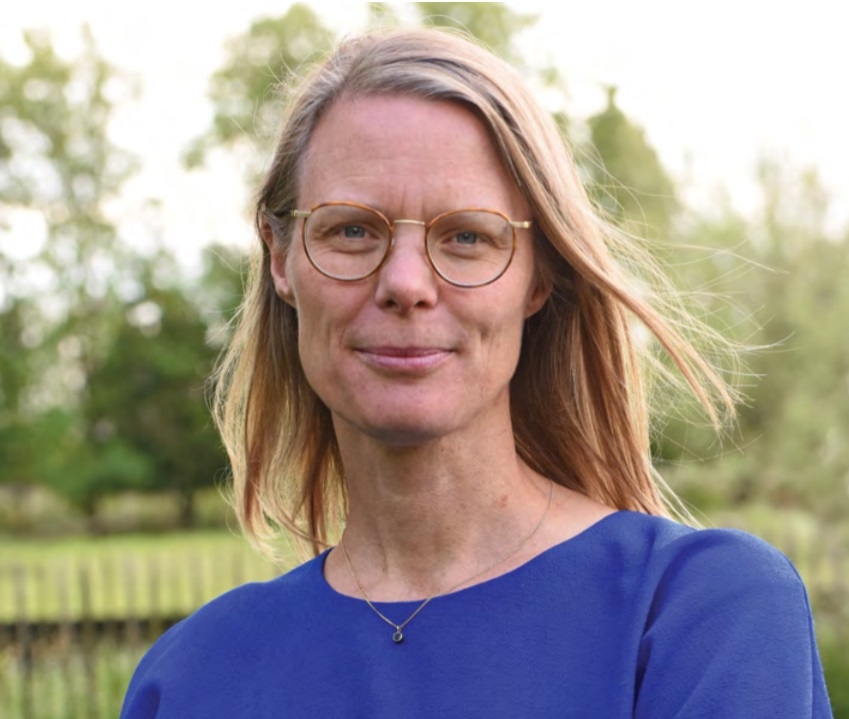
Irene Heemskerk will start on 15 June 2021
Head of climate change centre will report to President Lagarde
Climate change centre will shape and steer ECB’s climate agenda
The Executive Board of the European Central Bank (ECB) has appointed Irene Heemskerk as head of the ECB’s climate change centre as of 15 June 2021.
The ECB launched its climate change centre earlier this year to shape and steer its climate agenda internally and externally, building on the expertise of all teams already working on climate-related topics at the bank.
“The climate change centre will focus the ECB’s efforts to address climate change,” said ECB President Christine Lagarde. “Irene Heemskerk brings the experience, knowledge and enthusiasm required to lead the climate change centre’s work and to strengthen the ECB’s role in the fight against climate change within its mandate.”
As head of the climate change centre, Ms Heemskerk will report to President Lagarde.
Ms Heemskerk, 45, currently works as a Sustainability Fellow at the International Financial Reporting Standards (IFRS) Foundation. She was until recently advisor to the Chair of the Network for Greening the Financial System at De Nederlandsche Bank, a position she held between December 2017 and December 2020. Prior to that, she held various positions at De Nederlandsche Bank, including Secretary to the Supervisory Board and Legal Counsel. Ms Heemskerk also worked as a project manager on the revision of the Dutch Corporate Governance Code at the Ministry of Economic Affairs between October 2014 and December 2016.
Ms Heemskerk holds a master’s degree in international and European law from Leiden University and a master’s degree in law from the Academie voor Wetgeving in Den Haag.
She is a member of the Advisory Board of the International Union for Conservation of Nature for their Finance for Nature initiative.
World economy set to lose up to 18% GDP from climate change if no action taken, reveals Swiss Re Institute’s stress-test analysis
New Climate Economics Index stress-tests how climate change will impact 48 countries, representing 90% of world economy, and ranks their overall climate resilience
Expected global GDP impact by 2050 under different scenarios compared to a world without climate change:-18% if no mitigating actions are taken (3.2°C increase);-14% if some mitigating actions are taken (2.6°C increase);-11% if further mitigating actions are taken (2°C increase);-4% if Paris Agreement targets are met (below 2°C increase)
Economies in Asia would be hardest hit, with China at risk of losing nearly 24% of its GDP in a severe scenario, while the world’s biggest economy, the US, stands to lose close to 10%, and Europe almost 11%
Climate change poses the biggest long-term threat to the global economy. If no mitigating action is taken, global temperatures could rise by more than 3°C and the world economy could shrink by 18% in the next 30 years. But the impact can be lessened if decisive action is taken to meet the targets set in the Paris Agreement, Swiss Re Institute’s new Climate Economics Index shows. This will require more than what is pledged today; public and private sectors will play a crucial role in accelerating the transition to net zero.
Swiss Re Institute has conducted a stress test to examine how 48 economies would be impacted by the ongoing effects of climate change under four different temperature increase scenarios. As global warming makes the impact of weather-related natural disasters more severe, it can lead to substantial income and productivity losses over time. For example, rising sea levels result in loss of land that could have otherwise been used productively and heat stress can lead to crop failures. Emerging economies in equatorial regions would be most affected by rising temperatures.
Major economies could lose roughly 10% of GDP in 30 years
In a severe scenario of a 3.2°C temperature increase, China stands to lose almost one quarter of its GDP (24%) by mid-century. The US, Canada and the UK would all see around a 10% loss. Europe would suffer slightly more (11%), while economies such as Finland or Switzerland are less exposed (6%) than, for example, France or Greece (13%).
Thierry Léger, Group Chief Underwriting Officer and Chairman of Swiss Re Institute, said: “Climate risk affects every society, every company and every individual. By 2050, the world population will grow to almost 10 billion people, especially in regions most impacted by climate change. So, we must act now to mitigate the risks and to reach net-zero targets. Equally, as our recent biodiversity index shows, nature and ecosystem services provide huge economic benefits but are under intense threat. That’s why climate change and biodiversity loss are twin challenges that we need to tackle as a global community to maintain a healthy economy and a sustainable future.“
Climate Economics Index ranks countries’ resilience to climate change
Along with evaluating each country’s expected economic impact from climate risks, Swiss Re Institute also ranked each country on its vulnerability to extreme dry and wet weather conditions. In addition, it looked at the country’s capacity to cope with the effects of climate change. Put together, these findings generate a ranking of countries’ resilience to the impacts of climate change.
The ranking displays a similar view to the GDP impact analysis: Countries most negatively impacted are often the ones with fewest resources to adapt to and mitigate the effects of rising global temperatures. The most vulnerable countries in this context are Malaysia, Thailand, India, the Philippines and Indonesia. Advanced economies in the northern hemisphere are the least vulnerable, including the US, Canada, Switzerland and Germany.
Public and private sectors play a crucial role in accelerating climate action
Given the consequences highlighted in Swiss Re Institute’s analysis, the need for action is indisputable. Coordinated measures by the world’s largest carbon emitters are crucial to meet climate targets. The public and private sectors can facilitate and accelerate the transition, particularly regarding sustainable infrastructure investments that are vital to remain below a 2°C temperature increase. Given the long-term horizon of their liabilities and long-term capital to commit, institutional investors such as pension funds or insurance companies are also ideally positioned to play a strong role.
Jérôme Haegeli, Swiss Re’s Group Chief Economist, said: “Climate change is a systemic risk and can only be addressed globally. So far, too little is being done. Transparency and disclosure of embedded net-zero efforts by governments and the private sector alike are crucial. Only if public and private sectors pull together will the transition to a low-carbon economy be possible. Global cooperation to facilitate financial flows to vulnerable economies is essential. We have an opportunity to correct the course now and construct a world that will be greener, more sustainable and more resilient.
Our analysis shows the benefit of investing in a net-zero economy. For example, adding just 10% to the USD 6.3 trillion of annual global infrastructure investments would limit the average temperature increase to below 2°C. This is just a fraction of the loss in global GDP that we face if we don’t take appropriate action.“
Mitigating climate change requires a whole menu of measures. More carbon- pricing policies combined with incentives for nature-based and carbon-offsetting solutions are needed, as well as international convergence on taxonomy for green and sustainable investments. As part of financial reporting, institutions should regularly disclose how they plan to achieve the Paris Agreement and net-zero emission targets. Re/insurers also play a role in providing risk transfer capacity, risk knowledge and long-term investment, using their understanding of risk to help households, companies and societies mitigate and adapt to climate change.
Climate Economics Index: mid-of-century
The Climate Economics Index looks at which economies would be hardest hit, most exposed and best positioned to adapt to climate risk. It ranks countries based on: Expected economic impact from “chronic” climate risks linked to gradual temperature rises; the degree to which it is vulnerable to extreme weather events and severe hot/wet conditions; and a country’s current adaptive capacity.
Legal & General appoints new head of ESG as it accelerates climate change efforts

LGIM Real Assets (a division of Legal & General Investment Management) announces that it has appointed Shuen Chan as Head of ESG as it continues to establish itself as a global leader in responsible investment.
With the UK legally required to meet net zero carbon emissions by 2050, investors must actively consider how they call help reduce emissions in some of the most carbon intensive industries, including real estate, energy, transportation and social infrastructure. Legal & General is looking beyond current legislation and practices, seeking to align its real asset portfolio with a science-based carbon performance target covering the period to 2030.
Shuen will take the lead on ESG and support Legal & General’s strategic objective to embed sustainability in all areas of its Real Assets business, focusing on the LGIM Real Assets real estate equity platform and its rapidly expanding private credit portfolio (which includes infrastructure). She brings 25 years of experience in sustainability, capital markets and asset management, with expertise in ESG, climate change and impact investing. Most recently, Shuen co-founded a purpose-driven ESG advisory firm, Sustineri, helping institutional investors build a case for sustainable investing in the transition to a low-carbon economy.
Previously, Shuen was a founding member and Head of Structured Product Origination at one of the fastest growing credit asset management firms in Europe, European Credit Management. Shuen’s early career was in debt capital markets at Deutsche Bank, Macquarie and HSBC across Asia and Europe.Shuen will report to Rob Martin, Director, Strategy & ESG, LGIM Real Assets, and work closely with Malcolm Hanna, Sustainability Manager, LGIM Real Assets.
LGIM Real Assets was an early leader in sustainable investment, making it a core objective for the business in 2008. It was an early participant in the Global Real Estate Sustainability Benchmarking (GRESB) initiative to benchmark sustainability performance. Data was submitted for 16 portfolios in 2019, with all 16 achieving star ratings, 5 of which achieved the maximum 5 stars. Having successfully met its target of reducing carbon emissions by 20% compared to 2010 levels, Legal & General last year started work to develop new “science-based” targets.
Moving beyond the environment, following successful pilot projects in 2018, LGIM is pioneering the rollout of social value measurement, committing to measure the social impact of 20% of its portfolio by the end of 2020. “We need a step-change in progress towards combating climate change. As one of the UK’s largest institutional investors and real asset owners, we have a major part to play. Shuen’s appointment, with her strong expertise in ESG and climate change, including a deep understanding of debt markets, marks our continued commitment to embedding ESG in every area of our business.”Rob Martin, Director, Strategy & ESG, LGIM Real Assets “I am delighted to be joining the team at LGIM Real Assets as I truly believe that there is a significant opportunity in the real assets sector in delivering long term value for investors. ESG and sustainable investing in the real assets sector is fundamental to meeting the Paris Agreement targets and a transition towards a low carbon economy and society.”Shuen Chan, Head of ESG, LGIM Real Assets