
Greek central bank chief warns of 9.4% economic slump if pandemic worsens

Greece’s recession-hit economy could shrink at a rate closer to its central bank’s worst-case scenario if the coronavirus pandemic deepens, the head of the Bank of Greece said on Saturday.
The central bank has forecast the economy to contract by 7.5% this year under a baseline scenario, faring worse than a previous forecast of a 5.8% decline in gross domestic product.
The bank’s adverse scenario predicts the economy to shrink by 9.4%.
“A possible worsening of the pandemic, coupled with more restrictive measures in the fourth quarter, could bring the economy closer to the central bank’s adverse scenario,” bank Governor, Yannis Stournaras, told Ta Nea newspaper.
That would mean a 9.4% decline in economic activity this year and a weaker rebound in 2021, he said.
Under the adverse scenario, additional targeted fiscal measures need to be considered without risking fiscal stability, Stournaras said.
“In economies with high public debt, the combination of large fiscal deficits and slow recovery leads inevitably to higher risks as regards debt sustainability, with negative effects on long-term growth prospects,” he told the paper.
Greece’s economy shrank at an annual 0.5% in the first quarter and by 15.2% in the next three months to June 30.
Greece has seen a steady rise in infections since August but is still faring better than other European countries where infections have climbed more rapidly. Still, authorities have warned the relative stability is “especially fragile.”
Greece reported 508 new confirmed infections on Friday, topping the 500 daily mark for the first time, with health authorities worried that a drop in temperatures may intensify epidemiological trends as winter months approach.
Source: Reuters (Reporting by George Georgiopoulos; Editing by Mike Harrison)
Bank of Greece: Statistics on loans serviced by Credit Servicing Firms (CSFs): Q3 2019
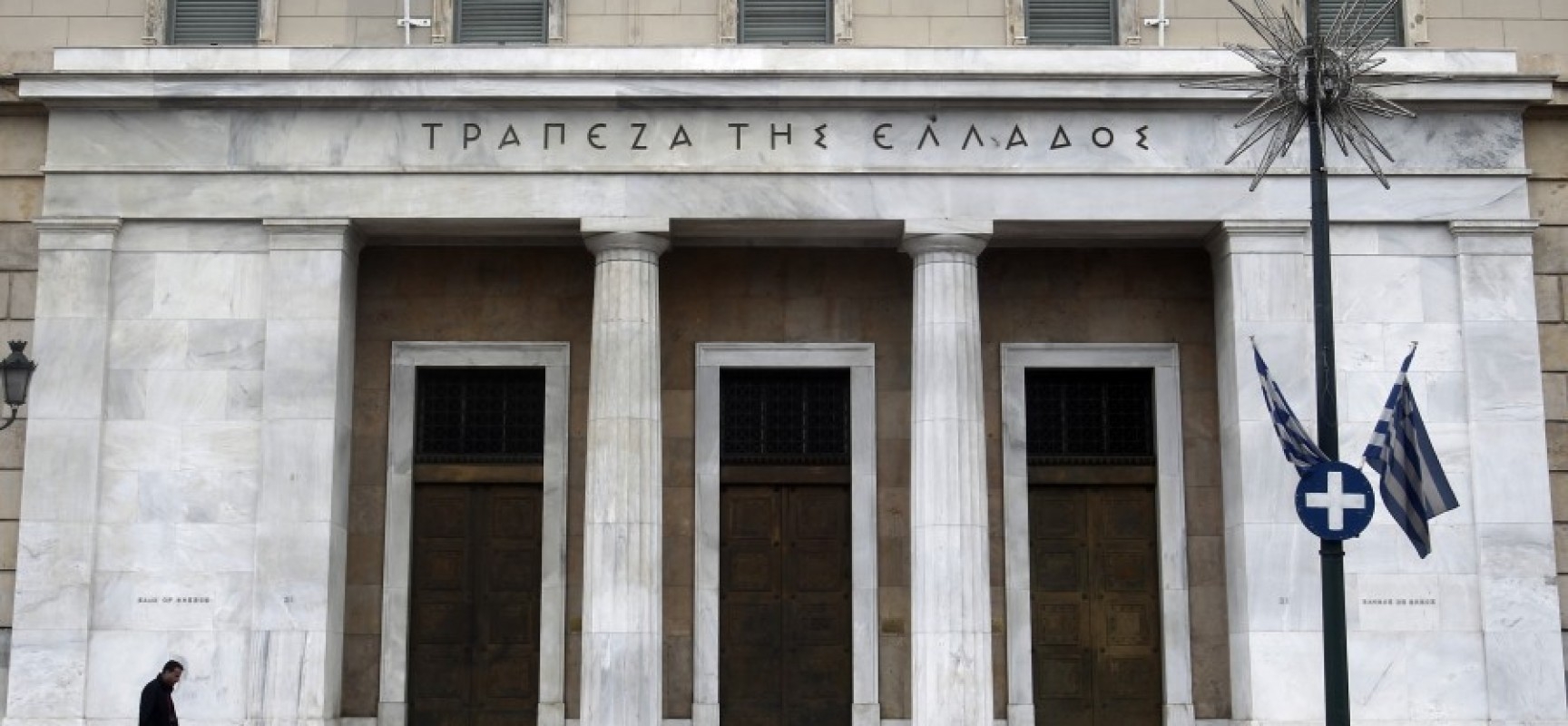
In the third quarter of 2019, the nominal value of loans serviced by domestic CSFs increased; the loans serviced concern loans that have been transferred from domestic credit institutions to non-resident specialized financial institutions.
In particular, the total value of loans serviced by CSFs increased by €1,967 million in the third quarter of 2019 and stood at €20,105 million, from €18,138 million in the second quarter of 2019 (see relevant Table and Diagrams). Corporate loans
The nominal value of serviced corporate loans increased to €5,408 million in the third quarter of 2019, from €5,367 million in the previous quarter. In further detail, the nominal value of loans to non-financial corporations (NFCs) increased by €41 million to €5,361 million at the end of the third quarter of 2019; Out of the total loans to NFCs, an amount of €3,719 million corresponds to loans to small and medium-sized enterprises (SMEs).
The nominal value of loans to insurance corporations and other financial intermediaries, serviced by CSFs, remained unchanged from the previous quarter, at €47 million. Loans to sole proprietors and unincorporated partnerships
The nominal value of loans to sole proprietors and unincorporated partnerships, serviced by the CSFs, decreased by €9 million from the previous quarter and stood at €2,256 million at the end of the third quarter of 2019. Serviced loans to individuals and private non-profit institutions
The nominal value of loans to individuals and private non-profit institutions, serviced by the CSFs, increased by €1,936 million to €12,441 million at the end of the third quarter of 2019. In further detail, the serviced consumer loans decreased by €9 million to €10,105 million at the end of the third quarter of 2019, while the corresponding housing loans increased by €1,956 million to €2,329 million.
Table: Loans transferred to foreign financial intermediaries and serviced by CSFs
(Nominal value, end of quarter data, in million euros)
March 2019
June 2019
September 2019
Private sector
18,231
18,138
20,105
Corporations
5,561
5,367
5,408
Non-financial corporations (NFCs)
5,511
5,320
5,361
o/w small and medium-sized enterprises (SMEs)
3,392
3,704
3,719
Insurance corporations and other financial intermediaries
49
47
47
Sole proprietors, farmers and individual enterprises
2,141
2,265
2,256
Individuals and private non-profit institutions (NPIs)
10,529
10,505
12,441
o/w consumer loans
10,142
10,114
10,105
o/w housing loans
375
373
2,329
Anniversary Exhibition “1821 before and after” in cooperation with Bank of Greece, NBG and Alpha Bank
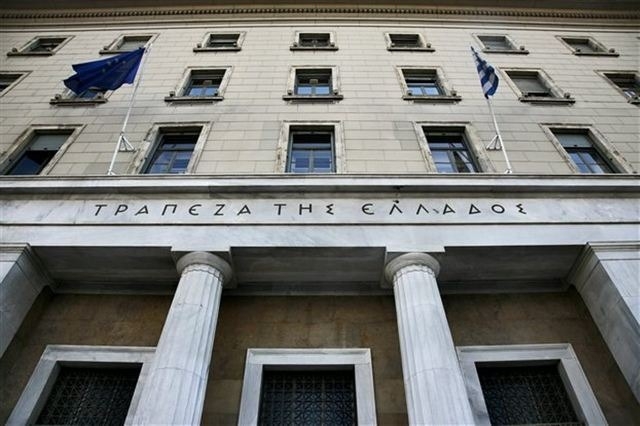
The Benaki Museum, in cooperation with the Bank of Greece, the National Bank of Greece and Alpha Bank, organises a major anniversary exhibition for the bicentenary of the 1821 Greek Revolution.The exhibition, under the title ‘1821 before and after’, will open in March 2021; it will last until October of the same year; and it will be hosted at the Benaki Museum / Pireos 138 building, covering its entire exhibition area. The building will become a living organism telling the story of modern Greeks from 1770 to 1870.For 6 months, 100 years of history will unfold across 3,500 square metres. The exhibition will consist of three parts: The first part will start from 1770 and the Orlov revolt and will conclude with the outbreak of the Revolution in 1821. The second part will follow the events of the war up to Ioannis Capodistria and his rule over the new state. Finally, the third part will extend between the arrival of young King Otto in 1833 and 1870.The exhibition narrative will use works of art and documents dating from the period in question; they are held in the collections of the three banks and in the Benaki Museum, itself a rich repository created on bonds of trust forged since its foundation with the families of those who fought and held centre stage in the 1821 Revolution. Important paintings,personal items belonging to key revolutionaries and historical heirlooms will bring to life the progress towards a national revolution, the events of the war of independence and its conclusion, the creation of the modern Greek state and its development and operation during the early decades. In parallel, the narrative will include utilitarian objects andtestimonies that will bring into focus the everyday life of Greeks in the periods covered by the exhibition.For their initiative to mount this exhibition, the co‐organisers have issued the following quotes:Irini Geroulanou, President of the Board of Trustees, Benaki Museum“Over the past century, the Benaki Museum has been the first museum institution in Greece to epitomise the processand development of Greek culture.In cooperation with three major banking institutions, the Bank of Greece, the National Bank of Greece and Alpha Bank, an exhibition for the 200‐year anniversary of the Greek Revolution is organised.The exhibition will showcase the heirlooms amassed by Antonis Benakis through personal choice and purchases as well as the heirlooms added to the Museum collections by countless donors, admirably arranged and presented by Angelos Delivorrias in the Benaki Museum we all know today, a museum institution with Greek roots and international standing.The ‘1821 before and after’ exhibition will take over the entire Benaki Museum / Pireos 138 building between March and October 2021. Its extent and duration signify its value and importance for the Benaki Museum.”Panagiotis Panagakis, Director of the Centre for Culture, Research and Documentation, Bank of Greece“For us at the Bank of Greece, the idea behind the exhibition is not only extremely interesting, but what is equallyimportant is the synergy of a major cultural institution such as the Benaki Museum, the central bank of the country and two more emblematic banks, the National Bank of Greece and Alpha Bank. It is a kind of synergy that happens for thefirst time on such a scale in our country and its significance is to be found in, among other things, fostering a culture of fertile and creative cooperation between institutions. The exhibition is something that the three banks and the Benaki Museum will do together, enhancing the philosophy of partnership, cooperation and mutual support in the country.”Gerassimos Notaras, Head of the Sub‐division of the Historical Archives, National Bank of Greece
“Works in the National Bank of Greece collections that relate to the 1821 Revolution and to the foundation of the Greek state are early 20th‐century commissions and belong to the ideological framework of their period, as they focus on the quest for a national identity and on strengthening communal memory.Copies after Hess, ordered by governor Streit in 1901, feature scenes from the war for liberation, fan the flames of patriotism and stimulate national pride. Further works covering the birth of the modern Greek state and the near‐ contemporary creation of the National Bank – Lytras’s portrait of King Otto, Hess’s Arrival of King Otto at Nafplion –contribute towards the universal mandate for constituting a strong new state.”Irini Orati, Curator of the Alpha Bank Collection “Alpha Bank, a bank that is deeply rooted in history and has contributed to the financial, social and cultural life of Greece, participates in the intricate museological planning towards an exhibition on the bicentenary of the 1821 Greek Revolution, joining forces with the Benaki Museum and two further historic banking institutions, the Bank of Greece andthe National Bank of Greece.Through this shared initiative we aspire to create a large and, in its kind, unique anniversary exhibition that will shed light on this seminal for our country historical event, while bringing to the wider public’s attention the power and efficacy of working together. To this end, all three banks will deploy works of art and documents from our collections tocomplement the Benaki Museum’s rich material.
Hoping that the exhibition narrative will connect history with the charm of past everyday life, we, the four co‐ organisers, will take steps together towards our grand shared goal, ‘1821 before and after’.”