
Bank of Greece – Bank credit and deposits: June 2026
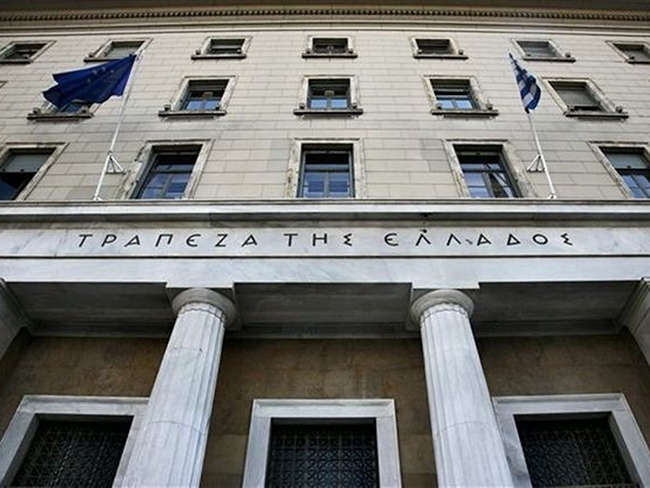
– The annual growth rate of total credit extended to the domestic economy increased to 5.0% in June 2026 from 4.6% in the previous month.
– The annual growth rate of total deposits increased to 8.8% in June 2026 from 8.1% in the previous month.
– Deposits placed by the private sector increased by €8,575 million in June 2026, compared with an increase of €5,313 million in the previous month.
I. Credit to the domestic economy
Τhe monthly net flow of total bank credit was positive by €3,501 million in June 2026, compared with a positive net flow of €1,644 million in the previous month.
Ι.1 Credit to the general government
In June 2026, the monthly net flow of bank credit to the general government was positive by €213million, compared with a positive net flow of €329 million in the previous month; the annual growth rate increased to 0.4% from 0.0% in the previous month.
Ι.2 Credit to the private sector
In June 2026, the annual growth rate of bank credit to the private sector increased to 7.7% from 7.4% in the previous month. The monthly net flow of credit was positive by €3,288 million, compared with a positive net flow of €1,315 million in the previous month.
Ι.2.1 Credit to corporations
In June 2026, the monthly net flow of bank credit to corporations was positive by €2,983 million, compared with a positive net flow of €1,285 million in the previous month, while the annual growth rate increased to 10.2% from 9.8% in the previous month. In particular, the annual growth rate of credit to non-financial corporations (NFCs) stood at 9.8% unchanged from the previous month; the monthly net flow was positive by €2,235 million, compared with a positive net flow of €427 million in the previous month. The annual growth rate of credit to insurance corporations and other financial intermediaries increased to 13.2% from 9.2% in the previous month; the monthly net flow was positive by €748 million, compared with a positive net flow of €858 million in the previous month.
Ι.2.2 Credit to sole proprietors and unincorporated partnerships
In June 2026, the monthly net flow of bank credit to sole proprietors and unincorporated partnerships was positive by €47 million, compared with a negative net flow of €9 million in the previous month; the annual growth rate stood at -2.6% from -2.0% in the previous month.
Ι.2.3 Credit to individuals and private non-profit institutions
In June 2026, the monthly net flow of bank credit to individuals and private non-profit institutions was positive by €258 million, compared with a positive net flow of €39 million in the previous month; the annual growth rate stood at 2.6% from 2.7% in the previous month.
II. Deposits by the domestic economy with the domestic credit institutions
In June 2026, the monthly net flow of total deposits was positive by €8,756 million, compared with a positive net flow of €5,063 million in the previous month.
ΙΙ.1 Deposits placed by the general government
In June 2026, deposits placed by the general government increased by €181 million, compared with a decrease of €249 million in the previous month; the annual growth rate decreased to -1.7% from 14.6% in the previous month.
ΙΙ.2 Deposits placed by the private sector
In June 2026, deposits placed by the private sector increased by €8,575 million, compared with an increase of €5,313 million in the previous month; the annual growth rate increased to 9.3% from 7.8% in the previous month.
ΙΙ.2.1 Corporate deposits
In June 2026, corporate deposits increased by €7,580 million, compared with an increase of €4,973 million in the previous month; the annual growth rate increased to 23.0% from 18.7% in the previous month. In particular, deposits from NFCs increased by €7,818 million, against an increase of €4.582 million in the previous month. Deposits placed by insurance corporations and other financial intermediaries decreased by €237 million, compared with an increase of €390 million in the previous month.
ΙΙ.2.2 Deposits placed by households and private non-profit institutions
In June 2026, deposits placed by households and private non-profit institutions increased by €995 million, compared with an increase of €340 million in the previous month; the annual growth rate stood at 4.3% from 4.1% in the previous month.
Notes:
1. The general government includes central government, local government and social security funds.
2. Deposits include repos.
3. The Bank of Greece is not included in domestic credit institutions.
The Bank of Greece Report on Monetary Policy 2025-2026
Global economic slowdown, rising inflation and increased geopolitical uncertainty
In 2026, the global economy faces a new period of heightened uncertainty and elevated geoeconomic risks, following a succession of unpredictable disruptions in recent years. The escalation of tensions in the Middle East and the disruption of global energy flows resulting from the closure of the Strait of Hormuz have triggered a sharp increase in international energy prices, weighing on growth prospects and reigniting inflationary pressures worldwide. At the same time, the persistence of high US tariffs, the increasing use of non-tariff barriers and the ongoing shifts in global supply chains are further amplifying uncertainty and constraining global trade growth. More recently, the US-Iran agreement has raised hopes for an end to hostilities, thereby leading to a moderation in energy prices. However, its effectiveness will ultimately depend on consistent implementation and the full restoration of energy flows.
Despite the resilience of the euro area economy over the past year amid significant trade tensions, the deterioration of the geopolitical environment and the new energy crisis are expected to weigh on short-term growth prospects in 2026, given the euro area’s status as a net energy importer. The surge in international energy prices, compounded by heightened uncertainty, is denting consumer and business confidence, dampening domestic demand and adding to inflationary pressures. In the first quarter of 2026, euro area GDP contracted by 0.2% quarter-on-quarter, after growing by 0.2% in the fourth quarter of 2025. At the same time, headline inflation, as measured by the Harmonised Index of Consumer Prices (HICP),rose further to 3.2% in May 2026, from 3.0% in April and 2.6% in March, moving once again above the ECB’s medium-term target after a prolonged period of disinflation. Against this backdrop, in June 2026 the Governing Council of the European Central Bank (ECB) decided to raise its three key policy rates by 25 basis points.
Greek economy: Resilient growth and rising inflation
In the first quarter of 2026, the Greek economy continued to expand at a solid pace. GDP grew by 2.0% year-on-year and by 0.2% quarter-on-quarter, significantly outperforming the euro area average. Investment remained the main driver of growth, while net exports and private consumption also made positive contributions. These developments underscore the resilience of the Greek economy and its sustained growth momentum, despite heightened uncertainty stemming from geopolitical tensions in the Middle East and the resurgence of inflationary pressures.
During the first five months of 2026, the expected further disinflation from the 2.9% rate recorded in December 2025 was interrupted by the geopolitical crisis in the Middle East and the sharp increase in international energy prices. As a result, HICP inflation accelerated to 4.9% in May, from 3.1% in February, remaining well above the euro area average of 3.2%. Higher energy costs are expected to generate second-round effects on both services and industrial goods prices. Food inflation is also expected to remain elevated, mainly reflecting higher energy-related costs across the production, storage and transportation chain.
Fiscal developments: Strong fiscal performance and continued debt reduction
Following the exceptionally strong fiscal performance recorded in 2024, fiscal outcomes remained highly favourable in 2025. According to available data, the general government balance turned out at a surplus of 1.7% of GDP in 2025, up from 1.3% in 2024, while the primary balance reached a historically high surplus of 4.9% of GDP, significantly exceeding the Budget target of 3.7% of GDP. This outcome primarily reflects stronger-than-expected revenue performance, particularly from VAT, individual income tax and social security contributions, supported by improved tax and social security compliance through the expansion of electronic transactions, the wider use of digital tools and the further rollout of the digital labour card. At the same time, prudent expenditure management contributed to the stronger fiscal outcome, creating additional fiscal space for targeted support measures from 2026 onwards.
The public debt-to-GDP ratio continued its downward trajectory, declining to 146.1% in 2025 from 154.2% in 2024, which was the largest reduction among EU Member States. This improvement was driven primarily by high primary surpluses and robust nominal GDP growth.
Financial developments: Tighter global financial conditions – Sustained investor confidence in Greek bond and equity markets
Global financial conditions have tightened since the beginning of 2026, mainly reflecting heightened geopolitical uncertainty stemming from the conflict in the Middle East and renewed inflationary pressures driven by higher international energy prices. Financial markets have revised upwards their expectations for inflation and policy rates, leading to increased volatility in global bond and equity markets and a broad tightening of financial conditions.
Despite the challenging international environment, the Greek government bond market has remained notably resilient. Sovereign credit rating upgrades, sustained high primary surpluses and the continued decline in public debt have whetted investor demand for Greek government securities. As a result, Greek government bond yields, while moving broadly in line with higher European yields, have continued to compare favourably with those of other euro area sovereigns, with the increase in yields effectively reflecting spillovers from international market developments. At the same time, improvements in Greece’s sovereign credit profile continued to support upgrades in bank credit ratings, reducing funding costs for Greek systemic banks and facilitating their access to international capital markets.
The Greek equity market also recorded strong gains in early 2026. The robust performance of the Athens Exchange (ATHEX) reflected the strong performance of sectors linked to the real economy, increased participation by international investors, successive credit rating upgrades and the continued improvement in the overall investment climate. These developments also contributed to the further upgrading of the Greek equity market’s international classification.
Banking sector: Volatile interest rates and robust credit growth
Interest rates on term deposits broadly stabilised during the fourth quarter of 2025 and the first four months of 2026, reflecting the unchanged policy rates of the Eurosystem over the same period. Following an increase of EUR 10.4 billion in private sector deposits in 2025, the stock of deposits declined cumulatively by EUR 3.6 billion during the first four months of 2026, reaching EUR 209.6 billion in April 2026.
After declining significantly, interest rates on business loans were highly volatile in the fourth quarter of 2025 and during the first four months of 2026. The weighted average interest rate on total business loans stood at 4.5% in April 2026, as much as on business loans with a defined maturity. The cost of bank financing was significantly reduced through programmes of the European Investment Bank (EIB) Group and the Hellenic Development Bank (HDB) as well as through RRF co-financing loans, an effect that is not fully captured by the reported lending rates. It is estimated that one third of new business loans and one fourth of lending to small and medium-sized enterprises are supported by development bank financing instruments and/or the RRF. For households, the weighted average mortgage lending rate declined slightly to 3.3% in April 2026, while around 30% of new mortgage loans granted in early 2026 was linked to the co-financed “My Home II” and “Upgrade My Home” programmes, which provide interest-free or low-interest financing.
Credit growth to non-financial corporations (NFCs) remained strong, although it moderated from the high levels recorded a year earlier. Bank lending to NFCs grew by 9.5% year-on-year in April 2026, down from 17.2% in April 2025. Continued robust lending to NFCs reflects both sustained demand for business credit and the supportive lending policies of banks. Bank lending to households also continued to expand year-on-year in early 2026, reflecting stronger consumer credit growth and a further acceleration in mortgage lending, supported primarily by rising house prices and increased private consumption.
Banking system: Strong fundamentals and enhanced resilience
Greek banks continued to perform strongly during the first months of 2026, maintaining solid profitability, capital adequacy and liquidity positions. The resilience of the Greek economy, despite ongoing geopolitical tensions and heightened uncertainty in the international environment, supported the continued strength of the banking sector. At the same time, Greek banks’ asset quality improved further, narrowing the gap with the European average. The sector’s strong performance is also reflected in the continued upgrades of banks’ credit ratings by international rating agencies. As a result, the four significant Greek banks are now rated BBB+, just one notch below the A rating category.
Projections
According to the latest projections of the Bank of Greece, the Greek economy is expected to continue expanding at a pace above the euro area average, supporting the ongoing convergence of real incomes. Real GDP growth is projected at 1.9% in both 2026 and 2027, before strengthening slightly to 2.0% in 2028. Economic activity is expected to be driven primarily by private consumption, investment and exports, despite heightened uncertainty in the global economic environment.
HICP inflation, following its temporary acceleration in response to higher energy prices and renewed inflationary pressures, is expected to gradually moderate over the projection horizon. Specifically, inflation is projected to rise to 3.8% in 2026, from 2.9% in 2025, before declining to 2.6% in 2027 and 2.3% in 2028 as pressures stemming from energy and food prices gradually ease.
The recent US-Iran agreement has raised expectations of an end to hostilities and further moderation in energy prices. This points to the possibility of more favourable developments in the Greek economy. Under this scenario, which assumes a faster decline in oil and natural gas prices, inflation would be slightly lower and economic activity somewhat stronger than currently projected. In particular, real GDP growth is projected at 2.0% in 2026 and 2.1% in both 2027 and 2028, while HICP inflation is projected at 3.7% in 2026, 2.5% in 2027 and 2.2% in 2028.
Challenges
The Greek economy has made significant progress in recent years, recording growth rates above the euro area average, strengthening fiscal and financial stability, and implementing important reforms. This progress has also been recognised by the European Commission, which considers that Greece no longer faces macroeconomic imbalances. Nevertheless, important challenges remain. These include low productivity, the slow transformation of the production model, demographic pressures, skills shortages and labour market bottlenecks, the limited diffusion of innovation, weak household purchasing power and difficulties in accessing affordable housing. At the same time, the economy continues to face challenges related to energy dependence, the persistently high current account deficit, the impacts of climate change, the sustainable management of natural resources, and chronic institutional weaknesses in public administration and the justice system. In addition, public debt remains elevated, while inflation continues to exceed the euro area average, denting the competitiveness of the economy.
Policy recommendations
Economic policy in the coming years should focus on supporting the transition of the Greek economy towards a more productive, outward-oriented, innovative, green and resilient growth model through a coherent agenda of reforms and investments.
In the short term, fiscal policy should remain prudent and complement the ECB’s monetary policy stance, without adding to inflationary pressures. Any support measures for households and businesses should be targeted, temporary and fiscally sustainable. At the same time, efforts to safeguard effective competition and address market distortions should be strengthened, including by stepping up audits. Over the medium term, enhancing competition through the removal of regulatory and administrative barriers will be essential for containing price pressures and improving competitiveness.
A key priority should be to boost productivity through structural reforms aimed at improving the business environment. Speeding up the delivery of justice, cutting red tape, strengthening public sector effectiveness, ensuring tax policy stability, and completing spatial and urban planning reforms would significantly enhance Greece’s attractiveness as an investment destination. Further simplification of the regulatory framework, faster licensing procedures, full digitalisation of public administration and systematic evaluation of regulatory interventions should also remain priorities.
Particular emphasis should be placed on improving the quality of investment. Available European resources should be directed towards sectors that strengthen the economy’s long-term productive capacity, including industry, research and development, energy infrastructures, logistics, agri-food, pharmaceuticals, export-oriented services and cutting-edge technologies. Investments in intangible capital, innovation, artificial intelligence and advanced digital applications are especially important.
The effective utilisation of European financing instruments after the expiry of the Recovery and Resilience Facility (RRF) will also be crucial. This includes resources available under the new Multiannual Financial Framework, the Social Climate Fund, the Modernisation Fund and other EU programmes.
At the same time, a more effective innovation policy is needed. Strengthening the governance of the research and innovation ecosystem, fostering collaboration between universities, research centres and businesses, deepening the venture capital market and accelerating the adoption of advanced digital technologies can significantly enhance productivity.
Improving access to finance for businesses remains another critical priority. Expanding financial instruments through the HDB, the EIB Group and the European Investment Fund, alongside developing alternative financing channels and venture capital markets, can help reduce financing gaps, particularly for small and medium-sized enterprises. In parallel, the continued strengthening of bank balance sheets and the accelerated resolution of non-performing loans would further support credit provision to the real economy.
Enhancing energy security and economic resilience requires accelerating investment in renewable energy sources, energy storage, electricity networks and interconnections, alongside improving energy efficiency. At the same time, more investment is needed in resilient infrastructures, civil protection and climate adaptation measures, supported by a comprehensive framework for natural risk management. Particular emphasis should also be placed on the sustainable management of natural resources through water infrastructure and water-efficiency projects, improved waste management, higher recycling rates and the promotion of a circular economy.
Labour market policies should focus on increasing labour force participation among women, young people, older workers and vulnerable groups. Expanding childcare and long-term care services, promoting flexible working arrangements and strengthening active labour market policies can help raise employment rates. At the same time, upgrading human capital requires improvements in education, stronger vocational training systems, enhanced digital skills and a better alignment of skills with labour market needs.
Addressing housing affordability challenges requires increasing housing supply through faster permitting procedures, mobilising underutilised housing stock, encouraging residential investment and expanding affordable and social housing policies. Strengthening social cohesion also requires improvements in healthcare services, further development of primary healthcare, addressing workforce shortages and reducing regional disparities in access to public services.
Finally, maintaining fiscal credibility and financial stability requires prudent fiscal policies that ensure sustained primary surpluses and a continued decline in the public debt-to-GDP ratio, while further enhancing competition and efficiency within the financial system.
***
Greece is much better placed than in the past to navigate the years ahead, having achieved substantial progress in economic growth, fiscal and financial stability, the attraction of domestic and foreign investment, and the credibility of economic policymaking. A key determinant of this progress has been political stability, which has enabled the consistent implementation of reforms, strengthened investor and market confidence, and supported the effective management of successive crises. Preserving political and economic stability, alongside continuing reforms and effectively utilising European resources, is a key prerequisite for the transition towards a more productive, outward-oriented and resilient growth model.
At the European level, geopolitical shifts, the challenges associated with energy and defence security, and the green and digital transitions underscore the need for stronger European cooperation and more effective financing mechanisms. Enhancing competitiveness, deepening European integration and completing initiatives such as the Banking Union and the Savings and Investments Union can support the investment needed to address common challenges, reduce financial fragmentation and strengthen Europe’s strategic autonomy and resilience in the face of global challenges.
The full text of the Report is available (in Greek) here.
Bank of Greece – Bank credit and deposits: April 2026
– The annual growth rate of total credit extended to the domestic economy decreased to 3.9% in April 2026 from 4.5% in the previous month.
– The annual growth rate of total deposits increased to 6.4% in April 2026 from 5.8% in the previous month.
– Deposits placed by the private sector decreased by €66 million in April 2026, compared with an increase of €2.080 million in the previous month.
I. Credit to the domestic economy
Τhe monthly net flow of total bank credit was negative by €1,081 million in April 2026, compared with a positive net flow of €3,533 million in the previous month.
Ι.1 Credit to the general government
In April 2026, the monthly net flow of bank credit to the general government was positive by €135 million, compared with a positive net flow of €1,124 million in the previous month; the annual growth rate stood at -0.7% from -0.8% in the previous month.
Ι.2 Credit to the private sector
In April 2026, the annual growth rate of bank credit to the private sector decreased to 6.8% from 7.7% in the previous month. The monthly net flow of credit was negative by €1,216 million, compared with a positive net flow of €2,409 million in the previous month.
Ι.2.1 Credit to corporations
In April 2026, the monthly net flow of bank credit to corporations was negative by €1,150 million, compared with a positive net flow of €2,226 million in the previous month, while the annual growth rate decreased to 8.8% from 10.1% in the previous month. In particular, the annual growth rate of credit to non-financial corporations (NFCs) decreased to 9.5% from 10.4% in the previous month; the monthly net flow was negative by €731 million, compared with a positive net flow of €2,158 million in the previous month. The annual growth rate of credit to insurance corporations and other financial intermediaries decreased to 2.8% from 7.4% in the previous month; the monthly net flow was negative by €419 million, compared with a positive net flow of €68 million in the previous month.
Ι.2.2 Credit to sole proprietors and unincorporated partnerships
In April 2026, the monthly net flow of bank credit to sole proprietors and unincorporated partnerships was negative by €54 million, compared with a positive net flow of €48 million in the previous month; the annual growth rate stood at -2.0% from -1.5% in the previous month.
Ι.2.3 Credit to individuals and private non-profit institutions
In April 2026, the monthly net flow of bank credit to individuals and private non-profit institutions was negative by €13 million, compared with a positive net flow of €134 million in the previous month; the annual growth rate stood at 2.7% from 2.8% in the previous month.
II. Deposits by the domestic economy with the domestic credit institutions
In April 2026, the monthly net flow of total deposits was negative by €34 million, compared with a positive net flow of €2,474 million in the previous month.
ΙΙ.1 Deposits placed by the general government
In April 2026, deposits placed by the general government increased by €32 million, compared with an increase of €394 million in the previous month; the annual growth rate increased to 22.5% from 17.4% in the previous month.
ΙΙ.2 Deposits placed by the private sector
In April 2026, deposits placed by the private sector decreased by €66 million, compared with an increase of €2,080 million in the previous month; the annual growth rate increased to 5.8% from 5.4% in the previous month.
ΙΙ.2.1 Corporate deposits
In April 2026, corporate deposits decreased by €935 million, compared with an increase of €2,453 million in the previous month; the annual growth rate increased to 10.8% from 10.2% in the previous month. In particular, deposits from NFCs decreased by €1,075 million, against an increase of €2,467 million in the previous month. Deposits placed by insurance corporations and other financial intermediaries increased by €139 million, compared with a decrease of €14 million in the previous month.
ΙΙ.2.2 Deposits placed by households and private non-profit institutions
In April 2026, deposits placed by households and private non-profit institutions increased by €869 million, compared with a decrease of €374 million in the previous month; the annual growth rate stood at 4.1% from 3.8% in the previous month.
Notes:
1. The general government includes central government, local government and social security funds.
2. Deposits include repos.
3. The Bank of Greece is not included in domestic credit institutions.
The next Press Release on “Bank credit and deposits” for May 2026 will be published on 29 June 2026, in accordance with the Advance release calendar,Opens in new tab published on the Bank of Greece website.
Bank of Greece General Council composition
Bank of Greece announced that on the 20th of April 2026, during the meeting of the General Council of the Bank of Greece, the following members of the General Council were sworn in, in accordance with Article 22 of the Bank’s Statute:
– Mr Christos Hadjiemmanuil, whose term as member of the Monetary Policy Council was renewed, as of its expiry, for a six-year term pursuant to the Presidential Decree of 9 April 2026 (Government Gazette YODD 499/9.4.2026) and who, in this capacity, also participates in the General Council of the Bank in accordance with the provisions of Articles 21 and 35A of its Statute, as well as- Messrs Georgios Karanikas, Ioannis Retsos and Ioannis Masoutis, who were re-elected as Members of the General Council by the 93rd Annual Ordinary General Meeting of Shareholders of 6 April 2026.Thus, the composition of the General Council of the Bank of Greece is as follows:
Yannis Stournaras
Governor
Theodore K. Pelagidis
Deputy Governor
Christina Papaconstantinou
Deputy Governor
Christos D. Hadjiemmanuil
Monetary Policy Council Member
Vasileios D. Kotsovilis
Monetary Policy Council Member
Panagiotis Tsakloglou
Monetary Policy Council Member
Georgios E. Kavvathas
Member
Georgios I. Karanikas
Member
Ioannis D. Masoutis
Member
Theodosios S. Panaikas
Member
Dimitrios Th. Papalexopoulos
Member
Ioannis A. Retsos
Member
Ms Christina Papaconstantinou, Deputy Governor of the Bank of Greece, attended the Spring Meetings of the International Monetary Fund and the World Bank Group

Deputy Governor of the Bank of Greece Ms Christina Papaconstantinou participated in the Spring Meetings of the International Monetary Fund and the World Bank Group, which took place from 13 to 18 April 2026 in Washington, D.C., USA.
During the Meetings, Ms Papaconstantinou participated in proceedings of the International Monetary and Financial Committee (IMFC) and followed public discussions by senior officials on the international economic developments and prospects amid the heightened uncertainty caused by the crisis in the Middle East. In the margins of the Meetings, she participated in a roundtable on the impact of geopolitical instability on the global economic outlook organised by the Swedish central bank (Sveriges Riksbank). She also attended a side event accompanying the release of a recent report on the role of supervisory culture in ensuring consistent and effective supervision.
During her stay in Washington, D.C., Ms Papaconstantinou met with representatives of central banks and supervisory authorities, with whom she exchanged views on international economic developments, the need for international cooperation, and the resilience of the Greek economy. Moreover, she met with IMF staff following the completion of the 2025 Financial Sector Assessment Program mission to Greece.
Proposal to the Council of Ministers on the appointment of Governor in accordance with Article 29 of the Statute of the Bank of Greece

It is announced that the General Council of the Bank of Greece, in view of the end of the term of Governor Yannis Stournaras on 26 June 2026, decided unanimously to propose to the Council of Ministers, under Article 29 of the Bank’s Statute, the reappointment of Mr. Yannis Stournaras as Governor of the Bank of Greece.
Bank of Greece – Balance of Payments: January 2026
In January 2026, the current account registered a deficit, against a surplus year-on-year, mainly due to a deterioration in the secondary income account and, to a lesser extent, in the primary income account, while the balance of goods and the balance of services improved.
Current account
In January 2026, the current account recorded a deficit of €1.3 billion, compared with a surplus in the corresponding month of 2025, while the balance of goods and services improved.
The goods deficit contracted as imports fell more than exports in absolute terms. At current prices, exports decreased by 10.6% (by 5.9% at constant prices) and imports fell by 7.5% (3.6% at constant prices). Specifically, non-oil exports of goods at current prices fell by 4.5% (6.4% at constant prices), while the corresponding imports decreased by 5.0% (5.7% at constant prices).
The services surplus rose in January 2026, mainly due to an improvement in the travel balance and, to a lesser extent, the other services balance, whereas the transport balance deteriorated. Compared with January 2025, non-residents’ arrivals rose by 33.3% and the relevant receipts grew by 58.4%.
The surplus of the primary income account declined year-on-year, almost exclusively on account of lower net receipts under other primary income. The surplus of the secondary income account contracted year-on-year, due to lower net receipts in the other sectors of the economy excluding general government.[1]
Capital account
In January 2026, the capital account recorded a deficit of €156.2 million, against a surplus in January 2025, owing to a shift from net receipts to net payments in the other sectors of the economy excluding general government.
Combined current and capital account
In January 2026, the surplus of the combined current and capital account (corresponding to the economy’s external financing requirements) decreased by €2.5 billion and turned into a deficit of €1.4 billion.
Financial account
In January 2026, direct investment showed a €496.4 million flow under residents’ external assets and a €2.2 billion flow under residents’ external liabilities, representing non‑residents’ direct investment in Greece, including UniCredit’s increased stake in Alpha Bank S.A.’s share capital.
Under portfolio investment, a decrease in residents’ external assets reflects a €985.0 million drop in residents’ holdings of foreign bonds and Treasury bills, which was offset, to some extent, by a €312.0 million rise in residents’ holdings of foreign equities. A rise in residents’ external liabilities is due to a €4.2 billion increase in non-residents’ holdings of Greek bonds and Treasury bills, which was partly offset by a €1.4 billion decrease in non-residents’ holdings of Greek equities.
Under other investment, residents’ external assets increased, due to a €613.0 million rise in loans extended to non-residents by domestic financial institutions and a €357.0 million statistical adjustment for the issuance of banknotes, which was partly offset by a €155.2 million drop in residents’ deposit and repo holdings abroad. A decline in residents’ external liabilities mainly reflects a €3.2 billion decrease in non-residents’ deposit and repo holdings in Greece (the TARGET account included) and, to a lesser extent, a €432.0 million decline in the outstanding debt to non-residents, which were offset to some extent by a €357.0 million statistical adjustment related to the issuance of banknotes.
At end-January 2026, Greece’s reserve assets stood at €22.5 billion, compared with €15.3 billion at end-January 2025.
Note: Balance of payments statistics for February 2026 will be released on 20 April 2026.
Bank of Greece – Developments in the balance of travel services: October 2025
The balance of travel services posted a surplus of €1,994.2 million in October 2025 and a surplus of €19,474.2 million in January-October 2025.
– Travel receipts rose by 8.2% in October 2025 and by 8.9% in January-October 2025.
– Inbound traveller flows increased by 7.2% in October 2025 and by 4.4% in January-October 2025.
Balance of travel services
Based on provisional data, the balance of travel services in October 2025 showed a surplus of €1,994.2 million, up by 8.7% from a surplus of €1,835.1 million in October 2024. More specifically, travel receipts rose by 8.2% to €2,252.5 million in October 2025, from €2,082.5 million in October 2024, while travel payments also increased by 4.4% (October 2025: €258.3 million, October 2024: €247.3 million). The rise in travel receipts stemmed from both a 7.2% increase in inbound traveller flows and a 0.4% rise in average expenditure per trip. Net travel receipts offset 74.2% of the goods deficit and contributed 91.2% to total net receipts from services.
In January-October 2025, the balance of travel services posted a surplus of €19,474.2 million, up from a surplus of €18,241.5 million in the same period of 2024. Travel receipts rose by €1,831.0 million, or 8.9%, to €22,385.8 million, while travel payments also increased by €598.3 million, or 25.9%, to €2,911.6 million. The rise in travel receipts was driven by a 4.4% increase in inbound traveller flows and a 3.9% rise in average expenditure per trip. Net travel receipts offset 70.9% of the goods deficit and contributed 89.8%% to total net receipts from services.
Travel receipts
In October 2025, as previously mentioned, travel receipts rose by 8.2% year-on-year. In more detail, receipts from residents of the EU27 rose by 7.3% to €1,138.5 million, as did receipts from residents of other countries, by 8.1% (October 2025: €947.0 million, October 2024: 875.9 million). The rise in receipts from within the EU27 was due to increases in receipts from euro area residents by 5.8% to €979.1 million (October 2024: €925.0 million) and in receipts from residents of non-euro area EU27 countries by 16.9% to €159.4 million.
Specifically, among major euro area countries of origin, receipts from Germany rose by 9.8% to €495.4 million. Receipts from France dropped by 15.3% to €93.6 million, whereas receipts from Italy grew by 31.7% to €77.6 million. Turning to other countries, receipts from the United Kingdom increased by 42.9% to €453.7 million, while receipts from the United States decreased by 15.5% to €144.7 million. No receipts were recorded from Russia.
In January-October 2025, travel receipts totalled €22,385.8 million, up by 8.9% year-on-year. This development is attributed to increases in receipts from EU27 residents by 5.8% to €12,122.9 million and in receipts from residents of other countries by 12.2% to €9,112.5 million. In greater detail, receipts from euro area residents rose by 3.7% to €9,404.2 million, while receipts from residents of non-euro area EU27 countries increased by 13.5% to €2,718.7 million.
Specifically, receipts from Germany grew by 0.5% to €3,610.8 million, as did receipts from France, by 5.3% to €1,285.6 million. Receipts from Italy also increased, by 8.1% to €1,274.4 million. Turning to other countries, receipts from the United Kingdom grew by 15.1% to €3,551.7 million, while receipts from the United States increased by 8.4% to €1,543.9 million. Lastly, receipts from Russia rose to €22.6 million.
Inbound traveller flows
The number of inbound travellers in October 2025 rose by 7.2% year-on-year to 3,660.2 thousand. Specifically, traveller flows through airports increased by 6.3% year-on-year, while traveller flows through road border-crossing points grew by 14.7%. This overall increase was due to higher traveller flows from both EU27 countries (up by 6.6%) and other countries (up by 8.1%). In greater detail, the number of travellers from within the euro area rose by 9.1% to 1,721.8 thousand, whereas travellers from non-euro area EU27 countries decreased by 3.0% to 401.3 thousand.
Specifically, the number of travellers from Germany rose by 9.0% to 810.2 thousand, while travellers from France declined by 14.0% to 165.9 thousand. Travellers from Italy increased by 25.4% to 147.3 thousand. Turning to other countries, the number of travellers from the United Kingdom increased by 24.3% to 628.0 thousand, whereas travellers from the United States declined by 24.1% to 124.9 thousand. Finally, no travellers were recorded from Russia.
In January-October 2025, the number of inbound travellers rose by 4.4% to 35,261.1 thousand (January-October 2024: 33,788.0 thousand). Specifically, traveller flows through airports increased by 4.6%, while traveller flows through road border-crossing points increased by 4.9%. In the period under review, the number of travellers from within the EU27 rose by 1.4% year-on-year to 21,010.7 thousand, as did the number of travellers from other countries, by 9.1% to 14,250.4 thousand. Travellers from within the euro area increased by 6.0%, whereas travellers from non-euro area EU27 countries declined by 7.8%.
Specifically, the number of travellers from Germany rose by 8.3% to 5,654.2 thousand, whereas the number of travellers from France fell by 2.0% to 1,874.9 thousand. Travellers from Italy increased by 8.2% to 2,095.6 thousand. Turning to other countries, the number of travellers from the United Kingdom rose by 6.6% to 4,684.4 thousand, as did the number of travellers from the United States, by 2.0% to 1,397.4 thousand. Lastly, the number of travellers from Russia increased to 20.5 thousand.
Note:
Inbound traveller flows exclude cruise passengers other than those recorded in the Border Survey.
Related information:
The next Press Release on “Developments in the balance of travel services” for November 2025 will be published on 21 January 2026, in accordance with the Advance Release CalendarOpens in new tab, posted on the Bank of Greece website.
Bank of Greece: Developments in the balance of travel services: April 2025
– The balance of travel services posted a surplus of €778.6 million in April 2025 and a surplus of €1,177.0 million in January-April 2025.
– Travel receipts rose by 17.4% in April 2025 and by 10.6% in January-April 2025.
– Inbound traveller flows increased by 6.4% in April 2025 and by 5.8% in January‑April 2025.
Balance of travel services
Based on provisional data, the balance of travel services in April 2025 showed a surplus of €778.6 million, up from a surplus of €666.0 million in April 2024. More specifically, in April 2025, travel receipts rose by 17.4% to €1,084.3 million, up from €923.7 million in April 2024, while travel payments also increased by 18.7% (April 2025: €305.8 million, April 2024: €257.7 million). The rise in travel receipts stemmed from both a 6.4% rise in inbound traveller flows and a 10.6% increase in average expenditure per trip. Net travel receipts offset 27.0% of the goods deficit and accounted for 77.8% of total net receipts from services.
In January-April 2025, the balance of travel services showed a surplus of €1,177.0 million, up from a surplus of €1,137.2 million in the same period of 2024. Travel receipts rose by €206.4 million, or 10.6%, to €2,157.1 million, while travel payments also increased by €166.6 million, or 20.5%, to €980.1 million. The rise in travel receipts was driven by a 5.8% increase in inbound traveller flows and a 4.4% rise in average expenditure per trip. Net travel receipts offset 10.3% of the goods deficit and contributed 60.1% to total net receipts from services.
Travel receipts
In April 2025, as mentioned previously, travel receipts grew by 17.4% year-on-year. In more detail, receipts from residents of the EU27 decreased by 3.9% to €505.7 million, whereas receipts from residents of other countries grew by 50.9% (April 2025: €514.3 million, April 2024: €340.9 million). The fall in receipts from within the EU27 was due to a decrease of 10.4% in receipts from euro area residents (April 2025: €427.3 million, April 2024: €476.9 million), as receipts from residents of non-euro area countries increased by 58.8% to €78.4 million.
More specifically, among major euro area countries of origin, receipts from Germany rose by 15.5% to €183.3 million. Receipts from France dropped by 20.3% to €78.2 million and receipts from Italy also fell by 44.5% to €33.7 million. Turning to other countries, receipts from the United Kingdom grew by 27.9% to €95.8 million, as did receipts from the United States, by 81.0% to €181.7 million. Receipts from Russia also grew to €0.4 million.
In January-April 2025, travel receipts totalled €2,157.1 million, up by 10.6% year-on-year. This development is mainly attributed to an increase of 26.0% in receipts from residents of other countries, which stood at €1,040.3 million, as receipts from residents of the EU27 decreased by 1.8% to €1,025.6 million. In greater detail, receipts from euro area residents fell by 5.7% to €861.5 million, while receipts from residents of non-euro area EU27 countries rose by 25.4% to €164.1 million.
Specifically, receipts from Germany increased by 0.8% to €297.1 million, whereas receipts from France dropped by 25.0% to €110.2 million and receipts from Italy fell by 6.6% to €110.3million. Turning to other countries, receipts from the United Kingdom grew by 23.4% to €167.8 million, receipts from the United States rose by 36.8% to €325.5 million and receipts from Russia increased to €2.5 million.
Inbound traveller flows
The number of inbound travellers in April 2025 rose by 6.4% year-on-year to 1,663.2 thousand. Specifically, traveller flows through airports increased by 6.8% year-on-year, while traveller flows through road border-crossing points grew by 6.1%. This overall increase was due to higher traveller flows from other countries (up by 34.9%), as traveller flows from EU27 countries decreased by 11.1%. In greater detail, the number of travellers from within the euro area dropped by 8.2% to 706.5 thousand, while the number of travellers from non-euro area EU27 countries declined by 22.4% to 155.5 thousand.
Specifically, the number of travellers from Germany dropped by 9.3% to 231.1 thousand, whereas travellers from France increased by 10.1% to 104.0 thousand. Travellers from Italy decreased by 39.9% to 70.7 thousand. Turning to non-EU27 countries, the number of travellers from the United Kingdom increased by 41.1% to 127.1 thousand and the number of travellers from the United States rose by 43.5% to 150.8 thousand. The number of travellers from Russia stood at 0.9 thousand.
In January-April 2025, the number of inbound travellers rose by 5.8% to 4,122.2 thousand (January-April 2024: 3,896.0 thousand). Specifically, traveller flows through airports increased by 10.8%, whereas traveller flows through road border-crossing points declined by 3.9%. In the period under review, the number of travellers from within the EU27 fell by 5.4% year‑on‑year to 2,041.1 thousand. Βy contrast, the number of travellers from other countries grew by 19.7% to 2,081.2 thousand. Travellers from within the euro area increased by 3.2%, while travellers from non-euro area EU27 countries decreased by 27.9%.
Specifically, the number of travellers from Germany rose by 3.6% to 475.5 thousand, whereas the number of travellers from France fell by 22.6% to 164.6 thousand. Travellers from Italy also decreased by 11.0% to 198.3 thousand. Turning to non-EU27 countries, the number of travellers from the United Kingdom rose by 41.5% to 294.6 thousand, as did the number of travellers from the United States, by 26.9% to 339.5 thousand. Lastly, the number of travellers from Russia rose to 2.8 thousand.
Bank of Greece: Central government net borrowing requirement on a cash basis: January-December 2022
In January-December 2022, the central government cash balance recorded a deficit of €12,664 million, compared to a deficit of €15,880 million in the same period of 2021. During this period, ordinary budget revenue amounted to €55,440 million, compared to €47,614 million in the corresponding period of last year. Ordinary budget expenditure amounted to €64,303 million, from €64,283 million in January-December 2021.
Table: Central government net borrowing requirement on a cash basis (million euro)