
Barclays Research takes stock of the effects of Russia’s war with Ukraine in 2022 Equity Gilt Study
Barclays Research released the 67th edition of the Equity Gilt Study (EGS), a flagship annual publication. Combining market-leading macro analysis with a unique multi-asset dataset spanning over 100 years, this year’s report takes stock of the effects of Russia’s war with Ukraine.
Barclays’ Research analysts survey the future of the European monetary union, arguing that Europe has often moved towards further integration during crises, and the recent past is no exception. The pandemic and the war in Ukraine have forced member states toward more fiscal and political co-operation. This includes a common diplomacy and defense policy, as well as a common energy policy.
Barclays Research argues that fears about the US dollar losing reserve currency status are greatly overstated. With the EMU still not fully integrated fiscally and politically and with the Chinese RMB only partially convertible, there are no good substitutes for the US dollar. Instead, large exporters might try to reduce their US current account surpluses by focusing more on regional trading blocs, in an attempt to diversify their foreign reserves.
In parallel, Barclays’ analysts note that the war is leading governments and corporations to re-examine the resilience of their supply chains and other economic linkages. That could lead to at least a partial reversal of the multi-decade trend of globalization. Already, our analysts see evidence of a “reshoring” of critical processes and infrastructure, and of multinational companies hiring closer to home.
Finally, Barclays’ analysts consider the implications for the macroeconomic environment, which, over the past three decades, has benefited from a period of “Great Moderation”, characterized by a relatively stable backdrop of growth, inflation, and monetary policy. We think this may be changing, with significant implications for macroeconomic stability.
“In this year’s Equity Gilt Study, Barclays’ analysts explore how the war in Ukraine, coming on the heels of the pandemic, will likely permanently re-shape the macro landscape,” says Ajay Rajadhyaksha, Global Chairman of Research at Barclays. “The Equity Gilt Study provides an indispensable tool to understand the themes and trends affecting global economies and markets for years to come.”
Eurovision 2023: Δεν θα γίνει στην Ουκρανία ο μουσικός διαγωνισμός

Δεν δύναται να διοργανώσει τη γιορτή της Eurovision 2023 η Ουκρανία, φετινή νικήτρια του διαγωνισμού, εξαιτίας του συνεχιζόμενου πολέμου. Προτεραιότητα για τη διοργάνωση φαίνεται πως έχει για το Ηνωμένο Βασίλειο που φέτος έλαβε τη δεύτερη θέση.
Σύμφωνα με τη σχετική ανακοίνωση της EBU:
«Μετά τη νίκη του στον διαγωνισμό τραγουδιού της Eurovision, τον Μάιο, η EBU διερεύνησε τις επιλογές για τη διοργάνωση του διαγωνισμού του επόμενου έτους με τον δημόσιο ραδιοτηλεοπτικό φορέα της Ουκρανίας (UA:PBC), ο οποίος είχε φιλοξενήσει τη διοργάνωση το 2017 και το 2005. Είναι γνωστή η παράδοση ότι ο νικητής του διαγωνισμού τραγουδιού της Eurovision φιλοξενεί τον διαγωνισμό την επόμενη χρονιά, υπό την προϋπόθεση ότι πληρούνται ορισμένα κριτήρια, μεταξύ των οποίων η διασφάλιση της βιωσιμότητας της διοργάνωσης και της ασφάλειας όλων των ενδιαφερομένων, συμπεριλαμβανομένου του κοινού. Δεδομένου του συνεχιζόμενου πολέμου μετά τη ρωσική εισβολή στη φετινή νικήτρια χώρα, η EBU αφιέρωσε χρόνο για τη διενέργεια πλήρους αξιολόγησης και μελέτης τόσο με το UA:PBC όσο και με τρίτους ειδικούς, συμπεριλαμβανομένων των θεμάτων ασφαλείας και προστασίας.
Ο διαγωνισμός τραγουδιού της Eurovision είναι μία από τις πιο σύνθετες τηλεοπτικές παραγωγές στον κόσμο, με χιλιάδες εργαζόμενους και συμμετέχοντες στην εκδήλωση και απαιτούνται 12 μήνες προετοιμασίας. Έπειτα από αντικειμενική ανάλυση, η Ομάδα Αναφοράς, δηλαδή το Διοικητικό Δυμβούλιο της Eurovision, κατέληξε με μεγάλη λύπη στο συμπέρασμα ότι -δεδομένων των σημερινών συνθηκών- οι εγγυήσεις ασφαλείας και λειτουργίας που απαιτούνται για έναν ραδιοτηλεοπτικό φορέα σχετικά με τη φιλοξενία, την οργάνωση και την παραγωγή του διαγωνισμού τραγουδιού της Eurovision, σύμφωνα με τους κανόνες της Eurovision, δεν μπορούν να ικανοποιηθούν από τo UA:PBC. Η EBU θα ήθελε να ευχαριστήσει τo UA:PBC για την ολόψυχη συνεργασία και την εμπλοκή του στη διερεύνηση όλων των σεναρίων κατά τις εβδομάδες μετά τη νίκη των Kalush Orchestra στις 14 Μαΐου, στο Τορίνο, και να μοιραστεί τη θλίψη και την απογοήτευσή της που ο διαγωνισμός του επόμενου έτους δεν μπορεί να διεξαχθεί στην Ουκρανία. Η EBU έχει υποστηρίξει το UA:PBC σε ένα ευρύ φάσμα τομέων από την εισβολή. Θα διασφαλίσουμε ότι η υποστήριξη αυτή θα συνεχιστεί, ώστε το UA:PBC να διατηρήσει τις απαραίτητες υπηρεσίες που παρέχει στους Ουκρανούς.
Ως αποτέλεσμα αυτής της απόφασης, σύμφωνα με τους κανόνες και για να διασφαλιστεί η συνέχεια της διοργάνωσης, η EBU θα αρχίσει τώρα συζητήσεις με το BBC, ως επιλαχόντα της φετινής διοργάνωσης, για να φιλοξενήσει ενδεχομένως τον διαγωνισμό τραγουδιού της Eurovision το 2023 στο Ηνωμένο Βασίλειο. Είναι πλήρης πρόθεσή μας η νίκη της Ουκρανίας να αντανακλάται στον διαγωνισμό του επόμενου έτους. Αυτό θα αποτελέσει προτεραιότητα για εμάς στις συζητήσεις μας με τους ενδεχόμενους οικοδεσπότες».
Societe Generale has closed the sale of Rosbank and its Russian insurance subsidiaries
Societe Generale announces the closing of the sale of Rosbank and the Group’s Russian insurance subsidiaries(1) to Interros Capital.
The impact of the sale, which reflects the evolution of foreign exchange rates since the announcement of the disposal on April 11, 2022, will be accounted for in Q2 22 and includes:
A residual impact of around -7 basis points on the capital ratio. On March 31, 2022, the Group’s CET 1 ratio was 12.9%, i.e. around 370 basis points above the regulatory requirement;
A net loss on the Group’s income statement of around 3.2 billion euros(2).
The Group thus exits Russia(3) in an effective and orderly manner, ensuring continuity for its employees and clients.
The actual transfer of shares of insurance subsidiaries will occur in the coming days.
Based on non-audited financial data as of April 30, 2022 and a EUR/RUB exchange rate of 68.8 to be compared to a reference rate of 85 as of 31.12.2021 and of 92 for the press release published on April 11, 2022. This loss, before tax effect, will be accounted for mainly as “net income/expense on other assets”.
ALD Automotive OOO, which operates in Russia and through its branches in Kazakhstan, and ALD Belarus LLC no longer concludes any new commercial transactions.
Allianz: Shipping losses fall, but Ukraine war, costly issues with large vessels, the shipping boom, and sustainability concerns muddy the waters
The international shipping industry is responsible for the carriage of around 90% of world trade, so vessel safety is critical. The sector continued its long-term positive safety trend over the past year but Russia’s invasion of Ukraine, the growing number of costly issues involving larger vessels, crew and port congestion challenges resulting from the shipping boom, and managing challenging decarbonization targets, means there is no room for complacency, according to marine insurer Allianz Global Corporate & Specialty SE’s (AGCS)Safety & Shipping Review 2022
“The shipping sector has demonstrated tremendous resilience through stormy seas in recent years, as evidenced by the boom we see in several parts of the industry today,” says Captain Rahul Khanna, Global Head of Marine Risk Consulting at AGCS. “Total losses are at record lows – around 50 to 75 a year over the last four years compared with 200+ annually in the 1990s. However, the tragic situation in Ukraine has caused widespread disruption in the Black Sea and elsewhere, exacerbating ongoing supply chain, port congestion, and crew crisis issues caused by the Covid-19 pandemic. At the same time, some of the industry’s responses to the shipping boom, such as changing the use of, or extending the working life of, vessels also raise warning flags. Meanwhile, the increasing number of problems posed by large vessels, such as fires, groundings and complex salvage operations, continue to challenge ship owners and their crews.”
The annual AGCS studyanalyzes reported shipping losses and casualties (incidents) over 100 gross tons. During 2021, 54 total losses of vessels were reported globally, compared with 65 a year earlier. This represents a 57% decline over 10 years (127 in 2012), while during the early 1990s the global fleet was losing 200+ vessels a year. The 2021 loss total is made more impressive by the fact that there are an estimated 130,000 ships in the global fleet today, compared with some 80,000 30 years ago. Such progress reflects the increased focus on safety measures over time through training and safety programs, improved ship design, technology and regulation.
According to the report, there have been almost 900 total losses over the past decade (892). The South China, Indochina, Indonesia, and the Philippines maritime region is the main global loss hotspot, accounting for one-in-five losses in 2021 (12) and one-in-four-losses over the past decade (225), driven by factors including high levels of trade, congested ports, older fleets, and extreme weather. Globally, cargo ships (27) account for half of vessels lost in the past year and 40% over the past decade. Foundered (sunk/submerged) was the main cause of total losses over the past year, accounting for 60% (32).
While total losses declined over the past year, the number of reported shipping casualties or incidents rose. The British Isles saw the highest number (668 out of 3,000). Machinery damage accounted for over one-in-three incidents globally (1,311), followed by collision (222) and fires (178), with the number of fires increasing by almost 10%.
Ukraine impact: safety and insuranceThe shipping industry has been affected on multiple fronts by Russia’s invasion of Ukraine, with the loss of life and vessels in the Black Sea, disruption to trade, and the growing burden of sanctions. It also faces challenges to day-to-day operations, with knock-on effects for crew, the cost and availability of bunker fuel, and the potential for growing cyber risk.
The invasion has further ramifications for a global maritime industry already facing shortages. Russian seafarers account for just over 10% of the world’s 1.89 million workforce, while around 4% come from Ukraine. These seafarers may struggle to return home or rejoin ships at the end of contracts. Meanwhile, a prolonged conflict is likely to have deeper consequences, potentially reshaping global trade in energy and other commodities. An expanded ban on Russian oil could contribute to pushing up the cost of bunker fuel and impacting availability, potentially pushing ship owners to use alternative fuels. If such fuels are of substandard quality, this may result in machinery breakdown claims in future. At the same time, security agencies continue to warn of a heightened prospect of cyber risks for the shipping sector such as GPS jamming, Automatic Identification System (AIS) spoofing and electronic interference.
“The insurance industry is likely to see a number of claims under specialist war policies from vessels damaged or lost to sea mines, rocket attacks and bombings in conflict zones,” explains Justus Heinrich, Global Product Leader, Marine Hull, at AGCS. “Insurers may also receive claims under marine war policies from vessels and cargo blocked or trapped in Ukrainian ports and coastal waters.”
The evolving range of sanctions against Russian interests presents a sizeable challenge. Violating sanctions can result in severe enforcement action, yet compliance can be a considerable burden. It can be difficult to establish the ultimate owner of a vessel, cargo or counterparty. Sanctions also apply to various parts of the transport supply chain, including banking and insurance, as well as maritime support services, which makes compliance even more complex.
A burning issue: fires on boardDuring the past year, fires on board the roll-on roll-off (ro-ro) car carrier Felicity Ace and the container ship X-Press Pearl both resulted in total losses. Cargo fires are indeed a priority concern. There have been over 70 reported fires on container ships alone in the past five years, the report notes. Fires often start in containers, which can be the result of non-/mis-declaration of hazardous cargo, such as chemicals and batteries – around 5% of containers shipped may consist of undeclared dangerous goods. Fires on large vessels can spread quickly and be difficult to control, often resulting in the crew abandoning ship, which can significantly increase the final cost of an incident.
Fires have also become a major loss driver for car carriers. Among other causes, they can start in cargo holds, caused by malfunctions or electrical short circuits in vehicles, while the open decks can allow them to spread quickly. The growing numbers of electric vehicles (EVs) transported by sea brings further challenges, given existing counter-measure systems may not respond effectively in the event of an EV blaze. Losses can be expensive, given the value of the car cargo and the cost of wreck removal and pollution mitigation.
When large vessels get into trouble, emergency response and finding a port of refuge can be challenging. Specialist salvage equipment, tugs, cranes, barges and port infrastructure are required, which adds time and cost to a response. The X-Press Pearl, which sank after it was refused refuge by two ports following a fire – the ports were unable or unwilling to discharge a leaking cargo of nitric acid – is one of several incidents where container ships have had difficulty finding a safe haven. Meanwhile, the salvage operation for the car carrier Golden Ray, which capsized in the US in 2019, took almost two years and cost in excess of $800mn.
“Too often, what should be a manageable incident on a large vessel can end in a total loss. Salvage is a growing concern. Environmental concerns are contributing to rising salvage and wreck removal costs as ship owners and insurers are expected to go the extra mile to protect the environment and local economies,” says Khanna. “Previously, a wreck might have been left in-situ if it posed no danger to navigation. Now, authorities want wrecks removed and the marine environment restored, irrespective of cost.”
Higher salvage costs, along with the burden of larger losses more generally, are a cost increasingly borne by cargo owners and their insurers. “’General average’, the legal process by which cargo owners proportionately share losses and the cost of saving a maritime venture, has become a frequency event, as well as a severity event, with the increase in the number of large ships involved in fires, groundings and container losses at sea compared with five years ago,” explains Régis Broudin, Global Head of Marine Claims at AGCS. It was declared in both the Ever Forward and Ever Given incidents. The large container ship Ever Forward ran aground in the US in March 2022, and was stuck for over a month before it was freed, almost a year to the day after its sister vessel, Ever Given blocked the Suez Canal.
Post-pandemic world brings new risk challengesWhile the Covid-19 pandemic resulted in few direct claims for the marine insurance sector, the subsequent impact on crew welfare and the boom in shipping and port congestion raises potential safety concerns. Demand for crew is high, yet many skilled and experienced seafarers are leaving the industry. A serious shortfall of officers is predicted within five years.
For those who remain, morale is low as commercial pressures, compliance duties and workloads are running high. Such a work situation is prone to mistakes – 75% of shipping incidents involve human error, AGCS analysis shows.
The economic rebound from Covid-19 lockdowns has created a boom time for shipping, with record increases in charter and freight rates. While this is a positive for shipping companies, higher freight rates and a shortage of container ship capacity are tempting some operators to use bulk carriers, or consider converting tankers, to transport containers. The use of non-container vessels to carry containers raises questions around stability, firefighting capabilities, and securing cargo. Bulk carriers are not designed to carry containers, which could impact their maneuvering characteristics in bad weather, and crew may not be able to respond appropriately in an incident.
With demand for shipping high, some owners are also extending the working life of vessels. Even before the pandemic, the average age of vessels was rising. Although there are many well-managed and maintained fleets composed of older vessels, analysis has shown older container and cargo vessels (15 to 25 years old) are more likely to result in claims, as they suffer from corrosion, while systems and machinery are more prone to breakdown. The average age of a vessel involved in a total loss over the past 10 years is 28.
Shipping bottlenecks and port congestionCovid-19 measures in China, a surge in consumer demand, and the Ukraine invasion have all been factors in ongoing unprecedented port congestion which puts crews, port handlers and facilities under additional pressure.
“Loading and unloading vessels is a particularly risky operation, where small mistakes can have big consequences. Busy container ports have little space, while the experienced labor required to handle the containers properly is in short supply. Add in fast turnaround times and this may result in a heightened risk environment,” explains Heinrich.
Climate change: transition problemsWith momentum gathering behind international efforts to tackle climate change, the shipping industry is coming under increasing pressure to accelerate its sustainability efforts, the report notes, given its greenhouse gas emissions grew by around 10% between 2012 and 2018.
Decarbonization will require big investments in green technology and alternative fuels. A growing number of vessels are already switching to liquefied natural gas (LNG), while other alternative fuels are under development, including ammonia, hydrogen and methanol, as well as electric-powered ships. The transition to alternative fuels will likely bring heightened risk of machinery breakdown claims, among other risks, as new technology beds down and as crews adapt to new procedures.
SCOR’s Q1 2022 results will be impacted by the conflict in Ukraine
Since the beginning of the war in Ukraine on 24th February 2022, SCOR has been closely monitoring the unfolding of events, and the resulting potential impact of the conflict and related international sanctions on its activity.
SCOR PO (the subsidiary owned by SCOR in Russia) is directly impacted and has stopped underwriting new business. More generally, this conflict has consequences on business lines such as Political Risks, Credit and Surety, and Aviation. SCOR expects a Q1 2022 charge in the high double-digit EUR million range for potential claims related to the conflict across both treaty reinsurance and specialty insurance. As the conflict continues, this estimate will evolve.
In Q1 2022, the estimated cost of this conflict is combined with a series of natural catastrophes (including floods in Australia, European windstorms and a drought in Brazil) and the continuation of the pandemic in the United States. These developments will have an adverse impact on SCOR P&C’s combined ratio and on SCOR L&H’s technical margin and are expected to result in a quarterly loss.
The Q1 2022 results will be published on May 6th, 2022.
The Group remains very well capitalized with a solvency ratio which should stand as of March 31st, 2022 at a level significantly above the 226% position reported at the end of Q4 2021. This solvency position reflects the payment of a dividend of EUR 1.80 per share for the fiscal year 2021, which will be submitted to the approval of the shareholders at the 2022 Annual General Meeting to be held on May 18th, 2022, with a payment date on May 24th, 2022.
Refugees, including Ukrainians, can start work at ABN AMRO

ABN AMRO is going to offer 60 status holders a job over the next three years. This concerns twenty jobs per year, also including coaching and training. This promise was made on Friday April 8 at the Second Dutch Business Summit on Refugees in Circl, a meeting devoted to aid for refugees. In addition, extra workplaces are being sought for Ukrainian refugees.
Every three years, the ‘Tent Partnership for Refugees’ organises a summit to mobilise the global business community to take in status holders (refugees with a residence permit). The non-profit organisation has been doing this since 2016. It has grown into a global network of more than 200 large companies. Through work, the integration and independence of refugees receive a major boost.
The First Dutch Business Summit on Refugees was held in 2019. This meeting has already led to 16 companies helping over 13,000 refugees enter the job market through training, mentorship and direct employment. At the time, ABN AMRO also made commitments to offer refugees a job. Since then, the bank has helped 80 refugees find work, through its Reboot-programme.
Last Friday 8 April, Circl was the place where Second Dutch Business Summit on Refugees was held. ABN AMRO co-hosted the event together with FrieslandCampina, Randstad and TenneT. New commitments have been made during this meeting. In addition to the promise of offering status holders a job, ABN AMRO will offer refugee entrepreneurs the opportunity to pitch ideas to its Private Banking clients at the Money Moves Forward event, in hopes of securing funding, mentorship, or coaching support.
Ukrainians are welcome
In addition, the Tent Partnership for Refugees published a statement of solidarity in support of refugees from Ukraine on 22 March. ABN AMRO has also signed this statement. As a result of an emergency regulation submitted to the Council of State to help Ukrainians find work, it is now possible for Ukrainian refugees to work in the Netherlands for one year on the basis of a Ukrainian passport. Of course, they are also more than welcome at ABN AMRO. Ukrainians can apply through open application for the Reboot-programme via werkenbijabnamro.nl.
The Reboot-programme is for all people with a refugee background, from Ukraine or from other countries. Since refugees from Ukraine do not have to apply for asylum, they are not officially status holders and we do not count them in the twenty placements per year. All Rebooters with an Ukrainian background will be added extra to this number. Also read a publication here from the Economic Bureau on Ukrainian refugees (Dutch only).
In the Reboot-programme ABN AMRO offers all Ukrainians, as all refugees from other countries, guidance and coaching in addition to a job. From learning Dutch to intercultural communication and personal development: we do everything in our power to turn intercultural differences in the workplace into an added value.
Equal opportunitie
ABN AMRO makes this pledge as we are committed to equal opportunities for all. We believe that everyone, regardless of their background, beliefs or preferences, has the right to equal opportunities. Unfortunately, a fair chance on the labour market is not yet a given to status holders. That is why ABN AMRO has promised to once again take on 60 status holders over the next three years. This gives them the chance to become financially independent, which is vital for building a stable future.
Photograph courtesy of Refugee Talent Hub
Stealthgas Inc.: LPG Trade Could be Affected Because of the Situation in Ukraine
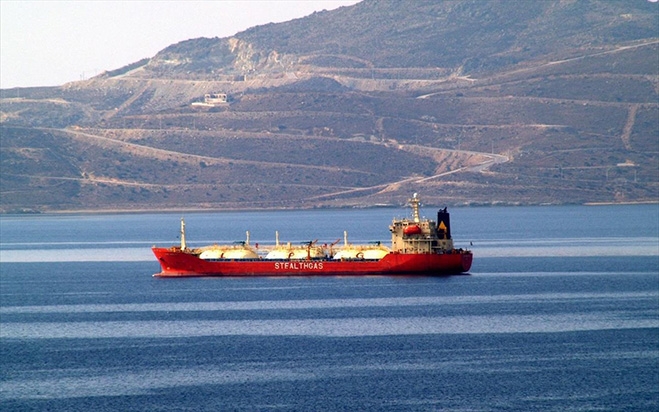
STEALTHGAS INC., a ship-owning company serving the liquefied petroleum gas (LPG) sector of the international shipping industry, announced its unaudited financial and operating results for the fourth quarter and twelve months ended December 31, 2021.
OPERATIONAL AND FINANCIAL HIGHLIGHTS• Fleet utilization of 98.3% with 62 days of technical off-hire, mainly as a result of the full completion of two drydockings in Q4 2021.• Operational utilization of 96.1%, an improved performance compared to the third quarter of 2021, mainly due to a 10% reduction of spot days.• About 49% of fleet days are secured on period charters for the remainder of 2022, with total fleet employment days for all subsequent periods generating approximately $70 million (excl. JV vessels) in contracted revenues. Period coverage for the second quarter of 2022 is currently 63%.• Completion of our spin-off of four tankers on December 3, 2021 to a new NASDAQ listed company called Imperial Petroleum Inc.• Voyage revenues of $36.1 million in Q4 21’, a decrease of $1.2 million compared to Q4 20’, mostly due to a decline in revenues stemming from the tanker vessels which were accounted in SteatlhGas financials up to December 3, 2021, the spin-off completion date.• Impairment charge of $40.2 million as a result of our tankers’ spin-off.• Net loss of $38.7 million for Q4 21’ corresponding to a loss per share of $1.02.• EBITDA1(losses) of $27.0 million in Q4 21’ compared to EBITDA of $11.8 million in Q4 20’.• Adjusted EBITDA1 of $14.6 million in Q4 21’ compared to $13.7 million in Q4 20’ due to higher operating income before impairment charges.• Low gearing is preserved even following the completion of the spin-off transaction, as debt to assets stands at 37.7% compared to 37.3% as at the end of 2020.• Total cash, including restricted cash, of $45.7 million as of December 31, 2021.• Adjusted Net Income1 of $2.8 million for Q4 21’ corresponding to an Adjusted EPS of $0.07.• For the twelve-month period ended December 31, 2021, our adjusted net income came in at $10.2 million corresponding to an Adjusted EPS of $0.27.
Fourth Quarter 2021 Results:• Revenues for the three months ended December 31, 2021 amounted to $36.1 million, a decrease of $1.2 million, or 3.2%, compared to revenues of $37.3 million for the three months ended December 31, 2020, mainly due to a decline in revenues stemming from the spin-off of our 4 tanker vessels which were accounted for in SteatlhGas financials up to December 3, 2021, the spin-off completion date, partially offset by the 15.2% increase of our time charter revenues generated from our LPG vessels.• Voyage expenses and vessels’ operating expenses for the three months ended December 31, 2021 were $4.8 million and $15.1 million, respectively, compared to $5.3 million and $14.7 million, respectively, for the three months ended December 31, 2020. The $0.5 million decrease in voyage expenses is small when considering the decline of spot days by 56%. This fact is attributed to the sharp rise of daily bunker costs by almost $2,600 (113%). The $0.4 million increase in vessels’ operating expenses compared to the same period of 2020 is due to fewer vessels on bareboat as our bareboat days declined by 15.8%, along with a further increase of our crew costs due to the COVID-19 pandemic by $0.2 million.• General and administrative expenses for the three months ended December 31, 2021 and 2020 were $1.3 million and $0.7 million, respectively. This $0.6 million increase compared to the same period of last year is due to stock compensation costs along with costs related to the spin-off transaction.• Drydocking costs for the three months ended December 31, 2021 and 2020 were $0.9 million and $0.9 million, respectively, and both relate to the full completion of two drydockings.• Depreciation for the three months ended December 31, 2021 and 2020, was $8.6 million and $9.5 million, respectively, as the number of our vessels declined following the spin-off of our four tanker vessels.• Impairment loss for the three months ended December 31, 2021 was $41.5 million and is mainly attributed to the spin-off transaction. Impairment loss for the three months ended December 31, 2020 was $0.7 million relating to one of our oldest vessels.• Interest and finance costs for the three months ended December 31, 2021 and 2020, were $3.1 million and $3.1 million, respectively. Although interest charges declined by almost $0.4 million compared to the same period of last year due to the decline of LIBOR rates, we incurred about $0.4 million of swap prepayment and arrangement fees in relation to loan refinancings.• Equity (losses)/earnings in joint ventures for the three months ended December 31, 2021 and 2020 was a gain of $1.7 million and a loss of $0.5 million, respectively. The $2.2 million increase from the same period of last year is mainly due to increased operating revenues which enhanced the profitability stemming from our joint venture arrangements.• As a result of the above, for the three months ended December 31, 2021, the Company reported a net loss of $38.7 million, compared to a net loss of $0.7 million for the three months ended December 31, 2020. The weighted average number of shares outstanding for the three months ended December 31, 2021 and 2020 was 37.9 million and 37.9 million, respectively.• Loss per share, basic and diluted, for the three months ended December 31, 2021 amounted to $1.02 compared to loss per share of $0.02 for the same period of last year.• Adjusted net income was $2.8 million corresponding to an Adjusted EPS of $0.07 for the three months ended December 31, 2021 compared to adjusted net income of $1.1 million corresponding to an Adjusted EPS of $0.03 for the same period of last year.• EBITDA for the three months ended December 31, 2021 amounted to losses of $27.0 million. Reconciliations of Adjusted Net Income, EBITDA and Adjusted EBITDA to Net (Loss)/Income are set forth below.• An average of 39.7 vessels were owned by the Company during the three months ended December 31, 2021 compared to 42.1 vessels for the same period of 2020.
Twelve Months 2021 Results:• Revenues for the twelve months ended December 31, 2021, amounted to $150.2 million, an increase of $5.2 million, or 3.6%, compared to revenues of $145.0 million for the twelve months ended December 31, 2020, primarily due to the reduction of our bareboat activity by 47.6% (equivalent to 1,630 days) where revenues are inherently lower, along with an increase in spot days.• Voyage expenses and vessels’ operating expenses for the twelve months ended December 31, 2021 were $22.2 million and $61.5 million, respectively, compared to $14.1 million and $53.3 million for the twelve months ended December 31, 2020. The $8.1 million increase in voyage expenses was an outcome of the 16.5% (or 435 days) increase of spot days in conjunction with a year-on-year increase of our daily bunker costs by 50.4%. The $8.2 million increase in vessels’ operating expenses, is due to the seven vessels (six small LPGs and our aframax tanker), which in 2020 were on bareboat either for the entire year or for a fair amount of time, while during the whole of 2021 operated either on time charter or in the spot market for which we incur operating costs. Operating expenses were also affected by a rise in crew related costs due to the COVID-19 pandemic, mostly evident from the second half of the year 2021 and onwards.• General and administrative expenses for the twelve months ended December 31, 2021 were $4.3 million and $2.3 million, respectively. This $2.0 million increase compared to the same period of last year is primarily due to stock compensation costs along with costs related to the spin off transaction.• Drydocking costs for the twelve months ended December 31, 2021 and 2020 were $5.3 million and $3.6 million, respectively. The costs for the twelve months ended December 31, 2021 mainly related to the drydocking of eight small LPG vessels, while the costs for the same period of last year related to the drydocking of six small LPG vessels and the drydocking of our aframax tanker.• Depreciation for the twelve months ended December 31, 2021, was $37.1 million, a $0.4 million decrease from $37.5 million for the same period of last year, primarily due to the decline of the number of our vessels following the spin-off of our four tanker vessels that was completed on December 3, 2021.• Impairment loss for the twelve months ended December 31, 2021 was $44.6 million; $40.2 million is attributed to the spin-off transaction while the remaining $4.4 million relates to four vessels, one older vessel and three vessels for which the Company entered into separate agreements to sell them to third parties. Impairment loss for the twelve months ended December 31, 2020 was $3.9 million relating to four of our oldest vessels.• Interest and finance costs for the twelve months ended December 31, 2021 and 2020 were $12.7 million and $14.1 million respectively. The $1.4 million decrease from the same period of last year is mostly due to the decline of LIBOR rates along with the reduction in our leverage, partially offset by the incurrence of refinancing related costs.• Equity earnings in joint ventures for the twelve months ended December 31, 2021 and 2020 was $8.3 million and $2.7 million, respectively. The $5.6 million increase from the same period of last year is mainly due to the gain on sale of one of the vessels owned by the MGC joint venture arrangement which was sold in 2021.• As a result of the above, the Company reported a net loss for the twelve months ended December 31, 2021 of $35.1 million, compared to a net income of $12.0 million for the twelve months ended December 31, 2020. The weighted average number of shares outstanding for the twelve months ended December 31, 2021 and 2020 was 37.9 million and 38.4 million, respectively.• Loss per share for the twelve months ended December 31, 2021 amounted to $0.93 compared to earnings per share of $0.31 for the same period of last year.• Adjusted net income was $10.2 million corresponding to an Adjusted EPS of $0.27, for the twelve months ended December 31, 2021 compared to adjusted net income of $16.9 million corresponding to an Adjusted EPS of $0.44, for the same period of last year.• EBITDA for the twelve months ended December 31, 2021 amounted to $14.7 million. Reconciliations of Adjusted Net Income, EBITDA and Adjusted EBITDA to Net (Loss)/Income are set forth below.• An average of 41.3 vessels were owned by the Company during the twelve months ended December 31, 2021, compared to 41.6 vessels for the same period of 2020.• As of December 31, 2021, cash and cash equivalents amounted to $32.1 million and total debt amounted to $301.0 million. During the twelve months ended December 31, 2021 debt repayments amounted to $173.0 million.
Fleet Update Since Previous AnnouncementThe Company announced the conclusion of the following chartering arrangements:
• A one-year time charter for its 2016 built LPG carrier the Eco Nemesis, to an Oil Major up until March 2023.• A one-year time charter for its 2014 built LPG carrier the Eco Corsair, to an Oil Major up until February 2023.• A one-year time charter for its 2015 built LPG carrier the Eco Royalty, to an Oil Major until February 2023.• A five months’ time charter extension for its 2020 built LPG carrier the Eco Texiana, to an Oil Major up until July 2022.• A five months’ time charter extension for its 2012 built LPG carrier the Gas Husky, to an Oil Major up until July 2022.• A three months’ time charter extension for its 2020 built LPG carrier the Eco Alice, to an International trading house until April 2022.· A three months’ time charter extension for its 2012 built LPG carrier the Gas Flawless, to an international LP trader up until March 2022.• A one month time charter for its 2016 built LPG carrier the Eco Nical, to an International LPG trader up until March 2022.• A one month time charter for its 2011 built LPG carrier the Gas Cerberus, to an International trading house up until April 2022.With these charters, the Company has total contracted revenues of approximately $70 million.
For the remainder of the year 2022, the Company has about 49% of fleet days secured under period contracts.
Board Chairman Michael Jolliffe CommentedYear 2021 has been throughout its course demanding, as it required shipping companies to adapt to the pressures arising from the ongoing COVID-19 pandemic, along with inflationary pressures as an outcome of rising energy prices. Regrettably, the Russian war outbreak in Ukraine has made our global reality uncertain with considerable effects on humanitarian, geopolitical and economic aspects; LPG trade will not remain unaffected, and we may see direct effects such as changes in trade patterns as well as indirect ones such as further increases in energy prices, and various other costs that may increase such as insurance war risk premiums.
Regardless of the dire environment in 2021, StealthGas followed a dynamic pace taking the strategic decision to become a pure player in the broader LPG market; thus, transferring the tankers to a separate listed entity; equally important, we underwent a large scale project of refinancing the majority of our fleet reaping benefits on both cash flow and costs.
Our year ended with a profit of $10.2 million excluding impairment charges, a decent performance when taking into consideration the large increase in our voyage costs, crew costs related to the COVID-19 pandemic as well expenses for drydocking again due to COVID-19 yard restrictions.
Going forward we cannot predict our market’s reality especially in such erratic times; however, our sizeable fleet, our market’s strong fundamentals, LPG rates improvement in the fourth quarter of 2021 along with our healthy capital structure are the strong points upon which we will rely, despite any market disturbances we may face.
Update on Crédit Agricole S.A.’s financial situation in Ukraine and Russia
In the current situation, of war in Ukraine and crisis with Russia, Crédit Agricole Group wishes to be transparent regarding its exposure to these two countries. The activities of the Group in Ukraine and Russia are locally operated through two 100% owned subsidiaries: the international retail bank Crédit Agricole Ukraine and the subsidiary of Crédit Agricole CIB in Russia, CACIB AO. In 2021, the activities of CA Ukraine and Crédit Agricole CIB AO represented the following contributions:
Country Net banking income excluding intragroup eliminations (in millions of euros) Average headcount (in FTE) Earnings before tax (in millions of euros) Ukraine 125 2,286 58 Russia 22 168 5
The total exposure (on-shore and off-shore) of Crédit Agricole S.A. in these two countries represents approximately 0.6% of the total commercial lending portfolio as of 31 December 2021.
Ukraine: The commercial lending commitments1 for Ukraine amount to eq. €1.5 billion as of 31 December 2021, i.e. approximately 0.15% of Crédit Agricole S.A.’s commercial lending portfolio. They are almost all booked at the Crédit Agricole Ukraine level and are locally financed. As of 31 December 2021, Crédit Agricole Ukraine is a provider of short term liquidity to Crédit Agricole S.A. The own funds of Credit Agricole Ukraine amount to €226 million as of 31 December 20212.
Russia: The commercial lending commitments3 for Russia as of 31 December 2021 amount to approximately 0.45% of Crédit Agricole S.A.’s commercial lending portfolio4.
The exposures booked in CACIB AO subsidiary represent eq. of €540 million as of 31 of December 2021. All of the credit portfolio is locally refinanced. The own funds of the subsidiary amount to approximately €150 million, of which €80 million in equity and €70 million in subordinated debt. The bulk of assets consists in loans to local corporates, mainly in rubles, 1/3 of which benefits from the parent multinational company’s guarantee5 and of a sovereign exposure corresponding to the excess liquidity of the subsidiary deposited short term at the Central Bank of Russia in the context of its regulatory liquidity and ratio requirements.
The exposures booked outside of CACIB AO, so-called off-shore exposures, can be split into on-balance sheet and off-balance sheet.
– The on-balance share of off-shore exposures amounts to eq. of €2.9 billion6 as of 31 December 2021. This portfolio mainly pertains to fifteen large Russian corporates, notably producers and exporters of commodities, leaders on the market in key economic sectors of their country. The sectorial break down is the following: 52% heavy industry (mining, steel, fertilizers), 36% energy (oil and gas), 6% other transports, 4% shipping, and 2% aerospace. Its quality is strong: 96% of the portfolio is rated investment grade in the internal rating scale as of end December 2021. It is mainly corporate finance for 62%, trade finance for 25% and the rest corresponds to asset financing (aerospace, project, shipping). The portfolio is 56% in USD, 38% in EUR, and 6% in CHF.
– The off-balance sheet share of off-shore exposures amounts to around €1.5 billion as of 31 December 2021. It is mainly corresponding to short-term trade finance activities (in particular documentary credit and financial guarantees), and, to a lesser extent, to confirmed un-drawn credit facilities.
The variation risk linked to derivative transactions is limited and amounts to €60 million as of 31 December 2021.
Finally, there has been no new financing granted to Russia counterparties since the beginning of the conflict.
All in, these exposures, which are of a limited size and of good quality, are under a close monitoring.
The evaluation of the situation has no consequences upon the distribution of the 2021 Credit Agricole S.A dividend that will be submitted to the Shareholders Meeting of 24 March 2022. As a reminder, Credit Agricole Group’s solvency ratio amounts to 17.5% and that of Crédit Agricole S.A. amounts to 11.9% as of 31 December 2021 (CET1 capital levels respectively amount to €102.7 billion and €44.9 billion).
1 On and off-balance sheet, excluding sovereign debt exposure on the balance sheet of Crédit Agricole Ukraine, which amounts to €0.3 billion as of 31 December 2021.
2 Out of which eq. of €201 million of equity and eq. of €25 million of subordinated debt, proforma of the dividend distribution amounting to €16 million and paid on 23 February 2022.
3 On and off-balance sheet, no exposure to Russia sovereign debt as of 31 December 2021
4 Excluding Indosuez Wealth Management Russian exposures, that currently represent around €250 million.
5 Covering political Russian risk
6 Drawn share of the credit facilities, net of Export Credit Agency guarantees, excluding variation risk
EIB Institute: €2.5 million donation for Ukraine

As part of the EIB Group support to Ukraine, the EIB Institute will coordinate a humanitarian aid donation of €2.5 million to help the people affected by the war in Ukraine. The donation comes on top of €668 million of financing approved last week as part of the EIB’s Ukraine Solidarity Package.
The EIB Institute partners with Caritas, the Red Cross (IFRC), Johanniter, Malteser International, Médecins du Monde, Save the Children and UNICEF, which will use this donation to provide food, water, medicine, protection and trauma care for people impacted by the conflict in Ukraine and its neighbouring countries.
The EIB Institute promotes and support social, cultural, and academic initiatives with European stakeholders and the public at large. It is a key pillar of the EIB Group’s community and citizenship engagement.