
Increased Voyage Revenues Propel Second Quarter Net Income for Dynagas LNG Partners LP
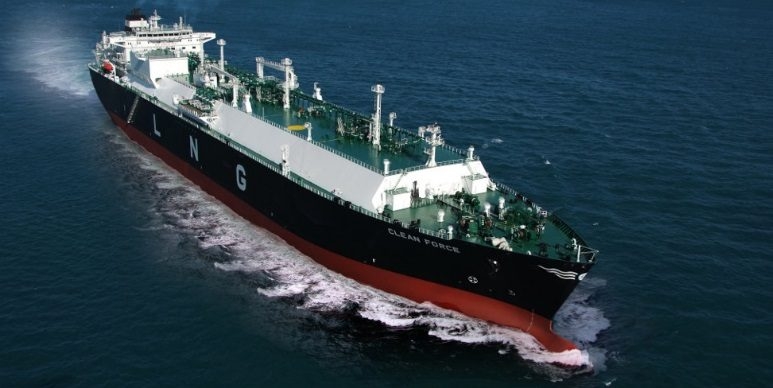
Dynagas LNG Partners LP, an owner and operator of liquefied natural gas (“LNG”) carriers, announced its results for the three and six months ended June 30, 2020.
Quarter Highlights:
Net income of $6.4 million and earnings per common unit of $0.10, after accounting for $3.4 million of non-cash market to market interest rate swap losses;Adjusted Net Income(1) of $9.9 million and Adjusted Earnings per common unit of $0.20 excluding the non-cash mark to market interest rate swap losses;Adjusted EBITDA(1) of $24.1 million;100% fleet utilization;Declared and paid cash distribution of $0.5625 per unit on its Series A Preferred Units (NYSE: “DLNG PR A”) for the period from February 12, 2020 to May 11, 2020 and $0.546875 per unit on the Series B Preferred Units (NYSE: “DLNG PR B”) for the period from February 22, 2020 to May 21, 2020; andEntered into a floating to fixed interest rate swap transaction effective from June 29, 2020 which provides for a fixed 3-month LIBOR rate of 0.41% based on notional values that reflect the amortization schedule of 100% of the Partnership’s debt outstanding under its $675 Million Credit Facility, until the $675 Million Credit Facility matures in September 2024.
Subsequent Events:
Declared a quarterly cash distribution of $0.5625 on the Series A Preferred Units for the period from May 12, 2020 to August 11, 2020, which was paid on August 12, 2020;Declared a quarterly cash distribution of $0.546875 on the Series B Preferred Units for the period from May 22, 2020 to August 21, 2020, which was paid on August 24, 2020; andIn August 2020, the Partnership entered into an amended and restated ATM Sales Agreement (the “A&R Sales Agreement”), for the offer and sale of common units representing limited partnership interests, having an aggregate offering price of up to $30.0 million (the “Current ATM Program”). Upon entry into the A&R Sales Agreement, the Partnership terminated its prior at-the-market program established in July 2020 (the “Prior ATM Program”). At the time of such termination, $0.4 million of the Partnership’s common units out of an aggregate of $30.0 million of its common units were sold pursuant to the Prior ATM Program.(1) Adjusted EBITDA, Adjusted Net Income, and Adjusted Earnings per common unit are not recognized measures under U.S. GAAP. Please refer to Appendix B of this press release for the definitions and reconciliation of these measures to the most directly comparable financial measures calculated and presented in accordance with U.S. GAAP and other related information.
CEO Commentary:
We are pleased to report the results for the three months and six months ended June 30, 2020. All six LNG carriers in our fleet are operating under their respective long-term charters with international gas producers with an average remaining contract term of 8.1 years. The earliest contracted re-delivery date for our six LNG carriers is in the third quarter of 2021 (the Arctic Aurora), with the next carrier (the Clean Energy) becoming available for re-chartering in the first quarter of 2026 at the earliest.
For the second quarter of 2020, we reported Net Income of $6.4 million and Adjusted EBITDA of $24.1 million. This improved performance is attributable to an increase in voyage revenues and a decrease in interest and finance costs compared to the corresponding period in 2019, coupled with stable vessel operating expenses during this period.
Despite the ongoing operational challenges the industry is facing as a result of the COVID-19 outbreak, we are pleased to report 100% utilization for our fleet for the second quarter of 2020. The ongoing impact of the COVID-19 outbreak has been operationally manageable due to our manager’s COVID-19 response plan which has been implemented with the support of our seafarers, charterers and employees, for which we are grateful.
Pursuant to our general objective to manage the cost of debt, we made use of the historically low interest rate environment and entered into a floating to fixed interest rate swap transaction effective from June 29, 2020 until the existing $675.0 Million Credit Facility expires in 2024. The swap provides for a fixed 3-month LIBOR rate of 0.41% and an effective interest rate cost of 3.41% (including margin) applicable for notional amounts matching the full amount and period of our outstanding debt. This was a key development in the execution of our strategic plan as it de-risks our exposure to interest rate volatility while securing a low cost of debt until 2024.
Additionally, in August 2020 we entered into an “at the market” offering program, pursuant to which the Partnership may offer and sell up to $30 million of its common units. Going forward, we intend to continue our strategy of using our cash flow generation to deleverage our balance sheet, reinforce our liquidity and generate cash so as to build equity over time. This, we believe, will enhance our ability to pursue future growth initiatives.
Three Months Ended June 30, 2020 and 2019 Financial Results
Net Income for the three months ended June 30, 2020 was $6.4 million as compared to a Net Income of $0.9 million in the corresponding period of 2019, which represents an increase of $5.5 million, or 611.1%. This increase was mainly attributable to an increase in voyage revenues as well as a decrease in interest and finance costs compared to the corresponding period of 2019. The increase in net income was partially offset by a $3.4 million unrealised loss on the Partnership’s interest rate swap transaction recognised in this quarter (no derivative instruments in the corresponding quarter of 2019) further to the commencement of the Partnership’s interest rate swap transaction effective from June 29, 2020 (see further below).
Adjusted Net Income (which excludes non cash flow items including the above mentioned unrealized loss of $3.4 million on the interest rate swap transaction), for the three months ended June 30, 2020 was $9.9 million compared to $0.8 million in the corresponding period of 2019, representing a net increase of $9.1 million or 1,137.5%.
Voyage revenues for the three months ended June 30, 2020 were $33.9 million as compared to $30.8 million for the corresponding period of 2019, which represents an increase of $3.1 million, mainly as a result of the higher revenues earned on the Lena River following its delivery to its multi-year contract with Yamal Trade Pte (“Yamal”) in July 2019.
The Partnership reported average daily hire gross of commissions(1) of approximately $62,200 per day per vessel in the three-month period ended June 30, 2020, compared to approximately $55,100 per day per vessel in the corresponding period of 2019. During the three-month periods ended June 30, 2020 and 2019, the Partnership’s vessels operated at 100% and 94.4% utilization, respectively.
Vessel operating expenses were $6.9 million in both three-month periods ended June 30, 2020 and 2019, which corresponds to the same daily rate per vessel of $12,630.
Adjusted EBITDA for the three months ended June 30, 2020 was $24.1 million, as compared to $20.9 million for the corresponding period of 2019. The increase of $3.2 million, or 15.3%, was mainly due to the increase in revenues as explained above.
Interest and finance costs, net, were $6.3 million in the three months ended June 30, 2020 as compared to $12.5 million in the corresponding period of 2019, which represents a decrease of $6.2 million, or 49.6% due to the lower weighted average interest and the reduction in the average interest bearing debt as compared to the corresponding period of 2019.
On May 7, 2020, the Partnership entered into a floating to fixed interest rate swap transaction effective from June 29, 2020. It provides a fixed 3-month LIBOR rate of 0.41% based on notional values that reflect the amortization schedule of 100% of the Partnership’s debt outstanding under its $675 Million Credit Facility, until the $675 Million Credit Facility matures in September 2024. The Partnership recognized an unrealised loss on the derivative financial instrument of $3.4 million as of June 30, 2020.
For the three months ended June 30, 2020, the Partnership reported Earnings per common unit and Adjusted Earnings per common unit, basic and diluted, of $0.10 and $0.20 respectively, after taking into account the distributions relating to the Series A Preferred Units and the Series B Preferred Units on the Partnership’s Net income/Adjusted Net Income. Earnings per common unit and Adjusted Earnings per common unit, basic and diluted, are calculated on the basis of a weighted average number of 35,490,000 common units outstanding during the period and in the case of Adjusted Earnings per common unit after reflecting the impact of the non-cash items presented in Appendix B of this press release.
Adjusted Net Income, Adjusted EBITDA and Adjusted Earnings/(Loss) per common unit are not recognized measures under U.S. GAAP. Please refer to Appendix B of this press release for the definitions and reconciliation of these measures to the most directly comparable financial measures calculated and presented in accordance with U.S. GAAP.
Liquidity/ Financing/ Cash Flow Coverage
During the three months ended June 30, 2020, the Partnership generated net cash from operating activities of $8.1 million as compared to $7.0 million in the corresponding period of 2019, which represents an increase of $1.1 million, or 15.7%.
As of June 30, 2020, the Partnership reported total cash of $63.3 million (including $50.0 million of restricted cash). The Partnership’s outstanding indebtedness as of June 30, 2020 under the $675.0 Million Credit Facility amounted to $639.0 million, gross of unamortized deferred loan fees and including $48.0 million, which was repayable within one year.
As of June 30, 2020, the Partnership had unused availability of $30.0 million under its interest free $30.0 million revolving credit facility with its Sponsor, or the $30.0 Million Revolving Credit Facility, which was extended on November 14, 2018, and is available to the Partnership at any time until November 2023.
Vessel Employment
As of September 3, 2020, the Partnership had estimated contracted time charter coverage(1) for 100% of its fleet estimated Available Days (as defined in Appendix B) for 2020, 92% of its fleet estimated Available Days for 2021 and 83% of its fleet estimated Available Days for 2022.
As of the same date, the Partnership’s contracted revenue backlog estimate was $1.18 billion, with an average remaining contract term of 8.1 years.
Globus Maritime Reports 35% Decrease in Voyage Revenues on COVID-19 Impact
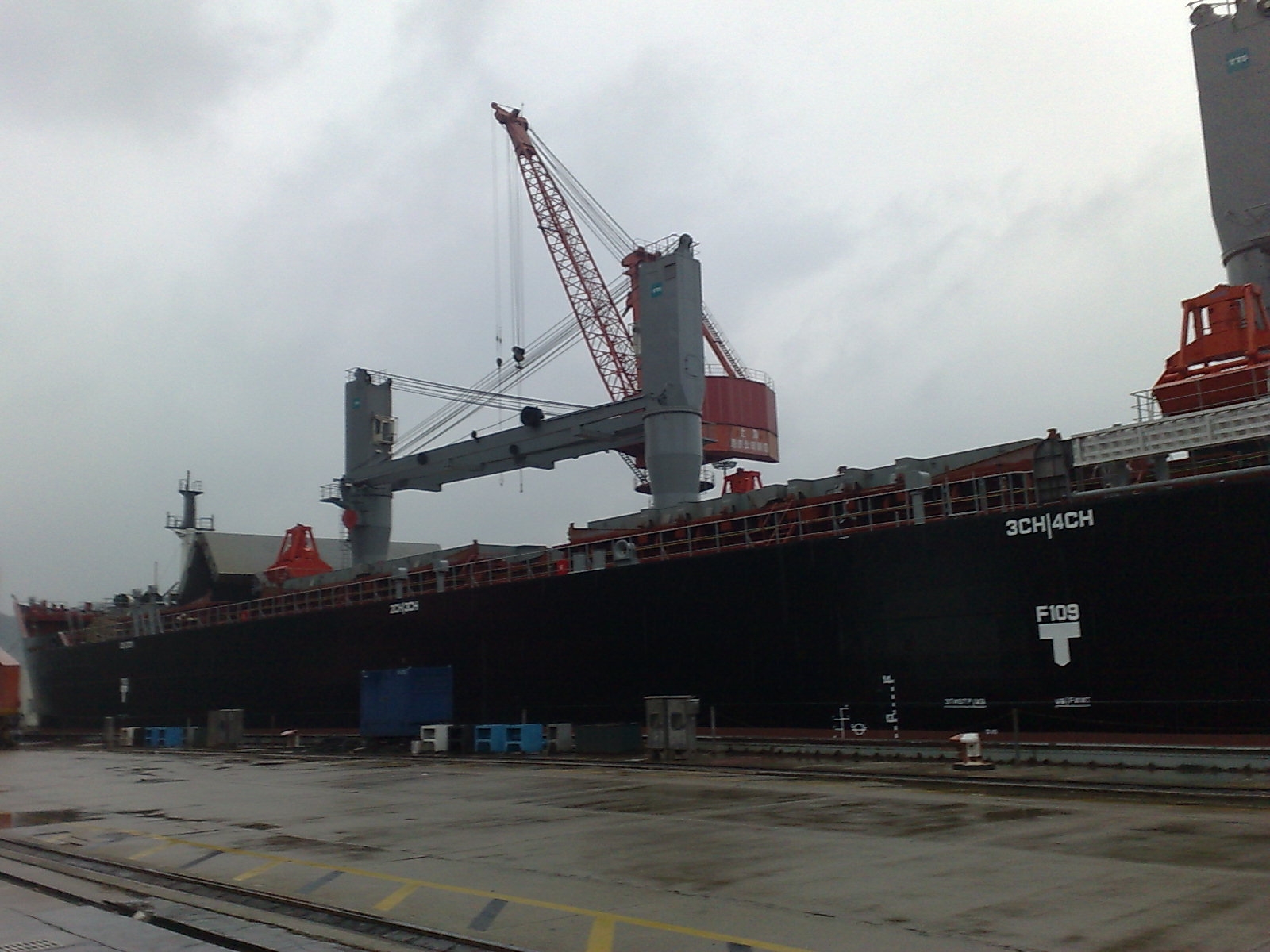
Globus Maritime Limited, a dry bulk shipping company, reported its unaudited consolidated operating and financial results for the quarter ended March 31, 2020.
Current Fleet Deployment
All our vessels are currently operating on short term time charters (“on spot”).
Management Discussion and Analysis of the Results of Operations
First Quarter of the Year 2020 compared to the First Quarter of the Year 2019
Total comprehensive loss for the first quarter of the year 2020 amounted to $9 million or $1.55 basic and diluted loss per share based on 5,816,904 weighted average number of shares, compared to total comprehensive loss of $0.3 million for the same period last year or $0.08 basic and diluted loss per share based on 3,209,604 weighted average number of shares.
Voyage revenues
During the three-month period ended March 31, 2020 and 2019, our Voyage revenues reached $2.3 million and $3.5 million respectively. The 35% decrease in Voyage revenues was mainly attributed to the decrease in the average time charter rates achieved by our vessels during the first quarter of 2020 compared to the same period in 2019. Daily Time Charter Equivalent rate (TCE) for the first quarter of 2020 was $2,173 per vessel per day against $6,736 per vessel per day during the same period in 2019 corresponding to a decrease of 68%, which is attributed to the outbreak of COVID-19 virus.
Voyage expenses reached $1.4 million during the first quarter of 2020 compared to $0.5 million during the same period last year. Voyage expenses include commissions on revenues, port and other voyage expenses and bunker expenses. Bunker expenses mainly refer to the cost of bunkers consumed during periods that our vessels are travelling seeking employment.
Average daily operating expenses during the three-month periods ended March 31, 2020 and 2019 were $4,521 per vessel per day and $4,634 per vessel per day respectively, corresponding to a decrease of 2%.
Depreciation
Depreciation charge during the first quarter of 2020 reached $0.6 million compared to $1.2 million during the same period in 2019. This is mainly attributed to the impairment loss of $29.9 million we recognized in 2019 as the recoverable amounts of the vessels were lower than their carrying amounts.
Impairment loss
As of March 31, 2020, the Company concluded that the recoverable amounts of the vessels were lower than their carrying amounts and recognized an impairment loss of $4.6 million.
Interest expense and finance costs
Interest expense and finance costs reached $1.1 million during the first quarter of 2020 compared to $0.7 million in 2019.
Gain/(Loss) on derivative financial instruments
The loss on the derivative financial instruments is mainly attributed to the valuation of the “Convertible Note”. Further to the conversion clause included into the Convertible Note for the period ended March 31, 2020 a total amount of approximately $1,168, principal and accrued interest, was converted to share capital with the conversion price of $1 per share and a total number of 1,167,767 new shares issued in name of the holder of the Convertible Note. These conversions resulted to a loss of approximately $0.3 million recognized in the consolidated statement of comprehensive loss.
Liquidity and capital resources
As of March 31, 2020 and 2019, our cash and bank balances and bank deposits (including restricted cash) were $2.4 and $4.5 million respectively.
Net cash used in operating activities for the three month period ended March 31, 2020 was $2 million compared to $1.1 million during the respective period in 2019. The increase in our cash used in operating activities was mainly attributed to the decrease in our adjusted EBITDA from $0.3 million during the first quarter of 2019 to negative $1.6 million during the three month period under consideration.
As of March 31, 2020 and 2019 we and our vessel-owning subsidiaries had outstanding borrowings under our Loan agreements of an aggregate of $40 million and of $42.6 million respectively gross of unamortized debt discount.
Recent Developments
Convertible Note
On March 13, 2020, Company and the holder of the Convertible Note entered into a waiver regarding the Convertible Note (the “Waiver”). The Waiver waives the Company’s obligation to repay the Convertible Note on the existing maturity date of March 13, 2020 and does not require the Company to repay the Convertible Note until March 13, 2021.
Firment Shipping Inc.
On May 8, 2020, the Company and Firment Shipping Inc. agreed to enter an amended and restated agreement. The final maturity of the Firment Shipping Credit Facility was extended to October 31, 2021 and the available amount to be drawn under this Facility increased to $14.2 million.
Receipt of Nasdaq Notice of Deficiency
On March 6, 2020, the Company received written notification from The Nasdaq Stock Market dated March 2, 2020, indicating that because the closing bid price of our common stock for the last 30 consecutive business days was below $1.00 per share, we no longer meet the minimum bid price continued listing requirement for the Nasdaq Capital Market, as set forth in Nasdaq Listing Rule 5450(a)(1). Pursuant to Nasdaq Listing Rules, the applicable grace period to regain compliance was 180 days, or until August 31, 2020, but citing extraordinary market conditions, Nasdaq filed an immediately effective rule change with the Securities and Exchange Commission which, with effect from April 16, 2020, tolled the listing process until July 1, 2020. Consequently, the Company’s compliance period has effectively been extended until November 12, 2020. The Company intends to monitor the closing bid price of its common stock between now and November 12, 2020 and is considering its options, including a potential reverse stock split, in order to regain compliance with the Nasdaq Capital Market minimum bid price requirement. The Company can cure this deficiency if the closing bid price of its common stock is $1.00 per share or higher for at least ten consecutive business days during the grace period. In the event the Company does not regain compliance within the 180-day grace period, and it meets all other listing standards and requirements it may be eligible for an additional 180-day grace period. The Company intends to cure the deficiency within the prescribed grace period. During this time, the Company’s common stock will continue to be listed and trade on the Nasdaq Capital Market.
Issuance of the Series B preferred shares
On June 12, 2020, the Company entered into a stock purchase agreement and issued 5,000 of our newly-designated Series B Preferred Shares, par value $0.001 per share, to Goldenmare Limited, a company controlled by our Chief Executive Officer, Athanasios Feidakis, in return for $150,000, which amount was paid by reducing, on a dollar for dollar basis, the amount payable as executive compensation by the Company to Goldenmare Limited pursuant to a consultancy agreement.
The issuance of the Series B preferred shares to Goldenmare Limited was approved by an independent committee of the Board of Directors of the Company, which received a fairness opinion from an independent financial advisor that the transaction was for a fair value.
Impact of COVID-19 on the Company’s Business
The spread of the COVID-19 virus, which has been declared a pandemic by the World Health Organization, in 2020 has caused substantial disruptions in the global economy and the shipping industry, as well as significant volatility in the financial markets, the severity and duration of which remains uncertain.
The measures taken by governments worldwide in response to the outbreak, which included numerous factory closures, self-quarantining, and restrictions on travel, as well as potential labor shortages resulting from the outbreak, are expected to slow down production of goods worldwide and decrease the amount of goods exported and imported worldwide. Some experts fear that the economic consequences of the coronavirus could cause a recession that outlives the pandemic.
Besides reducing demand for cargo, coronavirus may functionally limit the amount of cargo that the Company and its competitors are able to move because countries worldwide have imposed quarantine checks on arriving vessels, which have caused delays in loading and delivery of cargoes. It is possible that charterers may try to invoke force majeure clauses as a result.
The pandemic has already added, and could continue to add, pressure to shipping freight rates. The impact of the COVID-19 pandemic continues to unfold and may continue to have negative effect on the Company’s business, financial performance and the results of its operations, including due to decreased demand for global seaborne dry bulk trade and dry bulk charter rates, the extent of which will depend largely on future developments. As a result, many of the Company’s estimates and assumptions required increased judgment and carry a higher degree of variability and volatility. As events continue to evolve and additional information becomes available, the Company’s estimates may change in future periods.
Crewing and Crew management operations.
Due to Covid-19 there are restrictions on travelling on many jurisdictions. We may face problems in the embarkation and disembarkation our crew members. Many airports around the world as well as many countries impose heavy travel restrictions including complete lockdowns and quarantine periods for incoming and outgoing travelers. By extent it is increasingly hard, if not restrictive, for our crews to be relieved by new crew members. We continue to monitor the situation with respect and utmost care for our seafarers, always communicating with the relevant authorities in order to assist them as much as we can in these unprecedented times.
Disruption in operations in case crew members get infected.
In case one of our crew members is found to be infected by Covid-19 this may lead to delays in cargo operations. It may also need to a detention and quarantine of the ship for an unspecified amount of time. Relevant authorities may require us to perform disinfection and fumigation operations if a crew member gets infected by Covid-19. Crew members may be quarantined if a member is found to be infected. The above may lead to increased costs and lower utilization of our fleet.
Dry docking and Repairs.
Repair yards and dry docks in the far east, usually selected for the scheduled maintenance of our vessels, may be affected by the closures and travel restrictions in their countries. Shipyard staff and third party experts as well as spare parts may be harder to procure and provide making the maintenance process potentially lengthier, costlier or unfeasible. Spare parts and supplies may be harder to produce and deliver to a shipyard where they would be utilized for a scheduled maintenance. In addition to the above, and always relating to Covid-19 travel restrictions, it will be tough for our in-house technical teams to travel to the shipyards in order to monitor the maintenance process, so they may have to be postponed or 3rd party monitoring technical crews will be hired. Last but not least classification society surveyor attendance may be restricted thus not only affecting the time spent within a repair facility but also causing scheduled survey work to be postponed as far as this is permissible.
Effect on the following technical department activities yet not limited to:
Logistics and supply of spares and expert services may incur increased costs and disruption in Planned Maintenance and consequently lead to increased failures / incidents.Office Personnel attendance is disrupted or impossible, which can have as a result inadequate supervision and lead to increased incidents in third party inspection and reduced maintenance quality.Long Term planned maintenance (dry docking) unsupervised by company personnel, that can result to lower quality and increased costs.Delays in class surveys, which can lead to postponements.The above ultimately are translated to possible increased costs and reduced maintenance quality which in the long term shall spiral to cost increases again as the aftermath shall have to be dealt with. However, there are presently insufficient statistics to reach to prediction model as regards to the actual increase in costs due to the above disruptions.
The Company has evaluated the impact of current economic situation on the recoverability of the carrying amount of its vessels. As of March 31, 2020, the Company concluded that events and circumstances triggered the existence of potential impairment of its vessels. These indicators included volatility in the charter market as well as the potential impact the current marketplace may have on the future operations. As a result, the Company performed an impairment assessment of the Company’s vessels by comparing the discounted projected net operating cash flows for each vessel to its carrying values. As of March 31, 2020, the Company concluded that the recoverable amounts of the vessels were lower than their carrying amounts and an impairment loss of $4.6 million was recorded (see also Note 5).
The pandemic had a negative impact on the Voyage Revenues of the Company for the three-month period ended March 31, 2020, which reached $2.3 million, compared to $3.5 million to the same period in 2019. The 35% decrease in Voyage revenues is attributed to the low freight rates achieved in the first quarter of 2020 due to the outbreak of COVID-19 virus.