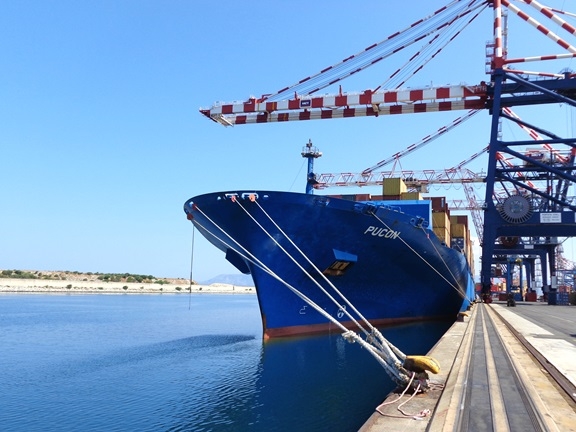
SeaRoad signs off on new €100 million vessel for 2023

Australian-based transport company SeaRoad has secured its future growth plan after finalising an agreement with German shipbuilding yard Flensburger Schiffbau-Gesellschaft (FSG) to construct a new roll-on / roll-off (RoRo) vessel with LNG propulsion worth more than 100 million euros.
The new freight vessel will join Searoad Mersey II and replace charter vessel MV Liekut to operate on Bass Strait between Melbourne and Devonport, scheduled for the last quarter of 2023.
Construction on the 210-metre-long vessel will commence in late 2021 and the ship will feature the latest technology, including LNG power, as part of SeaRoad’s commitment to sustainable practices. The vessel will have a capacity of 4,227 lane metres and capability to transport heavy cargo with a unit weight of up to 100 tonnes.
A large ship in the water
Description automatically generated with low confidence
Executive Chairman of SeaRoad, Chas Kelly, says the company is continuously evolving to be the premium freight provider across Bass Strait.
“We’re constantly looking for ways to enhance our logistics solutions for customers and with our investment in this new vessel, the team at SeaRoad is confident in the future of transport between Tasmania and the mainland,” Mr Kelly says.
“At over 40,000 tonnes gross, this will be the largest freight vessel in SeaRoad’s history, continuing to grow our capacity, and providing more options for local agriculture, aquaculture and manufacturing industries.
“We’ve been very pleased with how our two current FSG-built vessels have performed from both an efficiency and operational perspective. We look forward to continuing our successful relationship with the German shipyard and their experienced staff.”
Philipp Maracke, CEO of FSG, says the company was proud to have brought the business to Flensburg.
“This order by a long-standing customer equals an important vote of confidence in both this new model, as well as our established expertise as an innovative German newbuilding yard. Our aim is to combine superior quality and superior life-cycle value. With this new vessel, FSG and SeaRoad will make an important contribution to sustainable shipping.”
Additionally, SeaRoad has invested significantly in infrastructure and equipment in both Devonport and Port Melbourne over the past 18 months, according to Mr Kelly.
“We’ve invested more than $5 million in equipment to complement terminal activities, purchasing new heavy forklifts, terminal tractors, A-double trailer sets, side loaders, related prime movers and our fleet of rigid trucks.
“We have also begun a $6 million investment in new technology to streamline and automate our systems and processes. Meanwhile, TasPorts’ East Devonport Port Master Plan will provide the space required for our new vessel,” Mr Kelly says.
The new build agreement took a year to negotiate with border restrictions requiring SeaRoad and FSG to sign the contract 16,000 km apart during a video call.
FSG built Searoad Mersey II, which joined the fleet in 2016, and constructed MV Liekut, which joined SeaRoad under a three-year charter agreement in April 2021.
GC Rieber Shipping: Sale of vessel
GC Rieber Shipping has entered into an agreement to sell the IMR / Walk-to-Work vessel Polar Queen, built at Freire Shipyard in 2011. The gangway onboard the vessel is excluded from the sale and will remain an asset for GC Rieber Shipping’s vessels.
The sale is expected to be completed in March 2021 and will result in a positive liquidity effect of approximately NOK 22 million after repayment of the vessel`s outstanding debt.
The sale to the undisclosed buyer will see the vessel leave the offshore industry.
“This is the second sale of vessels since August 2020 and provides GC Rieber Shipping with a further strengthened balance sheet, enabling us to deliver on our strategy to develop new profitable and sustainable maritime projects”, Einar Ytredal, CEO of GC Rieber Shipping commented.
Castor Maritime Inc. Announces Vessel Acquisition
Castor Maritime Inc., a diversified global shipping company, announces that it entered, through a separate wholly-owned subsidiary, into an agreement to purchase a 2010 Korean-built Kamsarmax dry bulk carrier from an unaffiliated third-party for a purchase price of $14.8 million.
The acquisition is expected to be consummated by taking delivery of the vessel sometime in the end of the first quarter or beginning of the second quarter of this year and is subject to the satisfaction of certain customary closing conditions.
Petros Panagiotidis, Chief Executive Officer of Castor, commented: “We are very happy to announce the acquisition of our third Kamsarmax dry bulk vessel and remain committed to our plan of steadily deploying capital and growing our fleet. Upon completion of all our recently announced acquisitions, our fleet will consist of twelve vessels, doubling in size since the beginning of 2021. We are working diligently in identifying and taking advantage of attractive opportunities presented to us across vessel sizes and segments.”
Nautic Africa Launches Next-Generation 35 Metre Flagship Vessel
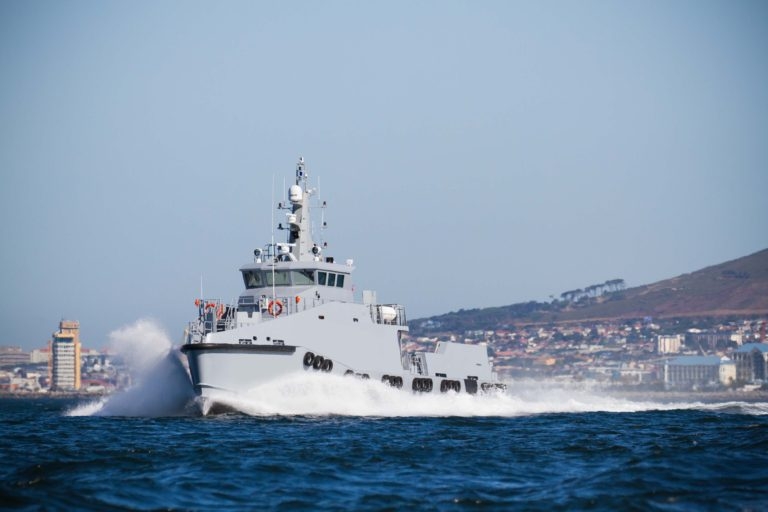
Paramount Maritime Holdings subsidiary, Nautic Africa has announced the launch of its new flagship 35m Sentinel vessel, the second of the new enhanced class, in a major milestone for the company and the wider African shipbuilding industry, due to its successful completion despite the challenges presented by the COVID-19 lockdown enforced across the globe.
Following the successful completion of sea trials, the multi-purpose vessel is destined for the Gulf of Guinea where it will be utilised for International Oil Company (IOC)-related assignments as well as escort patrols for larger vessels that have experienced an escalation of pirate attacks within 200 NM of the West African coastline.
Nautic Africa also announced that larger naval versions (40m and 47m) of the vessel have been made available due to rising interest from navies, and will be offered globally to bolster military and fishing patrol operations across EEZ waters.
The new flagship 35m Sentinel class maritime vessel, wholly designed with class leading features and manufactured in Africa, sets a new benchmark in innovative protection.It is fully compliant to the standards of naval and oil and gas (O&G) industries and International Oil Companies (IOCs) operating on the waters of the African continent and beyond.
Paramount Maritime Holdings Chief Executive Officer, James Fisher, stated: “The completion of our 35m flagship vessels during the COVID crisis is an important achievement and milestone for the South African shipbuilding industry, ushering in a new era of capability, excellence and performance. This is a celebration of what can be achieved despite facing, what seemed like, insurmountable challenges.
“Today we can celebrate the resilience of our business and the outstanding commitment of our people. I must offer special thanks to our staff and suppliers and commend them for not only ensuring our manufacturing capabilities remained fully operational, but that we went ‘the extra mile’ in both modern design and delivery, working night shifts where necessary, to ensure that we consistently set the bar in performance, innovation and safety. The updated 35m vessel will be a formidable maritime platform for customers across Africa.”
With insecurity throughout the Gulf of Guinea steadily climbing, in large part due to the region’s diverse natural resources, transnational piracy, oil bunkering and terrorism continue to be a serious threat to the region’s stability.
With passenger, crew comfort and security as top priorities in its design and manufacture, this vessel has been optimised for peak coastal operation performance, mobility and protection. The 35m Sentinel offers outstanding speed, with a range of 1150 nm cruising at 20 knots along with being capable of reaching a maximum speed of 28 knots, supported by three CAT C32 ACERT 1600 hp engines and fixed pitch propellers.
Further distinguishing this vessel from any others in the market is its exceptional ballistic protection (Wheelhouse STANAG KE Level II, Deck-house STANAG KE Level I), complete with a lifesaving ‘Super Shield’ composite wheelhouse structure and an internally clad main deck to a height of 2m. The highest levels of safety and ballistic support (for example, protection from typical assault rifle calibres) are thus ensured for the full crew, security personnel and passengers on board.
The client is a licenced Nigerian company with a 100% indigenous holding, with a product range tailored to meet specific and general requirements of major international oil companies (IOCs) operating within Nigeria’s ‘Blue Economy’ such as Chevron, ENI, Exxon-Mobil, Shell, Total and Tullow.
Pangaea Logistics Solutions Ltd. Announces Purchase of Vessel
Pangaea Logistics Solutions Ltd., a global provider of comprehensive maritime logistics solutions, announced it has purchased a vessel to add to its operating fleet. The ship was purchased in the second-hand market for USD 16.45 million. The Company will own 18 ships when the new ship is delivered to Pangaea by May 2021, and it operates a total fleet of 50-60 vessels in worldwide trades.
“This 2013 Imabari-built 61,000 dwt dry bulk vessel fits well into our core fleet and trading activities and, combined with our ice class newbuild program, is another step in our effort to renew our owned fleet with high quality and efficient tonnage,” said Ed Coll, Pangaea’s Chief Executive Officer. “We are committed to providing our clients with best in class service through our flexible owned and operated fleet. This ship, to be named Bulk Courageous, will bring our owned fleet to 18 vessels in advance of our four ice class newbuild vessels to be delivered later this year.”
Avenir LNG Limited announces the launch of the Avenir Allegiance; the world’s largest dual-purpose, LNG supply and bunkering vessel from CIMC Sinopacific Offshore & Engineering Co.
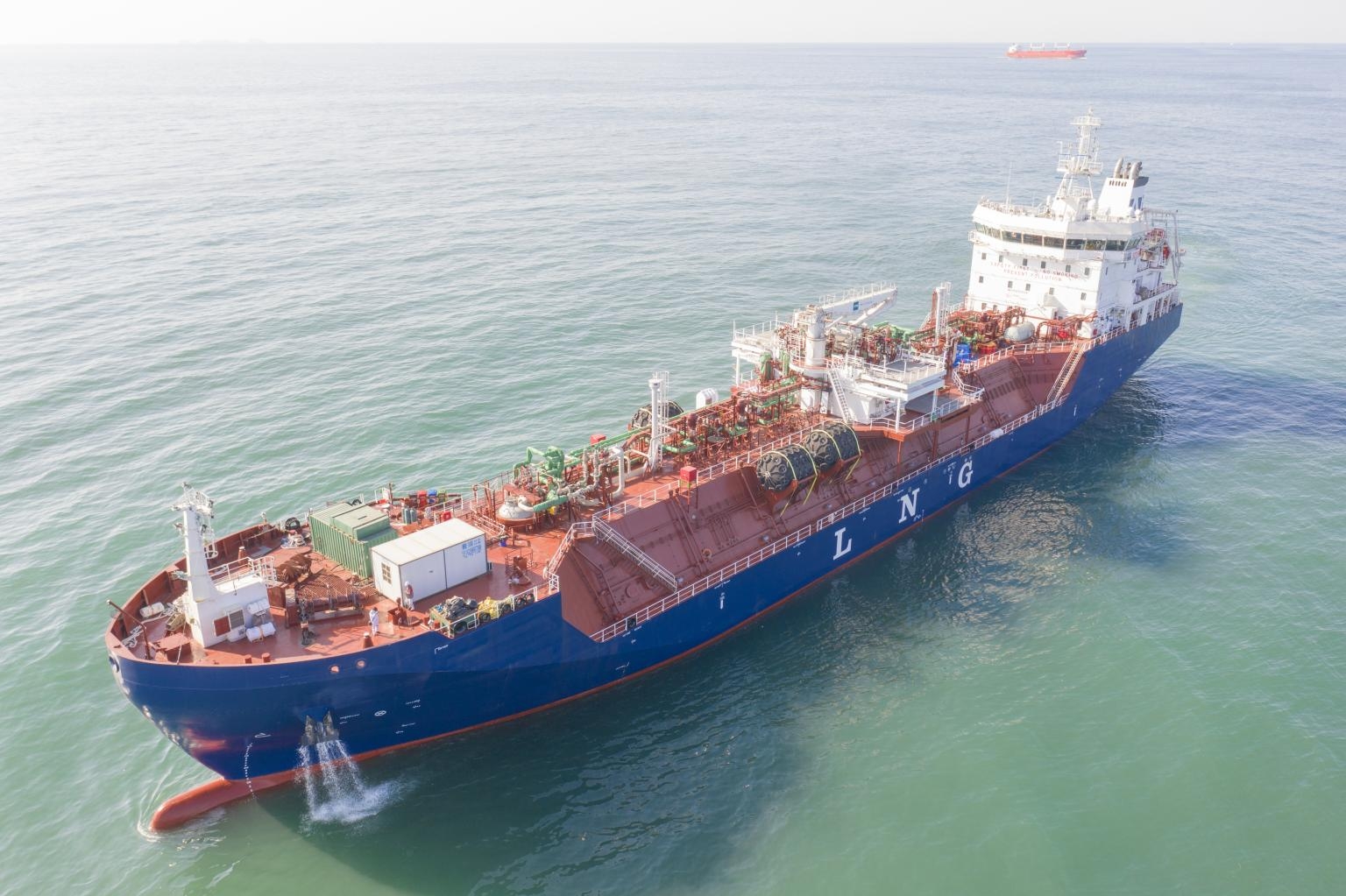
Avenir LNG Limited (NOTC:AVENIR) announces the launch of the Avenir Allegiance; the world’s largest dual-purpose, LNG supply and bunkering vessel from CIMC Sinopacific Offshore & Engineering Co. (CIMC SOE).
Avenir Allegiance was launched at 7am on January 27th 2021 at Zhoushan Changhong International Shipyard Co. Ltd. Due for delivery from CIMC SOE in the third quarter of this year, she will be the first 20,000cbm vessel to join the Avenir LNG fleet and the world’s largest LNG bunkering vessel.
Allegiance will be Cayman Island flagged and the 4th of 6 newbuilds delivered to Avenir LNG. Avenir’s first newbuild delivery (the Avenir Advantage) took place in October 2020 and will be followed by the Avenir Accolade, Aspiration, Allegiance, Ascension and Achievement this year.
Peter Mackey, CEO Avenir LNG Limited, commented: “We are delighted to see the latest, and largest, vessel in the Avenir LNG fleet being successfully launched by our partners CIMC SOE. We look forward to taking delivery of the Avenir Allegiance later this year.
As the largest LNG bunkering vessel in the world, the Avenir Allegiance is a clear demonstration of our commitment to developing new LNG supply chains globally. She will play a critical role in helping the shipping industry to transition to LNG as a more environmentally sustainable fuel. The Allegiance will operate as both an LNG bunkering vessel and an LNG supply vessel. This highly flexible vessel underscores our strategy of simultaneously unlocking multiple new LNG markets with multi-functional assets. We can deliver LNG to a broad range of customers from a single vessel, improving efficiency in the LNG supply chain and ultimately reducing costs to our end-customers.”
About Avenir LNG Limited: Avenir LNG supplies small-scale LNG to off-grid industry, power generation and transport fuel sectors as well as providing infrastructure to support the development of LNG as a marine fuel.
Coastal Dry Bulker named “Kaiei Maru”; New Vessel Will Serve Kaita Biomass Power
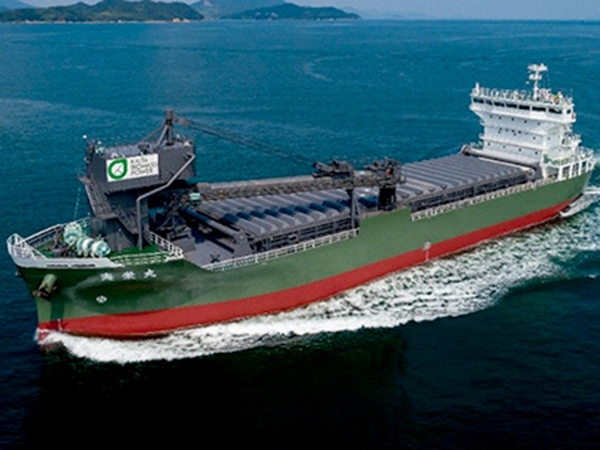
Mitsui O.S.K. Lines, Ltd. yesterday announced that naming and delivery ceremonies for the coastal dry bulker Kaiei Maru were held at Murakami Hide Shipbuilding Co., Ltd. (Eiji Murakami; Headquarters: Imabari-shi, Ehime Prefecture). Among those on hand for the event were Takeshi Tanimura, president of Kaita Biomass Power Co., Ltd. (Headquarters: Kaita-cho, Aki-gun, Hiroshima Prefecture). The Kaiei Maru will be operated by MOL Group company MOL Coastal Shipping, Ltd. (President: Masatoshi Nakajima; Headquarters: Minato-ku, Tokyo) and serve Kaita Biomass Power.
The Japanese name “Kaiei” is the combination of the letter “kai” derived from the city name Kaita-cho” and the letter “ei,” which expresses wishes for prosperity. The vessel’s name reflects its role in contributing to the future growth of the power plant and Kaita-cho.
The Kaiei Maru is a coastal dry bulker equipped with a self-unloader (Note 1) and will serve in routine transport of mainly woody biomass fuels, which will be used for thermal plants, from relay terminals in Japan to the Kaita Power Plant.
Biomass is a plant-derived woody fuel, and is referred as a fuel that can realize the goal of becoming “carbon neutral;” in other words not increasing density of combusted carbon dioxide (CO2) in the atmosphere, based on the idea that CO2 is absorbed by trees in the atmosphere.
The MOL Group continually offers efficient, high-quality services for customers in a proactive manner.
LOA: 99.99m
Breadth: 18.40mDraft: About 5.00mGross tonnage: 2,137 tonsDeadweight tonnage: About 3,800 tonsCargo hold capacity: About 4,300 m3Main engine: Diesel internal combustion engineSpeed: 11.8 knotsLoading capacity: 1,000m3/hShipbuilder: Murakami Hide Shipbuilding Co., Ltd.Ship operator: MOL Coastal Shipping, Ltd.
Ocean Azul ready for toothfish fishery: LOS Marine delivers world´s biggest autoline vessel
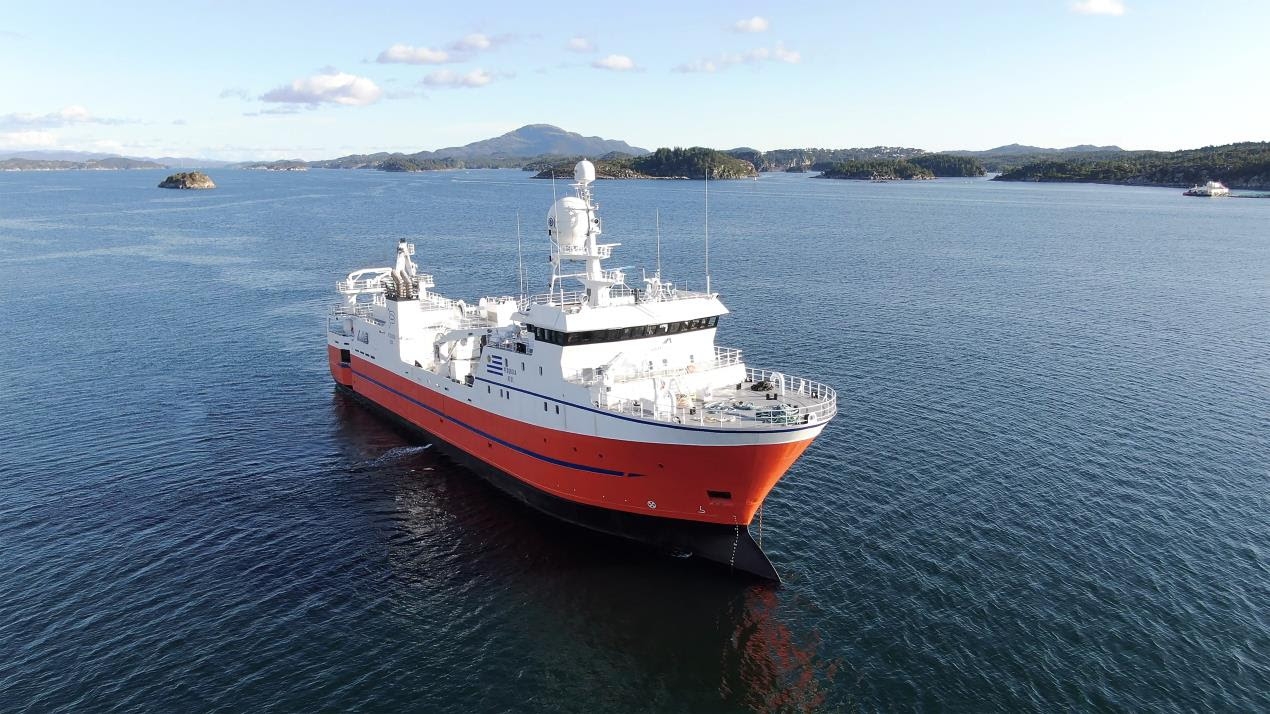
Norwegian yard LOS Marine transforms old trawler Kovda into high tech autoline vessel Ocean Azul.
Deep water longline fishing presents a number of challenges for both fishermen and ship owners. In partnership with Sago Solutions, LOS Marine has created a new and innovative solution that can keep both crew and catch safer at sea.
12 meters longer
Ship owners Pescuera Azul Norge AS (PAN) bought Kovda, an old trawler built in 1987, two years ago. Since arriving at LOS Marine´s yard on the west coast of Norway, the hull of Kovda has been extended 12 meters and the fishing vessel is now ready to set sail under its new name Ocean Azul.
“The ship is like a brand new vessel. Together with LOS Elektro we have rebuilt Ocean Azul to become a high-tech autolining vessel – the biggest of its kind in the world,” says Olav Hilmar Koløy, CEO at LOS Marine.
First of a kind
Ocean Azul and its crew are soon off for Uruguay to fish Patagonian toothfish. Behind the eye-catching orange and white exterior are several innovative solutions. Sago Solutions´ patent pending solution Sago Combi Pool has been installed to take on challenges with bird mortality as well as creating a safe and comfortable working environment for the crew.
“Sago Combi Pool is a stern extension module with an internal pool and working area. Since the longline is both set and hauled through the same pool and under water, sea birds won´t be able to dive in for the baited hooks,” Olav Hilmar Koløy says.
Securing the catch
Ocean Azul will also fish with Sago Solution´s Sago Extreme, a patented solution for automatic longlines – designed to secure the catch at seabed, making it unavailable for whale depredation and reducing the risk of losing catch in the hauling process.
“Whale depredation is a big problem for deep water longline fishing. With the Sago Extreme module, the catch is secured at seabed, making it unavailable for whales and sharks to feed off while hauling,” says Koløy.
The contract with PAN is the biggest in LOS Marine´s history. “We are very proud to have completed this major innovative rebuild. Ocean Azul will be noticed by the fishing industry around the world. Now we wish to thank LOS Elektro and our other collaborators on this project. We also thank Pesquera Azul Norway for the job, and wish them good luck with their new ship,” says Koløy.
FACTS
Ocean Azul
Built in 1987 as Kovda. Rebuild complete in 2020.Length: 72,5 metersWidth: 13 metersNumber of beds: 39Engine: 2x V12 3500hp ABC engine (main and generator)Gear from VoldaMain board: Austevoll ElektroPropulsion system: Wärtsilä
Vessel Insurance Premiums Jump As JWC Redraws Gulf Of Guinea Risk Area
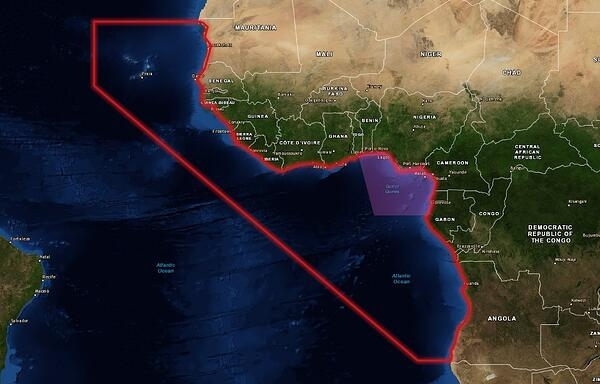
Following an increase in kidnap for ransom attacks in the Gulf of Guinea beyond Nigeria’s economic zone, the Joint War Committee has redrawn the listed extended risk area in the West Africa region.
The Joint War Committee* (JWC) has expanded its Gulf of Guinea listed area further south and east following an uptick in piracy attacks. The JWC’s listed area was last changed in 2013 and previously covered only the exclusive economic zones of Togo, Benin and Nigeria north of latitude 3° north. It has updated the listed areas and now extends between Lome, Togo (6° 6′ N, 01° 12′ E) to a point (0° 40′ S, 03° 00′ E), about 340 nautical miles west of Cape Lopez, Gabon in the south (0° 40′ S, 08° 42′ E).
West Africa VRA JWC
What does this mean for insurance premiums?
A change in the Listed Area allows underwriters to charge more to cover vessels that travel through the region because Shipowners who are required to sail in the Gulf of Guinea will have to obtain the approval of their insurer before they can enter these waters.
Chris Goddard is a leading underwriter of Marine War risks with Vessel Protect. He says additional premiums (AP’s) have increased in 2020 due to a proliferation of piracy in West Coast Africa in both the Marine War and Kidnap and Ransom market.
“The expansion of the Gulf of Guinea notification area is in direct response to the broadening of sustained attacks in the region which began increasing in 2019. The JWC’s decision will increase costs for shipowners operating in the region,” he added.
“However, those who widely adopt best management practice and engage in risk mitigation measures such as transit risk assessments conducted by independent maritime security experts will continue to see preferable insurance terms over their peers.”
Why has the Joint War Committee taken these steps now?
Dryad Global’s analyst, Shannon McSkimming says;
“Attacks in the extended JWC area increased from five in 2017 to 28 in 2019, with 10 of the incidents last year reported as kidnappings. Incidents in the revised area would have made up 30% of all incidents in the JWC West Africa region, had it been implemented last year. The trend that we’ve seen emerging since 2017 coexists alongside a lack of incident reporting in the Indian Ocean. This raises significant questions over the timeliness and responsiveness of the JWC in responding to the evolving nature of the risk and in turn the perceived heightened risk across the region”.
Gulf of Guinea maritime crime stats Jan 1 to Sept 30
Why have “pirates” begun operating at long range in deep waters?
There are a number of historical reports and incidents of Nigerian pirate groups operating at long range and in deep waters beyond Nigeria’s Exclusive Economic Zone (EEZ), but what’s become apparent is that their area of operations has expanded in the past year. The principle driver of such a incidents is the relative lack of effective enforcement in waters neighbouring Nigeria. In addition, pirate action groups seek to capitalise on the opportunities that lie beyond Nigeria’s EEZ where vessels are less likely to be hardened against attack and less likely to have BMP West Africa recommendations in operation. The maritime security threat within the Gulf of Guinea isn’t restricted to Nigeria’s EEZ and as the industry well knows maritime piracy doesn’t adhere to the mapping constraints of conventional national geographic and maritime borders.
Source: Dryad Global
Performance Shipping Inc. Announces Completion of Sale and Delivery of Vessel to her New Owners