
Performance Shipping Inc. Anticipates Tanker Market Recovery After Fourth Quarter Losses
Performance Shipping Inc., a global shipping company specializing in the ownership of tanker vessels, Friday reported a net loss and net loss from continuing and discontinued operations attributable to common stockholders of $2.5 million for the fourth quarter of 2020, compared to a net loss and net loss from continuing and discontinued operations attributable to common stockholders of $12.2 million for the same period in 2019. Loss per share for the fourth quarter of 2020 was $0.51, while loss per share for the fourth quarter of 2019 was $3.17.
Voyage and time charter revenues from continuing and discontinued operations were $7.2 million ($3.9 million net of voyage expenses) for the fourth quarter of 2020, compared to $10.6 million ($8.5 million net of voyage expenses) for the same period in 2019. This decrease was mainly attributable to the decreased time-charter equivalent rates (TCE rates) achieved during the quarter as a result of the depressed market conditions. Fleetwide, the average time charter equivalent rate for the fourth quarter of 2020 was $10,114, compared with an average rate of $23,153 for the same period of 2019. During the fourth quarter of 2020, net cash provided by operating activities of continuing and discontinued operations was $0.9 million, compared with net cash used in operating activities of continuing and discontinued operations of $0.3 million for the fourth quarter of 2019.
Net income from continuing and discontinued operations for the year ended December 31, 2020, amounted to $3.8 million, compared to a net loss from continuing and discontinued operations of $32.1 million for the year ended December 31, 2019. Net income from continuing and discontinued operations attributable to common stockholders for the year ended December 31, 2020, amounted to $5.2 million, due to a one-time gain of $1.5 million derived from the repurchase of the Series C preferred shares, and resulted in earnings per common share, basic and diluted, of $1.06 and $1.05, respectively. Net loss from continuing and discontinued operations attributable to common stockholders for the year ended December 31, 2019, was $32.1 million, resulting in a loss per share of $11.19.
Fourth Quarter 2020 and Subsequent Developments:
• Appointment of Andreas Michalopoulos as Chief Executive Officer and Anthony Argyropoulos as Chief Financial Officer in October 2020;• Initiation of new variable quarterly dividend policy and declaration of $0.01 dividend per share (or $0.1 per share, as adjusted after the one-for-ten reverse stock split) to all shareholders in October 2020;• Introduction of new business strategy and posting of the relevant presentation on the Company’s website in October 2020;• Effectiveness of a one-for-ten reverse stock split to comply with NASDAQ’s minimum share price rule in November 2020;• Acquisition of 2011-built Aframax tanker vessel “P. Yanbu” for $22.0 million in November 2020;• The signing of a loan agreement with Piraeus Bank S.A. for up to $31.5 million in December 2020, for the partial refinancing of the existing Nordea loan and additional financing for the “P. Yanbu”;• Signing of a supplemental loan agreement with Nordea for repayment schedule re-structuring in December 2020;• Delivery of the Aframax tanker vessel “P. Yanbu” in December 2020;• Entry into an At-The-Market Offering Agreement with H.C. Wainwright Co., LLC, pursuant to which the Company may, at its discretion, sell its common shares at market prices.
Commenting on the results of the fourth quarter of 2020, Mr. Andreas Michalopoulos, the Company’s Chief Executive Officer, stated:
“Spot charter rates during the fourth quarter of 2020 were the lowest in more than 30 years as a result of a combination of weak consumer and industrial demand, and low crude oil and refined petroleum products production. We, at Performance Shipping Inc., nevertheless managed to earn a time charter equivalent rate of $10,114 over our available days compared to the average daily spot Aframax tanker rate of $5,713 during the quarter. We expect the spot charter market to gradually recover through 2021 as the COVID-19 pandemic recedes and demand for crude oil and refined petroleum products recovers. Unfortunately, due to unprecedented low market conditions, we cannot declare and pay a dividend at the present time, but we are pleased to include for the first time in our earnings release our fourth quarter dividend calculation, a specific and transparent table based on which we determine whether we shall pay a dividend. The ATM agreement we will enter into today will position us to fund our stated growth strategy of gradually doubling the size of our fleet over the next twelve to twenty-four months through access to the public equity capital markets when our industry and share price recover in the future.”
TEN Ltd Expects Strong Tanker Market Recovery After the Pandemic
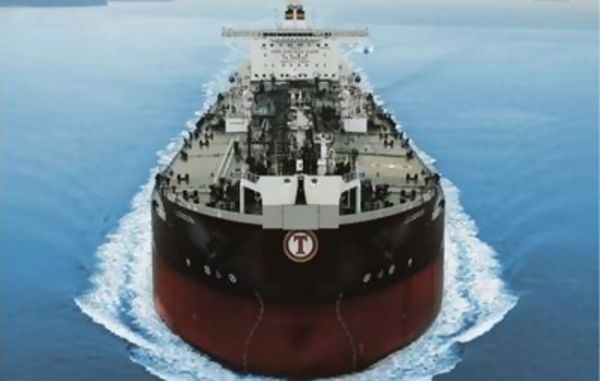
TEN, Ltd. reported results (unaudited) for the quarter and nine months ended September 30, 2020.
NINE MONTHS 2020 SUMMARY RESULTS
TEN generated a net income of $70.6 million in the nine months ended September 30, 2020, before second-quarter 2020 reported non-cash charges of $16.5 million, compared to $2.0 million for the same nine-month period in 2019.
Gross revenues amounted to $512.5 million, a $90.4 million, or 21.4%, increase over the 2019 equivalent nine-month period, despite three vessels undergoing dry-docking for survey and upgrading purposes.
Adjusted EBITDA for the nine months ended September 30, 2020 increased to $234.1 million, $67.0 million higher from the same period in 2019.
Operating income, before non-cash items, totaled $133.3 million, a 130% increase from the 2019 equivalent nine-month period.
The average daily time charter equivalent (TCE) rate per vessel of the fleet increased by 27.4% to reach $25,351.
Fleet utilization for the first nine months of the year at a still strong 95.2% after increased dry-dockings and pandemic related operational obstacles.
On September 30, 2020, total cash reserves stood at $236.5 million.
Six tankers with an average age of 14.7 years were sold in the first half of 2020 generating about $37.5 million free cash after repaying nearly $61.0 million of related debt. Additionally, during the year, the Company has taken delivery of four environmentally friendly state of the art vessels, two suezmaxes and two aframaxes on minimum five-year contracts to an oil major with expected TCE-basis revenues of about $200 million. These transactions resulted in the reduction of the fleet’s average age by about three years and further enhanced its modern profile.
Vessel operating expenses were at $133.4 million, just under the operating expenses in the 2019 nine-month period with the same average number of vessels.
Average daily operating expenses per vessel in the 2020 first nine months also remained at a relatively stable level of $7,757.
Total finance costs remained steady at $61.0 million, almost exactly the level of the 2019 nine-month period, of which bank loan interest amounted to $35.4 million. A reduction of $18.5 million due to lower average outstanding debt, lower market interest rates and lower average margins in this nine-month period.
Total debt outstanding as of September 30, 2020 stood at $1.504 billion.
Q3 2020 SUMMARY RESULTS
In what is the seasonally slowest quarter, TEN’s net income for the three-month period that ended on September 30, 2020 reached $1.4 million compared to a net loss of $9.5 million in the same quarter of 2019. An $11.0 million positive turnaround.
Gross revenue generated by TEN’s vessels amounted to $142.8 million, 9% more than in the 2019 third quarter resulting to an EBITDA of $48.1 million.
Despite the additional pressure created by the global slow-down in demand due to the pandemic and the inevitable draw-down of global inventories, operating income increased by 29% from the 2019 third quarter to reach $15.1 million.
Average daily TCE rates per vessel increased to $20,451, compared to an average daily TCE per vessel of $18,837 in the 2019 third quarter.
Operating expenses of about $45.2 million were similar to those of the 2019 third quarter. Average daily opex per vessel at $7,927 increased modestly, due partly to a weakness in the US dollar, necessary dry-docking expenses and effects of the pandemic.
Finance and interest costs fell 39% to $13.5 million, due to a reduction in average debt outstanding between the two respective third quarters and a decrease in margins payable on several loans.
DIVIDEND – COMMON SHARES
The Company will pay a dividend of $0.1250 per common share on December 22, 2020 to shareholders of record as of December 16, 2020 bringing the total payments to holders of the common stock for 2020 to $0.50 per share on a reverse-split adjusted basis.
OTHER
Following the full redemption of the $50 million Series B Preferred shares in July 2019, at the end of October 2020 TEN also repaid, at par, its 8.875% $50 million Series C Preferred Shares and reduced its total preferred shares by $100 million.
Since the commencement of the TEN’s share buyback program in May 2020, the Company has acquired approximately $10 million worth of common shares representing over 5% of the total (reverse-split adjusted) shares outstanding.
CORPORATE STRATEGY & OUTLOO
As the rollercoaster year 2020 approaches to a close, a light glimmers at the end of the tunnel in the form of a vaccine that hopefully cures all.
In the meantime, TEN continues its steady course through these turbulent times.
The strong market at the start of the year gave us the opportunity to charter-out at accretive rates a number of our vessels operating in spot trades. At the same time, we sold six tankers with an average age of 14.7 years and replaced them with four brand new, purposely-built eco-designed vessels with solid long-term employment which will add $200 million, over 5 years, in TCE-basis revenues.
Concurrently, we took the opportunity of the distressed newbuilding prices to order two specialized vessels, one DP2 shuttle tanker and one LNG carrier, today both with long-term charter contracts.
Additionally, we have continued the reduction of our preferred securities and bank debt, whilst maintaining our uninterrupted dividend policy and strong cash reserves.
Looking forward, a normalization of the pandemic should revitalize world trade and materially increase oil demand, resulting in a stronger freight market. The historically low supply of tonnage currently in existence should assist in boosting rates and asset values significantly, providing better opportunities to divest our first-generation vessels and enhance profitability further.
In the meantime, we spare no effort in securing the well-being of our seafarers and thank them for their heroic efforts in maintaining our flawless operations and high utilization record in this unprecedented challenging environment.
We wish you all a SAFE Thanksgiving and better days ahead.
Performance Shipping Inc. Expecting Tanker Market Rebound in the Post-Pandemic Era
Performance Shipping Inc., a global shipping company specializing in the ownership of tanker vessels, reported net income and net income attributable to common stockholders of $0.4 million for the third quarter of 2020, compared to a net loss and net loss attributable to common stockholders of $18.1 million for the same period in 2019. Earnings per common share, basic and diluted, for the third quarter of 2020 were $0.08, while loss per share for the third quarter of 2019 was $5.58.
Voyage and time charter revenues were $9.5 million ($6.7 million net of voyage expenses) for the third quarter of 2020, compared to $6.3 million ($5.5 million net of voyage expenses) for the same period in 2019. This increase was mainly attributable to the increased time-charter equivalent rates (TCE rates) contributed by the Company’s Aframax tankers. Fleetwide, the average time charter equivalent rate for the third quarter of 2020 was $15,990, compared with an average rate of $12,915 for the same period of 2019. As a result, during the third quarter of 2020, net cash provided by operating activities was $2.3 million, compared with net cash used in operating activities of $3.2 million for the third quarter of 2019.
Net income for the nine months ended September 30, 2020, amounted to $6.3 million, compared to a net loss of $19.8 million for the nine months ended September 30, 2019. Net income attributable to common stockholders for the nine months ended September 30, 2020, amounted to $7.8 million, due to a one-time gain of $1.5 million derived from the repurchase of the Series C preferred shares, and resulted in earnings per common share, basic and diluted, of $1.62 and $1.59, respectively. Net loss attributable to common stockholders for the nine months ended September 30, 2019, was $19.8 million, resulting in a loss per share, basic and diluted, of $7.83.
Third Quarter 2020 and Subsequent Developments:
Delivery of the last containership M/V Domingo to her new owners in August 2020;
Appointment of Andreas Michalopoulos as Chief Executive Officer and Anthony Argyropoulos as Chief Financial Officer in October 2020;
Initiation of new variable quarterly dividend policy and declaration of $0.01 dividend per share to all shareholders in October 2020;
Introduction of new business strategy and posting of the relevant presentation on the Company’s website in October 2020;
Effectiveness of one-for-ten reverse stock split to comply with NASDAQ’s minimum price rule in November 2020;
Acceptance of signed Offer Letter of up to $31.5 million from Piraeus Bank S.A. in November 2020, for the partial refinancing of the existing Nordea loan and additional financing for a fifth Aframax Tanker;
Acquisition of 2011-built Aframax Tanker for $22.0 million in November 2020.
As of November 15, 2020, the Company had 5,015,501 shares of common stock issued and outstanding.
Commenting on the results of the third quarter of 2020, Mr. Andreas Michalopoulos, the Company’s Chief Executive Officer, stated:
“During the third quarter of 2020, despite the prevailing deterioration in tanker charter rates, we continued to operate profitably with all four Aframax tankers in aggregate contributing to our operations with the support of our medium term time charter contract for the M/T Blue Moon at $28,000 per day. Midway through the current quarter, the tanker charter market is very low on the back of lower demand due to COVID-19 and low OPEC output. We have a new management team in place, a new business strategy, and initiated a variable quarterly dividend policy coupled with our specific low leverage target. We also secured an additional term loan to refinance part of our existing debt to reduce our quarterly installments and acquired our fifth Aframax tanker, resulting in a significant reduction in our daily cash break- even rate. We believe the low orderbook in conjunction with the gradual resurfacing of oil demand following a return to normality post COVID-19 will result in higher tanker charter rates in the future.”
Tanker Market Update for the Third Quarter 2020:
Fleet supply was 634.1 million dwt, up 0.8% from 629.0 million dwt from the previous quarter, and up 4.0% from Q3 2019 levels of 609.9 million dwt.
Demand, however, is estimated to have contracted by 14.5% from the previous quarter but remains up 1.3% from Q3 2019 levels.
Fleet utilization was estimated at 79.9%, down from 94.4% from the previous quarter and down from Q3 2019 levels of 81.9%.
Newbuilding contracting at 4.2 million dwt resulted in a further reduction of the orderbook to 8.0% of the fleet, the lowest level since 1996.
Daily spot charter rates for Aframax Tankers averaged $8,698, down 73.3% from the previous quarter average of $32,624 and down 41.0% from Q3 2019 average of $14,748.
The value of a 10-year-old Aframax tanker ended the quarter at $23 million, down 11.5% from the previous quarter assessed value of $26 million, and down 2.1% from Q3 2019 assessed value of $23.5 million.
Tankers used for floating storage was 307 (50.7 million dwt), down 15.4% from 363 (53.2 million dwt) from the previous quarter and up 270.0% from Q3 2019 levels of 83 (19.9 million dwt).
Global oil consumption was 94.1 million bpd, up 10.2% from the previous quarter level of 85.4 million bpd, and down 8.1% from Q3 2019 levels of 102.4 million bpd.
Global oil production was 91.1 million bpd, down 1.6% from the previous quarter level of 92.5 million bpd and down 9.0% from Q3 2019 levels of 100.1 million bpd.
OECD commercial inventories were 3,169.3 million barrels, down 0.1% from the previous quarter level of 3,173.1 million barrels, and up 7.6% from Q3 2019 levels of 2,946.3 million barrels.
Novel Coronavirus Risks:
On March 11, 2020, the World Health Organization declared the recent Novel coronavirus disease (“COVID-19”) outbreak a pandemic. In response to the outbreak, many countries, ports and organizations, including those where the Company conducts a large part of its operations, have implemented measures to combat the outbreak, such as quarantines and travel restrictions. Such measures have, and will likely continue to, negatively affect the global economy. Any prolonged restrictive measures in order to control the spread of COVID-19 or other adverse public health developments in Asia or in other geographies in which the Company’s vessels operate may significantly impact the demand for the Company’s vessels. The extent to which COVID-19 will impact the Company’s results of operations and financial condition will depend on future developments, which are highly uncertain and cannot be predicted, including new information which may emerge concerning the severity of the virus and the actions to contain or treat its impact or a potential second wave, among others. Accordingly, an estimate of the impact cannot be made at this time. However, if the COVID-19 pandemic worsens, additional restrictions are imposed, or current restrictions are imposed for a longer period of time in response to the outbreak, it may have a material adverse effect on the Company’s future results of operation and financial condition.
Pyxis Tankers Inc. Says impact of Covid-19 on the MR Product Tanker Market Has Been Limited So Far
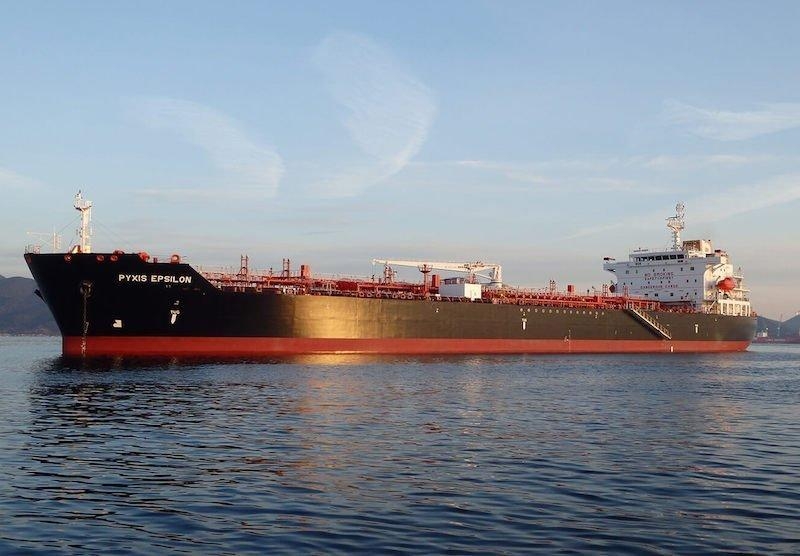
Pyxis Tankers Inc. a growth-oriented pure play product tanker company, announced unaudited results for the three months and year ended December 31, 2019.
Summary
For the three months ended December 31, 2019, our Revenues, net were $7.3 million and our time charter equivalent revenues increased by $1.8 million, or 39.5%, to $6.2 million compared to the same period in 2018. For the quarter ended December 31, 2019, our net loss was $3.6 million, or a loss per share (basic and diluted) of $0.17, which was primarily due to a non-cash loss of $2.8 million (or $0.13/share) on the sale of our oldest vessel, the Pyxis Delta, that was recognized during the period. Our Adjusted EBITDA was $1.9 million, an increase of $1.7 million over the comparable 2018 quarter. Please see “Non-GAAP Measures and Definitions” below.
Valentios Valentis, our Chairman and CEO commented: “Our operating results for the three months ended December 31, 2019 reflected a better overall market compared to the same period in 2018. During the fourth quarter, 2019 charter rates for medium range tankers (“MRs”) continued to improve primarily as a result of seasonal demand and strong market fundamentals. We operated all of our MR’s on staggered time charters in order to obtain predictable cash flow, especially in light of the various uncertainties surrounding the impact of new 2020 IMO fuel regulations. In addition to normal seasonal demand for heating oil in the Northern Hemisphere, the improving rate environment was also a result of incremental cargoes for marine gasoil and new compliant low-sulphur fuel blends as well as a dramatically stronger crude tanker market which caused a number of larger product tankers to trade dirty cargoes thereby reducing available capacity to transport clean petroleum products, such as, diesel or jet fuel.
We took advantage of this positive environment to sell the Pyxis Delta, our 2006 built non-eco tanker in order to achieve some of our strategic, operating and financial goals. The net proceeds were applied to de-lever our balance sheet, improve liquidity and better position us for growth. Further, we avoided operating this older, higher consuming vessel, which would be less competitive moving forward, and incurring the costs of a major upcoming special survey, which would have included the installation of the vessel’s ballast water treatment system.
Since early January 2020, the chartering environment has been very volatile. But, the overall impact of Covid-19 on the MR product tanker market has been limited so far. Initially, the spot market collapsed in the South East Asia region due to the dramatic decline in demand, the extended Lunar holidays in China and the ripple economic effects of the virus. However, spot rates have rebounded over the last couple of weeks. The Atlantic Basin spot market has held-up reasonably well despite a warm winter and the delayed arrival of Covid-19 in the Western Hemisphere, the impact of which is still to be determined. The period market has softened, which is usual for this time of the year, as refinery turn-arounds start to occur as well as fears of lower demand. Since the beginning of the year, the one-year time charter rate has declined by about $1,300/day for an Eco-MR to approximately $17,200/day.
Clearly, we are concerned about the health and welfare of all affected by the virus and we are hopeful that this will be a short-lived disruption. We continue to believe in a longer term, sustainable period of attractive charter rates as a result of improving product tanker fundamentals, such as, a relatively low newbuild orderbook for MRs combined with rebounding growth in consumption and increasing export-oriented petroleum refinery cargoes. In the short-term, silver-linings include lower bunker costs, tighter price spreads between high and low sulphur fuel oil, evolving arbitrage trading opportunities and lower net supply growth, primarily associated with delays in newbuild deliveries and drydockings, including scrubber installations. In this respect, we feel our mixed chartering strategy, modern eco fleet and stable operating cost structure will be beneficial during these uncertain times.”
Results for the three months ended December 31, 2018 and 2019
For the three months ended December 31, 2019, we reported a net loss of $3.6 million, or a loss per share of $0.17 (basic and diluted), compared to a net loss of $3.4 million, or a loss per share of $0.16 (basic and diluted) for the same period in 2018. For the three months ended December 31, 2019, our Revenues, net were $7.3 million, a decrease of $0.2 million, or 2.9%, from $7.5 million in the comparable period of 2018. For the three months ended December 31, 2019, our time charter equivalent revenues of $6.2 million represented an increase of $1.8 million from $4.4 million in the three months ended December 31, 2018. The increase in time charter equivalent revenues was mainly attributable to lower spot chartering activity, which resulted in a significant decrease of $2.0 million in voyage related costs and commissions for the three months ended December 31, 2019. However, this decrease was offset by the loss on vessel held-for-sale of $2.8 million, or $0.13 loss per share (basic and diluted), representing the expected non-cash loss from sale of Pyxis Delta that closed in January 2020. Our Adjusted EBITDA was $1.9 million for the three-month period ended December 31, 2019, representing an increase of $1.7 million from $0.2 million for the same period in 2018.
Results for the years ended December 31, 2018 and 2019
For the year ended December 31, 2019, we reported a net loss of $8.3 million, or $0.39 basic and diluted loss per share, which represents an increase in the net loss of $0.1 million compared to the same period in 2018. Our Revenues, net in 2019 totalled $27.8 million compared to $28.5 million in 2018, while our time charter equivalent revenues of $22.6 million in 2019 represented an increase of $6.0 million from $16.6 million in the prior year. The increase in time charter equivalent revenues was attributable to a decrease of $6.7 million in voyage related costs and commissions as a result of lower spot chartering activity as well as an improvement in the period market. Operating results in 2019 were reduced by the loss on vessel held-for-sale of $2.8 million and in 2018 by a vessel impairment charge of $2.3 million. Interest and finance costs increased by $1.3 million in 2019 and a gain on debt extinguishment of $4.3 million recognized in 2018 resulted in comparable net losses for both years ended December 31, 2018 and 2019 of $8.2 and $8.3 million, respectively.
Our 2019 Adjusted EBITDA was $5.8 million, representing an increase of $5.9 million from negative $0.1 million for the same period in 2018.
View Full Press Release