
Talanx Group off to a very good start in 2025
The Talanx Group has started 2025 with the strongest quarterly result in its history to date: Despite high large loss payments it generated Group net income of EUR 604 (576) million and is well on track to achieve its target for the year of more than EUR 2.1 billion. Primary insurance contributed 60 percent to Group net income, while the Reinsurance result (40 percent share of Group net income) was impacted by the forest fires in California. First-quarter Group insurance revenue rose 5 percent to EUR 12.4 (11.7) billion, while the insurance service result was up 3 percent to EUR 1,118 (1,088) million. Operating profit (EBIT) increased by 4 percent to EUR 1.3 (1.2) billion. The return on equity was 20.1 (21.3) percent. Resilience 1) in the Group’s loss reserves rose by EUR 1.0 billion in 2024 according to the Group’s own estimates to total roughly EUR 4.7 billion as at the 2024 year-end.
“We got off to a strong start in 2025, demonstrating that our diversified business model is paying off. Although the first quarter, which saw the forest fires in California, produced one of the largest losses from a natural disaster in the Group’s history, we also generated our strongest quarterly net income to date. This shows we are robustly positioned with our mix of Primary Insurance and Reinsurance, which is expected to normalise again in the course of the year. I am highly confident that we shall reach our target net income for 2025 of more than EUR 2.1 billion”, said Torsten Leue, CEO of Talanx AG.
The insurance service result rose slightly to EUR 1,118 (1,088) million. Payments for large losses jumped significantly to EUR 881 (76) million, EUR 276 million more than the large loss budget. The largest single loss – the forest fires in California at EUR 640 million – was also one of the largest losses from a natural disaster in the Group’s history to date. Other large losses included the earthquake in Myanmar (EUR 25 million) and Cyclone Alfred in Australia (EUR 17 million). All in all, man-made large losses amounted to EUR 173 million, while large losses from natural disasters totalled EUR 708 million. The combined ratio was 92.8 (90.8) percent.
The net insurance financial and investment result before currency effects rose 13 percent to EUR 448 (396) million. The Solvency 2 ratio as at 31 March 2025 was 229 percent. 2)
Corporate & Specialty Division: continued growth path
Insurance revenue in the Corporate & Specialty Division rose by 10 percent in the first quarter (9 percent adjusted for currency effects) to EUR 2.6 (2.3) billion. Growth was due in the first instance to new business but also in part to inflation-related price adjustments to the existing portfolio. The insurance service result jumped 19 percent to EUR 229 (192) million, largely as the result of an improved frequency loss ratio. Large loss payments climbed year-on-year to EUR 105 (17) million but undershot the pro rata budget for the period, which was recognised in full, by EUR 21 million. The combined ratio improved to 91.1 (91.8) percent. At EUR 49 (47) million, the net insurance financial and investment result before currency effects was on a par with the prior-year period. The strong insurance service result was enhanced by an improvement in the investment result, lifting operating profit to EUR 195 (140) million and the contribution to Group net income to EUR 141 (104) million.
Retail International Division: strong earnings growth
Insurance revenue in the Retail International Division rose by 4 percent in the first quarter (9 percent adjusted for currency effects) to EUR 2.3 (2.2) billion. This was largely driven by growth in Poland, Chile and Colombia. The combined ratio was 91.4 (90.9) percent. The insurance service result was stable at EUR 222 (222) million, while the net insurance financial and investment result before currency effects rose to EUR 107 (93) million. Operating profit (EBIT) climbed to EUR 263 (224) million, largely on the back of improvements in Poland and Türkiye. The division’s contribution to Group net income rose by 39 percent to EUR 172 (123) million. Due to the termination of the strategic partnership with Meiji Yasuda Life Insurance as at the year-end, Group net income also includes the previously unconsolidated minority interest in the net income of Polish subsidiaries Warta and TU Europa. This is already being recognised in the division’s net income in financial year 2025.
Retail Germany Division: stable operating profit and Group net income
First-quarter insurance revenue in the Retail Germany Division amounted to EUR 812 (860) million due to expiration at the end of 2025 of the partnership with Targobank. The insurance service result rose to EUR 124 (81) million. The combined ratio improved to 84.5 (97.9) percent on the back of optimisation measures, lower frequency losses in the motor vehicle business and one-off effects from loss adjustment in the area of homeowners insurance. The combined ratio without adjustment for these one-off effects would be roughly 92 percent. The net insurance financial and investment result rose to EUR 47 (26) million. Operating profit (EBIT) remained almost stable year-on-year at EUR 76 (78) million, as did the contribution to Group net income at EUR 46 (45) million.
Reinsurance Division: strong result despite high large losses
The Reinsurance Division lifted its insurance revenue by 5 percent in the first quarter to EUR 7.0 (6.7) billion. The insurance service result was EUR 515 (720) million due to the high level of large losses caused by the forest fires in California, while the net insurance financial and investment result before currency effects rose slightly to EUR 252 (246) million. Operating profit (EBIT) was EUR 702 (813) million, while the contribution to Group net income was EUR 240 (305) million.
Insurance revenue in the Property/Casualty Reinsurance segment rose by 7 percent to EUR 5.1 (4.7) billion thanks to new business and ongoing satisfactory pricing levels. Payments for large losses rose to EUR 765 million on the back of the forest fires in California (EUR 631 million), clearly exceeding the large loss budget for the period of EUR 435 million. Other large losses were the collision between a plane and a helicopter in Washington D.C. (EUR 29 million) and the fire in a refinery in southern Germany (EUR 20 million). The insurance service result declined to EUR 272 (509) million, since the positive business performance was unable to offset the higher large losses and conservative reserve recognition policy. The combined ratio was 93.9 (88.0) percent. The net insurance financial and investment result before currency effects amounted to EUR 195 (202) million, while operating profit was EUR 450 (634) million.
Insurance revenue in the Life/Health Reinsurance segment remained stable at EUR 1.9 (1.9) billion. The insurance service result rose to EUR 243 (211) million, on course to hit the full-year target of more than EUR 875 million. Growth in the longevity risks business had a positive effect here. The net insurance financial and investment result before currency effects increased to EUR 57 (43) million, while operating profit (EBIT) was EUR 251 (179) million.
Outlook for 2025 confirmed
The Talanx Group is confirming its 2025 earnings target of more than EUR 2.1 billion. This puts it on course to achieve its medium-term targets: the Group is aiming for Group net income of more than EUR 2.5 billion and an increase in the dividend to EUR 4.00 per share for 2027.
As usual, targets are subject to the proviso that no turbulence occurs on the currency and capital markets, and that large losses remain in line with expectations. The current geopolitical and macroeconomic situation is an additional source of uncertainty.
1) Resilience within the best-estimate assessment is defined as the amount by which the recognised net provisions for property/casualty insurance losses (based on Talanx AG’s best estimates, undiscounted and before taxes and minority interests) exceeds the estimated value in WTW’s annual assessment for these loss reserves.
2) Calculated using the internal model. Regulatory Solvency 2 ratio was 220 percent per 31 December 2024 and 216 percent per 31 March 2025 based on Article 230 (2) of Directive 2009/138/EC.
Condensed consolidated balance sheet for the Talanx Group
EUR billion
31.03.2025
31.12.2024
Intangible assets
2.3
2.3
Insurance contract assets
1.5
1.6
Reinsurance contract assets
8.2
7.7
Investments for own risk
143.4
144.3
Other assets
25.0
24.5
Total assets
180.5
180.4
Equity excluding non-controlling interests
12.3
11.7
Non-controlling interests in equity
7.0
6.8
Total equity
19.3
18.5
Insurance contract liabilities (technical provisions)
137.9
139.3
Reinsurance contract liabilities
0.6
0.7
Other equity and liabilities
22.7
21.9
Total equity and liabilities
180.5
180.4
Contractual service margin (CSM)
12.2
11.4
Condensed consolidated statement of income for the Talanx Group
EUR million
3M 2025
3M 2024
Change 1
Insurance revenue
12,363
11,720
+5%
Insurance service expenses
-11,046
-9,951
-11%
Expenses from reinsurance contracts held
-1,431
-1,466
+2%
Income from reinsurance contracts held
1,232
785
+57%
Insurance service result
1,118
1,088
+3%
Net investment income for own risk
1,241
1,166
+6%
Net investment income for the benefit of life insurance policyholders who bear the investment risk
-272
924
-129%
Net insurance financial result before currency effects
-521
-1,694
+69%
Net insurance financial and investment result before currency effects
448
396
+13%
Net currency result
55
-29
+290%
Other income/expenses
-347
-227
-53%
Operating profit/loss (EBIT)
1,273
1,228
+4%
Financing costs
-54
-59
+8%
Taxes on income
-344
-333
-3%
Net income
875
836
+5%
of which attributable to non-controlling interests
272
260
+4%
of which attributable to shareholders of Talanx AG
604
576
+5%
Diluted earnings per share (EUR)
2.34
2.23
+5%
Return on equity 2
20.1%
21.3%
-1.2 ppts
Combined ratio 3
92.8%
90.8%
+2.0 ppts
1) Adjusted in accordance with IFRS 3.49 for the amounts relating to the Liberty Andes companies in Q1 2024.
2) The ratio of annualised net income for the reporting period excluding non-controlling interests to average shareholders’ equity excluding non-controlling interests.
3) 1.0 minus [(net) insurance service result divided by insurance revenue (gross)].
The figures for the Group’s assets, liabilities, financial position and financial performance were prepared in accordance with the International Financial Reporting Standards (IFRSs). However, this quarterly statement does not represent an interim report as defined by IAS 34.
Talanx Group lifts Group net income to EUR 1,977 million in financial year 2024
Group net income climbs 25 percent to EUR 1,977 million based on preliminary figures
Insurance revenue up 11 percent to EUR 48.1 billionReturn on equity is expected to be 17.8 percent
Dividend proposal of EUR 2.70 per share for financial year 2024
Earnings outlook for 2025 of more than EUR 2.1 billion confirmed
The Talanx Group continued its positive business trend of the first nine months at the end of the year, and is expecting Group net income of EUR 1,977 (1,581) million for financial year 2024, based on consolidated unaudited figures. This means it has reached the 2024 earnings target that it lifted in November 2024 and further enhanced its resilience. Primary Insurance accounted for 49 percent (46) of the Group net income¹. Insurance revenue rose to EUR 48.1 (43.2) billion. Return on equity is expected to be 17.8 (16.6) percent.
As announced in December 2024, the Board of Management intends to allow shareholders to share in the Talanx Group’s success through a dividend of EUR 2.70 (2.35) per share for financial year 2024. Originally, the Talanx Group had planned to lift dividend payments to EUR 2.50 per share by 2025 (2022: EUR 2.00 per share). The Group has now surpassed this goal ahead of schedule, subject to the approval of the Supervisory Board and the General Meeting. The aim is to further lift the dividend by approx. 50 percent by 2027 to EUR 4.00 per share.
The Group has confirmed its earnings target for the current year, 2025, of more than EUR 2.1 billion, which it increased in November 2024. It is aiming to grow Group net income to more than EUR 2.5 billion by 2027.
Talanx will publish its final key financial figures and its full consolidated financial statements on 19 March 2025.
1) Calculated as percentage of Group net income adjusted for Group operations and consolidation.
Talanx Group starts 2024 with strong quarterly results
The Talanx Group has made a strong start to 2024: it lifted its first-quarter insurance revenue by 9 percent year-on-year to EUR 11.7 (10.7) billion and its Group net income by a clear double-digit 35 percent to EUR 572 (423) million. Primary Insurance was the driver behind the positive trend, generating revenue growth of 23 percent and increasing its share of Group net income to 47 (43) percent. The first quarter also saw a strong insurance service result and a positive overall claims experience. The return on equity, which fluctuates over the course of the year, rose to 21.2 (18.9) percent, clearly exceeding the strategic target of “more than 10 percent”. The Group is confirming its full-year Group net income forecast of more than EUR 1.7 billion, but is now confident of clearly exceeding this target.
“Our strong start to 2024 underscores the sustainable and profitable path we are on with our decentralised strategy and diversified business model”, said Torsten Leue, Chairman of Talanx AG’s Board of Management. “Despite our very good Group net income of EUR 572 million, we are reiterating our forecast for the full year of more than EUR 1.7 billion: potential large loss events such as the hurricane season and our continued goal of shifting from low-yield to higher-yield investments may impact net income over the course of the year. Nevertheless, we are increasingly confident of clearly exceeding our Group net income target for 2024 of more than EUR 1.7 billion.”
The insurance service result rose by 22 percent to EUR 1,072 (880) million on the back of a low loss frequency. Total claims paid for large losses in the first quarter were EUR 76 (419) million. Man-made large losses amounted to EUR 28 million of this. At EUR 48 million, large losses from natural disasters were unusually small compared to previous first quarters and were clearly below the prior-year figure of EUR 354 million. The largest single loss from a natural disaster was the earthquake in Japan, at EUR 25 million. The combined ratio improved to 90.9 (93.5) percent. This includes the pro rata large loss budget, which was recognised in full.
The net insurance financial and investment result before currency effects climbed 19 percent to EUR 395 (330) million, while operating profit (EBIT) rose 17 percent to EUR 1.2 (1.0) billion. Group net income rose in line with this to EUR 572 (423) million. The Solvency 2 ratio as at 31 March 2024 was 217 percent.
The Group further increased its robustness in the past year and enhanced its balance sheet resilience (1). This resilience, expressed as the best estimate for the (undiscounted) net provisions for losses in the property/casualty area before taxes and minority interests, amounted to EUR 3.7 billion as at the 2023 year-end. Roughly EUR 1.5 billion of this figure was attributable to Primary Insurance and EUR 2.1 billion to Reinsurance. This corresponds to a year-on-year increase of EUR 1.1 billion, or 40 percent.
Industrial Lines: strong growth in revenue and earnings
Industrial Lines generated clear growth in revenue and earnings after the first three months of 2024. The division’s insurance revenue rose by 13 percent in the first quarter (14 percent adjusted for currency effects) to EUR 2.3 (2.1) billion. Growth came primarily from inflation-related price adjustments and new property, liability and specialty insurance business. The insurance service result rose by 37 percent to EUR 192 (141) million on the back of improved loss ratios for natural disasters and frequency losses. At EUR 17 (34) million, aggregate large losses at Industrial Lines were lower than in the prior-year period. The division’s combined ratio improved to 91.8 (93.2) percent. The net insurance financial and investment result before currency effects rose to EUR 47 (21) million due to the higher net current return on investments and lower realised losses. Operating profit (EBIT) at Industrial Lines rose to EUR 140 (86) million, while the division’s contribution to Group net income increased to EUR 104 (69) million.
Retail International: extremely strong, profitable growth
The Retail International Division lifted its insurance revenue by 45 percent in the first quarter (51 percent adjusted for currency effects) to EUR 2.2 (1.5) billion. Both the property/casualty and the life insurance business at all major companies contributed to this positive trend. Property/casualty insurance revenue grew by 44 percent (51 percent adjusted for currency effects), largely due to growth in Brazil and Poland. Life insurance revenue climbed 47 percent (49 percent after adjustment for currency effects). Both lines also benefited from the first-time inclusion of Liberty Mutual’s activities in Brazil. The acquisition of Liberty Mutual’s retail customer/small and medium-sized enterprise business in Chile, Colombia and Ecuador closed in March 2024 and is not yet included in the statement of income for the first quarter, whereas the transaction for its Brazilian business closed in November 2023. Integration of all purchased companies has started as planned and without any complications.
The division’s insurance service result rose to EUR 208 (119) million, with growth mainly being driven by operating improvements in Brazil, Chile and Türkiye. In line with this, the combined ratio fell to 91.2 (93.4) percent, benefiting from a lower loss frequency in the Latin American markets in particular; this is expected to normalise again over the rest of the year. The net insurance financial and investment result before currency effects increased to EUR 92 (72) million. Operating profit grew to EUR 216 (137) million, and the division’s contribution to Group net income rose as a result to EUR 120 (75) million.
Retail Germany: good operating profit
First-quarter insurance revenue in the Retail Germany Division increased by 7 percent to EUR 860 (807) million and the insurance service result by 5 percent to EUR 81 (76) million. The division’s operating profit (EBIT) also increased on the back of this, climbing 26 percent to EUR 75 (59) million. The segment contributed EUR 43 (40) million to Group net income. This growth in revenue and earnings was largely due to improvements in the Life Insurance segment compared to a below-average prior-year quarter.
Property/Casualty Insurance segment: all lines contribute to revenue growth
Insurance revenue in the Property/Casualty Insurance segment rose by 5 percent to EUR 440 (421) million in the first quarter. All lines contributed to revenue growth. Ongoing claims inflation in the motor vehicles area negatively impacted the first-quarter insurance service result, which amounted to EUR 9 (21) million. However, the good profitability in the other lines muted the rise in the combined ratio, which merely rose to 97.9 (95.1) percent as a result. The net insurance financial and investment result before currency effects was stable in the first quarter at EUR 17 (19) million, while operating profit (EBIT) was EUR 16 (24) million.
Life Insurance segment: higher operating profit
Insurance revenue in the Life Insurance segment grew 9 percent to EUR 421 (386) million, partly due to a below-average prior-year quarter. The insurance service result rose 28 percent to EUR 71 (56) million, while the net insurance financial and investment result before currency effects was EUR 8 (19) million. Operating profit rose to EUR 58 (36) million.
Reinsurance: greater contribution to Group net income
Insurance revenue in the Reinsurance Division amounted to EUR 6.7 (6.6) billion in the first quarter; adjusted for currency effects, the increase would have been 3 percent. The insurance service result rose 27 percent to EUR 720 (568) million, while the net insurance financial and investment result before currency effects was up 11 percent at EUR 246 (222) million and the operating result grew by 13 percent to EUR 813 (722) million. The contribution made by the division to Group net income rose in line with this, climbing 24 percent to EUR 305 (247) million.
First-quarter insurance revenue in the Property/Casualty Reinsurance segment totalled EUR 4.7 (4.6) billion. The insurance service result rose tangibly to EUR 509 (315) million. The largest single loss in the quarter – the collapse of the bridge in Baltimore – cannot yet be quantified precisely as at the date of the quarterly financial statements. However, the impact of the large losses occurring in the first quarter will be within the large loss budget, which was recognised in full, as is customary. Other large losses were the earthquake in Japan, which totalled EUR 25 million, and the forest fires in Chile, which impacted the large loss budget by EUR 16 million. The combined ratio improved to 88.0 (92.3) percent, below the expected figure for the full year of 89.0 percent. The net insurance financial and investment result before currency effects rose by 15 percent to EUR 202 (176) million, while operating profit (EBIT) climbed by 35 percent to EUR 634 (471) million.
Insurance revenue in the Life/Health Reinsurance segment totalled EUR 1.9 (2.0) billion in the first three months of the year. At EUR 211 (253) million, the insurance service result was in line with expectations and is on course to hit the full-year target of more than EUR 850 million. The continued strong showing by the financial solutions business and the longevity risks business had positive effects here. The net insurance financial and investment result before currency effects was EUR 43 (45) million, while operating profit (EBIT) was EUR 179 (251) million.
Outlook: targets affirmed and increasing confidence
The Talanx Group is affirming its 2024 goal of achieving Group net income of more than EUR 1.7 billion. However, the strong quarterly figure of EUR 572 million has increased its confidence of clearly exceeding its target for Group net income. The Group is also confirming its 2024 target of a return on equity of more than 15 percent.
(1) Resilience is defined as the difference between Talanx’s recognised provisions (based on its own best estimates) and analyses by external experts. Since resilience was calculated in the previous year using the undiscounted IFRS 4 provisions for losses, undiscounted IFRS 17 provisions for losses were used for the current-year calculation so as to enhance comparability. This makes it easier to interpret the comparison with the previous year. The calculations by external experts are based on data provided by Talanx.
View Full Press Release
Talanx completes acquisitions in Chile, Colombia and Ecuador
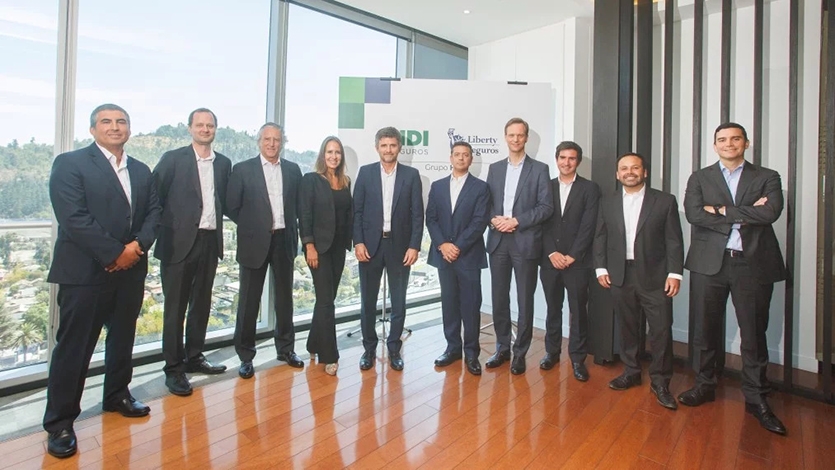
On 1 March 2024, the Retail International Division of the Talanx Group successfully completed the acquisition of the business of Liberty Seguros in Chile, Colombia and Ecuador with retail customers and small to mid-sized enterprises. HDI has thereby strengthened its market positions and moves up to number 1 in Chile, number 7 in Colombia and number 15 in Ecuador in P&C insurance business. Based on the results for the full 2022 financial year, HDI expects to boost the premium in these countries by altogether more than EUR 600 million. Combined with the acquisition in Brazil that closed in November, the annual premium income will likely increase by around EUR 1.7 billion.
“The acquisition is a major milestone in our strategic success story in Latin America. We are delighted to have advanced into the top 2 P&C insurers as a result of all Liberty acquisitions,” said Dr Wilm Langenbach, the member of the Board of Management of Talanx AG with responsibility for the Retail International Division and Chief Executive Officer of HDI International AG. “I’d like to extend a warm welcome to our new colleagues, distribution partners and customers in Chile, Colombia and Ecuador. I have no doubt that we shall combine our know-how and global resources with the skills and experience of Liberty Seguros and thereby enhance our power of scale, innovation and competitiveness for the benefit of our distribution partners and customers on the Latin American market.”
HDI International will consolidate the results of the acquired companies in the first quarter of 2024 with effect from closing of the transaction.
“The transaction makes us the P&C market leader in Chile, significantly strengthens our market position in Colombia, allowing us to become the second largest motor insurer, and opens a new market for HDI in Ecuador,” said Nicolas Masjuan, the member of the Management Board of HDI International AG responsible for business in Latin America. “This move opens up new opportunities and positions HDI as a leading player, enabling us to offer our customers and distribution partners an even stronger value proposition over the long term.”
The transaction also includes Liberty Specialty Markets direct insurance business in Chile and Colombia.
On a pro-forma basis for the full-year results for 2022, HDI Seguros and Liberty Seguros in Chile with a total workforce of 1,300 together generated a premium volume of around CLP 840 billion (EUR 920 million). In Colombia the two companies with a team of altogether around 1,200 employees have generated a premium volume of approximately COP 1.5 billion (EUR 300 million). The acquired company in Ecuador will add approximately 140 people to the workforce. The premium volume was around USD 33 million (EUR 31 million).
Photo from left to right: Carlos López, Jochen Sand, Alejandro Jiménez, Paula Greene, Nicolás Masjuan, Felipe Feres, Wilm Langenbach, Diego Granger, Roberto Larraín, Jorge Moreno
Talanx Group generates record profit of EUR 1,581 million in financial year 2023
Group net income of EUR 1,581 million expected, clearly surpassing the original forecast – 2024 Group net income target of more than EUR 1.7 billion confirmed
Insurance revenue increases to EUR 43.2 billion
Return on equity of 16.6 percent clearly exceeds strategic target
The Talanx Group was extremely successful in financial year 2023. Based on its consolidated unaudited figures, it is expecting Group net income of EUR 1,581 million. This clearly surpasses the original annual target of approximately EUR 1.4 billion. Insurance revenue rose to EUR 43.2 (39.7) billion. The return on equity of 16.6 percent clearly exceeds the strategic target of 10 percent. The positive trend in Group net income was driven by earnings growth in all divisions and large loss payments that remained within budget, plus inflation-related price increases.
The Group will report on the dividend proposal by the Board of Management and Supervisory Board for financial year 2023 at its annual results press conference on 21 March 2024, where the final key financial figures and the audited consolidated financial statements for 2023 will also be presented. In keeping with its long-term dividend policy, the Board of Management is aiming to exceed the prior-year dividend payment of EUR 2 per share.
Talanx is confirming the outlook for Group net income of more than EUR 1.7 billion for the current year, 2024. This means that it will clearly exceed its 2025 Group net income target of around EUR 1.6 billion one year earlier than planned.
The Group’s assets, liabilities, financial position and financial performance for 2023 were reported for the first time under the new IFRS 17 and IFRS 9 accounting standards. A comprehensive discussion of the key changes resulting from the new/modified accounting principles is provided in the Interim Report as at 30 June 2023.
Talanx Group invests in Swedish hydropower
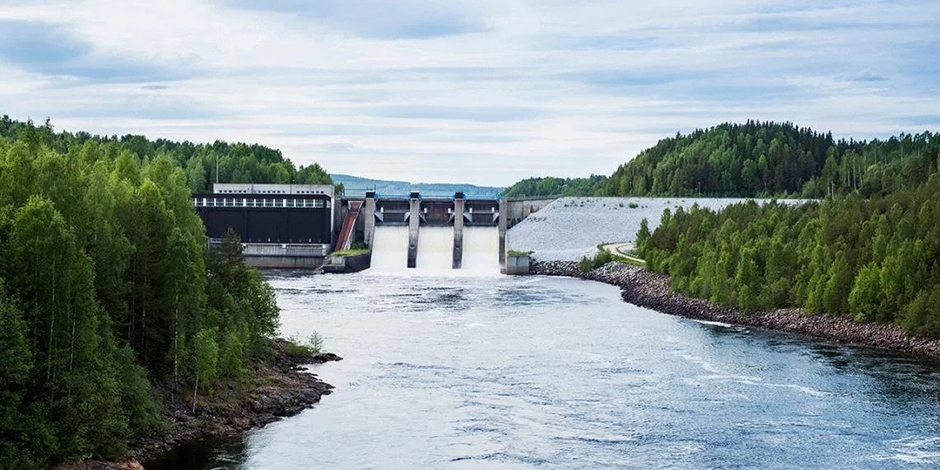
Long-term partnership with Uniper has a transaction volume in the three-figure millions of euros
The Group’s first hydropower investment diversifies and expands its pan-European commitment to renewable energies
Talanx is continuing its evolution into a leading renewables investor and underscoring its sustainable investment policy
The Talanx Group is investing via Ampega Asset Management in the green electricity produced by a portfolio of 15 hydro plants located on three Swedish river systems. The transaction volume for the 15-year power purchase agreement (PPA) is in the three-figure millions of euros. Talanx’s partners in the deal are Augusta Investment Management and German energy company Uniper. The latter owns and operates the plants, which have been feeding electricity into the Swedish grid for some decades now. The innovatively structured investment expands the Talanx Group’s support for the transition to green energy and enhances its role as a leading renewables investor.
“This transaction is particularly important for the Talanx Group: our first investment in hydropower adds a new dimension to our existing extensive portfolio of renewable energy investments”, said Dr Jan Wicke, Talanx AG’s Chief Financial Officer. “As a leading investor in this area, we are helping to continuously expand investments in renewables and increasingly contributing to the transition to sustainable energy. The move also underscores just how important ESG criteria are to our investment strategy and reinforces our wide-ranging sustainability strategy even further.“
Augusta Investment Management, which initiated the transaction, has a two terawatt hour portfolio of similar investments and substantial experience of hydro plants in northern Europe. It has been engaged as the asset manager for the duration of the investment.
The transaction volume for the 15 river hydro plants corresponds to an annual electricity generation figure of approximately 350 gigawatt hours. This is the equivalent of the electricity consumed by the eastern Swedish city of Umeå, for example, which has roughly 84,000 inhabitants.
Sweden is an attractive market for hydropower investments: 45 percent of the electricity consumed by the country each year is generated in its more than 2,000 hydro plants. In line with this, the country has a highly developed renewal energy market with a stable legal framework.
Eighth sustainability report published: Talanx Group strengthens its sustainability strategy
The Talanx Group significantly sharpened its sustainability activities over the past year. Its eighth sustainability report focuses on the Group’s role in supporting the industry and the economy in their sustainable transformation. The core long-term goal is to achieve net zero by 2050. This is why Talanx has resolved new exclusions in its underwriting business, among other things: additional restrictions on insurance for new oil and gas projects1 will be introduced with effect from 1 July 2023; a multi-stage reduction path has been drawn up detailing the Group’s withdrawal from thermal coal by 2038. In addition to the environmental topics, the Group also increased its focus on social and governance aspects in the reporting period.
“Sustainability is a core component of our Group strategy: we aim to live up to our responsibilities and play our part in ensuring a sustainable future. As an insurer and investor, we are actively supporting our partners in the industry as they transition, and hence promoting sustainable structural change”, said Torsten Leue, Chairman of Talanx AG’s Board of Management. “We are taking the next ambitious steps to underpin this aspiration by introducing new underwriting exclusions, comprehensively including ESG criteria in our investment activities, and consolidating and expanding sustainable structures within our Group.”
Extended exclusions substantiate position in underwriting
Talanx’s additional exclusion policy in relation to the underwriting of new oil and gas projects(1) on an individual risk basis, which was resolved at the beginning of the year, will take effect on 1 July 2023. As of that date, the Group will no longer provide insurance policies for new greenfield upstream oil and gas projects. In addition, it will no longer insure new midstream projects for pipelines and tank farms (new and stand-alone) that are directly linked to greenfield upstream oil developments. It will also exclude insurance cover for any stand-alone oil-fired power plants which have not yet been under construction or operation as of 1 July 2023. In the Arctic region, the exclusion of new oil and gas drilling projects is extended to new covers for existing projects. Equally, the Group will exclude deep sea mining project risks from underwriting as of 1 July 2023.
Prior to this, Talanx had already defined insurance exclusions for fossil fuels. With effect from 2038, the Group will no longer insure any thermal coal infrastructure(2) or business models based on oil and tar sands, which are particularly harmful for the environment. The withdrawal from thermal coal was set out in more detail in 2022 in a multi-stage exit plan, which defines milestones on the reduction path up to 2038.
Internal assessment methodology strengthens sustainability in asset management
For investment decisions relating to Talanx’s own holdings, the existing restrictions for business models based on thermal coal or oil and tar sands have been complemented: As of the reporting period, no investments shall be made in companies involved in new greenfield Arctic drilling projects. Therefore, the screening process excludes those issuers from investment that generate 10% or more of their revenue from offshore oil and gas extraction within the Arctic Circle (66° 34’ N).
A new internal assessment methodology was introduced in 2022 in order to assess the ESG profile of liquid investments. This approach provides support for the Group’s investment strategy and helps Talanx fulfil its role as a responsible investor, e.g. during structured dialogues with issuers.
The Group has set itself the goal of reducing the carbon intensity of its liquid portfolio under own management by 30% versus the 2019 baseline in the period up to 2025 – and it already achieved a reduction of 20% compared to 2019 in the reporting period. The goal of expanding the volume of sustainable investments to EUR 8 billion(3) – originally a target set for 2025 – was met for the first time in 2022. In addition to its investment activities in the area of renewable energy sources, the Group is helping to implement the transition to a sustainable transport system by investing in modernisation projects for the public transport infrastructure, and is promoting effective, low-emissions public transport.
Talanx maintains reductions in its own environmental footprint
Reducing its own carbon footprint is a high priority for Talanx. The Group has been climate neutral (including offsetting) in its own operations in Germany, where more than 44% of its global workforce are employed, since 2019, and plans to achieve this milestone worldwide by 2030. In addition, Talanx has set itself the goal of cutting carbon emissions from its German operations (Scope 1 and 2) by 25% versus the 2019 baseline by 2025. The Group was able to maintain the clear drop in emissions that it achieved in the previous years even after the end of the restrictions caused by the pandemic. In addition, a pilot project for switching the company’s car fleet to e-mobility vehicles is helping to transition to green energy in its operations.
Social focus and corporate governance: sustainable structures strengthened
The Group also deliberately strengthened its social focus in the reporting period as part of reviewing its sustainability strategy. In addition to its “Employee’s Journey”, which is aimed at the own workforce, the Group is concentrating on “Diversity, Equity & Inclusion”, as well as on projects promoting access to education and infrastructure. By doing so, Talanx is providing a strategic framework for its social activities, most of which are organised on a local basis.
As an integral part of the Group’s business strategy, sustainability is also firmly embedded in its governance structures. Two Supervisory Board members have been appointed as sustainability experts. In parallel, the divisions are reinforcing the importance of sustainability by expanding their own ESG teams.
(1) In those countries in which thermal coal plays a particularly large role in the energy mix and where access to alternative energy sources remains insufficient, Talanx’s main focus is on accelerating the withdrawal from thermal coal and supporting the transition to renewable energy. In line with this, the Talanx Group will make a limited number of exceptions so as to permit insurance of new greenfield gas projects. These exceptions will be made on a case-by-case basis following an examination of the technical standards, provided that the project concerned supports the exit from thermal coal.
(2) In those countries in which thermal coal plays a particularly large role in the energy mix and where access to alternative energy sources remains insufficient, the Group may, after reviewing the technical standards, permit a limited number of exceptions in individual cases, based on an adjusted reduction path in order to support the transition away from thermal coal.
(3) The amount may change due to changes in interest rates and durations. The target was reached for the first time in mid-December 2022, but the figure as at the 31 December reporting date had dipped slightly below it.
Talanx Group generates record premiums and Group net income in 2022
Gross premiums up 17.4 percent (13.2 percent on a currency-adjusted basis) to EUR 53.4 (45.5) billion
Total large losses of EUR 2.18 billion – the highest level in the Company’s history
Combined ratio of 98.9 (97.7) percent driven by reserves for Ukraine and Hurricane “Ian”
Group net income of EUR 1,172 (1,011) million despite large losses
Return on equity up clearly year-on-year at 12.9 (9.6) percent
Board of Management and Supervisory Board propose dividend increase to EUR 2.00 (1.60) per share, in line with the Company’s strategy
2023 earnings outlook of around EUR 1.4 billion(1) (after IFRS 17/IFRS 9) – on track to meet target of EUR 1.6 billion(2) by 2025
The Talanx Group generated record premium income and Group net income in financial year 2022. Gross written premiums were up 17.4 percent to EUR 53.4 billion, or 13.2 percent on a currency-adjusted basis. Large loss claims totalled EUR 2.18 billion, mainly driven by natural disasters and reserves booked for Russia’s war of aggression against Ukraine. Despite these adverse effects, Group net income rose 15.9 percent to a record EUR 1,172 million. At 12.9 (9.6) percent, the return on equity was well above the minimum target of 8.4 percent. The Board of Management and Supervisory Board are therefore proposing a substantial 40-cent dividend increase to the General Meeting, to EUR 2.00 per share. Group net income for financial year 2023 is expected to be roughly EUR 1.4 billion(1).
“We grew profitably in a strongly changed market environment, increased our very strong earnings even further, and proved our resilience. Net income at both our primary insurance and our reinsurance operations improved, driven substantially by our international business. Foreign premium income now accounts for 83 percent of the total gross written premiums – 3 percentage points more than in the previous year. Our distinct strategy, which is based on our decentralised, entrepreneurial structures and culture of trust as well as our broad diversification are paying off yet again. This is also demonstrated by the fact that we exceeded all our ambitious financial goals for the period to 2022. Consequently, we are optimistic about our prospects despite a challenging market environment and are pursuing our demanding goals for the period to 2025 with great confidence”, said Torsten Leue, Chairman of Talanx AG’s Board of Management.
The Talanx Group’s primary insurance operations (encompassing the Industrial Lines, Retail Germany and Retail International divisions) contributed significantly to this strong business performance, lifting its share of Group net income year-on-year to EUR 541 (493) million. The combined ratio for the entire Group was 98.9 (97.7) percent in financial year 2022. This was mainly driven by the reserves booked for Ukraine and high losses relating to natural disasters. The large loss budget for financial year 2022 was EUR 1.8 billion, well below the actual figure of almost EUR 2.2 billion. The Talanx Group has booked total reserves of EUR 367 million for potential client claims resulting from Russia’s war of aggression against Ukraine. Total large losses from natural disasters were EUR 1.5 billion in financial year 2022 – the highest volume in history of the rapidly growing Group. EUR 386 million of this figure was related to Hurricane “Ian”.
Net investment income was EUR 3.7 (4.7) billion, largely driven by lower net gains on disposals. Operating profit rose 37.4 percent to EUR 3.4 (2.5) billion, while Group net income was up 15.9 percent to EUR 1,172 (1,011) million.
Fourth quarter: clear increase in Group net income
The Talanx Group’s gross written premiums rose 13.6 percent year-on-year in the fourth quarter to EUR 11.8 (10.4) billion. The underwriting result jumped 70.0 percent to EUR –177 (–590) million, while net investment income was EUR 1,102 (1,241) million. The sharp rise in operating profit to EUR 1,406 (615) million was mainly driven by investment portfolio measures in the Reinsurance Division, which were implemented in the fourth quarter of the year. Group net income climbed 34.4 percent to EUR 387 (288) million.
Transition to strategy cycle for the period to 2025 at year-end 2022
Talanx successfully completed its strategy cycle for the period to 2022. All targets set in 2018 were met despite strong headwinds: For example, the average return on equity for 2019–2022 was 9.6 percent, well above the minimum target of 800 basis points more than the risk-free rate. Likewise, Talanx’s average annual EPS growth rate of 13.6 percent exceeded its minimum target of 5 percent. The same applies to the average payout ratio, which at 45.2 percent met the target range of 35–45 percent. The Group has now set itself new, ambitious goals for the period to 2025: a 25 percent rise in net income compared to 2022, a Group-wide return on equity of over 10 percent and dividend growth to EUR 2.50 by 2025.
Industrial Lines: medium-term combined ratio target almost met
The Industrial Lines Division grew its premium income by 17.9 percent in financial year 2022 to EUR 8.9 (7.6) billion – a clear double-digit rise. The currency-adjusted increase was 12.9 percent. Key growth areas were liability and property insurance and the division’s specialty lines. Growth was driven both by new business and by rate adjustments, partly as a result of inflation. HDI Global Specialty continued its successful development, growing premium income by EUR 660 million year-on-year to EUR 3.1 billion. Commercial Lines rose by EUR 693 million. A drop in frequency losses pushed down the combined ratio for the Industrial Lines Division to 95.7 (98.7) percent, in line with the Group’s strategy, despite an increase in total large losses and inflation effects. As a result, the division has almost reached its mid-term target of 95 percent well ahead of schedule. This reflects the positive effects of the measures taken to increase profitability since 2019. High large loss claims due to natural disasters such as Hurricane “Ian”, Hurricane “Fiona” and the floods in Australia impacted business by EUR 270 million. In addition, reserves for losses in relation to Russia’s war of aggression against Ukraine totalled EUR 36 million. With an amount slightly below EUR 17 million, the low level of losses incurred from Winter Storm “Elliot” in the fourth quarter reflects the strict restructuring of the property portfolio. Operating profit for the Industrial Lines Division climbed to EUR 252 (196) million in the financial year. The division contributed EUR 177 (143) million to Group net income.
Fourth-quarter gross written premiums jumped 18.2 percent year-on-year to EUR 2.0 (1.7) billion; the currency-adjusted rise was 13.5 percent. The combined ratio was down to 93.1 (98.9) percent, while operating profit climbed to EUR 93 (46) million. As a result, the division’s fourth-quarter contribution to Group net income rose to EUR 64 (42) million.
Retail Germany: higher interest rates boost Life Insurance segment
In the Retail Germany Division, premium income declined slightly year-on-year to EUR 6.0 (6.2) billion. Operating profit was EUR 263 (286) million driven by increased claims payments for large losses and inflation-related higher claims frequency. Higher interest rates were stimulating the performance in life insurance. Net investment income fell, largely because no hidden reserves needed to be realised to fund the Zinszusatzreserve (ZZR – additional interest reserve). The division contributed EUR 150 (161) million to Group net income.
Property/Casualty Insurance segment: premium growth in all lines
Gross written premiums in the Property/Casualty Insurance segment rose by 9.0 percent in financial year 2022 to EUR 1.7 (1.6) billion. The segment grew by 13 percent in line with its strategy, with particular momentum in the business with small and medium-sized enterprises and the liberal professions. In addition, the increase in premiums in motor insurance and unemployment insurance contributed significantly to the overall segment growth. A higher run-off result supported a slight improvement of the combined ratio to 98.9 (99.2) percent and helped to offset substantially increased large loss claims for natural disasters such as the February storms and Low-pressure System “Emmelinde” in May. In addition, claims frequency levels in the motor insurance business returned to pre-pandemic levels in financial year 2022, while inflation severely affected average claims amounts. Operating profit declined to EUR 70 (104) million in the reporting period, largely due to a net loss on disposals and higher impairment losses in net investment income.
Fourth-quarter gross written premiums rose 2.5 percent year-on-year to EUR 273 (266) million. The combined ratio declined to 95.9 (105.7) percent. Operating profit improved clearly to EUR 34 (5) million, mainly because restructuring expenses had impacted the prior-year period.
Life Insurance segment: rise in bancassurance biometric business
Premium income in the Life Insurance segment (including the savings elements of premiums from unit-linked life insurance) was EUR 4.3 (4.6) billion in financial year 2022. This change was mainly driven by a drop in the single-premium business. New life insurance products business – measured using the annual premium equivalent (APE), the international standard – was broadly unchanged, at EUR 425 (428) million. Sales of unit-linked annuity insurance product CleverInvest continued to perform well in financial year 2022. Total premiums for this particular product now exceed EUR 1.2 billion. Net investment income declined due to lower net gains on disposal since it was no longer necessary to fund the ZZR in financial year 2022. Nevertheless, operating profit rose 5.9 percent to EUR 193 (183) million on the back of higher capital market interest rates.
Fourth-quarter premium volumes in the Life Insurance segment totalled EUR 1,079 (1,271) million. Net investment income dropped to EUR 181 (431) million. Nevertheless, operating profit rose to EUR 52 (47) million thanks to higher interest rates.
Retail International Division: growth across all core markets
Gross written premiums in the Retail International Division rose by a clear double-digit 15.9 percent in financial year 2022 to EUR 7.1 (6.1) billion. At constant exchange rates, growth would have been 22.1 percent.
In the Europe region, gross written premiums increased by 9.8 percent year-on-year to EUR 5.0 (4.6) billion; the currency-adjusted increase was 21.3 percent. This rise was mainly driven by inflation-related premium adjustments in Türkiye and premium growth in the property/casualty business at Warta in Poland. Premiums in Latin America jumped 34.4 percent to EUR 2.1 (1.5) billion, or 24.3 percent on a currency-adjusted basis. Growth was recorded in all core divisional markets, in Chile in particular, where the distribution partnership between HDI Chile and state-owned BancoEstado, which started at the beginning of the year, clearly boosted premium income with a contribution of EUR 101 million. The Brazilian and Mexican motor business also contributed strongly to premium growth.
The combined ratio for the property/casualty insurance companies increased year-on-year to 97.5 (94.8) percent. This was caused by extremely high inflation, especially in Türkiye, and the normalisation of claims frequency levels following the end of the pandemic lockdowns. These effects were largely offset by intrayear rate adjustments, better risk selection and claims management measures.
The division’s operating profit climbed 16.2 percent to EUR 341 (294) million. Higher interest rates in Poland, Italy and Chile lifted net investment income and had a positive effect, while the deconsolidation of CiV Life in Russia negatively impacted results. Compensation received due to changes in the shareholder structure at TU Europa in Poland had the opposite effect. The division’s contribution to Group net income rose significantly by 13.3 percent to EUR 214 (189) million.
Fourth-quarter gross written premiums climbed by almost one-quarter (23.6 percent) to EUR 2.0 (1.6) billion. The combined ratio rose to 98.9 (96.2) percent. The operating profit improved year-on-year to EUR 95 (67) million. Its fourth-quarter contribution to Group net income also climbed to EUR 74 (54) million.
Reinsurance: sharp rise in premium income
The Reinsurance division saw clear double-digit growth in financial year 2022, with a rise of 19.9 percent to EUR 33.3 (27.8) billion. At constant exchange rates, growth would have been 12.7 percent. Higher claims for large losses impacted the division overall. The most significant large losses in the Property/Casualty Reinsurance segment in 2022 related to Hurricane “Ian”, the floods in Australia and the February storms in Europe. The reserves booked for the Russian war of aggression in Ukraine also affected results. Whereas the COVID-19 pandemic still had a major effect on the Life/Health Reinsurance segment, its magnitude steadily declined throughout the year. All in all, operating profit was EUR 2,500 (1,736) million(3), while the division’s contribution to Group net income rose to EUR 707 (609) million(3).
Property/Casualty Reinsurance segment: premium growth of over 25 percent
Gross written premiums in the Property/Casualty Reinsurance segment rose 26.1 percent in financial year 2022 to EUR 24.2 (19.2) billion, or 17.9 percent on a currency-adjusted basis. At EUR 1,706 (1,250) million, net large losses were up substantially on the previous year, thus exceeding the large loss budget of EUR 1.4 billion. The largest single loss events in financial year 2022 were Hurricane “Ian” (net impact: EUR 322 million), the floods in Australia (EUR 233 million), and Winter Storm “Ylenia”, which hit Central Europe in February (EUR 107 million). The segment also booked reserves of EUR 331 million for potential losses resulting from Russia’s war of aggression in Ukraine. Additional reserves were booked in 2022 for the drought in Brazil (EUR 106 million) and the floods in Malaysia (EUR 54 million), based on corresponding claims notifications. In addition, the effects of the COVID-19 pandemic on the Property/Casualty Reinsurance segment can now be quantified more accurately: Positive run-off results in the credit, surety and political risk areas were easing profitability, casualty and health insurance in the Asia-Pacific region burdened the overall performance. As a result, the combined ratio rose to 99.9 (97.7) percent. Operating profit rose to EUR 1.8 (1.5) billion(3).
Fourth-quarter gross written premiums climbed 20.3 percent to EUR 4.8 (4.0) billion. The combined ratio was 101.4 (97.2) percent, while operating profit jumped to EUR 862 (445) million(3).
Life/Health Reinsurance segment: COVID-19 pandemic clearly fading out
Gross written premiums in the Life/Health Reinsurance Division rose 5.8 percent in financial year 2022 to EUR 9.0 (8.5) billion. If exchange rates had remained unchanged, growth would have amounted to 1.0 percent. The COVID-19 pandemic’s impact on the segment faded out significantly over the financial year, leading to total additional claims of EUR 276 (582) million. Operating profit more than tripled year-on-year to EUR 729 (216) million.
Fourth-quarter gross written premiums rose 3.6 percent to EUR 2.3 (2.2) billion. Operating profit jumped to EUR 293 (1.2) million.
Outlook for 2023: ambitious targets despite uncertainties
In financial year 2023, the Talanx Group will present its financial results using IFRS 17/IFRS 9 for the first time. “Insurance revenue” will replace the previous KPI, “gross written premiums”. Savings components and reinsurance commissions are no longer included in this figure. Rather, the “insurance revenue” item consists solely of the payment received for insurance services rendered to policyholders during the reporting period. On this basis, the Group is anticipating insurance revenue of approximately EUR 42 billion. Group net income is forecast to be roughly EUR 1.4 billion(1), a high single-digit percentage increase year-on-year. The Group’s target return on equity is a minimum of 10 percent, in line with its strategy.
As usual, the outlook for financial year 2023 is subject to the proviso that there are no upheavals on the currency and capital markets, and that large losses remain in line with expectations. Russia’s war in Ukraine, higher inflation and resulting changes to central banks’ monetary policy are material sources of uncertainty for the current financial year.
(1) This assumes that large losses do not exceed the large loss budget, that there are no upheavals on the capital markets and that no material currency fluctuations arise. In addition, forecast Group net income may be subject to particular fluctuations due to the use of the new IFRS 9 accounting standard to measure investments.
(2) The Talanx Group is expecting initial application of IFRS 17 to positively impact Group net income by roughly EUR 100 million in 2023, compared to its original net income forecast of EUR 1,050–1,150 million for the baseline year, 2022. For simplicity’s sake, the medium-term goal for the period to 2025 has been calculated using the upper end of the 2022 forecast range for Group net income, plus the positive effect on net income of roughly EUR 100 million, i.e., from a starting point of EUR 1,250 million.
(3) This includes positive effects from the sale of equity holdings and from the contribution to a joint venture of equity interests from the private equity business, which were largely offset by realised losses as part of yield enhancing measures in the bond investment portfolio.
Key figures from the Talanx Group income statement for FY 2022, consolidated (IFRS)
EUR million
2022
2021
+/-
Gross written premiums
53,431
45,507
+17.4%%
Net premiums earned
44,722
37,863
+18.1%
Combined ratio in property/casualty primary insurance and Property/Casualty Reinsurance 1
98.9%
97.7%
+1.2 ppts
Net investment income
3,700
4,718
–21.6%
Operating profit (EBIT)
3,372
2,454
+37.4%
Group net income (after non-controlling interests)
1,172
1,011
15.9%
Return on equity 2
12.9%
9.6%
+3.3 ppts
1) Including net interest income on funds withheld and contract deposits.
2) The ratio of annualised net income for the reporting period excluding non-controlling interests to average shareholders’ equity excluding non-controlling interests.
Key figures from the Talanx Group income statement for Q4 2022, consolidated (IFRS)
EUR million
Q4 2022
Q4 2021
+/-
Gross written premiums
11,769
10,357
+13.6%
Net premiums earned
12,064
10,096
+19.5%
Combined ratio in property/casualty primary insurance and Property/Casualty Reinsurance 1
99.6%
98.0%
+1.6 ppts
Net investment income
1,102
1,241
–11.2%
Operating profit (EBIT)
1,406
615
+128.8%
Group net income (after non-controlling interests)
387
288
+34.4%
Return on equity 2
20.9%
10.8%
+10.1 ppts
1) Including net interest income on funds withheld and contract deposits.
2) The ratio of annualised net income for the reporting period excluding non-controlling interests to average shareholders’ equity excluding non-controlling interests.
Information about the publication of the Talanx Group Quarterly Statement as at 30.09.2022
Publications/conferences
Date/time (CEST)
Further information
Quarterly Statement
14.11.2022approx. 7:30 a.m.
Presentation: Quarterly Statement
14.11.2022approx. 7:30 a.m.
Press call: Quarterly Statement
14.11.20228:00 a.m.
Analyst call: Quarterly Statement
14.11.20229:00 a.m.
Live Audio-Webcast
Talanx Group finances sustainable mobility in Rostock
Long-term debt financing for new trams in Rostock
Tramcars powered entirely by green energy and hence carbon neutral
Talanx Group in the role of cooperation partner for municipal corporations in the drive to modernise public infrastructure
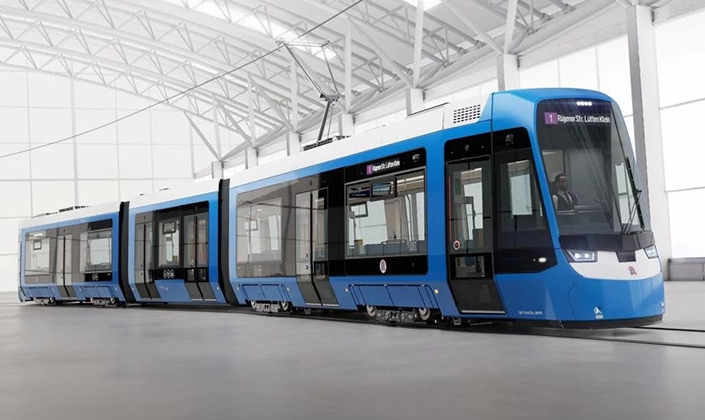
The Talanx Group is investing over EUR 60 million in the purchase of 28 new, passenger-friendly streetcars for local public transport in Rostock. By providing funding for the trams, the Group is demonstrating its commitment to preserving an efficient, emissions-reducing public transit system and thus promoting mobility solutions in the context of a shift towards sustainable green transport policies.
The Talanx Group is financing the new trams as part of a consortium through Ampega Asset Management GmbH, a subsidiary of Talanx AG based in Cologne. The financing takes the form of a long-term debt tranche to be amortised in full across the 30-year life of the vehicles. As the consortium’s largest financial backer, the Talanx Group is contributing to state-of-the-art mobility solutions in Rostock and at the same time reinforcing its sustainable and responsible investment policy in line with ESG criteria.
The new passenger-friendly tramcars, which will be operated in the future by Rostocker Straßenbahn AG and built by the long-established Swiss company Stadler, are powered entirely by green energy and hence have zero carbon emissions. The funding of attractive local public transportation puts in place the necessary conditions for a shift towards sustainable transport policies. At the same time, broad access to alternative and attractive public transit solutions reduces the use of private cars with their high emissions and enables mobility for all sectors of the population.
In concrete terms, the insurers belonging to the Retail Germany division of the Talanx Group, PB Leben, neue leben Pensionskasse and HDI Pensionskasse are participating in the funding. Along with Ampega Asset Management, the consortium is led by NORD/LB and Deutsche Leasing Finance with the involvement of DAL Deutsche Anlagen-Leasing. The other consortium partners, which include Ostseesparkasse Rostock, have put up altogether around EUR 30 million as part of the financing.