
Spain: EIB provides Minoryx with up to €25 million to support development of breakthrough therapies in orphan neurodegenerative diseases
EIB support to develop breakthrough treatments to address orphan neurodegenerative diseases with high unmet medical needs
Focus on Minoryx’s lead asset, leriglitazone, a novel, disease-modifying PPAR-γ agonist
Venture debt operation supported by the Investment Plan for Europe
The European Investment Bank (EIB) announced that it has approved €25 million financing for Minoryx Therapeutics, a Phase 3 clinical stage biotech company focused on the development of differentiating treatment options for orphan central nervous system (CNS) disorders.
The EU bank will grant long-term financing to Minoryx to drive the company’s research activities in orphan genetic diseases for which there are currently no approved drugs available. The EIB investments will specifically support the development of Minoryx’s leriglitazone, a disease-modifying treatment (PPAR-γ agonist) currently being evaluated in three late-stage clinical trials:
Pivotal Phase 2/3 ADVANCE study in adrenomyeloneuropathy (AMN), a disease that constitutes the chronic form of X-ALD (X-linked adrenoleukodystrophy) with onset in adulthood and characterised by progressive neurodegeneration of the spinal cord, resulting in progressive motor dysfunction.
Phase 2 NEXUS study in cerebral adrenoleukodystrophy (cALD), the most aggressive form of X-ALD, typically affecting children between 2 and 12 years of age and characterised by brain inflammation, leading to rapid cognitive decline and death.
Phase 2 FRAMES study in Friedreich’s Ataxia (FRDA), a life threatening disease characterised by neurodegeneration resulting in loss of coordination, muscle strength, and cardiomyopathy.
Estimates indicate that the investment in this research, development and innovation (RDI) project will help create over 50 jobs during the implementation phase.
EIB Vice-President Ricardo Mourinho Félix, who is responsible for the Bank’s operations in Spain, said: “We are very happy to sign an agreement that reaffirms the EIB’s commitment to fostering innovation in the healthcare sector by driving the development of new treatments that will have a positive impact on the quality of life of people affected by rare diseases of the central nervous system. Our support for the research programme of Minoryx, a Spanish biotech company, will also help to improve the competitiveness of the European pharmaceutical industry and create highly skilled jobs.”
European Commissioner for the Economy, Paolo Gentiloni, said: “This EU support will help Minoryx to develop breakthrough therapies for genetic diseases and treatments for diseases of the central nervous system. The coronavirus pandemic has shown how important it is to continue to push scientific boundaries and deliver medication for rare diseases. The European Commission will continue to support companies’ efforts in this sense at every opportunity.”
“The EIB brings Minoryx valuable non-dilutive financial resources, alongside our strong and supportive shareholder base, which, we believe, is a clear endorsement of the potential of leriglitazone to improve the lives of patients living with debilitating neurodegenerative disorders”, said Didier Le Normand, Group CFO and General Manager Belgium. “The current clinical studies with leriglitazone continue to advance as planned and we remain on track to report top line data from the pivotal ADVANCE study before the end of the year.”
The EIB will provide funds for this RDI project by way of a venture debt operation under the European Fund for Strategic Investments (EFSI), a financing instrument used by the EU bank to assist leading companies in innovative research sectors. Since it was launched by the EIB under the Juncker Plan in 2016, this initiative has granted over €2 billion in financing for projects in sectors such as robotics, artificial intelligence and biomedicine. EIB venture debt financing targets European companies with up to 3 000 employees in the fields of biotechnology and health sciences, software and ICT, engineering and automation, and renewable energy and clean technology.
Metlife Foundation donates $425,000 to provide cash support to families impacted by Covid-19
MetLife Foundation announced that it will provide a $425,000 grant to SaverLife, a national nonprofit fintech company that helps low-income working families achieve prosperity through savings. SaverLife will use the grant to give cash support to around 800 SaverLife clients facing economic instability as a result of COVID-19. The grant is part of MetLife Foundation’s $25 million commitment to the COVID-19 global response.
Most of SaverLife’s online platform members are low-income women and people of color, who represent some of the groups hard hit by the pandemic. MetLife Foundation’s grant will support SaverLife members who have lost their regular paychecks, along with those using food stamps, with $500 “emergency savings boosts” through SaverLife’s existing digital platform.
Since the start of the pandemic, SaverLife has surveyed its members to better understand the real-life impact of COVID-19 on families. Not only did many lose jobs and incomes, but expenses also rose as families rushed to stock up on essentials.
“SaverLife creates solutions to help low-income people build financial resilience,” said Dennis White, president and CEO of MetLife Foundation. “With this grant, we want to help SaverLife’s members maintain a degree of resilience in the face of the severe challenges posed by the pandemic.”
“With MetLife Foundation’s support and by leveraging our existing technology, SaverLife is uniquely poised to provide effective and rapid economic support to working families facing unprecedented financial uncertainty,” said Leigh Phillips, CEO of SaverLife.
On top of the donation to SaverLife’s COVID-19 Emergency Response Fund, MetLife Foundation has provided $3.25 million in grants since 2016 to help SaverLife expand its user-centric savings platform and support low-income people in stabilizing their finances, including through tools provided in the workplace.
Lloyds Banking Group provides support to 30,000 UK businesses impacted by Covid-19
Since the beginning of March relationship managers have been working tirelessly, talking to tens of thousands of business customers to understand how COVID-19 is impacting them and to provide support where it is needed. As part of the Group’s commitment to lend £18bn this year, a £2bn fund was allocated for businesses impacted by COVID-19 to provide fee-free financing to help them with their working capital.
– In addition to the £3bn in existing undrawn overdraft facilities that was already available to businesses, we have approved a further 10,000 overdraft extensions worth £100m
– We have approved 20,000 capital repayment holidays to help businesses with their working capital challenges and reduce their outgoings
– We are approving the vast majority of eligible CBILS applications that we assess and so far out of 2,876 completed applications we have approved 2,382 CBILS loans to a value of £335m.
Our capacity to process applications continues to increase and we are doing all we can to ensure that customers get the financing they need. As well as prioritising urgent cases we are working to urgently process the backlog of CBILS applications that have built up while we have been establishing our operation and processes to offer these loans.
For our larger customers, we are one of seven providers of CLBILS and we are also registered as a dealer and arranger for commercial paper to facilitate the needs of investment grade corporations through the CCFF scheme.
“During uncertain times our business customers need reassurance and support, we understand this and are here to support. We have supported 30,000 businesses, allocated considerable, additional resource to meet the demand, but also provide the right solution to suit their needs. This can range from an overdraft extension, repayment holidays through to term lending and CBILS. Our processing of CIBLS applications for those that need them is accelerating quickly and we would expect that to continue over coming days. We will continue to work alongside our customers to meet their needs”
David Oldfield, Group Director & CEO, Commercial
Poland: Solid EIB Group activity in 2019 paves the way for continued support this year, as the economy struggles with coronavirus
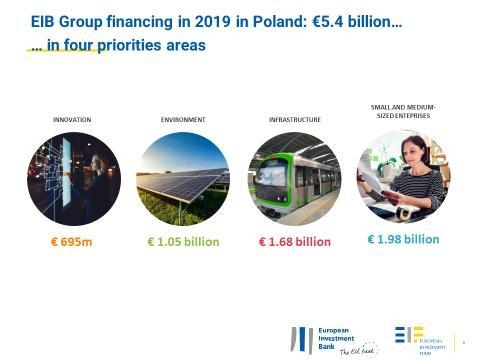
– The European Investment Bank Group’s financing amounted to €5.4 billion last year, driven by investments in infrastructure and environment and showing increasing support for small and medium-sized businesses
– In the first months of 2020, the EIB has signed new loans for renewable energy and sustainable transport projects, supporting Poland in its climate transition
– In light of the COVID-19 emergency, the EIB Group is ready to intensify its support for the Polish and European economy
With €5.4 billion of overall financing 2019 was a strong year for the European Investment Bank (EIB) Group in Poland. The Group’s activity was 13 % higher than in the previous year and in line with the trend of the past five years. Loans granted to public and private counterparts by the EIB amounted to €4.3 billion, while the European Investment Fund (EIF) provided €1.1 billion in guarantees and equity investments to small and medium-sized businesses and mid-caps.
Poland was the fifth biggest recipient of EIB Group financing among EU countries, after Italy, Spain, France and Germany. This financing represents more than 1% of Poland’s GDP, making the country the second largest beneficiary among countries with a population above 10 million after Greece. This shows the impact of the EU bank’s operations.
In the first few months of 2020, new operations were signed in renewable energy production, with a €60 million loan to Pomerania Wind Farm (a subsidiary of the Lithuanian Ignitis group), and in sustainable transport. A €480 million loan to LG Chem for the construction of electric-vehicle batteries in Wroclaw was announced today.
“Last year, the level of activity of the EIB Group in Poland was once again significant. The EU bank financed important projects in all sectors of the economy, with a particular focus on infrastructure and environment, and with record volumes of loans and guarantees to small and medium-sized businesses. We take these positive results as a motivation to continue to support the Polish economy as it faces the daunting task of fighting the coronavirus crisis,” said EIB Vice-President Teresa Czerwińska, who is in charge of operations in Poland following her appointment to the EIB Management Committee on 1 March. Teresa Czerwińska added: “We will work tirelessly with all our public and private partners in Poland, so that we continue to finance projects that help the Polish economy to be more resilient to shocks and more prosperous in the longer term. The EIB stands ready to further support SMEs, who are the most vulnerable economic actors in times of social and economic lockdown. The package announced last week of up to €40 billion for European SMEs is a first step in our commitment. We will do everything we can to combine national and European efforts and I trust that by working together we will overcome the coronavirus crisis, in Poland as well as in Europe.”
“2019 was another year of very good cooperation between Poland and the EIB Group,” said the Minister of Finance, Tadeusz Kościński. “This is confirmed by figures, with €5.4 billion of financing provided to Polish enterprises, national and local government bodies. This ranks Poland 5th among EU countries. EIB Group financing supported, among others, railway upgrade projects, renewable energy, access to finance for SMEs, scientific research programs and hospitals modernization projects. Last year, the role of Poland as the Bank’s shareholder also increased. We strengthen our contribution to the management of the Bank. I hope and I am confident that the Bank will continue its support, including its commitment to tackle the challenge of COVID-19 today. ”
2019 results overview Infrastructure and environment
Projects related to infrastructure needs attracted €1.68 billion, while projects with a direct climate action and environment component received €1.05 billion of financing. Taking all projects in aggregate, climate action accounted for 31% of the EIB Group’s financing, in line with the Group’s global level.
In many cases, EIB support improves the country’s infrastructure, while at the same time facilitating the transition to a more climate-friendly environment. For example:
– Railways attracted the biggest part of EIB loans for transport projects in Poland in 2019 (€738 million), more than roads (€617 million). In particular, the EIB financed the modernisation of 195 km of PLK railway lines between Poznan and Szczecin (E59), as part of the Baltic-Adriatic corridor upgrade.
– Cleaner energy projects also received solid backing. The EIB supported the upgrade of municipal heating networks in Bydgoszcz, Lublin and Opole, to make them more energy efficient, and signed a €64 million loan to finance the construction by PGE of three onshore windfarms on the Baltic coast for a combined capacity of 97 MW.
Small and medium-sized business
A combination of EIB credit lines (for approximately €1 billion) as well as EIF guarantees and equity investments (for approximately €1.1 billion) provided a record amount of around €2 billion in fresh financing to Polish SMEs and mid-caps. The EIB Group lends to SMEs mainly via partnerships with Polish banks, leasing companies and other financial institutions. It lends to those financial intermediaries who, in turn, on-lend to their clients with attractive rates and maturities, making access to finance easier for small business. Part of those loan agreements, with partners including mBank and BNP Paribas Polska, will support dedicated energy efficiency programmes carried out by SMEs.
The EIB also financed SMEs directly. The bank signed a €50 million loan with the diary company Mlekpol to upgrade its production and storage facilities. The operation was backed by EFSI.
Innovation, research, health
Projects with a strong innovation component received €695 million. Around €480 million were invested in science, supporting the early-stage research and applied R&D projects of national science and research centres in Krakow and Warsaw, and the education and research programmes of the Polish Academy of Science. A €45 million loan was signed with the specialty chemicals company PCC Rokita for its modernisation programme, including a new Centre for Innovation. The EIB also signed a €30 million loan with Mabion, the first biotech company in Poland to receive EIB backing.
University hospitals in Gdansk and Lublin received a €91 million loan for the modernisation and extension of their facilities, via an agreement with the Ministry of Finance. This operation followed two direct loans signed in 2018 with university hospitals in Warsaw and Poznan, showing the readiness of the EIB to support the healthcare sector in Poland.
European Fund for Strategic Investments (EFSI):
Poland also ranks fifth among EU countries in terms of loans received under the European Fund for Strategic Investments (EFSI), which is the financial pillar of the “Juncker Plan”. This plan, launched by the European Commission and the EIB in 2015, helps attract public and private investments into projects by taking on a higher risk than is usual for EIB lending activity. As of 31 December 2019, there were 73 approved EFSI transactions in Poland amounting to €3.9 billion. They were expected to mobilise €21 billion of total investments.
BNP Paribas and Credit Suisse join leading global shipping banks in support of UN climate targets
The world’s largest lender to global shipping, BNP Paribas, and leading wealth manager, Credit Suisse, become the 15th and 16th financial institutions to sign on to the Poseidon Principles.
The Poseidon Principles are the world’s first sector-specific, self-governing climate alignment agreement amongst financial institutions. They establish a common framework to quantitatively assess and disclose whether financial institutions’ lending portfolios are in line with climate goals set by the International Maritime Organization (IMO), a specialized agency of the United Nations responsible for regulating shipping. The IMO’s target is for greenhouse gas emissions from international shipping to peak as soon as possible and to reduce the industry’s total annual GHG emissions by at least 50% by 2050, with a strong emphasis on zero emissions.
The Principles are designed to support ship owners in achieving the ‘at least 50% by 2050’ reduction target and to help financial institutions in managing critical investment risks – to the benefit of business and society.
“The decision of BNP Paribas and Credit Suisse to sign on to the Poseidon Principles represents another milestone for responsible ship finance. We welcome their leadership and we encourage other serious financial institutions to join them in serving global seaborne trade in a sustainable manner,“ says Michael Parker, Chairman of Global Shipping Logistics & Offshore at Citi and Chair of the Poseidon Principles Association.
“As a leading and longstanding lender to the global maritime industry, we welcome the establishment of the Poseidon Principles, an industry-wide and self-volunteered initiative that reflects our own commitment to combat climate change and protect the oceans,” says Vincent Pascal, Head of Shipping & Offshore Finance EMEA at BNP Paribas.
“The Poseidon Principles are key to leading industry-wide change. Along with our co-signatories, we aim to align our ship finance portfolio to be environmentally responsible and to lead by example in the reduction of GHG emissions. Joining the Principles shows our clear and continued commitment to sustainable shipping – being there to support our clients in their business and in their transition to a low-carbon shipping industry,” says Mario Béhé, Global Head of Ship Finance at Credit Suisse.
Signatories of the Poseidon Principles include, ABN Amro, Amsterdam Trade Bank, BNP Paribas, Citi, Credit Agricole CIB, Credit Industriel et Commercial, Credit Suisse, Danish Ship Finance, Danske Bank, DNB, DVB, Export Credit Norway, ING, Nordea, Société Générale, and Sparebanken Vest.
The Poseidon Principles were developed by Citi, DNB, and Société Générale in collaboration with leading industry players – A.P. Møller Mærsk, Cargill, Euronav, Lloyd’s Register, and Watson Farley & Williams – with expert support provided by the Global Maritime Forum, Rocky Mountain Institute, and University College London Energy Institute. The Principles were established in June 2019.
The Principles are applicable to lenders, relevant lessors, and financial guarantors including export credit agencies. They are implemented in internal policies, procedures and standards and applied in all credit products secured by vessels that fall under the purview of the IMO. The Principles are intended to evolve over time to include other issues where the collective influence of financial institutions can help improve the contribution the maritime industry and its lenders can make to society.
Bulgaria: EIB and ProCredit Bank Bulgaria expand support to small and medium-sized businesses and foster climate action
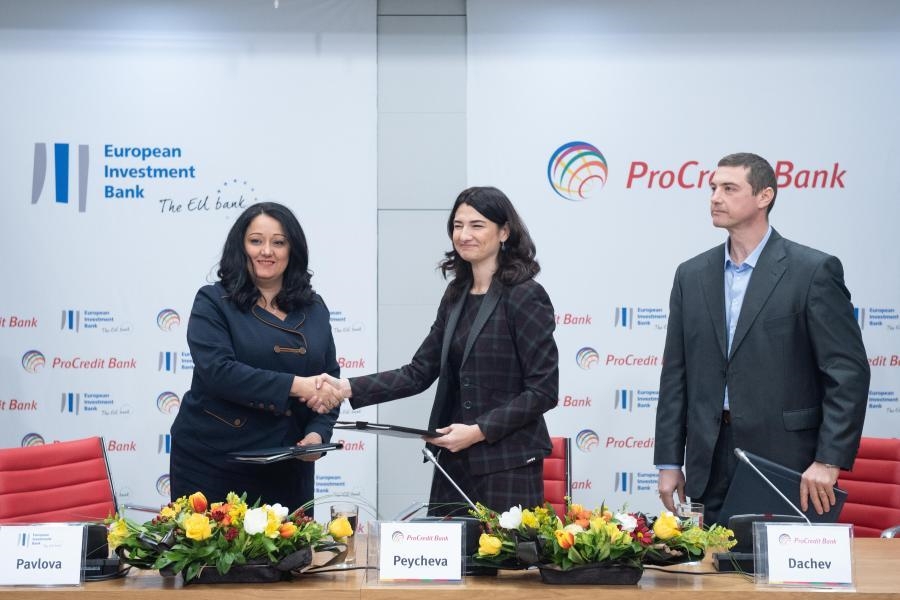
– This EUR 15m loan is the third EIB operation with ProCredit in Bulgaria
– 40% of the loan is dedicated to projects with a climate action component
The European Investment Bank (EIB) lends EUR 15m to ProCredit Bank Bulgaria to co-finance small and medium-scale investments in the country. 40% of the intermediated loans are dedicated to renewable energy, energy efficiency, low carbon transport and waste management projects.
Thanks to the EIB loan, Bulgarian companies with fewer than 3 000 employees will benefit from better access to long-term financing provided at favourable terms.
“Support to cohesion regions and the fight against climate change are strategic priorities of the EU bank,” said EIB Vice-President Lilyana Pavlova. She continued: “The EIB, in cooperation with our well-established partner ProCredit Bank, will sustain employment in Bulgaria, strengthen the competitiveness of the private sector and support the fight against climate change. Our joint efforts will stimulate sustainable growth and investments in Bulgaria, fostering economic convergence, increasing the number of qualified jobs and ultimately improving the living conditions of European citizens.”
“ProCredit Bank is a pioneer in offering specialised green and energy efficiency loans, including financing for renewable energy generation, and has devoted significant efforts to encouraging investments of this kind. By doing this we have accumulated in-house expertise and experience, and have positioned ourselves as the bank of choice for green loans – among both businesses and providers of funds. The signing of today’s contract reflects the shared principles and goals of both institutions, as well as our joint commitment to promoting growth and employment by supporting small and medium-sized enterprises”, said Reni Peycheva, Member of the Management Board and Executive Director of ProCredit Bank (Bulgaria).
This is the third operation since the start of the EIB’s cooperation with ProCredit Bank in 2011. The EIB has already provided two intermediated loans to the bank, thereby helping to finance small and mid-sized businesses in Bulgaria.
Ireland: EIB agrees EUR 40m support for RCSI campus investment

RCSI has negotiated a EUR 40m second loan agreement with the European Investment Bank (EIB). The financing will fund, in part, the next stage of the development of RCSI’s city centre medical campus at St. Stephen’s Green, Dublin.
Subject to planning permission, the EUR 90 million redevelopment of Block A of the Ardilaun Centre, which fronts on to St. Stephen’s Green and is adjacent to RCSI’s award winning development at 26 York Street, will provide enhanced research, teaching, learning, faculty and student facilities.
Speaking at the signing of the agreement Professor Cathal Kelly, RCSI CEO said, “Our campus has constantly evolved to meet the medical challenges and opportunities of each new generation. We are now setting out on what will be the most exciting and transformative phase of our journey so far”.
“The opening of 26 York Street in 2018, also funded in part through a first EUR 50m loan provided by EIB, marked the beginning of an exciting campus expansion for RCSI, providing world-class simulation facilities for our students and trainees. The redevelopment of Ardilaun Block A will further transform the way in which we educate our students so they can learn, grow, and prepare to take their place as the medical leaders of the 21st century. It will also provide a space that engages and involves the local community and plays a dynamic role in the life of the city”.
EIB Vice President Andrew McDowell said “Investment in research and education is crucial for Europe’s future. The European Investment Bank is pleased to support transformational new investment by RCSI, Ireland’s leading medical school, in the heart of Dublin. This represents our second loan to RCSI in less than three years and follows recent support for campus investment at every university in Ireland. The visionary new investment by RCSI will further strengthen Ireland’s global role as a centre for medical learning and research, improve education for future generations of doctors, nurses, midwives and pharmacists and significantly reduce carbon emissions through energy efficient buildings.”
RCSI is ranked among the top 250 (top 2%) of universities worldwide in the Times Higher Education World University Rankings (2020) and its research is ranked first in Ireland for citations. It is an international not-for-profit health sciences institution, with its headquarters in Dublin, focused on education and research to drive improvements in human health worldwide. RCSI has been awarded Athena Swan Bronze accreditation for positive gender practice in higher education.
The EU Bank boosts its support for cities and regions

– The European Investment Bank (EIB) commits to support cities and regions through its lending and advisory services
– Cities will benefit from an increase of investments for climate action and environmental sustainability
– New support announced for sustainable transport, affordable and energy efficient housing, education and climate change resilience
The EIB boosts its support for cities and regions to tackle climate change and foster social inclusion. During the last 5 years (2014-2018), the EU bank dedicated EUR 104 billion to urban lending including health, housing, urban transport or water and wastewater management.
Ahead of the European Week of Cities and Regions in Brussels, the EU Bank announced new support for projects across Europe:
– PLN 1.5 billion (EUR 350 million) loan to the City of Warsaw co-finance the extension of the second line of the City’s metro- EUR 355 million scheme to protect Athens, Thessaloniki and the Peloponnese from floods and climate change- EUR 90 million for the financing of six high schools and professional schools in Guadeloupe- EUR 115 million loan to the public transport provider of Rotterdam and the Metropole-region Rotterdam-The Hague to acquire new electric and diesel-hybrid buses, install charging infrastructure and renew tram and metro tracks around the city.- EIB and HBOR partnership to enable easier access to energy efficiency loans to Croatian businesses and municipalities- SEK 3 billion (EUR 300 million) for the construction of affordable and energy efficient housing in five cities in Sweden- EUR 200 million financing to support clean urban transport in Spain, in cities such as Las Palmas de Gran Canaria, Barcelona, Valencia and Palma de Mallorca
Vazil Hudak, EIB Vice-President responsible for financing economic and social cohesion commented: “Cities and regions have been a partner of choice for the EU Bank for more than 60 years. As they face new challenges such as growing urbanization and climate change, the EIB is fully committed to support investments that make our cities and regions thrive. By 2025, the EIB aims to allocate at least 50% of its financing activities for projects that support climate action and environmental sustainability and a significant share of this will be implemented in cities.”
Karl-Heinz Lambertz, President of the European Committee of the Regions, said: “The CoR and the EIB Group share the objective of delivering economic growth and job creation across the EU’s Regions and Cities. Continuing our successful cooperation, and reaffirming the good working relations between the CoR and the EIB Group, the 2019 renewed Action Plan will contribute to support high-quality projects that benefit citizens and businesses alike and leaves no region behind.”
At the European Week of Regions and Cities, the EIB will organize a number of sessions to present its toolkit for municipalities and regional governments. This includes framework loans (flexible loans that cover several small projects), investment loans, equity investments or advisory services such as URBIS, a new dedicated urban investment advisory platform. The EIB has also developed an unique expertise to help cities and regions establish financial instruments with EU grants from structural funds.
To reduce regional economic imbalances and raise living standards across the EU, the EIB dedicates at least 30% of all new operations in the EU and pre-Accession countries to cohesion projects. During the last 5 years (2014-2018), the EIB has provided EUR 88 billion to projects in EU cohesion regions. For 2018, this amounted to EUR 14.25 billion.
ABN AMRO, Rabobank and BNP Paribas team up to support smallholder coffee farmers

ABN AMRO, Rabobank and BNP Paribas team up with Neumann Kaffee Gruppe (NKG), IDH, and USAID to support smallholder coffee farmers in Kenya, Honduras and Mexico.
These countries will be introducing NKG Bloom in 2019, a programme launched in Uganda in 2017.
NKG Bloom is an initiative of Neumann Kaffee Gruppe, the largest green coffee service group in the world. German based NKG provides farmers with access to finance, an education and technology to harness their full production potential, work more sustainably and to make their coffee traceable.
The three banks provide the financing and, together with NKG, USAID and IDH, they share the credit risk. ABN AMRO structured this unique 25 million-dollar credit facility for NKG and was Lead Arranger and Coordinator.
Perspective for small farmers and more sustainable production
ABN AMRO’s Karin Kersten on behalf of the banks: “The successful project of NKG Bloom in Uganda in 2017 offers smallholder farmers more perspective and increases the production of sustainable coffee. We’re proud to be involved in this next step to support NKG Bloom together with Rabobank and BNP Paribas.”
Impact banking
For ABN AMRO it is the third impact banking transaction. The bank is looking to build an impact banking portfolio of around EUR 50 million. Karin Kersten: “We want to be an impactful bank. This transaction shows that we set great store by supporting our clients in making the transition to more sustainable business models. We’re extremely proud that we’ve been able to contribute to this innovative facility.”
Serbia: EIB supports Highway of Peace
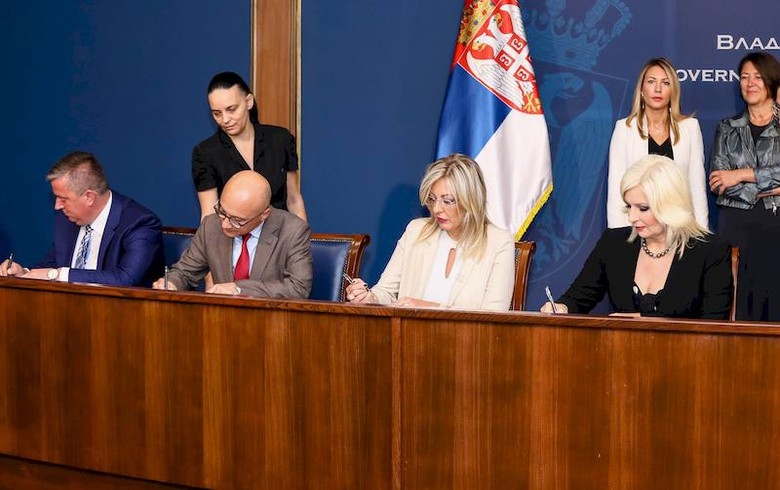
– The EU Bank has signed a EUR 100m loan to finance the construction of the new highway linking Niš and Merdare
– The project will also benefit from a EUR 48m investment grant from the Western Balkans Investment Framework, an EU-led initiative
– The project, known as the Highway of Peace, represents a concrete step towards regional cooperation and reconciliation
– EU Commissioner for Mobility and Transport Violeta Bulc attended the signature event
The European Investment Bank (EIB) is continuing to support transport infrastructure in the Western Balkans region by signing a EUR 100m loan to build the new highway linking Niš and Merdare in Serbia. The project concerns the construction of the first 32 km (out of 100 km in total) section – also called the Highway of Peace – connecting Niš, one of the largest cities in Serbia, with Priština. The new road is part of the 314 km-long corridor connecting Southern and Eastern Europe.
The project is worth EUR 255m and will also be supported by EUR 48m in grants under the Western Balkans Investment Framework platform (WBIF), consisting of a EUR 40.6m investment grant and a EUR 7.4m technical assistance grant for project preparation. It is expected that the project will be completed by the end of 2024.
The project includes the construction of four grade-separated junctions, six tunnels ranging from 200 to 1 200 m long, nine major bridges between 100 and 1 000 metres long, as well as rest areas, a local control centre and platforms for service stations. It will be constructed as a single carriageway, but will be designed for subsequent easy upgrading to full Trans European Motorway standards when traffic reaches the requisite level, expected in about 15 years’ time.
The finance contract and the investment grant were signed in Belgrade in the presence of the EU Commissioner for Mobility and Transport Violeta Bulc. The documents were signed by the EIB Director for Italy, Malta, Slovenia, Croatia and Western Balkans Miguel Morgado, the Serbian Deputy Prime Minister and Minister of Construction, Transport and Infrastructure Zorana Mihajlović, the Minister of EU Integration Jadranka Joksimović, and the Assistant Director of the Corridors of Serbia Dušan Purić.
EU Commissioner Violeta Bulc emphasised the following: “We are stepping up our work in support of modernised infrastructure in the Western Balkans region. This highway will improve road safety and efficiency, while enabling better connectivity within the region. Even more so, this project is a concrete example of increasing cooperation and reconciliation between the peoples of Serbia and Kosovo.”
EIB Vice President Dario Scannapieco stated: “The EIB has strongly supported the infrastructure sector in the Western Balkans since the beginning of its activity in the area more than 40 years ago. I am proud that the EU bank will support this project, for its crucial geopolitical importance: not by chance, this section of this trans-European transport network is also known as the Highway of Peace.”
Deputy Prime Minister Zorana Mihajlović added: “The Niš-Merdare highway is one of the six highways that Serbia is starting to build this and next year. This highway is significant both for its regional connectivity – as it will connect Serbia with Albanian ports on Adriatic Sea – and for the faster development of the districts in Southern and Central Serbia that the new highway will connect. Infrastructure is not just concrete and asphalt, so I expect that this project will help to build a better future for this region and will create a better life for all the people who live here.”
Serbian Minister of EU Integration Jadranka Joksimović said: “This project is important for regional interconnectivity, which will be a significant impetus for the future growth and development of the region, and especially for Serbia. It is part of our joint effort with the EU to promote infrastructure connectivity, and connectivity in general. Investment in infrastructure has never been a wasted investment, and everyone benefits – both Serbia and the region and the EU. We managed to negotiate a significant grant of EUR 40.6m from the Western Balkans Investment Fund, while securing the rest of the funds through a favourable credit line with our EIB partners, with whom we have collaborated on other infrastructure projects in Serbia.”