
Helvetia (CH) Swiss Property Fund posts strong result for the 2021 financial year

The Helvetia (CH) Swiss Property Fund is reporting a very encouraging result for the second financial year. Underpinned by solid net income and an appreciation in the property portfolio, total income in 2021 came to CHF 24.2 million, representing an attractive investment yield of 5.5%.After transaction costs from the purchase of the initial portfolio of 29 properties impacted on the short first financial year (3.6.2020 to 30.9.2020), the 2021 financial year revealed the portfolio’s strong earning power over the twelve-month period. On the strength of the dominant residential component of 83% of the target rental income, the portfolio of the Helvetia (CH) Swiss Property Fund remained largely unscathed by the adverse effects of the COVID-19 pandemic in the second financial year too. Property income solid and rent default rate low
Rental income amounted to CHF 22.2 million, while the rent default rate was reduced to a low 2.5% within the space of a year. The EBIT margin increased to 66.3% and the fund operating expense ratio (TERREF GAV) was down to almost 0.8%. Net income generated in the 2021 financial year amounted to CHF 12.8 million, or CHF 2.84 per unit. Encouraging price trend and strong performance
Low interest rates and stable income on the Swiss property market ensured the continuing appeal of the real estate asset class and strong demand for investment properties in 2021 as well. Real estate investments with a high residential component profited in particular. In the period from 30.9.2020 to 30.9.2021 the Helvetia (CH) Swiss Property Fund reported a performance of 18.9% based on the price trend in over-the-counter trading, beating the benchmark SXI® Real Estate Funds Broad TR (relevant for listed Swiss real estate funds), which achieved a performance of 15.3% in the same period.
Increase in net asset value and high dividend yield
Last year the net asset value per unit increased by 5.5% from CHF 98.03 to CHF 103.40. The market value of the properties rose by around CHF 12.2 million (2.3%). After the decision not to distribute accrued income in the short first financial year, the initial distribution per unit was set at CHF 3.55. Based on the over-the-counter price of CHF 126.00 per unit, this represents a dividend yield of 2.8% as at the end of the 2021 financial year. Further expansion of real estate portfolio planned
The fund management company intends to expand the real estate portfolio substantially in the 2022 financial year. To this end, it is planning a new capital increase of approximately CHF 200 million as at end March 2022. The proceeds of the issue will again be used to purchase a broadly diversified real estate portfolio with a high residential component from Helvetia Group’s portfolio. A listing on SIX Swiss Exchange is planned in one to three years.
Commerzbank with strong results in the first quarter – transformation successfully started
Revenues in Q1 increased by 35% to €2.49bn (Q1 2020: €1.85bn)
Low risk result of minus €149m (Q1 2020: minus €326m)
Strong operating result of €538m (Q1 2020: minus €278m)
Net result of €133m (Q1 2020: minus €291m) despite restructuring charges of €465m
Common Equity Tier 1 ratio improved to 13.4%
Full year outlook raised after good start into the year
Agreement reached with employee representatives for personnel reduction
Ambitious sustainability goals defined
Commerzbank made a very good start into the current year and generated a positive net result in the first quarter despite the ongoing pandemic and restructuring charges. Net commission income increased strongly thanks to a flourishing securities business. This enabled the Bank to largely compensate the impact from the negative interest-rate environment and the ongoing lower consumption resulting from coronavirus restrictions. In conjunction with stable expenses and a lower risk result, this led to an operating profit of €538 million. The Common Equity Tier 1 (CET 1) ratio of the Bank improved to 13.4% and continues to be significantly above the regulatory requirement (MDA). Following on from the positive start of the year, the Bank raised its full year outlook for revenues and the CET 1 ratio.
The transformation of Commerzbank launched in February through “Strategy 2024” is making good progress with the four core topics of profitability, sustainability, digitalisation, and customer centricity.
As already announced, the Bank quickly reached agreements with the employee representatives in Germany about a framework settlement of interests and a framework social plan concerning the necessary personnel reduction. The binding agreements form the basis for a maximally socially responsible downsizing. The Bank had already agreed a voluntary redundancy programme on a headcount reduction of 1,700 full-time equivalents for 2021.
The Bank is also proceeding quickly with the issue of sustainability and has defined ambitious goals for this area. It intends to increase the volume for sustainable financial products from the recent total of around €100 billion to €300 billion by the end of 2025. Furthermore, Commerzbank is one of the first German financial institutions to have made a commitment as a member of the Net-Zero Banking Alliance to reduce CO2 emissions as far as possible and to achieve net-zero CO2 emissions for the entire loan and investment portfolio by 2050, and for its own banking operations already by 2040.
Commerzbank is also making good progress on its digital offerings and in the area of customer centricity. Together with Deutsche Börse, it is investing in the fintech 360X as part of a strategic partnership. The goal is to develop new blockchain-based digital marketplaces and ecosystems for existing real asset classes such as art and real estate. The Bank also agreed a comprehensive cooperation for Equity Brokerage and Equity Research with Oddo BHF. Commerzbank is thereby reducing costs and complexity while improving the customer offer. Alongside market-leading stock analysis in the German-speaking regions of Germany, Austria, and Switzerland, customers will also receive even better access to European equity markets in future.
“After only a few months, we have already achieved some important milestones in our transformation and launched a large number of projects and measures in all parts of the Group. We are now consistently implementing these projects. The agreement with the employee representatives on the framework for the necessary headcount reduction is a decisive step,” commented Manfred Knof, Chief Executive Officer of Commerzbank. “After a very good start into the year, we are looking confidently to the future despite of the ongoing pandemic.”
Revenues in the first quarter increased by 35% to €2,492 million (Q1 2020: €1,851 million) primarily on the basis of a strong net commission income and positive valuation effects. The interest rate benefit from the Targeted Longer-Term Refinancing Operations (TLTRO) of the European Central Bank (ECB) amounted to €126 million in the first quarter. The underlying revenues excluding exceptional items rose to €2,308 million (Q1 2020: €2,024 million). This enabled the Bank to more than compensate the pressure of the negative interest-rate environment on net interest income.
The risk result at minus €149 million was below the year-on-year value (Q1 2020: minus €326 million). Despite of the ongoing coronavirus pandemic, the loan portfolio remained stable. This is also reflected by the continuing low ratio of non-performing exposures (NPE ratio) at 0.9% (year-end 2020: 1.0%). The additional provision formed last year for coronavirus effects anticipated for 2021 (“top-level adjustment”) was nearly unchanged at €495 million at the end of March.
Operating costs fell to €1,469 million (Q1 2020: €1,503 million). Administrative expenses benefited from lower spending for advertising, depreciation, and travel. The burden of compulsory contributions continued to rise by almost 12% to €336 million (Q1 2020: €301 million) as a result of higher contributions for the deposit guarantee scheme and for the European Bank Levy. Despite this additional burden, total expenses were at €1,806 million (Q1 2020: €1,804 million) and thus remained stable overall.
Total operating profit amounted to a strong €538 million (Q1 2020: minus €278 million). This more than compensated for the restructuring charges of €465 million booked in the first quarter. The consolidated profit attributable to Commerzbank shareholders amounted to €133 million (Q1 2020: minus €291 million) partly due to positive tax effects.
The CET 1 ratio increased to 13.4% by the end of March (end of December 2020: 13.2%) and is now around 380 basis points above the regulatory requirement (MDA) of currently 9.6%.
“We started the year with very strong results, and we have achieved a positive net result after restructuring charges. In particular, the strong securities business made a significant contribution to this result, and this enabled us to largely compensate for the effects arising from the negative interest-rate environment. Our improved capital ratio provides us with a solid basis for the further transformation,” said Bettina Orlopp, Chief Financial Officer at Commerzbank.
Development of the segments
The Private and Small-Business Customers segment continued its growth with loans and securities and increased the volume of its business in Germany to €307 billion by the end of March – a plus of €17 billion by comparison with year-end 2020 and €67 billion year-on-year. This was primarily due to strong securities business with an increase in volume of €15 billion since the beginning of the year. Out of this, €5 billion was net new money. Since the turn of the year, the loan volume went up by €2.4 billion to around €115 billion. Once again, the driver for this growth was successful mortgage business, which increased year-on-year by 7% to a volume of nearly €88 billion.
Total underlying revenues for the Private and Small-Business segment amounted to €1,338 million (Q1 2020: €1,329 million), despite of sustained pressure on net interest income. Owing to the securities business, net commission income increased by more than 11%. This enabled the segment to compensate for falling contributions from deposits, lower demand for consumer loans due to the pandemic, and the effect of the lockdown on payment transactions. Net interest income fell by around 10% due to the continuing negative interest-rate environment. Thanks to the significantly lower risk result, the segment generated an operating profit of €250 million (Q1 2020: €146 million).
The Corporate Clients segment maintained almost stable underlying revenues at €824 million (Q1 2020: €833 million) thanks to strong capital market business which enabled the segment to compensate the pandemic-related decrease in lending business. The International Corporates division benefited from improved bond and syndicated loan business, while lower demand for loans had an impact in the Mittelstand division. The effects of the coronavirus crisis led to lower transaction banking in the Institutionals division. Including exceptional items and valuation effects, total revenues for the segment increased by more than 11% to €842 million (Q1 2020: €755 million).
A low risk result of minus €52 million (Q1 2020: minus €165 million) and a further reduction in costs led to a positive operating result for the segment of €98 million (Q1 2020: minus €112 million).
Outlook
Given the strong results of the first quarter, revenues should slightly exceed the previous year. With the further progress of the transformation the Bank targets costs of around €6.5 billion. While uncertainty of the further development of the pandemic remains, a risk result in the range from minus €0.8 billion to minus €1.2 billion is anticipated. Based on current observations, a risk result up to minus €1 billion is likely. Based on the results of the first quarter, the Bank expects a CET 1 ratio of at least 12.5% – well above the targeted buffer of 200 to 250 basis points above the MDA. Overall, Commerzbank expects a positive operating result. The expectations are based on the assumption that there is no fundamental change affecting the Swiss francs loan portfolio at mBank.
Kuwait Re reports strong results for the first half 2020
Kuwait Reinsurance Company K.S.C.P reported a net profit of KD 3.09 million for the period ended 30 June 2020, an increase of 7% as compared to KD 2.87 million in the corresponding period previous year.
The technical risk evaluation and prudent capacity allocation led to solid underwriting performance and absorbed the expected volatility in investment income. Performance highlights for H1 2020 includes the following:
▪ Gross written premium of KD 39.89 million compared to KD 41.31 million in the corresponding period previous year.
▪ The company’s underwriting results improved by 25%: KD 2.88 million comparted to KD 2.30 million during H1 2019.
▪ The combined ratio improved to 93.5% compared to 95.7% in the corresponding period previous year.
▪ The Company’s net investment income was KD 1.77 million with a yield of 3.58% compared to KD 2.17 million with 4.91% yield in the corresponding period previous year.
▪ Net profit for H1 2020 improved by 7% to KD 3.09 million from KD 2.87 million in the corresponding period previous year.
▪ Kuwait Re’s total assets have increased by 11% to KD 165.43 million, from KD 149.39 million at the end of 2019.
▪ The company’s Invested assets has grown to KD 100.35 million, from KD 97.40 million at the end of 2019, an increase of 3.0%.
▪ Shareholders’ equity increased to KD 54.55 million, from KD 53.57 million at the end of 2019, an increase of 1.8%.
SCOR delivers strong results in Q1 2020 with a net income of EUR 162 million
Throughout the past 50 years SCOR has built its reputation on being there for its clients, its employees and all its stakeholders in the most difficult times. The unprecedented crisis we are now facing is no different. On March 11, 2020, the World Health Organization declared the Covid-19 outbreak a global pandemic. The first quarter 2020 results of the SCOR group were not materially affected by the Covid-19 pandemic and the related economic and financial crisis, but this event is ongoing. The impact for the remainder of the financial year cannot be accurately assessed at this stage given the high uncertainty related to the magnitude and duration of the pandemic and of its wide-ranging social, economic and financial consequences on the one hand, and to the possible effects of ongoing and future governmental actions on the other hand. SCOR may see an increased level of claims in its Life and P&C businesses and an increased level of asset impairments during 2020.
As we go through this crisis, we will do everything in our power to support our business partners, employees and local communities throughout the world, while ensuring that our operations continue efficiently.
SCOR is doing its utmost to help stop the spread of the COVID-19 virus, starting within the company. Actively protecting the health of our employees and their loved ones is our top priority. This is why we adopted early and strict prevention measures, before fully activating our Business Continuity Plan and switching to working from home in all Group offices, a move that came before lockdown and social distancing measures were even implemented in most countries. But we are also acting outside the company. SCOR has launched a call to action with the “Spread knowledge, not the virus” campaign, which explains the importance of strict containment measures to combat the pandemic and calls on everyone to contribute to the fight against its spread. The Group is also sharing knowledge on the evolution of Covid-19 with the regular publication of appropriate epidemiological data.
The resilience of SCOR’s operational capability, supported by high-performance IT systems and applications, means that the Group can continue to serve its clients in this period of crisis and immediately respond to their reinsurance needs.
The coronavirus pandemic is being addressed by governments via lockdown policies and fiscal stimulus and by central banks via monetary policies to support financial markets and liquidity concerns. The outcome of these efforts, and notably the timetable at which the spread of the virus subsides, will become clearer over time.
***
SCOR delivers a strong set of results in the first quarter of 2020, combining disciplined growth, strong profitability and robust solvency.
Gross written premiums total EUR 4,158 million in Q1 2020, up 2.2% at constant exchange rates compared with Q1 2019 (up 4.3% at current exchange rates).
SCOR Global P&C gross written premiums are up 2.9% at constant exchange rates compared with Q1 2019 (up 4.8% at current exchange rates). SCOR Global P&C demonstrates solid technical profitability in Q1 2020 with a net combined ratio of 94.5% in line with “Quantum Leap” assumptions.
SCOR Global Life continues to successfully expand its franchise, with gross written premiums up 1.7% at constant exchange rates compared with Q1 2019 (up 4.0% at current exchange rates). SCOR Global Life delivers a strong level of technical profitability in Q1 2020 by recording a technical margin of 7.4%.
SCOR Global Investments pursues a prudent asset management strategy and delivers a strong return on invested assets of 3.1% in Q1 2020, benefiting from capital gains.
The Group cost ratio, which stands at 4.7% of gross written premiums, is better than the “Quantum Leap” assumption of ~5.0%.
The Group net income stands at EUR 162 million for the quarter, up 23.7% compared to Q1 2019. The annualized return on equity (ROE) stands at 10.7%1, 1007 bps above the risk-free rate2, currently exceeding the profitability target of the strategic plan “Quantum Leap”.
Group net operating cash flows stand at EUR 246 million in Q1 2020, with good contributions from both SCOR Global Life and SCOR Global P&C. The Group’s total liquidity is very strong, standing at EUR 2.7 billion at March 31, 2020.
Shareholders’ equity stands at EUR 6,268 million at March 31, 2020, down by EUR 106 million compared with December 31, 2019. This variation is largely explained by the evolution of credit spreads and equity markets in Q1 2020. This results in a strong book value per share of EUR 33.41, compared to EUR 34.06 at December 31, 2019.
Financial leverage stands at 26.6% on March 31, 2020, slightly increasing by 0.2% points compared to December 31, 2019. Allowing for the intended call of the debt3 callable on October 20, 2020, the adjusted financial leverage ratio would be at 25.5%.
The Group’s estimated solvency ratio stands at 210% on March 31, 2020, in the upper part of the optimal solvency range of 185% – 220% as defined in the “Quantum Leap” strategic plan. The reduction in solvency compared to December 31, 2019 was driven by market movements.
SCOR group Q1 2020 key financial details
SCOR’s status on the exposures to the Covid-19 pandemic
SCOR benefits from a strong capital position, high solvency ratio and resilient global franchise. The Group’s current status is the following:
On the Life side, the current situation remains well-below the 1-in-200 year pandemic extreme scenario disclosed by SCOR:
The key exposure relates to mortality business, primarily in the U.S., where SCOR has a diversified portfolio predominantly exposed to younger age and higher socio-economic groups.
There is limited exposure to lines of business impacted by economic downturn, for example disability in France and Australia.
There are some potential positive offsetting impacts over time from our longevity and long-term care (France) portfolios.
On the P&C side, SCOR is continuously monitoring its exposures to the Covid-19 outbreak in light of a rapidly changing environment, considering lines of business (LOBs) according to the degree of materiality of potential impacts:
Many LOBs are simply not loss impacted or have minimal loss exposure even if they may be affected in terms of volume due to the nature of their coverage;
SCOR Global P&C is not involved or has incidental and immaterial exposure in many of the LOBs most affected by the pandemic and the ensuing financial and economic crises, such as event cancellation or contingency business;
The Business Interruption development is being closely monitored, in all relevant jurisdictions;
Potential exposures could also arise within the Trade Credit, Surety and Political Risks portfolio, limited to ~7% of the SCOR Global P&C premium base.
On the investment side, whilst SCOR may in the future see reduced investment income through lower yields and experience higher asset impairments, SCOR entered the Covid-19 crisis with a resilient and defensive investment portfolio:
SCOR has a prudent investment portfolio with limited appetite for asset risks;
Throughout 2019, SCOR voluntarily decreased the risk of the investment portfolio with a material reduction of the credit exposure and a stronger liquidity profile. SCOR’s investment portfolio has a very limited exposure to listed equities (0.6% of invested assets);
At the end of Q1 2020, its fixed income portfolio, of very high quality with an average rating of A+, and highly liquid, has limited exposure to the oil and gas sectors (1.7% of invested assets), as well as to the airlines, retail, leisure, hotel and entertainment sectors (2.4% of invested assets);
The liquidity of the investment portfolio is very strong. The invested assets portfolio (EUR 20.3 billion) benefits from its short duration positioning, with a fixed income duration of 3.2 years (versus 4.3 years at the end of 2018), and with EUR 8.3 billion of financial cash-flows4 expected over the next 24 months, equivalent to 41% of invested assets.
Denis Kessler, Chairman & Chief Executive Officer of SCOR, comments: “The Covid-19 pandemic is a shock of historic severity. It has become a multifaceted crisis which is profoundly impacting the lives of billions of people worldwide. In this context, SCOR has been proactive in taking immediate actions to help stop the spread of the pandemic and to contribute more generally to the wellbeing and resilience of society, for the benefit of all its stakeholders. Our top priority has been to actively protect the health and safety of our employees, to continue operating efficiently and supporting our clients through this disruptive period, to share our knowledge on the evolution of the pandemic and to emphasize the importance of preventative and protective actions to help contain the virus. The current crisis is an ordeal for all of us. The Group is fully mobilized to anticipate, measure and manage the impacts of this major shock, just as it has done for other disasters in the past. We wish each and every one of you the best of health and safety during this very difficult period.”
1 There is uncertainty on the potential negative impacts of the COVID-19 crisis stemming both from claim developments and the capital markets environment. The Q1 figures were not significantly impacted by the crisis and the Q1 financial information may not necessarily be indicative of the interim and full year financial results
2 Based on a 5-year rolling average of 5-year risk-free rates (62 bps in Q1 2020)
3 CHF 125 million undated subordinated note lines, issued on October 20, 2014, and callable in October 2020
4 Investable cash includes current cash balances, and future coupons and redemptions
Cigna Continues to Lead Response to COVID-19 and Delivers Strong First Quarter 2020 Results
– Total revenues in the first quarter were $38.5 billion. Adjusted revenues1 were $38.4 billion.
– Shareholders’ net income for the first quarter was $1.2 billion, or $3.15 per share
– Adjusted income from operations2 for the first quarter was $1.8 billion, or $4.69 per share
– Adjusted income from operations2,3 is projected to be in the range of $18.00 to $18.60 per share in 20203
– Global health service company Cigna Corporation (NYSE: CI) continues to lead a rapid response to the challenges presented by COVID-19 and today reported strong first quarter 2020 results driven by focused execution across its businesses.
“The world is facing an unprecedented health crisis from COVID-19, and Cigna recognizes the many challenges that our customers, clients, health care partners, and communities are facing. We have always tackled the most complex health issues and are well prepared to continue meeting the needs of our customers and clients for greater affordability, predictability and simplicity, even in the most difficult times,” said David M. Cordani, President and Chief Executive Officer.
“Cigna entered 2020 with a long track record of growth, fueled by innovation and customer service. We delivered first quarter results that build on that foundation, and we remain confident in the strength of our four well-positioned growth platforms.”
Total revenues for first quarter 2020 were $38.5 billion. Adjusted revenues1 were $38.4 billion and reflect strong contributions from each of Cigna’s ongoing businesses.
Shareholders’ net income for first quarter 2020 was $1.2 billion, or $3.15 per share, compared with $1.4 billion, or $3.56 per share, for first quarter 2019.
Cigna’s adjusted income from operations2 for first quarter 2020 was $1.8 billion, or $4.69 per share, compared with $1.5 billion, or $3.90 per share, for first quarter 2019. This represents per share growth of 20% and reflects strong earnings contributions led by the Health Services, Integrated Medical, and International Markets segments.
Reconciliations of total revenues to adjusted revenues1 and of shareholders’ net income to adjusted income from operations2 are provided on the following page, and on Exhibit 1 of this earnings release.
View Full Press Release here
Swiss Re manages COVID-19 onset with industry-leading capital position and strong investment result
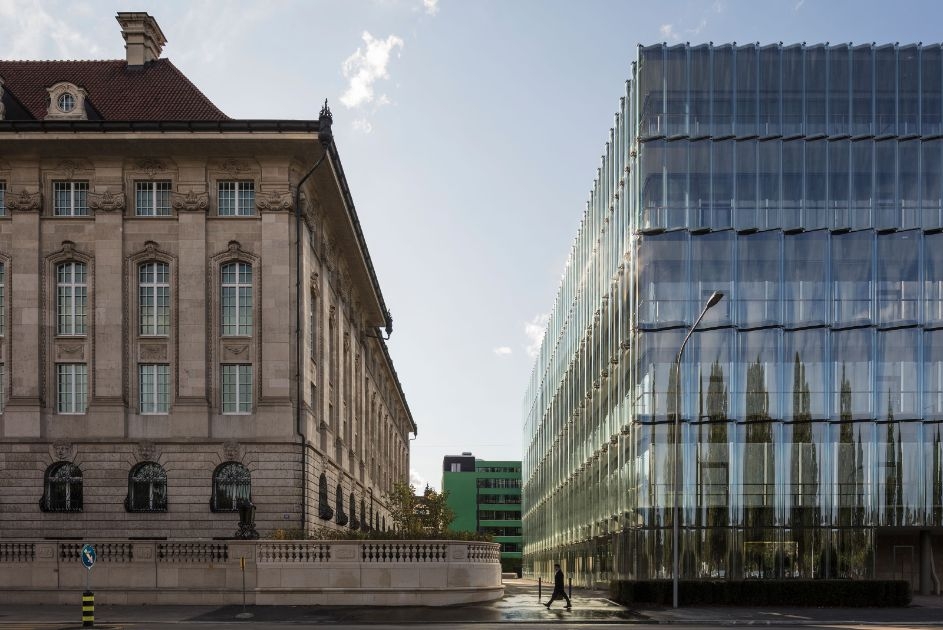
Swiss Re manages COVID-19 onset with industry-leading capital position and strong investment result | Swiss Re
Group net loss of USD 225 million reflects the impact of COVID-19, notably a pre-tax charge of USD 476 million for the property and casualty businesses
Property & Casualty Reinsurance (P&C Re) net income of USD 61 million, despite losses related to COVID-19
Life & Health Reinsurance (L&H Re) net income of USD 299 million; return on equity (ROE) of 15.8%
Corporate Solutions net loss of USD 167 million, impacted by losses related to COVID-19
Life Capital net loss of USD 261 million, reflecting mark-to-market adjustment for Phoenix Group Holdings plc’s share price
Strong return on investments (ROI) of 3.2%; running yield of 2.5%
Successful April 2020 P&C Re renewals: premium volume up 4%; nominal price increase of 8%
Industry-leading capital position maintained, with Group Swiss Solvency Test (SST) ratio comfortably above 200% as of 31 March 2020
Swiss Re reported a net loss of USD 225 million for the first quarter of 2020, reflecting the impact of the COVID-19 crisis on the underwriting (USD 476 million) and investment (net USD 300 million) results. The first-quarter result was also adversely impacted by the mark-to-market valuation of Phoenix Group Holdings plc shares, which Swiss Re will receive upon completion of the ReAssure sale. Swiss Re maintains its industry-leading capital position, with the Group SST ratio comfortably above 200% as of 31 March 2020.
Swiss Re’s Group Chief Executive Officer Christian Mumenthaler said: “The COVID-19 pandemic has had a deep impact on society, governments and businesses across the globe. Our heartfelt sympathies go to those who have lost a loved one or have otherwise suffered in the crisis. These difficult times reinforce our resolve to continue working towards Swiss Re’s vision – making the world more resilient. We do this each day by handling claims, renewing contracts, sharing our knowledge and innovating. Swiss Re’s business remains resilient despite the financial impact of the crisis on our results. And our industry-leading capital position means we will weather this situation as a strong partner for our clients.“
Asset Management successfully navigated market turbulence
Market turbulence was responsible for a US GAAP net valuation loss of approximately USD 300 million. A higher gross impact was substantially contained through gains from credit and equity hedging of approximately USD 650 million. In addition, the high quality of the portfolio and proactive management decisions during the first quarter limited impairments to less than USD 20 million. The Group ROI was 3.2% for the quarter, while the running yield declined to 2.5%, reflecting the unprecedented low-yield environment.
Shareholders’ equity declined to approximately USD 28.0 billion from USD 29.3 billion at the end of 2019, mainly driven by net unrealised losses of USD 655 million. Swiss Re’s book value was at USD 96.82 per share at the end of the first quarter.
Swiss Re’s Group Chief Financial Officer John Dacey said: “We took timely and substantial measures to protect our balance sheet and hedge investment positions in the first quarter, ahead of one of the sharpest sell-offs in recent history. This allowed us to largely mitigate the negative impacts of market turbulence, and the low impairments in our portfolio underscore its quality. As markets remain volatile, we continue to be vigilant to the challenges the current conditions present.“
P&C Re net income of USD 61 million, ROE of 13.2% excluding COVID-19 impact
P&C Re reported a net income of USD 61 million for the first quarter, up from USD 13 million in the same period of 2019. The business remained profitable despite charges related to COVID-19 and natural catastrophes. The COVID-19 crisis impacted the result by USD 253 million as reserves were established primarily for expected claims for cancelled or postponed events. Large natural catastrophe losses of USD 397 million somewhat exceeded the expected losses for the quarter. This reflected the Business Unit’s strong presence in Australia, where hailstorms and significant flooding compounded the major bushfire losses already reserved for in 2019, as well as more typical winter storm losses in Europe.
P&C Re’s net premiums earned increased strongly by 12% to USD 4.7 billion. The annualised ROE was 3.0% compared with 0.6% in the first quarter of 2019. Excluding the impact from COVID-19, the ROE was 13.2%. The reported combined ratio was 110.8%. Excluding the claims related to COVID-19, the Business Unit is on track to reach the normalised1 combined ratio estimate of 97% for the full year 2020.
Successful April P&C renewals supported by improving pricing, particularly in Japan
April renewals were conducted without disruptions, despite the challenges presented by the COVID-19 crisis. Treaty premium volume increased by 4%, and P&C Re achieved a nominal price increase of 8%, with a notable strong increase on Japan windstorm risk of more than 50%. Risk-adjusted price quality year-to-date remained unchanged, reflecting lower interest rates and material adjustments to loss assumptions.
L&H Re ROE exceeded its target range
L&H Re reported a net income of USD 299 million for the first quarter of 2020, reflecting strong underwriting and investment results. No material COVID-19 claims impact (either mortality or critical illness) emerged in the quarter, notable at this point given Swiss Re’s market-leading franchise in Asia. The Business Unit continues to work closely with clients to manage existing risks and develop new solutions.
The ROE of 15.8% is well above the target 10–12% range. Net premiums earned and fee income increased to USD 3.4 billion from USD 3.1 billion in the first quarter of 2019.
Corporate Solutions turnaround on track
Corporate Solutions reported a net loss of USD 167 million for the quarter, as reserving for claims related to the COVID-19 crisis totalled USD 223 million. Most of these losses are reserves posted for anticipated claims related to event cancellations, a line of business Corporate Solutions decided to exit in the restructuring announced last year.
Excluding the COVID-19 impact, Corporate Solutions’ combined ratio was 103.2%, 13 percentage points better than the reported ratio one year ago. On a normalised2 basis and excluding the COVID-19 impact, the Business Unit is on track to achieve the combined ratio estimate of 105% for 2020.
The strong pricing momentum experienced in 2019 continued in the first quarter, with Corporate Solutions achieving price increases of 13%, and current market conditions are expected to reinforce this trend.
Life Capital impacted by a decline in Phoenix Group share price; continued growth in open books
Life Capital reported a net loss of USD 261 million in the first three months of the year, attributable almost entirely to a mark-to-market charge (USD 251 million pre-tax) on the announced sale of ReAssure due to the decline in Phoenix Group Holdings plc’s share price. This impact was partly offset by a hedge on the broader UK equity market. The agreed sale of ReAssure is on track and is expected to close mid-2020, subject to the necessary regulatory and antitrust approvals.
Net premiums and fee income for the Life Capital Business Unit decreased to USD 497 million from USD 548 million in the first quarter of 2019 due to lower fee income reflecting market conditions. Gross premiums written of the open books increased 20% year-on-year when measured at constant exchange rates.
Outlook
Swiss Re’s Group Chief Executive Officer Christian Mumenthaler said: “The COVID-19 pandemic is far from over and its broader economic and social consequences will be far-reaching. Our industry plays an important part by absorbing some of the pain caused by this crisis. At Swiss Re, we continue to be here for our clients, run our business without interruptions, and use the flexibility allotted by our capital strength. We are confident that we will make a positive contribution. In the longer term, we will need to draw lessons from the current situation and look at public-private partnership solutions to ensure society can better deal with such large-scale disruptive events in the future.“
View Full Press Release here
Phoenix Group announces strong results and new cash generation target
Phoenix Group, Europe’s largest life and pensions consolidator1, announces strong results for the year ended 31 December 2019.
Financial highlights
· Strong cash generation2 of £707 million in 2019 (2018: £664 million) exceeding the upper end of its cash generation target range of £600 million – £700 million3 for the year.
· Solvency II surplus of £3.1 billion4 as at 31 December 2019 (£3.2 billion5 as at 31 December 2018).
· Shareholder Capital Coverage Ratio of 161%4,6 as at 31 December 2019 (167%5 as at 31 December 2018) demonstrating continued resilience.
· Group operating profit of £810 million in 2019 (2018: £708 million).
· Proposed final dividend of 23.4p per share (2018 final dividend: 23.4p per share) with 2019 full year dividend of 46.8p per share (2018 full year dividend7: 46.0p per share).
· New business in 2019 enhances the sustainability of our dividend by delivering £475 million of incremental long-term cash generation:
· £240 million from UK Open and Europe businesses (2018 pro forma8: £280 million); and
· £235 million from bulk purchase annuities (2018: £250 million).
· Assets under administration of £248 billion as at 31 December 2019 (£226 billion as at 31 December 2018).
· Fitch Ratings affirmed the Group’s rating as A+9; “positive” outlook. Leverage ratio10 of 22% as at 31 December 2019 (22% as at 31 December 2018).
Cash generation targets
· 2020 cash generation target of £800 – £900 million.
· 5 year cash generation target (2019 – 2023) increased by £0.1 billion to £3.9 billion for new business written during 2019.
· Long-term cash generation guidance remains at £12 billion after 2019 cash remittance of £707 million, demonstrating offsetting nature of new business written in the year.
Standard Life Assurance transition programme
· Remains on track to deliver the £1.2 billion total synergy target.
· Enlarged partnership with Tata Consultancy Services announced will support delivery of Hybrid end state Customer Service and IT operating model.
· £145 million of capital synergies delivered in 2019, taking cumulative capital synergies to £645 million against a target of £720 million (90% of total).
· £33 million per annum cost savings delivered to date against a target of £75 million per annum (44% of total).
Delivering on strategic priorities
· £3.2 billion acquisition of ReAssure Group plc on track to complete mid-2020, subject to regulatory approvals.
· Exceeded all customer service metric targets and continued investment in customer proposition.
· £7.0 billion gross new business inflows for UK Open and Europe businesses in 2019 (2018 pro forma8: £8.5 billion) generating a new business contribution11 of £158 million (2018 pro forma8: £154 million).
· £1.1 billion of bulk purchase annuity liabilities contracted in 2019 (2018: £0.8 billion).
· £1.1 billion buy-in from the PGL Pension Scheme successfully completed.
· £1.3 billion of illiquid assets sourced, taking allocation of illiquid assets backing annuity liabilities to 26%.
· £500 million Solvency II benefit from management actions delivered in the year in addition to £145 million of Standard Life Assurance transition programme capital synergies.
Commenting on the results, Group CEO, Clive Bannister said:
“Phoenix has had a strong year – we beat our cash generation target, made significant progress in the transition of Standard Life Assurance and announced the £3.2 billion acquisition of ReAssure. With circa £0.5 billion of incremental cash generation delivered from new business written in the year, we have demonstrated that our Open businesses and BPA bring sustainability to Phoenix, offsetting the run-off of our in-force business. I am extremely proud of the evolution of Phoenix during my time as CEO and I would like to thank all of the colleagues I have worked with throughout to deliver benefits to both our customers and shareholders.”
Nicholas Lyons, Chairman commented:
“I am delighted to welcome Andy Briggs to the Group as Clive’s successor as CEO and to announce today that Rakesh Thakrar will succeed Jim McConville as Group Finance Director when he retires in May. Andy and Rakesh inherit a Group that is delivering on its financial and operational targets and is strategically positioned to capture future opportunities in the life and pensions industry. The ReAssure transaction will deliver £7 billion of incremental cash generation and, alongside supporting the dividend, will give us an enhanced platform to pursue further growth opportunities. I would like to reiterate my thanks to both Clive and Jim for everything they have achieved at Phoenix, during which time they have transformed and grown the business to become the largest life and pensions consolidator in Europe.”
View Full Press Release
Kuwait Re reports strong results for the period ended 30 September 2019
Kuwait Reinsurance Company K.S.C.P reported a net profit of KD 3.87 MLN for the period ended Q3 2019, an increase of 30% as compared to KD 2.97 MLN for the corresponding period previous year. Basic and Diluted Earnings per share (EPS) were Fils 20.63, compared to Fils 15.84 in Q3 2018.
Highlights for the performance as at Q3 2019 includes the following:
• Gross written premium increased by 19% to KD 49.71 MLN from KD 41.60 MLN in the corresponding period previous year.
• The underwriting result improved to KD 2.95 MLN from KD 2.66 MLN, 11% increase from the corresponding period previous year.
• The combined ratio slightly increased to 96.5% compared to 96.1% in the corresponding period previous year.
• The Company’s net investment income showed consistent growth, an increase of 32% to KD 3.10 MLN with a yield of 4.57% compared to KD 2.35 MLN with 3.76% yield in the corresponding period previous year.
• The Net profit of the company improved significantly by 30% to KD 3.87 MLN from KD 2.97 MLN in the corresponding period previous year, mainly contributed by the increase in net earned premium and investment income.
• The Shareholders’ equity has grown to KD 51.99 MLN, from KD 48.69 MLN at the end of 2018, an increase of 7%.
• The company’s Invested assets has shown steady growth to KD 93.71 MLN, from KD 87.01 MLN at the end of 2018, an increase of 8%. The total assets of Kuwait Re has gone up by 16% to KD 150.78 MLN, from KD 129.47 MLN at the end of 2018.