
Barclays Research takes stock of the effects of Russia’s war with Ukraine in 2022 Equity Gilt Study
Barclays Research released the 67th edition of the Equity Gilt Study (EGS), a flagship annual publication. Combining market-leading macro analysis with a unique multi-asset dataset spanning over 100 years, this year’s report takes stock of the effects of Russia’s war with Ukraine.
Barclays’ Research analysts survey the future of the European monetary union, arguing that Europe has often moved towards further integration during crises, and the recent past is no exception. The pandemic and the war in Ukraine have forced member states toward more fiscal and political co-operation. This includes a common diplomacy and defense policy, as well as a common energy policy.
Barclays Research argues that fears about the US dollar losing reserve currency status are greatly overstated. With the EMU still not fully integrated fiscally and politically and with the Chinese RMB only partially convertible, there are no good substitutes for the US dollar. Instead, large exporters might try to reduce their US current account surpluses by focusing more on regional trading blocs, in an attempt to diversify their foreign reserves.
In parallel, Barclays’ analysts note that the war is leading governments and corporations to re-examine the resilience of their supply chains and other economic linkages. That could lead to at least a partial reversal of the multi-decade trend of globalization. Already, our analysts see evidence of a “reshoring” of critical processes and infrastructure, and of multinational companies hiring closer to home.
Finally, Barclays’ analysts consider the implications for the macroeconomic environment, which, over the past three decades, has benefited from a period of “Great Moderation”, characterized by a relatively stable backdrop of growth, inflation, and monetary policy. We think this may be changing, with significant implications for macroeconomic stability.
“In this year’s Equity Gilt Study, Barclays’ analysts explore how the war in Ukraine, coming on the heels of the pandemic, will likely permanently re-shape the macro landscape,” says Ajay Rajadhyaksha, Global Chairman of Research at Barclays. “The Equity Gilt Study provides an indispensable tool to understand the themes and trends affecting global economies and markets for years to come.”
Societe Generale has closed the sale of Rosbank and its Russian insurance subsidiaries
Societe Generale announces the closing of the sale of Rosbank and the Group’s Russian insurance subsidiaries(1) to Interros Capital.
The impact of the sale, which reflects the evolution of foreign exchange rates since the announcement of the disposal on April 11, 2022, will be accounted for in Q2 22 and includes:
A residual impact of around -7 basis points on the capital ratio. On March 31, 2022, the Group’s CET 1 ratio was 12.9%, i.e. around 370 basis points above the regulatory requirement;
A net loss on the Group’s income statement of around 3.2 billion euros(2).
The Group thus exits Russia(3) in an effective and orderly manner, ensuring continuity for its employees and clients.
The actual transfer of shares of insurance subsidiaries will occur in the coming days.
Based on non-audited financial data as of April 30, 2022 and a EUR/RUB exchange rate of 68.8 to be compared to a reference rate of 85 as of 31.12.2021 and of 92 for the press release published on April 11, 2022. This loss, before tax effect, will be accounted for mainly as “net income/expense on other assets”.
ALD Automotive OOO, which operates in Russia and through its branches in Kazakhstan, and ALD Belarus LLC no longer concludes any new commercial transactions.
Update on Crédit Agricole S.A.’s financial situation in Ukraine and Russia
In the current situation, of war in Ukraine and crisis with Russia, Crédit Agricole Group wishes to be transparent regarding its exposure to these two countries. The activities of the Group in Ukraine and Russia are locally operated through two 100% owned subsidiaries: the international retail bank Crédit Agricole Ukraine and the subsidiary of Crédit Agricole CIB in Russia, CACIB AO. In 2021, the activities of CA Ukraine and Crédit Agricole CIB AO represented the following contributions:
Country Net banking income excluding intragroup eliminations (in millions of euros) Average headcount (in FTE) Earnings before tax (in millions of euros) Ukraine 125 2,286 58 Russia 22 168 5
The total exposure (on-shore and off-shore) of Crédit Agricole S.A. in these two countries represents approximately 0.6% of the total commercial lending portfolio as of 31 December 2021.
Ukraine: The commercial lending commitments1 for Ukraine amount to eq. €1.5 billion as of 31 December 2021, i.e. approximately 0.15% of Crédit Agricole S.A.’s commercial lending portfolio. They are almost all booked at the Crédit Agricole Ukraine level and are locally financed. As of 31 December 2021, Crédit Agricole Ukraine is a provider of short term liquidity to Crédit Agricole S.A. The own funds of Credit Agricole Ukraine amount to €226 million as of 31 December 20212.
Russia: The commercial lending commitments3 for Russia as of 31 December 2021 amount to approximately 0.45% of Crédit Agricole S.A.’s commercial lending portfolio4.
The exposures booked in CACIB AO subsidiary represent eq. of €540 million as of 31 of December 2021. All of the credit portfolio is locally refinanced. The own funds of the subsidiary amount to approximately €150 million, of which €80 million in equity and €70 million in subordinated debt. The bulk of assets consists in loans to local corporates, mainly in rubles, 1/3 of which benefits from the parent multinational company’s guarantee5 and of a sovereign exposure corresponding to the excess liquidity of the subsidiary deposited short term at the Central Bank of Russia in the context of its regulatory liquidity and ratio requirements.
The exposures booked outside of CACIB AO, so-called off-shore exposures, can be split into on-balance sheet and off-balance sheet.
– The on-balance share of off-shore exposures amounts to eq. of €2.9 billion6 as of 31 December 2021. This portfolio mainly pertains to fifteen large Russian corporates, notably producers and exporters of commodities, leaders on the market in key economic sectors of their country. The sectorial break down is the following: 52% heavy industry (mining, steel, fertilizers), 36% energy (oil and gas), 6% other transports, 4% shipping, and 2% aerospace. Its quality is strong: 96% of the portfolio is rated investment grade in the internal rating scale as of end December 2021. It is mainly corporate finance for 62%, trade finance for 25% and the rest corresponds to asset financing (aerospace, project, shipping). The portfolio is 56% in USD, 38% in EUR, and 6% in CHF.
– The off-balance sheet share of off-shore exposures amounts to around €1.5 billion as of 31 December 2021. It is mainly corresponding to short-term trade finance activities (in particular documentary credit and financial guarantees), and, to a lesser extent, to confirmed un-drawn credit facilities.
The variation risk linked to derivative transactions is limited and amounts to €60 million as of 31 December 2021.
Finally, there has been no new financing granted to Russia counterparties since the beginning of the conflict.
All in, these exposures, which are of a limited size and of good quality, are under a close monitoring.
The evaluation of the situation has no consequences upon the distribution of the 2021 Credit Agricole S.A dividend that will be submitted to the Shareholders Meeting of 24 March 2022. As a reminder, Credit Agricole Group’s solvency ratio amounts to 17.5% and that of Crédit Agricole S.A. amounts to 11.9% as of 31 December 2021 (CET1 capital levels respectively amount to €102.7 billion and €44.9 billion).
1 On and off-balance sheet, excluding sovereign debt exposure on the balance sheet of Crédit Agricole Ukraine, which amounts to €0.3 billion as of 31 December 2021.
2 Out of which eq. of €201 million of equity and eq. of €25 million of subordinated debt, proforma of the dividend distribution amounting to €16 million and paid on 23 February 2022.
3 On and off-balance sheet, no exposure to Russia sovereign debt as of 31 December 2021
4 Excluding Indosuez Wealth Management Russian exposures, that currently represent around €250 million.
5 Covering political Russian risk
6 Drawn share of the credit facilities, net of Export Credit Agency guarantees, excluding variation risk
EIB Institute: €2.5 million donation for Ukraine
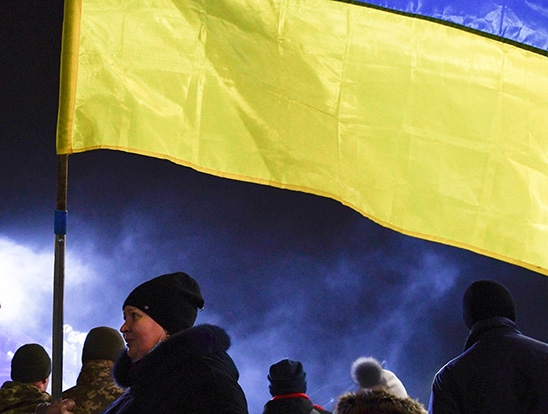
As part of the EIB Group support to Ukraine, the EIB Institute will coordinate a humanitarian aid donation of €2.5 million to help the people affected by the war in Ukraine. The donation comes on top of €668 million of financing approved last week as part of the EIB’s Ukraine Solidarity Package.
The EIB Institute partners with Caritas, the Red Cross (IFRC), Johanniter, Malteser International, Médecins du Monde, Save the Children and UNICEF, which will use this donation to provide food, water, medicine, protection and trauma care for people impacted by the conflict in Ukraine and its neighbouring countries.
The EIB Institute promotes and support social, cultural, and academic initiatives with European stakeholders and the public at large. It is a key pillar of the EIB Group’s community and citizenship engagement.