
E+S Rück expects rising reinsurance prices after catastrophic weather events in Germany
Accumulation of large losses from natural perils and the pandemic combined with drag on profitability caused by low interest rates and inflation necessitate higher prices in primary insurance and reinsurance
Sustained strong demand for high-quality protection from financially robust reinsurers
Focus on long-term customer partnerships and comprehensive range of products and services
E+S Rückversicherung AG, the Hannover Re subsidiary responsible for the Group’s German business, expects higher prices – in some areas markedly so – and improved conditions in property and casualty reinsurance on the German market following the devastating flood damage in the summer.
“After the terrible severe weather events of June and July, 2021 will go down as one of the costliest years ever for the German market,” said Dr. Michael Pickel, Chief Executive Officer of E+S Rück. “We extend our sympathies to everyone who has been and continues to be impacted by the disastrous flooding. As a reinsurer, we are aware of our responsibility and will play our part in overcoming the damage. It is our expectation that many insurers will further expand their reinsurance protection in the wake of these latest losses. Following on from the considerable strains incurred last year from the Covid-19 pandemic, the recent bad weather losses, low interest rates and price rises in the construction industry will lead to an appreciable increase in reinsurance prices.”
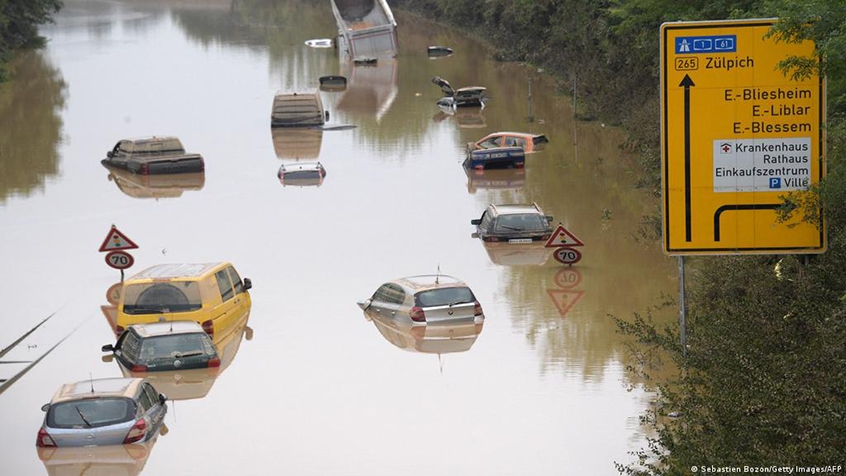
The disastrous flooding caused by the low-pressure system “Bernd” led to insured market losses in Germany alone well in excess of EUR 8 billion. Added to this were further hail and heavy rainfall events, as a consequence of which 2021 will likely be the year with the largest ever burden of insured losses from natural catastrophes in Germany.
All in all, against the backdrop of the heavy loss expenditures, E+S Rück anticipates appreciable adjustments to prices and conditions in the property line in Germany, especially for catastrophe covers. Moreover, demand for high-quality reinsurance protection continues to grow.
Claims frequencies in motor insurance will come close to reaching the pre-pandemic level again in 2022. At the same time, the sharp rise in the cost of spare parts and repairs has continued and even accelerated in recent months. Taking into account regional hail and flood losses that were in some cases significant, results for the industry are expected to take a clear turn for the worse compared to the previous year. As a consequence, we do not see any room for price cuts in original business or in the reinsurance market.
In the telematics sector we anticipate further vigorous growth in the number of policies, although to date this has been limited to only a few market players. The general level of interest within the industry is rising slowly but steadily. With its telematics solution es|Tmatik E+S Rück offers its customers a modular, configurable pricing basis that has been expanded to include inter alia a refined tariff model and is currently undergoing testing by numerous cedants.
Natural catastrophe covers in Germany will see appreciable price increases in the aftermath of the summer’s historic flood damage. After years with comparatively low claims burdens from natural hazards, the year 2021 was one of the most damaging ever. What is more, losses and potential losses for programmes connected with Covid-19 could often be priced only minimally into the previous renewals because it was not yet possible to definitively resolve the scale of pandemic losses and the question of coverage under the reinsurance treaties. The pandemic-related strains for some customer relationships have increased further, which means that in these cases additional adjustments will be needed for the reinsurance treaties in the 2022 renewals.
Large losses in industrial and commercial business have similarly increased year-on-year, due not only to the rise in losses from natural catastrophes but also to human-caused losses. Particularly in industrial fire business, a high claims frequency has also been recorded. The pressure for remediation therefore remains undiminished. When it comes to protection against cyber risks, progressive digitalisation and increasingly widespread hacker attacks are generating greater risk awareness and prompting adjustments to conditions. There is a need for clarification as regards the handling of silent cyber risks and accumulation scenarios that can only be insured to a limited extent.
Overall, E+S Rück considers higher prices in the reinsurance market for commercial and industrial risks to be necessary, especially under loss-impacted programmes. On the conditions side, too, adjustments are needed for pandemic-related and cyber risks if they have not already been implemented.
While adjustments to prices and conditions are indispensable in many lines of business, E+S Rück continues to attach great importance to close, partnership-based collaboration with its clients.
“Just as we stood shoulder to shoulder with our customers and their insureds during the pandemic, we continue to do this in the aftermath of this summer’s devastating flood disasters,” Dr. Michael Pickel said. “This year, as in the past, we shall work with our customers to find solutions that recognise our entire business relationship, whether it be through traditional reinsurance, tailor-made solutions or the development of innovative coverage concepts. With this in mind, I look to the current renewals with confidence.”
Munich Re expects rising reinsurance prices in Europe

– Munich Re expects to see continued market hardening to accompany January renewals
– The January renewals are particularly important for the European market – major losses and inflation indicate more pricing discipline
– Due to the character of risks like natural catastrophes, COVID-19, and rising cyber attacks, the role of reinsurance is increasingly transcending risk transfer”Rising prices for various assets and the latest major losses make considerably higher reinsurance rates in Europe likely. The major losses produced by extreme flooding in Central Europe and the rise in weather events like droughts and wildfires affect regions that, in some cases, are not characterised by risk-adequate prices and conditions. In addition, the higher inflation is accompanied by continuing low interest rates for investments. Accordingly, I see a number of indicators for prolonged market hardening when the renewals come.”Doris Höpke Member of the Board of Management (photo)
Economic conditions and renewals
The most serious losses in Europe this year were in connection with the floods that struck Central Europe in mid-July. Overall losses amounted to an estimated €46bn, of which over €9bn were insured. In Germany, the flooding – which produced overall losses of around €33bn and insured losses of at least €7bn – was the most expensive natural catastrophe in its history. In addition to improved preventive measures, the influence of climate change, which makes precisely this type of regional extreme rainfall more probable, has to be taken into greater account in risk assessments.
At the same time, the eurozone has seen a recent spike in inflation – well above 3% in September, and climbing to over 4% in Germany. Higher inflation also leads to higher claims costs. In the long term, the inflation rates will likely normalise again, but remain above the pre-COVID level. In contrast, interest-rate levels have remained virtually unchanged. Taken together, these two factors are producing an upward pressure when it comes to insurance prices.
Very large losses and the role of insurance
In response to the very large losses resulting from the flooding, the pandemic, and increasingly also cyber attacks, Munich Re’s strategy is to be a reliable point of contact for all aspects of clients’ risk management in the context of very large risks – from consulting on risk prevention and risk transfer, working hand in hand with the state or the capital market wherever necessary, to providing support with disaster recovery.
The latest very large losses, including those in Europe, show that the role of insurance must extend far beyond assuming risks and compensating for losses. Consulting based on sound risk expertise can promote more active prevention, helping to prevent or reduce losses. Risk assumption puts a price tag on risks, which supports risk-adequate action. We contribute our know-how on risk avoidance and the development of innovative insurance solutions like state-supported pools. And when it comes to managing losses, insurers can help by entering into partnerships with suitable companies and by working to ensure that claimants receive support that goes beyond simple loss compensation.
Where people’s risk awareness is too low, or the risk exceeds the risk-bearing capacities of private insurers, reinsurance providers actively work to help find new solutions. Examples to be mentioned include the perennially discussed topic of compulsory flood insurance in Germany, or the potential expansion of state-supported risk pools, which would be necessary in order to cover pandemic-related business interruptions. State-supported risk pools would also be needed to combat certain systemic cyber risks, e.g. those resulting from cyber warfare, since they can’t be borne by insurers alone.
“This is how I see the future role of insurance: We want to be the central partner for comprehensive risk management, to be a resilience provider, if you will. The basis for insurance, and for risk management of any type, is to monitor and understand risks, and to subsequently develop forward-thinking solutions that can strengthen society in the long term. And of course we want to help reduce the considerable gaps in insurance that can still be found in many industrialised countries, like insurance for flood losses in Germany. Otherwise, many people will have no way to cover their losses, or will have to hope they receive state support, even though these losses could have been insured in exchange for a suitable premium,” said Höpke at the Baden-Baden Reinsurance Meeting.