
Safe Bulkers, Inc. Expects Improvement in Profitability
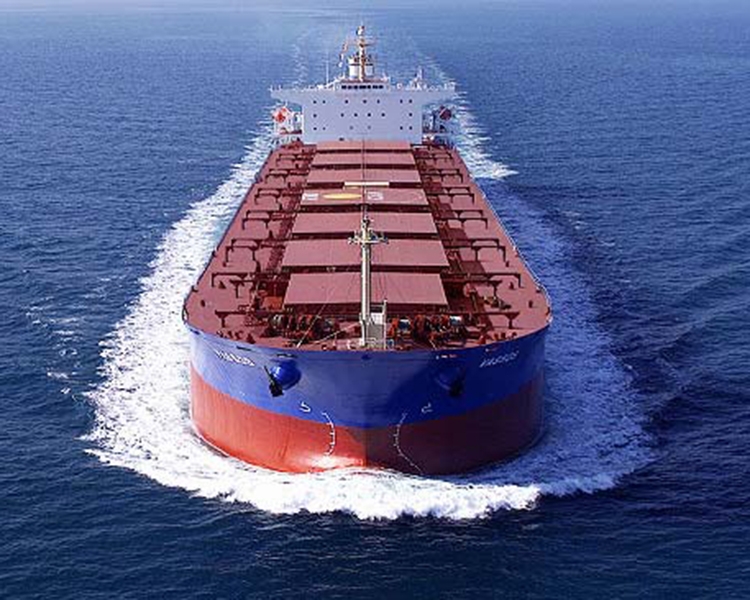
Safe Bulkers, Inc., an international provider of marine drybulk transportation services, announced its unaudited financial results for the three and twelve months period ended December 31, 2020.
Management Commentary
Dr. Loukas Barmparis, President of the Company, said: ”Having a consistent strategy for fleet renewal and environmental upgrading, hands on operations and strong balance sheet, we believe we are well positioned to take advantage of a strengthening charter market.”
Update on COVID-19, Company’s actions and status
There has been a negative effect from the COVID-19 pandemic on the Company’s results of operations and financial condition year to date, due to lower demand which resulted in relatively lower charter rates, and higher crew and related costs. Any future impact of COVID-19 on the Company’s results of operations and financial condition and any long-term impact of the pandemic on the dry bulk industry, will depend on future developments, which are highly uncertain and cannot be predicted, including any potential third wave of the pandemic and any new potential restrictions imposed as a result of the virus, new information which may emerge concerning the severity of the virus and/or actions taken to contain or treat its impact, including distribution and effectiveness of the vaccines, as well as political implications that could further impact world trade and global growth.
The COVID-19 pandemic had significant impact on the shipping industry and our seafarers as port lockdowns were imposed globally in 2020 and certain ports that have since reopened have subsequently closed again for crew changes. The Company has worked extensively to find solutions focusing on effectively managing crew changes despite the ongoing port closures and travel restrictions imposed by governments around the world. The Company has also taken measures to protect its seafarers’ and shore employees’ health and well-being, keep its vessels sailing with minimal disruption to their trading ability, service its charterers and mitigate and address the risks, effects and impact of COVID-19 on our operations and financial performance.
At-the-market equity offering program
In August 2020, the Company filed a prospectus supplement with the Securities and Exchange Commission (“SEC”), under which it may offer and sell shares of its common stock (“Shares”) from time to time for up to aggregate gross offering proceeds of $23.5 million through an “at-the-market” equity offering program (the “ATM Program”). As of February 12, 2021, the Company had not offered to sell and has not sold any Shares under the ATM Program.
Chartering our fleet
Our vessels are used to transport bulk cargoes, particularly coal, grain and iron ore, along worldwide shipping routes. We intend to employ our vessels on both period time charters and spot time charters, according to our assessment of market conditions. Our customers represent some of the world’s largest consumers of marine drybulk transportation services. The vessels we deploy on period time charters provide us with visible and relatively stable cash flow, while the vessels we deploy in the spot market allow us to maintain our flexibility in low charter market conditions and provide an opportunity for a potential upside in our revenue when charter market conditions improve.
In December 2020, the Company agreed the early termination of an existing charter of the Capesize-class vessel MV Lake Despina, which was contractually due to expire in January 2024. In exchange for the early redelivery of the vessel, the charterer paid the Company cash compensation of about $8.1 million, 50% of which was received in December 2020, and the balance in January 2021. The vessel was redelivered in February 2021 and was subsequently deployed under a new period time charter with a different charterer for a duration of 12 to 14 months at a gross daily charter rate linked to the 5 TC Baltic Exchange Capesize Index (“BCI-180 5TC”) times 119%.
Orderbook and financing
During the fourth quarter of 2020, the Company, as part of its plan to implement a gradual fleet renewal with modern, energy efficient vessels, entered into agreements for the acquisition of two Japanese dry-bulk newbuild vessels, one Kamsarmax class, 82,000 dwt and of one Post-Panamax class, 87,000 dwt, with scheduled deliveries within the first half of 2022 and the third quarter of 2022, respectively. The vessels are designed to meet the Phase 3 requirements of Energy Efficiency Design Index, (”EEDI Phase 3”) related to the mandatory reduction of green house gas emissions, as adopted by the International Maritime Organization, (“IMO”) and also comply with the latest NOx emissions regulation, NOx-Tier III (IMO, MARPOL Annex VI, reg. 13).
Concurrently with the ordering of the newbuild vessels, the Company has concluded the financing arrangements: i) for the Kamsarmax newbuild, a sale and lease back through a ten-year bareboat charter agreement for 90% financing with a purchase obligation at a predetermined price on termination and purchase options after the third year in the Company’s favor, and, ii) for the Post-Panamax newbuild, a new term loan facility of up to 60% post-delivery financing and an increase of the existing revolving credit facility from $20 million to $30 million, the maturity of which was extended from 2022, by up to 2 years.
Vessel sales and second hand acquisition
In the framework of fleet renewal the Company has entered into memoranda of agreements for the sale of two of its older vessels and for the acquisition of a 2011 second-hand Panamax.
During the last quarter of 2020, the Company made available for sale, a 2003-built, Panamax class, dry-bulk vessel, the Paraskevi. In January 2021, the Company signed an agreement for its sale at a price of $7.3 million before commissions with expected delivery date in March 2021. As of February 12, 2021, the respective outstanding loan balance of about $4.0 million, net of deferred finance charges, which was secured by the vessel, has been repaid. Upon consummation of the sale transaction, we expect that our debt will be decreased by $4.0 million and our liquidity will be increased by $3.2 million and expect to incur a non-cash loss on sale of asset in the approximate amount of $0.3 million.
During January 2021, the Company made available for sale a 2004-built, Panamax class, dry-bulk vessel, the Vassos, and signed an agreement for its sale at a price of $8.7 million before commissions. The respective outstanding loan balance of about $6.0 million, net of deferred finance charges, which is secured by the vessel, will be repaid prior to the expected conclusion of the sale in April 2021. Upon consummation of the sale transaction, we expect that our debt will be decreased by $6.0 million and our liquidity will be increased by $2.5 million and expect to incur a non-cash loss on sale of asset in the approximate amount of $1.0 million.
Upon consummation of both sale transactions, we expect that our debt will be decreased by $10.0 million in the aggregate and our net liquidity will be increased by $5.7 million in the aggregate.
In February 2021, the Company entered into an agreement for the acquisition of a Panamax class, 2011 Japanese-built, dry-bulk, 75,000 dwt at a price of $14.0 million before commissions, which will be funded from available cash. The vessel, which is sister-ship with two of the Company’s existing vessels, is scheduled to be delivered within February 2021 and has been chartered for 11 to 14 months at a gross daily charter rate of $13,800.
Mezzanine equity redemption and financing
In February 2021, a Company’s subsidiary issued a notice of redemption for all issued and outstanding shares of series A cumulative redeemable perpetual preferred stock, recorded as mezzanine equity (the “Mezzanine Equity”) with a redemption price of approximately $18.1 million, including the accrued dividend. The Mezzanine Equity was issued in 2018 to a third party investor in relation to the financing of the then newbuild vessel Pedhoulas Cedrus. The redemption is expected to be completed within February. In addition, the Company entered into a sale and lease back of Pedhoulas Cedrus through a bareboat charter agreement with a purchase obligation at a predetermined price on termination and purchase options after the third year in the Company’s favor. This agreement will be consummated concurrently with the share redemption. The net increase of our liquidity from this refinancing is expected to be $6.4 million.
Liquidity
As of December 31, 2020, we had liquidity of $171.2 million, which included cash and cash equivalents, time deposits, restricted cash and funds available under the sale and lease back agreements, new term loan agreement and the revolving credit facility. Our aggregate remaining capital expenditure requirements for the acquisition of the two newbuilds as of December 31, 2020, amounted to $52.0 million, of which $0.6 million is payable in 2021 and $51.4 million in 2022.
As of February 12, 2021, we had liquidity of $184.3 million, which included cash and cash equivalents, time deposits, restricted cash and funds available under the sale and lease back agreements, new term loan agreement and the revolving credit facility. Our aggregate remaining capital expenditure requirements for the acquisition of the two newbuilds and the second hand vessel, which will be debt-free, were $64.0 million, of which $12.6 million is payable in 2021 and $51.4 million payable in 2022.
Management Discussion of Fourth Quarter 2020 Results
Statements of Operations
During the fourth quarter of 2020, we operated in a relatively weaker charter market environment with lower operating and interest expenses compared to the same period in 2019, while our revenues were partly supported by the additional earnings from scrubber fitted vessels, the operation of one additional newbuild vessel from April 2020 and reduced voyage expenses. The net effect is reflected in our reduced TCE of $12,319 for the fourth quarter of 2020, compared to $13,707 during the same period in 2019. The net income for the fourth quarter of 2020, amounted to $7.6 million compared to net income of $3.6 million during the same period in 2019. In more detail the change in net income resulted from the following main factors:
Net revenues: Net revenues decreased by 2% to $52.2 million for the fourth quarter of 2020, compared to $53.2 million for the same period in 2019, mainly due to the reduced TCE rate because of a weaker market, partially offset by the additional revenues earned by our scrubber fitted vessels and the additional vessel delivered in 2020.
Voyage expenses: Voyage expenses decreased to $4.7 million for the fourth quarter of 2020 compared to $5.1 million for the same period in 2019, as a net effect of decreased vessel repositioning expenses and lower loss on bunkers sales and the inclusion in 2020 of bunker consumption costs for scrubber fitted vessels under charter agreements which provide for variable consideration based on the bunker consumption.
Vessel operating expenses: Vessel operating expenses decreased by 20% to $15.4 million for the fourth quarter of 2020 compared to $19.2 million for the same period in 2019, which is associated with reduced dry-dockings and provision of technical services and increased crew repatriation expenses due to the COVID-19 pandemic in 2020. In more detail the changes were: i) spares, stores and provisions of $2.8 million for the fourth quarter of 2020, compared to $4.4 million for the same period in 2019, ii) repairs and maintenance of $0.8 million for the fourth quarter of 2020, compared to $1.5 million for the same period in 2019, and iii) dry docking expense of $0.1 million related to one partially completed dry docking during the fourth quarter of 2020, compared to $2.1 million related to five fully and one partially completed dry dockings for the same period of 2019, partly offset by the increase in crew wages, repatriation and related costs of $9.1 million for the fourth quarter of 2020 compared to $8.3 million for the same period in 2019. The Company expenses dry-docking and pre-delivery costs as incurred, which costs may vary from period to period. Excluding dry-docking and pre-delivery costs of $0.1 million and $2.1 million for the fourth quarter of 2020 and 2019, respectively, vessel operating expenses decreased to $15.3 million for the fourth quarter of 2020 compared to $17.1 million for the same period in 2019, despite the increased crew repatriation expenses due to COVID-19. Dry-docking expense is related to the number of dry-dockings in each period and pre-delivery expenses to the number of vessel deliveries and second hand acquisitions in each period. Certain other shipping companies may defer and amortize dry-docking expense and others do not include dry-docking expenses within vessel operating expenses costs and present these separately.
Depreciation: Depreciation increased by 8% to $13.9 million for the fourth quarter of 2020, compared to $12.9 million for the same period in 2019, as a result of the commencement of depreciation of environmental investments that were completed following the third quarter of 2019 and depreciation of the newbuild delivered during the second quarter of 2020.
Interest expense: Interest expense decreased to $4.3 million in the fourth quarter of 2020 compared to $6.2 million for the same period in 2019, as a result of the decreased USD LIBOR12 affecting the weighted average interest rate of our loans and credit facilities.
Daily vessel operating expenses: Daily vessel operating expenses, calculated by dividing vessel operating expenses by the ownership days of the relevant period, decreased by 22% to $3,978 for the fourth quarter of 2020 compared to $5,103 for the same period in 2019. Daily vessel operating expenses excluding dry-docking and pre-delivery expenses decreased by 13% to $3,955 for the fourth quarter of 2020 compared to $4,540 for the same period in 2019.
Daily general and administrative expenses14: Daily general and administrative expenses, which include management fees payable to our Managers and daily company administrations expenses, increased by 4% to $1,469 for the fourth quarter of 2020, compared to $1,414 for the same period in 2019, as a result of the increase of the management fees associated to the strengthening of the exchange rate of Euro versus USD, partly offset by the lower company administration expenses.
Commerzbank to significantly increase profitability through deep restructuring and comprehensive digitalisation

Commerzbank announces cornerstones of its new strategy, resolution by Board of Managing Directors planned for 3 February 2021
Overall headcount reduction of 10,000 full-time equivalents (FTEs) intended
Reduction of number of branches to 450
Reduction of cost base by €1.4 billion targeted for 2024 compared with 2020
Return on Tangible Equity (RoTE) of 6.5% to 7% targeted for 2024
CEO Manfred Knof: “We will focus on our strengths and consistently restructure.”
Commerzbank intends to launch an in-depth restructuring programme. As part of its transformation, the Bank strives to combine the benefits of a fully digitalised bank with personal advice, consistent customer focus, and sustainability. Costs are to be significantly reduced and profitability substantially increased by 2024.This will enable Commerzbank to further strengthen its leading position as the Bank for the German Mittelstand and as a strong partner for approximately eleven million Private and Small-Business Customers.
The Bank’s Board of Managing Directors has submitted a draft of the new strategy programme to the Supervisory Board. The Supervisory Board meeting in which this proposal is due to be discussed is scheduled for 3 February 2021. After that the strategy is to be decided upon by the Board of Managing Directors. So far, no decisions have been taken on any item of the strategy programme. The early publication of planned cornerstones is a consequence of the current media coverage.
Manfred Knof, Chairman of the Board of Managing Directors of Commerzbank AG: “We want to focus on Commerzbank’s strengths and secure its strong performance for the long term. To achieve this, we will thoroughly reduce complexity and cut costs. Our goals are very ambitious, but we will do everything necessary to achieve them. Thereby, the Bank will create value for customers, employees, shareholders, and society as a whole.”
The strategy programme builds on the following key levers:
– Going forward, the Bank will consistently put profitability before growth, for example when it comes to the efficient use of capital or adequate pricing of products and services.
– As part of the Group’s restructuring, there will be a significant headcount reduction. By 2024, Commerzbank will reduce approximately 10,000 full-time equivalents in gross terms. In Germany, will affect every third job. Commerzbank will work with employee representatives to agree fair and – as far as possible – socially responsible solutions for the headcount reduction. The Bank is working towards a swift agreement on the planned headcount reduction with the Works Council to launch implementation as soon as possible.
– As part of a wide-ranging digitalisation, the Bank will substantially reduce the branch network and significantly expand its digital offerings for customers. The number of branches is to be reduced from the current level of 790 to 450 locations across Germany. At the same time, the Bank will simplify, digitalise and automate its business processes. To achieve this, Commerzbank will invest a total of €1.7 billion in its IT over the next four years.
– Furthermore, the Bank will accelerate its cultural transformation with the objective to strengthen a success-oriented performance culture.
Sustainability will play an even more central role across all business activities going forward. Commerzbank intends to commit to ambitious targets. A corresponding strategy will be presented in the near future.
Cost reductions of €1.4 billion targeted
As a result of the restructuring, Commerzbank targets a return on equity (RoTE) of 6.5 to 7 per cent for the financial year 2024. Compared to the figures expected for 2020, costs will be reduced by €1.4 billion or around 20 per cent by 2024. At the same time, revenues are expected to remain largely stable – excluding further growth of mBank. Commerzbank is anticipating restructuring expenses totalling €1.8 billion, which will be fully financed with existing funds. The restructuring expenses will be fully booked in the current financial year. A provision of €0.8 billion was already set aside in the financial year 2020 to cover a substantial proportion of the restructuring expenses that will be incurred. In addition, there are further €0.1 billion in provisions from 2019.
Despite of the significant restructuring, the Bank targets a Common Equity Tier 1 ratio (CET 1) which is at least 200 to 250 basis points above the minimum regulatory requirements (MDA). This will enable Commerzbank to retain its resilience while efficiently managing its capital.
As part of the Group, mBank will continue its growth strategy.
Star Bulk Carriers Corp. Returned to Profitability During the Third Quarter of 2020
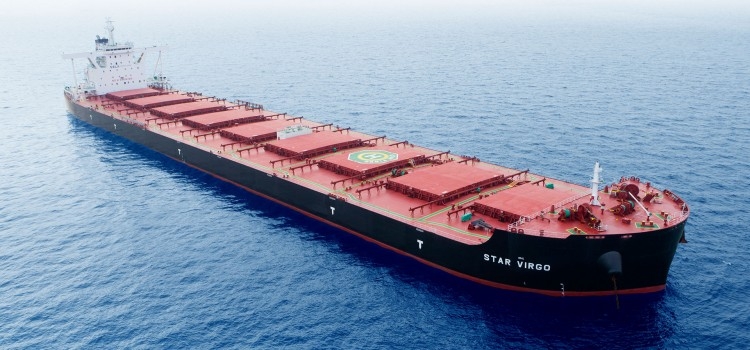
Star Bulk Carriers Corp., a global shipping company focusing on the transportation of dry bulk cargoes, announced its unaudited financial and operating results for the third quarter and the nine months ended September 30, 2020.
Petros Pappas, Chief Executive Officer of Star Bulk, commented:
“Star Bulk returned to profitability during the third quarter of 2020, reporting Net income of $23.3 million, Adjusted Net Income of $27.3 million, TCE Revenues of $137.8 million and Adjusted EBITDA of $79.7 million. We were able to take advantage of the recovering dry bulk market, increasing our TCE to $13,083/ day per vessel for the third quarter of 2020. Average Opex per vessel excluding non-recurring expenses and Net Cash G&A expenses per vessel were at $4,244/day and $985/day respectively.
Over the last few months, we have continued to strengthen our liquidity, having agreed 9 refinancings, increasing our cash by a total of $113.2 million and improving the average margin and repayment profile. Despite turbulent financial markets, we received a lot of support from our existing lenders and forged relationships with new financiers to expand our lending group. Our pro-forma current liquidity, including the available revolving credit facility, has reached $225 million.
It continues to be challenging to get crew on and off our vessels due to restrictions designed to slow the spread of COVID-19. The whole shipping industry, including us, continues to experience vessel itinerary disruptions as well as higher operating costs due to these restrictions.
Our outlook for the market continues to be constructive, despite the uncertainty stemming from the COVID-19 pandemic. Supply is at historical lows due to the recent demand shocks and ambiguity around the future of vessel propulsion technology, while demand for dry bulk is healthy as ton miles are growing, driven by global infrastructure stimulus projects.”
Recent Developments
Financing Activities:
In August and September 2020, we drew down $268.4 million in aggregate under sale and leaseback agreements with i) China Merchants Bank Leasing (“CMBL”) for the vessels M/V Laura, M/V Idee Fixe, M/V Roberta, M/V Kaley, M/V Star Sirius and M/V Star Vega, ii) Shinken Bussan Co., Ltd. for the vessel M/V Star Lutas, iii) SPDB Financial Leasing Co., Ltd. for the vessels M/V Mackenzie, M/V Kennadi, M/V Honey Badger, M/V Wolverine and M/V Star Antares and iv) ICBC Financial Leasing Co., Ltd. for the vessels M/V Gargantua, M/V Goliath and M/V Maharaj. The amount drawn was used in part to refinance the $191.9 million outstanding under the loan and lease agreements secured by the above-mentioned vessels.
As of the date of this press release, after the completion of the above mentioned refinancings and along with the amounts drawn in July 2020, and after deducting relevant finance fees we increased our cash by approximately $106.5 million.
In addition, in September 2020, we received a commitment from China Export-Import Bank for a loan amount of up to $57.7 million (the “CEXIM Bank $57.7 million Facility”). The facility is expected to be used to refinance the outstanding amounts under a loan facility and lease agreements secured by the vessels M/V Star Wave, M/V Star Gina 2GR, M/V Star Charis and M/V Star Suzanna. We expect to draw down this facility by the end of November 2020. The facility will mature eight years after the drawdown and will be secured by first priority mortgages on the four aforementioned vessels. The facility is subject to customary conditions precedent and the execution of definitive documentation.
We expect to further strengthen our cash balance with net proceeds after finance fees of approximately $6.7 million by the end of November 2020 with the finalization of i) the CEXIM Bank $57.7 million Facility and ii) the agreement with CMBL to sell and leaseback the vessel M/V Diva.
As of the date of this press release, the outstanding balance under the $30.0 million revolving facility with HSBC France (the “HSBC Working Capital Facility”) is $24.2 million, while another $5.8 million remains available under this facility.
Hedging VLSFO-HSFO Spread
As of the date of this press release, we have hedged approximately 8,000 metric tons of our estimated fuel consumption for November and December 2020 by selling the 2020 Singapore spread between Very Low-Sulfur Fuel Oil (VLSFO) – High-Sulfur Fuel Oil (HSFO) at an average price of $266 per ton.
Impact of COVID-19 and Our Proactive Measures
While it is still too early to fully assess the overall impact that COVID-19 will have on our financial condition and operations and on the dry bulk industry in general, to date we have identified the following adverse effects of the COVID-19 pandemic on our business:
• Significant reduction in market charter rates, as a result of the decreased demand for dry bulk commodities and the uncertainty with regard to the timing of a return to more normalized global trade patterns.
• Potential adverse impact on asset values reflecting the weaker freight markets environment and lack of liquidity in the second-hand market. Star Bulk is fully compliant with all its financial covenants as of the end of the nine months ended September 30, 2020.
• Significant delays and increased operational costs associated with crew rotation and related logistical complications, supplying our vessels with spares or other supplies, and the reduced availability of attending engineers for overhauling or maintenance due to travel restrictions and quarantine rules.
We have taken proactive measures to ensure the health and wellness of our crew and onshore employees while maintaining effective business continuity and the uninterrupted service to our customers.
Our business continuity plans onshore for our global offices in Athens, Limassol, Singapore, New York, Oslo and Manilla, have allowed for an efficient transition to a remote working environment. Additionally, we have also placed a temporary ban on all non-essential travel by our employees.
The actual impact of these and other effects on our business, and the efficacy of any measures we take in response to the challenges presented by the COVID-19 pandemic, will depend on how the outbreak further develops, the duration and extent of the restrictive measures that are associated with the pandemic and their impact on global economy and trade.
Employment Overview
Daily Time Charter Equivalent Rate (“TCE”) and TCE Revenues are non-GAAP measures. Please see the table at the end of this release for a reconciliation to Voyage Revenues, which is the most directly comparable financial measure calculated and presented in accordance with U.S. GAAP, as well as for the definition of the respective measures.
For the third quarter of 2020 our TCE rate was:Capesize / Newcastlemax Vessels: $17,942 per day.Post Panamax / Kamsarmax / Panamax Vessels: $11,354 per day.Ultramax / Supramax Vessels: $10,306 per day.
For nine month period ended September 30, 2020 our TCE rate was:Capesize / Newcastlemax Vessels: $15,327 per day.Post Panamax / Kamsarmax / Panamax Vessels: $9,867 per day.Ultramax / Supramax Vessels: $8,501 per day.
Amounts shown throughout the press release and variations in period–on–period comparisons are derived from the actual unaudited numbers in our books and records. Reference to per share figures below are based on 96,370,925 and 94,276,144 weighted average diluted shares for the third quarter of 2020 and 2019, respectively.
Third Quarter 2020 and 2019 Results
For the third quarter of 2020, we had a net income of $23.3 million, or $0.24 earnings per share. Net income for the third quarter of 2019 was $5.8 million, or $0.06 earnings per share.
Adjusted net income for the third quarter of 2020, which excludes certain non-cash items, was $27.3 million, or $0.28 earnings per share, compared to an adjusted net income for the third quarter of 2019 of $17.3 million, or $0.18 earnings per share.
Net cash provided by operating activities for the third quarter of 2020 was $57.0 million, compared to net cash provided by operating activities of $27.7 million for the third quarter of 2019. Adjusted EBITDA for the third quarter of 2020, which excludes certain non-cash items was $79.7 million, compared to adjusted EBITDA for the third quarter of 2019 of $72.2 million.
Voyage revenues for the third quarter of 2020 decreased to $200.2 million from $248.4 million in the third quarter of 2019. Adjusted time charter equivalent revenues (“Adjusted TCE Revenues”) (please see the table at the end of this release for the calculation of the Adjusted TCE Revenues) were $137.6 million for the third quarter of 2020, compared to $131.0 million for the third quarter of 2019. The negative impact of the COVID-19 pandemic led to an overall weak dry bulk market environment. As a result, TCE rate for the third quarter of 2020 was $13,083 compared to $14,688 for the third quarter of 2019.
For the third quarters of 2020 and 2019, vessel operating expenses were $47.2 million and $39.7 million, respectively. Vessel operating expenses for the third quarter of 2020 included additional crew expenses related to the increased number of crew changes performed during the period as a result of COVID-19 restrictions imposed in the beginning of 2020 of $1.9 million. Vessel operating expenses for the third quarter of 2019 included pre-delivery and pre-joining expenses of $0.3 million. Our average daily operating expenses per vessel for the third quarters of 2020 and 2019 were $4,425 and $3,719, respectively. Excluding non-recurring expenses such the increased costs due to the COVID-19 pandemic in 2020 or the pre-delivery expenses in 2019, our average daily operating expenses per vessel for the third quarters of 2020 and 2019 were $4,244 and $3,693, respectively.
General and administrative expenses for the third quarters of 2020 and 2019 were $9.3 million and $9.7 million, respectively. The decrease is mainly attributable to the decrease in stock based compensation expense to $3.1 million in the third quarter of 2020 from $3.5 million in the third quarter of 2019. Vessel management fees for the third quarters of 2020 and 2019 were both $4.6 million. Our average daily net cash general and administrative expenses per vessel (including management fees and excluding stock-based compensation) for the third quarters of 2020 and 2019 were $985 and $828, respectively.
Interest and finance costs net of interest and other income/(loss) for the third quarters of 2020 and 2019 were $16.2 million and $22.5 million, respectively. Despite the increase in the weighted average balance of our outstanding indebtedness of $1,601.1 million during the third quarter of 2020, compared to $1,572.5 million for the same period in 2019, the interest and finance costs net of interest and other income/ (loss) decreased due to the decrease in the average interest rate on our outstanding indebtedness, mainly driven by the refinancing of certain of our debt agreements, the interest rate swap agreements that we entered into during the second and third quarters of 2020 and the lower LIBOR rates during the third quarter of 2020.
EBITDA and Adjusted EBITDA Reconciliation
We include EBITDA herein since it is a basis upon which we assess our liquidity position. It is also used by our lenders as a measure of our compliance with certain loan covenants and we believe that it presents useful information to investors regarding our ability to service and/or incur indebtedness.
To derive Adjusted EBITDA from EBITDA, we excluded non-cash gains/(losses) such as those related to sale of vessels, stock-based compensation expense, the write-off of the unamortized fair value of above/below market acquired time charters, impairment losses, the write-off of claims receivable and loss from bad debt, change in fair value of forward freight agreements and bunker swaps, provision for onerous contracts, and the equity in income/(loss) of investee, if any, which may vary from period to period and for different companies and because these items do not reflect operational cash inflows and outflows of our fleet. In addition, together with our scrubber installation program, we decided to bring forward to 2019 the majority of 2020 dry docking services; thus, in the Adjusted EBITDA calculation for 2019 we included only the dry docking expenses for the vessels which were due for their periodic dry dock during 2019. 2020 Adjusted EBITDA does not include the drydocking expenses for the vessels which were due for their periodic dry dock in 2020 but this was performed in 2019.
EBITDA and Adjusted EBITDA do not represent and should not be considered as alternatives to cash flow from operating activities or net income, as determined by United States generally accepted accounting principles, or U.S. GAAP, and our calculation of EBITDA and Adjusted EBITDA may not be comparable to that reported by other companies due to differences in methods of calculation.
Net income/(Loss) and Adjusted Net income/(Loss) Reconciliation and calculation of Adjusted Earnings/(Loss) Per Share
To derive Adjusted Net Income and Adjusted Earnings/(Loss) Per Share from Net Income, we excluded non-cash items, as provided in the table below. We believe that Adjusted Net Income and Adjusted Earnings/(Loss) Per Share assist our management and investors by increasing the comparability of our performance from period to period since each such measure eliminates the effects of such non-cash items as gain/(loss) on sale of assets, unrealized gain/(loss) on derivatives, impairment losses and other items which may vary from year to year, for reasons unrelated to overall operating performance. Similarly, with what was discussed above, we excluded from the Adjusted Income/(loss) and Adjusted Earnings/(loss) per share the accelerated dry docking expenses that were due in 2020. In addition, we believe that the presentation of the respective measure provides investors with supplemental data relating to our results of operations, and therefore, with a more complete understanding of factors affecting our business than with GAAP measures alone. Our method of computing Adjusted Net Income and Adjusted Earnings/ (Loss) Per Share may not necessarily be comparable to other similarly titled captions of other companies due to differences in methods of calculation.
View Full Report
Yang Ming Returns to Profitability in 2020 Q3
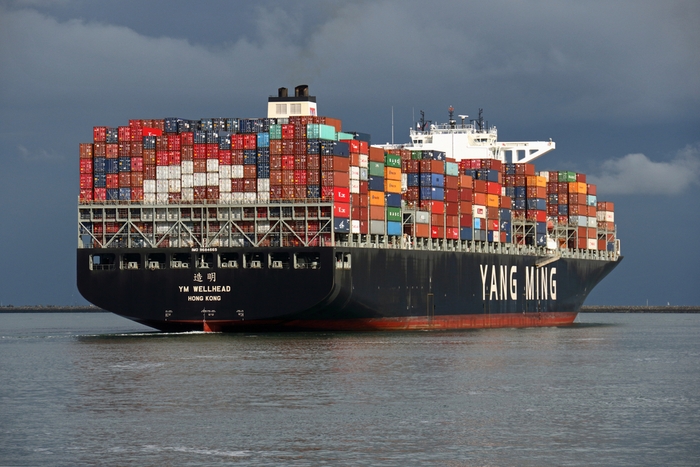
Yang Ming Marine Transport Corporation (Yang Ming) held its 352nd Board Meeting on November 12th, 2020 to approve its 2020 Q3 financial report.
Its consolidated revenues for the third quarter totaled NTD 38.86 billion (USD 1.3 billion), up 2.83% from the same period of last year. Business volumes were down by 10.99% year-over-year to 1.28 million TEUs. Yang Ming’s profit after-tax for the third quarter reached NTD 2.74 billion (USD 91.69 million). The decline in volume was mainly due to the market uncertainty caused by the COVID-19 pandemic. The company had to timely adapt capacity on East-West trades in response to the market change. However, since mid-August the lockdown restrictions have been gradually lifted following signs that the virus spread might be slowing. In light of this, the inventory build-ups across the supply chains in U.S. and Europe have returned. But, the lockdown measures already have profoundly impacted on people’s way of life and consumer behavior, which accelerates the shift to e-Commerce, further increases the needs for hygiene products and home improvement materials, including housewares, home office accessories, exercise equipment, and consequently leads to a rebound in container shipping demand and boosts freight rates.
For the first three quarters of 2020, Yang Ming’s consolidated revenues totaled NTD 105.25 billion (USD 3.53 billion). Year-to-date business volumes were 3.66 million TEUs. The after-tax profit for the first three quarters improved by 155.68% year-on-year to NTD 1.85 billion (USD 62.01 million). With the strong improvement in the third quarter, Yang Ming successfully achieved a return to profitability in 2020.
In the last quarter of 2020, this positive trend tends to continue. Yang Ming has prepared itself to offer the most suitable capacity to meet the needs of respective tradelanes. Looking into 2021, analyst firm Alphaliner projected the annual capacity growth at 3.0% and global throughput growth at 3.3%, suggesting a positive sign for the next year. In spite of this, the outlook of container shipping still remains clouded in uncertainties over the possible comeback of COVID-19 pandemic and U.S.-China trade conflicts. To navigate the challenge, Yang Ming will continue to enhance its business strategies and service quality. Furthermore, the company will set financial stability as its priority goal, in turn, to ensure steady profitability and sustainable customer service in the future.