
Munich Re: Profit of €608m in Q1, annual guidance of €3.3bn unchanged
Below-average major losses in property-casualty reinsurance
Impairment losses on Russian and Ukrainian bonds, first Russia/Ukraine claims
April renewals yield further premium growth (+7.6%), prices continue to be at a high level
Gross premium expected to increase to €64bn in 2022
Munich Re is helping to provide humanitarian aid for the people of Ukraine and fully supports the sanctions against Russia. The financial consequences of the war and the sanctions severely impacted our result in the first quarter: We made write-downs for impairment losses on Russian and Ukrainian bonds alike and recorded the first claims. Despite the uncertainties of a challenging environment, Munich Re maintains its annual guidance of €3.3bn based on a quarterly profit of more than €600m.
Christoph Jurecka
CFO
Summary of Q1 figures
Munich Re generated a profit of €608m (589m) in Q1 2022. The operating result totalled €780m (798m), while the other non-operating result amounted to –€14m (– 12m). The currency result totalled €17m (–23m), and the effective tax rate was 17.6% (16.3%). Supported by strong organic growth across all segments, especially in property-casualty reinsurance, gross premiums written increased substantially by 15.7% year on year to €16,833 (14,551m).
At €27,783m, equity was down from the level at the start of the year (€30,945m), mainly due to a decline in valuation reserves on fixed-interest securities. The latter was attributable to a rise in interest rates that is economically advantageous for insurers. The solvency ratio was approx. 231% (227% as at 31 December 2021), which is above the optimum range (175–220%), and includes the deduction of €1bn share buy-back. Building on this strong capital base, Munich Re will redeem two subordinated bonds.
The annualised return on equity (RoE) for Q1 2022 was 9.8% (10.4%).
Reinsurance: Result of €511m
The reinsurance field of business contributed €511m (410m) to the consolidated result in Q1. The operating result rose to €654m (558m) and gross premiums written increased to €11,307m (9,389m).
Life and health reinsurance business generated a loss of €78m (+52m) in Q1, mainly due to COVID-19-related losses of €150m, above all from the Omicron wave in the USA. Premium income rose to €3,369m (3,058m). Business with non-significant risk transfer (fee income) continued to see very pleasing growth. At €20m (51m), the Q1 technical result (including the result from business with non-significant risk transfer) fell short of the pro-rated annual target due to pandemic losses, mainly expected in the first half of the year. Overall, the segment reported good operational performance in Q1.
Property-casualty reinsurance contributed €589m (358m) to the result in Q1. Premium volume increased substantially to €7,938m (6,330m), with a continued strong focus on quality. The combined ratio was 91.3% (98.9%) of net earned premium. In Q1, Munich Re posted expenditure related to the war in Ukraine of slightly over €100m in some specialty lines.
Major losses of over €10m each totalled €667m (892m). This figure includes gains from the settlement of major losses from previous years of around €100m. Major-loss expenditure corresponded to 9.2% (15.5%) of net earned premiums, and was thus below the long-term average expected value of 13%. Man-made major losses declined to €185m (247m). Major losses from natural catastrophes came to €481m (646m) in Q1. Major natural catastrophe events included heavy rainfall in eastern Australia, resulting in losses of around €440m, and the winter storms in Europe, which produced losses of slightly below €120m for Munich Re.
In Q1, loss reserves of €291m (230m) were released for basic losses from prior years, which corresponds to 4.0% (4.0%) of net earned premiums. The normalised combined ratio was 94.8%. Munich Re continually seeks to set the amount of provisions for newly emerging claims at the very top end of the estimation range so that profits from the release of a portion of these reserves can be generated at a later stage.
In the reinsurance renewals as at 1 April 2022, Munich Re was able to increase the volume of business written to €2.7bn (+7.6%). It was possible to tap into growth opportunities, especially in Asia – particularly in Japan and India – as well as in Latin America. By contrast, Munich Re once again selectively discontinued business that no longer met risk/return expectations.
Prices were up overall in the sectional markets, with significantly different trends dependent upon claims experience, future loss expectations and the situation in each individual market. Prices for reinsurance cover rose considerably in some markets, including the USA.
All in all, prices for the Munich Re portfolio continued to be at a high level (–0.1%). This figure is, as always, risk-adjusted. In other words, price increases are offset if they are associated with increased risk and, consequently, elevated loss expectations. Particularly in light of higher inflation, Munich Re was deliberately cautious in calculating future loss expectations.
Munich Re anticipates that the market environment will remain stable in the next renewal round in July, offering attractive growth opportunities.
ERGO: Result of €96m
Despite adverse effects from volatile capital markets and major losses, ERGO posted a profit of €96m (178m) for Munich Re in Q1 thanks to ongoing very pleasing operating performance across all segments. ERGO again saw substantial growth in Q1. Overall premium income rose to €5,803m (5,362m) supported by all segments, while gross premiums written increased to €5,526m (5,163m). The Property-casualty Germany segment saw particularly strong premium growth.
The ERGO Life and Health Germany segment contributed €44m (94m) to the result owing to a comparatively low investment result. In addition, loss development in health and travel business returned to normal after a very good Q1 2021. Driven by continued excellent operating performance, the ERGO International segment posted a good result of €40m after generating a high profit (€60m) in the same quarter last year. The ERGO Property-casualty Germany segment posted a profit of €12m (24m). Major-loss expenditure was partly offset by profitable premium growth and a good investment result. The operating result for the ERGO field of business amounted to €127m (240m).
In the Property-casualty Germany segment, the combined ratio was 97.4% (94.2%). This development was driven by major losses as well as normal seasonal fluctuations in premiums and claims. In the International segment, the combined ratio improved to 92.6% (93.8%) thanks to ongoing excellent development in our core markets, especially Poland and Greece.
Investments: Investment result of €987m
Munich Re’s investment result decreased to €987m (1,691m) in Q1. Regular income from investments was up slightly to €1,458m (1,429m). The balance of gains and losses on disposals excluding derivatives amounted to €960m (983m). The net balance of derivatives amounted to –€116m (–368m). The net balance of write-ups and write-downs declined substantially to –€1,122m (–171m), mainly due to gross write-downs of almost €700m (net: €370m) on Russian and Ukrainian bonds, which impacted the investment results of both reinsurance and ERGO.
Overall, the Q1 investment result represents a return of 1.6% on the average market value of the portfolio. The running yield was 2.3% and the yield on reinvestment rose substantially to 2.1%. The equity-backing ratio including equity derivatives amounted to 7.5% as at 31 March 2022 (7.7% as at 31 December 2021).
The investment portfolio as at 31 March 2022 decreased compared with the 2021 year-end figure, with the carrying amount falling to €233,308m (240,300m); the market values amounted to €245,860m (257,485m). This development was essentially due to the rise in interest rates.
Outlook for 2022: Annual target unchanged at €3.3bn
Munich Re expects to see advantageous business prospects in reinsurance in 2022. This is evident in the projected gross premium in this field of business, which has been adjusted upwards from €42.5bn to €45bn and, in turn, raises the forecast for the Munich Re Group as a whole to €64bn. The other targets communicated for 2022 in Munich Re’s Group Annual Report 2021 remain unchanged. Munich Re is still aiming for a consolidated result of €3.3bn for the 2022 financial year. The achievement of this result target is supported by a remaining major-loss budget in property-casualty reinsurance of around €3.3bn for the rest of the year.
All forecasts and targets face considerable uncertainty owing to fragile macroeconomic developments, volatile capital markets and the unclear future of the pandemic. In particular, there is considerable uncertainty regarding the financial impact of the Russian war of aggression in Ukraine. As always, the projections are subject to major losses being within normal bounds, and to the income statement not being impacted by severe fluctuations in the currency or capital markets, significant changes in the tax environment, or other one-off effects.
Hannover Re generates quarterly profit of EUR 264 million despite substantial losses and confirms earnings guidance
Gross premiums up by 13.9% adjusted for exchange-rate effects
Major losses in property and casualty reinsurance above budgeted level for the first quarter
Additional provision for possible losses from the war in Ukraine in the low triple-digit million euro range
Pandemic-related losses in life and health reinsurance within the expected range
Gratifying return on investment of 3.1%
Group net income reaches EUR 264 million
Return on equity beats minimum target at 9.3%
Earnings guidance for 2022 confirmed
Hannover Re posted a quarterly profit of EUR 264 million in the first three months and confirms its full-year earnings guidance. That was despite sizeable natural catastrophe claims, further pandemic-related losses in life and health reinsurance and additional strengthening of provisions for possible losses resulting from the war in Ukraine.
“While we are all appalled by the suffering that Russia has unleashed in its war on Ukraine, it is not yet possible to put a concrete figure on the economic impact at this point in time,” said Jean-Jacques Henchoz, Chief Executive Officer of Hannover Re. “Along with the potential implications of the war in Ukraine, we faced numerous natural catastrophes and further pandemic-related strains in life and health reinsurance in the first three months of the year. Against this backdrop, we again demonstrated the quality of our risk and capital management and stood shoulder-to-shoulder with our clients as a reliable partner.”
Hannover Re’s capital adequacy ratio at the end of March was 242% and therefore remained comfortably above the limit of 180% and threshold of 200%.
Gross premiums booked by Hannover Re grows by 19.5%
The gross written premiums booked by Hannover Re increased by 19.5% as of 31 March 2022 to EUR 9.3 billion (EUR 7.8 billion). Growth would have reached 13.9% adjusted for exchange rate effects. Net premiums earned rose by 17.9% to EUR 6.7 billion (EUR 5.7 billion). Growth of 12.4% would have been booked at constant exchange rates.
Group net income reaches EUR 264 million
Operating profit (EBIT) reached EUR 396 million (EUR 404 million) despite the losses incurred in the first quarter. Group net income fell by 13.8% to EUR 264 million (EUR 306 million). Earnings per share stood at EUR 2.19 (EUR 2.54).
Property and casualty reinsurance: Major losses higher than expected
Hannover Re was satisfied overall with the renewal of its property and casualty reinsurance portfolio as of 1 January 2022. 62% of the treaties in traditional property and casualty reinsurance were renegotiated on this date. The inflation- and risk-adjusted price increase amounted to 4.1%, with the biggest gains recorded in Europe.
Gross written premiums grew by 26% as of the end of March to EUR 7.1 billion (EUR 5.7 billion); they would have risen by 19.5% adjusted for exchange rate effects. Net premiums earned was up by 24% to EUR 4.8 billion (EUR 3.9 billion); the increase would have been 18.0% at constant exchange rates.
Expenditures for major losses reached a total of EUR 336 million (EUR 193 million) and thus exceeded the budgeted amount of EUR 284 million for the first quarter. The largest individual losses were the floods in Australia caused by heavy rainfall with net expenditure of EUR 186 million, the windstorm events Ylenia/Zeynep in Europe at a cost of EUR 124 million and the sinking of the cargo ship “Felicity Ace” following a fire with a loss of EUR 14 million.
Hannover Re established an additional general provision in the low triple-digit million euro range in the first quarter for possible losses from the war in Ukraine.
The combined ratio in property and casualty reinsurance increased to 99.5% (96.2%) and thus exceeded the target level of no more than 96%. The underwriting result for property and casualty reinsurance including interest on funds withheld and contract deposits came in well below the previous year’s level at EUR 26 million (EUR 147 million). Despite the substantial losses, it was possible to generate an operating profit (EBIT) of EUR 284 million (EUR 312 million). Net income in property and casualty reinsurance amounted to EUR 177 million (EUR 261 million).
Life and health reinsurance sees decline in pandemic-related losses
In life and health reinsurance Hannover Re continued to expand its financial solutions business, especially in China. Demand for solutions to protect against longevity risks also showed further growth worldwide. Interest here was still particularly strong in the United Kingdom, but also extended to the United States and Canada. The environment for life and health reinsurance was satisfactory on the whole.
The impact of the pandemic remained the dominant issue, especially in relation to mortality covers. As expected, further pandemic-related losses of EUR 123 million were incurred, although these diminished progressively over the course of the quarter.
Gross written premiums increased by 3.2% to EUR 2.2 billion (EUR 2.1 billion), corresponding to a decrease of 1.2% adjusted for exchange rate effects. Net premiums earned rose by 5.4% to EUR 1.9 million (EUR 1.8 billion); growth of 0.8% would have been booked at constant exchange rates.
The operating result (EBIT) increased by 23% to EUR 113 million (EUR 92 million). Net income in life and health reinsurance grew by 78% to EUR 101 million (EUR 57 million).
Very pleasing investment income despite persistent low interest rate environment
The portfolio of assets under own management was stable relative to year-end 2021 with a volume of EUR 56.2 billion.
Ordinary investment income excluding interest on funds withheld and contract deposits totalled EUR 397 million (EUR 310 million) and was thus clearly higher than in the comparable period. Positive profit contributions from inflation-linked bonds again played a part here. The net balance of gains realised on disposals contracted to EUR 42 million (EUR 90 million) and was primarily attributable to sales connected with portfolio maintenance, realisations in the real estate sector as well as regrouping moves in the equity portfolio. Impairments of EUR 15 million (EUR 21 million) were taken. Interest on funds withheld and contract deposits retreated to EUR 55 million (EUR 131 million), principally due to a special effect recorded in the comparable quarter.
In total, investments under own management generated income of EUR 429 million (EUR 311 million). This produced an annualised return on investment of 3.1% that was well above the full-year target of at least 2.3%. Net investment income including interest on funds withheld and contract deposits grew by 9.7% to EUR 484 million (EUR 441 million).
Return on equity remains above minimum target
The shareholders’ equity of Hannover Re dropped by 10.0% as at 31 March to EUR 10.7 billion (31 December 2021: EUR 11.9 billion). Primarily reflecting the rise in interest rates, unrealised losses on fixed-income securities amounted to EUR 1.0 billion at the end of March. This contrasted with unrealised gains of EUR 1.4 billion as at 31 December 2021. The annualised return on equity stood at 9.3% (31 December 2021: 10.8%) and thus continued to outperform the target level of 900 basis points above the risk-free interest rate.
Guidance for 2022 confirmed
It is still too soon to put a definitive figure on losses for global insurance and reinsurance markets resulting from the war in Ukraine. Hannover Re has temporarily stopped writing new risks or renewal of treaties with clients in Russia and Belarus until further notice.
“Even though it will take some time before the impact of the war on insurers and reinsurers can be precisely quantified, we have taken the precaution of establishing additional provisions in the first quarter,” Henchoz said. “Despite all the uncertainties, I remain confident that we can achieve the goals we have set ourselves for the full year thanks to our considerable resilience and robust profitability.”
Hannover Re renews business in the Asia-Pacific region, North America as well as parts of the specialty business as of 1 April 2022. The negotiations resulted in significant growth at improved prices. Premiums volume increased by 17.4%. The inflation- and risk-adjusted price increase for the renewed business amounted to 3.7%.
In life and health reinsurance Hannover Re expects further pandemic-related losses, although these will drop sharply over the course of the year.
On the Group level it remains Hannover Re’s expectation that net income of EUR 1.4 billion to EUR 1.5 billion will be generated for the 2022 financial year. This assumes that major loss expenditure does not materially exceed the budgeted level of EUR 1.4 billion, the Covid-19 pandemic does not have a significant unexpected impact on the result in life and health reinsurance and no unforeseen developments occur on capital markets. The return on investment should reach at least 2.3%.
Hannover Re continues to aim for an ordinary dividend that is higher than in the previous year or at least remains stable. This will be supplemented by a special dividend provided the capitalisation exceeds the capital required for future growth and the profit target is achieved.
The virtual Annual General Meeting of Hannover Rück SE is also being held on today’s date. As already announced, the Executive Board and Supervisory Board have proposed a dividend of EUR 5.75 per share for the 2021 financial year. This is composed of an unchanged ordinary dividend of EUR 4.50 per share plus a special dividend of EUR 1.25 per share.
SCOR Channel delivers on strategy with £14.1 million profit for 2021 and becomes the SCOR Syndicate
2021 provided pleasing results for SCOR Channel, which produced a £14.1m full-year profit for 2021
Further integration with SCOR’s Specialty Insurance platform continues to strengthen SCOR Channel’s business position
Increased focus on sustainable growth combined with a diversification of SCOR Channel’s portfolio
SCOR Channel, part of SCOR’s Specialty Insurance platform, announces the continued delivery on its strategic objective of returning to profit, having produced a profit of around £25 million over the past two years. For the full year 2021, SCOR Channel returned a profit of £14.1 million.
Effective April 1st, as part of the positive continuation of its integration with the SCOR Group, SCOR Channel will be renamed as the SCOR Syndicate.
Stuart McMurdo, CEO of SCOR P&C EMEA, commented: “Despite some market turbulence, 2021 proved to be another good year for SCOR Channel. Following the resetting of our strategy in Q4 2018 and the remediation work accomplished through 2019, we are delighted to see another strong set of results for our syndicate. These results further strengthen the business’ position within SCOR’s Specialty Insurance unit, promoting increased structural alignment. Going forward, our focus is on ensuring our portfolio continues to be sustainable through diversification away from the property segment, while maintaining our position therein.”
Romain Launay, Deputy CEO of SCOR P&C and CEO of Specialty Insurance, commented: “The renaming of SCOR Channel as the SCOR Syndicate reflects the depth of its integration into the wider SCOR Specialty Insurance unit. This integration allows SCOR to leverage a unified London platform and a single pool of top talent to write business in a flexible way, thereby offering the optimal solutions to our client needs.”
Banco Sabadell earns profit of 530 million euros and brings forward the profitability target of its strategic plan by one year
The Bank meets its targets one year ahead of schedule and ends the year with ROTE of 5% (ROTE forecast to stand above 6% in 2022)
Core results (net interest income + fees and commissions – recurrent costs) increase by 12.6% year-on-year and by 3.6% in the quarter
TSB consolidates its positive contribution to the Group with 118 million euros (22.3% of total), in contrast to 220 million euros of losses in 2020
The Board of Directors approves a dividend of 0.03 euros to be paid out of 2021 earnings (31.8% pay-out ratio)
Banco Sabadell Group has ended 2021 with net attributed profit of 530 million euros, in contrast to 2 million euros profit at year-end 2020. The Institution’s core results (net interest income + fees and commissions – recurrent costs) increased by 12.6% year-on-year and by 3.6% quarter-on-quarter, in line with the targets set out in its strategic plan.
According to the CEO, César González-Bueno, “we end a good year with a new team, governance, organisational structure, and strategic plan. The commercial thrust with profitability metrics, the digital transformation, as well as the radical turnaround of TSB and the labour agreement in Spain, have contributed to a substantial improvement in results”. He further stated that “we have brought forward the profitability target set out in our plan by one year and we look forward with optimism to the future of this great franchise”.
Banco Sabadell’s Chief Financial Officer, Leopoldo Alvear, for his part, noted that “we have increased lending volumes and have gained market share, both in Spain and in the UK, further improving our comfortable solvency position. The execution of efficiency plans and cost savings have had a positive impact on the financial statements for the year, and we will continue to see this reflected in the results of upcoming quarters”.
The Bank brings forward its profitability target by one year
On 28 May 2021, Banco Sabadell presented its new strategic plan based on the transformation of its retail business, the consolidation of its leadership in the business segment and a focus on improving efficiency and profitability. The Institution ends the year with ROTE of 5% and expects to achieve ROTE of over 6% in 2022, meaning that it will meet the profitability targets of its plan one year ahead of schedule.
The fully-loaded CET1 ratio has been kept above 12% in all quarters of the year, despite loan volume growth, with an MDA buffer of 391bps, higher than the 350bps set as the target for the year. Cost of risk continues to decrease. Commercial activity is displaying excellent dynamism, with market share growth observed in mortgages, consumer loans and business lending, and with core revenue (interest income + fees and commissions) improving, in line with market announcements.
Net interest income + fees & commissions
Core banking revenue (net interest income + net fees and commissions) reached 4,893 million euros, 3.0% higher year-on-year. Quarter-on-quarter, core banking revenue growth was 1.8%. Net interest income increased year-on-year by 0.8% to reach 3,425 million euros, mainly supported by loan volume growth, while quarter-on-quarter it fell by 1.6% due to a lower contribution from the fixed income portfolio, reaching 863 million euros.
Net fees and commissions amounted to 1,468 million euros, representing year-on-year growth of 8.7%, due to the good performance of asset management fees, as well as service fees. Asset management fees grew by 10.1% in the quarter, driven by seasonality and by mutual fund growth.
Positive impact of cost reductions
Recurrent costs amounted to 2,988 million euros and fell by 2.3% compared to the previous year, due to the improvement of staff expenses in Spain and of general expenses in TSB. Total costs amounted to 3,307 million euros and decreased by 4.4% in the year. In the fourth quarter, total costs fell sharply following extraordinary costs of 301 million euros intended to fund the efficiency plan in the third quarter. The aforesaid plan will bring annual savings of 130 million euros in Spain. 2022 will deliver total cost savings of 85% (110 million euros).
Lending growth in Spain and UK
Banco Sabadell performing loans had a balance of 154,912 million euros at year-end 2021 (110,862 million euros ex-TSB). Lending grew by 6.7% year-on-year(1) driven by a good performance across all segments in Spain, and strong growth of TSB’s mortgage portfolio. Quarter-on-quarter it also grew, by 1.7%.
New mortgage lending continued to follow a positive trend in Spain, reaching 1,369 million euros in the quarter, representing year-on-year growth of 5%. Meanwhile, new mortgage lending in the UK amounted to 2,169 million pounds in the quarter, 56% more than in the same period of the previous year. TSB ended 2021 with the best mortgage lending volume in its history.
At year-end 2021, on-balance sheet customer funds amounted to a total of 162,020 million euros (119,242 million euros ex-TSB), representing year-on-year growth of 7.5% (5.9% ex-TSB). This item grew by 2.6% in the quarter (2.4% ex-TSB).
Sight account balances amounted to 147,268 million euros (106,578 million euros ex-TSB), representing an increase of 13.0% year-on-year (12.4% ex-TSB) and 3.5% in the quarter (3.6% ex-TSB).
Term deposits amounted to 14,813 million euros (12,725 million euros ex-TSB), falling by 28.8% (29.6% ex-TSB) year-on-year and by 6.0% in the quarter (6.7% ex-TSB), as deposits flowed through to sight accounts.
At the end of December, off-balance sheet customer funds amounted to a total of 41,678 million euros and increased by 9.5% year-on-year due to an increase in net mutual fund subscriptions. They remained stable in the quarter, despite the sale of BancSabadell d’Andorra. Not including this impact, they grew by 11.6% in the year and by 2.1% in the quarter.
Comfortable solvency and liquidity position
The phase-in CET1 ratio stood at 12.43% at the end of December and included 25 bps of IFRS 9 transitional adjustments. The fully-loaded CET1 ratio, on the other hand, stood at 12.18%, increasing by 6 bps quarter-on-quarter. The phase-in total capital ratio stood at 17.90% at year-end, above the regulatory requirement, with an MDA buffer of 391 bps. In terms of liquidity management, the liquidity coverage ratio (LCR) reached 221% at the Group level.
The NPL ratio remains stable
Non-performing assets amounted to 7,565 million euros in total, of which 6,203 million euros are non-performing loans and 1,362 million euros are foreclosed assets. The NPA coverage ratio stood at 53.1%, with the NPL (stage 3) coverage ratio, including total provisions, standing at 56.3% and the foreclosed asset coverage ratio standing at 38.2%, while the NPL ratio stands at 3.65%.
Credit cost of risk decreased and stood at 49 bps at year-end 2021, 2 bps lower than the previous quarter, representing a 37 bps improvement year-on-year.
Transformation process in Spain
In 2021, Banco Sabadell carried out a number of initiatives concerning the transformation of the Bank in Spain, with the aim of enhancing customer experience, improving efficiency and boosting profitability. In retail banking, fully digital processes have been implemented for arranging personal loans, setting up accounts and ordering cards. In addition, the Bank’s offering of pre-approved consumer loans has been improved and the first phase of the deployment of relationship managers specialised in mortgages, insurance and savings/investment products has been carried out. In Business Banking new value-added services have been introduced in PoS terminals and a specific sectoral offering aimed at eleven differentiated business segments and sectors has been developed.
The Board of Directors approves dividend payment
The Board of Directors of Banco Sabadell has approved a cash dividend payment of 0.03 euros per share, which represents a pay-out ratio of 31.8% on 2021 results. This agreement will be submitted for ratification at the next Annual General Meeting.
TSB consolidates its positive contribution to the Group with 118 million euros
TSB has ended 2021 with a positive contribution to Group results of 118 million euros, in contrast to losses of 220 million euros in 2020, due to the growth of core revenues, lower costs and fewer provisions. This figure represents 22.3% of the Group’s consolidated results, in line with the weight of its capital in the Group’s total capital, and the British subsidiary completes its fourth consecutive quarter in positive territory. Its contribution to the Group’s income statement during the quarter amounted to 36 million euros. TSB obtained standalone pre-tax profit of 157.5 million pounds in 2021.
Net interest income was 10.5% higher at the end of December at £869 million, due to the strong growth in mortgage volumes. Net fees were 20.8% higher year-on-year at £104 million, due to higher service fees, particularly from cards. Total expenses declined 4% year-on-year to £770 million. Recurrent income was £203 million, compared to £69 million a year earlier.
(1) Excludes the impact of the CAM APS
Deutsche Bank reports 2021 profit before tax of € 3.4 billion
Net profit for 2021 rises more than fourfold to € 2.5 billion, highest since 2011
Profit before tax rises threefold to € 3.4 billion
Adjusted profit before tax1 of € 4.8 billion, more than double 2020
Fourth quarter profit before tax of € 82 million after transformation-related effects1 of €456 million
Announced intention to distribute approximately € 700 million of capital to shareholders
Core Bank: 2021 profit before tax rises 48% year on year to € 4.8 billion
Profit growth across all four core businesses
Post-tax RoTE1 of 6.4%, up from 4.0% in 2020, with adjusted post-tax RoTE1 of 8.5%
Adjusted profit before tax1 up 46% year on year to € 6.1 billion
Capital Release Unit: RWA reduction ahead of end-2022 target with further P&L improvement
RWAs reduced from € 34 billion to € 28 billion during 2021
Leverage exposure reduced to € 39 billion, down from € 72 billion at end-2020
Loss before tax reduced by 38% year on year to € 1.4 billion
Prime Finance transfer to BNP Paribas completed on schedule
Revenue growth maintained in 2021
Group full year net revenues rise 6% year on year to € 25.4 billion
Momentum sustained in fourth quarter: net revenues up 8% to € 5.9 billion
2021 noninterest expenses up 1%, or € 289 million, to € 21.5 billion
Transformation-related effects1 of € 1.5 billion, up 21%
97% of total expected transformation-related effects1 through end-2022 recognised
Adjusted costs ex-transformation charges1 and reimbursable Prime Finance-related expenses down 1% to € 19.3 billion
Risk, capital and balance sheet in line with goals
Provision for credit losses down 71% to € 515 million, 12 bps of average loans
Common Equity Tier 1 (CET1) capital ratio of 13.2% at end-2021
Leverage ratio of 4.9% fully loaded and 5.0% on a phase-in basis
Sustainable Finance: record quarterly volume and rating upgrades
Fourth quarter sustainable financing and investment volumes of € 32 billion
Cumulative total of € 157 billion since beginning of 2020, of which € 112 billion in 2021
On track to exceed end-2023 target of at least € 200 billion
¹ For a description of this and other non-GAAP financial measures, see ‘Use of non-GAAP financial measures’ on pp 17-25 of the fourth quarter 2021 Financial Data Supplement
In 2021, we increased our net profit fourfold and delivered our best result in ten years while putting almost all of our expected transformation costs behind us. All four core businesses performed at or ahead of our plan, and our reduction of legacy assets progressed faster than expected. We are delighted to be resuming capital distributions to our shareholders as we promised in the summer of 2019. Our transformation progress and financial performance in 2021 provide a strong step-off point to achieve our target of a return on tangible equity of 8% in 2022. Christian Sewing, Chief Executive Officer
Deutsche Bank (XETRA: DBKGn.DB / NYSE: DB) today reported its highest full-year net profit since 2011. Profit before tax was € 3.4 billion in 2021, up by more than three times year on year, also the best for ten years.
Net profit was € 2.5 billion, a more than fourfold increase over 2020. Full-year 2021 results included transformation-related effects1 of € 1.5 billion, up 21% versus 2020, as Deutsche Bank continued to execute its transformation programme.
Adjusted profit before tax1, which excludes transformation-related effects1 and specific revenue items, more than doubled versus 2020 to € 4.8 billion. Post-tax return on average shareholders’ equity was 3.4%, up from 0.2% in 2020. Post-tax return on average tangible shareholders’ equity (RoTE)1 was 3.8%, versus 0.2% in the prior year.
In the fourth quarter, profit before tax was € 82 million and net profit was € 315 million, up 67% year on year. The fourth quarter tax benefit reflected a positive deferred tax asset valuation adjustment of € 274 million resulting from the strong performance of Deutsche Bank’s US operations. Net revenues in the quarter were € 5.9 billion, up 8% year on year, while noninterest expenses rose 11% year on year. This increase partly reflected a 17% year on year rise in transformation-related effects1 to € 456 million. Adjusted profit before tax1, which excludes these effects, was € 527 million, down 15% year on year.
On January 26, 2022, Deutsche Bank announced actions which would provide total capital distributions to shareholders of approximately € 700 million. This represents the first step towards the bank’s previously announced commitment to return € 5 billion of capital to shareholders over time. The Management Board has decided to initiate a share repurchase programme of € 300 million, to be completed in the first half of 2022, and intends to propose to the Annual General Meeting a cash dividend of € 0.20 per share for the financial year 2021.
Core Bank: profit before tax up 48% to € 4.8 billion in 2021
In the Core Bank, which excludes the Capital Release Unit, profit before tax was € 4.8 billion, up 48% year on year, while adjusted profit before tax1 rose 46% to € 6.1 billion. Post-tax RoTE was 6.4%, up from 4.0% in the prior year, while adjusted post-tax RoTE1 was 8.5%, up from 5.7%. The Core Bank’s cost/income ratio was 79%, unchanged from 2020.
All core businesses contributed to year on year growth in profit before tax in 2021, as follows:
Corporate Bank: up 86% to € 1.0 billion;
Investment Bank: up 17% to € 3.7 billion;
Private Bank: up by € 465 million to € 366 million;
Asset Management: up 50% to € 816 million.
In the fourth quarter, Core Bank profit before tax was € 434 million, down 27% year on year. Revenue growth of 7% was offset by growth of 12% in noninterest expenses which partly reflected a 31% year on year rise in transformation-related effects1 to € 435 million. Adjusted profit before tax1, which excludes these effects, was € 860 million in the quarter, down 13% year on year.
Capital Release Unit: continued portfolio reduction, bottom line improvement and completion of Prime Finance transfer
The Capital Release Unit delivered another year of significant portfolio reduction while further reducing the cost of de-leveraging in 2021. The transfer of clients, technology and key staff from Deutsche Bank’s Global Prime Finance and Electronic Equities businesses to BNP Paribas was successfully completed by the end of 2021, meeting the targeted timeline.
At year-end, risk weighted assets (RWAs) were reduced to € 28 billion, down from € 34 billion at the end of 2020 and ahead of Deutsche Bank’s end-2022 target of € 32 billion. As at year end, the Unit’s RWAs included Operational Risk RWAs of € 20 billion. Leverage exposure was € 39 billion at the end of 2021, down 46% from € 72 billion at the end of 2020.
Since its inception in mid-2019, the Capital Release Unit has reduced RWAs by 57%, or € 37 billion, and leverage exposure by 84%, or € 210 billion.
The Capital Release Unit reported a substantial improvement in P&L in 2021. The loss before tax was € 1.4 billion, down 38% from a loss before tax of € 2.2 billion in 2020. This improvement was primarily driven by a 26% reduction in noninterest expenses, reflecting a 35% reduction in adjusted costs ex-transformation charges1 during the year.
In the fourth quarter, the Capital Release Unit reported a loss before tax of € 352 million, a 15% loss reduction compared to the fourth quarter of 2020.
Revenues: fourth quarter growth includes record revenues in Asset Management
Net revenues were € 25.4 billion in 2021, up 6% versus 2020. Revenue growth continued in the fourth quarter, with net revenues up 8% year on year to € 5.9 billion. Within Deutsche Bank’s core businesses, revenue development in 2021 was as follows:
Corporate Bank net revenues were € 5.2 billion, flat versus 2020. The Corporate Bank grew business volumes, with € 8 billion in loan growth and € 18 billion in deposit growth during 2021. Accounts with deposits of € 101 billion were covered by deposit repricing agreements by year-end, which contributed revenues of € 364 million in 2021. These factors successfully offset interest rate headwinds. In the fourth quarter, net revenues were € 1.4 billion, up 10% year on year, the highest revenues of any quarter since the formation of the Corporate Bank in 2019, as an easing of interest rate headwinds and business volume growth positively impacted revenues. Both Corporate Treasury Services and Institutional Client Services achieved revenue growth of 12%, while Business Banking revenues declined 1%, reflecting ongoing interest rate headwinds.
Investment Bank net revenues rose 4% to € 9.6 billion in 2021. Revenues in Fixed Income & Currencies (FIC) Sales & trading were essentially flat year on year, while revenues in Origination & Advisory rose 23%. Deutsche Bank regained the No. 1 position in Origination & Advisory in Germany for the year 2021 with a share of 9.2% (source: Dealogic). In the fourth quarter, Investment Bank net revenues were € 1.9 billion, up 1% year on year. A 14% decline in FIC revenues versus a strong prior year quarter was offset by 29% growth in Origination & Advisory revenues, the eighth consecutive quarter of year-on-year revenue growth.
Private Bank net revenues were € 8.2 billion in 2021, up 1% year on year, or up 2% if adjusted for forgone revenues resulting from the German Federal Court of Justice (BGH) ruling on customer consent for pricing changes on current accounts and the non-recurrence of a negative prior year impact from the sale of Postbank Systems AG. The Private Bank generated business volume growth of € 45 billion in 2021, 50% ahead of its target threshold, including € 23 billion in net inflows into investment products and € 15 billion in net new client loans. Volume growth more than offset the adverse revenue impact of interest rate headwinds. Business volumes in 2021 included environmental, social and governance (ESG) assets under management of € 26 billion and growth in ESG client loans of € 4 billion. In the fourth quarter, Private Bank net revenues were € 2.0 billion, up 4%. Revenues in Private Bank Germany were up 8%, or down 2% if adjusted for the prior year impact of Postbank Systems and the BGH ruling. Revenues in the International Private Bank were down 2%, or up 6% if adjusted for the non-recurrence of prior year revenues relating to Sal. Oppenheim workout activities.
Asset Management net revenues grew 21% to € 2.7 billion in 2021, reflecting growth in both management fees and performance fees. Assets under management grew to a record € 928 billion at the end of 2021, up € 135 billion or 17% during the year. This was partly driven by record 12-month net inflows of € 48 billion, with inflows across Active, Passive and Alternative assets. Full year inflows in ESG assets were € 19 billion, or around 40% of total net inflows. In the fourth quarter, Asset Management net revenues were a record € 789 million, up 32% versus the fourth quarter of 2020. Assets under management grew by € 45 billion in the quarter, including net inflows of € 15 billion, the seventh consecutive quarter of net inflows, including € 6 billion of ESG assets.
Expenses: 97% of total transformation-related effects already recognised
Noninterest expenses were € 21.5 billion in 2021, up 1% year on year. These included transformation-related effects1 of € 1.5 billion, up 21% year on year, predominantly driven by transformation charges of € 1.0 billion, up from € 490 million in 2020. By the end of 2021, 97% of total transformation-related effects1 anticipated through the end of 2022 were already recognised. Adjusted costs ex-transformation charges1 and reimbursable expenses related to Prime Finance were down 1% year on year to € 19.3 billion, a reduction of 10% since 2019.
Deutsche Bank’s workforce was reduced to 82,969 full-time equivalents (FTEs) at the end of 2021, down by 1,690 FTEs since the end of 2020, despite continued internalisation of external contract staff and selective hiring to support business growth. This compares to 90,866 FTEs at the launch of the transformation programme in July 2019.
In the fourth quarter, noninterest expenses rose by 11% to € 5.6 billion. These include transformation-related effects of € 456 million, up 17% year on year, primarily reflecting a 46% rise in restructuring and severance expenses. Adjusted costs ex-transformation charges and reimbursable expenses related to Prime Finance1 rose 6% to € 4.9 billion, or 4% if adjusted for exchange rate movements. This development was driven by higher compensation expenses which primarily reflected improved business performance, and technology costs reflecting the execution of the bank’s technology and platform strategies.
Credit provisions: significant reduction versus 2020
Provision for credit losses was € 515 million in 2021, down 71% versus 2020, reflecting a supportive credit environment, high quality loan book and continued strict risk discipline against a backdrop of economic recovery due to the easing of COVID-19 restrictions during 2021. Provision for credit losses was 12 basis points of average loans, down from 41 basis points in 2020.
In the fourth quarter, provision for credit losses was € 254 million, essentially flat compared to the fourth quarter of 2020. A lower net release for performing (Stage 1 and 2) loans of € 5 million, down from a net release of € 101 million in the prior year quarter, was offset by a 26% year on year reduction in provision for non-performing (Stage 3) loans to € 259 million.
Conservative capital and balance sheet management throughout 2021
The Common Equity Tier 1 (CET1) capital ratio was 13.2% at the end of 2021, compared to 13.6% at the end of 2020. RWAs increased from € 329 billion to € 352 billion during the year. The full-year CET1 ratio development reflects a net negative impact of approximately 90 basis points from regulatory and methodology changes during 2021, partly offset by reductions in Market Risk and Operational Risk RWAs and organic capital growth through retained earnings. These enabled Deutsche Bank to support both increased lending to clients and future distributions to shareholders, while maintaining its commitment to a CET1 ratio above 12.5%.
In the fourth quarter, the CET1 capital ratio, at 13.2%, was 22 basis points higher than in the third quarter. The ratio benefited from an increase in CET1 capital, reflecting the positive impact of a regulatory-driven reversal of capital deductions. RWA remained essentially flat during the quarter, as growth in Credit Risk RWAs, reflecting business growth in the Core Bank, was largely offset by reductions in Market Risk and Operational Risk RWAs.
The Leverage ratio was 5.0% in the fourth quarter on a phase-in basis and 4.9% on a fully loaded basis, compared to a phase-in leverage ratio of 4.9% and 4.8% fully loaded at the end of the third quarter. This improvement primarily reflected the issuance of € 1.25 billion of Additional Tier 1 (AT1) capital during the quarter. These ratios exclude certain central bank balances under applicable rules. Including these balances, the fully loaded Leverage ratio would have been 4.5% in the quarter, and 4.6% on a phase-in basis, in line with the bank’s 2022 financial target of around 4.5% fully loaded.
Liquidity reserves were € 241 billion at year-end, versus € 249 billion at the end of the third quarter, including High Quality Liquid Assets of € 207 billion. The Liquidity Coverage Ratio was 133%, well above the regulatory requirement of 100% and a surplus of € 52 billion. The Net Stable Funding Ratio was 120% at year-end, at the top of the bank’s target range of 115-120%, with a surplus of € 101 billion above required levels.
Sustainable Finance: record quarterly volume accelerates progress
By the end of 2021, cumulative environmental, social and governance (ESG)-related financing and investment volumes reached € 157 billion ex-DWS since the beginning of 2020. This significantly exceeds Deutsche Bank’s target of at least € 100 billion by year-end 2021 and is on track to exceed the bank’s target of at least € 200 billion by year-end 2023.
ESG-related financing and investment volumes were a record € 32 billion ex-DWS in the fourth quarter, bringing the full year 2021 total to € 112 billion. In the fourth quarter, Deutsche Bank’s businesses contributed as follows:
Corporate Bank: € 8 billion in sustainable financing in the quarter, raising the business’ cumulative total since the beginning of 2020 to € 26 billion;
Investment Bank: € 14 billion in fourth quarter sustainable financing and capital market issuance, for a cumulative total of € 87 billion. In 2021, Deutsche Bank ranked 5th globally in ESG-related debt and sustainability-linked bond issuance as measured by fees, up from 8th in the full year 2020 and 13th in 2019 (Source: Dealogic);
Private Bank: € 9 billion growth in ESG assets under management and a further €1 billion in new client lending, raising the Private Bank’s cumulative total to € 44 billion.
During the fourth quarter, Deutsche Bank’s progress in sustainable banking was recognised by ratings upgrades from several independent agencies:
The UK-based non-profit organisation CDP raised Deutsche Bank’s rating to B, reflecting a more active approach and taking co-ordinated action on climate issues;
S&P raised Deutsche Bank’s rating in its annual Global Corporate Sustainability assessment, enabling the bank to return to the Dow Jones Sustainability Europe Index;
Deutsche Bank’s Sustainalytics score improved, reducing the risk rating from ‘high’ to ‘medium’.
Deutsche Bank reports profit before tax of € 554 million in the third quarter of 2021
Deutsche Bank (XETRA: DBKGn.DB / NYSE: DB) reported a 15% year on year rise in pre-tax profit to € 554 million in the third quarter of 2021 after recognising a further € 583 million in transformation charges. Adjusted profit before tax(1), which excludes transformation-related effects and specific revenue items, rose 39% year on year to € 1.2 billion and net income in the quarter rose 6% year on year to € 329 million.
Transformation charges recognised in the quarter consisted predominantly of technology-related items, including approximately € 450 million relating to a contract settlement and software impairments, principally triggered by the bank’s migration to the cloud.
90% of the total transformation-related effects anticipated through year-end 2022 are now fully recognised. Deutsche Bank reaffirmed its intention to recognise most of the remaining transformation-related effects by year-end 2021.
Third quarter profit before tax and adjusted profit before tax1 include an impact of € 98 million, predominantly in foregone revenues, from the ruling in April 2021 by the German Federal Court of Justice (‘BGH ruling’) requiring active customer consent for pricing changes on current accounts. This impact is expected to be considerably lower from the fourth quarter of 2021 onwards, as approximately two-thirds of the accounts affected now have the necessary consent agreements in place. These will become effective in the fourth quarter.
For the first nine months of 2021, profit before tax was € 3.3 billion, despite € 798 million in transformation charges and € 324 million relating to the BGH ruling. The year-to-date impact of the BGH ruling comprised € 192 million in foregone revenues and € 131 million in litigation provisions. In the first nine months of 2020, profit before tax was € 846 million after € 283 million in transformation charges. Adjusted profit before tax(1), which excludes transformation-related effects and specific revenue items but includes the impact of the BGH ruling, was €4.3 billion, up from € 1.5 billion in the prior year period.
Net income was € 2.2 billion in the first nine months, up more than five-fold from € 435 million in the prior year period. Post-tax return on average shareholders’ equity was 4.3%, up from 0.1% in the same period of 2020, while post-tax return on average tangible equity (RoTE)¹ was 4.8%, up from 0.2% in the prior year period. Adjusted post-tax RoTE¹ was 6.6%
The four core businesses contributed to growth in nine-month post-tax RoTE as follows:
– Corporate Bank: 7.0%, up from 3.2% year on year;- Investment Bank: 13.5%, up from 10.6%;- Private Bank: 2.7%, up from negative 1.8%;- Asset Management: 28.3%, up from 20.3%.
Group cost/income ratio was 82%, down from 87% in the first nine months of 2020.
Core Bank: profit up 64% in the first nine months of 2021
In the Core Bank, which excludes the Capital Release Unit, profit before tax was € 898 million in the third quarter, in line with € 909 million in the third quarter of 2020, despite € 570 million in transformation charges, up from € 66 million in the prior year quarter. Adjusted profit before tax1 was up 23% year on year to € 1.5 billion. Post-tax RoTE¹ was 3.9% in the quarter, while adjusted post-tax RoTE¹ was 7.3%.
For the first nine months, Core Bank profit before tax rose 64% year on year to € 4.3 billion and adjusted profit before tax1 was € 5.2 billion, also up 64%. Post-tax RoTE was 7.5%, up from 4.3% in the prior year period, compared to the Core Bank’s 2022 reported post-tax RoTE target of above 9%. Adjusted post-tax RoTE was 9.4%.
Capital Release Unit: continued bottom line improvement and portfolio reduction
The Capital Release Unit reported a loss before tax of € 344 million in the quarter, a loss reduction of 19% versus the third quarter of 2020. This improvement was driven primarily by a 19% reduction in noninterest expenses to € 312 million.
The Capital Release Unit maintained progress on portfolio reduction during the third quarter. Leverage exposure was reduced from € 71 billion to € 61 billion, primarily driven by continued portfolio reduction actions and transfers of Prime Finance client relationships. Deutsche Bank aims to meet or exceed its year-end 2022 leverage exposure reduction target of € 51 billion by year-end 2021. RWAs were further reduced to € 30 billion, already ahead of the year-end 2022 target of € 32 billion.
In the first nine months, the Capital Release Unit reported a loss before tax of € 1.0 billion, a loss reduction of 43% versus the € 1.8 billion loss in the first nine months of 2020. This improvement was driven largely by a 32% reduction in noninterest expenses to € 1.1 billion, and a 37% year on year reduction in adjusted costs ex-transformation charges to € 901 million, down from € 1.4 billion the first nine months of 2020.
Since the third quarter of 2020, the Unit has reduced leverage exposure by 32% from € 90 billion to € 61 billion, and RWAs by 23% from € 39 billion to € 30 billion.
Revenues: resilience in core businesses
Group net revenues were € 6.0 billion in the third quarter, up 2% year on year despite continued normalising markets, low interest rates and € 96 million in foregone revenues from the BGH ruling. Core Bank net revenues were € 6.1 billion, up 2%.
For the first nine months, Group net revenues were € 19.5 billion, up 5%, and Core Bank net revenues were also € 19.5 billion, up 4%.
Third quarter revenue development in Deutsche Bank’s core businesses was as follows:
– Corporate Bank net revenues were € 1.3 billion, stable year on year. Business growth and deposit re-pricing offset interest rate headwinds and a year on year decline of € 59 million in items episodic in nature which comprise portfolio rebalancing actions, recoveries related to credit protection and other one-time effects. Excluding episodic items, revenues were up slightly, and no specific items affected revenues in the period. By quarter end, accounts with deposits of € 94 billion were covered by charging agreements, up from € 88 billion in the second quarter, and contributing € 96 million in quarterly net revenues. Loan growth was € 3 billion in the quarter. Nine-month net revenues were € 3.8 billion, down 3% year on year and essentially flat excluding items episodic in nature and currency translation effects.
– Investment Bank net revenues were € 2.2 billion, down 6% year on year. Revenues in Fixed Income & Currencies (FIC) were down 12% at € 1.6 billion. Significantly higher revenues in Financing were offset by declines in Credit, Rates and Foreign Exchange revenues as solid levels of client activity were more than offset by normalising market conditions and lower volatility. Emerging Market revenues were higher, driven by performance across regions. Origination & Advisory revenues were up 22% year on year at € 648 million, reflecting growth across Debt Origination, Equity Origination and Advisory. Nine-month net revenues were € 7.7 billion, up 4% year on year. For the first nine months, Deutsche Bank ranked No. 1 in Origination & Advisory in Germany with a share of 8.7% (source: Dealogic). Deutsche Bank was named Best Investment Bank in Western Europe by The Banker magazine in its 2021 Investment Banking Awards.
– Private Bank net revenues were € 2.0 billion, down 2% year on year. Revenues were stable excluding specific items and € 94 million in foregone revenues arising from the BGH ruling. Revenues in the Private Bank Germany were down 6%, and up 1% if adjusted for the impact of the BGH ruling, while revenues in the International Private Bank were up 6%, and up 1% excluding specific items. New business volumes were € 9 billion, including € 5 billion in net inflows of investment products and € 3 billion in net new client loans. Nine-month net revenues were € 6.2 billion, up 1% year on year, despite a € 188 million impact from the BGH ruling. Year to date new business volumes were € 38 billion, above the Private Bank’s full-year 2021 target of € 30 billion, including net inflows of investment products of € 22 billion and net new client loans of € 11 billion.
– Asset Management net revenues were € 656 million, up 17% year on year and the highest for seven quarters, driven primarily by a rise in management fees to the highest level for over six years. This was driven by six consecutive quarters of net inflows and market performance in a supportive market environment. Net inflows were € 12 billion, reflecting contributions across all asset pillars, and included € 5 billion in environmental, social and governance (ESG) assets, the highest quarterly ESG inflows of 2021 to date. Net inflows, together with a positive impact from currency movements, drove assets under management up by € 21 billion to a record € 880 billion. Since the third quarter of 2020, assets under management have grown by € 121 billion including net inflows of € 46 billion. For the first nine months, net revenues were up 18% to € 1.9 billion while net inflows were € 33 billion, including ESG net inflows of € 13 billion.
Further progress toward completing recognition of transformation charges
Noninterest expenses rose 4% to € 5.4 billion in the quarter, including € 583 million in transformation charges. These were driven primarily by a contract settlement and software impairments, principally triggered by Deutsche Bank’s migration to the cloud. Both of these are expected to reduce run-rate costs in future quarters. Adjusted costs ex-transformation charges were down 3% to € 4.7 billion in the quarter.
Deutsche Bank’s workforce was 84,512 full-time equivalents (FTEs) at the end of the quarter, up by 715 versus the second quarter. Selective hiring to support business growth and internalisation of contract staff were largely offset by workforce reduction measures and other departures, while the quarter-on-quarter FTE increase predominantly reflected the annual arrival of new graduate hires during the quarter. Since the end of the prior year period, the workforce has been reduced by just under 2,500 full-time equivalents despite selective hiring, internalisations and graduate hires.
For the first nine months, noninterest expenses were € 15.9 billion, down 2% despite a near-threefold year on year increase in transformation charges to € 798 million. Adjusted costs ex-transformation charges were € 14.6 billion, down 4% year on year.
Credit provisions remain significantly below prior year
Provision for credit losses was € 117 million in the quarter, down 57% year on year, reflecting a supportive credit environment, high quality loan book and strict risk discipline. Provision for non-performing loans (stage 3) was € 199 million, down 51% year on year. This was partly offset by net releases of € 82 million of provision for performing loans (stage 1 and 2) driven by a more stable macro-economic outlook.
For the first nine months, provision for credit losses was down 83% year on year to € 261 million, or 8 basis points of average loans on an annualised basis, down from 47 basis points in the first nine months of 2020.
Conservative capital and balance sheet management
The Common Equity Tier 1 (CET1) capital ratio was 13.0% at the end of the quarter, in line with previous guidance, down from 13.2% at the end of the second quarter. This development mainly reflects higher RWAs due to methodology changes driven by regulation, as expected, together with RWA increases related to client-related activity. The latter were largely offset by a reduction in Operational Risk RWAs arising from improvements in the bank’s risk profile. As at the end of the third quarter, CET1 capital reflected deductions for common share dividends of € 641 million.
The Leverage Ratio (fully loaded) remained stable at 4.8% in the quarter, reflecting continued progress on leverage exposure reduction in the Capital Release Unit offset by currency translation effects. On a phase-in basis, the leverage ratio was 4.9%.
Liquidity reserves were € 249 billion in the quarter, versus € 254 billion at the end of the previous quarter, including High Quality Liquid Assets of € 217 billion. The Liquidity Coverage Ratio was 137%, above the bank’s target of 130%, and preliminary Net Stable Funding Ratio was 123% in the quarter, above the bank’s target range of 115-120% and with a surplus of € 109 billion above required levels.
Sustainable Finance: full year 2021 target exceeded after € 27 billion in third quarter volumes
Cumulative environmental, social and governance (ESG)-related financing and investment volumes reached € 125 billion excluding DWS since the beginning of 2020. This exceeds Deutsche Bank’s target of at least € 100 billion by year-end 2021, on a path to the bank’s target of at least € 200 billion by year-end 2023.
Third-quarter ESG-related financing and investment volumes were € 27 billion excluding DWS, in line with the record levels of the previous quarter. The bank’s businesses contributed as follows:
– Corporate Bank: € 3 billion in sustainable financing, raising the Corporate Bank’s cumulative total to € 18 billion;
– Investment Bank: € 17 billion in sustainable financing and capital market issuance, bringing the Investment Bank’s cumulative total to € 73 billion. In 2021 to date, Deutsche Bank ranked top-five globally in ESG-related debt and sustainability-linked bond issuance as measured by fees, up from 8th in the full year 2020 (Source: Dealogic);
– Private Bank: € 5 billion growth in ESG assets under management and a further € 1 billion in new client lending, raising the business’s cumulative total to € 34 billion.
Progress in the businesses during the quarter included:
– Acting as bookrunner on four of the six largest ESG bond issues of the quarter as measured by face value (source: Dealogic);- Leading three inaugural sovereign green bonds, notably a £ 10 billion issue for the UK Debt Management Office, a € 5 billion inaugural green bond for the Kingdom of Spain;- Executing the bank’s first green repurchase agreement, raising £ 20 million;- Raising $ 200 million through the bank’s first green Formosa Bond, which will help fund renewable energy projects and energy efficiency improvements;- The Corporate Bank further expanded its offering for the German Mittelstand and built out its capability to structure sustainability-linked loans in this segment.- The Private Bank Germany introduced Blue Economy funds to build resilience in regions most vulnerable to ocean risk.
Deutsche Bank underwent a “Sustainable Procurement Maturity Review” for the first time by EcoVadis, and was rated “proactive”. The bank also defined a path to 100% renewable electricity usage for its own operations by 2024 via the use of Energy Attribute Certificates.
Banco Santander reports attributable profit of €5,849 million for the first nine months of 2021
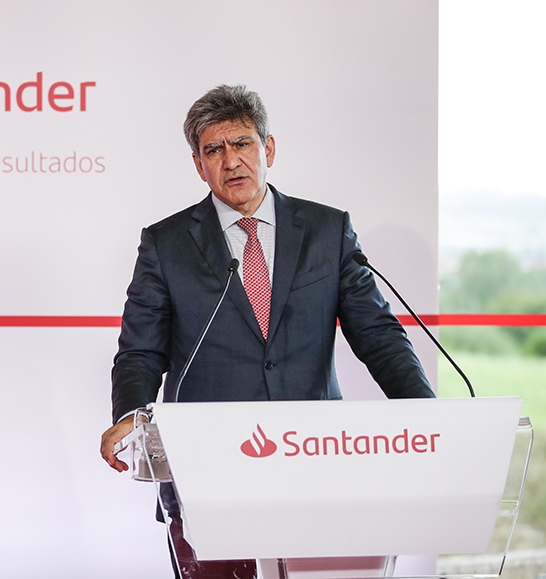
Banco Santander achieved an attributable profit of €5,849 million in the first nine months of 2021. This compares to a loss of €9 billion in the same period last year, when the bank made a non-cash adjustment to the valuation of goodwill and deferred tax assets (DTAs). Excluding net charges of €530 million for restructuring costs already announced in Q1 2021, underlying profit for the first nine months was €6,379 million, up 87% versus the same period of last year. This is Santander’s highest underlying profit in the first nine months since 2009. In the third quarter alone, the bank achieved an attributable profit of €2,174 million, an increase of 25% versus the same period of last year.
The bank’s strong performance was driven by good volume growth, with loans increasing 4% and deposits 6% year-on-year. Across the group, businesses continued to focus on supporting customers, driving revenue growth, effective net interest income management and cost control.
The results illustrate the benefits of Santander’s geographic and business diversification, with its three regions (Europe, North America and South America), making similar contributions to the group’s overall profit. Underlying profit in the first nine months nearly doubled in Europe to €2,293 million (+98%) and more than doubled in North America to €2,288 million (+122%), while it grew 31% in South America to €2,471 million. The Digital Consumer Bank also grew strongly (+17%) to €935 million.
Underlying profit before tax was €11.4 billion in the first nine months of the year, up 74%, while tax on profit in the period was €3.9 billion, resulting in an effective tax rate of 34%.
Full press release
Lloyd’s reports strong 2021 half year results with £1.4bn profit and 92.2% combined ratio

Banco Santander reports attributable profit of €3,675 million for the first half of 2021
Banco Santander achieved an attributable profit of €3,675 million in the first half of 2021. This compares to a loss of €10.8 billion in the same period last year, when the bank made a non-cash adjustment to the valuation of goodwill and deferred tax assets (DTAs). Excluding net charges of €530 million for restructuring costs already announced in Q1 2021, underlying profit for the first half was €4,205 million, up 153% versus the same period of last year. This is Santander’s highest underlying profit in the first half since 2010.
The bank’s strong performance was driven by good volume growth, with loans increasing 2% and deposits 4%. Across the group, businesses continued to focus on supporting customers, revenue growth, effective net interest income management and cost control.
The results illustrate the benefits of Santander’s geographic and business diversification, with its three regions (Europe, North America and South America), making similar contributions to the group’s overall profit. Underlying profit in the first half nearly tripled in Europe to €1,426 million (+172%) and North America to €1,628 million (+178%), while it grew 41% in South America to €1,645 million.
View full press release
Deutsche Bank reports profit before tax of € 1.2 billion in the second quarter of 2021
Net income of € 828 million with post-tax return on tangible equity (RoTE)¹ of 5.5%
Transformation drives second-quarter profit growth
Core Bank: profit before tax rises 90% to € 1.4 billion
Post-tax RoTE¹ of 7.8% with cost/income ratio¹ of 76%
Capital Release Unit reduces quarterly loss before tax by 56% to € 258 million
Net revenues of €6.2 billion, down 1% as markets normalise in second quarter
Further progress on costs in the quarter
Noninterest expenses down 7% year on year to € 5.0 billion
Adjusted costs ex-transformation charges¹ of € 4.6 billion, down 6%
Continued capital, balance sheet and risk discipline
Common Equity Tier 1 (CET1) ratio of 13.2%, down from 13.7% quarter on quarter, reflecting anticipated regulatory effects on risk weighted assets (RWAs)
Provision for credit losses of € 75 million, down 90% year on year
Capital Release Unit further reduces RWAs to € 32 billion, in line with end-2022 target, and cuts leverage exposure by € 10 billion to € 71 billion
Business growth includes record net inflows of € 27 billion into investment products
Asset Management: record net inflows of € 20 billion help lift Assets under Management by € 39 billion to € 859 billion
Private Bank: net new business volumes of € 14 billion include net inflows into investment products of € 7 billion
Sustainability: outperformance driven by a record quarter
Record quarterly ESG financing and investment volumes of € 27 billion
Cumulative volumes rise to € 99 billion, on path to end-2023 target of € 200+ billion
First half-year 2021: progress toward 2022 ambitions
Net revenues up 7% to € 13.5 billion year on year
Provision for credit losses down 89% to € 144 million, or 7 basis points of loans
Adjusted costs ex-transformation charges and reimbursable expenses related to Prime Finance1 down 4% to € 9.8 billion
Group profit before tax of € 2.8 billion, up seven-fold, with net profit of € 1.9 billion
Post-tax RoTE¹ of 6.5% with cost/income ratio reduced to 78%Core Bank profit before tax of € 3.4 billion, up 99%
Post-tax RoTE¹ of 9.3%, in line with 2022 target, and cost/income ratio of 73%
¹ For a description of this and other non-GAAP financial measures, see ‘Use of non-GAAP financial measures’ on pp 17-25 of the second quarter 2021 Financial Data Supplement
“Our pre-tax profit of € 1.2 billion in the second quarter demonstrates that we’re well on the path toward our goal for a post-tax RoTE1 of 8% next year. All our businesses have contributed to the year-on-year profit growth, gained further relevance for our clients and continued to capture market share. Once again, our cost and risk management provided us with firm foundations. Our priority now is to continue with our disciplined execution of transformation, quarter by quarter.”Christian Sewing, Chief Executive Officer
Deutsche Bank today reported its best second quarter and best first half year since 2015. Significant year on year profit improvement across all businesses was driven by resilient revenues, sustained progress on cost reduction and substantial year on year improvements in provision for credit losses.
Across the board profit improvement
Group profit before tax was € 1.2 billion in the second quarter of 2021, versus € 158 million in the second quarter of 2020. Net profit was € 828 million, up from € 61 million in the prior year quarter. Post-tax return on average shareholders’ equity was 4.9% and post-tax RoTE1 was 5.5% in the quarter. The cost/income ratio was 80%, down from 85% in the prior year quarter.
The quarter reflected a negative impact on profit before tax of € 226 million from the ruling by the German Federal Court of Justice (Bundesgerichtshof or ‘BGH’) in April 2021 requiring active customer consent for pricing changes on current accounts (for more information on this ruling, please see the ‘Provisions’ section of the Interim Report). This included an impact of € 96 million in foregone revenues, of which € 93 million was in the Private Bank Germany with the balance in the International Private Bank and Corporate Bank. The cost impact was € 130 million in litigation expenses, also predominantly in the Private Bank.
For the first six months of 2021, profit before tax was € 2.8 billion, up from € 364 million in the same period of 2020. Net profit was € 1.9 billion, up from € 126 million in the prior year period. Post-tax RoTE1 was 6.5%, and 7.6% if adjusted for transformation-related effects1 and specific revenue items. The cost/income ratio was 78%, down from 87% in the first six months of 2020.
In the Core Bank, which excludes the Capital Release Unit, second-quarter profit before tax rose 90% to € 1.4 billion. All four core businesses contributed to this year on year improvement in profitability. Post-tax RoTE1 was 7.8%, up from 3.4% in the prior year quarter, while the cost/income ratio was 76%. Adjusted profit before tax, which excludes specific revenue items, transformation charges, impairments of goodwill and intangibles and restructuring and severance, rose 72% to € 1.6 billion.
For the first six months, Core Bank profit before tax near-doubled to € 3.4 billion. Post-tax RoTE1 was 9.3%, in line with the Core Bank’s full-year 2022 target, and 10.5% if adjusted for transformation-related effects1 and specific revenue items. The cost/income ratio was 73%, down from 77% in the prior year period.
Capital Release Unit: significant loss reductionThe Capital Release Unit reported a loss before tax of € 258 million in the quarter, down by 56% from a loss of € 591 million in the second quarter of 2020. The adjusted loss before tax was € 236 million, down 54% year on year. This improvement was driven primarily by cost reduction: noninterest expenses were down 48% year on year to € 259 million, while adjusted costs ex-transformation charges1 were down 45% to € 236 million. Net revenues were negative €24 million, an improvement versus negative € 66 million in the prior year quarter.
The Capital Release Unit further reduced RWAs and leverage exposure. RWAs were reduced from € 34 billion to € 32 billion during the quarter, in line with the Unit’s end-2022 target, and a reduction of 24% over the past twelve months. The Unit reduced leverage exposure by € 10 billion to € 71 billion during the quarter, and by 30% versus the end of the second quarter of 2020.
For the first six months, the Capital Release Unit reported a loss before tax of € 668 million, a reduction of more than half versus the € 1.4 billion loss before tax in the first six months of 2020. This improvement was driven largely by a 36% year on year reduction in noninterest expenses to € 757 million, while adjusted costs ex-transformation charges were reduced by 40% to € 658 million. Net revenues were € 57 million for the first six months, an improvement of € 180 million versus the first six months of 2020.
Revenues: resilience despite market normalisation and specific effects
Group net revenues were € 6.2 billion, down 1% versus the second quarter of 2020. Revenue development in the quarter reflected the normalisation of financial markets compared to the prior year quarter, continued low interest rates, and the impact of foregone revenues due to the BGH ruling. Revenues in the Core Bank were € 6.3 billion, down 1%.
For the first six months, Group net revenues grew 7% to € 13.5 billion, while Core Bank net revenues grew 5% to € 13.4 billion.
Second quarter revenue development in Deutsche Bank’s core businesses was as follows:
– Corporate Bank net revenues were € 1.2 billion, down 8% year on year, or down 6% if adjusted for currency translation effects. Net revenues were essentially unchanged versus the prior year quarter if adjusted for episodic items, including recoveries related to credit protection and portfolio rebalancing actions, which were substantially lower than in the second quarter of 2020. Interest rate headwinds were offset by the positive effects of business growth and further progress on deposit re-pricing, which covered accounts with deposits of € 87 billion, up from € 83 billion at the end of the previous quarter and contributing € 85 million in quarterly net revenues. Deutsche Bank also recaptured the No. 1 position for German Corporate Banking in FINANCE-Magazin’s annual survey. For the first six months, net revenues were € 2.5 billion, down 5% year on year, reflecting the aforementioned factors impacting the second quarter.
– Investment Bank net revenues were € 2.4 billion, down 11%. Revenues in Fixed Income & Currencies (FIC) were € 1.8 billion, down 11%. This development largely reflected the anticipated normalisation of financial market activity compared to the second quarter of 2020, which impacted revenues in Rates, Emerging Markets and FX. This was partly offset by strong year on year growth in Credit, both Trading and Financing. Origination & Advisory revenues were 2% higher at € 624 million. Advisory revenues were more than double the prior year quarter, driven by higher M&A activity, while lower levels of Investment Grade Debt issuance in normalising markets more than offset growth and market share gains (source: Dealogic) in Leveraged Debt Capital Markets. Deutsche Bank returned to the No. 1 position in Origination & Advisory in Germany in the quarter (source: Dealogic). For the first six months, Investment Bank net revenues were up 9% to € 5.5 billion.
– Private Bank net revenues were € 2.0 billion, up 3% versus the prior year quarter, and up 8% if adjusted for the impact of the BGH ruling. Continued business growth in improved market conditions more than offset pressure on deposit margins from low interest rates. New business volumes of € 14 billion in the quarter included € 4 billion in net new client loans and € 7 billion in net inflows of investment products, the sixth consecutive quarter of net inflows into investment products. Revenues in the Private Bank Germany were down 1%, and up 7% if adjusted for the € 93 million impact of the BGH ruling. Revenues in the International Private Bank grew by 9%, or 8% excluding specific items. For the first six months, Private Bank net revenues rose to € 4.2 billion, up 2% year on year or up 4% if adjusted for the € 94 million impact of the BGH ruling. This increase was supported by continued new business growth, with net new business volumes of € 29 billion in the first half of 2021 including net new client loans of € 9 billion and net inflows in investment products of € 16 billion.
– Asset Management net revenues were € 626 million in the quarter, up 14%. Growth was driven primarily by 15% growth in management fees, as five consecutive quarters of client inflows and supportive market performance more than offset continued industry-wide margin pressure. Net inflows were a record € 20 billion in the quarter, driven by positive flows across asset classes in all regions, and including € 3.8 billion in Environmental, Social and Governance (ESG) assets. These record inflows and strong investment performance contributed to € 39 billion growth in Assets under Management to € 859 billion in the quarter, a new record level, and € 114 billion or 15% higher than at the end of the prior year quarter. For the first six months, net revenues grew 18% to € 1.3 billion, total net inflows were € 21 billion, and Assets under Management grew by € 67 billion.
Further cost reduction
Noninterest expenses were reduced by 7% to € 5.0 billion in the quarter, despite pressure from several external factors including the aforementioned € 130 million in litigation provisions relating to the BGH ruling. Adjusted costs ex-transformation charges were reduced by 6% year on year to € 4.6 billion.
The workforce was reduced by an additional 592 full-time equivalents (FTEs) to 83,797 during the quarter, and by approximately 3,000 FTEs over the past twelve months. At the end of the quarter, Deutsche Bank had recognised 90% of the total transformation-related effects1 anticipated through the end of 2022.
For the first six months, noninterest expenses were down 4% to € 10.6 billion. Adjusted costs ex-transformation charges1 and reimbursable expenses related to Prime Finance were down 4% to € 9.8 billion, including € 547 million in bank levies.
Sustained year on year improvement in provision for credit losses
Provision for credit losses was € 75 million in the quarter, equivalent to 7 basis points of average loans on an annualised basis, and down by 90% compared to € 761 million in the second quarter of 2020. Provisions for non-performing loans (Stage 3) were € 111 million in the quarter, down 33% on the previous quarter and down by 78% compared to the second quarter of 2020. Stage 3 provisions were offset by releases of € 36 million in provisions for performing loans (Stage 1 and 2) which reflected a positive macro-economic outlook.
For the first six months, provision for credit losses was € 144 million, or 7 basis points of average loans annualised, down from € 1.3 billion, or 57 basis points of average loans annualised, in the prior year period.
Conservative capital and balance sheet management
The Common Equity Tier 1 (CET1) capital ratio was 13.2% in the quarter, a decline of 55 basis points compared to 13.7% in the previous quarter. This development reflects a negative impact of approximately 70 basis points from the regulatory-driven increases in RWAs relating to the ECB’s Targeted Review of Internal Models (TRIM) and Capital Requirements Regulation (CRR) amendments taking effect in the quarter as expected. The TRIM decisions reflected in the second quarter conclude the multi-year TRIM programme for Deutsche Bank. These factors were partly counterbalanced by a positive impact of 12 basis points from organic capital generation through net income, after deductions for dividends, of € 274 million, and for coupons for Additional Tier 1 (AT1) instruments in the quarter. As at June 30, Deutsche Bank had deducted € 575 million for dividends from first-half 2021 earnings.
Risk Weighted Assets (RWAs) rose from € 330 billion to € 345 billion during the second quarter. This development was almost entirely due to the impact of the aforementioned TRIM decisions and CRR amendments.
The Leverage Ratio (fully-loaded) rose to 4.8% in the second quarter, up from 4.6% in the previous quarter. On a phase-in basis, the Leverage Ratio rose to 4.9%, from 4.7% in the previous quarter. These ratios exclude certain central bank balances under applicable rules. Including these balances, the fully-loaded Leverage Ratio would have been 4.3% in the quarter.
Liquidity Reserves rose € 11 billion to € 254 billion during the quarter, including High Quality Liquid Assets of € 224 billion, up by € 4 billion during the quarter. The Liquidity Coverage Ratio was 143%, a surplus over regulatory requirements of € 67 billion.
2022 ratio targets reaffirmed; guidance updated
Deutsche Bank reaffirmed its 2022 ratio targets in the light of progress made in its transformation, namely: a post-tax RoTE1 of 8% at Group level and over 9% for the Core Bank; a cost/income ratio of 70%; a Common Equity Tier 1 capital ratio of at least 12.5% and a leverage ratio (fully-loaded) of approximately 4.5%. With Deutsche Bank’s transformation significantly advanced and having evidenced sustainable profitability in the first half of 2021, management is updating cost guidance to focus on the cost/income ratio. This more accurately reflects the sustainable margin which the bank is targeting. Accordingly, the bank will no longer disclose an absolute cost target, previously € 16.7 billion, for 2022.
Deutsche Bank also provided updated guidance on the drivers of these target ratios as transformation advances. Management expects net revenues to be ahead of guidance provided at the Investor Deep Dive on December 9, 2020. The bank sees a substantial portion of its revenue growth in recent quarters as sustainable, as underpinned by strong business growth in 2021 to date and the expected gradual easing of interest rate headwinds in future quarters. Additionally, provision for credit losses is expected to be lower than previous guidance, in a range of around 20 basis points of average loans.
The bank expects these positive factors to counterbalance additional expenses due to unforeseen factors arising in 2021, including higher-than-expected contributions to the Single Resolution Fund and the German statutory deposit guarantee scheme. Management believes these items will exceed its initial plan by approximately € 400 million in total. The bank also foresees additional expenses arising from higher business volumes and investments in the control environment. In line with its firm commitment to continued discipline on controllable cost items, management has initiated a series of incremental cost reduction measures to mitigate these additional cost pressures. For more information on the bank’s financial and regulatory targets, please see the ‘Strategy’ section of the Interim Report.
Sustainable finance: record quarterly volume underpins outperformance
Deutsche Bank remains ahead of target in pursuit of its goal, of at least € 200 billion in cumulative Environmental, Social and Governance (ESG)-related financing and investments excluding DWS from the beginning of 2020 to the end of 2023. At the end of the second quarter, cumulative ESG financing and investments reached € 99 billion, close to the bank’s full-year interim goal of at least € 100 billion by end-2021.
In the second quarter, ESG financing and investment volumes were a record € 27 billion. Deutsche Bank’s businesses contributed to this total as follows:
The Corporate Bank added € 6 billion in sustainable financing, bringing its cumulative total to € 15 billion;In the Investment Bank, sustainable financing and capital market issuance volumes were € 15 billion in the quarter, bringing the division’s cumulative total to € 56 billion;The Private Bank added € 7 billion to reach a cumulative total of € 28 billion. During the quarter, investment volumes were € 6 billion, with an additional € 1 billion in new client loans. Cumulative total volumes now stand at € 19 billion for the Private Bank Germany and € 9 billion for the International Private Bank.
During the quarter, Deutsche Bank joined the Net Zero Banking Alliance, committing to align its operational and attributable emissions from its loan portfolio with pathways to net zero by 2050. This supplements the bank’s signing of the Collective Commitment to Climate Action of the German financial sector and Deutsche Bank’s commitment to publish the carbon footprint of its € 445 billion loan portfolio by the end of 2022. The bank continued to refine its Climate Risk methodology and data strategy in alignment with other financial institutions and collaborative cross-industry bodies. In May 2021, Deutsche Bank became the first bank to join the Ocean Risk and Resilience Action Alliance (ORRAA) as a full member and announced its support for the Monetary Authority of Singapore in establishing an ESG Center of Excellence which will focus on public and private ESG transactions, product development and advisory services. Asset Management was selected to advise and help drive the global Net Zero Asset Managers Initiative (NZAMI) and will form part of NZAMI’s newly formed advisory group.