
Patra: the last port of call for Poseidon Med II
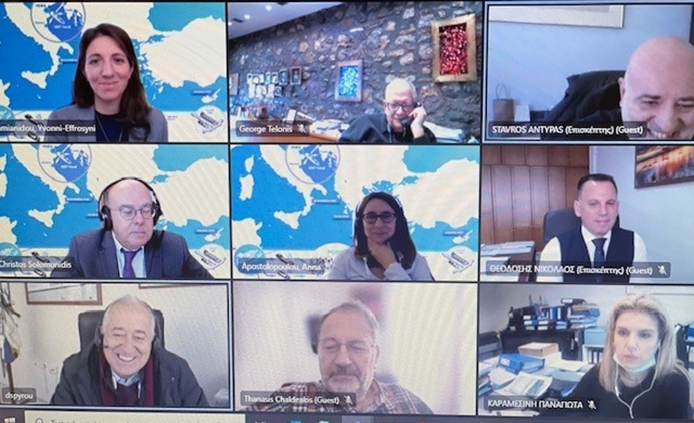
Patras Port Authority had the honour of organising the last dissemination event of Poseidon Med II, just one week prior to its conclusion. The satellite port to the EU co-funded programme, gathered key stakeholders and interested parties to informed them about milestones of the Action and raise their final feedback with main Activity owners from Lloyd’s Register and Rogan Associates, who are also partners of Poseidon Med II.
Presentations focused on the basic features of LNG, the Presidential Decree on safe LNG Bunkering, the training competencies, port manuals and the port’s masterplan to accommodate LNG as a marine fuel.
Mr Panagiotis Tsonis, CEO of Patras Port Authority, gave a warm welcome at the virtual event by thanking all partners for the deliverables and studies performed that will offer the opportunity to the port of Patras to become part of the new green supply chain in the maritime transportation sector.
Mr Stavros Antypas, Director of Development and Project Manager on behalf of the Patras Port Authority commented that despite the obstacles that came along with the studies and the associated local consultation, he is proud to see that the Action is concluded leaving behind a complete and rigid file of approved studies and data that will enable the Port to engage in efficient and sustainable operations in the near future. He moved on by adding that the Authority will pursue funding opportunities inside and outside the Greek territory in order to proceed with the necessary infrastructure works.
After demonstrating the actual position for the LNG bunkering operations inside the port and explaining how it was chosen as the optimum solution, participants discussed on the scenario of coexistence of pipelines and bunker vessels for the supply of LNG. Ms Anna Apostolopoulou, EU Projects Leader & Offshore Manager for Greece, Cyprus & Israel, who served as Project Manager of the Action on behalf of Lloyd’s Register, clarified that bunkering will not ‘disturb’ any of the other simultaneous operations taking place inside the port. Practically what this means is that any incoming vessel will berth at the intended position and the LNG feeder vessel shall proceed with the bunkering in parallel to any loading/ offloading operations taking place.
The virtual meeting was concluded with a sense of satisfaction on the achievements of Poseidon Med II and an anticipation for all partners to collectively work together again on a similar innovative project.
Τhe sole responsibility of this publication lies with the author. The European Union is not responsible for any use that may be made of the information contained therein.
Poseidon Med II laid the foundations for a sustainable supply chain in Eastern Mediterranean
The Poseidon Med II Stakeholders’ Conference 2021 “Poseidon Med II brings into reality sustainable shipping to the Eastern Mediterranean” was successfully organized as a virtual event on Thursday, December 9, 2021. The Conference marked the official closing of the EU co-funded Poseidon Med II Action, which started in June 2015 and will end in December 2021.
Mr Konstantinos Skrekas, Minister for the Environment and Energy of Greece, opened the Conference and noted the importance of LNG as a transition fuel for the green transformation of the shipping industry; Mr Ioannis Efstratiou, Director, Safety & Environmental Protection Directorate, representing the Cypriot Deputy Minister for Shipping, Mr V. Demetriades, stressed that a major advantages of adopting LNG as a marine fuel is its abundant availability which makes it a sound option for the transition towards Europe’s net zero future. Mr Giannis Papadopoulos, Chairman of the BoD, DEPA Commercial S.A., highlighted that LNG is indeed an intelligent, flexible and viable business solution with which the shipping industry can address the challenge to decarbonize He then made reference to the development of Greece’s first LNG bunkering vessel by DEPA COMMERCIAL with a capacity of of 4,000 m3 that will be used to supply ships in the port of Piraeus as well as in other ports in Greece and at the Region. For Mr J. Chomatas, Asset Development Division Director, DESFA SA – Hellenic Gas Transmission System Operator, the new SSLNG facilities that will be accommodating bunker and feeder vessels is due to the contribution of PM II marking an important achievement. . Concluding the opening statements, Mr. Siamak Jalali, from the office of the EU’s Coordinator for the “Motorways of the Sea” noted that the goal for 2050 is to make Europe a modern resource efficient and competitive economy with the maritime being a crucial sector as 80% of the goods are transported by sea.
On behalf of the European Climate, Infrastructure and Environment Executive Agency (CINEA), Mrs Katerina Chrysostomou, PMEDII Project Officer, congratulated all the PMII Partners for completing the foreseen actions and for contributing to the realization of LNG bunkering operations in Greece, Cyprus and Italy.
Mr George Polychroniou, Poseidon Med II Project Manager, Executive Director, Strategy and Business Development, DEPA Commercial S.A. noted the importance of PMII for the decarbonization of the maritime sector and its particular significance for the region and Greece.
During the first session of the Conference entitled “Mapping the Achievements of Poseidon Med II” the results of the Action were presented by various partners, notably: Mrs Efstathia Niarchou, Project Manager of Poseidon Med II Action, DESFA, Dr. Christos Solomonidis, Partner, Chairman of the BoD, Rogan Associates S.A., Mrs Anna Apostolopoulou, Offshore Manager Gr/Cy/Isr, EU Projects Leader SEUR/Lloyd’s Register, Dr. Davide Calderan, President, Rimorchiatori Riuniti Panfido & C. Srl , Mr Giannis Gkabrias, Market Research and Development, Ocean Finance. ,
The speakers agreed that the main goals of PM II have been achieved and the foundations for a sustainable and effective supply chain in the Eastern Mediterranean have been established. Moreover, the necessary studies for this as well as for the adoption of LNG as a marine fuel were carried out from a technical, economic and regulatory perspective. Namely PM II has contributed to the preparation of a regulatory framework with particular emphasis on safety aspects regarding LNG bunkering operations at Greek Ports, leading to the enactment of legislation (Presidential Decree 64/2019) With regard to ports, Piraeus, Patras, Heraklion, Igoumenitsa and Limassol, PMII financed the design studies for the development of small-scale LNG infrastructures (ssLNG) to enable the provision of bunkering services. Moreover, studies completed by PMII are enabling the construction of a truck loading station, for bunkering and off grid consumers’ supply as well as a ssLNG jetty that will accommodate vessels from 1.000 m3 to 28.000m.
At the second session entitled “LNG, a great opportunity for Shipping in the Eastern Mediterranean” experts discussed the increasing use of LNG as a shipping fuel both in Europe and worldwide; Participants included Mr Steve Esau, General Manager, SEA LNG, Mr Panayiotis Mitrou, Global Gas Technology Segment Manager, Lloyd’s Register, Dr. George A. Kriezis, Technical Manager, Neptune Lines Shipping and Managing Enterprises S.A., Dr. Nikolaos Liapis, Member the Board of Directors, Hellenic Shortsea Shipowners Association and Mr Dimitris Spyrou, Consultant, Strategic Planning and Marketing Department, Piraeus Port Authority S.A.
It was concluded that LNG will have a decisive role during the transition to a sustainable maritime transportation. Moreover, synthetic and bio-LNG, that can be used with the same infrastructure as for LNG, are compatible with the EU’s zero-carbon goals and will contribute to the decarbonization of the maritime sector Finally participants stressed the emerging role of Greece as an international LNG bunkering and distribution hub for the broader region.
Poseidon Med II demonstrates that shifting to LNG is bringing benefits to the Port of Igoumenitsa
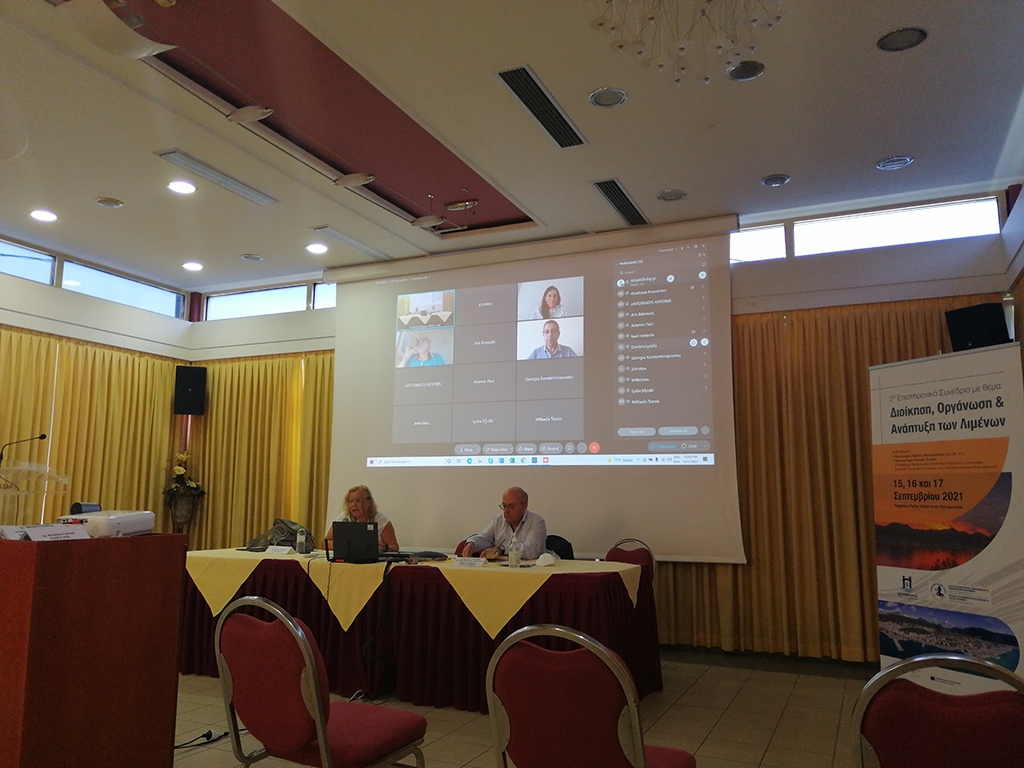
Within the context of the 2nd Scientific Conference on Port Management, Organization and Development (PDMO 2021), the European Programme Poseidon Med II organized a panel discussion entitled ‘Environment and Energy in the Eastern Mediterranean’.
The panel focused on the significant benefits that the port of Igoumenitsa gains from its shift to Liquefied Natural Gas (LNG), including operational, financial, environmental, as well as long-term strategic benefits related to employment, competitiveness and sustainability. Participants called all competent bodies to cooperate with one another to address a number of technical and legislative aspects so as to accelerate the realization of LNG Infrastructure and contribute to upgrading the port of Igoumenitsa and its emergence as a critical pathway on the new energy map of Eastern Mediterranean.
In particular, during the discussion, Dr. Christos Solomonidis of ROGAN & Associates SA, who also moderated the panel, presented the design roadmap of the Small-Scale LNG infrastructure. Dr. Solomonidis brought up issues relating to the selection of the optimum location for the LNG bunkering infrastructure and presented the results of a series of technical and environmental studies implemented under the PMEDII project.
Particular emphasis was given to the legislative framework. Anastasia Kouvertari from Lloyd’s Register briefly presented the regulatory framework for LNG bunkering having as reference the relevant Presidential Decree (64/2019) issued by the Hellenic Republic, as well as the main pillars of the Port Manuals that were developed in the framework of the Poseidon Med II, which include practical and guiding principles for ship’s bunkering as well as a specialized training development framework for the personnel involved in bunkering operations.
Professor Dimitrios Lyridis from the National Technical University of Athens (NTUA) referred to the importance of comprehensive improvements of the energy hubs (where production, conversion, storage and consumption of different energy carriers is done) and methods to achieve this. Responding to the challenges arising from the new EU regulations and policies on carbon-related pollutants, the Professor referred to the development of ports as energy hubs, highlighting the range of their activities related to the operation of the network, storage and energy trading, with the assistance of Renewable Energy Sources (RES). Along the same lines was the presentation of Professor Vassilios Tselentis, from the University of Piraeus, who presented the concept of ‘Smart Ports’.
The University of West Attica and the Igoumenitsa Port Authority organised the 2nd Scientific Conference on Port Administration, Organization and Development (PDMO 2021), on 15, 16 and 17 September 2021 at ANGELIKA PALLAS HOTEL in Igoumenitsa.
The sole responsibility of this publication lies with the author. The European Union is not responsible for any use that may be made of the information contained therein.
Photo: Snapshot from the discussion that followed, under the coordination of Dr. Solomonidis
Το Poseidon Med II αναδεικνύει τα οφέλη της ενεργειακής μετάβασης προς το ΥΦΑ για τον λιμένα της Ηγουμενίτσας
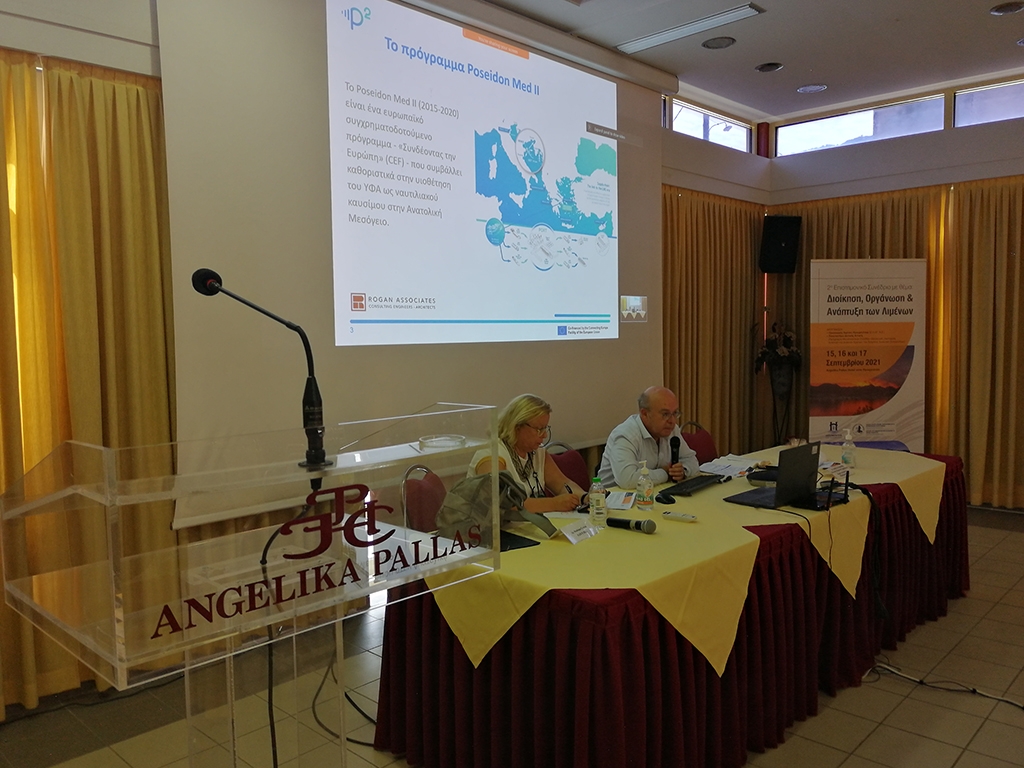
Στο πλαίσιο του 2ου Επιστημονικού Συνεδρίου για τη Διοίκηση, την Οργάνωση και την Ανάπτυξη των Λιμένων (PDMO 2021), τo Ευρωπαϊκό πρόγραμμα Poseidon Med II διοργάνωσε συζήτηση με θέμα ‘Περιβάλλον και Ενέργεια στην Ανατολική Μεσόγειο’.
Η συζήτηση επικεντρώθηκε στα σημαντικά οφέλη που μπορεί να εισπράξει ο λιμένας της Ηγουμενίτσας, από την ενεργειακή μετάβαση του προς το Υγροποιημένο Φυσικό Αέριο (ΥΦΑ), τα οποία είναι λειτουργικά, οικονομικά, περιβαλλοντικά καθώς και μακροπρόθεσμα στρατηγικά και σχετίζονται με την απασχόληση, την ανταγωνιστικότητα και τη βιωσιμότητα. Οι συμμετέχοντες στη συζήτηση κάλεσαν τους αρμόδιους φορείς να συνεργαστούν αρμονικά για τη διευθέτηση μιας πλειάδας τεχνικών και νομοθετικών κανονιστικών πτυχών που θα επιταχύνουν την υλοποίηση του έργου εγκατάστασης υποδομών ανεφοδιασμού με ΥΦΑ, συμβάλλοντας στην αναβάθμιση του λιμένα της Ηγουμενίτσας και την ανάδειξή του ως κρίσιμο κόμβο στον νέο ενεργειακό χάρτη της Ανατολικής Μεσογείου.
Ειδικότερα, κατά τη διάρκεια της συζήτησης, παρουσιάστηκε η πορεία σχεδιασμού της εγκατάστασης ΥΦΑ Μικρής Κλίμακας, από τον Δρ. Χρήστο Σολομωνίδη των ΡΟΓΚΑΝ & Συνεργάτες, ο οποίος συντόνισε τη συζήτηση, θέτοντας στο τραπέζι επιμέρους θέματα σχετικά με τη χωροθέτηση της εγκατάστασης ενώ παρουσίασε μια σειρά από τεχνικές και περιβαλλοντικές μελέτες που υλοποιήθηκαν στα πλαίσια του PMEDII.
Ιδιαίτερη έμφαση δόθηκε και στο νομοθετικό πλαίσιο. Η Αναστασία Κουβερτάρη από τον Lloyd’s Registerπαρουσίασε συνοπτικά το κανονιστικό πλαίσιο σχετικά με τον ανεφοδιασμό των πλοίων με ΥΦΑ κάνοντας αναφορά στο σχετικό Προεδρικό Διάταγμα (64/2019), καθώς και στους βασικούς πυλώνες των Εγχειριδίων Λιμένων που έχουν αναπτυχθεί στα πλαίσια του Poseidon Med II, τα οποία περιλαμβάνουν πρακτικές και κατευθυντήριες αρχές για τον ανεφοδιασμό των πλοίων με ΥΦΑ, καθώς και ένα εξειδικευμένο πλαίσιο ανάπτυξης εκπαίδευσης του εμπλεκόμενου προσωπικού.
Στο θέμα της ολιστικής βελτιστοποίησης των ενεργειακών λιμένων και τον τρόπο επίτευξης της αναφέρθηκε ο Καθηγητής του Εθνικού Μετσόβιου Πολυτεχνείου (ΕΜΠ) Δημήτριος Λυρίδης. Απαντώντας στις προκλήσεις που προκύπτουν από τους νέους κανονισμούς και τις πολιτικές της ΕΕ για τους ρύπους που σχετίζονται με τον άνθρακα, ο Καθηγητής αναφέρθηκε στην ανάπτυξη των λιμένων ως ενεργειακούς κόμβους, αναδεικνύοντας το φάσμα των δραστηριοτήτων τους που σχετίζονται με τη λειτουργία του δικτύου, την αποθήκευση και εμπορία της ενέργειας, με τη συμμετοχή των Ανανεώσιμων Πηγών Ενέργειας (ΑΠΕ). Στο ίδιο πνεύμα κινήθηκε και η παρουσίαση του Καθηγητή του Πανεπιστημίου Πειραιά, Βασίλειου Τσελέντη, ο οποίος αναφέρθηκε στην έννοια των ‘Έξυπνων Λιμένων’.
Το 2ο Επιστημονικό Συνέδριο για τη Διοίκηση, την Οργάνωση και την Ανάπτυξη των Λιμένων (PDMO 2021) διοργάνωσε το Πανεπιστήμιο Δυτικής Αττικής και ο Οργανισμός Λιμένος Ηγουμενίτσας στις 15, 16 και 17 Σεπτεμβρίου 2021 στο ANGELIKA PALLAS HOTEL στην Ηγουμενίτσα.
Την αποκλειστική ευθύνη της παρούσας έκδοσης φέρει ο συγγραφέας της. Η Ευρωπαϊκή Ένωση δεν φέρει καμία ευθύνη για οποιαδήποτε χρήση των περιεχομένων σ’ αυτήν πληροφοριών.
Φωτό: O Δρ.Σολομωνίδης από τους ΡΟΓΚΑΝ & Συνεργάτες στην ομιλία του για το Πρόγραμμα Poseidon Med II
To Poseidon Med II κατασκευάζει το πρώτο πλοίο μεταφοράς & ανεφοδιασμού (SBBT) στην Ανατολική Μεσόγειο
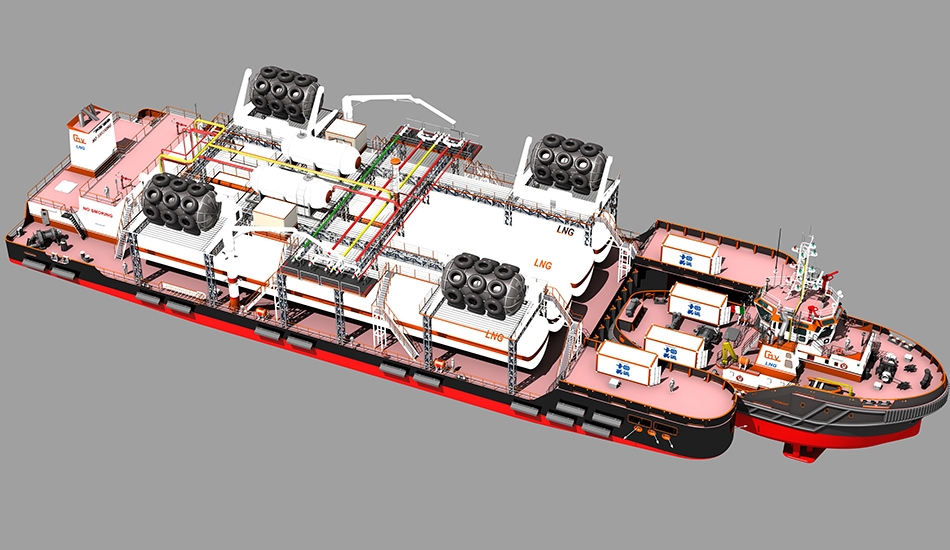
Ξεκίνησε η κατασκευή του πλοίου μεταφοράς & ανεφοδιασμού (Semi-Ballastable Barge Transporter-SBBT) στο ναυπηγείο ROSETTI MARINO Spa της Ραβέννας, στα πλαίσια του ευρωπαϊκού συγχρηματοδοτούμενου προγράμματος Poseidon Med II, το οποίο αναμένεται να παραδοθεί το 2020.
Το SBBT, με χωρητικότητα φορτίου 4.000 m3 LNG (υγροποιημένο φυσικό αέριο) και 1.000 m3 MDO (πετρέλαιο), θα είναι το πρώτο πλοίο αυτού του καινοτόμου τύπου στην περιοχή της Μεσογείου που θα χρησιμοποιηθεί για ανεφοδιασμό πλοίων στη Βόρειο-Αδριατική θάλασσα.
Ο σχεδιασμός του πλοίου ανατέθηκε στην εταιρεία SENER που διαθέτει πολυετή εμπερία, από τον εταίρο του Poseidon Med II CMV PANFIDO & C. S.r.l.
Το SBBT αποτελείται από μία πλωτή τύπου σχεδία χωρίς σύστημα πρόωσης (Νon-propelled Pontoon) για τον ανεφοδιασμό LNG και MDO με δύναμη έλξης 3 ναυτικά μίλια και από ένα διπλό ρυμουλκό (Dual Tug) που λειτουργεί ως μονάδα ισχύος με κινητήρα Niigata διπλού καυσίμου (LNG & MDO) με δύναμη έλξης 65 τόνων. Το διπλό ρυμουλκό θα έχει συνολικό μήκος 37 μέτρα και θα συνδέεται με μία μονάδα φορτίου (Cargo Unit) για τον ανεφοδιασμό, με κυρίες διαστάσεις περίπου 86,40 x 26,70 μέτρων.
Ο κ. Γιώργος Πολυχρονίου, Συντονιστής Διευθυντής Δραστηριοτήτων Στρατηγικής, Ανάπτυξης, Διοικητικών & Πληροφορικής της ΔΕΠΑ/ Project Manager του PΜΙΙ, σχολίασε: «Η κατασκευή του καινοτόμου SBΒT πλοίου στον λιμένα της Βενετίας, αποτελεί ένα σημαντικό ορόσημο για το Poseidon Med II. Το πρόγραμμα έχει ήδη θέσει τα θεμέλια για την εδραίωση του ΥΦΑ ως ναυτιλιακού καυσίμου στην Ανατολική Μεσόγειο, με την κατασκευή νέων πλοίων ανεφοδιασμoύ LNG στην ευρύτερη περιοχή».
Τι είναι το πρόγραμμα Ρoseidon Med II;
Το πρόγραμμα Poseidon Med II αποτελεί τον οδικό χάρτη για την ευρεία υιοθέτηση του ΥΦΑ ως ασφαλούς, περιβαλλοντικά φιλικού και βιώσιμου εναλλακτικού καυσίμου στη ναυτιλία, ωθώντας τις θαλάσσιες μεταφορές στην Ανατολική Μεσόγειο προς ένα πιο πράσινο μέλλον. Το πρόγραμμα, το οποίο συγχρηματοδοτείται από την Ευρωπαϊκή Ένωση υλοποιείται σε τρεις χώρες –Ελλάδα, Ιταλία και Κύπρο-, και συμμετέχουν έξι Ευρωπαϊκά λιμάνια (Πειραιάς, Πάτρα, Ηράκλειο, Ηγουμενίτσα, Λεμεσός και Βενετία) και ο Τερματικός σταθμός ΥΦΑ στη Ρεβυθούσα. Στο πρόγραμμα συνεργάζονται κορυφαίοι ειδικοί από τους κλάδους της ναυτιλίας, της ενέργειας και των χρηματοοικονομικών για το σχεδιασμό μιας ολοκληρωμένης αποτελεσματικής εφοδιαστικής αλυσίδας ΥΦΑ.