
£5.3 billion lost from over 50s retirement pots throughout the course of the pandemic
4 million over 50s workers are continuing to save less towards their retirement when compared to before the pandemic – with £3,283 lost on average
Those who have cut savings are now putting £155 less monthly towards retirement, however at the peak of the pandemic contributions dipped by more than £200
Legal & General Retail Retirement (LGRR) analysis suggests this reduction in payments could delay the retirement of someone who saved less by more than four years (based on the median average) if contributions remain at reduced levels.
Financial outcomes can be returned to pre-pandemic levels and LGRR encourages people to ‘Spend A Day’ on retirement this Pension Awareness Week with its course with The Open University
Over 50s workers in the UK could have a £5.3 billion hole in their collective pension pot due to cutbacks on retirement savings over the course of the pandemic, according to new research from Legal & General Retail Retirement (LGRR) 1.
The new findings, released as part of Pension Awareness Week, estimate that approximately 10% of pre-retired over 50s – 1.4 million people2 – are continuing to save less every month when compared to before the pandemic. At present, those over 50 saving less have reduced their monthly savings by £155 a month, however at the peak of the pandemic this was an average of £219 less a month. Overall, over 50s saving less towards retirement will have contributed £3,283 less on average over the course of the pandemic than they otherwise would have.
Over 50s workers who are continuing to save less are doing so for a variety of reasons, such as pay decreases (39%), redundancies or job losses (22%) and the impact of being furloughed (13%). One in five over 50s saving less (20%) have also had to reduce their retirement contributions in order to provide more monetary support to their loved ones.
Retirement planning course with The Open University
To help those approaching retirement understand their options – and manage their financial affairs better in later life – Legal & General has a free online course with The Open University, setting out a series of stepping stones to a financially secure retirement.
The introductory 4-hour course combines guidance, short videos and tools and covers various aspects of retirement planning, from how to budget for retirement, how different types of pensions work and what to do if pension income is at risk of falling short.
“It’s completely understandable that those who have faced financial hardship as a result of the pandemic may have looked for opportunities to cut back on their outgoings. However, as our research shows, saving less, particularly for those in their 50s, could have a significant impact on retirement prospects and planning. Our own analysis suggests that those who have saved less would, based on the median average, need to bring their contributions back to pre-pandemic levels, then pay an additional £41 per month to make good on their shortfall. If the same saver does not bring their contributions back to pre-pandemic levels they might need to delay their retirement by more than four years to reach the levels they previously would have saved before cutting back on their monthly contributions.
As we look ahead towards a period of recovery, the best thing people can do is commit to spending a day sorting through their affairs to better understand the options at their disposal, rather than burying their head in the sand. To encourage people to do this, we offer a range of resources, including a free online course that can be completed in an afternoon. Our hope is that by encouraging older workers to engage with their later life finances, growing numbers will be equipped with the tools to enjoy a more comfortable retirement.”
Emma Byron, Managing Director, Legal & General Retirement Solutions
Munich Re posts strong Q2 result despite ongoing burden of pandemic
Munich Re on track for 2021 target with profit of €1,106m in Q2
COVID-19-related losses in Q2 total €241m
ERGO contributes €155m to Group Q2 result
July renewals confirm trend of rising prices (+2.0%) and premium growth (+11.1%)
Expected overall claims expenditure from disastrous flooding in the mid-three-digit million euro range
On track to meet our target of €2.8bn for the year, the Group is showing a very solid profit for the first half of the year. All areas of our operation are helping deliver on our strategic objectives: Munich Re is growing profitably. Our reliability and expertise are in demand, and we are making good use of the positive market environment – always balancing healthy growth and strict risk management. Munich Re is tapping and shaping tomorrow’s new business: cyber, for example, shows how we can move from the role of pioneer to that of market leader. Munich Re assumes responsibility. We are more committed than ever to the sustainability of our business, from decarbonising our investments and treaty business to strengthening ESG governance at Board of Management level. Faced with challenges such as pandemics, floods and heatwaves, our aspiration as an insurer remains to contribute our part to the solutions of the future.
Joachim Wenning
Chairman of the Board of Management
Summary of Q2 figures
Munich Re generated a profit of €1,106m (579m) in Q2 2021, and a total of €1,695m (800m) for Q1–2. Below-average overall expenditure for major losses, which totalled 6.8% of net earned premiums, contributed to the Q2 result. The impact of COVID-19-related losses on reinsurance business came to €241m (700m) for the quarter and €505m (1,500m) since the beginning of the year. Of this, in the first half-year €203m (1,395m) was attributable to the property-casualty segment and €302m (105m) to life and health reinsurance. In the ERGO field of business, COVID-19-related effects had a negative impact of €6m on the Q2 result after the previous year had seen limited repercussions; there was a positive effect of €7m since the start of 2021.
The operating result in Q2 increased year on year to €1,554m (755m). In addition, the other non-operating result amounted to –€9m (–6m). The currency result totalled –€117m (23m), and the effective tax rate was 19.6% (19.3%). Compared with Q2 2020, gross premiums written moved up notably – by 14.2% to €14,642m (12,827m), and in Q1–2 by 7.7% to €29,193m (27,112m).
Equity was almost at the same level at the end of the reporting period (€29,920m) as at the start of the year (€29,994m). The solvency ratio was 225% (208% as at 31 December 2020), which is slightly above the optimum range (175–220%).
In Q2 2021, annualised return on equity (RoE) amounted to 19.2% (10.4%); the RoE for the half-year was 15.0% (7.1%).
Reinsurance: Result of €951m
The reinsurance field of business contributed €951m (407m) to the consolidated result in Q2 and €1,361m (555m) in the first half-year. In Q2, the operating result swelled to €1,274m (465m) and gross premiums written increased markedly to €10,299m (8,856m).
Life and health reinsurance business generated a profit of €93m (59m) in Q2. The technical result, including the result from reinsurance treaties with non-significant risk transfer, was €64m (48m). Premium income amounted to €3,144m (3,332m), with the decrease due primarily to negative currency translation effects.
COVID-19-related losses of €140m impacted the quarterly result, a higher amount than initially projected. These were dominated by the developments in India and South Africa and by the diminishing trend in anticipated expenses for mortality covers in the US. Apart from the impacts of COVID-19, Q2 went well overall, mainly owing to retroactive increases in premium for the Australian disability business and a positive one-off effect pertaining to a large North American reinsurance treaty.
Given the significant COVID-19 losses of €302m in HY1 2021, Munich Re is increasing its loss expectation from COVID-19 for life and health reinsurance business for 2021 as a whole to approx. €400m (previously approx. €200m) and thus for the reinsurance field of business overall to approx. €700m (previously approx. €500m). For property-casualty reinsurance, the COVID-19 loss expectation remains unchanged at approx. €300m.
Property-casualty reinsurance contributed €858m (348m) to the result in Q2. Premium volume surged to €7,155m (5,524m) – despite counter-effects from currency translation. The combined ratio improved considerably to 90.1% (99.9%) of net earned premiums and in Q1–2 to 94.3% (103.0%).
Major losses of over €10m each were down significantly in Q2 and totalled €432m (799m). These figures include gains and losses from the settlement of major losses from previous years. Major-loss expenditure corresponds to 6.8% (14.8%) of net earned premiums, and was thus below the long-term average expected value of 12% both for Q2 and for the half-year (11.0%). Man-made major losses including COVID-19-related losses of €101m (Q2 2020: €595m) sank to €229m (632m). Major-loss expenditure from natural catastrophes increased slightly to €203m (167m).
In Q2, loss reserves of €252m (217m) were released for basic losses from prior years, which corresponds to 4.0% (4.0%) of net earned premiums. Munich Re is still aiming to set the amount of provisions for newly emerging claims at the top end of the estimation range.
In the reinsurance renewals as at 1 July 2021, Munich Re exploited growth opportunities successfully and increased the volume of business written to €3.9bn (+11.1%). The primary focus of the renewals was business in North America, South America, Australia, and with global clients.
Prices continued to increase overall. The trend toward higher reinsurance prices persists, owing to claims in various markets and lines of business, including COVID-19-related claims. Primary insurance prices are also increasing in many markets.
Overall, prices across Munich Re’s portfolio renewed as at 1 July 2021 were up by 2.0%. This figure is, as always, risk-adjusted. In other words, price increases are offset if they are associated with increased risk and, consequently, elevated loss expectations. Similarly, changes are offset by the composition of different classes of business in the portfolio so as to make valid comparisons possible.
Munich Re anticipates that the market environment will continue to improve year on year in the next major renewal round in January – also in view of the current claims burden, e.g. from extreme weather events in America or Europe in Q3.
ERGO: Result of €155m
Munich Re generated a profit of €155m (173m) in its ERGO field of business in Q2 and €334m (245m) in Q1–2. The operating result for the ERGO field of business amounted to €281m (291m).
The high Q2 result was driven by the bottom line of ERGO Property-casualty Germany moving up to €81m (50m), to which a high investment result contributed in addition to profitable premium growth in particular. This, together with ongoing very good operational performance, largely offset the claims burden from natural disasters and man-made major losses. Having seen a very strong prior-year quarter, ERGO International’s result shrank to €41m (59m). Major losses in the Baltic states, burdens from natural catastrophes in Austria and COVID-19-related losses in India were partially made up for by the continued strong development of operations in Poland and Spain.
The COVID-19-related losses in India are also material to the effect of the pandemic on results for 2021 as a whole. In view of the more favourable development overall in the first half-year, ERGO is now reckoning with a negative impact of €40–50m (formerly €90–100m) owing to COVID-19.
After a very good quarter in 2020, ERGO Life and Health Germany posted a result of €33m (63m) on account of a lower investment result in the field of life business. This was partially offset by ongoing good operational performance in health and lower losses in travel insurance.
Despite loss events, the combined ratios remain at a very good level. In Property-casualty Germany, the combined ratio was 92.6% (92.5%) in Q2, and 93.4% (92.9%) in Q1–2. In International, the ratio moved up in Q2 to 92.2% (90.1%), and in Q1–2 to 93.0% (92.7%).
Total premium income across all lines rose very significantly in Q2 to €4,616m (4,228m); gross premiums written increased to €4,343m (3,971m).
Investments: Investment result of €1,933m
The Group’s investment result (excluding insurance-related investments) increased to €1,933m (1,697m) in Q2. Regular income from investments fell to €1,645m (1,721m), while the balance of gains and losses on disposal excluding derivatives amounted to €627m (1,189m). The net balance of derivatives was –€90m (–906m). The balance from write-ups and write-downs sank marginally to –€77m (–108m).
Overall, the Q2 investment result represents a return of 3.1% on the average market value of the portfolio. The running yield was 2.6% and the yield on reinvestment was 1.7%. By means of acquisitions in primary insurance and reinsurance – and aided by the positive market development – Munich Re increased its equity-backing ratio, including equity derivatives, to 7.5% as at 30 June 2021 (6.0% as at 31 December 2020).
The investment portfolio (excluding insurance-related investments) as at 30 June 2021 increased slightly compared with the 2020 year-end figure, with the carrying amount moving up somewhat to €233,961m (232,950m); the market values amounted to €250,597m (252,789m).
The Group’s asset manager is MEAG. As at 30 June 2021 – in addition to managing the Group’s own assets – MEAG managed third-party investments totalling €65.0bn (69.6bn).
Outlook for 2021: Annual target unchanged at €2.8bn
Munich Re anticipates advantageous business opportunities also in the second half of 2021 and is thus raising its gross premium forecasts: by €1bn to €40bn for reinsurance, and by €0.5bn to €18bn for the ERGO field of business. At Group level, gross premiums of €58bn are hence projected for 2021.
Given the raised loss expectation in life and health reinsurance due to COVID-19, it is now more likely that the isolated partial objective of a technical result of €400m, including the result from reinsurance treaties with non-significant risk transfer, will not be met.
In July, various regions in western and central Europe and especially in Germany suffered severe weather events and disastrous flooding (low pressure system “Bernd”) that led to significant damage to public and private property. As there is still a very high degree of uncertainty at this stage, precise claims forecasts are not yet possible. Munich Re expects overall claims expenditure for reinsurance and ERGO to be in the mid-three-digit million euro range.
In its 2020 Annual Report, Munich Re forecast a combined ratio of around 92% for ERGO Property-casualty Germany. Owing to the flooding in July, there is increased uncertainty as to whether Munich Re will be able to reach that target.
Munich Re continues to aim for a consolidated profit of €2.8bn for the 2021 financial year. The other targets communicated for 2021 in Munich Re’s Group Annual Report 2020 remain unchanged.
All forecasts are made more difficult by the pronounced volatility of the capital markets and exchange rates and by the increased uncertainty with regard to potential claims in connection with the coronavirus pandemic. As always, the projections are subject to major losses being within normal bounds, and to the income statement not being impacted by severe fluctuations in the currency or capital markets, significant changes in the tax environment, or other one-off effects.
ERGO Blickpunkt: Nearly half of all self-employed in Germany now earn less than they did before the pandemic
Financially speaking, self-employed have been especially hard hit by the coronavirus pandemic. This also affects their old-age provision, which those surveyed now have less money for than before the pandemic. As a result, they are very concerned about old-age poverty. A majority of those surveyed would support mandatory insurance for self-employed. These are the main findings of a survey of 511 self-employed working in Germany, which was conducted by YouGov on behalf of ERGO in June 2021. The survey marks the start of the ERGO Blickpunkt study series, which ERGO uses to shed light on current social issues.
Not only in their private lives, but in many cases also financially, self-employed are especially hard hit by the coronavirus pandemic. Of those surveyed, 61% reported being financially impacted by the effects of the coronavirus pandemic, while one in five (20%) is in danger of going bankrupt. In addition, 49% of respondents now earn less than they did before the pandemic, and 3% currently have no earnings whatsoever.
This also affects their old-age provision: nearly half (46%) of the self-employed surveyed stated that, as a result of the pandemic, they now had less or no money to put away for their old age. In fact, nearly one in ten (9%) had to draw on financial reserves originally intended for their old age.
Major concerns about old-age povertyAs a result, German self-employed are very concerned about old-age poverty. Nearly half (49%) of those surveyed said they feared not having enough money in their old age. What’s more, 43% now assume that they won’t have sufficient savings in their old age.
Nearly half (46%) of respondents would support mandatory pensions for self-employed, a step currently being considered by Germany’s federal government, so as to enjoy more financial security in their old age.
Federal government called upon to take actionEven before the pandemic, private pensions were especially important for self-employed, who had little or no claim to social benefits. Nevertheless, until recently more than a third (37%) of those surveyed eschewed private pensions.
“The survey shows once again just how important private old-age provisions are in shielding self-employed from the risk of old-age poverty”, explains Michael Fauser, Chairman of the Board of Management of ERGO Vorsorge Lebensversicherung AG. “Accordingly, mandatory insurance for self-employed is unavoidable. The results of the survey are a clear call to action for the incoming administration in Berlin to solve this problem in a timely manner.”
Optimal old-age provisions need to be flexible and easy to understandIf mandatory old-age provisions were introduced in Germany, more than half (58%) of the self-employed surveyed would want them to include integrated protection from the seizure of their savings in the event of unemployment. More specifically, 52% want flexibility in terms of premium payments, while 42% want the products to be easy to understand and offer a secure form of investment.
When asked what tailored old-age provisions should look like, roughly two-thirds (64%) of respondents answered that they should offer security. Some 44% wanted flexibility during the pay-out phase; 38% during the pay-in phase. For nearly a third (31%) of those surveyed, optimal old-age provisions should offer higher returns on investment by more actively tapping the opportunities offered by capital markets, for instance.
“In this regard, flexibility also includes the free choice of products,” Fauser adds. “A standard product offered by the state doesn’t fit the varying pension-related needs of those surveyed. Consequently, we need to make old-age provisions mandatory, combined with individual choice of products, in order to best meet everyone’s needs.”
About the surveyFrom 1 June to 7 June 2021, YouGov surveyed 511 self-employed working in Germany on behalf of ERGO with regard to the financial repercussions of the coronavirus pandemic and old-age provisions.
Metlife Foundation provides financial support to help India and Bangladesh fight Covid-19 spread
MetLife Foundation announced that it is donating USD1.5 million to fund targeted support in India and Bangladesh as both countries struggle to cope with the devastating wave of COVID-19 cases.
The Foundation will channel funds through its partners, including:
– Habitat for Humanity (India) – to deploy additional beds, equipment, and set-up costs for COVID-19 emergency facilities in Delhi, Maharashtra, Karnataka and Uttar Pradesh- Healing Fields Foundation (India) – to provide tele-consultation, food supplies, medicines, and other home-isolation and management support across 300 villages in some of the most vulnerable states and districts in India- Sajida Foundation (Bangladesh) – to support low-income families, predominantly in the capital city of Dhaka, with access to healthcare and other basic needs
Kishore Ponnavolu, President, Asia for MetLife, said: “We have all watched in grief as India and Bangladesh have been engulfed by this wave of infections and deaths. We pray that MetLife Foundation’s donations will help to alleviate some of the strain on healthcare services and bring hope to those who need it most.”
In addition to MetLife Foundation’s USD1.5 million donation, MetLife employees will be able to donate to relief efforts in India, Bangladesh and countries in Latin America facing severe spread of COVID-19 and have their contributions matched by the Foundation.
Ashish Kumar Srivastava, Managing Director & CEO, PNB MetLife, said: “The pandemic is an unprecedented crisis and India has been severely impacted by this latest wave of COVID-19. There is an immediate requirement to support medical infrastructure for those affected and we at PNB MetLife thank MetLife Foundation for supporting India during these testing times with aid across key impacted regions. We are humbled by MetLife standing by us, our society and our nation.”
Ala Ahmad, CEO of MetLife Bangladesh, noted: “We are very proud of the efforts of MetLife Foundation in mitigating the impacts of the ongoing COVID-19 situation in Bangladesh. We stand with our fellow citizens at this time of need and will do our very best to give necessary assistance to the health and wellbeing needs of the people affected by this pandemic.”
Dolphin Marine Group successfully expands in Djibouti despite the pandemic
Dolphin Marine Group, a leader in maritime safety equipment and services, has opened its new office in Djibouti, after successfully capturing markets in Egypt and Dubai. This move was made despite the COVID-19 pandemic that impacted the global marine industry and led to an economic downturn.
The new office in Djibouti will be a one-stop-shop, providing an array of safety and inspection services. The company will carry out works including inspection of Life-Saving Appliances (LSA), safety equipment, and Fire Fighting Equipment (FFE) onboard the boat. The new division will offer servicing, repair work, and maintenance of boat parts and provide replacement of damaged parts for all leading brands in the market. It will also offer additional services in the form of resuscitators, medical oxygen systems, foam concentrate analysis, and more, showcasing its vast offerings and solidifying its leading status in the industry.
Building on key strengths
Having been in the maritime safety equipment and services market for over four decades, the company has continually stressed on the importance of boat servicing, repair work and maintenance. The safety and security of their clients has been their top priority. Their top-notch services have helped them gain significant projects from key players in the industry. With the new branch, the company hopes to utilize Djibouti’s strategic location at the crossroads of one of the busiest shipping routes in the world, linking Europe, the Far East, the Horn of Africa and the Arabian Gulf.
Eng. Hussein El Bagouri, Managing Director of Dolphin Marine Group
Commenting on this milestone, Eng. Hussein El Bagouri, Managing Director of Dolphin Marine Group emphasized: “We have a long legacy of working in the industry and are known for ensuring that safety is not compromised. This is why, we invest heavily in being able to offer outstanding inspection services when it comes to life-saving appliances, safety equipment, and firefighting equipment on board. Our emphasis on having a safe experience at sea and the unparalleled and reliable services we offer give us an edge over our competitors. This approach has enabled us to maintain growth, sustain our operations and complete this expansion even during the COVID-19 crisis.”
Offering a host of services
As part of their Life-Saving Appliances (LSA) services, the company will initiate examination of lifeboats, rescue boats, davits and winches, immersion suits, rescue equipment, life jackets, and medical oxygen systems. In terms of safety equipment, the expert team at Dolphin Marine will conduct servicing and repair works of Breathing Air Apparatus (SCBA), Emergency Escape Breathing Devices (EEBD), breathing air cylinders, firemen’s outfits, and will also test air quality by analysing breathing air compressors. Moreover, the company will survey and carry out maintenance works of Fire Fighting Equipment (FFE) as well by testing CO2 high-and-low-pressure systems, galley systems, wet chemical systems, paint locker systems, and foam systems.
El Bagouri explained, “The new branch will not only continue to perform periodic inspection of LSAs, safety equipment, and FFEs, but will also provide services such as repair, maintenance, and replacement of damaged parts of the boats. In addition to maintenance work, we will also perform water analysis, portable and fixed gas detector calibration, and bilge alarm tests.”
Source: Dolphin Marine
TEN Ltd Expects Strong Tanker Market Recovery After the Pandemic
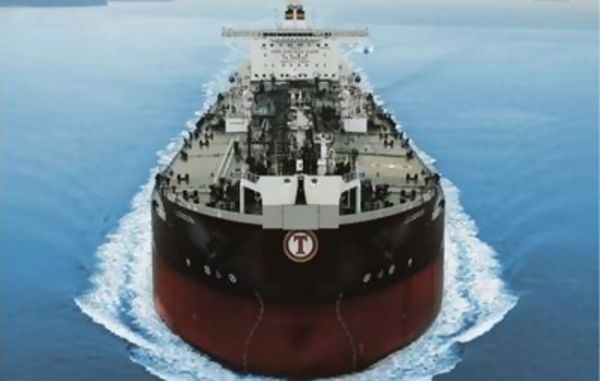
TEN, Ltd. reported results (unaudited) for the quarter and nine months ended September 30, 2020.
NINE MONTHS 2020 SUMMARY RESULTS
TEN generated a net income of $70.6 million in the nine months ended September 30, 2020, before second-quarter 2020 reported non-cash charges of $16.5 million, compared to $2.0 million for the same nine-month period in 2019.
Gross revenues amounted to $512.5 million, a $90.4 million, or 21.4%, increase over the 2019 equivalent nine-month period, despite three vessels undergoing dry-docking for survey and upgrading purposes.
Adjusted EBITDA for the nine months ended September 30, 2020 increased to $234.1 million, $67.0 million higher from the same period in 2019.
Operating income, before non-cash items, totaled $133.3 million, a 130% increase from the 2019 equivalent nine-month period.
The average daily time charter equivalent (TCE) rate per vessel of the fleet increased by 27.4% to reach $25,351.
Fleet utilization for the first nine months of the year at a still strong 95.2% after increased dry-dockings and pandemic related operational obstacles.
On September 30, 2020, total cash reserves stood at $236.5 million.
Six tankers with an average age of 14.7 years were sold in the first half of 2020 generating about $37.5 million free cash after repaying nearly $61.0 million of related debt. Additionally, during the year, the Company has taken delivery of four environmentally friendly state of the art vessels, two suezmaxes and two aframaxes on minimum five-year contracts to an oil major with expected TCE-basis revenues of about $200 million. These transactions resulted in the reduction of the fleet’s average age by about three years and further enhanced its modern profile.
Vessel operating expenses were at $133.4 million, just under the operating expenses in the 2019 nine-month period with the same average number of vessels.
Average daily operating expenses per vessel in the 2020 first nine months also remained at a relatively stable level of $7,757.
Total finance costs remained steady at $61.0 million, almost exactly the level of the 2019 nine-month period, of which bank loan interest amounted to $35.4 million. A reduction of $18.5 million due to lower average outstanding debt, lower market interest rates and lower average margins in this nine-month period.
Total debt outstanding as of September 30, 2020 stood at $1.504 billion.
Q3 2020 SUMMARY RESULTS
In what is the seasonally slowest quarter, TEN’s net income for the three-month period that ended on September 30, 2020 reached $1.4 million compared to a net loss of $9.5 million in the same quarter of 2019. An $11.0 million positive turnaround.
Gross revenue generated by TEN’s vessels amounted to $142.8 million, 9% more than in the 2019 third quarter resulting to an EBITDA of $48.1 million.
Despite the additional pressure created by the global slow-down in demand due to the pandemic and the inevitable draw-down of global inventories, operating income increased by 29% from the 2019 third quarter to reach $15.1 million.
Average daily TCE rates per vessel increased to $20,451, compared to an average daily TCE per vessel of $18,837 in the 2019 third quarter.
Operating expenses of about $45.2 million were similar to those of the 2019 third quarter. Average daily opex per vessel at $7,927 increased modestly, due partly to a weakness in the US dollar, necessary dry-docking expenses and effects of the pandemic.
Finance and interest costs fell 39% to $13.5 million, due to a reduction in average debt outstanding between the two respective third quarters and a decrease in margins payable on several loans.
DIVIDEND – COMMON SHARES
The Company will pay a dividend of $0.1250 per common share on December 22, 2020 to shareholders of record as of December 16, 2020 bringing the total payments to holders of the common stock for 2020 to $0.50 per share on a reverse-split adjusted basis.
OTHER
Following the full redemption of the $50 million Series B Preferred shares in July 2019, at the end of October 2020 TEN also repaid, at par, its 8.875% $50 million Series C Preferred Shares and reduced its total preferred shares by $100 million.
Since the commencement of the TEN’s share buyback program in May 2020, the Company has acquired approximately $10 million worth of common shares representing over 5% of the total (reverse-split adjusted) shares outstanding.
CORPORATE STRATEGY & OUTLOO
As the rollercoaster year 2020 approaches to a close, a light glimmers at the end of the tunnel in the form of a vaccine that hopefully cures all.
In the meantime, TEN continues its steady course through these turbulent times.
The strong market at the start of the year gave us the opportunity to charter-out at accretive rates a number of our vessels operating in spot trades. At the same time, we sold six tankers with an average age of 14.7 years and replaced them with four brand new, purposely-built eco-designed vessels with solid long-term employment which will add $200 million, over 5 years, in TCE-basis revenues.
Concurrently, we took the opportunity of the distressed newbuilding prices to order two specialized vessels, one DP2 shuttle tanker and one LNG carrier, today both with long-term charter contracts.
Additionally, we have continued the reduction of our preferred securities and bank debt, whilst maintaining our uninterrupted dividend policy and strong cash reserves.
Looking forward, a normalization of the pandemic should revitalize world trade and materially increase oil demand, resulting in a stronger freight market. The historically low supply of tonnage currently in existence should assist in boosting rates and asset values significantly, providing better opportunities to divest our first-generation vessels and enhance profitability further.
In the meantime, we spare no effort in securing the well-being of our seafarers and thank them for their heroic efforts in maintaining our flawless operations and high utilization record in this unprecedented challenging environment.
We wish you all a SAFE Thanksgiving and better days ahead.
Everest Re Group Announces Estimated First Quarter 2020 Impact From The Covid-19 Pandemic
Everest Re Group, Ltd. (“Everest” or the “Company”) announced today the estimated impact from the Covid-19 pandemic (“Pandemic”) on its first quarter 2020 results. Everest is providing details in advance of its full quarterly earnings to be released on May 6, 2020.
“As the situation surrounding the Covid-19 pandemic continues to evolve, our thoughts are with everyone who has been impacted around the globe. Everest remains committed to supporting our clients, communities, and trading partners. These are unprecedented times, and our first priority is the safety of our employees, business partners, other stakeholders and their families. Our entire organization has been working remotely, continuing to serve our customers with the same high level of service that they have come to expect. Our capital position remains a source of strength, with high quality invested assets, significant liquidity, low financial leverage, and a low operating expense ratio. Our diversified global platform with its broad mix of products, distribution and geography is resilient,” said Everest President & CEO Juan C. Andrade.
For the first quarter of 2020, Everest expects to report the following:
1. A combined ratio below 100% for the consolidated reinsurance and insurance operations.
Included in the above combined ratio is an incurred but not reported (“IBNR”) provision for an estimate of $150 million in pre-tax net first party losses for expected claims related to the Pandemic. The majority of the losses are expected to come from our Reinsurance Segment. This estimate is consistent with our philosophy of recognizing and reacting to expected losses on a timely basis. As a result, this IBNR estimate is being recognized in the current quarter. Pandemic losses will be tracked separately and as an ongoing event.
2. Net investment income of $148 million for the first quarter of 2020.
Everest notes that net investment income from limited partnerships is generally subject to a reporting lag averaging one quarter. As such, the results from these investments during the first quarter of 2020 will be reported in the second quarter 2020 net investment income. Our balance sheet, including our investment portfolio, is well-diversified, with a focus on high quality fixed income investments. Since the start of the economic crisis, Everest has further repositioned our portfolio, moving up in fixed income credit quality and reducing equity exposure.
Risks and Uncertainties
There are significant uncertainties surrounding the ultimate number of claims and scope of loss resulting from the Pandemic. The Company’s estimates are based on best available information obtained to date from a review of relevant in-force contracts with potential exposure and estimates of reinsurance recoverables, and also from the Company’s clients and brokers. Given the uncertain and evolving nature of the Pandemic, actual ultimate losses from these events may vary materially from these current estimates. Everest anticipates this Pandemic could have a meaningful impact on revenue, as well as net and operating income in future quarters as a result of reinsurance and insurance claims due to the Pandemic and resulting macro-economic market conditions.
This news release contains forward-looking statements within the meaning of the U.S. federal securities laws. We intend these forward-looking statements to be covered by the safe harbor provisions for forward-looking statements in the U.S. Federal securities laws. These statements involve risks and uncertainties that could cause actual results to differ materially from those contained in forward-looking statements made on behalf of the Company. These risks and uncertainties include the impact of general economic conditions and conditions affecting the insurance and reinsurance industry, the adequacy of our reserves, our ability to assess underwriting risk, trends in rates for property and casualty insurance and reinsurance, competition, investment market fluctuations, trends in insured and paid losses, catastrophes, pandemic, regulatory and legal uncertainties and other factors described in our latest Annual Report on Form 10-K. The Company undertakes no obligation to publicly update or revise any forward-looking statements, whether as a result of new information, future events or otherwise.
Alpha Bank supports the National Health System in the fight against the Covid-19 pandemic
Alpha Bank actively supports the national effort in the fight against the Covid-19 pandemic, and stands by the doctors and nursing personnel fighting in the front line, covering the needs for medical and healthcare supplies at Intensive Care Units in three referral hospitals across Greece. Specifically, the Bank provides the Thoracic Diseases General Hospital “Sotiria” in Athens, the University General Hospital of Thessaloniki “AHEPA” and the General University Hospital of Larissa with advanced technology medical equipment, including monitors to record patients’ vital functions, a digital X-ray unit, digital heart monitors, video laryngoscopes, bronchoscopes and ICU beds, as well as healthcare equipment, necessary for the protection of doctors and the nursing personnel. The Bank had previously been in contact with the management of the hospitals “Sotiria”, “AHEPA” and the General Hospital of Larissa, in order to specify their needs and cover them in the best possible way. Alpha Bank thanks the management of all three hospitals as well as the State competent authorities, for their close cooperation in achieving the common goal, namely providing doctors and the nursing personnel with the necessary equipment. Fully aware of its role and responsibility towards society, Alpha Bank will continue to support the National Health System in the fight against the healthcare crisis. At the same time, from the very first moment, the Bank took all necessary measures to protect the health and safety of its Customers and Personnel, and has made full use of the modernized and comprehensive digital networks platform. Actively supporting its Customers, Alpha Bank is in the front line in terms of the efforts to restrict the consequences of the crisis and restart Greek economy.