
PMA promotes the protection of cetaceans
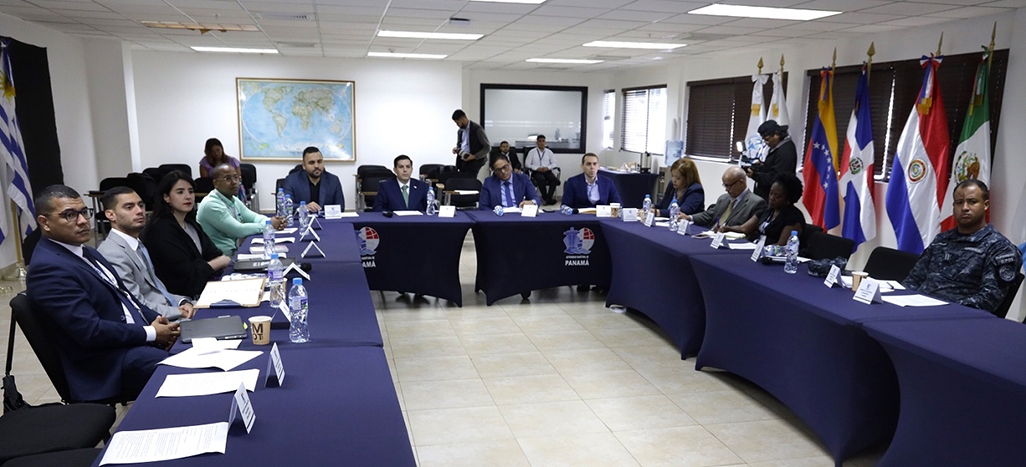
The Panama Maritime Authority (PMA), the Ministry of Environment (MiAmbiente), the Tourism Authority (ATP), the Aquatic Resources Authority of Panama (ARAP) and the National Aeronautical Service (SENAN) are joining forces to disseminate information about the legal framework governing whale watching.
A first inter-institutional workshop was held to develop strategies for preserving humpback whales, spotted dolphins, and common bottlenose dolphins, which migrate to Panamanian waters to reproduce.
Humpback whales, which migrate through our waters annually to breed, are a major draw for both domestic and international tourists.
The collaborative work of these institutions has culminated in the issuance of Resolution 0144-2022 on July 12, 2022, establishing regulations for cetacean sighting within Panama’s jurisdictional waters. This measure aims to ensure the conservation and proper management of all marine species in the country.
The primary goal of this initial workshop was to inform attendees about the content of Resolution 0144-2022 and familiarize them with the registration, inspection, and training processes required for those involved in or interested in cetacean sighting activities.
“We are in the midst of whale migration season, and protecting these magnificent creatures is our responsibility,” said Max Florez, Director General of Ports and Auxiliary Maritime Industries at the PMA. “To reduce the risk of whale injuries and fatalities from ship strikes, the PMA has issued Circular DGPIMA-014-DECCP-2024, mandating a speed limit of 10 knots for all merchant and other vessels in the Gulf of Panama from August 1 to November 30 each year. This measure aligns with IMO guidelines established in 2014 for areas with high cetacean activity.”
The Republic of Panama is a signatory to both the Convention on International Trade in Endangered Species of Wild Fauna and Flora (CITES) and the International Convention for the Regulation of Whaling (ICRW), which collectively form the cornerstone of global cetacean protection.
Panama further demonstrated its commitment to marine mammal conservation through the enactment of Law 13 on May 5, 2005, establishing a marine corridor for their protection and preservation within the country’s waters.
The Panama Maritime Authority Celebrates 23 Years Leading Its Technological Transformation
The Panamanian State merges all its maritime management units, in 1998, through Decree Law 7 of February 10, creating the Panama Maritime Authority (AMP) as the governing body of the country’s maritime activity, it is also the Institution that manages the registration process worldwide. In these moments when the digital age is causing a profound transformation in society, the AMP will lead its own technological change and readjust its production processes according to market trends.
The Minister of Maritime Affairs, Arch. Noriel Araúz, is in charge of carrying out the reengineering of the Panama Maritime Authority (AMP) and the Panama Ship Registry, for this he has the support of the State, the shipowners and seafarers.
Minister Araúz indicated that operating under the auspices of the Panamanian government makes the AMP an organization with all the diplomatic, political and economic tools necessary to guarantee clients, worldwide, that their ships and naval mortgages are protected at all times.
This strength has ensured that over the years, regardless of conflicts, wars, economic crises, pandemics and other types of events, Panama has not suspended its maritime services, nor abandoned its seafarers, nor its ships at any time, being this a key factor for the sustainability of the flag business.However, technology forces us to innovate, change strategies, policies and routine methods, to focus on providing new products, business opportunities, processes, financial strategies and, above all, on being closer to our customers.
In this regard, when facing a technological transformation we depend fundamentally on people and the organizational culture, since the challenge of transformation has very little value if the professionals, protagonists of this scenario, are not prepared or willing to do the work.
That is why, said Minister Araúz, that the keystone of the success of this great project that I must carry out is undoubtedly “teamwork”, which we are strengthening through continuous training, identifying and improving the experience of the AMP staff, applying a collaborative training plan based on new technologies, to make it attractive, interactive and easy to use.
This effort goes hand in hand with the creation of new policies to guarantee the support of the maritime industry, particularly with regard to the protection of the environment; the search for more efficient machinery and technologies as well as the safety and preservation of life at sea.
An undeniable sign that we are on the right track is that the actions carried out since the beginning of the present management in the AMP, in order to be more competitive and efficient, in accordance with the demands of the current international market, through a technological reengineering, are already paying off, this being evident in the statistics at the end of 2020.
• The Panama Ship Registry added some 1,033 ships to its fleet and 29.7 million GRT, of which 339 ships correspond to newly built ships that contribute 14.3 million GRT to our fleet, which in its totality reaches 230,577,081 GRT, through the 8,516 vessels registered under the Panamanian flag. These figures represent a growth of 6.22%, compared to the 2019 figures.
• In the last 6 months, the General Directorate of the Public Registry of Ship Property has registered 920 property titles and 739 naval mortgages.
• The General Directorate of Ports and Auxiliary Maritime Industries, set a new record regarding the mobilization of containers in Panamanian ports, reaching 7.73 million TEUs, (standard measure equivalent to a 20-foot container), exceeding the end of 2019 by 5.3%.
• The General Directorate of Seafarers historically achieved the recovery of USD $ 2,021,691.29 in wages owed by the shipowners to seafarers, as a result of the processing of 427 labor complaints, in addition 539 repatriations were executed pertaining to abandoned crew members on Panamanian flag vessels, in various parts of the world, reaffirming our commitment to the application of the 2006 Maritime Labor Convention as amended.
• Obtaining these results at a time of global health crisis has not been an easy task, it could not have been achieved, without the strategies and technological innovations that we have been applying since the beginning of this administration, along with the professionalism and hard work of our human capital.
Today, we celebrate our 23rd anniversary aimed at realizing the vision we have to transform the future of maritime navigation, jointly with the solid support and teamwork collaboration, we will succeed in making the Republic of Panama, through the AMP, become consolidated as a global maritime power as well as a role model for other Flag Registries around the world.