
NatWest Group plc – Directorate Changes

NatWest Group plc (‘NWG’) announces the appointment of Erminia (Ernie) Johannson as an independent non-executive director with effect from 1 July 2026.
Rick Haythornthwaite, Chair of NWG, said:
“I am delighted to welcome Ernie to the NWG Board. Ernie brings over three decades of experience in financial services across investment management and banking. Her deep strengths in banking including payments, digital and data analytics, together with her leadership experience in financial services will be a valuable asset to the Board.”
Ernie most recently served as Group Head of North American Personal and Business Banking and was a member of the Executive Committee at the Bank of Montreal (BMO). Prior to her 12 year tenure at BMO, she held senior positions at Fidelity Investments and CIBC.
She previously served as Chair of the Canadian Bankers Association and has held board positions with the U.S. Consumer Bankers Association, Payments Canada and Moneris Solutions Corporation.
There are no further matters requiring disclosure under Listing Rule 6.4.8R.
NatWest Group commits £20 billion to drive growth across the North of England over next decade

The commitment, announced by NatWest Group’s CEO Paul Thwaite at the Great North Investment Summit, which has been convened in collaboration with the northern mayors and sponsored by NatWest, underlines the bank’s role as a long-term partner to local and regional governments, businesses and investors, and forms part of the bank’s Growing Together plan to drive UK economic growth by backing powerful regions.
The £20 billion ambition will support investment in areas that underpin regional growth and resilience, including energy, transport, infrastructure, regeneration and housing. NatWest Group will do this by providing direct funding, sharing risk with partners and helping bring in investment from other sources. The banks ambition is to collaborate with Northern Combined Authorities1 including those in the process of being created to facilitate the mobilisation of private capital alongside public funding.
The areas of focus include:
– Housing and the built environment, working with housing associations and local partners to accelerate delivery and improve the performance of existing stock. This builds on the banks £10billion national lending ambition to housing associations to drive construction of new homes and retrofitting.
– Mobility and transport, spanning rail, road and airport infrastructure alongside vehicle charging and local transport solutions.
– Energy and power systems, including clean power generation, energy storage and essential grid upgrades.
– Climate resilience and decarbonisation, supporting the North of England’s transition to a low‑carbon, climate‑resilient future through investment in energy‑efficiency and retrofit programmes, deployment of renewable technologies such as solar, and resilience infrastructure including flood defences, wastewater systems and land regeneration.
The announcement strengthens the case for greater powers over devolved funding, with new research from the bank showing that almost two‑thirds (65%) of senior business decision makers believe giving regional leaders more control over funding and investment decisions would boost investor confidence. Sixty-five per cent of business leaders said that they would be more likely to invest where funding is stable and long term – underlining how greater local control goes hand in hand with clearer accountability for delivery. Confidence is already higher in the North of England, where the most established Mayoral Combined Authorities are based, and the fiscal devolution roadmap should reflect this by phasing in further powers where there is strong governance, business engagement and a proven track record of delivery.
NatWest Group also aims to play a coordinating role for institutional and private capital, pooling projects across regions where appropriate to improve scale and efficiency. By focusing on critical investment categories with clear economic fundamentals, the bank seeks to improve ease of execution for both public and private sector partners.
Paul Thwaite, CEO of NatWest Group, said: “This commitment reflects our confidence in the North as a growth engine for the UK. We can see the strength of ambition across the region, and the scale of projects coming forward in housing, transport, energy and infrastructure. NatWest Group has deep roots in the North and an on-the-ground presence across its many communities, so we understand both the opportunity and what it takes to deliver it. Our role isn’t just to provide finance, it’s to connect capital with local ambition — working in partnership with combined authorities, business and investment partners to accelerate growth.”
Oliver Holbourn, CEO, at National Wealth Fund, said: “The National Wealth Fund is committed to driving economic growth as we transition to clean energy; while ensuring we develop the businesses, skills and capabilities that will be crucial to unlocking the future of the UK. That means, through providing investment and expert advice and supporting projects and local authorities, many of which are in our former industrial heartlands. NatWest Group’s approach very much aligns with these ambitions and we welcome it.”
Chair of The Great North, North East Mayor Kim McGuinness said: “Across the North, we have the talent, innovation and ambition to lead the UK’s next era of growth and prosperity. NatWest Group’s investment and commitment to the North shows us investors see the huge, untapped potential across the North of England and the massive prize on offer from backing our regions.”
Following the Summit, NatWest Group will continue to work with combined authorities and delivery partners to progress priority schemes and bring forward additional sources of private capital.
This new commitment builds on the bank’s existing investment in communities and businesses across the North of England, including:
Newcastle International Airport
NatWest supported Newcastle International Airport as part of a £364 million sustainable finance package, acting as sole debt advisor and a top tier lender, backing the airport’s transition to net zero by 2035. The funding has enabled continued investment in a range of low-carbon technologies, including on-site renewable energy generation and wider infrastructure improvements to support decarbonisation.
The financing also included a £15 million green loan which has supported the next phase of the airport’s solar farm and its continued transition to electric vehicles. This demonstrates how NatWest Group is supporting critical UK infrastructure to accelerate sustainability ambitions, unlock investment in clean technologies, and drive regional economic growth.
Broadacres Housing Association
Broadacres Housing Association (BHA) is a North Yorkshire‑based housing provider, headquartered in Northallerton, which owns and manages more than 6,800 homes across rural and coastal communities in the North of England. Established in 1993, it has grown into a major regional provider with a strong focus on delivering affordable homes and supporting local communities.
With the support of a £106 million funding package from NatWest Group, Broadacres is set to expand its development programme. The funding combines long‑term lending with a revolving credit facility to give both stability and day‑to‑day flexibility and includes a social loan as part of NatWest Group’s £1 billion commitment to the housing sector. This support is helping Broadacres keep building at pace — delivering 112 homes in the year to March 2026, including around 44 social homes — and underlines NatWest Group’s role in backing large housing projects across the North to help tackle the shortage of affordable homes.
NatWest Group Annual General Meeting 2026

The following is an extract from the remarks to be made by Chair, Rick Haythornthwaite and Group Chief Executive Officer, Paul Thwaite at the meeting.
Rick Haythornthwaite
Good morning, and welcome to NatWest Group’s Annual General Meeting for 2026. It is a pleasure to welcome you here today at our Gogarburn headquarters in Scotland, a nation that has long been central to our story, and which continues to play a vital role in the future we are building together.
Let me begin by thanking you, our shareholders, for your continued support, both here today and through our ongoing programme of engagement, including last week’s Virtual Shareholder Event.
Before turning to our performance, it is worth recognising the significance of the past year for NatWest Group, following our return to full private ownership in May 2025, when the UK Government sold its final shares in the bank. This milestone is a testament to the progress we have made in recent years, as well as the longer-term transformation that has seen our bank become simpler, stronger and more customer focused.
It was a symbolic moment because it turns the page on an important chapter in our history, but it also reflects how far the organisation has come. And it gives us the opportunity to look forward with confidence and conviction while never forgetting the lessons of the past.
We have started 2026 with positive momentum on which we can build. We are not standing still. A new chapter is well underway, one defined not by recovery, but by an ambition to succeed for the long term, helping turn our customers possibilities into progress across the UK.
Turning now to performance. The past year was one of strong, consistent delivery against our strategic priorities. However, our progress is not measured solely in financial results, important though they are. It is measured in the trust we continue to earn, and in the long-term value we create for our shareholders, our customers, and the wider economy. Our strategy is delivering, and we have continued to grow our customer base, strengthen our core franchises, and invest in the capabilities that will define the bank of the future.
For shareholders, we can see this in tangible outcomes. The Group delivered attractive returns through a combination of dividends and share buybacks. Having raised our dividend payout ratio, we announced total dividends per share of 32.5p, an increase of 51% compared to the previous year. Alongside this, we also announced a £750 million buyback in July, and a further £750m buyback a few months ago, at our Full Year Results. This is the result of disciplined execution – on growth, on capital, and on risk. And it reinforces a simple truth: this is a bank that is performing today, while building for tomorrow.
This means giving confidence to our shareholders in the sustainability of our returns and having the capacity to invest in our future, building on the strong organic growth we are already delivering, as well as considering acquisitions where we see both a clear strategic fit and value for shareholders.
Our acquisition of Evelyn Partners reflects our positive momentum, it’s a timely and compelling transaction which I know Paul will expand on shortly.
As owners of the business, shareholders rightly expect the Group to allocate capital with discipline and with clear strategic intent in order to further strengthen our performance. The Board takes that responsibility seriously. We know that consistency of delivery truly matters and that confidence is earned over time.
Over recent years, uncertainty and volatility have been a persistent feature of our operating environment. Growth is present, but it is uneven. It varies by sector, by region and by levels of financial resilience, and it demands discipline and selectivity. What has been striking over the past year is that behaviours have often proved more resilient than sentiment. Across households and businesses, people continue to plan, invest and adapt, even in the face of uncertainty, but with greater discipline and a renewed focus on returns and value for money.
We should be clear: there are near-term challenges. Recent global events mean pressures have elevated for many households and businesses. From a Board perspective, maintaining a longer‑term view is essential, and we believe deeply in the long-term strengths of the UK.
The UK faces into today’s challenges with significant structural strengths, including strong institutions, deep pools of talent and an enduring capacity to innovate. For a bank such as ours, this environment only reinforces our role: to use our strength and expertise to support customers through periods of adjustment, to allocate capital with discipline, and to help enable the investment that underpins future growth.
One of the most important and rewarding parts of my role is staying close to those we serve and to those who shape our operating environment. Even in the past month alone, that engagement has taken me to the United States, meeting with technology leaders; to business innovation events with AI start‑ups; and closer to home, spending time with businesses and communities in Kent.
Through our Board engagement, we hear directly from customers, colleagues, policymakers and regulators across the UK and internationally, and those perspectives matter.
And wherever I’ve been, it is clear that there is a genuine appetite to understand how banks can support long-term growth. Those conversations also reinforce something fundamental: growth and opportunity are not uniform. Which is why our local connections, combined with our national scale and insight, are not only a defining source of strength for NatWest Group; they are central to how we support growth across the UK.
Let me bring that to life with an example here in Scotland, a nation where we have deep roots and a long‑standing commitment to supporting local economies and communities. As we approach the Royal Bank’s 300‑year anniversary next year, that sense of long‑term partnership matters more than ever, not only as part of our history, but as part of the future we are building.
Over the past year, we have continued to strengthen the support we provide to Scotland’s entrepreneurs and businesses. We have announced a new accelerator partnership with the University of Edinburgh, launched specialist Venture Banking services, and announced the launch of IP lending, reflecting our focus on backing innovation and helping businesses realise the value of their ideas.
Just last week, we also opened our new Accelerator Hub on Princes Street in Edinburgh. From the heart of the city, this hub brings together expert support, mentoring and networks, helping ambitious businesses connect capital with opportunity.
This builds on our long-standing accelerator programme, which has supported more than 1,000 entrepreneurs across Scotland over the past decade, and forms part of our wider commitment to substantially increase support for 5,000 Scottish entrepreneurs in the years ahead. That is what supporting growth looks like in practice, combining deep local relationships with the scale and capability of a national bank.
Of course, customer expectations continue to evolve, shaped by technology, data and artificial intelligence or AI in now common parlance, and by the pace of change across the wider economy. These shifts bring challenges, but also significant opportunities.
We see AI as an accelerant of our strategy, helping us serve customers more seamlessly, support colleagues to work more effectively, and strengthen how we manage risk and resilience. At our core, banks like NatWest play a vital enabling role: supporting investment, backing businesses as they grow, and helping to create jobs and prosperity throughout the country.
But we are not simply providers of capital. Our role goes well beyond lending. Increasingly, we are long‑term partners, offering expert advice and insights and connecting capital with opportunity.
In this endeavour, a predictable, proportionate approach to regulation and policy making is essential to giving businesses and consumers the confidence to invest, innovate and succeed. And we have seen a marked shift in recent years, as politicians and regulators have sought to prioritise growth, balancing it with the need for stability.
There has been some notable progress, beyond the rhetoric, but it remains early days. And business must play its part. Through collaboration between the private and public sectors, we can build a stable, supportive environment that fosters innovation, contributes to positive and sustainable economic outcomes and supports long‑term competitiveness and growth.
As a Board, we have remained closely engaged on the issues that matter most to the long‑term success of the Group, be that our strategic intent, our risk appetite or how we are positioning ourselves for a changing economic and technological landscape.
We have also ensured the Board evolves in the right way, with the leadership, culture and capabilities needed to support our ambitions. Late last year, we welcomed Josh Critchley as an independent non-executive director. And in February, Albert Hitchcock joined the Board. Together, they bring a breadth of skills, experience and perspective that strengthens the Board, and I very much look forward to working with them as we continue to guide the Group through the next year.
On 31 March, Yasmin Jetha retired after nine years of outstanding service. I want to thank Yasmin for her significant contribution and wise counsel over that period.
And we were deeply saddened by the passing of Frank Dangeard, Chair of NatWest Markets, in August. His wisdom and integrity left a lasting impression on all of us.
As we begin 2026, we do so with conviction and positive momentum, and with a clear sense of how we can build on our progress. So where does this leave us?
We are a bank in good shape. We have a clear strategy, we are delivering against it, and we are building the capabilities that will define our future competitiveness. There is more to do, but the direction is clear, and the foundations are strong.
Let me conclude by turning to our leadership. I have great confidence in Paul and the leadership team. They have demonstrated both the discipline to deliver and the ambition to raise our sights. Paul will now take you through the Group’s performance and strategy in more detail, and outline how we are continuing to execute our priorities for the years ahead.
But from the perspective of the Board, the message is simple: this is a bank with momentum, a bank with purpose, a bank with the strength to navigate uncertainty and a bank with the ambition and the capability to succeed with our customers in the years to come.
Paul Thwaite
Thank you, Rick and good morning everyone.
Let me begin with a question, one that sits behind everything we do as a bank. Are we making it easier for people, businesses and communities across the UK to make progress? In short: are we helping our customers to succeed?
Because, ultimately, that is the test of our strategy, and how we create sustainable value for our shareholders and the wider UK economy.
Our scale and our performance only matter if they translate into real, positive outcomes for customers:
Whether supporting a business to start, to grow or to invest
Helping people to buy their first home
Or helping families save and plan for the future.
Today, I firmly believe we can answer that question with confidence.
Put simply, yes we are. And the progress we made in 2025 is clear evidence of that. It was another year that showed our strategy is working. Where the activity of our customers underpinned our strong financial performance.
Income of £16.4 billion, operating profits of £7.7 billion and a return on tangible equity of 19.2 per cent, all significantly higher than the year before. But, just as importantly, we continued to grow with our customers, supporting more than 20 million people, families and businesses in every nation and region of the UK.
The momentum we’ve built is already visible, in our performance, in our delivery, and in the way we are executing against our three strategic priorities.
Our first priority is disciplined growth. Across the Group, healthy levels of customer activity drove broad-based growth, with deposits, lending and assets under management all higher year on year.
And we continued to introduce new products and services to meet customers’ changing needs, from the launch of our family-backed mortgage to extending our Intellectual Property-backed lending for business. In Retail, we supported families and households to manage their finances with confidence. And we made home ownership a reality for more people, growing mortgage balances by £7 billion and helping over 50,000 customers to buy their first home.
In Commercial and Institutional Banking, we continued to support one and a half million businesses, from start-ups and scale-ups to large institutions, backing investment and growth across the economy, including in sectors such as infrastructure, social housing, and climate and transition finance, where we can support sustainable economic growth at scale.
And in Private Banking and Wealth, we helped more customers to save and invest, strengthening our proposition to meet growing demand for high‑quality financial advice and long‑term planning, with assets under management increasing by 20 per cent, including 50,000 customers investing with us for the first time.
Our organic growth was complemented by the successful integration of more than 1m Sainsbury’s Bank customers and the £2.3bn mortgage portfolio from Metro Bank. And, earlier this year, we announced our acquisition of Evelyn Partners, set to complete in the months ahead.
Alongside this, our second priority of bank-wide simplification remains a critical driver of future growth. By reducing complexity, improving productivity and enhancing customer experiences, we create capacity to invest, innovate and serve customers better.
Accelerated deployment of technology and AI has enabled faster innovation, more personalised services and safer, more resilient banking – but only when applied with judgement and care.
Applied in the right way, the benefits for both customers and colleagues are clear. It means quicker, more informed decisions, smoother experiences, and more time for our people to focus on where they add the greatest value.
That is how technology strengthens trust, by putting better tools and information in the hands of our brilliant people.
AI can complement their judgement, experience and expertise. Done responsibly, it improves decision‑making and frees colleagues to focus on what matters most: building trusted relationships and delivering better outcomes for customers.
On our final strategic priority, our active risk and balance sheet management remains a core strength. Strong capital generation is underpinned by a resilient, well-diversified loan book that continues to perform well.
This means we are well positioned to continue helping our customers to invest and grow, whilst providing the advice, insight or support they might need to navigate increasing uncertainty. As well as investing in our business and delivering attractive returns to shareholders.
We are already well into 2026, and we have started the year with positive momentum and confidence in our priorities. Having already raised our ambitions, we are now delivering against them.
And despite the ongoing uncertainty, we continue to see potential for long‑term, sustainable growth across the UK economy. Whether that’s leveraging our leading positions in Social Housing and infrastructure, bringing our financial planning and wealth management expertise to more customers or supporting high growth sectors such as technology, life sciences and advanced manufacturing.
When I stood in this room last year at the Scottish Global Investment Summit, I spoke about the importance of backing the businesses that drive investment, productivity and job creation across the UK. That also means helping businesses to look beyond the UK, to trade, export and compete internationally.
These are businesses with ambition and the potential to grow – operating across a wide range of sectors and regions, and often navigating moments of real complexity as they expand. We are helping turn ambition into action, giving businesses the confidence to invest, the backing to innovate, and the support they need as they adapt and scale. Opportunity is not confined to one part of the country. There is real long-term potential across every nation and region of the UK, and we are well placed to help unlock it.
Against the shocks and sustained uncertainty, we have seen in recent years the importance of strong, well‑capitalised banks becomes even clearer. Not simply because of the capital we provide, but because of the certainty, stability and expertise we bring, underpinned by deep, long-standing relationships in the communities we serve.
As I’ve said before, strong economies need strong banks. Banks that support growth through economic cycles, not just when conditions are favourable. Long-term growth depends on confidence: confidence that risks are understood and managed, that decisions are well judged, and that banks will remain resilient in the face of change.
This is not about moving faster at any cost, but about building on the foundations we have put in place to manage economic, social and environmental impact in order to support ambition responsibly and sustainably. And it is this combination of resilience, discipline and long‑term perspective that allows us to support investment, productivity and sustainable growth across the UK economy, while delivering enduring value for our shareholders.
Because what gives us confidence is not just the opportunity ahead, but the clarity we have about where we are choosing to focus, and how we are supporting customers along the way.
Our acquisition of Evelyn Partners is one example of this. At its heart, this transaction is about responding to a growing customer demand for financial planning and advice. We’re entering what is likely to be a defining decade for financial advice, with people living longer, an historic generational wealth transfer under way and technology changing how people save, plan and make decisions about their long-term finances. Evelyn Partners transforms our ability to meet those changing needs, deepens long-term relationships, and broadens access to high-quality financial planning and investment management.
So, as we continue through the next phase of our strategy, we are building on the strengths we have established and stepping up our ambition to make the most of the opportunities ahead.
Taken together, our strategic priorities will allow us to grow with our customers, generate sustainable returns for our shareholders, and support the wider economy. The near-term pressures are very real, but we are confident and optimistic about our future, and about the UK’s long-term potential.
And we know that NatWest has an important role to play in helping the UK to navigate challenge and grow, through our committed colleagues, trusted relationships, and a clear sense of the responsibilities to the customers and communities we serve. We want to be a trusted partner to them and to the UK, whilst building sustainable value in our business, and delivering for our shareholders.
And if we return to the question I began with, whether we are helping people, businesses and communities move forward with confidence, I believe the answer is clear. We have momentum, but there is no room for complacency. Customer expectations continue to evolve, and the pace of change across our industry remains high. What matters is that we have the foundations, the capability and the discipline to anticipate change and respond at pace.
Before I finish, I want to briefly say thank you. First, to our colleagues across NatWest Group. Their commitment, professionalism and focus on customers underpins everything we have achieved. And also to our customers and our shareholders, for the trust you place in NatWest Group.
This trust is the foundation of banking, and it is something we never take for granted. So, thank you again for your continued support.
Results of our Annual General Meeting 2026
NatWest Group plc – Directorate Changes

NatWest Group plc (‘NWG’) announced the appointment of Josh Critchley as an independent non-executive director with effect from 3rd November 2025.
Rick Haythornthwaite, Chair of NWG, said:
“I am delighted to welcome Josh to the NWG Board. Josh brings over three decades of experience in investment banking and capital markets, having advised boards and management teams across a wide range of industries and geographies. His deep expertise in financial services and strategic advisory will be a valuable asset to the Board, particularly as we continue to pursue our growth ambitions and navigate an evolving market landscape.”
Josh is a former Vice Chair of Global Investment Banking at the Royal Bank of Canada, and prior to joining RBC in 2009, held senior roles at Goldman Sachs and Merrill Lynch.
Josh currently serves as Trustee and Investment Committee Chair at Great Ormond Street Hospital Children’s Charity and is an Honorary Senior Visiting Fellow at Bayes Business School, City St. George’s, University of London.
NatWest Group appoints new Chief Customer & Operating Officer as it drives bank-wide customer agenda
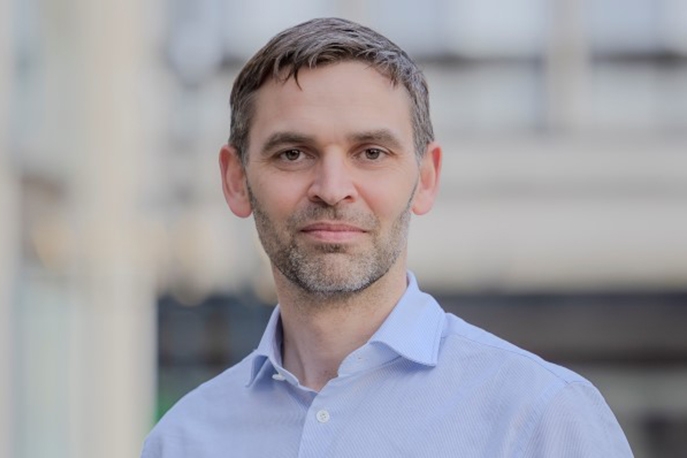
NatWest Group has appointed James Holian to the new role of Chief Customer and Operations Officer, effective 1 October 2025.
In his new role, James will drive the bank-wide customer agenda, working closely with the three customers franchises and central expert functional teams to identify, prioritise, and deliver initiatives that support customer success and optimise growth.
Following this new appointment, Group Chief Information Officer, Scott Marcar’s role, will exclusively focus on accelerating NatWest’s technology, artificial intelligence, and data capabilities. This shift will enable the bank to deliver on its strategy even faster, providing better outcomes for customers and building a simpler, more agile bank for its colleagues.
NatWest’s central expert functional teams of People, Corporate Affairs, Marketing and Legal, Governance & Regulatory Affairs will now also report directly to the CEO. This will enable faster decision making and ensure central team accountabilities to are aligned to customer priorities.
As the bank takes this next step in its transformation, Group Chief Operating Officer, Jen Tippin has decided it is the right time to leave the bank. Jen has made a significant contribution over the last five years and has been instrumental in driving the transformation.
NatWest Group has appointed new Managing Director to lead Investment Products & Solutions for its Wealth Businesses
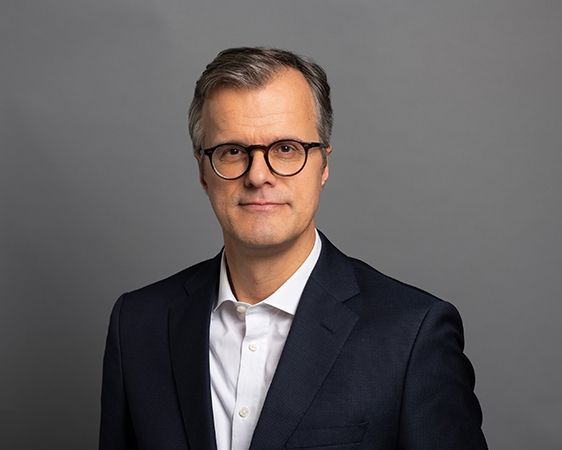
Jan-Marc Fergg has been appointed as Managing Director, Investment Products & Solutions for NatWest Group, reporting into Wealth CEO, Emma Crystal.
He will join the bank on 1 September with over 30 years of experience in the private banking and wealth management industry, having held senior positions at both HSBC and UBS.
Jan-Marc will oversee the bank’s investment strategy and the continued growth of its investment offering for clients and customers across the Group, including Coutts.
Prior to joining NatWest, Jan-Marc was Global Head of Managed Solutions & ESG at HSBC Global Private Banking and Wealth & Premier Solutions, where he was responsible for the bank’s investment management proposition, including its alternative investment offering, discretionary and funds solutions and digital innovation across all global wealth management client segments.
Emma Crystal, CEO, Wealth Businesses, NatWest Group said: “I am really looking forward to welcoming Jan-Marc to NatWest Group. His extensive leadership experience, deep understanding of the wealth management industry and his expertise in developing leading investment solutions will be invaluable for our clients and customers.”
Jan-Marc Fergg, Managing Director, Investment Products & Solutions, NatWest Group said: “It is a privilege to be joining one of the UK’s most prestigious brands. I am looking forward to working with Emma and the team to deliver great investment outcomes and to help more clients and customers to plan for their financial future.”