
Beyond broken infrastructure – Swiss Re explores cascading effects of natural disasters and other key emerging risks

The 2024 edition of Swiss Re’s SONAR report features 16 emerging risks and their potential impacts on the insurance sector and society
Key risks include the cascading effects of natural disasters, the weakening resilience of supply chains and the repercussions of persistent underfunding of healthcare systems
Compounding effects of natural catastrophes on critical infrastructure and supply chains generate loss accumulation
Decreasing resilience of supply chains leads to more business interruptions, risking economic slowdown
Underfunding of public health can lead to higher morbidity and mortality rates, particularly in case of a future pandemic, which could also result in lower economic growth
The world is facing multiple interconnected crises which bring about ever-more complex risks, finds Swiss Re’s 12th SONAR emerging risk report. It explores critical topics of the future to foster better understanding of new or changing risks, their interactions and dependencies.
Patrick Raaflaub, Swiss Re Group Chief Risk Officer, said: “We live in a world characterised by interconnected crises, which in turn can give rise to new risks. For re/insurers, it is key to anticipate trends and understand how major global issues such as climate change, economic uncertainty or geopolitical turmoil could impact not only the industry but also society as a whole.”
Weather-related natural catastrophes are increasing in frequency and severity. While floods, wildfires and storms can lead to property damage and loss of life, the cascading effects of such events pose additional risks. Wildfires can impact the water infrastructure by contaminating water sources or cutting access to it. Floods and storms can likewise damage energy grids and disrupt transport networks, bringing production lines to a standstill due to lack of power, leading to lost production time, materials spoilage and delays to deliveries. If critical infrastructure and supply chains are affected, the accumulation of damage can be significant.
While the security of supply chains was a priority for companies following the large-scale disruptions caused by the COVID-19 pandemic, the focus has shifted back to immediate cost savings. The cost pressure has grown, but so too have the risks to supply chains – as exemplified by the Red Sea crisis. Due to the more volatile geopolitical landscape, increasing frequencies of extreme weather events, economic uncertainty, and heightened cyber and technology risks, key supply routes around the globe are likely to become less secure. Given the current situation and the negative outlook on these risk drivers, supply chain resilience should be at the top of companies’ agendas. If risks accumulate or coincide with an already stressed supply chain, the economic fallout could be significant.
Climate change and supply chain issues also affect the healthcare infrastructure, exacerbated by consistent underfunding of healthcare systems. Essential services such as water, sanitation and electricity supplies may be compromised under more extreme climate scenarios that cause a higher risk of frequent flooding and other disruptive events. Weakened health services increase risks for societies, with delayed or inadequate care contributing to higher morbidity and mortality, and thus also impact economies through increased health-related absenteeism and understaffing. Underfunding of healthcare systems and the impacts thereof are a concern across low-, middle- and high-income countries.
Aon: Global Insured Losses From Natural Disasters Exceeded $130 Billion In 2022, Driven By Second-Costliest Event On Record
Annual Weather, Climate and Catastrophe Insight report reveals $313 billion global economic loss from natural catastrophes
Prominence of droughts and heatwaves highlighted growing importance of these perils in a warming world
AON, a leading global professional services firm, today published its 2023 Weather, Climate and Catastrophe Insight report, which identifies global natural disaster and climate trends to help make better decisions to manage volatility and enhance global resilience. The report reveals that natural disasters caused a $313 billion global economic loss during the 12-month period under review – 4 percent above the 21st-century average – $132 billion of which was covered by insurance.
Data show that 2022 was the fifth costliest year on record for insurers, with approximately $50-55 billion of the global insured loss total resulting from Hurricane Ian in the United States – the second-costliest natural catastrophe in history from an insurance perspective, surpassed only by Hurricane Katrina in 2005, which resulted in nearly $100 billion in insured losses on a price-inflated basis.
The report also highlights that approximately 31,300 people lost their lives due to global natural catastrophe events in 2022. The total number of fatalities remains below average for now 12 years in a row; however, more than 19,000 of the fatalities were heat-related deaths in Europe alone, primarily as a result of heatwaves.
While a majority of total losses in 2022 were left uninsured, the 58 percent “protection gap” was one of the lowest on record, highlighting a positive shift in how businesses are navigating volatility through risk mitigation, and how insurers are providing further protection to underserved communities through access to capital.
“This report explores the events and costs of catastrophes and natural disasters in 2022 that created a staggering amount of economic loss,” said Greg Case, CEO of Aon. “But this data also highlights a tremendous opportunity for us to continue to better serve clients. By working together on scalable solutions, we will not only mitigate risk, but bring together public, private and societal forces to accelerate innovation, protect underserved communities and strengthen the economy.”
While technological innovation has allowed for better insight as catastrophes unfold and faster and more thorough assessments of damages after an event, the Aon study examines resilience and the ability to overcome climate-related consequences – not only for physical risks, but in areas like the health of the workforce, reiterating the need to build multi-faceted strategies that account for climate change risk mitigation on all fronts.
Further findings of the 2023 Weather, Climate and Catastrophe Insight report include:
421 notable natural disaster events were recorded in 2022, higher than the 21st century average of 396.
75 percent of global insured losses were recorded in the United States, which was higher than the average of 60 percent.
Windstorm Eunice was the costliest individual European windstorm since 2010, with $3.4 billion in insured losses. Widespread hailstorms in France contributed to the second-highest natural disaster payouts for the country on record of €6.9 billion ($7.4 billion).
Droughts and heatwaves severely impacted Europe, the United States, China and other regions and global insurance payouts for the drought peril were the second highest on record, at $12.6 billion globally.
Flood losses in Australia broke the historical record as La Niña conditions persisted for a third year and Sydney recorded the highest annual rainfall.
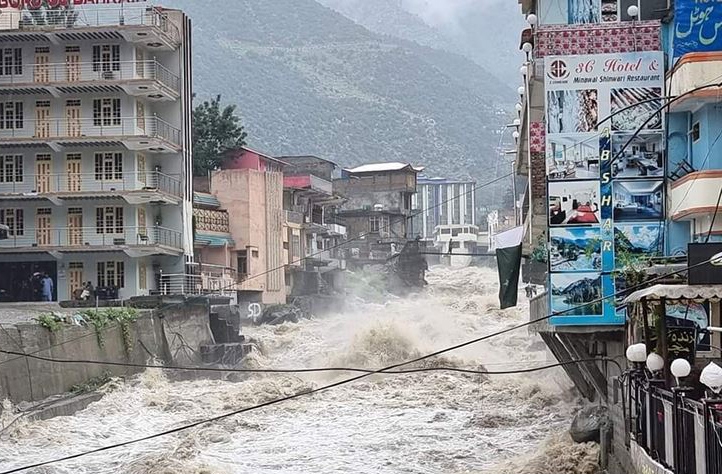
Monsoonal floods in Pakistan had a far-reaching humanitarian impact on the country. In a summary of the 2022 monsoon season, the Pakistan Meteorological Department noted that country-wide rainfall from July to September was 175 percent above average.
Both severe drought conditions and a prolonged rainy season in different regions of Latin America reduced agricultural crop yield across the region.
“The devastation that disasters caused around the world demonstrate the need for wider adoption of risk mitigation strategies, including better disaster management and warning systems that improve resilience,” said Michal Lörinc, head of Catastrophe Insight at Aon. “While impacts of climate change become increasingly visible around the world, it is the socioeconomic aspects, demographics and wealth distribution that remain a major driver of financial loss. Data in this report will help guide organizations to not only enhance their own risk mitigation but take action to close the protection gap globally to better protect the communities in which we live and work.”
The top 10 global economic loss events in 2022 were:
Date
Event
Location
Deaths
EconomicLoss
InsuredLoss
($ billion)
($ billion)
09/27 – 10/01
Hurricane Ian
United States, Cuba
157
95.5
52.5
Annual
European Drought
Southern, Western & Central Europe
N/A
22
3
Annual
U.S. Drought
United States
N/A
16
8
06/14 – 10/30
Pakistan Seasonal Floods
Pakistan
1,739
15
0.1
06/01 – 09/30
China Seasonal Floods
China
195
15
0.4
03/16
Fukushima Earthquake
Japan
4
9.1
2.9
02/23 – 03/31
QLD & NSW Floods
Australia
22
8
4
Annual
China Drought
China
N/A
7.6
0.2
02/18 – 02/19
Windstorm Eunice
Western & Central Europe
17
4.5
3.4
05/17 – 10/31
India Seasonal Floods
India
2,135
4.2
0.1
All other events
~27,100
115.6
57.4
TOTALS
~31,300
313 billion
132 billion
The full report and a short video are available on Aon’s interactive microsite. Along with this report, readers can access current and historical natural catastrophe data and event analysis at catastropheinsight.aon.com.
Aon: Global Insured Losses From Natural Disasters Exceeded $130 Billion In 2022, Driven By Second-Costliest Event On Record

Annual Weather, Climate and Catastrophe Insight report reveals $313 billion global economic loss from natural catastrophes
Prominence of droughts and heatwaves highlighted growing importance of these perils in a warming world
AON plc, a leading global professional services firm, published its 2023 Weather, Climate and Catastrophe Insight report, which identifies global natural disaster and climate trends to help make better decisions to manage volatility and enhance global resilience. The report reveals that natural disasters caused a $313 billion global economic loss during the 12-month period under review – 4 percent above the 21st-century average – $132 billion of which was covered by insurance.
Data show that 2022 was the fifth costliest year on record for insurers, with approximately $50-55 billion of the global insured loss total resulting from Hurricane Ian in the United States – the second-costliest natural catastrophe in history from an insurance perspective, surpassed only by Hurricane Katrina in 2005, which resulted in nearly $100 billion in insured losses on a price-inflated basis.
The report also highlights that approximately 31,300 people lost their lives due to global natural catastrophe events in 2022. The total number of fatalities remains below average for now 12 years in a row; however, more than 19,000 of the fatalities were heat-related deaths in Europe alone, primarily as a result of heatwaves.
While a majority of total losses in 2022 were left uninsured, the 58 percent “protection gap” was one of the lowest on record, highlighting a positive shift in how businesses are navigating volatility through risk mitigation, and how insurers are providing further protection to underserved communities through access to capital.
“This report explores the events and costs of catastrophes and natural disasters in 2022 that created a staggering amount of economic loss,” said Greg Case, CEO of Aon. “But this data also highlights a tremendous opportunity for us to continue to better serve clients. By working together on scalable solutions, we will not only mitigate risk, but bring together public, private and societal forces to accelerate innovation, protect underserved communities and strengthen the economy.”
While technological innovation has allowed for better insight as catastrophes unfold and faster and more thorough assessments of damages after an event, the Aon study examines resilience and the ability to overcome climate-related consequences – not only for physical risks, but in areas like the health of the workforce, reiterating the need to build multi-faceted strategies that account for climate change risk mitigation on all fronts.
Further findings of the 2023 Weather, Climate and Catastrophe Insight report include:
421 notable natural disaster events were recorded in 2022, higher than the 21st century average of 396.
75 percent of global insured losses were recorded in the United States, which was higher than the average of 60 percent.
Windstorm Eunice was the costliest individual European windstorm since 2010, with $3.4 billion in insured losses. Widespread hailstorms in France contributed to the second-highest natural disaster payouts for the country on record of €6.9 billion ($7.4 billion).
Droughts and heatwaves severely impacted Europe, the United States, China and other regions and global insurance payouts for the drought peril were the second highest on record, at $12.6 billion globally.
Flood losses in Australia broke the historical record as La Niña conditions persisted for a third year and Sydney recorded the highest annual rainfall.
Monsoonal floods in Pakistan had a far-reaching humanitarian impact on the country. In a summary of the 2022 monsoon season, the Pakistan Meteorological Department noted that country-wide rainfall from July to September was 175 percent above average.
Both severe drought conditions and a prolonged rainy season in different regions of Latin America reduced agricultural crop yield across the region.
“The devastation that disasters caused around the world demonstrate the need for wider adoption of risk mitigation strategies, including better disaster management and warning systems that improve resilience,” said Michal Lörinc, head of Catastrophe Insight at Aon. “While impacts of climate change become increasingly visible around the world, it is the socioeconomic aspects, demographics and wealth distribution that remain a major driver of financial loss. Data in this report will help guide organizations to not only enhance their own risk mitigation but take action to close the protection gap globally to better protect the communities in which we live and work.”
The top 10 global economic loss events in 2022 were:
Hurricanes, cold waves, tornadoes: Weather disasters in USA dominate natural disaster losses in 2021

In 2021, natural disasters caused overall losses of US$ 280bn, of which roughly US$ 120bn were insured
Alongside 2005 and 2011, the year 2021 proved to be the second-costliest ever for the insurance sector (record year 2017: US$ 146bn, inflation-adjusted) – overall losses from natural disasters were the fourth-highest to date (record year 2011: US$ 355bn)
Hurricane Ida was the year’s costliest natural disaster, with overall losses of US$ 65bn (insured losses of US$ 36bn)
In Europe, flash floods after extreme rainfall caused losses of US$ 54bn (€46bn) – the costliest natural disaster on record in Germany
Many of the weather catastrophes fit in with the expected consequences of climate change, making greater loss preparedness and climate protection a matter of urgency
The images of natural disasters in 2021 are disturbing. Climate research increasingly confirms that extreme weather has become more likely. Societies need to urgently adapt to increasing weather risks and make climate protection a priority. Insurers meet their responsibilities by covering a portion of the risks and losses. By applying risk-adequate premiums, they put a price on natural hazards, thereby encouraging carefully considered behaviour to limit the losses. At the same time, severe volcanic eruptions and earthquakes in 2021 showed that we should not overlook these categories of natural disasters either.
Torsten Jeworrek
Member of the Board of Management
Exceptionally high proportion of losses in USA
The USA accounted for a very high share of natural disaster losses in 2021 (roughly US$ 145bn), of which some US$ 85bn were insured. Both overall and insured losses were significantly higher than in the two previous years (Overall losses 2020: US$ 100bn, 2019: US$ 52bn; insured losses 2020: US$ 67bn, 2019: US$ 26bn). In detail:
Tornadoes
In December 2021, a series of severe storms across several states in the central and southeastern USA led to exceptionally high losses, especially for the month of December. Dozens of violent tornadoes with wind speeds of up to 310 km/h (190 mph) carved a trail of devastation across six states. Especially hard hit was the town of Mayfield, Kentucky, where a long-track, massive wedge-type EF4 tornado roared through the neighbourhood. Large parts of the town, including a candle factory, were completely destroyed. According to initial estimates, overall losses amount to around US$ 5.2bn, with projected insured losses of US$ 4bn. An estimated 90 people were killed.
Tropical storms: The Atlantic hurricane season
The costliest natural disaster in 2021 was Hurricane Ida, which made landfall on 29 August 90 km south of New Orleans as a major hurricane (Category 4, the second-most destructive), with wind speeds of around 240 km/h (150 mph). Tens of thousands of buildings were damaged or destroyed. The New Orleans levee system, which was strengthened following Hurricane Katrina in 2005, withstood the storm surges, thereby preventing much higher losses.Hurricane Ida then tracked to the northeast, causing severe flooding, in particular in New Jersey and the New York City metropolitan area. Overall, Hurricane Ida caused losses of US$ 65bn, of which approximately US$ 36bn were insured (55%). A total of 114 people lost their lives.Hard on the heels of the previous record-setting 30 named tropical storms in 2020, storm activity during the 2021 hurricane season was again significantly above the long-term average (14.3 for the period 1991 to 2020), with 21 named tropical storms.
Deep freeze
In February, an exceptional cold wave brought icy temperatures as far as the southern USA. A temperature of -8°C (17°F) was recorded in the southern Texas city of Houston. Although the state of Texas experiences a major freeze event about once a decade, the state’s energy, infrastructure and buildings are often inadequately prepared for such conditions. Millions of people were left without electricity. Overall, with losses of US$ 30bn (half of which were insured), the event was the year’s third-costliest natural disaster.
Europe: Extreme flash floods with record losses
In Europe, torrential rainfall in July 2021 triggered exceptionally severe floodings that caused devastating losses in local areas, particularly in western Germany. In the regions affected, the rainfall caused by the low-pressure system “Bernd” was the highest in over a hundred years. In tributaries, such as the River Ahr in the Rhineland-Palatinate, the deluge triggered flash floods that swept away countless buildings. There was also severe damage to infrastructure, such as railway lines, roads and bridges. More than 220 people were killed.
Overall losses came to €46bn (US$ 54bn), of which €33bn (US$ 40bn) was in Germany. The insured portion was relatively low because of uninsured infrastructure losses and the limited insurance density for flooding in Germany. €11bn (US$ 13bn) was insured, of which €8.2bn (US$ 9.7bn) was in Germany, according to figures provided by the Association of German Insurers. It is the costliest natural disaster in Germany and Europe to date.
What effect is climate change having?
Ernst Rauch, Chief Climate and Geo Scientist at Munich Re, and head of the Climate Solutions Unit, commented as follows on the figures:
“The 2021 disaster statistics are striking because some of the extreme weather events are of the kind that are likely to become more frequent or more severe as a result of climate change. Among these are severe storms in the USA, including in the winter half-year, or heavy rain followed by floods in Europe. For hurricanes, scientists anticipate that the proportion of severe storms and of storms with extreme rainfall will increase because of climate change. Even though events cannot automatically be attributed to climate change, analysis of the changes over decades provides plausible indications of a connection with the warming of the atmosphere and the oceans. Adapting to increasing risks due to climate change will be a challenge.”
Relatively low losses in Asia-Pacific region
In the Asia-Pacific region, losses remained modest. With overall economic losses of US$ 50bn, of which US$ 9bn were insured (insurance gap 83%), the region accounted for just 18% of overall losses and 7% of insured losses. The costliest natural disaster was a severe flood in Henan Province in central China, where countless rivers, including the Yellow River, burst their banks. Hundreds of thousands of homes were flooded. Overall losses came to some US$ 16.5bn, with only about 10% of these insured.
A 7.1-magnitude earthquake struck off the east coast of Japan on 13 February. The earthquake was not far from the epicentre of the Tohoku earthquake off Japan’s northeast coast, which ten years earlier had triggered a devastating tsunami that led to the Fukushima nuclear disaster. The latest earthquake caused substantial losses of US$ 7.7bn, with insured losses in the region of US$ 2.3bn (insurance gap: 70%).
Volcanic eruptions and earthquakes – an underestimated threat?
Along with the earthquakes in Japan, several violent volcanic eruptions following a number of more peaceful years underlined the threats from geophysical catastrophes. In September, the Cumbre Vieja volcano in the south of La Palma in the Canary Islands erupted. Giant streams of lava flowed all the way to the sea. Some 3,000 properties were buried under lava streams and layers of volcanic ash. It was not until 25 December that the authorities were able to officially declare the eruption over. Losses are in the region of €850m (US$ 1bn). Only a small portion of this is likely to be insured.
On the Indonesian island of Java, the Mount Semeru volcano erupted in December. The event produced what are known as pyroclastic flows consisting of hot ash and rock at temperatures of around 1,000°C, which is why such eruptions are far more dangerous than those with lava flows. More than 50 people were killed.
Even in industrialised countries, there is still a large insurance gap
On a global level, around 57% of losses from natural catastrophes in 2021 were not insured. Those affected must bear the financial losses themselves, or rely on aid. This insurance gap has declined over the last few decades in industrialised countries, whereas in poorer countries it remains unchanged at over 90%.
In industrialised countries, the proportion of insured losses depends on the particular natural hazard concerned. For example, in the USA and Europe, insurance density is much lower for floods than for storms. Some infrastructure in the USA is insured, while this is seldom the case in Europe.
“Greater insurance density can help people and countries to better cope with the financial consequences of a disaster and help them return to a normal life. Developing concepts in partnership with governments (public-private partnerships) certainly makes sense,” explains Ernst Rauch.
View more analytically