
IUMI Statement: Marine Insurance in the Middle East
IUMI and the marine insurance community are closely monitoring the situation in the Middle East and, in particular, the safety and free passage of shipping in the Persian Gulf and Red Sea. As with all shipping interests, the safety of seafarers will be a priority for owners.
The situation remains fluid with a number of vessels being trapped in the Persian Gulf and many operators re-routing their vessels to avoid the high-risk areas. Insurers will be mindful of the impact this might have on accumulations at nearby ports as well as on the vessels and crews as they navigate longer sea routes. We are likely to see disruptions to supply chains in the short-term, as a result.
The granting of war cover for the Persian Gulf and Red Sea is and will remain available under specific agreement on a single voyage basis as long as navigation is authorised by governments and flag states. In the current fast-paced situation, insurers will regularly re-examine their ability and willingness to that provide cover.
By way of explanation – in circumstances such as these, some insurers will serve a Notice of Cancellation in relation to the cover their assureds have in place. This is to enable the insurer to reassess the risk and then reinstate the cover at adjusted terms. It is important to recognise that a Notice of Cancellation does not, necessarily, end the cover. War cover remains available for owners and operators wishing to take it.
It should be noted that IUMI members (in the main) provide property insurance (hull, machinery and cargo) whereas liability insurance is usually covered by Protection & Indemnity Clubs, many of whom operate under the umbrella of the International Group of P&I Clubs.
Η Howden ανάμεσα στους Global Partners του Marine Insurance Greece 2025
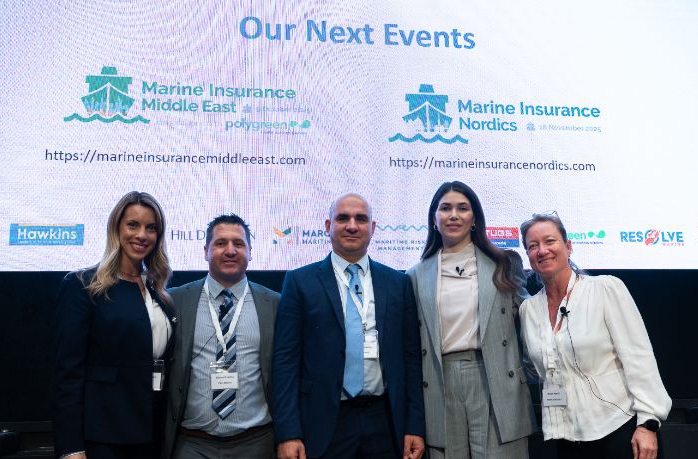
Η Howden, ο μεγαλύτερος μεσίτης ασφαλίσεων και αντασφαλίσεων στην Ελλάδα και στην Κύπρο, είχε την τιμή να βρίσκεται ανάμεσα στους Global Partners του κορυφαίου συνεδρίου Marine Insurance Greece 2025, το οποίο πραγματοποιήθηκε στις 13 και 14 Μαΐου 2025, στο Ίδρυμα Ευγενίδου στην Αθήνα.
Η φετινή διοργάνωση συγκέντρωσε περισσότερους από 330 επαγγελματίες του κλάδου της ναυτιλιακής ασφάλισης, μεταξύ των οποίων εφοπλιστές, brokers, ασφαλιστές και εξειδικευμένοι συνεργάτες από την Ελλάδα και το εξωτερικό. Κατά τη διάρκεια των εργασιών, κορυφαία στελέχη της ναυτασφαλιστικής αγοράς από την Ελλάδα και το εξωτερικό τοποθετήθηκαν πάνω σε επίκαιρα ζητήματα του κλάδου, αναδεικνύοντας τις γεωπολιτικές εξελίξεις και τον αντίκτυπό τους στη ναυτιλία, τις τεχνολογικές καινοτομίες που διαμορφώνουν τις σύγχρονες πρακτικές και την ανάγκη για συνεργατικές και βιώσιμες λύσεις σε όλο το φάσμα της ασφάλισης.
Ιδιαίτερη τιμή για τη Howden αποτέλεσε η συμμετοχή της Σταυριάνας Ασπρογιαννίδου, Managing Director, Marine της Howden Hellas, η οποία είχε τον ρόλο της συντονίστριας στο εξειδικευμένο πάνελ με θέμα “Integrated Waste Management Services After a Fire on Board a Container Vessel” όπου εξετάστηκε η σημασία της υιοθέτησης βέλτιστων πρακτικών στη διαχείριση κρίσιμων περιστατικών εν πλω. Η σωστή διαχείριση αποβλήτων πάνω στο πλοίο δεν είναι απλώς μια υποχρέωση – είναι μια απαραίτητη προϋπόθεση για την προστασία του θαλάσσιου και χερσαίου περιβάλλοντος. Παράλληλα, οι πρακτικές αυτές παίζουν σημαντικό ρόλο στη συμμόρφωση με τα πρότυπα ESG, που πλέον αποτελούν βασικό κριτήριο για τις ναυτιλιακές εταιρίες, επενδυτές και ρυθμιστικές αρχές. Επιπλέον, η αποδοτική διαχείριση αποβλήτων μπορεί να μειώσει σημαντικά τα κόστη – είτε μέσω της αποφυγής προστίμων, είτε μέσω της ανακύκλωσης και της βελτιστοποίησης των λειτουργιών.
Η παρουσία της Howden στο Marine Insurance Greece 2025 επιβεβαιώνει τη στρατηγική της δέσμευση για ενεργό ρόλο στη διαμόρφωση του μέλλοντος της ναυτασφάλισης, μέσα από την τεχνογνωσία και τη συνεργασία που διαθέτει με την παγκόσμια αγορά.
Global claims trends to watch in marine insurance
Although the long-term positive safety trend for the global shipping industry continues –total losses have more than halved over the past decade– a number of factors are leading to ever larger claims, according to Allianz Global Corporate & Specialty (AGCS) industry loss analysis.
Fire/explosion is now the most expensive driver of claims activity, while at a time of rising exposures and inflation, cargo damage is the most frequent cause of loss, following an increase in both attritional and high-value claims. At the same time, the effects of climate change and the transition to net-zero are becoming a feature of claims activity – a development that will only increase in time – all against the backdrop of the damage and disruption caused by Russia’s invasion of Ukraine.
Source: Allianz Global Corporate & Specialty (AGCS). Based on analysis of 244,451 insurance claims between January 1, 2017, and December 31, 2021, worth approximately €9.2bn in value. “Other” causes of loss account for 32% of the value of all claims. Claims total includes the share of other insurers in addition to AGCS.
1.Fire is the top cause of claims by value, as Li-ion batteries add a new loss dimension
Fire and explosion has overtaken sinking and collision as the number one cause of marine insurance losses by value over the past five years according to AGCS analysis of more than 240,000 industry claims with an approximate value of €9.2bn. Fires accounted for 18% of the value of marine claims analyzed (equivalent to around €1.65bn) during the period ending December 31, 2021, compared with 13% for a five-year period ending July 2018. The number of fires on board large vessels has increased significantly in recent years, with a string of incidents involving cargo, which are difficult to extinguish and can easily lead to the total loss of a vessel, tragic loss of life and environmental damage. A contributing factor is often mis-declared or non-declaration of dangerous cargos, while the International Union of Marine Insurance (IUMI) [1] recently noted an increase in engine room fires which may reveal some underlying risk including crew competencies and modern technologies.
Another notable recent trend has been the threat posed by Li-ion batteries in electric vehicles or cargo that is not stored, handled or transported correctly. Highly inflammable, they have been implicated in a number of car carrier and container ship fires in recent years. A battery fire was reported to have been a contributing factor in the March 2022 sinking of ro-ro carrier Felicity Ace [2] in the Atlantic Ocean, along with its cargo of 4,000 vehicles. In June 2020, a fire on the car carrier Höegh Xiamen [3] in Florida was attributed to a failure to properly disconnect and secure vehicle batteries.
Li-ion batteries have also caused fires in shipping containers, often where shipments have been mis-declared as mobile phone accessories or spare parts. In January 2020, a fire on the container ship Cosco Pacific [4] was attributed to the combustion of a Li-ion battery cargo which was not properly declared. In 2022, the US Coast Guard [5] issued a safety alert about the risk posed by Li-ion batteries following two separate container fires.
Li-ion battery and electric vehicle fires burn more ferociously, are difficult to extinguish, and are capable of spontaneously reigniting hours or even days after they have been put out. Most ships lack the suitable fire protection, firefighting capabilities, and detection systems to tackle these fires at sea, which has been made more difficult by the dramatic increase in ship size.
Given the difficulties involved in extinguishing battery fires at sea companies’ primary focus should be on loss prevention. Measures to consider include ensuring staff/crew receive adequate training and access to appropriate firefighting equipment, improving early detection systems and developing hazard control and emergency plans. A new risk management report from AGCS highlights a full list of loss prevention measures to consider here. [6].
“Shipping losses may have more than halved over the past decade (54 total losses (over 100 GT) at the end of 2021 compared to 127 at the end of 2012, according to the AGCS Safety & Shipping Review 2022) but fires on board vessels remain among the biggest safety issues for the industry. The potential dangers that the transportation of lithium-ion batteries pose if they are not stored or handled correctly only add to these concerns, and we have already seen a number of incidents,” explains Captain Rahul Khanna, Global Head of Marine Risk Consulting at AGCS.
2.Inflation and exposure growth drive claims severity
With many countries seeing rates at or around 10%, soaring inflation is compounding existing trends driving higher claims severity, including larger vessels and environmental, social and governance (ESG) factors. Higher steel prices, the higher cost of spare parts, and rising labor costs are all impacting the cost of hull repair and machinery breakdown claims.
Incidents such as fires, collisions and groundings are among the top causes of marine insurance claims by value, with a number of costly incidents in recent years. Accidents involving large container ships and car carriers are particularly expensive, reflecting the accumulation of cargo exposures and challenges in emergency response and salvage. In many cases, a small incident, such as a fire in mis-declared cargo or errors in stability calculations have resulted in a total loss.
In particular higher salvage and wreck removal costs are associated with larger vessels, which require specialist equipment and rely on a limited number of ports of refuge. The ultra-large container ship Ever Given took almost a week to free having blocked the Suez Canal in 2021, while its sister ship the Ever Forward took a month to re-float after it ran aground a year later in Chesapeake Bay in the US. Both incidents were declared General Average, a complex process whereby cargo interests and vessel owners share losses and the costs of salvage.
Salvage costs have also been rising in response to heightened ESG and sustainability concerns, which favor lengthy and expensive wreck removal. The capsizing of the car carrier Golden Ray in the US in 2019 was one of the costliest shipping incidents in modern times, costing [7] over $1bn, with salvage and wreck removal costs having exceeded $800mn to date. The wreck removal of the Costa Concordia cruise ship off Italy between 2012 and 2014 cost in the region of $1.3bn while the wreck removal of the Rena, which sank in 2011 off New Zealand cost an estimated $450m [8]. The Rena clean-up operation was not declared complete until April 2016.
Inflation is also adding to the problem of rising values at risk. The value of both vessels and cargos has been increasing at a time of growing exposures associated with larger vessels, which can carry over 20,000 containers at a time. The surge in demand for shipping has seen the value of vessels increase significantly in recent years. According to Clarkson Research Services, the combined value of the global merchant fleet increased 26% to $1.2trn in 2021 [9], while IUMI also noted that the overall value of insured vessels rose significantly in 2021, driven primarily by the large increase in container ship prices which were up more than 35%, with dry bulk and general cargo vessel values also seeing increases.
The average value of container shipments has also been increasing with inflation and an increase in the shipping of high value goods like electronics and pharmaceuticals.
“We see more high value goods being shipped by container, while the average cost of goods rises with inflation,” says Khanna. “It is not unusual to see one container valued at $50mn or more for high value cargos like pharmaceuticals. These high value cargos need additional risk mitigation measures, such as GPS trackers and sensors that provide real time monitoring on temperature, moisture shock, and light and door openings, for example. At the same time cargo interests need to keep a close eye on insured values. Clients may need to adjust their insurance and policy limits, or risk being underinsured – we have already seen claims for high value container cargos where the cargo interest was underinsured by as much as $20mn.”
3.Cargo claims continue to rise
Damaged goods, including cargo handling and storage, is the top cause of marine insurance claims by frequency, and the third largest by value over the past five years, according to the AGCS analysis. The most common claims continue to be physical damage to cargo, typically from poor cargo handling, storage and packing. But recent years have also seen a number of high-value theft and temperature variation claims. Interestingly, crime and theft are the third most frequent cause of marine insurance claims during the same time period.
Criminal gangs are targeting consumer electronics and high-value commodities like copper. Cargos are typically stolen from ports, warehouses or during transit, falling victim to armed robbery or fake handling agents. Latin America is a hot spot for cargo theft, although there have also been large claims in Europe. In 2020, criminals using insider knowledge stole a cargo of mobile phones valued at €3mn from Schiphol, just one of three major thefts at the Netherlands-based airport that year.
The insurance market has also paid some large temperature variation and fire claims involving pharmaceutical shipments, according to Régis Broudin, Global Head of Marine Claims at AGCS. “Cargo values have risen noticeably in the past year. We recently saw a truck fire loss involving a cargo valued at $73mn from just one transportation. This is a concerning trend for marine underwriters.”
The recent boom in container shipping, which puts cargo handling and port turn-around under pressure, has also affected cargo claims. A global shortage of shipping containers has resulted in substandard and damaged containers being bought back into use, while a deterioration in the economic environment and the higher cost of living could have implications for future theft and civil unrest claims.“We have always seen cargo losses from defective containers, for example caused by ingress of water. But if we see a lot of substandard containers being brought back into use, the result could be a higher frequency of losses coming through in future months,” says Captain Nitin Chopra, Senior Marine Risk Consultant at AGCS.
4.Supply chain exposures and disruption continue to impact
Recent years have highlighted large supply chain disruption exposures in the shipping industry, as a number of maritime incidents, natural catastrophes, cyber-attacks and the Covid-19 pandemic have caused major delays to shipping and ports. Further disruption has also been caused by congestion, labor shortages and constrained container capacity.
“The trend for larger ships is also helping increase supply chain exposures. Larger vessels, while more efficient, require port infrastructure and logistical support that is more complex and specialist than traditional shipping. There are also greater concentrations of cargo risk on board large container vessels and in major ports, so any incident has the potential to simultaneously affect large volumes of cargo and companies. Ports are also increasingly reliant on technology, where an outage or cyber-attack could effectively close a port. Commercial pressures are already a contributing factor in many losses that resulted from poor decision-making,” says Chopra. “The pressure on vessels and crew is currently very high. The reality is that some may be tempted to ignore issues or take shortcuts, which could result in future losses.”
“Risk managers must take these factors into account and take a more risk managed approach to the shipping aspect of supply chains,” explains Broudin. “In the past, companies have not paid enough attention to cargo risks and exposure accumulation. Companies need to start treating cargo risks more like property assets, tracking and monitoring exposures, and taking a more proactive approach to protecting them.”
In addition to improving the transparency of cargo exposures, companies should challenge freight forwarders on the risks, such as the quality of the vessel, loading and operation. They can also seek help from insurers who can provide risk improvement advice on ways to prevent cargo damage losses and reduce accumulations.
“Events over the past year have demonstrated just how fragile and interconnected global supply chains are, and the critical role played by the shipping industry. It is essential that companies understand their accumulations and consider ways in which they can minimize exposure to major events,” says Khanna.
5.Climate-risks contribute to claims
Climate change will increasingly affect marine insurance claims, with more extreme weather events and with new exposures linked to the transition to net-zero.
Natural catastrophes were already the fifth biggest cause of marine insurance claims, by frequency and severity for the five-year period ending December 2021, according to AGCS analysis. Extreme weather and natural hazards have contributed to a number of large losses in the past, with the loss of vessels and damage to cargos – extreme weather was a contributing factor in at least 25% of the total vessel losses reported in 2021 alone. In addition, drought in Europe during 2022 again caused major disruption to shipping on the Rhine, preventing many vessels from navigating this critical European shipping route fully loaded. Meanwhile, in the US, many barges were reported to have run aground on the lower Mississippi River as drought dropped inland waterways to levels not seen for decades, impacting one of the most cost-efficient means of getting commodity crops such as grain into the global market.
Weather has also been a factor in a recent increase in the number of containers lost at sea, as heavy seas exert huge forces on large container vessels and container lashings. According to the World Shipping Council [10], the annual average number of containers lost at sea has increased 18% over the past 14 years to 1,629 in 2021. The average losses for the two-year period 2020-2021 alone were 3,113 compared to 779 in the previous period.
Efforts to decarbonize the shipping industry will also impact marine claims going forward. With 90% of international trade moved by sea, shipping is currently a major contributor to global greenhouse gas emissions. The International Maritime Organization (IMO) is working towards a 40% cut in greenhouse gas emissions across the global fleet by 2030, and at least a 50% cut by 2050. Reducing greenhouse gas emissions will require the shipping industry to develop more sustainable forms of propulsion and vessel design. A key risk factor in the transition will be the adoption of alternative fuels, which could include liquefied natural gas, green hydrogen and methanol, as well as electric- and wind-powered assisted vessels.
The introduction of new technology and working practices can, however, result in new risks or unexpected consequences. Machinery breakdown is already a significant source of marine insurance claims – it is the fourth largest cause by frequency and value over the past five years. The insurance industry has already seen a number of machinery breakdown and contaminated fuel claims related to the introduction of low sulfur fuel oil under IMO 2020, which was introduced to cut sulfur oxide emissions, as marine fuels and bunkering has become more complex.
The shift to greener energy sources is already giving rise to new claims scenarios. In 2022, drifting bulk carrier Julietta D [11] collided with an offshore wind turbine foundation and transformer station in the Hollandse Kust Zuid windfarm, having previously collided with the tanker Pechora Star after its anchor gave way in a storm. With 2,500 wind turbines due to be installed on the North Sea before 2030, the risk of a ship to turbine collision is estimated at 1.5 to 2.5 times a year, according to the Maritime Research Institute Netherlands (MARIN) [12].
Cosco shipping captive joins the Poseidon Principles for marine insurance
The Poseidon Principles for Marine Insurance create a common global baseline for assessing and disclosing the alignment of marine insurance portfolios with climate goals.
“We are delighted to be the first Asian marine hull insurance company to sign up for the Poseidon Principles for Marine Insurance (PPMI). Joining PPMI is aligned with Cosco Shipping Group and Cosco Shipping Captive’s strategy towards green shipping and green finance. We are happy and motivated to work with all stakeholders to promote marine de-carbonization and marine industry’s sustainable transition and growth,” says Zheng Xiaozhe, Chairman of the Board, COSCO SHIPPING Captive Insurance.
Two Asia-based organizations are already members of the Poseidon Principles for Marine Insurance: Singapore’s EF Marine and Hong Kong’s CTX Special Risks.
“It is essential to the mission of the Poseidon Principles for Marine Insurance that our membership reflects the diversity of the maritime industry. I am proud to welcome COSCO SHIPPING Captive Insurance to our framework for responsible marine insurance as they bring us a big step closer to this goal,” adds Patrizia Kern-Ferretti, Head Marine, Swiss Re Corporate Solutions and Chair of the Poseidon Principles for Marine Insurance.
COSCO SHIPPING Captive Insurance joins Cambiaso Risso, Cefor, CTX Special Risks, EF Marine, Gallagher, Lochain Patrick Insurance Brokers, Lockton, and Willis Towers Watson as an Affiliate member of the Poseidon Principles for Marine Insurance.
Signatories include AXA XL, Fidelis Insurance, Gard, Hellenic Hull Management, Navium Marine, Norwegian Hull Club, SCOR, Swiss Re Corporate Solutions, and Victor Insurance.
International Union of Marine Insurance is a supporting partner.
Other responsible actors within the maritime insurance space are invited to join.
Source: Poseidon Principles for Marine Insurance
Poseidon Principles for Marine Insurance hold founding meeting and enter into force with Navium and AXA XL as latest Signatories
The Poseidon Principles for Marine Insurance are a global framework for measuring and publicly reporting the climate alignment of insurers’ hull and machinery portfolios. With the number of its Signatories reaching – and surpassing – the threshold of eight, the framework now enters into force. This means that Signatories are required to report their climate alignment scores on an annual basis. The first reporting period will take place at the end of this year.
As part of the founding meeting, members established the Poseidon Principles for Marine Insurance and elected members to the Association’s Steering Committee, the governance body that coordinates the Association on behalf of its members.
Patrizia Kern-Ferretti (Swiss Re Corporate Solutions) was elected as Chair of the Steering Committee.
“I thank fellow Poseidon Principles for Marine Insurance members for the trust placed in me to chair this pioneering initiative. Our founding meeting marks two important milestones. With Navium Marine and AXA XL among our ranks and the Association officially established, we have all that we need to effect real change and encourage the decarbonization of the maritime industry,” says Patrizia Kern-Ferretti, Head Marine at Swiss Re Corporate Solutions and Chair of the Poseidon Principles for Marine Insurance Association.
Rolf Thore Roppestad (Gard) was elected as Vice Chair of the Steering Committee.
“I am honored to have been elected Vice Chair of the Poseidon Principles for Marine Insurance. Together with my fellow Steering Committee members, we will work to ensure that the Association stays true to its vision: doing what we can to support and incentivize responsible environmental behavior throughout the maritime value chain,” adds Rolf Thore Roppestad, Chief Executive Officer, Gard and Vice Chair of the Poseidon Principles for Marine Insurance Association.
Oliver Clark (Navium Marine), Atle Fjeldstad (Norwegian Hull Club), Sylvain Gauden (SCOR), Charles Mathias (Fidelis Insurance), Ilias Tsakiris (Hellenic Hull Management), Richard Turner (Victor Insurance) were elected as members of the Steering Committee.
Hereafter the Steering Committee consists of:Patrizia Kern-Ferretti (Chair), Rolf Thore Roppestad (Vice Chair), Oliver Clark, Atle Fjeldstad, Sylvain Gauden, Charles Mathias, Ilias Tsakiris, Richard Turner.
Ben Abraham (Willis Towers Watson) was elected as Chair of the Affiliate Members Committee.
Helle Hammer (Cefor), Mauro Iguera (Cambiaso Risso Group), Alistair Rivers (Lockton), Folkert Strengholt (EF Marine) were elected as members of the Affiliate Members Committee.
More information about the members of the Steering Committee is available here.
The founding members of the Association include Swiss Re Corporate Solutions, Gard, Hellenic Hull Management, SCOR, Victor Insurance, Norwegian Hull Club, Fidelis Insurance, Navium Marine, AXA XL, Willis Towers Watson, Cefor, EF Marine, Cambiaso Risso, Lockton, and International Union of Marine Insurance (IUMI).
IUMI renews focus on a sustainable, resilient and innovative future for marine insurance
Speaking at its Spring Meeting held online last week, Richard Turner, President of the International Union of Marine Insurance (IUMI) reinforced the association’s focus on facilitating a sustainable, resilient and innovative future for the marine insurance industry.
Richard Turner explains: “Environmental, Sustainability and Governance (ESG) issues are impacting all forms of business, including marine insurance. We believe that our industry will be affected in three ways. Climate change and the related rise in sea levels will impact the frequency and severity of claims. The evolution of the transport assets we insure and changes to the cargoes we protect will also be significant and we are already seeing the impact as the industry adopts low sulphur fuels. And third is the sustainability of our clients and the industries in which they operate. It is becoming increasingly clear that some industries will have the opportunity to grow and develop while others will shrink as the world moves to a more sustainable footing. As an industry, we need to recognise these changes and adapt.”
IUMI’s ongoing response is to continue its work in raising awareness of these issues to ensure the marine insurance sector is better prepared to respond adequately. More directly, the association is actively lobbying to raise relevant issues, monitor response and agitate for change. Many issues already on IUMI’s policy agenda have a sustainability impact including arctic sailing and low sulphur fuels. Additionally, IUMI is coordinating responses from a wide range of stakeholders and projecting the view of marine insurance with a common voice.
Richard Turner continues. “Building on a comprehensive member survey conducted more than a year ago, we are continuing our advocacy activity on a number of key issues. This has led to the formation of a sub-committee of IUMI’s executive committee to focus specifically on ESG issues. In addition, we are proud to be a supporting institution of the UN’s Principles for Sustainable Insurance.”
ESG issues will be further reinforced at this year’s IUMI annual conference (staged virtually from Seoul, Korea 2-15 September 2021) where the common theme will be “Pathways to a sustainable, resilient and innovative future”.
Richard Turner says, “This year’s common theme is both optimistic and forward looking, and we aim to cover the opportunities and risks that marine insurance is likely to face in a continuing and post pandemic world. We will discuss the various options and pathways that marine insurance should pursue to ensure sustainability, both in terms of ESG issues but also to maintain marine underwriting as a healthy and resilient activity.”
Marine insurance: IRDAI in talks with INSA to set up P&I club
The Insurance Regulatory and Development Authority of India (IRDAI) is in talks with Indian National Shipowners Association (INSA) to develop a protection and indemnity insurance club (P&I club) in India, a move that will support the development of a marine insurance market in India, said insurance sector players at a Maritime India Summit.
Marine premium formed about 2 per cent of the gross domestic premium in FY20. India has been looking to put in place a P&I club for a few years now.
A P&I club is a mutual insurance association that enables risk pooling among members and provides information and representation for its members. A P& I club provides cover for open-ended risks (such as war risk, environmental damage such as oil spills and pollution) that traditional insurers are reluctant to insure. P&I clubs are structures where shipowners, operators and seafarers pool in money that can be used to help shipowners or seafarers in challenging times. These days even freight forwarders and warehouse operators are able to join P&I clubs in overseas jurisdictions.
Digital push
Meanwhile, the General Insurance Council is set to automate the re-insurance payment system, a first such initiative globally, making India the first country to digitise reinsurance, said Kuhu Mohapatra, DGM-Marine Underwriter, New India Assurance Company. Most of the re-insurance work and processes are paper-based globally, she pointed out, adding that Singapore is making an effort in the same direction.
While India accounts for a low share of marine insurance globally, its software prowess could be used to give India the necessary leg-up in the area, pointed out IRDAI.
Subhash Chandra Khuntia, Chairman, IRDAI, said that primary insurance (for marine sector) can grow if there is presence of reinsurance and called for starting a protection and indemnity club in India. He also sought support from shipowners for information sharing regarding Indian and foreign vessels and insurance pooling initiatives such as salvage association and P&I clubs. Salvage is the process of recovering cargo after a ship wreck.
Growth of this area depends on the availability of ecosystem, pointed out Arti Mathur, GM, Oriental Insurance Company. Marine insurance business in India is in the range of 1.5-2 per cent, which further shrunk during the pandemic, Mathur added.
Gujarat International Finance Tec-City IFSC (International Financial Services Centre) can be a platform for such activities, pointed out experts.
As India looks to develop a robust marine insurance sector, challenges that need to be addressed include lack of P&I clubs (for covering risks like loss of lives) and lack of claims assessment expertise, said Mohapatra.
Source: The Hindu Business Line
Zurich Expands Marine Insurance Platform into Additional Countries, Regions
Zurich Insurance Group is expanding the roll-out of a new marine insurance platform for small and medium cargo, following its successful introduction in selected markets around the world.
The Zurich Swift Insurance Platform provides intuitive, web-based access to insurance that users can tailor to their needs, said the company. The Zurich Swift Insurance Platform uses automation technologies to allow marine insurance brokers and intermediaries to manage the full policy lifecycle for single shipment and annual cargo insurance policies. This includes receiving quotes, checking existing trade & economic sanctions, binding and renewing policies, making mid-term adjustments and issuing certificates.
The platform was launched in selected markets in 2019, including Spain, Germany, Singapore and Mexico. As a result of the very positive feedback, Zurich plans to make it available in additional countries and regions, including North America, the Nordics and further countries in Latin America later this year.Marine insurance requirements have changed with the expansion of international trade. While globalization gives a growing number of companies the opportunity to ship goods worldwide, it creates more complex supply chains and risk exposures that can impact the ability to deliver goods safely, Zurich explained.
“The Zurich Swift Insurance Platform provides comprehensive and tailored marine insurance for small and medium cargo in a very timely manner, and is a perfect example of our commitment to simple and efficient solutions,” said Howard Kingston, Zurich’s global head of Marine.