
Germany: More living space for Berlin – EIB lends EUR 240 million to Gewobag
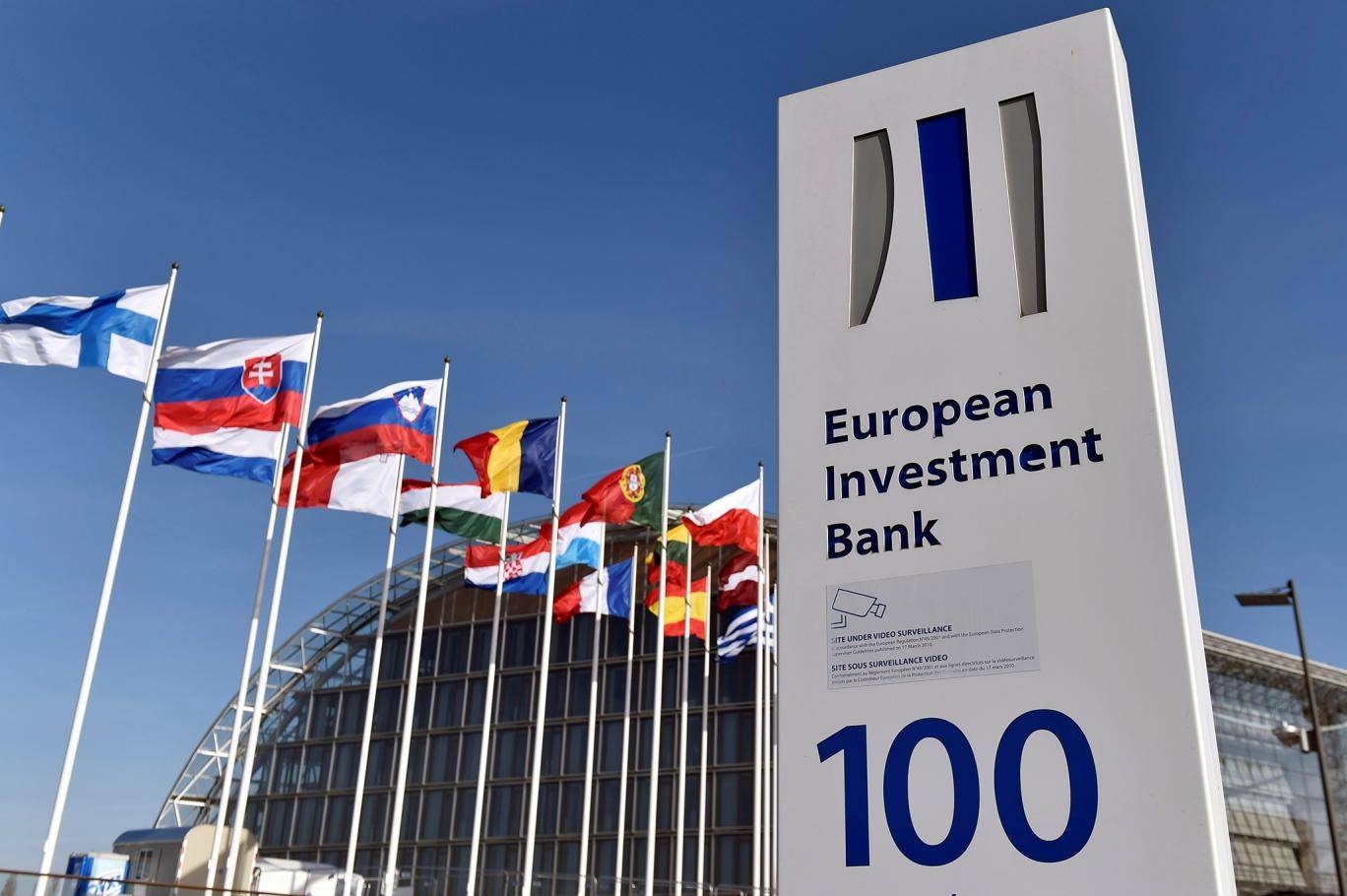
The European Investment Bank (EIB) is providing the state-owned housing company Gewobag with a 240-million-euro loan, which is earmarked for the construction of 2,000 new residential units by 2023. The new buildings will predominantly meet “energy-efficient house” standards and therefore surpass the requirements of the applicable energy saving regulation (EnEV).
The contract for financing the project between the European Investment Bank and Gewobag was already signed. This cooperation will secure further affordable housing for Berlin.
“The low-interest loan from the EIB enables us to make further investments in Berlin’s housing construction in order to increase the state’s own residential portfolio. This also means that our tenants’ rental burdens are kept as low as possible. We are pleased to have a strong partner on our side with the EIB”, says Markus Terboven, member of the board of Gewobag.
“The lack of quality, affordable housing is a pressing issue in many European cities,” said Ambroise Fayolle, EIB Vice-President responsible for operations in Germany. “I am proud that the EIB has a long tradition in financing sustainable urban housing. Our loan to Gewobag brings more financially accessible and greener homes to many people in Berlin, and when we talk about the added value that a public bank like the EIB needs to deliver, this is a prime example.”
This loan is already the second financing project on which Gewobag is working together with the EIB. The project is not only in line with the EU Urban Agenda for livable and innovative cities, but also makes an important contribution to the EIB’s and Gewobag’s climate change objectives through high energy efficiency standards.
With around 70,000 apartments and more than 120,000 tenants, Gewobag is one of the largest real estate companies in the capital and nationwide. In the medium term, the state-owned housing company will expand its portfolio by around 15,000 apartments.
Italy: Juncker Plan – EIB lends EUR 250m to ENEA for research into clean fusion energy
– The project is guaranteed by the Investment Plan for Europe and is being co-financed by EUROfusion, the EU programme to produce safe, clean nuclear fusion energy by 2050
– Agreement signed with the Lazio Region will help develop the new international scientific hub in Frascati
– 1,500 new jobs expected, including 500 for scientists and technicians, with an impact of EUR 2bn for the Italian economy
The challenge to produce safe, clean nuclear fusion energy by 2050 can now count on a ground-breaking experimental device that will be built in Italy. ENEA’s Divertor Tokamak Test (DTT) is ready to be launched thanks to EIB financing and the support of the Lazio Region, both announced today. The European Investment Bank will provide EUR 250m worth of financing under the Commission’s Juncker Plan supporting the implementation of the new scientific and technological hub of ENEA (National Agency for New Technologies, Energy and Sustainable Economic Development). This forms part of a total investment of EUR 500m for the facility which will be hosted in Frascati near Rome thanks to the agreement signed with the Lazio Region. The project will also receive funding from EUROfusion, the European Union’s programme to produce safe, clean nuclear energy, launched in 2014.
The whole project was presented in Rome by ENEA Chairman Federico Testa, EIB Vice-President Dario Scannapieco, Vice-President of the Lazio Region Daniele Leodori, EUROfusion Chairman Ambrogio Fasoli, and the Head of the European Commission’s Euratom Research Unit Elena Righi Steele.
The DTT facility has been created to respond to some of the key scientific and technological issues surrounding nuclear fusion, in particular the question of how to control the enormous amount of heat generated. The main financing is broken down as follows: apart from the EUR 250m allocated by the EIB and backed by the guarantee of the European Fund for Strategic Investments (EFSI, the pillars of the Juncker Plan), EUROfusion will contribute EUR 60m in Horizon 2020 funding, MIUR will provide EUR 40m, MISE EUR 40m, and the Lazio Region EUR 25m.
There will be positive implications for global scientific research with respect to existing large-scale projects and for the Italian economy. Some 1,500 scientists and technicians will be involved in the project (500 directly) and the impact on Italy’s GDP will be around EUR 2bn. Furthermore, thanks to collaboration with Italian and European universities and research centres, new generations of scientists and researchers from all continents will emerge.
“This cutting-edge project combining major research, technological innovation, development and industrial competitiveness will have an impact of more than EUR 2bn in pure economic terms. Its implementation is a great success because it will help respond to complex issues concerning the fusion process. It also confirms Italy’s strong leadership in this field thanks to its brilliant scientific community, which has managed to get the most advanced industries involved to create a hugely important sector. Italian companies have already won over EUR 1.2bn worth of contracts in this field”, said ENEA Chairman Federico Testa.
“ENEA’s project has two aspects that are fundamental for Europe: innovation and combating climate change. We must do more in both fields if we wish to look towards our planet’s future with hope and a sense of optimism, focusing responsibly on the long term without fear of the immediate short term which too often influences choices in terms of allocation of financial resources. I am proud that the EIB is providing a large chunk of the financing to support the development of the new laboratories in Frascati”, stated EIB Vice-President Dario Scannapieco.
European Commissioner Miguel Arias Cañete, responsible for Climate Action and Energy, said: “To achieve a climate neutral Europe by 2050, we need to keep investing in new technological solutions. Fusion is a potential source of safe, non-carbon emitting and virtually limitless energy. If we succeed in making a breakthrough in this technology it could significantly contribute to our efforts to make Europe the first climate neutral major economy. Today’s investment decision is one step towards this objective.”
EIB freezes new lending linked to Turkish government as part of EU’s Cyprus drilling row response
The European Investment Bank (EIB) will not enter into any new lending in Turkey linked to the country’s government until at least the end of the year. The move has been triggered by the European Union’s decision to introduce initial sanctions to deter Turkey from carrying on with “illegal” drilling for gas off Cyprus in the eastern Mediterranean.
The EIB -which said the time period would be spent conducting a strategy review- is Turkey’s biggest single lender. It has pumped between €0.4bn and €2.2bn into the country in the past three years, although nothing has been invested so far in 2019.
“As the EU Bank, the EIB will follow the [European] Council’s recommendations and, notably, will take a restrictive approach toward the submission of new lending operations to its Board for approval for the rest of the year,” an EIB spokeswoman told Reuters on July 24.
The block placed on lending is not expected to impact private sector projects in Turkey, with the bank possibly moving to sign around €350mn worth of deals before the end of the year if EU finance ministers on the EIB board approve the related loans, according to the news agency.
“A [completed] review of the bank’s strategic orientations of its lending activities in Turkey is scheduled for later this year,” the spokeswoman reportedly added.
Other moves
As well as making the EIB move, EU foreign ministers have suspended negotiations on a Comprehensive Air Transport Agreement with Turkey. They have also said they will curb high-level diplomatic contacts with Ankara for the time being, while they have proposed cutting pre-EU accession assistance to Turkey.
An EU diplomat told Reuters in mid-July that under sanctions Ankara could lose some 150 million of 400 million euros that the bloc had earmarked for 2020 for everything from political reforms to agriculture projects to help Turkey prepare for eventual EU membership. The EU had been due to give Turkey €4.45bn between 2014 and 2020, but it cut and suspended some funding last year. It has frozen membership talks and negotiations on upgrading its customs union with Turkey, accusing Erdogan of grave violations of human rights among other things.
Turkey has said that any EU funding cuts will have no affect on its drilling off Cyprus and responded to the sanctions announcement by sending a fourth vessel to the drilling zone.
Ankara and Nicosia have overlapping claims to regional waters off Cyprus linked to the split of the island between Greek and Turkish Cypriots. The Greek Cypriot government and EU says Turkey is conducting exploration for oil and gas in territory that falls under EU member state Cyprus’ exclusive economic zone. The Turks dispute the mapping of the zone and say they are determined that the Turkish Cypriots, who since 1974 have run a breakaway territory in the north of the island which is only recognised by Turkey, should receive their fair share of proceeds from any successful drilling for hydrocarbons in the surrounding waters.
Source: intellinews.com