
Safe Bulkers, Inc. Announces Agreement for the Acquisition of Two Newbuild Kamsarmax Class Dry-bulk Vessels
Safe Bulkers, Inc. (the Company) (NYSE: SB), an international provider of marine drybulk transportation services, announced that it has entered into an agreement for the acquisition of two newbuild, 82,500 dwt, dry-bulk, Chinese, Kamsarmax class vessels, with scheduled delivery dates in the third quarter of 2028 and the first quarter of 2029.
The newbuild vessels are designed to meet the Phase 3 requirements of the Energy Efficiency Design Index related to the reduction of greenhouse gas emissions (“IMO GHG -EEDI Phase 3”) as adopted by the International Maritime Organization, (“IMO”) and also comply with the latest NOx emissions regulation, NOx-Tier III (“NOx-Tier III”). The newbuild vessels are sister to existing vessels in our fleet with advanced energy efficiency characteristics resulting in lower fuel consumption.
The Company has already taken delivery of twelve IMO GHG Phase 3 – NOx Tier III vessels. Including this agreement, the Company has an outstanding orderbook of eight newbuild vessels, two of which are methanol dual fuel, with scheduled deliveries four in 2026, two in 2027, one in 2028 and one in 2029.
Dr. Loukas Barmparis, President of the Company commented: “We have placed these newbuild orders consistent with our fleet renewal strategy, aiming to increase the competitiveness and resiliency of the Company and to own one of the most modern and environmentally efficient dry bulk fleets in the market.”
Safe Bulkers, Inc. Entered into an Agreement for the Acquisition of Three Kamsarmax Class Dry-bulk Japanese Vessels
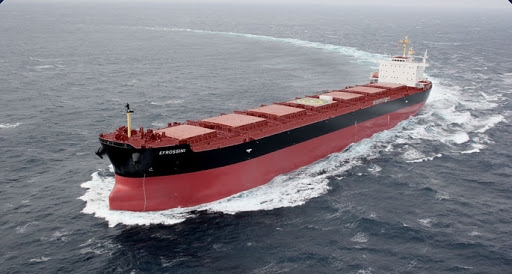
Safe Bulkers, Inc., an international provider of marine drybulk transportation services, announced that in relation to its fleet renewal strategy, it has entered into agreements for the acquisition of three Japanese dry-bulk 82,000 dwt, Kamsarmax class vessels at attractive prices with scheduled delivery dates within the fourth quarter of 2023 for one vessel and within the first quarter of 2024, for the other two vessels.
All three newbuild vessels are designed to meet the Phase 3 requirements of Energy Efficiency Design Index related to Green House Gas emissions, (GHG-EEDI, Phase 3) and also comply with the latest NOx emissions regulation, (NOx-Tier III) and will be financed from the cash reserves of the Company.
Dr. Loukas Barmparis, President of the Company, commented: “We are continuing our fleet renewal strategy, by ordering three additional vessels, bringing the total number of newbuilds to eight GHG-EEDI Phase 3, NOx-Tier III. In parallel, the Company has already acquired two younger second hand vessels. Newbuild orders and second hand acquisitions are in the context of our strategy to replace older or Chinese-built vessels, six of which have been sold until now.”
Star Bulk Carriers Corp. Announces Acquisition of Two Resale Modern High Specification Kamsarmax Vessels
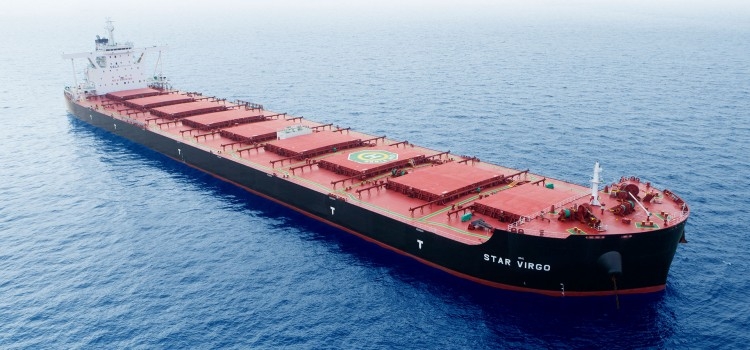
tar Bulk Carriers Corp. (the “Company” or “Star Bulk”) (Nasdaq: SBLK) a global shipping company focusing on the transportation of dry bulk cargoes, announced that it has entered into a definitive agreement with a third party pursuant to which the Company will acquire two (2) ECO type resale 82k dwt Kamsarmax vessels. The vessels are expected to be delivered to the Company in June and September 2021 respectively directly from YAMIC yard (a joint venture between Mitsui and New Yangzijiang). The Company is in advanced discussions with leading financial institutions to finance the largest part of the purchase price at competitive financing terms.
Petros Pappas, Chief Executive Officer of Star Bulk, commented:
“In view of the changing regulatory environment with regards to carbon emissions, we believe that the acquisition of these two resale vessels further contributes to our fleet renewal efforts and initiatives. Their 3- to 6-month prompt delivery, combined with an attractive purchase price and the strong fundamentals of the Kamsarmax and dry bulk sector overall, ensure this transaction adds value to the Company and to our shareholders.”