
Italy: EIB and Italian Ministry of Justice join forces to promote social inclusion of convicts through a social impact bond
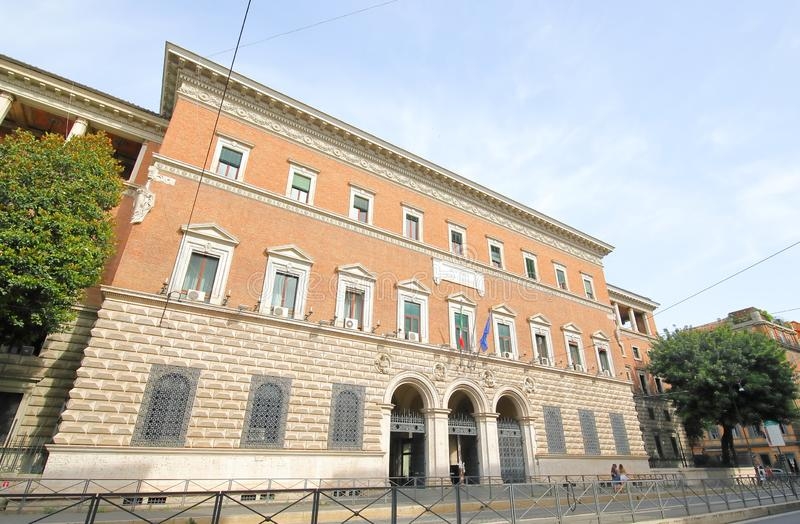
The project aims to curb the reoffending rate of ex-convicts and ensure smooth reintegration into society
EIB experts will work with the Italian Ministry of Justice to assess the possibility to launch a social impact bond
The geographical focus of this agreement is limited to the Lombardy Region, but bears the potential to be adopted at a larger scale
The European Union, through the European Investment Advisory Hub will advise the Italian Ministry of Justice on the implementation of innovative financing and procurement methodologies, aimed at curbing reoffending rates of ex-convicts. The European Investment Advisory Hub, funded by the European Commission and the European Investment Bank, will support the Ministry in its mission to ensure a smooth transition of inmates back into society through innovative financing models, such as social impact bonds.
The agreement, reached within the context of the Advisory Platform for Social Outcomes Contracting, was signed this week by the Advisory Services Department of the EIB and the Department of Penitentiary Administration of the Italian Ministry of Justice. Through this agreement, EIB experts will perform a comprehensive feasibility study on the launch of a social impact bond, an innovative, outcome-oriented financing solution which foresees private investors’ participation – and risk sharing – in labour market initiatives with a measurable outcome.
The agreement is signed in the context of the Investment Plan for Europe, which enables the EU Bank to support projects that present particular added value owing to their nature or structure. Whilst the geographical focus of this agreement is limited to the Lombardy Region, the EIB and the Italian Administration cooperation set out to deliver a blueprint that can be adopted at a larger scale.
European Commissioner for the Economy, Paolo Gentiloni, said: “The support and technical assistance provided through the Investment Plan for Europe’s Advisory Hub will enable the Italian Ministry of Justice to facilitate the social inclusion of convicts, at first in Lombardy but later hopefully in other regions too. This will be achieved through new financing solutions like social impact bonds. It will not only help the social and economic reintegration of former inmates, but also reduce the costs for the public administration.”
EIB Vice-President Dario Scannapieco, responsible for EIB’s operations in Italy, commented: “We are pleased to support the Italian Ministry of Justice in their efforts to facilitate the reintegration into society of convicts, through the use of innovative financing models, such as social impact bonds. We are very proud to share our knowledge in this field and to see that more and more EU Countries show their interest in such innovative ways of financing social services. Supporting an inclusive economic growth that leaves no one behind is the way forward.”
Italian Minister for Justice, Alfonso Bonafede said: “This kind of contracts put Italy at the forefront of social policy, as they enable us to carry out innovative projects by sharing the risk with private counterparts. If successful, such innovative approach could be replicated and allow the public administration to better fulfil the re-educational mission of its penitentiary system. Working together with qualified partners, such as the EIB, is crucial to head towards reducing the reoffending rate of ex-convicts, which nowadays has reached ca 68%, resulting in social costs of around EUR 130 million per year. We know that enhancing inmates’ capability to develop a sustainable career after serving their sentences would increase their chances of social and working inclusion. Social entrepreneurs and investors know that the Italian Ministry of Justice is keen on supporting their pilot projects. This is a very promising form of public-private cooperation, and we are proud to be able to count on the backing of the EIB, which we thank for its commitment.”
The Head of the Department of Penitentiary Administration, Bernardo Petralia said: “As Head of the Department, I welcome this partnership, the first in Europe, between the Ministry of Justice and the EIB targeting the penitentiary system. We hope that this collaboration will lead to the development of a new financial and organisational model involving private capital and European funds to address social objectives; a model that can be replicated, after Lombardy, in other Italian regions as early as 2021 “.
Social impact bonds can be a testbed for innovative actions that, on one side, fulfil the re-educational mission of the sentences and, on the other side, provide inmates with soft skills and specific knowledge that increase their chances of finding a job upon their release. Ultimately, work inclusion of former inmates would reduce costs for the public administration and would ensure an income to targeted individuals.
About the Social Outcomes Contracting Advisory Platform
The support will be provided under the Advisory Platform for Social Outcomes Contracting created in early 2020 and funded by the Advisory Hub. The platform aims at fostering the development and use of social outcomes contracting methodologies (supported, for example, by social impact bonds and other innovative financing options) as a strategic and operational tool to address social inclusion issues and thus contribute to improving EU citizens’ welfare.
Italy: COVID-19 – EIB provides €50 million to MCC for SMEs and mid-caps in southern Italy

Support for new investment projects, with a maximum term of five years, in all production sectors mainly for companies in southern Italy.
Working capital, including wages, tax, social security contributions, and administrative and other operational costs are also financed.
The European Investment Bank (EIB) and Mediocredito Centrale (MCC) are providing €50 million to help Italian small and medium-sized enterprises (SMEs) and mid-caps to face the COVID-19 crisis.
An agreement to this end was announced today by the EU bank and the Italian public sector bank dedicated to supporting smaller companies mostly in southern Italy. Under the agreement, the EIB will make €50 million available to MCC for SMEs (businesses with up to 250 employees) and mid-caps (up to 3 000 employees).
The new credit line, aiming to address the ongoing crisis, provides financing for new investment projects with a maximum term of five years, and covers working capital needs, in view of the exceptional situation being faced by Italian industry. This includes social security contributions, administrative and other operational costs and multifunctional credit lines, even if these are extensions or renewals of working capital loans. Only purely financial and/or real estate transactions remain excluded.
The loans target projects from companies active in all production sectors: agriculture, crafts, commerce, tourism, services and industry.
“Thanks to the partnership with Mediocredito Centrale, the advantages of EIB financing in terms of loan duration and low interest rates will be available to small and medium-sized companies, mostly in southern Italy, an area which, in addition to manufacturing, also hosts production chains interconnected with national and international industry, such as many activities in the automotive sector,” said EIB Vice-President Dario Scannapieco.
“The agreement signed by Mediocredito Centrale and the EIB is an important tool for small and medium-sized enterprises in southern Italy that, from a position of competitive disadvantage, have been more heavily affected by the effects of the ongoing health crisis. The interdependence of northern and southern Italy means that supporting production chains and investments in this area will provide a boost for the entire country. This virtuous multiplier effect shows how Italy can only grow with a stronger and more competitive South, and how this region is playing a strategic role in post-crisis reconstruction and recovery policies,” added Mediocredito Centrale CEO Bernardo Mattarella.
Italy: Investment Plan for Europe – EIB finances new trains of Naples Circumvesuviana network
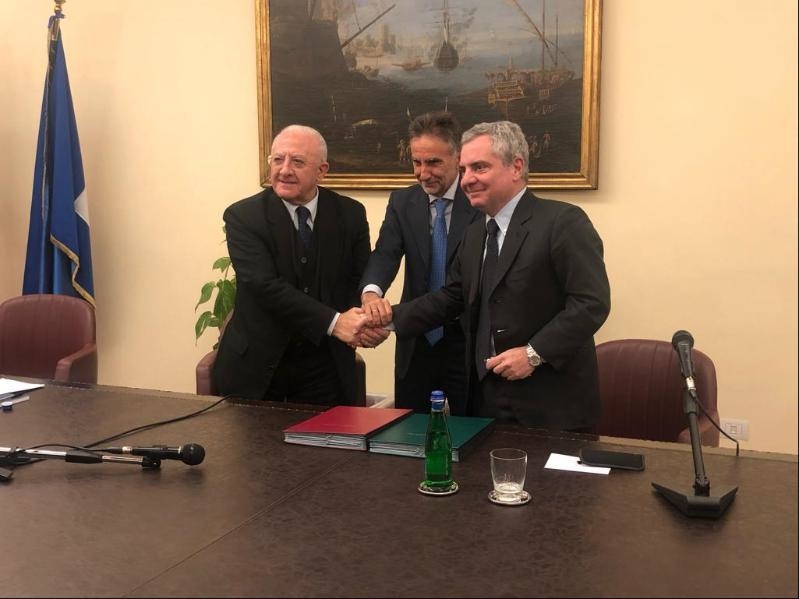
– EUR 68m loan to Ente Autonomo Volturno (wholly owned by the Campania Region) to purchase 40 new electric trains
– Significant impact in terms of cutting CO2 emissions and combating climate change
– Will relieve traffic congestion for commuters and tourists in one of the most densely populated areas in Europe
A new fleet of 40 electric trains for the railway network serving Naples and the province of Naples, the so-called Circumvesuviana, to help significantly relieve traffic congestion and considerably reduce pollution in the entire area. That is the aim of the five-year investment plan of Ente Autonomo Volturno (EAV), the Campania Region’s railway management authority, supported by the European Investment Bank via a EUR 68m loan. The EIB loan is guaranteed by the European Fund for Strategic Investments (EFSI), one of the pillars of the Investment Plan for Europe, also known as the Juncker Plan.
EAV’s total investment of around EUR 220m will be used to replace 40 trains that have reached the end of their useful life. The new trains will be deployed on the six lines of the Circumvesuviana, which serve one of the most densely populated areas in Europe: 47 municipalities with around 2.5 million inhabitants. The busiest line is the Naples-Sorrento line which, besides being a commuter line, also serves a large number of tourist destinations and cultural heritage sites such as Herculaneum and Pompeii.
For EAV, a company wholly owned by the Campania Region, investing in new mobility programmes aimed at protecting the environment is a priority to preserve the fragile and already congested transport network in the metropolitan area of Naples which, besides the huge numbers of commuters it carries, is impacted by the increase in traffic caused by the growing influx of tourists. The project will enable the EAV fleet to fulfil the latest requirements in terms of safety, operational and energy efficiency.
As regards the aims of the EU bank, the operation will serve to significantly cut CO2 emissions and enable the EIB to subsequently step up its own commitment to meeting climate action targets. In terms of employment, during the construction phase 1 347 jobs will be generated while 46 new permanent jobs will be created in the management phase.
EIB Vice-President Dario Scannapieco stated: “In the metropolitan area of Naples, the Circumvesuviana railway lines are strategically important for commuters and tourists. I am proud therefore that the EIB is supporting this project in view of its social impact and because the move to new electric trains will have a considerable impact on reducing pollution, thus helping to meet the ambitious but achievable goals set by the European Union and the EIB.”
“This EUR 68m loan for the purchase of 40 new trains for the Circumvesuviana network will help meet the daily needs of the people of Naples and promote the cultural life and economic development of the Naples region. The European Union supports its regions and through the Juncker Plan continues to deliver tangible benefits for its citizens. We are now working to step up and expand these kinds of operations, which skilfully marry our development goals with climate action”, said European Commissioner for Economy Paolo Gentiloni.
President of the Campania Region Vincenzo De Luca remarked: “The revival of EAV continues. We are proud that, following its historic financial recovery, our company is the first public transport company in southern Italy to sign an agreement with the EIB under the Juncker Plan. Thanks to regional funds EAV has already started acquiring more rolling stock, and this loan will give it the impetus to continue doing so in order to provide our fellow citizens with an even better, more modern service.”
Chairman of EAV Umberto De Gregorio said: “Over the past three years we have managed a ‘bad company’ within EAV, completing some 800 transactions and paying debts of around EUR 700m. Over the period 2016-18, we generated operating profits of EUR 90m (compared to losses of EUR 330m for the period 2012-15) and net equity increased from EUR 10m to EUR 152m. EAV is now a sound company that is investing and recruiting. This is the start of a new era. The loan granted by the EIB is evidence of that work.”
Italy: EIB and Banco BPM provide EUR 500m for SMEs, mid-caps and agribusinesses
– EUR 200m each for the SME and mid-cap segments, EUR 100m to the agricultural sector
– Financing both for new and existing projects in all productive sectors
– The operation is based on the European Investment Bank’s underwriting of a reserved bond issued by Banco BPM
An agreement signed between the European Investment Bank (EIB) and Banco BPM in support of the Italian economy will make available EUR 500m in new funding to Italian small and medium-sized enterprises (SMEs) and agribusinesses.
Of that amount, EUR 200m is reserved for SMEs (up to 250 employees), EUR 200m for mid-caps (250-3 000 employees) and EUR 100m for agribusinesses, with a 10% share dedicated to “young farmers” (under 41 years of age).
The loans are intended to fund either new or existing projects providing these have not yet been completed. Loans to businesses operating in all productive sectors (agriculture, crafts, industry, retail, tourism and services) can be allocated for the purchase, construction, extension and refurbishment of buildings; the purchase of plant, equipment, vehicles or machinery; expenses, additional charges and intangible assets related to the projects, including research, development and innovation costs; and ongoing working capital requirements for operational purposes.
In terms of the structure of the operation, the EIB is underwriting, in a private placement, a new covered bond issued as part of the BPM Covered Bond 2 programme, backed by a portfolio of residential mortgages established pursuant to Italian law on covered bonds. The covered bond issued by Banco BPM has a term of six years with repayment of principal on maturity and an annual fixed coupon rate of 0.5%. In turn, Banco BPM will transfer EUR 500m in new funding with a financial benefit (tax reductions) for businesses that apply for project financing.
Banco BPM will manage the financing applications, disbursements and repayments through its network of subsidiaries. The loans can have maturities of up to 12 years.
EIB Vice-President Dario Scannapieco stated: “I am particularly pleased with this partnership with Banco BPM. It is allocating funds very rapidly, which shows that by working together with a large Italian bank the EU can help individuals and businesses, including agribusinesses, to revive the economy.”
Banco BPM’s CEO Giuseppe Castagna said: “This operation consolidates our existing strong relationship with the EIB, which represents a significant chapter in Banco BPM’s continued backing for Italian businesses. To date, loans disbursed under agreements with the EIB have enabled us to support more than 2 200 SMEs via investments amounting to over EUR 1bn. I am very satisfied that a substantial share of the total amount provided under this specific agreement is intended for agribusiness, a sector in which Banco BPM represents a benchmark for many enterprises and in which we intend to keep growing.”
The operation was overseen for Banco BPM by our in-house legal team with the support of A&O. For its part, the EIB was assisted by BonelliErede.
Italy: Terna and the EIB agree on a EUR 490 million loan for network upgrade
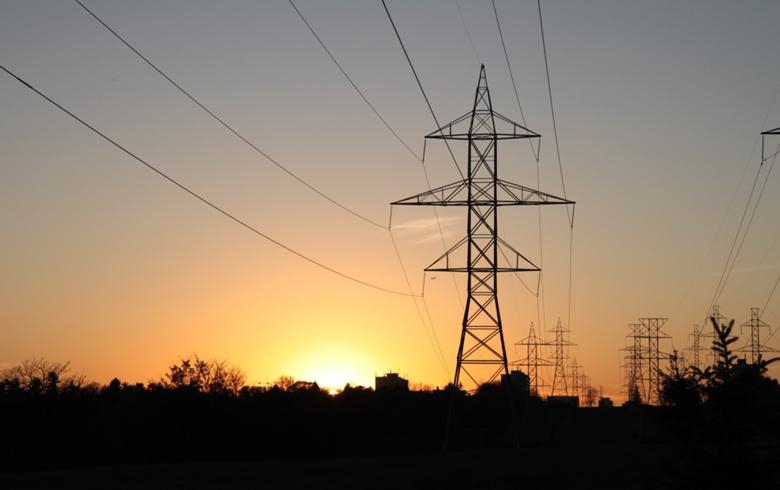
– The EU bank will support with a 22-year loan the company’s investments to modernize e the national electricity transmission grid
– This disbursement will bring the EIB outstanding loans to Terna to EUR 2.15 billion
Terna and the European Investment Bank (EIB) signed today an agreement for a EUR 490 million loan to support investments that will improve the reliability and quality of the electricity grid.
For the first time in the history of the relationship between Terna and the EIB, the loan will be allocated to support “asset renewal investments”. This includes assets and individual components replacement, as well as the adoption of the most advanced solutions in terms of eco-compatibility with the host environment. This disbursement will bring the EIB outstanding loans to Terna to EUR 2.15 billion.
The loan, which has a longer term and lower costs than those available on the market, is part of Terna’s financial structure optimization policy and is coherent with the EIB’s main financing activities in the energy and environmental field.
The loan will be disbursed in two fixed-rate tranches, each with a maturity of around 22 years. The first tranche drawdown is expected in June 2020 for a total amount of EUR 147 million, with a fixed rate of 0.717%, the second tranche drawdown is expected in March 2021 for a total amount of EUR 343 million and a fixed rate of 0.78%.Dario Scannapieco, Vice-President of the EIB, said: “This operation confirms the commitment of the European Union’s bank in upgrading the crucial sector of electricity grids. It also further strengthens the EIB’s fruitful partnership with Terna: in the last few years the bank has supported the company’s key investment plans in transmission-grid modernisation and development and in cross border high quality projects such as the Italy-France interconnection. With this new loan our ongoing financial commitment with Terna exceeds a total of two billion euro”.
“The contribution that the European Investment Bank makes to improve the reliability and quality of the electricity grid is very important to us. The acceleration of investments in the national transmission grid, in support of the energy transition taking place in the country, allows us to look with confidence towards an increasingly secure, efficient and sustainable integrated electricity market” declared Luigi Ferraris, CEO and General Manager of Terna.
Italy: Juncker Plan – EIB lends EUR 250m to ENEA for research into clean fusion energy
– The project is guaranteed by the Investment Plan for Europe and is being co-financed by EUROfusion, the EU programme to produce safe, clean nuclear fusion energy by 2050
– Agreement signed with the Lazio Region will help develop the new international scientific hub in Frascati
– 1,500 new jobs expected, including 500 for scientists and technicians, with an impact of EUR 2bn for the Italian economy
The challenge to produce safe, clean nuclear fusion energy by 2050 can now count on a ground-breaking experimental device that will be built in Italy. ENEA’s Divertor Tokamak Test (DTT) is ready to be launched thanks to EIB financing and the support of the Lazio Region, both announced today. The European Investment Bank will provide EUR 250m worth of financing under the Commission’s Juncker Plan supporting the implementation of the new scientific and technological hub of ENEA (National Agency for New Technologies, Energy and Sustainable Economic Development). This forms part of a total investment of EUR 500m for the facility which will be hosted in Frascati near Rome thanks to the agreement signed with the Lazio Region. The project will also receive funding from EUROfusion, the European Union’s programme to produce safe, clean nuclear energy, launched in 2014.
The whole project was presented in Rome by ENEA Chairman Federico Testa, EIB Vice-President Dario Scannapieco, Vice-President of the Lazio Region Daniele Leodori, EUROfusion Chairman Ambrogio Fasoli, and the Head of the European Commission’s Euratom Research Unit Elena Righi Steele.
The DTT facility has been created to respond to some of the key scientific and technological issues surrounding nuclear fusion, in particular the question of how to control the enormous amount of heat generated. The main financing is broken down as follows: apart from the EUR 250m allocated by the EIB and backed by the guarantee of the European Fund for Strategic Investments (EFSI, the pillars of the Juncker Plan), EUROfusion will contribute EUR 60m in Horizon 2020 funding, MIUR will provide EUR 40m, MISE EUR 40m, and the Lazio Region EUR 25m.
There will be positive implications for global scientific research with respect to existing large-scale projects and for the Italian economy. Some 1,500 scientists and technicians will be involved in the project (500 directly) and the impact on Italy’s GDP will be around EUR 2bn. Furthermore, thanks to collaboration with Italian and European universities and research centres, new generations of scientists and researchers from all continents will emerge.
“This cutting-edge project combining major research, technological innovation, development and industrial competitiveness will have an impact of more than EUR 2bn in pure economic terms. Its implementation is a great success because it will help respond to complex issues concerning the fusion process. It also confirms Italy’s strong leadership in this field thanks to its brilliant scientific community, which has managed to get the most advanced industries involved to create a hugely important sector. Italian companies have already won over EUR 1.2bn worth of contracts in this field”, said ENEA Chairman Federico Testa.
“ENEA’s project has two aspects that are fundamental for Europe: innovation and combating climate change. We must do more in both fields if we wish to look towards our planet’s future with hope and a sense of optimism, focusing responsibly on the long term without fear of the immediate short term which too often influences choices in terms of allocation of financial resources. I am proud that the EIB is providing a large chunk of the financing to support the development of the new laboratories in Frascati”, stated EIB Vice-President Dario Scannapieco.
European Commissioner Miguel Arias Cañete, responsible for Climate Action and Energy, said: “To achieve a climate neutral Europe by 2050, we need to keep investing in new technological solutions. Fusion is a potential source of safe, non-carbon emitting and virtually limitless energy. If we succeed in making a breakthrough in this technology it could significantly contribute to our efforts to make Europe the first climate neutral major economy. Today’s investment decision is one step towards this objective.”
Italy: EIB signs loan agreement with Cassa Depositi e Prestiti in support of mid-caps

– European Investment Bank (EIB) signs EUR 200 million loan agreement with Cassa Depositi e Prestiti (CDP), it is the first EIB credit line to Italian mid-caps through CDP.
– Financing available under advantageous conditions to all sectors in the Italian business environment, but with a focus on RDI, manufacturing and agri-food.
The EIB and CDP have signed a EUR 200 million loan agreement to promote lending to Italian mid-cap companies. The EIB funding will be on-lent to the final beneficiaries either through the subscription by CDP of mini-bonds that these companies would emit, or in the form of standard lending.
“The collaboration with CDP goes back a long time.” commented Andrea Clerici, head of the EIB’s Rome office. “However, this is the first time that the EIB partners with CDP to specifically support midcaps. These companies are trying to differentiate their funding sources, for example through the emission of mini-bonds, which are indeed on the rise, and we think this is a positive development for the market as a whole.”
In total, CDP will support up to 20 mid-cap companies in Italy through this loan. As a rule of thumb, the EIB financing can be used to cover only 50% of any supported project by CDP.