
Digital Solutions from HDI Global SE provides insurance for the pacemakers of technological progress

From remote-controlled construction machinery in crisis areas to converting normal vehicles for autonomous driving, companies such as Gravis Robotics or Embotech are advancing social and technological progress with innovative digital business models. With the insurance solutions of its Digital Solutions division, industrial insurer HDI Global acts as a partner and enabler to companies worldwide that are driving forward the digital transformation by minimising and assuming the associated risks.
HDI can call on more than 120 years of experience in industrial insurance to demonstrate extensive expertise in protecting companies against complex risks. As digitisation continues, manufacturing companies worldwide are in flux. More digitally designed business models are emerging, and established players are changing their business models to keep pace with digital developments such as artificial intelligence or robotics.
Companies face unprecedented risks due to the transformations brought about by new technologies. This is where HDI Global’s Digital Solutions unit comes in. It specialises in insurance solutions for partners in autonomous vehicles and systems, micromobility and online digital technology.
“In most cases, there are still no insurance solutions for the specific needs and novel risks of these innovation drivers. To address this, we develop tailored new insurance concepts.”
Meryem SeyyarHead of HDI Digital Solutions
In this way, HDI Digital Solutions helps its partners gain the trust of their customers and investors in their novel products and services and reduce their financial risk. “We see ourselves as a partner to our customers. As such, especially in times of accelerated market transformation, we support them in developing their business from the beginning and across all value chain steps,” Seyyar said. HDI Global is active worldwide as part of the Talanx Group. This means that the insurance solutions for customers from the digital sector can be easily scaled for other regions and adapted to local market regulations.
New partners in robotics and autonomous driving
The latest cooperation partners of the Digital Solutions unit include two spin-off companies that started at ETH Zurich, which stands for excellent framework conditions for academic research. Their graduates are in demand worldwide as specialists and managers.
Gard withstands market turbulence to deliver stand out insurance results
Gard presented its annual results and its second integrated annual report, showing that the group has delivered its best insurance performance in 15 years. Challenging investment markets meant that results overall ended close to break even.
Gard’s reporting period was slightly shorter than usual this year, as the Board of Directors decided to change the financial year. Going forward it will coincide with the calendar year instead of running from February to February. The 2022 results thus cover a transition period of roughly ten months, from 21 February to 31 December 2022.
The results for this period were as follows – all numbers on an Estimated Total Call (ETC) basis:
– Gross written premium of USD 995 million- Combined ratio net of 81 per cent- Technical result of USD 149.8 million- Non-technical loss of USD 149.3 million- Profit after tax of USD USD 1.7 million- Equity reserves of USD 1,260 million
The report also highlighted that Gard is the world’s first specialised marine insurer to receive a gold rating from Ecovadis, a leading rating agency assessing companies’ corporate responsibility and ESG performance.
Gard CEO, Rolf Thore Roppestad said: “I am delighted to see that Gard continues to deliver strong results, offering stability, sustainability and financial strength for the benefit of our Members and clients. It has been a turbulent year, both operation-ally and in terms of financial markets, so it has not been straightforward. Still, we have focused on the fundamentals and delivered fantastic insurance results – the best we have seen in fifteen years. In fact, all five lines of business have delivered positive results. In a volatile business like ours, that is quite extraordinary.
“The strong results were driven primarily by a lower level of major claims, combined with disciplined underwriting and good claims handling. Both Gard and its Members and clients run high-quality operations, which is what is being reflected in these results.”
Even though the reporting period was two months shorter than usual, the group’s gross written premium was almost the same as in the previous period, when it surpassed USD 1 billion for the first time. Looking at the full calendar year 2022, the gross written premium was USD 1,167 million.
Roppestad said: “Overall, Gard remains well capitalised and financially robust. That is why it was agreed to give a five per cent Owners’ General Discount (OGD) to mutual entries that renewed with Gard for the 2023 policy year. For our owners, this means approximately USD 23 million in savings. With this, we continue to help and support our Members and clients in uncertain times, focusing on staying robust and well-placed to face the future.”
Insurance for vessels leaving Ukrainian ports loaded with grains skyrockets

London’s insurance industry is gearing up to cover Ukrainian grain and fertilizer shipments via a safe corridor, which could require up to US$50 million per insured cargo, industry sources said this week.
In effect, London’s marine insurance market has put the Black Sea region on its high-risk list, and insurance costs have soared.
For each voyage, ships will need separate layers of coverage, including for the cargo and the vessel itself, known as hull and machinery coverage. An additional fee is also charged by subscribers to enter such areas.
Lloyd’s insurer Ascot and brokerage Marsh have launched a mechanism for grain traders to provide up to US$ 50 million in cargo coverage for each voyage, according to Marsh’s global head of shipping and cargo, Marcus Baker.
“We’ve had some inquiries over the last couple of days, and we expect this to gain traction,” Mr. Baker explained, adding that US$50 million is more than enough for most grain shipments.
While there are issues to be resolved related to the corridor and ports, Baker explained that “the fact that we have this in place means that when something happens, we can move.”
Baker declined to comment on pricing but said the system would include a “no claims bonus” — a refund for a hassle-free trip.
The first grain ship to leave a Ukrainian port since Russia invaded on February 24, following a deal brokered by Ankara, Moscow and the United Nations, passed through the Bosphorus after the inspection ended last Wednesday. That same day three vessels loaded with corn left from Ukrainian ports in the Black Sea towards the Bosphorus. She was the first of a long list of another sixteen waiting depart.
Source: Mercopress
Groupe BPCE: Jérôme Terpereau appointed Head of Retail Banking & Insurance, Member of the Management Board
Meeting of 25.03.2022 under the chairmanship of Thierry Cahn, the Groupe BPCE Supervisory Board approved the proposal put forward by Laurent Mignon, CEO of Groupe BPCE, to appoint Jerôme Terpereau, as Head of Retail Banking & Insurance, Member of the Groupe BPCE Management Board, as from June 1.
Jérôme Terpereau is currently Chairman of the Management Board of Caisse d’Epargne Aquitaine Poitou-Charentes.
He will succeed Christine Fabresse, who has been appointed to chair the Management Board of Caisse d’Epargne Provence-Alpes-Corse (CEPAC) as from May 2, 2022.
As from June 1, the Groupe BPCE Executive Management Committee shall comprise:
Laurent Mignon, CEO of Groupe BPCE;
Béatrice Lafaurie, Head of Human Resources, Member of the Management Board;
Jean-François Lequoy, Head of Finance & Strategy, Member of the Management Board;
Nicolas Namias, Chief Executive Officer Global Financial Services, Member of the Management Board;
Jérôme Terpereau, Head of Retail Banking & Insurance, Member of the Management Board;
Laurent Benatar, Chief Technology and Operations Officer;
Jacques Beyssade, Secretary General;
François Codet, Chief Executive Officer, Insurance;
Catherine Halberstadt, Head of Financial Solutions & Expertise;
Stéphanie Paix, Chief Risk Officer;
Yves Tyrode, Chief Digital & Payments Officer.
Biography of Jérôme Terpereau, Head of Retail Banking & Insurance
Jérôme Terpereau, 53, holds a Master in Economic Science and a DESS specialist degree in Management of Financial and Banking Organizations from Paris IX Dauphine University and is a graduate of France’s Economics and Banking Institute (IEB) and the Centre for Higher Studies in Banking (CESB).
Jérôme Terpereau began with Caisse d’Épargne Centre Val-de-Loire in 1991 where he occupied various finance functions, before joining the Executive Committee in 2001 as Head of Financial Management. He subsequently moved to Caisse Nationale des Caisses d’Épargne in 2003 and became Head of Financial Engineering with responsibility for local government bodies and institutions, then Chief Budget Officer.
He was later appointed to the Management Board of Caisse d’Épargne Midi-Pyrénées in 2008, with responsibility for Finance and General Functions, as well as real estate and financing subsidiaries. In 2015, he was named Chief Executive Officer of BPCE Financement.
Since 2018, he has been Chairman of the Management Board of Caisse d’Epargne Aquitaine Poitou-Charentes.
Lloyd’s report highlights importance of insurance to safeguard employee value

Lloyd’s, the world’s leading marketplace for commercial, corporate and speciality risk solutions, published a new report in collaboration with KPMG, which looks at how human capital, or the collective abilities and skills of employees, is a key driver of organisational value and a potential blind spot for firms failing to invest in their workforce in the wake of the pandemic.
The new report, ‘Safeguarding human capital: How to protect and enhance the value of human capital’ is the last in a series of joint reports from Lloyd’s and KPMG which focus on the increasing risk intangible assets pose to organisations, and the importance of protecting them.
The report identifies ways in which the insurance industry could help organisations to manage and mitigate against the varying and far-reaching implications of human capital events, such as a pandemic. While there are existing insurance solutions already available in the Lloyd’s market, the report highlights the need for a further continued effort at product development in this area. By protecting the value associated with teams rather than just key individuals, human capital insurance solutions could be key to workforce management in the wake of the pandemic and future systemic risks.
The report focuses on how insurers can support organisations following an adverse event by not only addressing the wider damage caused, but also by playing a preventative role. As well as considering how different metrics and indices can be used to quantify and measure the damage of human capital events, insurers could track and analyse workforce data to project risk triggers and their potential impact on value.
COVID-19 has exacerbated many of the risks involving human capital value. With the pandemic impacting the entire workforce globally, and many organisations still operating under a remote working model, the value of employees in achieving productivity is vital for business continuity. It is becoming increasingly apparent that talent attraction and retention, and employee wellbeing are not just intrinsically linked, they also have a direct impact on business performance.
Though most firms recognise this, many are failing to fully understand the value of their people. This means that their skills and knowledge – and corresponding value as human capital – depart when employees do, leaving firms exposed. By investing in employees through upskilling, better engagement and proactive culture management, firms can ensure they are attracting and retaining the best talent.
The report identifies four key actions that risk owners in organisations need to think about to advance their preparedness to safeguard their organisations’ human capital. These include:
– Ensure leadership champions a culture that truly empowers employees in remote working conditions
– Use data to hire and manage your employees
– Prioritise the needs of employees but also reduce the reliance on any one individual
– Horizon scan and be prepared to continuously adapt to change
Dr. Trevor Maynard, head of Innovation at Lloyd’s said: “Human capital is key to company value, and whilst insurance solutions already exist to protect this intangible asset, the past two years has highlighted the need for insurers to work with risk owners to manage the new risks that have emerged as work practices change and evolve. Lloyd’s is a great place for such collaboration to happen and we hope to see new innovative solutions and products that will help protect companies’ human capital.
Paul Merrey, partner at KPMG UK, said: “Technology will need to play a key role in future human capital insurance solutions. Currently most organisations have limited capabilities in gathering and analysing in-depth employee data. There is significant scope for insurance solutions that provide organisations with the required tools, knowledge and financial capital to overcome challenges whilst minimising business interruption and any adverse impact on their competitive position.”
Taxpayers, Not Insurance, to Cover Costs of Capitol Damage by Trump Mob

U.S. taxpayers will be on the hook for damage from a mob attack on the U.S. Capitol in Washington on Wednesday because the building and grounds are not insured, industry sources said.
Supporters of Republican President Donald Trump angry at his election loss stormed the Capitol Building, breaking windows, defacing items inside and setting small fires outside.
Taxpayers will pay for damages because federal agencies rarely carry insurance, industry and policy sources said. “Taxpayers will be on the hook for repairs to the Capitol,” said Stephen Ellis, president of Taxpayers for Common Sense, a U.S. budget watchdog group.
The tab for fixing broken glass, doors and furniture, plus cleaning debris left behind, was still unknown.
Senator Jeff Merkley’s office had a door knocked off its hinges and art torn from the wall, according to video the Oregon Democrat posted on Twitter.
Other congressional staffers and journalists posted photos of offices littered with broken glass and debris, as well as a door with “MURDER THE MEDIA” scrawled into it, and a bust of former President Zachary Taylor splashed with red paint.
The Architect of the Capitol, which oversees building preservation and maintenance, will likely have to cover some of the cost, sources said. The agency did not respond to a comment request.
The violence on Wednesday came as the Senate was counting electoral votes to certify Democrat Joe Biden’s presidential victory. The siege by Trump supporters represents one of the gravest security lapses in recent U.S. history, current and former law enforcement officials said.
In terms of repair and cleanup expenses, the federal government has long considered insurance not worth the expense.
Even allowing the FBI to purchase coverage for an undercover operation involving global risks is rare, the Government Accountability Office noted in a 1982 report.
That position has not changed much, even after terrorists targeted the Pentagon on Sept. 11, 2001. It cost $500 million to $1 billion to fix the building, according to estimates.
Source: insurancejournal.com (Reporting by Suzanne Barlyn Editing by Lauren Tara LaCapra)
Halifax goes digital to take hassle out of content insurance

Two-thirds (62%) of UK renters risk not being able to replace their possessions if they were damaged or stolen because they do not have contents insurance.
This is against a backdrop of increasing numbers of renters overall. The number of households renting in the UK has risen from 2.8 million in 2007 to 4.5 million in 2017, an increase of 63%, according to the Office of National Statistics.
Young renters are especially at risk, with research from Halifax Home Insurance showing that while 42% of 25-34 year-olds rent their home, three quarters (70%) of this group do not have contents insurance in place.
The biggest turn off for renters is the perceived cost of cover, with 40% identifying this as the major blocker. The next turn off is that people don’t think their possessions are worth enough to insure them (26% of renters).
Halifax has worked with US fintech firm Trov to launch a simple and lower-cost insurance product, Halifax Renters Insurance, which offers:
Insurance against lower sums – traditional contents insurance policies tend to cover £75,000 – £100,000 as standard but this is more than most renters require. Renters’ Insurance will protect contents up to £10,000.
Ability for users to insure individual items whenever they want, turning protection on or off at the touch of a button.
Online access and management throughout, meaning it’s much simpler for customers to take out cover.Monthly subscriptions, allowing customers to get cover when they need it without being tied into a contract. “Renters can easily fall into the trap of taking out individual insurance for only their prized possessions, such as a phone and laptop, but not taking out contents insurance as they don’t see the benefit of traditional policies. But when the cost of these individual insurance policies is added up, people can end up spending more on several policies than on a single contents insurance policy which would cover more than just those items. Working with Trov, we’re taking the hassle out of home insurance for renters, giving them peace of mind that their belongings are covered should the worst happen”, said Jeremy Ward, Head of Home Insurance at Halifax.
Home & Legacy partners with Munich Re Syndicate on high net worth insurance

High net worth insurance specialist, Home & Legacy, has announced that specialist underwriter at Lloyd’s of London market, Munich Re Syndicate, has joined its household underwriting panel.
Alongside existing panel members, Munich Re Syndicate will underwrite Home & Legacy’s Prestige Home and Ultra Home products.
Commenting on the partnership Home & Legacy’s underwriting & markets director, Adrian Ewington, said:
“When a new underwriter joins Home & Legacy’s panel, the relationship has to be right. We partner with prestigious insurers, which fit well with our existing panel and help us offer the best possible footprint for high net worth customers and brokers. We’re proud to announce our partnership with Munich Re Syndicate and look forward to a prosperous relationship.”
Munich Re Syndicate’s property underwriting manager, Martyn Dolan commented:
“We are delighted to be joining the Home & Legacy panel – a partnership which supports our exciting development ambitions and commitment to writing quality high net worth insurance business. The excellent service that Home & Legacy offers customers and brokers makes it an excellent partner for us to work with in the high net worth market.”Home & Legacy’s unique high net worth insurance panel business model provides brokers with access to exclusive rates from a number of leading insurers. Quotes from Munich Re Syndicate will now appear on the Home & Legacy Online ‘quote grid view’ and brokers will notice Munich Re Syndicate on Home & Legacy renewal quotations.
Travel and insurance firms in the front line of Thomas Cook fallout

This weekend’s demise of Thomas Cook has rearranged the top of the FTSE losers and gainers table this morning and the score is as follows: travel firms score, insurance lose.
The tour group went into compulsory liquidation over the weekend after last ditch rescue talks failed, cancelling all of its flight and hotel bookings. In a larger scale replay of the collapse of Monarch airlines a few years ago thousands of travellers were left stranded, leaving the UK Civil Aviation Authority to repatriate some 150,000 passengers.
Insurance firms are already reeling from the bill that could potentially head their way with RSA Insurance, Prudential and high street banks all trading lower.
Travel group TUI spiked 8% assuming that it will pick up a large portion of Thomas Cook’s holiday traffic in the future.
Source: cityindex
Insurance startup Lemonade raises $300 million to fuel expansion
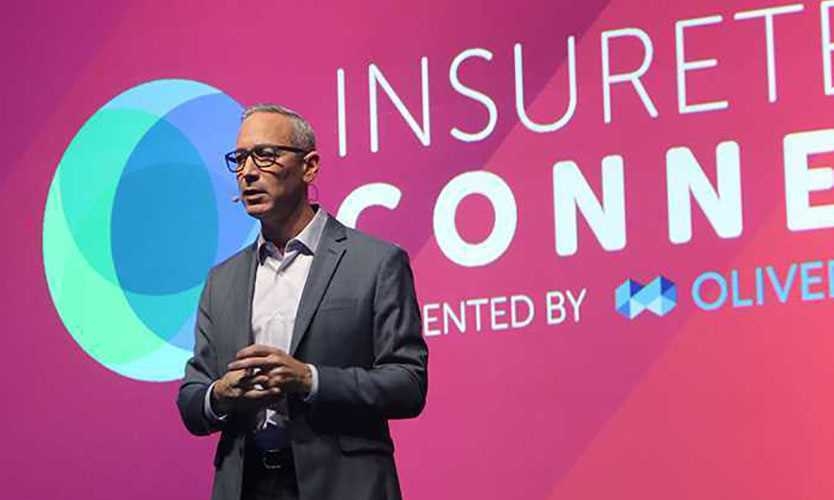
(Reuters) – Tech-driven insurance startup Lemonade Inc has signed a $300 million funding round led by Japan’s SoftBank Group Corp , the company said on Thursday. Other investors included insurer Allianz SE, Alphabet Inc’s venture capital arm GV, General Catalyst, OurCrowd and Thrive Capital. The company will use the funds to expand in the United States, launch in Europe and grow its product offering beyond home and rental insurance, Lemonade Chief Executive Daniel Schreiber said in an interview. Lemonade, which started in New York in late 2016, is part of a growing number of young companies looking to shake up the insurance sector through better use of technology. It offers insurance in 25 U.S. states and markets itself as a company that has nothing to gain by denying claims because it donates any money left over to charities chosen by its customers. Lemonade says it has digitized the entire insurance process replacing brokers and paperwork with algorithms and providing policies in as little as 90 seconds and payment of claims in three minutes. Lemonade says it collects 100 times more data than traditional carriers which will enable it to improve underwriting and pricing.
It currently has 163 employees and has sold over half a million policies so-far, Schreiber said. The company aims to grow its roster of products to be able to keep up with the evolving needs of its customers, many of whom are young first-time buyers of insurance, he said.
It hopes to take advantage of its lower operational costs than traditional players to build a global digital insurance company. “When you build the company on a purely digital substrate you have the ability to expand geographically and expand into new markets at a fraction of a cost,” Schreiber said. “We don’t have to roll into town and build a skyscraper.” The new investment round, which is targeted to close this quarter, brings the total funding raised by Lemonade to $480 million. It follows a $120 million raise in December 2017 led by Softbank with participation from existing investors.