
ArcelorMittal and the EIB announce €280 million of funding for research and innovation supporting the steel company’s decarbonisation objectives
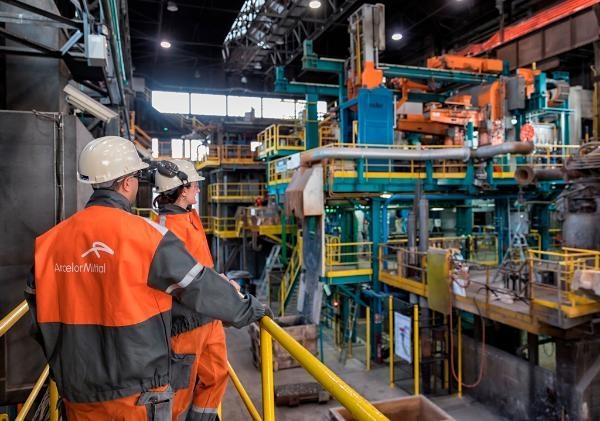
Key funding will allow significant expansion of ArcelorMittal’s research and development activities on decarbonisation.
A project covering capital expenditure in several EU countries: France, Belgium, Luxembourg and Spain.
The loan is backed by a guarantee from the European Fund for Strategic Investments, the main pillar of the European Commission’s Investment Plan for Europe.
A €280 million loan granted to ArcelorMittal by the European Investment Bank (EIB) backed by the Investment Plan for Europe will help to fund the group’s European research and development programme between 2021 and 2023.
This major funding initiative aims to support ArcelorMittal’s research activities and the associated capital expenditure in the field of environmental, climate and energy projects. It will help the group to reach its ambitious climate action goals and thus to reduce the environmental footprint of its manufacturing facilities, steel products and technological solutions. ArcelorMittal Europe has committed to reducing CO2e emissions intensity by 35% by 2030, with ArcelorMittal Group having set a 2050 net-zero emissions target.
This partnership between the EIB and ArcelorMittal is backed by the European Fund for Strategic Investments (EFSI), the central pillar of the Investment Plan for Europe. In general, at least 40% of EFSI infrastructure and innovation projects aim to contribute to climate action in line with the Paris Agreement. This project will also contribute to EU industry’s leadership as a provider of high-tech steel grades, products and solutions.
New products, process improvements and technical solutions are expected to bring significant positive environmental results in terms of direct and indirect greenhouse gas emissions reductions.
The research and development activities supported through the new investment will be carried out primarily in ArcelorMittal’s existing R&D facilities in France, Belgium, Luxembourg and Spain.
Vice-President of ArcelorMittal and Head of Research and Development Greg Ludkovsky said: “The role of our organisation, Global R&D, is to create the technological basis for ensuring ArcelorMittal’s long-term viability as the world’s leading steel and mining company. This funding will help Global R&D to further enable ArcelorMittal’s ambitions to reduce its environmental footprint in terms of its operations and its products. We will be able to expand our work to develop environmentally sustainable, high-added value, cost-effective and disruptive products and manufacturing processes.”
EIB Vice-President Ambroise Fayolle underlined the fact that “the signing of this agreement between the EU bank and ArcelorMittal will support a major European player in the steel industry with an in-depth focus on higher value-added steel products. These investments will play a key role in ArcelorMittal’s carbon footprint reduction strategy and therefore contribute to the European Green Deal, aligned with the terms of the 2015 Paris Agreement on climate change.”
EIB Vice-President Kris Peeters said: “I very much welcome this financing agreement, which will support the innovation efforts of ArcelorMittal in the European Union. I like the idea that the research will be carried out in several Member States, in a true European spirit. The steel sector is vital for the European economy. More than other sectors, it is faced with the need to constantly reinvent itself and make its production processes more efficient and less of a burden on the environment. This requires constant investment in innovation. I trust that through our support we can support ArcelorMittal in its operations, helping to increase the competitiveness of the company and thereby contributing to the EU’s leadership as provider of high-tech steel worldwide.”
European Commissioner for the Economy Paolo Gentiloni added: “Thanks to a guarantee from the Investment Plan for Europe, ArcelorMittal will invest €280 million into research and development activities to meet its climate goals and reduce the environmental footprint of its manufacturing facilities. This agreement shows that innovation is key to companies’ efforts to contribute to Europe’s climate commitments while staying competitive. I am looking forward to seeing many other companies follow suit.”
In 2017, ArcelorMittal Group and the EIB signed a financing agreement for €350 million, supported by the Investment Plan for Europe, to help to fund the group’s European research and development programme between 2017 and 2020.
In 2020, the EIB granted a €75 million loan to ArcelorMittal supported by InnovFin Energy Demonstration projects and financed under Horizon 2020 and the NER 300 funding programme of the European Commission.
The funding supported ArcelorMittal Group’s research and development activities and associated capital expenditure in various fields:
Innovative casting technologies
Circular economy and CO2 reduction
Alternative coatings to replace Chromium 6
New rolling technologies for energy reduction
Blast furnace decarbonisation
Additive manufacturing for steel applications
Development of innovative high strength steels for automotive
Development of low loss electrical steel to improve engines’ energy retention
Substrates and coatings for global energy transition applications (solar, windmills, etc.)
Deutsche Bank announces two senior hires in Technology, Data and Innovation
Deutsche Bank today announced two senior appointments within its newly formed Technology, Data and Innovation division. Both individuals will join in December.
Dilip Khandelwal will join as Managing Director and Head of Technology Centres, based in Pune. Khandelwal will oversee the development of the bank‘s Technology Centres globally to create one, consistent strategy while continuing to work with our businesses on developing technology to improve the client experience. He will also become Head of Technology, Data and Innovation for Asia Pacific and Chief Information Officer for Human Resources, Legal and Communications. Khandelwal joins from SAP where he led large scale transformation to accelerate customers to the cloud. Under his guidance, SAP Labs India became one of the top contributing Technology Centres at the company, with highest employee engagement.
Gil Perez will join the bank as Managing Director and Head of Strategy & Innovation. Perez will oversee innovation strategy, thought leadership, and technology innovation partnerships, ensuring that the bank continues to evaluate and match business demand with appropriate third-party technology solutions. Perez joins from SAP, where he spent 8 years working with enterprise companies guiding them through their respective digital transformation journey.
Bernd Leukert, Head of Technology, Data and Innovation at Deutsche Bank, said: “The opportunity to transform technology at a global company like Deutsche Bank is a unique challenge for talented and ambitious technologists. With Dilip and Gil we are gaining two outstanding technology leaders who will help bring our IT strategy to life. They have built proven track-records within the technology industry for being innovative, transformative and focused on clients’ needs. I know they will complement the expertise we are fortunate to have at Deutsche Bank and help position technology at the centre of the bank’s activities.”
EUR 7 billion EIB backing for communications, renewable energy and innovation
– EUR 1.3 billion to improve internet and mobile telecommunication services
– EUR 1.7 billion for business and corporate innovation investment
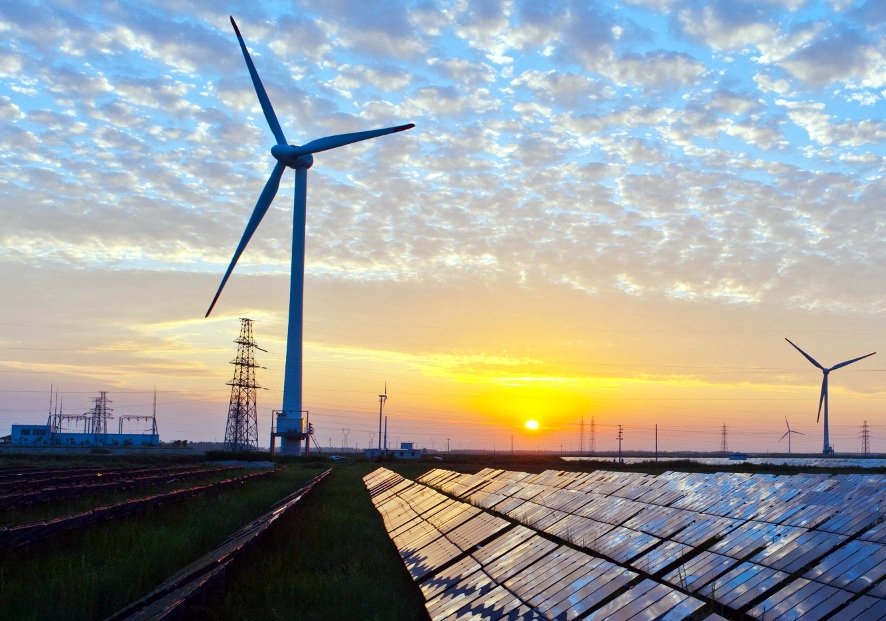
– EUR 1.5 billion for renewable energy and energy transition
The Board of the European Investment Bank (EIB) yesterday agreed to support EUR 6.9 billion of new financing. This includes backing new investment across Europe and around the world to improve communications, renewable energy, sustainable transport, social housing and education infrastructure.The new EIB financing includes EUR 1.7 billion of new support for corporate research and development, and business investment through direct financing and credit lines with local banks.
The meeting also approved a new Energy Lending Policy to further strengthen the impact of EIB support for energy transition and a new strategy to deliver on the EIB’s ambition to increase climate action and environmental sustainability over the next decade.
Improving communications for millions of people across Europe
The EIB approved more than EUR 1.3 billion new financing to enhance mobile and broadband communications for millions of people in France, Italy and Hungary.New projects backed by the EIB include the roll out of ultra high-speed fibre to more than 5.8 million households across France and upgrading the Italian mobile phone network to enable access to high-speed mobile services by 99% of the population.
Accelerating energy transition and scaling up renewable energy
The EIB agreed EUR 1.5 billion of new financing to support renewable energy and energy efficiency projects around the world.This includes support for new wind farms in Austria and Lebanon, 15 new solar power plants across Spain, as well as small-scale climate action and renewable energy projects in France, Kazakhstan, the South Caucasus, Latin America and Africa.New energy network investment to expand electric vehicle charging in Estonia, provision of smart meters in Ireland and more efficient street lighting across Italy were also approved by the EIB board.
Fostering innovation and private enterprise
At the November meeting the EIB approved EUR 1.6 billion of new direct and indirect financing for corporate innovation and private sector business investment.This includes lending programmes to finance innovation investment with leading local banks in Germany and Italy, support for private equity investment in Spain and Slovakia and schemes to enhance access to finance by local SMEs in Austria and Georgia.Four new schemes to provide local and foreign currency business financing will help to overcome currency related investment barriers in Belarus, Ukraine and Africa.
Transforming sustainable urban transport
2.3 million people living in the Indian city of Bhopal and commuters across France will benefit from new sustainable transport investment agreed by the EIB.This will support construction of the first two metro lines in Bhopal and provision of 330 electric buses and charging infrastructure to replace diesel buses with zero emission transport in towns across France.
Strengthening agricultural production
Agriculture and bio-industry investment across Europe will be supported by a new EUR 700 million financing scheme approved by the EIB board. This follows the successful implementation of a pilot agriculture financing programme over the last year.The EIB also agreed new financing to support renewal of agricultural machinery in Spain, agri-food investment in Morocco and upgrading grain storage and transport in Ukraine.Improving access to social housing and quality educationHouseholds across France and Ireland will benefit from construction of 80,000 new social housing units to be financed by the EIB in France and new support for energy efficient affordable housing in Ireland.The EIB also agreed to finance construction of 150 new primary schools in Tunisia and upgrading 37 schools, kindergarten and sports centres in Finland.
Enabling sustainable development in vulnerable countries
Projects across the Caribbean that contribute to sustainable development goals will be supported by a new streamlined financing programme approved by the EIB. The Board also approved a new scheme to support projects in Colombia in areas most impacted by recent conflict.In Brazil 140,000 households will be connected to clean drinking water for the first time and 300,000 homes benefit from wastewater services under a regional water investment programme backed by the EIB
EUR 2.2 billion of investment backed by the Investment Plan for Europe
The European Fund for Strategic Investments (EFSI), the financial pillar of the Juncker plan will support EUR 2.2 billion of new investment for projects approved by the EIB board.