
BlueInvest Thematic Workshop 2020 | Green Shipping
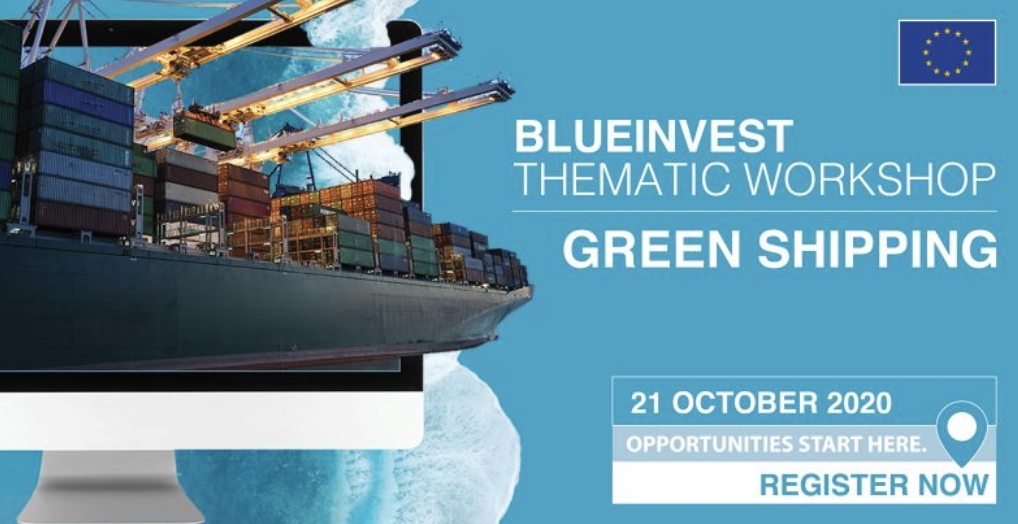
A one-day virtual event featuring investors’ pitches, corporate spotlight and entrepreneurs’ pitches in which they will have the opportunity to present innovative start-ups and projects in the Blue Economy sector (green shipping, smart ports, and maritime logistics industries)
• 21st October
• Athens, Greece (online)
• Co-organized by PwC and Aephoria (BlueGrowth), Greece
The event is part of the BlueInvest framework of activities to promote Blue Growth and help SMEs and start-ups access finance and business opportunities. Blue Economy is of significant importance for the EU as it will make a substantial contribution to acquiring the goals of the European Green Deal. In this regard, this thematic workshop will be an unprecedented opportunity for entrepreneurs, investors, corporates and maritime stakeholders to connect and develop together innovative strategies to deal with future common challenges.
This event will be an opportunity for Blue Economy entrepreneurs to make their maritime startups known, present their innovative projects and attract investment from the sector. In fact, they will be given a unique chance to pitch their solutions in front of a panel of investors and investment experts. At the same time corporates will present the market needs, digital ports, upcoming trends in green shipping and how the industry could be re-shaped providing visions for the future and strategies on how to accept the challenges and seize the opportunities of EU Green Deal. The discussion will be attended by hi level corporates in the blue economy from both the private and public sector.
For the first time in Greece, the 2020 edition of the BlueInvest thematic workshop will host a space for successful investors to present their funds and projects. Thus they will be able to showcase their future plans in the sector also bringing attention on their specific needs.
Agenda
09:00 – 10:00 Session 1: Opening Session10:00 – 11:00 Session 2: Investor Spotlight11:00 – 12:30 Pitch Session 1
12:30 – 14:00 Break
14:00 – 15:00 Session 3: Corporate Spotlight15:00 – 16:30 Pitch Session 2
16:30 – 17:00 Conclusion and wrap-up
ING invests in green inland shipping
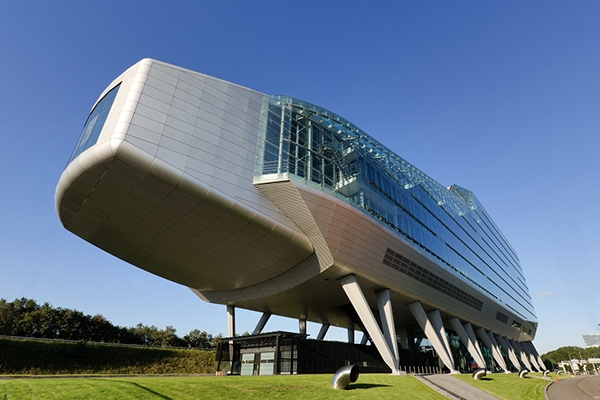
ING and partners have formed a new company that aims to make Dutch inland shipping more sustainable.
The company is called Zero Emission Services, or ZES, and it will allow inland barges in the Netherlands to sail emission-free thanks to replaceable battery containers that are charged with renewable power. The system includes a network of charging points for exchanging battery containers, technical support and an innovative pay-per-use concept for ship owners that was developed by ING, which enables a low entry barrier for the shipowners, a key factor for the transformation to succeed. Today, the Dutch transport sector is collectively responsible for 21% of all carbon dioxide (CO2) emissions in the Netherlands. Inland navigation accounts for 5% of this. By transforming from diesel-powered inland shipping to fully electrically powered transport, the inland shipping sector is taking an important step towards realising the Paris Climate Agreement goals. The company was founded by ING, energy and technical service provider ENGIE, maritime technology company Wärtsilä and the Port of Rotterdam Authority. It has the support of the Dutch Ministry of Infrastructure and Water Management, as well as a first client in Heineken. Heineken has committed to use this electric transport for its beer transport in the Netherlands for the next 10 years, to give the initiative a jump-start.Ruud van Dusschoten, CEO of ING in the Netherlands, explains.
How is ING helping inland shipowners transition to sustainability?
“ING has developed an innovative financing method for making inland shipping more sustainable based on ‘pay per use’. With this, we make it easier for ship owners to transition to zero emissions.
Ruud van Dusschoten, CEO of ING in the Netherlands
“With this form of financing, the ship owner doesn’t have to pay for the transition himself, nor does he run a financial risk on the new sustainable energy carrier. We take that off their hands. The ship owner only pays for usage. You can best compare it to paying the energy bill at home: you pay a base fee for the connection and then only for the amount of energy you use.“Pay per use has already been successfully applied. Like with transport by train, where the passenger only pays when used, or paying for light in offices without the building owner investing in light fixtures and bulbs.“We see this form of financing at ING as an increasingly important instrument for stimulating sustainability. It makes the decision to participate in the transition to sustainability easier, which helps to achieve climate targets faster.”
ING is an investor in ZES, rather than just providing a loan. Can you explain this?
“ING supports the Paris climate goals to keep global warming well below two degrees. The biggest impact we can make is with our financing. And devising new forms of financing that help contribute to sustainability.“That’s why we’re committed to the Dutch Climate Agreement and have also signed the Green Deal for Shipping, Inland Shipping and Ports. Inland shipping, in addition to greenhouse emissions, also has nitrogen and particulate matter emissions, which are very harmful to the living environment. Plus, ships sail through crowded areas. We therefore see great importance in helping the sector to stimulate a zero-emission mode of transport. And we think it’s possible from our perspective as a bank. That’s why we participate in the ZES consortium as ING, as an investor and as the inventor of the financing model.“We have already proven that we can achieve sustainability in the sector. As a financier, ING previously initiated the transition to zero emissions in Dutch public transport. As a result, by 2030 all public transport vehicles will be zero emissions. Now we also want to help inland shipping quickly take large ‘green’ steps towards zero emissions.”