
EBRD to invest in Lamda’s green bond in Greece
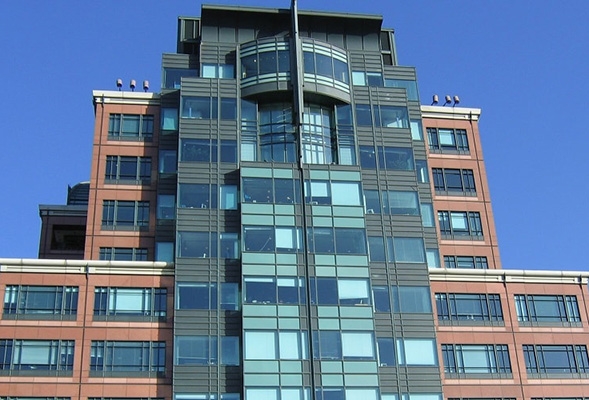
EBRD to invest €20 million in a €230 million green bond issue by Lamda Development
Green bond to back the company’s investment in sustainability and climate resilience
EBRD to support flagship The Ellinikon project through an innovative green finance instrument
The European Bank for Reconstruction and Development (EBRD) has successfully participated in a green bond issued by Lamda Development in Greece, investing €20 million in the total €230 million offering.
Lamda is the largest Greek real-estate developer and owner of The Ellinikon, the largest urban regeneration project in Greece and one of the largest in Europe, which aims to transform the former Athens International Airport in the area of Ellinikon into a sustainable and fully integrated commercial, residential and hospitality area open to the public.
The proceeds of the bond issue will fund sustainability elements of The Ellinikon, including green buildings and infrastructure, green energy and smart-city technologies.
Lamda will invest the EBRD’s proceeds in financing green-certified assets, achieving at least Leadership in Energy and Environmental Design (LEED) “Gold” or BREEAM “Very Good” certification.
The green bond is listed on the Athens Stock Exchange (ΑΤΗΕΧ) and aligned with the International Capital Market Association’s Green Bond Principles. The issuance, taking place in the current market environment, shows the debt capital market’s resilience and contributes to its development and long-term financial viability, promoting environmental aspirations through a dedicated green finance instrument that strengthens corporate climate governance.
Vlaho Kojakovic, EBRD Head of Property and Tourism, said: “We are delighted to contribute to Lamda’s path towards a low-carbon trajectory and the realisation of an investment plan focused on sustainability and climate resilience, through a tailored capital markets tool. The Ellinikon is a flagship project for the sector’s transition to a high-specification, smart and sustainable building and infrastructure landscape, offering a versatile land-use mix and having significant economic, societal and environmental implications for a much wider area.
Odisseas Athanasiou, CEO of Lamda Development, said: “We are very pleased with the EBRD’s participation in our first ever green Greek listed bond. This transaction further cements our relationship with the EBRD, which we consider a strong partner in our journey to make The Ellinikon a benchmark project for sustainability and smart living. The great reception of this bond by our investors is testament to the trust and confidence in our commitment to provide all of society, in a responsible way, with the highest standards of living in an urban environment.”
In 2019, the Bank invested €22.7 million in Lamda’s equity issuance to support the development of The Ellinikon.
To date, the EBRD has invested more than €5.8 billion in 91 projects in the corporate, financial, energy and infrastructure sectors of the Greek economy.
Source: EBRD
EBRD invests in Noval Property’s debut green bond in Greece
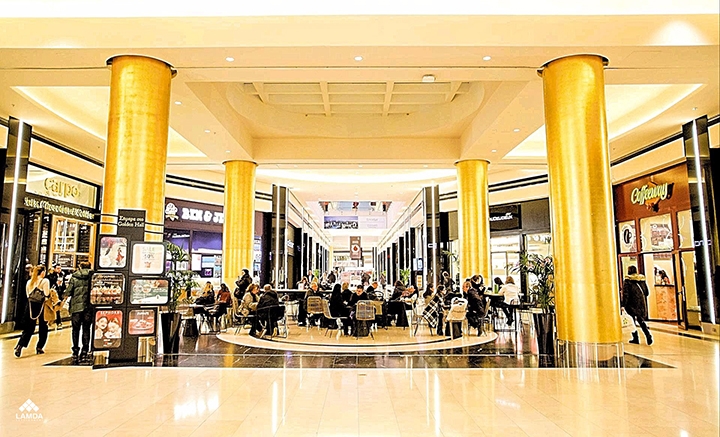
EBRD invests €12 million in €120 million debut green bond issuance by Noval Property
Green bond supports the company’s investment in green buildings
EBRD backs decarbonisation of the building sector in Greece
The European Bank for Reconstruction and Development (EBRD) has successfully participated in a debut green bond issuance by Noval Property in Greece, with an investment of €12 million of the total €120 million offering.
Noval Property is the second-largest real estate investment company in Greece in terms of assets, with a current portfolio of 43 commercial properties valued at €390 million. It is also a subsidiary of Viohalco.
Noval Property’s green bond, which is listed on the Athens Stock Exchange, is aligned with the International Capital Market Association’s (ICMA) Green Bond Principles, and will help strengthen corporate climate governance, while supporting transparency and integrity in the development of the local green capital market.
The issuance advances Noval Property’s strategy to scale up by providing funding to pursue new investments and property developments, while diversifying its funding sources and restructuring its balance sheet.
As part of the project, Noval Property has committed to invest the EBRD’s proceeds in financing green-certified assets, achieving at least LEED “Gold” or BREEAM “Very Good” certification.
Vlaho Kojakovic, EBRD Head of Property and Tourism, said: “We are very excited to support Noval Property in its inaugural step to access the green debt capital markets and in widening its investment portfolio. Noval Property will be pursuing a promising pipeline of sustainable green-certified buildings, which are currently in limited market supply, ultimately supporting the decarbonisation of the building sector in Greece.”
Panagiotis Kapetanakos, CEO of Noval Property, commented: “Noval Property is committed to green buildings and sustainable development. The proceeds from this issue will help us further enrich our green-certified portfolio by progressing our captive development pipeline and capitalising on suitable investment opportunities in the market. We are very happy and honoured that the EBRD shared our vision and supported this issue.”
To date the EBRD has invested approximately €5.1 billion in more than 80 projects in the corporate, financial, energy and infrastructure sectors of the Greek economy.
Source: EBRD
Deutsche Bank issues first own green bond
Deutsche Bank has, for the first time, successfully placed its own green bond in the market. The bond has a tenor of six years and a volume of 500 million euros with a coupon of 1.375 percent. The proceeds of the issue will be used exclusively to refinance the bank’s own sustainable projects, such as the expansion of renewable energies. In mid-May, Deutsche Bank established the necessary framework for a green bond and also set itself concrete sustainability targets.
“Issuing our own green bonds is a further building block of our sustainability strategy,” said CEO Christian Sewing. “As one of the few global financing houses, we can and want to help shape the transformation to a low-carbon economy. Green bonds for our own account and for our customers are an important instrument in this respect”.
Deutsche Bank’s Green Bond Framework defines the assets with which the bond is backed and what the proceeds may be used for. “Green” assets include loans and investments in companies, assets or projects in the fields of renewable energy, energy efficiency and so-called green buildings, which are constructed according to ecological and sustainable standards.
The bank’s framework follows the principles for green bonds of the International Capital Market Association (ICMA) – an industry association of capital market participants that has been the standard-bearer in the sustainable bond market since 2014. In addition, the framework also follows the latest guidelines of the Technical Expert Group on EU Taxonomy, the future classification system for sustainable investments within the European Union.