
Globus Maritime Ltd Reported Financial Results for the Second Quarter and Six-month period ended June 30, 2025
Globus Maritime Limited, a dry bulk shipping company, has reported its unaudited consolidated financial results for the second quarter and six-month period ended June 30, 2025.
• Revenue o $9.5 million in Q2 2025 o $18.2 million in H1 2025
• Adjusted EBITDA o $3.2 million in Q2 2025 o $5.2 million in H1 2025
• Time Charter Equivalent o $11,444 per day in Q2 2025 o $10,274 per day in H1 2025
Current Fleet Profile As of the date of this press release, Globus’ subsidiaries own and operate nine dry bulk carriers, consisting of six Kamsarmax and three Ultramax.
Management Commentary
“During the second quarter of 2025, rates edged higher compared to the softer averages of the first quarter, though they remained somewhat subdued overall. The quarter was marked by significant volatility in both freight rates and asset pricing—particularly for older vessels. Much of this fluctuation and weakness can be attributed to regulatory and geopolitical developments that dampened market confidence midway through the quarter, resulting in a temporary loss of momentum.
Toward the end of the quarter, however, we observed a gradual recovery in rates. This positive trend gained traction, supporting both stronger freight levels and firmer asset values. As of this writing, rates are standing at very healthy levels.
With the majority of our fleet employed in the spot market or with index-linked exposure, we are well positioned to capture the current upside. Our outlook for the short to medium term remains constructive. We are confident that our modern fleet will continue to benefit from favorable market dynamics, underpinned by healthy cargo flows, supportive ton-mile developments, and a relatively modest newbuilding orderbook.
In line with our fleet renewal and growth strategy, we expect delivery of two additional fuel-efficient Ultramaxes currently under construction in Japan, scheduled for in about a year from now.
We are also in active discussions with both existing and prospective financial institutions to secure competitive financing for our fleet and newbuildings. Our priority remains to maintain a strong balance sheet while keeping funding costs at reasonable levels.
Looking ahead, we remain fully committed to enhancing shareholder value through prudent growth, active fleet renewal, and the continued modernization of our operations.”
View Full Report
Globus Maritime announces agreement to sell the River Globe, a supramax vessel
Globus Maritime Limited (the “Company” or “Globus”) (NASDAQ: GLBS), a dry bulk shipping company, announced that through a wholly owned subsidiary, it has entered into an agreement to sell to an unaffiliated third party its 2007-built supramax vessel of approximately 53,627 dwt, the m/v River Globe, for a gross price of US$ 8.55 million before commissions and expenses.
The vessel is expected to be delivered to its new owner between March 1, 2025, and April 15, 2025. The sale of the vessel is subject to customary closing conditions and requirements.
Globus Maritime Announces New Charter for the M/V River Globe
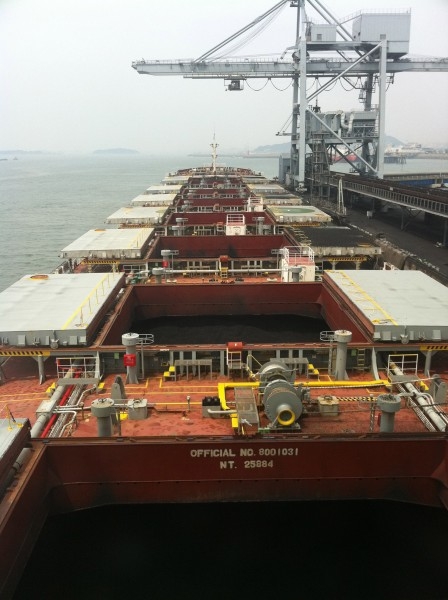
Globus Maritime Limited (the “Company” or “Globus”) (NASDAQ: GLBS), a dry bulk shipping company, announced that it has secured a new charter employment for its vessel M/V River Globe (a 53,627-deadweight ton Supramax dry bulk carrier built in 2007, at the Yangzhou Dayang Shipbuilding Co. Ltd).
The vessel has been chartered to an unrelated party for a gross daily rate of $29,500. The charter commenced on June 21, 2021 and has a minimum duration of three months and a maximum duration of five months (plus 15 days) at the charterer’s option, which is expected to generate gross revenue of approximately $2.74 million assuming the charter continues for the minimum scheduled period and approximately $4.07 million if the charter continues for the maximum period, in each case assuming no offhire days.
Athanasios (“Thanos”) Feidakis, President and CEO of Globus commented:
“We have secured short term employment as we continue to experience a strong market. We are focused on generating long term value and expect to continue to take advantage of a rising market.”
Globus Maritime Limited Announces the Acquisition of a 2018-Built “Eco” Kamsarmax Dry Bulk Carrier
Globus Maritime Limited, a dry bulk shipping company, announced that it has entered into, through a separate wholly owned subsidiary, an agreement with an unaffiliated third party to purchase a 2018-built “Eco” (i.e., with certain fuel efficiency design features) Kamsarmax vessel built by the Jiangsu New Yangzi Shipbuilding yard, for $27 million. The purchase agreement is subject to standard closing conditions and requirements.
The vessel is expected to be delivered to Globus during the second quarter of 2021.
On completion of this acquisition and the acquisition of the Kamsarmax vessel that the Company previously agreed to acquire and announced on February 18, 2021, which is also subject to standard closing conditions and requirements, the fleet of Globus is expected to expand to eight modern dry bulk carriers with a total carrying capacity of 544,420 deadweight tons and a weighted average age of 9.9 years (as of March 22, 2021).
Athanasios (“Thanos”) Feidakis, President and CEO of Globus commented:
“We are very pleased to announce yet another agreement to purchase a modern vessel resulting in an increase of our fleet carrying capacity and a decrease of the average age of the fleet.
We are excited to welcome the new vessel into our fleet and operations and believe that its expected long operating life will add value to the Company and contribute significantly to our long-term success. The vessel is modern and fuel efficient, and fits our strategy and expansion plans.”
Globus Maritime Announces New Charter for the M/V Sky Globe
Globus Maritime Limited, a dry bulk shipping company, announced that it has secured a new charter employment for its vessel MV. Sky Globe (a 56,855-deadweight ton Supramax dry bulk carrier built in 2009, at the Kouan Shipbuilding Industry Shipyard).
The vessel has been chartered to an unrelated charterer. The charter commenced on March 2, 2021 and has a minimum duration of four months (minus 15 days) and a maximum duration of six months (plus 15 days) at the charterer’s option, which is expected to generate gross revenue of approximately $1.67 million assuming the charter continues for the minimum scheduled period and approximately $3.1 million if the charter continues for the maximum period, in each case assuming no offhire days.
Athanasios (“Thanos”) Feidakis, President and CEO of Globus commented:
“Our focus for the first half of 2021 remains on taping the upside of the market, and we are delighted that we have successfully achieved that so far. At this time, we are pleased by assuming on the minimum duration of the charter, we managed to secure around 84% of our projected fleet operating expenses for 2021.”
Globus Maritime Announces New Charter for the M/V Star Globe
Globus Maritime Limited (the “Company” or “Globus”) (NASDAQ: GLBS), a dry bulk shipping company, announced today that it has secured new time charter employment for its vessel Star Globe (a 56,867-deadweight ton built Supramax dry bulk carrier built in 2010, at Kouan Shipbuilding Industry Shipyard in China).
The vessel has been chartered to an unrelated charterer. The charter commences today, January 13, 2021, and has a minimum duration of five months (minus 15 days) and a maximum duration of eight months, at the charterer’s option (plus 15 days for redelivery), which is expected to generate gross revenue of approximately $1.4 million assuming the charter continues for the minimum scheduled period and approximately $2.6 million if the charter continues for the maximum period, in each case assuming no offhire days.
Athanasios (“Thanos”) Feidakis, President and CEO of Globus commented:
“We continue to take advantage of the upward trend in the market therefore, we are very pleased that after this charter and in combination with our previously announced charters of Moon Globe and Galaxy Globe, we have now secured what we expect to be about 50% of our projected fleet operating expenses for 2021.”
Νέα συμφωνία χρονοναύλωσης για την Globus Maritime
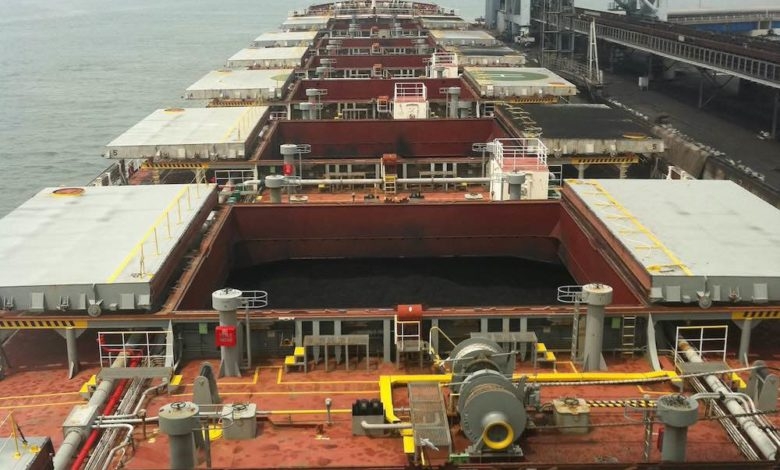
Σε νέα συμφωνία χρονοναύλωσης του panamax Moon Globe (κατασκευής 2005) προχώρησε η Globus Maritime, συμφερόντων της οικογένειας Φειδάκη.
Η συμφωνία, η οποία αποτιμάται ανάμεσα σε 1,3 εκατ. δολάρια και 2,4 εκατ. δολάρια, θα τεθεί σε ισχύ στις 21 Ιανουαρίου και θα διαρκέσει από τρεις έως και έξι μήνες, ενώ δεν έχει γίνει γνωστό το όνομα του ναυλωτή.
Ο πρόεδρος και CEO της Globus, Αθανάσιος Φειδάκης, σχολίασε: «Είμαστε πολύ ικανοποιημένοι για αυτήν τη χρονοναύλωση και σε συνδυασμό με την τρέχουσα ναύλωση για το Galaxy Globe, έχουμε εξασφαλίσει περίπου 40% των προβλεπόμενων λειτουργικών εξόδων του στόλου μας για το 2021. Πολλά υποσχόμενη είναι, λοιπόν, η εκκίνηση του 2021».
H Globus διαχειρίζεται ένα στόλο έξι bulkers, εκ των οποίων τέσσερα είναι supramaxes, ένα kamsarmax και ένα panamax.
Globus Maritime Announces New Charter for the M/V Galaxy Globe
Globus Maritime Limited, a dry bulk shipping company, announced that it has secured new time charter employment for its recently acquired m/v Galaxy Globe (an 81,167-deadweight ton Kamsarmax dry bulk carrier built in 2015, at Hudong-Zhonghua Shipyard in China).
The vessel has been chartered to a Europe-based charterer. The charter commenced on November 8, 2020 and has a minimum 10 months or a maximum of 14 months, at the charterer’s option (plus or minus 15 days for redelivery), which is expected to generate gross revenue of approximately $3,200,00 assuming the charter continues for the minimum scheduled period and approximately $4,900,000 if the charter continues for the maximum period, in each case assuming no offhire days.
Globus Maritime Reports 35% Decrease in Voyage Revenues on COVID-19 Impact
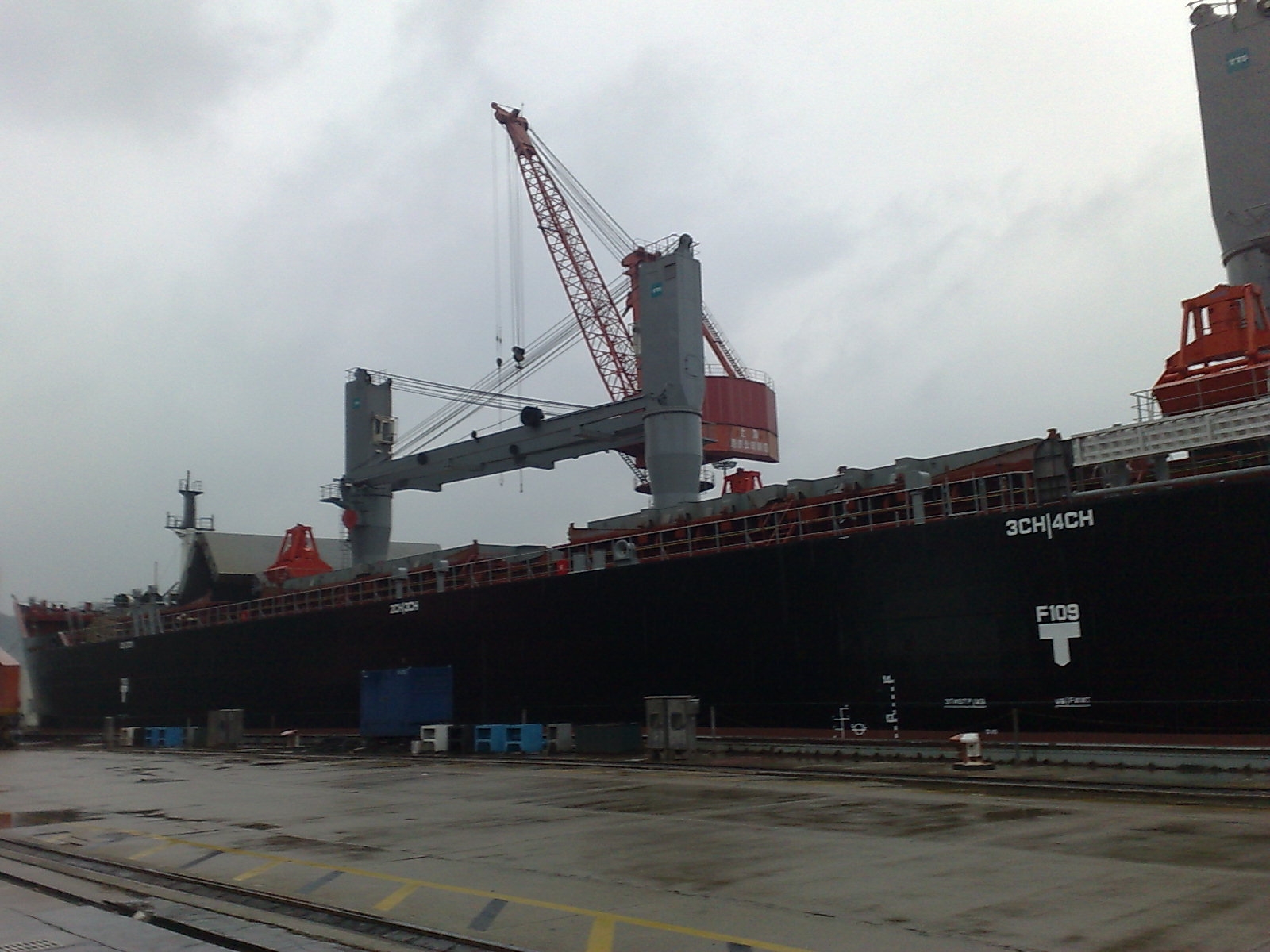
Globus Maritime Limited, a dry bulk shipping company, reported its unaudited consolidated operating and financial results for the quarter ended March 31, 2020.
Current Fleet Deployment
All our vessels are currently operating on short term time charters (“on spot”).
Management Discussion and Analysis of the Results of Operations
First Quarter of the Year 2020 compared to the First Quarter of the Year 2019
Total comprehensive loss for the first quarter of the year 2020 amounted to $9 million or $1.55 basic and diluted loss per share based on 5,816,904 weighted average number of shares, compared to total comprehensive loss of $0.3 million for the same period last year or $0.08 basic and diluted loss per share based on 3,209,604 weighted average number of shares.
Voyage revenues
During the three-month period ended March 31, 2020 and 2019, our Voyage revenues reached $2.3 million and $3.5 million respectively. The 35% decrease in Voyage revenues was mainly attributed to the decrease in the average time charter rates achieved by our vessels during the first quarter of 2020 compared to the same period in 2019. Daily Time Charter Equivalent rate (TCE) for the first quarter of 2020 was $2,173 per vessel per day against $6,736 per vessel per day during the same period in 2019 corresponding to a decrease of 68%, which is attributed to the outbreak of COVID-19 virus.
Voyage expenses reached $1.4 million during the first quarter of 2020 compared to $0.5 million during the same period last year. Voyage expenses include commissions on revenues, port and other voyage expenses and bunker expenses. Bunker expenses mainly refer to the cost of bunkers consumed during periods that our vessels are travelling seeking employment.
Average daily operating expenses during the three-month periods ended March 31, 2020 and 2019 were $4,521 per vessel per day and $4,634 per vessel per day respectively, corresponding to a decrease of 2%.
Depreciation
Depreciation charge during the first quarter of 2020 reached $0.6 million compared to $1.2 million during the same period in 2019. This is mainly attributed to the impairment loss of $29.9 million we recognized in 2019 as the recoverable amounts of the vessels were lower than their carrying amounts.
Impairment loss
As of March 31, 2020, the Company concluded that the recoverable amounts of the vessels were lower than their carrying amounts and recognized an impairment loss of $4.6 million.
Interest expense and finance costs
Interest expense and finance costs reached $1.1 million during the first quarter of 2020 compared to $0.7 million in 2019.
Gain/(Loss) on derivative financial instruments
The loss on the derivative financial instruments is mainly attributed to the valuation of the “Convertible Note”. Further to the conversion clause included into the Convertible Note for the period ended March 31, 2020 a total amount of approximately $1,168, principal and accrued interest, was converted to share capital with the conversion price of $1 per share and a total number of 1,167,767 new shares issued in name of the holder of the Convertible Note. These conversions resulted to a loss of approximately $0.3 million recognized in the consolidated statement of comprehensive loss.
Liquidity and capital resources
As of March 31, 2020 and 2019, our cash and bank balances and bank deposits (including restricted cash) were $2.4 and $4.5 million respectively.
Net cash used in operating activities for the three month period ended March 31, 2020 was $2 million compared to $1.1 million during the respective period in 2019. The increase in our cash used in operating activities was mainly attributed to the decrease in our adjusted EBITDA from $0.3 million during the first quarter of 2019 to negative $1.6 million during the three month period under consideration.
As of March 31, 2020 and 2019 we and our vessel-owning subsidiaries had outstanding borrowings under our Loan agreements of an aggregate of $40 million and of $42.6 million respectively gross of unamortized debt discount.
Recent Developments
Convertible Note
On March 13, 2020, Company and the holder of the Convertible Note entered into a waiver regarding the Convertible Note (the “Waiver”). The Waiver waives the Company’s obligation to repay the Convertible Note on the existing maturity date of March 13, 2020 and does not require the Company to repay the Convertible Note until March 13, 2021.
Firment Shipping Inc.
On May 8, 2020, the Company and Firment Shipping Inc. agreed to enter an amended and restated agreement. The final maturity of the Firment Shipping Credit Facility was extended to October 31, 2021 and the available amount to be drawn under this Facility increased to $14.2 million.
Receipt of Nasdaq Notice of Deficiency
On March 6, 2020, the Company received written notification from The Nasdaq Stock Market dated March 2, 2020, indicating that because the closing bid price of our common stock for the last 30 consecutive business days was below $1.00 per share, we no longer meet the minimum bid price continued listing requirement for the Nasdaq Capital Market, as set forth in Nasdaq Listing Rule 5450(a)(1). Pursuant to Nasdaq Listing Rules, the applicable grace period to regain compliance was 180 days, or until August 31, 2020, but citing extraordinary market conditions, Nasdaq filed an immediately effective rule change with the Securities and Exchange Commission which, with effect from April 16, 2020, tolled the listing process until July 1, 2020. Consequently, the Company’s compliance period has effectively been extended until November 12, 2020. The Company intends to monitor the closing bid price of its common stock between now and November 12, 2020 and is considering its options, including a potential reverse stock split, in order to regain compliance with the Nasdaq Capital Market minimum bid price requirement. The Company can cure this deficiency if the closing bid price of its common stock is $1.00 per share or higher for at least ten consecutive business days during the grace period. In the event the Company does not regain compliance within the 180-day grace period, and it meets all other listing standards and requirements it may be eligible for an additional 180-day grace period. The Company intends to cure the deficiency within the prescribed grace period. During this time, the Company’s common stock will continue to be listed and trade on the Nasdaq Capital Market.
Issuance of the Series B preferred shares
On June 12, 2020, the Company entered into a stock purchase agreement and issued 5,000 of our newly-designated Series B Preferred Shares, par value $0.001 per share, to Goldenmare Limited, a company controlled by our Chief Executive Officer, Athanasios Feidakis, in return for $150,000, which amount was paid by reducing, on a dollar for dollar basis, the amount payable as executive compensation by the Company to Goldenmare Limited pursuant to a consultancy agreement.
The issuance of the Series B preferred shares to Goldenmare Limited was approved by an independent committee of the Board of Directors of the Company, which received a fairness opinion from an independent financial advisor that the transaction was for a fair value.
Impact of COVID-19 on the Company’s Business
The spread of the COVID-19 virus, which has been declared a pandemic by the World Health Organization, in 2020 has caused substantial disruptions in the global economy and the shipping industry, as well as significant volatility in the financial markets, the severity and duration of which remains uncertain.
The measures taken by governments worldwide in response to the outbreak, which included numerous factory closures, self-quarantining, and restrictions on travel, as well as potential labor shortages resulting from the outbreak, are expected to slow down production of goods worldwide and decrease the amount of goods exported and imported worldwide. Some experts fear that the economic consequences of the coronavirus could cause a recession that outlives the pandemic.
Besides reducing demand for cargo, coronavirus may functionally limit the amount of cargo that the Company and its competitors are able to move because countries worldwide have imposed quarantine checks on arriving vessels, which have caused delays in loading and delivery of cargoes. It is possible that charterers may try to invoke force majeure clauses as a result.
The pandemic has already added, and could continue to add, pressure to shipping freight rates. The impact of the COVID-19 pandemic continues to unfold and may continue to have negative effect on the Company’s business, financial performance and the results of its operations, including due to decreased demand for global seaborne dry bulk trade and dry bulk charter rates, the extent of which will depend largely on future developments. As a result, many of the Company’s estimates and assumptions required increased judgment and carry a higher degree of variability and volatility. As events continue to evolve and additional information becomes available, the Company’s estimates may change in future periods.
Crewing and Crew management operations.
Due to Covid-19 there are restrictions on travelling on many jurisdictions. We may face problems in the embarkation and disembarkation our crew members. Many airports around the world as well as many countries impose heavy travel restrictions including complete lockdowns and quarantine periods for incoming and outgoing travelers. By extent it is increasingly hard, if not restrictive, for our crews to be relieved by new crew members. We continue to monitor the situation with respect and utmost care for our seafarers, always communicating with the relevant authorities in order to assist them as much as we can in these unprecedented times.
Disruption in operations in case crew members get infected.
In case one of our crew members is found to be infected by Covid-19 this may lead to delays in cargo operations. It may also need to a detention and quarantine of the ship for an unspecified amount of time. Relevant authorities may require us to perform disinfection and fumigation operations if a crew member gets infected by Covid-19. Crew members may be quarantined if a member is found to be infected. The above may lead to increased costs and lower utilization of our fleet.
Dry docking and Repairs.
Repair yards and dry docks in the far east, usually selected for the scheduled maintenance of our vessels, may be affected by the closures and travel restrictions in their countries. Shipyard staff and third party experts as well as spare parts may be harder to procure and provide making the maintenance process potentially lengthier, costlier or unfeasible. Spare parts and supplies may be harder to produce and deliver to a shipyard where they would be utilized for a scheduled maintenance. In addition to the above, and always relating to Covid-19 travel restrictions, it will be tough for our in-house technical teams to travel to the shipyards in order to monitor the maintenance process, so they may have to be postponed or 3rd party monitoring technical crews will be hired. Last but not least classification society surveyor attendance may be restricted thus not only affecting the time spent within a repair facility but also causing scheduled survey work to be postponed as far as this is permissible.
Effect on the following technical department activities yet not limited to:
Logistics and supply of spares and expert services may incur increased costs and disruption in Planned Maintenance and consequently lead to increased failures / incidents.Office Personnel attendance is disrupted or impossible, which can have as a result inadequate supervision and lead to increased incidents in third party inspection and reduced maintenance quality.Long Term planned maintenance (dry docking) unsupervised by company personnel, that can result to lower quality and increased costs.Delays in class surveys, which can lead to postponements.The above ultimately are translated to possible increased costs and reduced maintenance quality which in the long term shall spiral to cost increases again as the aftermath shall have to be dealt with. However, there are presently insufficient statistics to reach to prediction model as regards to the actual increase in costs due to the above disruptions.
The Company has evaluated the impact of current economic situation on the recoverability of the carrying amount of its vessels. As of March 31, 2020, the Company concluded that events and circumstances triggered the existence of potential impairment of its vessels. These indicators included volatility in the charter market as well as the potential impact the current marketplace may have on the future operations. As a result, the Company performed an impairment assessment of the Company’s vessels by comparing the discounted projected net operating cash flows for each vessel to its carrying values. As of March 31, 2020, the Company concluded that the recoverable amounts of the vessels were lower than their carrying amounts and an impairment loss of $4.6 million was recorded (see also Note 5).
The pandemic had a negative impact on the Voyage Revenues of the Company for the three-month period ended March 31, 2020, which reached $2.3 million, compared to $3.5 million to the same period in 2019. The 35% decrease in Voyage revenues is attributed to the low freight rates achieved in the first quarter of 2020 due to the outbreak of COVID-19 virus.
Globus Maritime Limited Expects Volatile, but Rising Dry Bulk Market Moving Forward
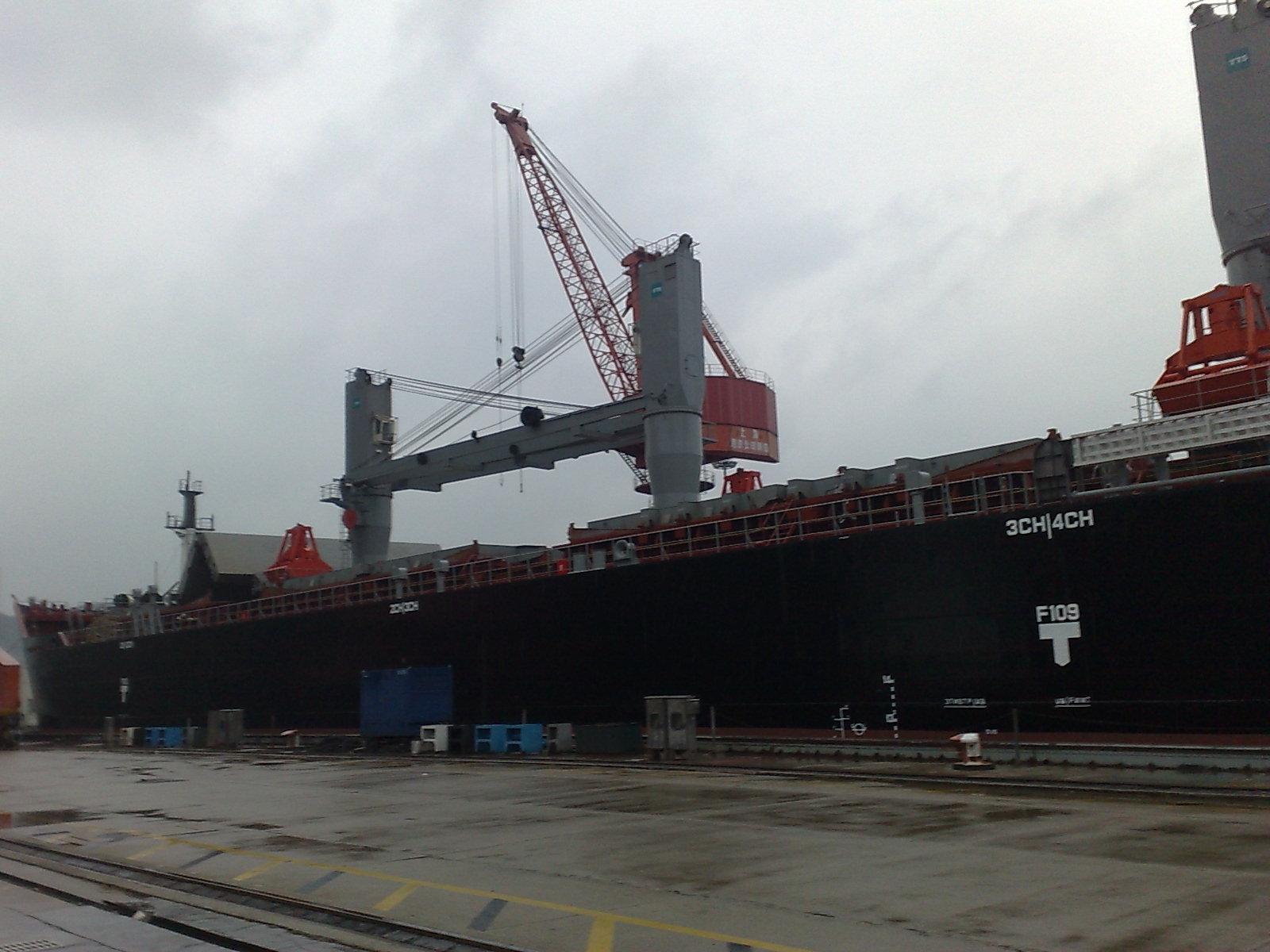
Globus Maritime Limited, a dry bulk shipping company, yesterday reported its unaudited consolidated operating and financial results for the quarter and nine-month period ended September 30, 2019.
Management Commentary
“During the third quarter we experienced a short-term spike in the spot market that allowed us to enjoy higher than normal rates. However, the spike was short-lived and fluctuation returned full-speed, spilling over into the fourth quarter. This was mainly due to the an increase in vessel supply returning online from dry docks and was further deteriorated by some demand-driven pressure which put a weight on rates. By the end of the quarter and the beginning of the fourth quarter there was a strong downward pressure which thankfully started to reverse later on.
“The doubling and tripling of day rates showed us however, that there is steam in the market, and these upward swings can be expected. Of course we are still being affected by the negative sentiment created by the trade war, as well as the ore export bans in Indonesia and the coal import quotas in China.
“Coming up into the fourth quarter we have scheduled maintenance repairs for two of our vessels. We do not expect any extraordinary items during the repairs, normal maintenance of hull, cargo holds and machineries will take place. We expect the repairs to last for about 40 days. Notwithstanding our constant vigilance on cost our first priority is to keep our vessels safe.
“The market is expected to be volatile, but we do expect an upward trend. The huge industry adjustment to IMO 2020 regulation is just around the corner, and we will see the full effect of this event during the first half of the year. We believe it will be a net positive for the industry. The margin at the moment of the low sulfur fuel oils and high sulfur fuel oils is at about $250. Our company will be using the low sulfur fuel oil option in order to comply with the new regulations. We believe that this is a better-suited approach for the type and size of our vessels than using exhaust gas scrubbers that are expensive to install and operate.”
Management Discussion and Analysis of the Results of Operations
Recent Developments
New Convertible Note
On March 13, 2019, the Company signed a securities purchase agreement with a private investor and on March 13, 2019 issued, for gross proceeds of $5 million, a senior convertible note (the “Convertible Note”) that is convertible into shares of the Company’s common stock, par value $0.004 per share. If not converted or redeemed beforehand pursuant to the terms of the Convertible Note, the Convertible Note matures upon the anniversary of its issue. We have used part of the proceeds from the Convertible Note for general corporate purposes and working capital including repayment of debt. The Convertible Note was issued in a transaction exempt from registration under the Securities Act.
Further to the conversion clause included into the Convertible Note, during the third quarter of 2019, a total amount of approximately $488 thousand, principal and accrued interest, was converted to share capital with the conversion price of $2.25 per share and a total number of 216,863 new shares issued in the name of the holder of the Convertible Note. Furthermore, during October and November 2019, an additional total amount of approximately $1,170 thousand, principal and accrued interest, was converted to share capital with the conversion price of $2.25 per share and a total number of 519,874 new shares issued in the name of the holder of the Convertible Note. The Convertible Note provides that the “Floor Price” (as defined in the Note), which is currently $2.25, may be reduced to not less than $1.00 by mutual agreement of the Company and the holder of the Note.
The Convertible Note provides for interest to accrue at 10% annually, which interest shall be paid on the first anniversary of the Convertible Note’s issuance unless the Convertible Note is converted or redeemed pursuant to its terms beforehand. The interest may be paid in common shares of the Company, if certain conditions described within the Convertible Note are met.
As per the conversion clause included in the Note, the Company has recognized it as a hybrid agreement which includes an embedded derivative. This embedded derivative was separated to the derivative component and the non-derivative host. The derivative component is shown separately from the non-derivative host at fair value. The changes in the fair value of the derivative financial instrument are recognized in the consolidated statement of comprehensive loss. For the period ended September 30, 2019, the Company recognized a gain on this derivative financial instrument amounting to $2.7 million, which was classified under “Gain on derivative financial instruments” in the consolidated statement of comprehensive income/(loss).
Upon any future stock dividend, stock split, reverse stock split or similar transaction, the Floor Price will not be adjusted, and the Floor Price following such transaction will be equal to the Floor Price immediately prior to such transaction.
The terms of the Note provide that the Note may be required at the option of the holder to be redeemed by the Company in cash, in whole or in part, at any time following any consecutive period of ten trading days during each of which the volume-weighted average price of the Company’s common shares is less than the Floor Price.
Conversion of Debt and Issuance of Shares
On May 2, 2019, Globus announced that, in accordance with the terms and provisions of the revolving credit facility, dated November 21, 2018, between the Company and Firment Shipping Inc., an entity deemed as an affiliated party through common control, the Company has elected to convert the aggregate outstanding principal balance and accrued interest of $3,170,136 into 1,132,191 shares of common stock of the Company.
Loan Refinancing
In June 2019, Globus through its wholly-owned subsidiaries, Devocean Maritime Ltd., Domina Maritime Ltd., Dulac Maritime S.A., Artful Shipholding S.A. and Longevity Maritime Limited, vessel-owning companies of m/v River Globe, m/v Sky Globe, m/v Star Globe, m/v Moon Globe and m/v Sun Globe, respectively, entered a new-term loan facility for up to $37 million with EnTrust Global’s Blue Ocean Fund (“Entrust loan facility”) for the purpose of refinancing the existing indebtedness secured on the ships and for general corporate purposes. Globus subsidiaries, namely Devocean Maritime Ltd., Domina Maritime Ltd., Dulac Maritime S.A., Artful Shipholding S.A. and Longevity Maritime Limited, are identified as the borrowers under the loan facility which is guaranteed by Globus, and which contains a standard security package including mortgages on all of our ships, pledges of bank accounts, charter assignments, shares pledges respecting each borrower, and a general assignment over each ship’s earnings, insurances and any requisition compensation in relation to that ship. This loan facility will be referred to as EnTrust loan facility. On June 24, 2019, the Company drew down $37 million and fully prepaid the existing loan facilities with Hamburg Commercial Bank AG (formerly known as HSH Nordbank AG) and Macquarie Bank International Limited.
The EnTrust loan facility bears interest at LIBOR plus a margin of 8.5% (or 10.5% default interest), and is repayable by five consecutive quarterly installments commencing on December 31, 2019 each in the amount of the earnings of the ships after deducing interest on the EnTrust loan facility, operating expenses and reserves for dry-docking, then by six consecutive quarterly installments commencing on March 31, 2021 each in the amount of $1,492,622, and by a final installment on June 30, 2022 in the amount of $1,492,622 together with the remaining principal amount as a balloon payment.
The Company must maintain a credit balance of not less than $250,000 for each mortgaged ship. Globus must maintain, on a consolidated basis, at the end of each calendar quarter, liquid funds in an amount, in aggregate, of not less than 5% of the consolidated financial indebtedness of the group. Each borrower must maintain in its earnings account during the cash sweep period an amount equal to the product of (a) the lower of: (i) $1,000; and (ii) the difference between the daily time charter equivalent rate of the ship owned by that borrower, and the break-even expenses of that ship for that cash sweep period; and (b) the actual number of days lapsed during that cash sweep period for that borrower. Each borrower is prohibited from declaring or paying dividends, or from repaying the EnTrust loan facility, until December 25, 2020. The EnTrust loan facility contains standard loan covenants, including loan to value covenants.
Results of Operations
Third quarter of the year 2019 compared to the third quarter of the year 2018
Total comprehensive income for the third quarter of the year 2019 amounted to $280 thousand or $0.06 basic and diluted earnings per share based on 4,422,825 weighted average number of shares, compared to total comprehensive income of $254 thousand for the same period last year or $0.08 basic and diluted earnings per share based on 3,204,271 weighted average number of shares.
Full Report