
€3 billion of EIB Group financing announced for farmers and bioeconomy
EIB Group offers €3 billion in loans for agriculture and other bioeconomy activities across Europe with focus on young farmers, gender equality and green investments
EIB Group also working with European Commission to develop new forms of agricultural insurance and de-risking schemes against extreme weather events
New initiatives form part of EIB Group’s plan for agriculture and bioeconomy in the context of Strategic Dialogue on the future of EU agriculture
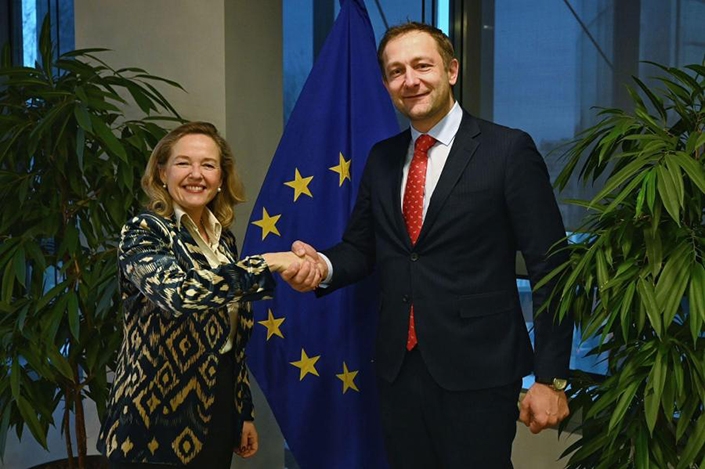
European Investment Bank (EIB) Group President Nadia Calviño has announced a €3 billion financing package for agriculture, forestry and fisheries across Europe along with moves to bolster farm insurance. The EIB Group loans will be matched by other participating financial institutions, unlocking close to €8.4 billion of long-term investments for the bioeconomy sector.
The support marks the largest EIB-backed financing initiative for European agriculture and will be directed towards small and medium-sized enterprises (SMEs) as well as mid-caps. It will be spread over the next three years, with the first loans due to be signed in the first half of 2025.
A share of the loans will be earmarked for young or new farmers because they generally have more trouble obtaining traditional bank financing. The support will also target female farmers to overcome a gender imbalance in agriculture as well as green investments to support the European Union’s sustainability goals.
“Farming is a vibrant part of European life, and a productive part of our economy and security. The EIB Group financing announced today will help ensure a future for a new generation of farmers and companies active in the agri-food industry and the bioeconomy value chain” EIB Group President Nadia Calviño said today at the EU Agri-Food Days conference in Brussels.
Commissioner for Agriculture and Food, Christophe Hansen, said: “I welcome the strong commitment of EIB in favour of the EU farming community, especially for young farmers and women farmers. Bridging the financing gap in the sector is vital, and with the EIB Group’s support we are giving agriculture the tools to thrive and grow. We will closely work with the EIB to make sure that this financing opportunity is taken up on the ground and delivers results. Together, we are securing a sustainable future for the sector.”
The new financing aims to spur investments in a range of activities including soil health, digital tools, water management and climate resilience. It is also intended to bolster training in sustainable farming practices and the purchase of land by young or new farmers, helping boost the 12% share of Europe’s farmers who are under the age of 40 and the 31.6% share who are women.
“We are stepping up our support for agriculture and the bioeconomy using a wide array of innovative tools,” said EIB Vice-President Gelsomina Vigliotti. “Working with partners along the whole value chain, we aim to help meet agriculture’s triple challenge of producing affordable food, protecting farm production and livelihoods in the face of climate change and preserving the environment and natural resources.”
To ensure favourable loan terms, the package allows for the financing to be complemented by interest rate subsidies or capital grants under the EU and national budgets. Participating financial institutions will also gain extra advisory support from the Green Gateway programme and an enhanced Green Eligibility Checker – an online method to assess the eligibility and climate impact of green investment projects.
As part of its increased support for the bioeconomy, the EIB Group is exploring ways to improve agricultural insurance against the more frequent incidents of extreme weather including floods and droughts. It will work with the European Commission, the insurance industry and other stakeholders to examine options for enhancing EU level support of current insurance schemes coupled with pan-European measures to accelerate investment in climate adaptation or to provide more liquidity and credit risk coverage for companies affected by climate disasters.
The new initiatives are part of an action plan by the EIB Group within the context of a “Strategic Dialogue on the future of EU agriculture” launched by European Commission President Ursula von der Leyen in January 2024. The Dialogue is a new forum that aims to develop a joint understanding and shape a shared vision for the future EU farming and food system.
The EIB Group will work closely with the European Commission to enact the plan with a view to maximise public investment sources while leveraging and de-risking private capital in the agricultural sector.
The EIB Group action plan also includes:
A venture debt programme, which will provide loans to innovative companies along the agricultural value chain working on, for example, new technologies, the development of payment for ecosystem services or sustainable biofuel and biomaterial technologies.
Guarantee schemes possibly leveraging the European agricultural fund for rural development (EAFRD) and/or national resources under the Common Agricultural Policy Strategic Plans
A private equity programme to back European fund managers that target European innovative technologies and solutions for the future of food (agritech, foodtech), and to attract private investors to the sector.
A broadened scope of direct lending to medium-sized and large counterparts to include not only cooperatives but also other farmer organisations or entities such as irrigation communities, associations for dam and dike maintenance or forestry maintenance.
Increased support to infrastructure in rural areas, such as road networks, education, and agricultural water management.
Barclays launches £250 million in financial support to help farmers drive Sustainability through Agri-Tech
· Campaign launched as research reveals that UK farmers could be carbon neutral within 15 years
· 8 in 10 farmers believe they will be carbon neutral by 2035
· Two-thirds of farmers say sustainability is one of their top priorities
· Shoppers willing to pay an extra £192.40 per year for more sustainable produce
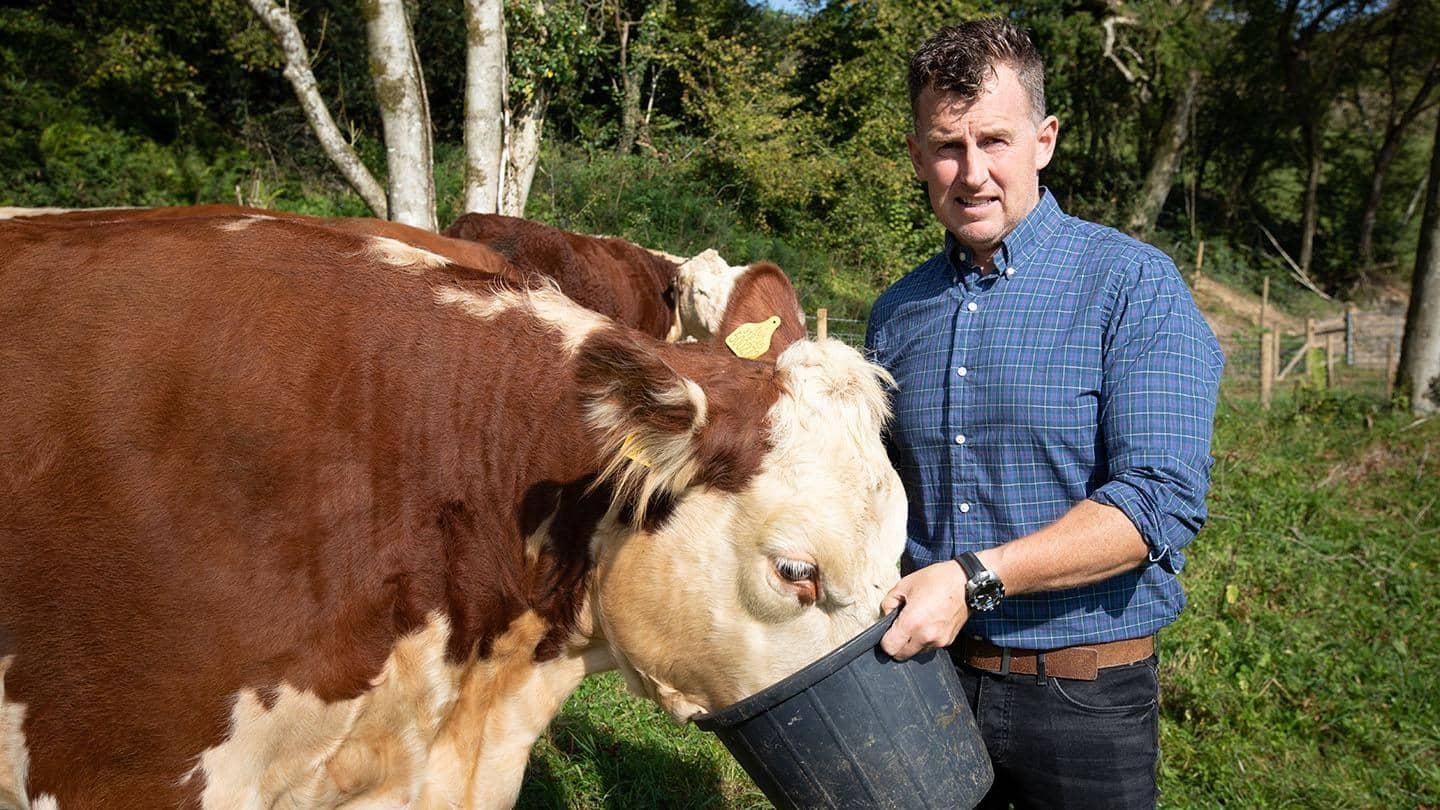
Barclays has teamed up with Nigel Owens MBE, world-renowned rugby union referee and Welsh cattle farmer, to launch a new campaign to drive awareness amongst consumers on the benefits of helping the food system become carbon net zero. Sustainability Through Agri-Tech will also provide farmers with access to £250 million which is available to support their business to become carbon net-zero through Agri-Tech solutions.
In a survey of 1,000 UK farmers, eight in ten (83 per cent) say that they believe they could be carbon neutral by 2035, five years ahead of the 2040 target set by the National Farmers Union (NFU). One in six (16 per cent) believe that they have already reached this goal, while 65 per cent said they were thinking about how to make their businesses more sustainable in the wake of the pandemic. More than two thirds of respondents (69 per cent) also said that becoming greener will increase their farm’s competitiveness after the UK has left the EU, indicating Brexit could accelerate their transition to becoming carbon neutral.
Barclays has also uncovered a growing appetite among Brits for carbon neutral foods, with research indicating that the average consumer would pay £192.40 per year on top of their shopping basket totals for more sustainable produce. When taking the whole population into account, this totals over £10 billion of additional spend.[1]
When farmers were asked what investments they were making to become more sustainable, over a quarter (26 per cent) said that they had or are planning to improve their waste and slurry management, while 25 per cent had spent or are planning to invest in Agri-Tech to become more efficient. Respondents also suggested that they are or plan to plant more trees and hedgerows (24 per cent), while 22 per cent are or will be investing in solar power and 21 per cent in wind turbines.
Over two-thirds of farmers (68 per cent) said that the UK needs a more resilient food system to cope with rising temperatures, and 66 per cent revealed sustainability and business efficiency to be their farm’s top priorities.
Nigel Owens MBE, rugby union referee and farmer in Pontyberem, Wales said: “It’s great we’re starting to talk more about how farmers can further enhance the environment and be part of the climate change solution while keeping the nation fed and healthy, which is especially important at times like this.
“I’m a proud owner of 35 Herefordshire cows, and cattle play an important role in the ecosystem when managed properly. Grassland is very good at capturing carbon from out of the atmosphere, and soil is key to carbon sequestration policies, an underrated solution to tackling climate change. I’ll continue to plant more trees and will look into Technologies that can help the farm to become more efficient too.”
Tech investment
The Barclays campaign highlights Agri-Tech as key to helping the industry on its carbon neutral mission, as well as improve productivity. Seventy per cent of farmers surveyed said Agri-Tech could help their business to become more sustainable and efficient, while nearly two thirds (65 per cent) said it would enable them to produce more food.
Mark Suthern, National Head of Agriculture at Barclays Business Bank, said: “There’s already a huge amount of work going on across farming enterprises of all types so their businesses can reach the carbon net zero goal by 2040. It’s also encouraging to see consumers willing to pay for carbon neutral foods, as we all consider our role in helping the industry become carbon neutral from farm to fork.
“Without doubt, investment in Technologies will play a part in businesses becoming carbon neutral, but it’s important that we continue to support the sector in the supply chain, both as an industry and with Government policy. We also know that two-thirds (67 per cent) of farmers want access to further financial support from their bank to invest in this type of technology, with the same number believing it will increase job opportunities and will dramatically change the type of skills the sector requires over the coming years.
“Our research shows the average farmer set to invest £195,602 over the next decade to achieve greater efficiency and become more sustainable. That’s why we have made available £250 million and with our team of agricultural relationship managers we can help to advice on investments and their carbon net zero ambitions.”
Richard Lilburn, owner of Brookvale Farm in Northern Ireland, finishes:
“We use a wide variety of Tech on our farm – from robots to milk our cows, backscratchers and automatic yard scrapers to keep them healthy and happy, to automated feeding systems and motion sensors which use algorithms to monitor their health. Happier cows are healthier cows and the technology we are using on our farm means they produce more milk, so that’s good for business.
“We have plans to become carbon net zero through planting trees, installing solar panels and hopefully investing in an anaerobic digester, but farms like ours do need help to achieve this. Farming more efficiently and more sustainably will ultimately help all aspects of farm business and life and Technology will always be able to improve how we operate.”
Crédit Agricole is stepping up its support for farmers during the crisis
Crédit Agricole has adapted its customer support system to the specific characteristics of the farming market. It is stepping up its actions to support its farmer customers in hardship due to the health crisis.
To allow farmers to focus their full attention on the production of agricultural products necessary to feed the fellow citizens, several support measures are available to them: – Government-guaranteed interest-free loans without processing fees (excluding government guarantee fees)
– Suspension of loan repayments at no additional cost (excluding interest of the original contract), including agricultural equipment financing (Agilor loans)
– Postponement of payment deadlines for equipment or real estate leases for up to 6 months without any rate increase or management fees
– Accelerated procedures for loan approval in less than 5 days for the most urgent situations
– Arrangement of factoring contracts for customers, on a case-by-case basis, without processing fees Crédit Agricole’s regional banks and their advisers are fully invested in supporting farmers, mobilised more than ever to provide fresh, quality products to the people of France.
In addition, well aware of the specific needs of farmers to harvest their crops, Crédit Agricole is relaying the “Des bras pour nos assiettes” initiative to its customers https://desbraspourtonassiette.wizi.farm/