
Ukraine: EU Bank launches new scheme to strengthen the agri-food sector
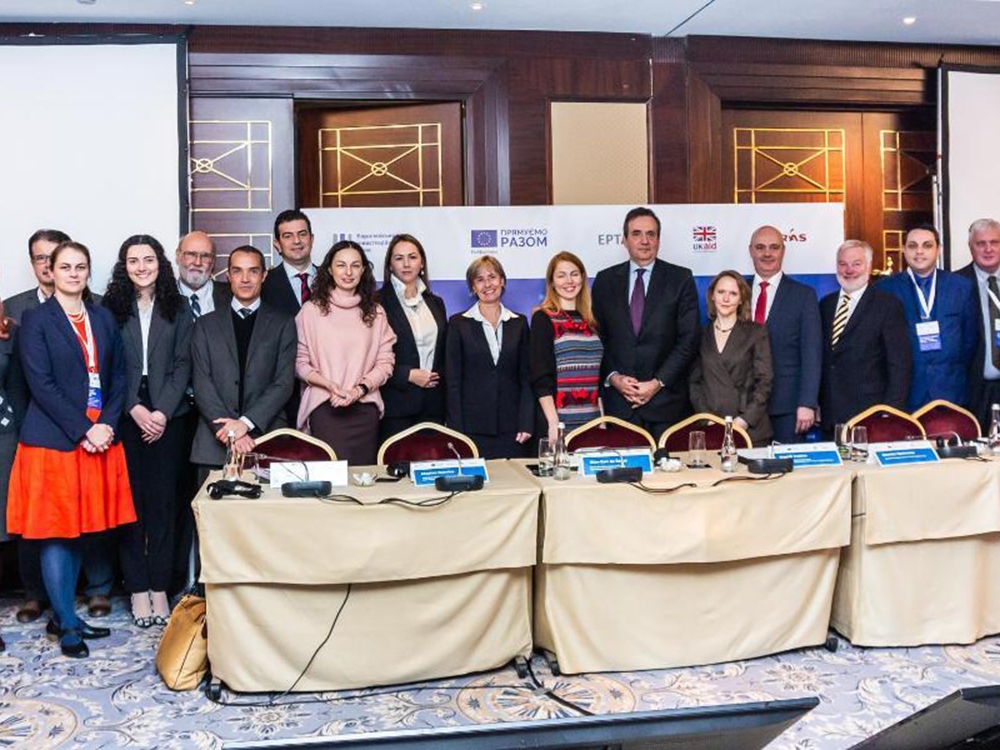
The European Investment Bank (EIB) has launched the Agri-Food Value Chain Project, which is backed by a loan of up to EUR 400m from the EU bank, along with donor-backed technical assistance, in order to support small and medium-sized enterprises (SMEs) and mid-caps in Ukraine. The programme is intended to help Ukraine benefit from the opportunities offered by the Deep and Comprehensive Free Trade Area (DCFTA) established under the Association Agreement with the European Union (EU).
At the launch event, Marion Hoenicke, Head of Division in the EIB’s Neighbouring Countries Department, stated: “The programme launched today will support the agri-food sector, which has enormous growth potential, given its long tradition and competitive advantages. With the support of the European Union as well as the United Kingdom through the Eastern Partnership Technical Assistance Trust Fund (EPTATF), the EIB is stepping up its efforts to improve access to finance and build capacity in order to support sustainable and inclusive growth in Ukraine.”
The EIB funds will provide long-term finance to support productive investments by SMEs and mid-caps, as well as public service providers, along the entire value chain. Potential beneficiaries, therefore, include input suppliers, farmers, processors, and storage and logistics operators, as well as testing laboratories, research and education institutions and extension services that contribute to the functioning of the target value chains.
The cereals, oil seeds and aquaculture/fisheries value chains are being targeted by the programme, as they have been identified as being best placed to satisfy domestic demand for quality produce and to increase the competitiveness of the sector and its exports to the EU and global markets.
The EIB loan will be made available through financial intermediaries to private and public sector final beneficiaries, and is further supported by the EU and the United Kingdom through a combined grant amount of EUR 5.5m for technical assistance services. Based in Kyiv, the technical assistance project team – lead by the Denmark-based consulting firm NIRAS – will work on two main levels, providing support and advice to intermediary banks (including commercial banks and agricultural leasing companies) lending to SMEs and mid-caps in the cereals, oilseeds and fisheries sectors, and also directly to beneficiary SMEs on investment planning and credit applications.
The event was attended by CEOs, CFOs and the top management of SMEs and mid-sized companies as well as financial intermediaries, financial advisors, academic institutions and industry associations.
The EU Bank boosts its support for cities and regions

– The European Investment Bank (EIB) commits to support cities and regions through its lending and advisory services
– Cities will benefit from an increase of investments for climate action and environmental sustainability
– New support announced for sustainable transport, affordable and energy efficient housing, education and climate change resilience
The EIB boosts its support for cities and regions to tackle climate change and foster social inclusion. During the last 5 years (2014-2018), the EU bank dedicated EUR 104 billion to urban lending including health, housing, urban transport or water and wastewater management.
Ahead of the European Week of Cities and Regions in Brussels, the EU Bank announced new support for projects across Europe:
– PLN 1.5 billion (EUR 350 million) loan to the City of Warsaw co-finance the extension of the second line of the City’s metro- EUR 355 million scheme to protect Athens, Thessaloniki and the Peloponnese from floods and climate change- EUR 90 million for the financing of six high schools and professional schools in Guadeloupe- EUR 115 million loan to the public transport provider of Rotterdam and the Metropole-region Rotterdam-The Hague to acquire new electric and diesel-hybrid buses, install charging infrastructure and renew tram and metro tracks around the city.- EIB and HBOR partnership to enable easier access to energy efficiency loans to Croatian businesses and municipalities- SEK 3 billion (EUR 300 million) for the construction of affordable and energy efficient housing in five cities in Sweden- EUR 200 million financing to support clean urban transport in Spain, in cities such as Las Palmas de Gran Canaria, Barcelona, Valencia and Palma de Mallorca
Vazil Hudak, EIB Vice-President responsible for financing economic and social cohesion commented: “Cities and regions have been a partner of choice for the EU Bank for more than 60 years. As they face new challenges such as growing urbanization and climate change, the EIB is fully committed to support investments that make our cities and regions thrive. By 2025, the EIB aims to allocate at least 50% of its financing activities for projects that support climate action and environmental sustainability and a significant share of this will be implemented in cities.”
Karl-Heinz Lambertz, President of the European Committee of the Regions, said: “The CoR and the EIB Group share the objective of delivering economic growth and job creation across the EU’s Regions and Cities. Continuing our successful cooperation, and reaffirming the good working relations between the CoR and the EIB Group, the 2019 renewed Action Plan will contribute to support high-quality projects that benefit citizens and businesses alike and leaves no region behind.”
At the European Week of Regions and Cities, the EIB will organize a number of sessions to present its toolkit for municipalities and regional governments. This includes framework loans (flexible loans that cover several small projects), investment loans, equity investments or advisory services such as URBIS, a new dedicated urban investment advisory platform. The EIB has also developed an unique expertise to help cities and regions establish financial instruments with EU grants from structural funds.
To reduce regional economic imbalances and raise living standards across the EU, the EIB dedicates at least 30% of all new operations in the EU and pre-Accession countries to cohesion projects. During the last 5 years (2014-2018), the EIB has provided EUR 88 billion to projects in EU cohesion regions. For 2018, this amounted to EUR 14.25 billion.