
Costamare Bulkers: Αυτόνομη εταιρεία στον τομέα dry bulk μετά την απόσχιση από την Costamare Inc.

Την απόσχιση του dry bulk τομέα σε μια αυτόνομη εταιρεία, την Costamare Bulkers Holdings Limited (Costamare Bulkers), ενέκρινε το διοικητικό συμβούλιο της Costamare Inc., συμφερόντων του Κωστή Κωνσταντακόπουλου.
Η εταιρεία αναμένει να ολοκληρώσει τη συναλλαγή στις 6 Μαΐου και από την Τρίτη 7 Μαΐου θα ξεκινήσει η διαπραγμάτευση των μετοχών της Costamare Bulkers στο Χρηματιστήριο της Νέας Υόρκης (NYSE), σηματοδοτώντας τη νέα εποχή στον κλάδο χύδην ξηρού φορτίου για τον ναυτιλιακό όμιλο Costamare Inc.
Στο πλαίσιο της απόσχισης, κάθε υφιστάμενος μέτοχος της Costamare θα λάβει μία κοινή μετοχή της νέας εταιρείας για κάθε πέντε κοινές μετοχές της Costamare που κατέχει, με ημερομηνία αναφοράς το κλείσιμο της συνεδρίασης της 29ης Απριλίου 2025.
Η νέα εταιρεία θα διατηρήσει και θα διαχειρίζεται στόλο σχεδόν 40 ιδιόκτητων πλοίων, ενώ θα ενσωματώνει και την πλατφόρμα ναυλώσεων CBI (Costamare Bulkers Investments), η οποία περιλαμβάνει περίπου 50 ναυλωμένα bulkers μέσω συνεργασιών τρίτων.
Η απόσχιση και η εισαγωγή της νέας εταιρείας στο χρηματιστήριο αποτελεί στρατηγική κίνηση διαφοροποίησης και εξειδίκευσης της δραστηριότητας του ομίλου, δίνοντας στο επενδυτικό κοινό τη δυνατότητα να αποκτήσει απευθείας έκθεση στον κλάδο του χύδην ξηρού φορτίου, ο οποίος παρουσιάζει έντονη δυναμική λόγω των διακυμάνσεων του παγκόσμιου εμπορίου και της ναυλαγοράς.
MOL Announces Integration of Dry Bulk Business and the Establishment of “MOL Drybulk Ltd.”
Mitsui O.S.K. Lines, Ltd. Friday announced that the name of its wholly owned subsidiary Mitsui O.S.K. Kinkai, Ltd. will be changed to “MOL Drybulk Ltd.” effective April 1, 2021(“New Company”).
1. New Company name and integration of the commercial activities
As announced on December 11, 2020, “MOL announces the integration of the Dry Bulk business, Wood Chip Carrier business, and Mitsui O.S.K. Kinkai, Ltd., and the establishment of a new Company,” MOK and MOL’s small- and medium- sized bulk carrier, wood chip carrier, and Panamax business, excluding services for steel manufacturers and domestic electric power companies, will be integrated(“Reorganization”). Prior to Reorganization, scheduled for April 2022, it has been decided that the name of MOK will be changed to “MOL Drybulk Ltd.” on April 1, 2021, and that commercial activities in the targeted areas will be integrated by collaboration between the two companies.
2. The Purpose of Integration
In the past, through strategic reform and reorganization, the MOL Group has optimized its cost structure and significantly reduced its market exposure in the dry bulk business.As the next step this integration will further improve its competitiveness in the dry bulk business by bringing the strengths together, and increase the value and quality of the service provided to our customers.
3. The Characteristics of the New Company
– MOL Drybulk Ltd.: A team of Professionals -Dry bulk shall continue to be a core activity of MOL, and the new name represents MOL’s commitment to the creation of a strong and resilient organization specialized in this sector. By uniting all of the resources within the group, the New Company will be capable of adapting to the changes in the business environments and act proactively.
– Offering one-stop services with a wide range of fleet of about 200 vessels -The New Company will be a unique entity operating a wide variety of vessel types ranging from 10,000-100,000 DWT bulk carriers, wood chip carriers, and multi-purpose vessels. Prior to the structural integration in 2022, the “one-stop service” covering all of these vessel types will be available for our customers from April 2021.
– Provide Environmental solutions -The New Company will leverage MOL Group’s technologies, work collaboratively with our customers in order to understand and meet their needs, and provide environmental solutions that reduce the greenhouse gas (GHG) emissions throughout the supply chain.
4. Top Management
Current President of MOK, Kenichi Nagata, will resign as of March 31, 2021.
5. Timeline of Reorganization
December 11, 2020 The policy of the reorganization was resolved at the Board of Directors meetingApril 1, 2021 Name of MOK will be changed, integrating of commercial activitiesApril 1, 2022 The effective date of Reorganization (plan)
6. Others
MOL will disclose promptly when it confirms the execution of Reorganization.
U-Ming Secures 10-Year Dry Bulk LNG Dual Fuel Charters with Anglo American, Demonstrating Long-term Commitment to Sustainable Shipping

U-Ming Marine Transport Corporation, Taiwan’s largest publicly listed bulk carrier company, has been awarded a 10-year LNG Dual Fuel dry bulk charter contract by Anglo American, a leading global mining company.
It is the first such long term time charter in the bulk carrier sector, demonstrating both companies’ strong commitment to decarbonisation and sustainability.
A fleet of Four (4) LNG Dual Fuel Tier III 190,000 DWT bulk carriers, with a length of about 299m and width 47.50m, will be built by Shanghai Waigaoqiao Shipbuilding (SWS) to support the 10-year time charter, and they are expected to be delivered throughout 2023.
Pioneering LNG Bulk Carriers Backed by Technology and Innovation
Backed by our strong corporate value in pursuit of greener shipping, the vessels are built with the concept of energy-saving and sustainability. The newbuildings will be powered by LNG, a viable and alternative fuel that emits significantly lower greenhouse gas (GHG) emissions. The vessels will also be fitted with MAN Energy Solutions’ high-pressure ME-GI engines to further reduce their environmental footprint with negligible levels of methane slippage, while increasing operational efficiency and reliability.
To further increase fuel efficiency, U-Ming will be investing and installing other energy-saving devices such as a Mewis duct, propeller boss fin and alpha lubricator. The new vessels will also be equipped with U-Ming’ proprietary Fleet Safety Management (FSM) and Fleet Performance Management (FPM) systems supported by its Operation Center, enabling near real-time speed, weather and route optimization updates, thus further saving fuel and ensuring safe navigation. These platforms can also monitor the operational status of ship critical equipment, allowing preventive maintenance well conducted when necessary to avoid unnecessary breakdowns and delays.
U-Ming President Mr. C. K. Ong said, “U-Ming is committed to make the world a better place for our future generations. To achieve that, we are building a greener fleet using LNG, and to reduce GHG emissions and fuel consumption by improving vessel design and optimizing fuel efficiency.
In our collaboration with Anglo American, we are pleased to be the first in the bulk carrier sector to be awarded a 10-year time charter. To demonstrate our long-term commitment to sustainability, we are also one of the first few carriers in the world to operate LNG-fuelled bulkers which have been shown to significantly reduce GHG emissions, and these newbuildings will be part of our fleet renewal and decarbonisation strategy. Going onward, we are committed to provide sustainable long-term green shipping solutions to our customers with the specific target of reducing greenhouse gas emissions by at least 30% in 2025, compared to 2013.”
Improving Bulker Market and Future Outlook
The outbreak of the global pandemic has triggered the worst recession since World War II and has unprecedented impact on sea transport demand. With a sharp decrease in Chinese steel production, power and coal consumptions in the first half of the year, the average Baltic Dry Index (BDI) had decreased 23% to only 685 points, from 895 points in the same period of 2019.
However, the bulk market has gradually recovered since May, and the freight indices of various vessel types have rebounded. The US-China trade war has been beneficial to Brazilian soybeans farmers and contributed to the uptick in demand from China at the end of May.
China also began restocking its iron ore supplies in May, supported by the Government’s infrastructure stimulus plan to combat the pandemic-induced recession. Stimulus packages from various countries have also started to boost domestic demand and have increased investment in infrastructure construction, which will ensure a sustained recovery in the dry bulk market.
During this challenging time, U-Ming managed to reduce the impact with strong leadership, prudent business strategy as well as solid balance sheets.
Long Term Commitment to Build Eco-Friendly Smart Fleet
Since 2012, U-Ming commenced its Vessel Renewal Programme to build a high-performance, eco-friendly fleet for energy conservation and carbon reduction. This year, despite the uncertainty of the COVID-19 pandemic, U-Ming continued to invest in digitalization and technology enhancement. For example, the FSM system is upgraded to include fuel consumption information, in response to the EU’s global data collection system for ship fuel oil consumption data. U-Ming’s management team has also identified Performance Enhancement (PE), Condition Monitoring Enhancement (CME) and Reliability and Security Enhancement (RSE) as key focus for building a smart fleet.
“While the Covid-19 pandemic has posed economic challenges, the maritime industry must not lose sight of the long-term challenges that the industry faces. With the successful implementation of IMO2020 earlier this year, decarbonisation is an ongoing trend and requires us to take further action. LNG-fuelled vessels can significantly reduce CO2 and NOx (nitrogen oxide) emissions, which will be benchmarked against the IMO’s target to halve carbon pollution from 2008 levels by 2050. U-Ming believes that this target will expedite the charters of LNG-fuelled bulk carriers in the industry, and the Company shall be at the forefront to leverage on this trend,” Mr. Ong concluded.
EuroDry Ltd. Looking To Weather The Dry Bulk “Storm”, as Panamax Rates Retreat 50% Compared to the Fourth Quarter of 2019
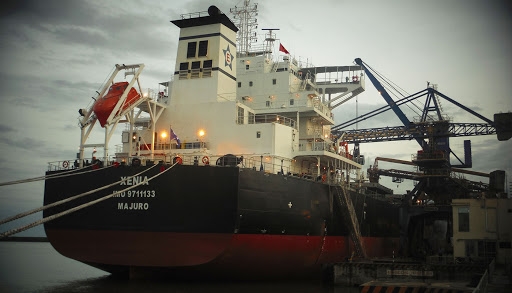
EuroDry Ltd., an owner and operator of drybulk vessels and provider of seaborne transportation for drybulk cargoes, announced its results for the three-month period ended March 31, 2020.
First Quarter 2020 Highlights:
Total net revenues of $5.1 million; net loss of $2.3 million; net loss attributable to common shareholders (after a $0.4 million dividend on Series B Preferred Shares) of $2.6 million or $1.17 loss per share basic and diluted. Adjusted net loss attributable to common shareholders1 for the period was $2.1 million or $0.91 per share basic and diluted.
Adjusted EBITDA1 was $0.6 million.
An average of 7.0 vessels were owned and operated during the first quarter of 2020 earning an average time charter equivalent rate of $7,885 per day.
The Company declared its fifth cash dividend of $0.4 million on its Series B Preferred Shares.
Aristides Pittas, Chairman and CEO of EuroDry commented:
“Year 2020 to-date has been marked by the dramatic effects on the global economy and seaborne trade of the COVID-19 pandemic. Drybulk seaborne trade, in particular, declined dramatically causing charter rates for Panamax vessels to drop to levels of about 50% lower compared to fourth quarter of 2019, a period that already had shown signs of a weakening market. By mid-May 2020, countries have only timidly started reopening their economies and as a result, we anticipate that we will continue experiencing low charter rates and low demand well into the next few months.”
“A positive effect of the depressed market and the prevailing uncertainty is the extremely low level of newbuilding orders placed. This development, in combination with the already low orderbook and delays in completing existing newbuilding contracts set the stage for a quick recovery of rates when, of course, drybulk seaborne trade recovers. We try to position ourselves to benefit from such a development and we continuously evaluate opportunities for investment in vessels or pursue combination with other fleets, especially, focusing on using our status as a public company to provide a consolidation platform.”
Tasos Aslidis, Chief Financial Officer of EuroDry commented:
“Our net revenues for the first quarter of 2020 were lower by 12.5% as compared to the first quarter of 2019. This was the result of lower average charter rates by 16.8% earned during the quarter as compared to the first quarter of 2019 and 36.6% lower when compared to the fourth quarter of 2019, the latter decline being partly moderated by our fixed rate charter contracts.”
“Total daily vessel operating expenses, including management fees, general and administrative expenses, but excluding drydocking costs, increased by approximately 3.5% during the first quarter of 2020 compared to the same quarter of last year.”
“Adjusted EBITDA during the first quarter of 2020 was $0.6 million compared to $2.5 million achieved for the first quarter of last year. As of March 31, 2020, our outstanding debt (excluding the unamortized loan fees) was $54.9 million versus restricted and unrestricted cash of approximately $6.4 million.”
First Quarter 2020 Results:
For the first quarter of 2020, the Company reported total net revenues of $5.1 million representing a 12.5% decrease over total net revenues of $5.8 million during the first quarter of 2019, which was the result of the lower time charter rates our vessels earned during the first quarter of 2020. The Company reported net loss for the period of $2.3 million and net loss attributable to common shareholders of $2.6 million, as compared to net income and net income attributable to common shareholders of $0.9 million and $0.4 million, respectively, for the same period of 2019. Depreciation expenses for the first quarter of 2020 were $1.6 million remaining unchanged compared to the same period of 2019. Vessel operating expenses and management fees were $3.3 million for the first quarter of 2020 compared to $3.1 million in the same period of 2019 while general and administrative expenses remained unchanged at $0.6 million for the first quarter of 2020 as compared to the same period of last year.
Interest and other financing costs for the first quarter of 2020 amounted to $0.7 million compared to $1.0 million for the same period of 2019. Interest during the first quarter of 2020 was lower due to the lower average outstanding debt and the decreased Libor rates of our loans during the period as compared to the same period of last year. For the three months ended March 31, 2020, the Company recognized a $0.3 million loss on two interest rate swaps as compared to a gain on derivatives of $1.5 million, comprised of a $1.6 million gain on forward freight agreements and a $0.1 million loss on two interest rate swaps, for the same period of 2019.
On average, 7.0 vessels were owned and operated during the first quarter of 2020 earning an average time charter equivalent rate of $7,885 per day compared to 7.0 vessels in the same period of 2019 earning on average $9,472 per day.
Adjusted EBITDA for the first quarter of 2020 was $0.6 million compared to $2.5 million achieved during the first quarter of 2019.
Basic and diluted loss per share attributable to common shareholders for the first quarter of 2020 was $1.17 calculated on 2,267,375 basic and diluted weighted average number of shares outstanding, compared to basic and diluted earnings per share of $0.18 for the first quarter of 2019, calculated on 2,244,803 basic and 2,252,427 diluted weighted average number of shares outstanding.
Excluding the effect on the loss attributable to common shareholders for the quarter of the unrealized gain / loss on derivatives and loss on write-down of inventory, the adjusted loss attributable to common shareholders for the quarter ended March 31, 2020 would have been $0.91 per share basic and diluted, compared to an adjusted loss of $0.21 per share basic and diluted for the quarter ended March 31, 2019. Usually, security analysts do not include the above item in their published estimates of earnings per share.
View Full Report