
Sun Life declares dividends on Common and Preferred Shares payable in Q3 2024

The Board of Directors (the “Board”) of Sun Life Financial Inc. (the “Company”) announced that a dividend of $0.81 per share on the common shares of the Company has been declared, payable September 27, 2024 to shareholders of record at the close of business on August 28, 2024. This is the same amount as paid in the previous quarter.
The Board also announced that the following dividends have been declared on the Company’s Class A Non-Cumulative Preferred Shares, payable on September 27, 2024 to shareholders of record at the close of business on August 28, 2024:
Series 3
$0.278125 per share
Series 4
$0.278125 per share
Series 5
$0.28125 per share
Series 8R
$0.114063 per share
Series 9QR
$0.395852 per share
Series 10R
$0.185438 per share
Series 11QR
$0.443742 per share
Common shares of the Company acquired under the Company’s Canadian Dividend Reinvestment and Share Purchase Plan (the “Plan”) will be purchased by the Plan agent on the open market through the facilities of the Toronto Stock Exchange and through the facilities of other Canadian stock exchanges and alternative Canadian trading platforms.
Sun Life Financial Inc. has designated the dividends referred to above as eligible dividends for the purposes of the Income Tax Act (Canada).
Sun Life Financial Inc. trades on the Toronto (TSX), New York (NYSE) and Philippine (PSE) stock exchanges under the ticker symbol SLF.
Note: All figures in Canadian dollars
Star Bulk Carriers Corp. Reports Net Profit of $35.8 Million for the First Quarter of 2021 and Declares Quarterly Dividend of $0.30 Per Share
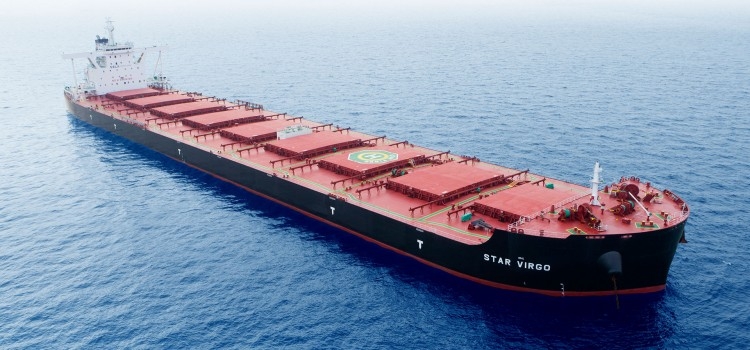
Star Bulk Carriers Corp., a global shipping company focusing on the transportation of dry bulk cargoes, announced its unaudited financial and operating results for the first quarter of 2021. Unless otherwise indicated or unless the context requires otherwise, all references in this press release to “we,” “us,” “our,” or similar references, mean Star Bulk Carriers Corp. and, where applicable, its consolidated subsidiaries.
Petros Pappas, Chief Executive Officer of Star Bulk, commented:
“Star Bulk reported a strong first quarter of 2021, earning net income of $35.8 million, on TCE Revenues of $156.4 million, with daily TCE per vessel for the fleet increasing to $15,461. The majority of the fleet remains exposed to the spot market for Q3 and following, with current forward coverage at $21,168 for 82% of available days in Q2.
The Board of Directors has amended the Company’s dividend policy to substantially increase return of capital to our shareholders. As a result, the Company will be paying a dividend for Q1 of $0.30 / share for the first quarter.
Over the past months we have continued increasing our fleet with the acquisition of twelve vessels, on average younger than our current fleet, nine of which were delivered within Q1. We expect to take delivery of the remaining three vessels during Q2.
Our outlook for the market remains positive due to the reopening of the global economy and consequent increased demand across all key dry bulk commodities. The record low orderbook coupled with upcoming environmental regulations that limit new vessel orders, also create favorable long term dynamics for our industry, which our Company is well positioned to enjoy.”
Recent Developments
Declaration of Dividend
The Company’s Board of Directors (the “Board”) declared a quarterly cash dividend of $0.30 per share on May 19, 2021, payable on or about June 14th, 2021 to all shareholders of record as of May 31st, 2021 (“Record Date”). The ex-dividend date is expected to be May 30th, 2021.Updated Dividend Policy
In November 2019, the Board established a dividend policy, which is now updated, pursuant to which the Board intends to declare a dividend in each of February, May, August and November in an amount equal to (a) Star Bulk’s Total Cash Balance minus (b) the product of (i) the Minimum Cash Balance per Vessel and (ii) the Number of Vessels.“Total Cash Balance” means (a) the aggregate amount of cash on Star Bulk’s balance sheet as of the last day of the quarter preceding the relevant dividend declaration date minus (b) any proceeds received by Star Bulk, including its subsidiaries, from vessel sales, or additional proceeds from vessel refinancings, or securities offerings in the last 12 months that have been earmarked for share repurchases, debt prepayment, vessel acquisitions and general corporate purposes.
“Minimum Cash Balance per Vessel” means:
$1.40 million for March 31, 2021;$1.65 million for June 30, 2021$1.90 million for September 30, 2021$2.10 million for December 31, 2021 and thereafter
“Number of Vessels” means the total number of vessels owned by the Company, including its subsidiaries, or that are subject to sale and leaseback transactions and finance leases, as of the last day of the quarter preceding the relevant dividend declaration date.
As of March 31, 2021, we owned 125 vessels and our Total Cash Balance was at $206.6 million. Adjusted for the Minimum Cash Balance per Vessel for March 31, 2021 of $1.40 million, resulted in total declared dividend amount of approximately $31.0 million or $0.30 per share.
Since Star Bulk is a holding company with no material assets other than the shares of its subsidiaries through which it conducts its operations, Star Bulk’s ability to pay dividends will depend on its subsidiaries distributing their earnings and cash flow to it. Any future dividends declared will be at the discretion and remain subject to approval of our Board each quarter, after its review of our financial condition and other factors, including but not limited to our earnings, prevailing charter market conditions, capital requirements, limitations under our debt agreements and applicable provisions of Marshall Islands law, which generally prohibits the payment of dividends other than from operating surplus or while a company is insolvent or would be rendered insolvent upon the payment of such dividend. Star Bulk’s dividend policy and declaration and payment of dividends may be changed at any time and are subject to legally available funds and the Board’s determination that each declaration and payment is at the time in the best interests of Star Bulk and its shareholders after its review of our financial performance. There can be no assurance that our Board will declare or pay any dividend in the future.
Fleet Update:
On May 19, 2021 we took delivery of SBI Pegasus, the seventh and final vessel, pursuant to the previously announced transaction with ENETI INC (formerly known as Scorpio Bulkers Inc.). We issued to the relevant ENETI affiliates 350,797 common shares representing the share consideration for the seventh vessel and we assumed the outstanding lease obligations associated with the vessel. Following the issuance of these shares the Company has 102,239,716 common shares issued and outstanding.
COVID-19 and Our Proactive Measures
Despite the global gradual recovery from COVID-19, we continue to take proactive measures to ensure the health and wellness of our crew and onshore employees while maintaining effective business continuity and uninterrupted service to our customers. The overall impact of COVID-19 on our business, and the efficacy of any measures we take in response to the challenges presented by the COVID-19 pandemic, will depend on how the outbreak further develops, the duration and extent of the restrictive measures that are associated with the pandemic and their impact on global economy and trade, which is still uncertain.
Employment Overview
Daily Time Charter Equivalent Rate (“TCE”) and TCE Revenues are non-GAAP measures. Please see the table at the end of this release for a reconciliation to Voyage Revenues, which is the most directly comparable financial measure calculated and presented in accordance with U.S. GAAP, as well as for the definition of the respective measures.
*For the first quarter of 2021 our TCE rate was:
Capesize / Newcastlemax Vessels: $17,986 per day.Post Panamax / Kamsarmax / Panamax Vessels: $14,791 per day.Ultramax / Supramax Vessels: $13,632 per day.
Amounts shown throughout the press release and variations in period–on–period comparisons are derived from the actual unaudited numbers in our books and records. Reference to per share figures below are based on 99,019,944 and 95,916,480 weighted average diluted shares for the first quarter of 2021 and 2020, respectively.
First Quarter 2021 and 2020 Results
For the first quarter of 2021, we had a net income of $35.8 million, or $0.36 earnings per share. Net income for the first quarter of 2020 was $2.8 million, or $0.03 earnings per share.
Adjusted net income, which excludes certain non-cash items, was $35.7 million, or $0.36 earnings per share for the first quarter of 2021, compared to an adjusted net loss for the first quarter of 2020 of $22.3 million, or $0.23 loss per share.
Net cash provided by operating activities for the first quarter of 2021 was $79.2 million, compared to net cash provided by operating activities of $32.1 million for the first quarter of 2020. Adjusted EBITDA, which excludes certain non-cash items, was $84.7 million for the first quarter of 2021, compared to adjusted EBITDA of $32.6 million for the first quarter of 2020.
Voyage revenues for the first quarter of 2021 increased to $200.5 million from $160.9 million in the first quarter of 2020. Time charter equivalent revenues (“TCE Revenues”) (please see the table at the end of this release for the calculation of the TCE Revenues) were $156.4 million for the first quarter of 2021, compared to $99.8 million for the first quarter of 2020. TCE rate for the first quarter of 2021 was $15,461 compared to $10,949 for the first quarter of 2020.
For the first quarters of 2021 and 2020, vessel operating expenses were $47.4 million and $42.7 million, respectively. Vessel operating expenses for the first quarter of 2021 included pre-delivery and pre-joining expenses of $0.5 million and additional crew expenses related to the increased number of crew changes performed during the period as a result of COVID-19 restrictions imposed during 2020 of $1.3 million. Our average daily operating expenses per vessel for the first quarters of 2021 and 2020 were $4,410 and $4,047, respectively. Excluding non-recurring expenses such as pre-delivery and pre-joining expenses and the increased costs due to the COVID-19 pandemic in 2021, our average daily operating expenses per vessel for the first quarter of 2021 were $4,251.
General and administrative expenses for the first quarters of 2021 and 2020 were $7.3 million and $6.0 million, respectively. The increase is mainly attributable to the reversal, in the first quarter of 2020, of the previously recognized stock based compensation expense of $1.2 million following the reassessment of the probability of achieving the performance conditions for some of our outstanding awards. Vessel management fees for the first quarters of 2021 and 2020 were $4.7 million and $4.6 million, respectively. Our average daily net cash general and administrative expenses per vessel (including management fees and excluding stock-based compensation and other non-cash charges) for the first quarters of 2021 and 2020 were $1,087 and $1,064, respectively.
Interest and finance costs net of interest and other income/(loss) for the first quarters of 2021 and 2020 were $12.7 million and $20.1 million, respectively. Despite the increase in the weighted average balance of our outstanding indebtedness to $1,604.5 million during the first quarter of 2021, from $1,593.2 million for the same period in 2020, the interest and finance costs net of interest and other income/ (loss) decreased due to the decrease in the average interest rate on our outstanding indebtedness, mainly driven by the refinancing of certain of our debt agreements, the interest rate swap agreements that we entered into in 2020 and 2021 and the lower LIBOR rates during the first quarter of 2021 compared to the same period in 2020.
View Full Report
EIOPA statement on dividends distribution and variable remuneration policies in the context of COVID-19

EIOPA considers that it is essential to ensure the access to and continuity of insurance services, safeguarding the ability of the insurance sector to continue to perform its role as risk transfer mechanism from citizens and businesses and its capacity to mobilize savings and invest them in the real economy. This objective requires that (re)insurers take all necessary steps to continue to ensure a robust level of own funds to be able to protect policyholders and absorb potential losses.
As mentioned in EIOPA’s statement of 17 March, in the context of the current crisis all (re)insurers should take measures to preserve their capital position in balance with the protection of the insured, following prudent dividend and other distribution policies, including variable remuneration.
In exercising this prudence, (re)insurers should ensure that their assessment of the overall solvency needs is forward-looking, taking due account of the current level of uncertainty on the depth, magnitude and duration of the impacts of COVID-19 in financial markets and on the economy and the repercussions of that uncertainty in their solvency and financial position.
Against this background of uncertainty, EIOPA urges that at the current juncture (re)insurers temporarily suspend all discretionary dividend distributions and share buy backs aimed at remunerating shareholders. This suspension should be reviewed as the financial and economic impact of the COVID-19 starts to become clearer.
Taking into account the need to preserve an efficient and prudent allocation of capital within insurance groups and the proper functioning of the Single Market, EIOPA urges that this prudent approach is applied by all (re)insurance groups at the consolidated level and also regarding significant intra-group dividend distributions or similar transactions, whenever these may materially influence the solvency or liquidity position of the group or of one of the undertakings involved. The materiality of this impact should be monitored jointly by the group and solo supervisors.
This prudent approach should also be applicable to the variable remuneration policies. It is expected that (re)insurers review their current remuneration policies, practices and rewards and ensure that they reflect prudent capital planning and are consistent with, and reflective of, the current economic situation. In such context, the variable part of remuneration policies should be set at a conservative level and should be considered for postponement.
(Re)insurers that consider themselves legally required to pay-out dividends or large amounts of variable remuneration should explain the underlying reasons to their National Competent Authority.
ABN AMRO to postpone dividends on the recommendation of the European Central Bank; expects loss in Q1 2020
ABN AMRO has taken notice of the recommendation of the European Central Bank (ECB) to credit institutions under ECB supervision to conserve capital and refrain from making dividend payments and perform share buy-backs until at least 1 October 2020 in order to support the economy in an environment of heightened uncertainty caused by COVID 19.
ABN AMRO’s annual general meeting is expected to take place as planned on 22 April 2020. At the recommendation of the ECB, ABN AMRO has decided to keep the initial proposal for distribution of the dividend for the financial year 2019 but make the actual payment conditional to the reassessment of the situation once the uncertainties caused by COVID 19 disappear (and, in any case, not before 1 October 2020). In addition, ABN AMRO will not pay an interim dividend in August 2020.
ABN AMRO has a strong capital position (CET1 of 18.1% at YE 2019) and a significant buffer above its minimum capital requirements. Given our strong capital and liquidity position and the bank’s important role in the Dutch economy, ABN AMRO was able to announce several measures to support clients affected by the COVID 19 virus in the past 2 weeks. For almost all Commercial Banking clients payments of interest and principal are automatically deferred for 6 months, unless clients opt-out. And clients with a mortgage or a consumer loan affected by COVID 19 can obtain a three month deferral of interest and principal payments.
The long term impact of the Corona virus on the economy, on our clients and on the quality of our loan portfolio is currently uncertain. We expect the FY2020 and especially Q1 2020 cost of risk to be materially higher than the through-the-cycle cost of risk range of 25-30bps. Together with the incidental loss at ABN AMRO Clearing, we expect to record a loss in Q1 2020.