
Swiss Re to propose regular dividend of CHF 5.90 per share
Swiss Re’s Board of Directors to propose a regular dividend of CHF 5.90 per share
Total contribution to economic net worth (ENW) of USD –434 million in 2020; excluding COVID-19 impact, total contribution of USD 3.3 billion for the year
Swiss Re maintains a very strong capital position; Group Swiss Solvency Test (SST) ratio of 215% as of 1 January 2021
Sergio P. Ermotti to be nominated for election as Chairman of the Board of Directors
For the upcoming Annual General Meeting (AGM) on 16 April 2021, the shareholders are invited to have their shares represented by the independent proxy
Cathy Desquesses to succeed Nigel Fretwell as Group Chief Human Resources Officer and member of the Group Executive Committee
Swiss Re today published its 2020 Annual Report, Sustainability Report and the agenda for the upcoming Annual General Meeting of shareholders (AGM) on 16 April 2021. In line with the preventive measures announced by the Swiss Federal Council, and in order to best protect the health of Swiss Re’s shareholders and employees, it will not be possible for shareholders to attend the AGM in person.
Shareholders can exercise their voting rights in writing or electronically via the independent proxy. Voting results will be published on the Group’s website. Shareholders are also invited to attend a virtual post-AGM information event to be streamed live, starting at 10:00 CEST on 16 April 2021. Details for this event are available in the shareholder invitation to the AGM or through the Sherpany App.
Swiss Re’s capital position remained very strong throughout 2020. As of 1 January 2021, the Group Swiss Solvency Test (SST) ratio was at 215%, within the new target range of 200–250%. The Group’s very strong capital position and positive outlook enables the Board of Directors to propose a stable dividend of CHF 5.90 per share at the upcoming AGM.
Swiss Re’s Chairman Walter B. Kielholz said: “In 2020, Swiss Re again proved that its business model is robust and that it can fulfil its role as shock absorber for the insurance industry in times of crisis. The company has supported its clients through the extraordinary events of the COVID-19 pandemic, all the while maintaining a very strong capital position. Swiss Re’s businesses delivered strong underlying results, highlighting their long-term earning potential, and market trends point to an optimistic outlook for 2021 and beyond. These factors allow the Board of Directors to confidently propose an attractive dividend to shareholders.“
Swiss Re’s 2020 Annual Report contains Swiss Re Group’s Economic Value Management (EVM) results. EVM is Swiss Re’s proprietary integrated economic valuation and steering framework, consistently measuring economic performance across all businesses. It allows Swiss Re to see the connection between risk-taking and value creation and provides a consistent framework to evaluate the outcome of controlled risk-taking and capital allocation decisions throughout a performance cycle.
Swiss Re reported a total contribution to economic net worth (ENW) of USD –434 million in 2020. The result was largely driven by COVID-19-related claims and reserves of USD 4.6 billion, which include both the 2020 impact and forward-looking estimates for 2021. Excluding COVID-19-related impacts, the total economic contribution to ENW amounted to USD 3.3 billion for the year, reflecting a strong underlying business performance in Reinsurance and Corporate Solutions.
ENW decreased to USD 33.7 billion as of 31 December 2020 from USD 36.1 billion on 31 December 2019. ENW per share was USD 116.45 (CHF 102.93) as of 31 December 2020. ENW per share growth amounted to –0.1% in 2020. Excluding COVID-19 claims and reserves, ENW per share growth was 10.3%, underpinning the strong underlying business performance.
Cathy Desquesses to succeed Nigel Fretwell as Group Chief Human Resources Officer and member of the Group Executive Committee
Cathy Desquesses has been appointed Group Chief Human Resources Officer and member of the Group Executive Committee, effective 1 July 2021. She will succeed Nigel Fretwell, who has decided to retire. Cathy Desquesses has been the Chief People Officer and member of the Executive Committee at Sodexo since July 2018. Prior to that she had a 20-year career at GE, working in various senior HR positions around the world. She holds a master’s degree in Labor & Employment Law from the Université Panthéon Assas in France.
Swiss Re’s Chairman Walter B. Kielholz said: “On behalf of the Swiss Re Board of Directors, I would like to thank Nigel Fretwell for his contribution to the Group over the past eight years and wish him all the best in retirement. We are pleased to have found an ideal successor in Cathy Desquesses to continue championing the topics of employee engagement, global talent pipeline, inclusion and diversity.“
Swiss Re Annual General Meeting
The Board of Directors proposes that Sergio P. Ermotti be re-elected as a member of the Board of Directors and elected as its Chairman for a one-year term of office until completion of the next Annual General Meeting. As previously announced, Walter B. Kielholz will retire after 12 years as Chairman of the Board of Directors and will not stand for re-election.
The Board of Directors will propose the re-election of the following members for a one-year term of office:
Raymond K.F. Ch’ien
Renato Fassbind
Karen Gavan
Joachim Oechslin
Deanna Ong
Jay Ralph
Joerg Reinhardt
Philip K. Ryan
Sir Paul Tucker
Jacques de Vaucleroy
Susan L. Wagner
Larry Zimpleman
The Board of Directors will propose the following individuals to be re-elected as members of the Compensation Committee:
Raymond K.F. Ch’ien
Renato Fassbind
Karen Gavan
Joerg Reinhardt
Jacques de Vaucleroy
The Board of Directors proposes that KPMG be re-elected as the Group’s auditor for a one-year term of office for the financial year 2022.The invitation to Swiss Re Ltd’s 2021 AGM is available online here.
Publication of the 2020 Annual Report and 2020 Sustainability Report
Swiss Re today published its 2020 Annual Report “Transforming Tomorrow Together“. The Annual Report consists of the Business Report and the Financial Report. The Business Report presents the Group’s strategic position and illustrates how Swiss Re and its partners are creating new partnerships and technologies to drive insurance growth, navigating the COVID-19 pandemic, while making the transition to a net-zero business model. The Financial Report includes the audited consolidated and statutory financial statements for 2020. The 2020 Annual Report is available online here. In addition, the SRZ Annual Report 2020 is also available online here.Information about Swiss Re’s capital position, financial strength and capital management can be found on pages 54–59 of the 2020 Financial Report. The Group also published loss development triangles on both an accident year and underwriting year basis. These are available online here.Swiss Re today published its Sustainability Report, which describes its Group Sustainability Strategy and its implementation in 2020. Key topics include linking compensation to sustainability performance, progress on the Group’s commitments to achieve net-zero emissions (in underwriting, investments and operations), the growing significance of biodiversity and ecosystem services, and Swiss Re’s people strategy. The report is available online here.
Munich Re maintains stable dividend and continues to grow

Munich Re posts a 2020 profit of €1.2bn, despite high COVID-19 losses
January renewals show premium growth (+10.9%) and rising prices (+2.4%)
Subject to the approval of the Supervisory Board and of the Annual General Meeting, a stable dividend of €9.80 per share is to be paid
In spite of the tremendous challenges posed by COVID-19, Munich Re closed out 2020 with a clear profit – and our dividend remains dependable. In 2021, we expect to meet the profit target that we envisaged prior to the pandemic. All the pieces are in place. Our reinsurance business is ideally positioned to resolutely exploit opportunities for profitable growth in the improved market environment. And ERGO is performing well following the successful conclusion of its Strategy Programme. We are refraining from launching a new share buy-back programme at this time, because our shareholders will benefit more from investments in the attractive business opportunities now emerging.
Joachim Wenning
Chairman of the Board of Management
Summary of figures for the 2020 financial year
Munich Re generated a profit of €1,211m (2,707m) in 2020, and €212m (217m) in Q4. The 2020 financial year was marked by high losses in connection with COVID-19. In reinsurance, pandemic-related losses totalling €3.4bn were posted, of which €370m was attributable to life and health reinsurance, and slightly over €3bn to property-casualty reinsurance. At ERGO, the negative impact on the result arising from COVID-19 totalled €64m. Adjusted for the above-mentioned losses, the Group would have met its originally envisaged 2020 profit target of €2.8bn, which was retracted in March 2020.
The operating result fell year on year to €1,986m (3,430m), while the other non-operating result amounted to –€83m (–91m). The currency result totalled –€200m (73m), and the effective tax rate was 18.2% (15.1%). Gross premiums written increased by 6.7% year on year to €54,890m (51,457m).
Equity was slightly lower at the end of the reporting period (€29,994m) than at the start of 2020 (€30,576m). At the end of the year, the solvency ratio – as usual, after accounting for the proposed dividend – was approx. 208% (31 December 2019: 237%), and was thus within the targeted, optimum range of 175–220%.
In the 2020 financial year, return on equity (RoE) amounted to 5.3%.
Reinsurance: Result of €694m
The reinsurance field of business contributed €694m (2,268m) to the consolidated result in 2020; the Q4 result was €75m (116m). The operating result amounted to €984m (2,613m). Gross premiums written rose to €37,321m (33,807m).
Life and health reinsurance business generated a profit of €123m (706m) in 2020. Premium income increased to €12,707m (11,716m). The technical result, including the result from reinsurance treaties with non-significant risk transfer, amounted to €97m (493m).
In 2020, property-casualty reinsurance business contributed €571m (1,562m) to the result. Premium volume rose to €24,615m (22,091m). The combined ratio was 105.6% (100.2%) of net earned premium on account of the high major losses.
Major losses – in excess of €10m each – totalled €4,689m (3,124m) for the full year, and €1,191m (1,462m) for Q4. These figures include gains and losses from the settlement of major losses from previous years. Major-loss expenditure corresponded to 20.8% (15.2%) of net earned premiums, and was thus considerably above the long-term average of 12%. This was primarily attributable to major losses associated with the coronavirus pandemic. In this context, the most significant losses were incurred in connection with the cancellation or postponement of major events. On a smaller scale, there were also losses in other lines of property-casualty reinsurance, including business interruption. These and other man-made major losses added up to a sizeable €3,784m (1,071m). Major losses from natural catastrophes cost €906m (2,053m), which was far lower than expected on average – despite a record number of events in some loss scenarios. The costliest natural catastrophe for Munich Re in 2020 was Hurricane Laura (approx. €280m).
In the 2020 financial year, provisions for basic losses from prior years totalling around €938m were released; this corresponds to 4.2% of net earned premiums. Munich Re continually seeks to set the amount of provisions for newly emerging claims at the top end of the estimation range, so that profits from the release of a portion of these provisions are possible at a later stage.
In the reinsurance renewals as at 1 January 2021, Munich Re was able to increase the volume of business written to €11.6bn (+10.9%). Around half of property-casualty business was renewed, with a focus on Europe, the USA (mainly excluding hurricane cover) and global business. Prices, terms, and conditions improved; rates increased particularly in parts of the non-proportional business. Prices improved to varying degrees around the world. All in all, prices for the Munich Re portfolio increased by 2.4%. This figure is, as always, risk-adjusted. In other words, price increases are offset if they are associated with increased risk and, consequently, elevated loss expectations. Looking ahead to the upcoming renewal rounds in April and July, Munich Re anticipates that the market environment will remain positive and offer attractive growth opportunities.
ERGO: Result of €517m
Munich Re generated a profit of €517m (440m) in its ERGO field of business in 2020, and €136m (101m) in Q4. This means that ERGO successfully completed its Strategy Programme, nearly meeting its 2020 profit guidance of €530m – the burdens arising from COVID-19 notwithstanding.
This result was buoyed by the ERGO International segment’s very high result of €230m (105m). Three factors contributed to this achievement: a renewed improvement in operational business, a positive one-off effect as part of the merger of two joint ventures in India, and the fact that the previous year had been burdened by the optimization of the international portfolio. The ERGO Property-casualty Germany segment generated a profit of €157m (148m), chiefly owing to strong premium growth and a good technical result. The impact of COVID-19 was cushioned by lower major losses. ERGO Life and Health Germany reported a result of €130m (187m). This decline occurred primarily on account of the lower investment result in the health field and the impact of COVID-19 in travel insurance. ERGO’s operating result amounted to €1,002m (817m).
The combined ratios remained at a very good level. In the Property-casualty Germany segment, the combined ratio was 92.4% (92.3%), which met the 2020 target of 92%. The combined ratio in the ERGO International segment amounted to 92.7% (94.3%), which was even better than the target of 94% for 2020. This improvement was fuelled by a lower claims frequency in motor insurance.
Overall premium income across all lines fell only slightly to €18,448m (18,880m), despite international portfolio remediation and the repercussions of the pandemic; gross premiums written decreased to €17,569m (17,650m).
Investments: Investment result of €7,398m
Munich Re’s investment result (excluding insurance-related investments) decreased to €7,398m (7,822m) in 2020. Regular income from investments fell to €6,273m (6,751m), largely due to lower interest income. The balance of write-ups/write-downs amounted to –€1,957m (–309m), particularly on account of impairment losses on equities triggered by the Q1 plunge in equity markets. In addition, net gains on disposals excluding derivatives increased to €3,698m (2,779m), driven by the sale of fixed-income investments, equities and real estate. The net balance of derivatives amounted to €74m (–717m), with gains on interest-rate derivatives and losses on equity derivatives nearly offsetting each other.
Overall, the 2020 investment result represents a return of 3.0% on the average market value of the portfolio. Munich Re thus managed to achieve its target – in spite of the challenging conditions and high volatility prevailing in the capital markets. The running yield was 2.5% and the reinvestment yield was 1.5%. The equity-backing ratio, including equity derivatives, dropped to 6.0% as at 31 December 2020 (31 December 2019: 6.4%).
Munich Re’s investment portfolio (excluding insurance-related investments) increased compared with the 2019 year-end figure, with the carrying amount rising slightly to €232,950m (228,764m); the market value amounted to €252,789m (247,310m).
The Group’s asset manager is MEAG, whose assets under management as at 31 December 2020 included not only Group investments but also a volume of €69.6bn (38.2bn) for third parties.
Outlook 2021: Group targets a consolidated result of €2.8bn
Munich Re is aiming for a profit of €2.8bn in 2021, as communicated on 1 December 2020. The Group expects the financial consequences from COVID-19 to be on a considerably smaller scale than in 2020. Group premium income is expected to rise to about €55bn in 2021, and return on investment to be above 2.5%, the persistently very low interest rates notwithstanding.
In its reinsurance field of business, Munich Re anticipates premium income of about €37bn and a profit of about €2.3bn in 2021. The combined ratio in property-casualty reinsurance is forecast to be about 96% (95% without burdens arising from COVID-19). Munich Re projects a technical result, including the result from reinsurance treaties with non-significant risk transfer, of about €400m in life and health reinsurance.
It is anticipated that the ERGO field of business will contribute about €500m to consolidated profit. ERGO is targeting a combined ratio of 92% in the Property-casualty Germany segment (91% without expenditure for COVID-19), and 93% in the ERGO International segment. Premium income will amount to approx. €17.5bn in 2021.
All forecasts and targets face considerable uncertainty owing to fragile macroeconomic developments, volatile capital markets and the unclear development of the pandemic. As always, the projections are subject to major losses being within normal bounds, and to the income statement not being impacted by severe fluctuations in the currency or capital markets, significant changes in the tax environment, or other one-off effects.
CNP Assurances – 2020 Annual Results: Attributable net profit of €1,350 million, SCR coverage ratio of 208%, Recommended dividend of €1.57 per share
Premium income(2) of €27.0 billion, down 17.3% as reported (down -11.5% at constant exchange rates(3))- Strong commercial momentum in the second half, across all geographies- 51.8% of Savings/Pensions premiums represented by unit-linked contracts- €5.9 billion net inflow to unit-linked contracts and €7.2 billion net outflow from traditional products at Group level
EBIT of €2,614 million, down 14.0% as reported (down 5.7% at constant exchange rates)
Attributable net profit of €1,350 million, down 4.4% as reported (down 2.1% at constant exchange rates)
APE margin of 12.2%
Consolidated SCR coverage ratio of 208%
The Board of Directors recommends paying a dividend of €1.57 per share, comprising an ordinary dividend of €0.77 and a special dividend of €0.80, representing a 40% payout ratio for the years 2019 and 2020.
Antoine Lissowski, CNP Assurances’ Chief Executive Officer, said:
“In spite of the Covid-19 health crisis which affected Life insurance sales in France in the first half of the year, CNP Assurances began transforming its business and in-force portfolio in response to the negative interest rate environment. Written premiums were particularly strong in Italy and Brazil, where activity is heavily weighted towards unit-linked products.The Group’s financial results and solvency ratio were robust despite the effects of the economic slowdown.Now an integral part of La Banque Postale group, CNP Assurances is fully engaged in the process to reshape its business model.”
(1) Recommended at the Annual General Meeting of 16 April 2021(2) 2019 premium income has been restated to exclude the top line contribution of Fourgous and Eurocroissance transfers for a total of €914 million. (3) Average exchange rates:At 31 December 2020: Brazil: €1 = BRL 5.89; Argentina: €1 = ARS 81.04 At 31 December 2019: Brazil: €1 = BRL 4.41; Argentina: €1 = ARS 53.88
Download .PDF (308.3 kB)
TEN Ltd. Declares Dividend on its Series F Cumulative Redeemable Perpetual Preferred Shares

TEN Ltd., a leading diversified crude, product and LNG tanker operator, yesterday announced that its Board of Directors declared the regular quarterly cash dividend of approximately $0.59375 per share for its Series F Cumulative Redeemable Perpetual Preferred Shares (the “Series F Preferred Shares”; NYSE: TNPPRF).
Each dividend of the Series F Preferred Shares is for the period from the most recent dividend payment date on October 30, 2020 through January 29, 2021.
The dividend on the Series F Preferred Shares will be paid on February 1, 2021 to all holders of record of Series F Preferred Shares as of January 27, 2021. Dividends on the Series F Preferred Shares are payable quarterly in arrears on the 30th day (unless the 30th falls on a weekend or public holiday, in which case the payment date is moved to the next business day) of January, April, July and October of each year, when, as and if declared by TEN’s board of directors. This is the 10th dividend on the Series F since their commencement of trading on the New York Stock Exchange.
TEN has 6,000,000 Series F Preferred Shares outstanding as of the date of this press release.
Safe Bulkers, Inc. Declares Quarterly Dividend on its 8.00% Series C Cumulative Redeemable Perpetual Preferred Shares
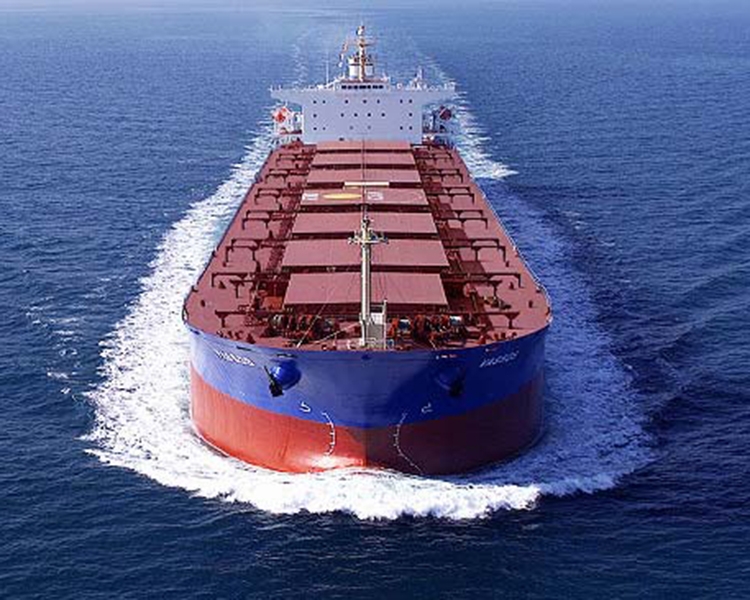
Safe Bulkers, Inc., an international provider of marine drybulk transportation services, announced that the Company’s Board of Directors has declared:
• a cash dividend of $0.50 per share on its 8.00% Series C Cumulative Redeemable Perpetual Preferred Shares (the “Series C Preferred Shares”) (NYSE: SB.PR.C) for the period from April 30, 2020 to July 29, 2020;
• a cash dividend of $0.50 per share on its 8.00% Series D Cumulative Redeemable Perpetual Preferred Shares (the “Series D Preferred Shares”) (NYSE: SB.PR.D) for the period from April 30, 2020 to July 29, 2020.
Each dividend will be paid on July 30, 2020 to all shareholders of record as of July 23, 2020 of the Series C Preferred Shares and of the Series D Preferred Shares, respectively. Dividends on the Series C and D Preferred Shares are payable quarterly in arrears on the 30th day (unless the 30th falls on a weekend or public holiday, in which case the payment date is moved to the next business day) of January, April, July and October of each year.
The declaration and payment of dividends, if any, will always be subject to the discretion of the Board of Directors of the Company, and will depend on, among other things, the Company’s earnings, financial condition and cash requirements and availability, the Company’s ability to obtain debt and equity financing on acceptable terms as contemplated by the Company’s growth and leverage strategies, the restrictive covenants in the Company’s existing and future debt instruments and global economic conditions.
TEN Ltd Reports Strong Profits for First Quarter 2020 and Announces Special Dividend, 250% increase of Net Income before non-cash items

TEN, Ltd (TEN) reported results (unaudited) for the quarter ended March 31, 2020.
Q1 2020 Summary Results
Gross revenues for the first quarter of 2020 came at approximately $180 million, $32 million higher than in the 2019 first quarter.
Operating income doubled to $54.7 million from $27.8 million in the 2019 first quarter.
Net income, exclusive of a non-cash bunker hedge effect, increased 250% to $39.3 million, and to a solid $21.2 million after taking into account the impact of non-cash items. Earnings per share, after non-cash bunker hedges and preferred stock dividends, increased to $0.12 in the first quarter of 2020 from $0.01 in the first quarter of 2019.
EBITDA amounted to about $90 million, 40% higher than in the 2019 first quarter.
The daily average TCE per vessel reached $26,629 compared to $21,054 in the first quarter of 2019.
This performance was a reflection of the strong market that started in the latter months of 2019 and continued into the first and second quarter of 2020. As a result, TEN once again benefited by chartering its vessels on long-term contracts hence securing future earnings and allowing the fleet to achieve a high fleet utilization, reaching 97% with only one vessel undergoing scheduled dry docking.
Fleet operating expenses increased modestly to $45.5 million from $43.3 million in the first quarter of 2019, partly due to the size of the fleet and calculated increases in provisions and stores taken onboard vessels for precautionary reasons as the Covid-19 pandemic began to spread, threatening access to terminals.
On a daily average per vessel basis, operating expenses were once again controlled to about $7,900 due to strict cost checks.
G&A expenses increased by $1.17 million mainly due to a slightly higher fleet from the first quarter of 2019.
Depreciation and amortization combined were about $0.5 million lower than in the 2019 first quarter due to vessel sales.
In the first quarter of 2020, interest and finance costs reached $33.6 million which included hedge related payments and $16.0 million non-cash negative changes in bunker valuations. These non-cash items have already reversed due to the rebalancing of the oil market in terms of oil production and expected to have a positive impact on the balance sheet going forward.
Actual bank loan interest payments fell by $4.4 million due to lower interest rates and declining outstanding loans from scheduled repayments and vessel sales.
By the end of the 2020 first quarter, total outstanding indebtedness fell by a net $53.5 million and correspondingly TEN’s net debt to capital declined to 46.5%. Concurrently, TEN’s cash balances reached a level well beyond earlier expectations, with cash reserves at a healthy $221 million.
In January 2020, TEN took delivery of the newbuilding aframax Caribbean Voyager which immediately commenced its five-year bareboat employment to a US oil major, sistership to the Mediterranean Voyager delivered in October 2019 to the same charterer for identical employment.
Dividend – Common Shares
Following the March 24, 2020 announcement of a 5 cents per common share dividend, the Company’s Board of Directors have subsequently approved to increase, for this time, that amount by 50% and pay a total of 7.5 cents per common share on June 26, 2020. The record date has been set for June 22, 2020 with ex-dividend date June 19, 2020.
Corporate Strategy & Outlook
The primary objective of management since the beginning of the year has been to ensure that the fleet’s crew is safe and sound in these challenging times, especially as government actions around the world have applied harsh, but necessary restrictions to contain the Covid-19 pandemic.
In this unprecedented environment, with 65 vessels navigating all corners of the world and crewed by 2,000 seafarers, management’s goal has been to ensure their health and safety. We are proud to have safeguarded our employees to the best of our ability, so far.
During this period, the silver lining has been the strength of the tanker market, due to its solid fundamentals and the strong demand for our services during the first six months of 2020. In this environment, TEN took the opportunity to agree long-term accretive charters, that will secure the Company’s positive performance for the remainder of 2020.
Maintaining a strong balance sheet by increasing liquidity and reducing debt obligations continues to be a priority. As previously stated, it remains management’s intention to initiate the, at par, redemption of its Series C preferred shares next quarter.
“In the first quarter of 2020, the pandemic was accompanied by a strong tanker market that continued well into the second quarter. During that period, TEN fixed long-term charters for its vessels that will secure positive returns for the remainder of the year and beyond,” Mr. George Saroglou, COO of TEN commented. “Management continues to be in discussions with first-class charterers for similar accretive employments to safeguard cash flow visibility, a core element in TEN’s strategy. The safety of our seafarers was, is and remains our top priority as TEN continues its long established and market tested operating model to achieve the highest utilization levels and long-term profitability. This is the fourth and most challenging crisis we have successfully navigated in 28 years of operations. We would like to thank all our colleagues for their efforts during these extraordinary times and wish them to remain safe and healthy,” Mr. Saroglou concluded.
Reverse Share Split
At the Company’s Annual General Meeting which was held on May 28, 2020 it was resolved by shareholders to undertake a one-for-five reverse split of our common shares by which one new common share will be given in exchange for every five currently held. This is scheduled to take effect at the opening of trading on July 1st, 2020 and management expects this to increase the universe of investors with the ability to invest in TEN. Further details will be provided in a Press Release on this topic.
Zurich shareholders re-elect all members of the Board and approve dividend
Shareholders of Zurich Insurance Group Ltd (Zurich) approved all items on the agenda at today’s Annual General Meeting (AGM), including the re-election of all members of the Board of Directors. Michel M. Liès was confirmed as Chairman of the Board.
The event took place without the presence of the shareholders, following government restrictions on gatherings designed to curb the spread of Covid-19 and in compliance with the Covid-19 Ordinance 2 of the Swiss Federal Council. Shareholders were able to exercise their voting rights by providing instructions to the independent voting rights representative electronically or in writing. Votes were cast by 32,632 shareholders, representing 69,912,524 registered shares or 65.57% of the shares entitled to vote.
Following the approval of shareholders, the dividend of CHF 20 per share will be paid out as from April 7, 2020.
“We thank our shareholders for their trust and for their understanding for the unusual format of this year’s Annual General Meeting,” said Zurich Chairman Michel M. Liès. “Following three successful years of our customer-focused strategy, we entered the current public health emergency in a position of strength. Our teams around the world have successfully switched to working remotely, serving customers in flexible and innovative ways.”
In a non-binding advisory vote, 86.39% of shareholders represented at the AGM approved the remuneration report 2019.
The Management Report, Annual Financial Statements and Consolidated Financial Statements detailing Zurich’s performance in 2019, and all other items on the agenda, were also approved.
The Board of Directors and the Remuneration Committee remain unchanged and consist of the following members:
Board of Directors (all CVs to be found here)
– Michel M. Liès, Chairman
– Joan Amble
– Catherine P. Bessant
– Dame Alison Carnwath
– Christoph Franz
– Michael Halbherr
– Jeffrey L. Hayman
– Monica Mächler
– Kishore Mahbubani
– Jasmin Staiblin
– Barry Stowe
Remuneration Committee
– Christoph Franz
– Catherine P. Bessant
– Michel M. Liès
– Kishore Mahbubani
– Jasmin Staiblin
The Vice-Chairman of the Board of Directors, the Chairman of the Remuneration Committee and the members of the other committees will be elected at the constituent meeting, which will take place tomorrow, April 2, 2020.
Credit Agricole Group – Decision regarding the 2019 dividend

In accordance with the recommendations published by the European Central Bank on 27th March, related to the Covid-19 crisis, and applicable to the Credit Agricole Group and to its subsidiaries, Amundi intends to propose to its Board of Directors not to submit to its General Assembly, convened on May 12th 2020[1], the dividend payout of €3.10 per share for the 2019 fiscal year, and to allocate the entire 2019 results to reserves.
During the second half of 2020, the Board will propose guidelines for distribution to shareholders. These could consist in the payment of an advance on dividends pertaining to 2020 results, or in an exceptional distribution from reserves, which would require the holding of an Exceptional General Shareholders’ Meeting. Amundi reminds that it enjoys a strong capital position, with a CET1 ratio of 15.9% at end-2019 (including the provisioning of the dividend). The allocation of the 2019 results to reserves will positively impact this ratio by more than 500 bps to over 20%. [1] In the current epidemic context, the AGM convened of 12 May 2020 will take place without physical attendance of shareholders, in compliance with the French ordonnance n° 2020-321, dated 25 March 2020. Consequently, shareholders are invited to vote by post, using the voting form, or to give their proxy to the Chairman of the AGM.
ING provides update on dividend in the context of the coronavirus pandemic
ING is fully committed to helping our customers and supporting society in coping with the coronavirus pandemic. In many countries we are working with the local industry and governments to provide businesses and individuals the necessary financial flexibility while ensuring we continue to play the vital role banks have in society, providing key banking services through our network.
In that context, ING announced today it will follow the recommendations made by the European Central Bank to European banks on 27 March 2020 regarding dividend distributions. ING is well capitalised, above regulatory requirements, but in line with the ECB’s recommendations, it will suspend any payment of dividends on its ordinary shares until at least 1 October 2020. At the Annual General Meeting scheduled for 28 April 2020, the proposal to pay a final 2019 dividend (agenda item 3B) will not be put up for a vote and will be removed from the agenda. In addition, ING does not expect to make an interim-dividend payment from 2020 earnings and will review any further dividend announcements after 1 October 2020.
Ralph Hamers, CEO of ING said: “These are extraordinary times for all of us. ING is taking all necessary steps to ensure the wellbeing of our employees and the continued support of our customers. I am proud of the efforts of our employees across various countries who have provided assistance to thousands of customers. While we are well capitalised and funded, and strive to provide our shareholders an attractive return, we think it is prudent to follow the ECB’s recommendations for all European banks regarding dividend payments, enabling us even greater flexibility to support our customers and society in this crisis and work together with governments and regulators towards a recovery.”
As reported, ING has scheduled its Annual General Meeting for Tuesday 28 April 2020.