
Deutsche Bank’s 2026 AGM to be held in person again for the first time since 2019; dividend again increased for shareholders
Management Board and Supervisory Board propose a dividend of € 1.00 per share in respect of the financial year 2025, an increase of around 50% compared to 2024
Alexander Wynaendts and Yngve Slyngstad are proposed for another term on the Supervisory Board. It is intended that Wynaendts will subsequently be again elected Chairman of the Supervisory Board
Frank Witter will step down from the Supervisory Board for personal reasons, with effect from the close of the Annual General Meeting on May 28, 2026. Carsten Knobel will be proposed for election to the Supervisory Board at the AGM
The remuneration of the Supervisory Board members is to be adjusted
The Annual General Meeting of Deutsche Bank AG (XETRA: DBKGn.DE / NYSE: DB) will take place in person this year for the first time since 2019. Shareholders can attend in person in Frankfurt am Main and exercise their shareholder rights.
“The Supervisory Board and Management Board are very much looking forward to a direct and open exchange with our shareholders. By holding an in-person event, we are accommodating wishes of shareholders,” said Alexander Wynaendts, Chairman of the Supervisory Board. “We believe that alternating on a regular basis between in-person and virtual formats, which we have now initiated, is for a good way of combining the advantages of both options.”
As announced in January 2026, the Management Board and the Supervisory Board propose a dividend of € 1.00 per share (approximately € 1.9 billion in total) for 2025. This would represent an increase of around 50% compared to € 0.68 per share paid in respect of 2024. Together with the share buyback launched in February 2026 with a volume of € 1.0 billion, which is now underway, this increases the cumulative capital distributions in respect of the financial years 2021-2025 to € 8.5 billion, thereby exceeding the Bank’s original target of € 8.0 billion for this period.
Supervisory Board elections
Alexander Wynaendts’ term of office is set to expire with the conclusion of the Annual General Meeting on May 28, 2026. As announced in November, the Supervisory Board has nominated Wynaendts for another four-year term. It is intended that Alexander Wynaendts will be re-elected Chairman of the Supervisory Board following his election by the Annual General Meeting. Yngve Slyngstad’s term of office also expires at the 2026 AGM; he is also proposed for re-election.
Frank Witter has informed the Bank that he will resign from his Supervisory Board mandate for personal reasons at the conclusion of the Annual General Meeting on May 28, 2026. To fill the vacancy, Carsten Knobel, Chief Executive Officer of Henkel AG & Co. KGaA, will be proposed for election to the Supervisory Board at the AGM.
“I am delighted that Carsten Knobel will be a candidate for our Supervisory Board. He brings extensive experience and is a highly respected representative of a globally oriented German industrial and consumer goods company,” said Wynaendts. “At the same time, I look forward to continuing the good and trusting cooperation with Yngve Slyngstad.”
“I would also like to thank Frank Witter for his significant contribution over the past years. With his commitment and expertise as Chairman of the Audit Committee, he supported the bank during an important phase and contributed greatly to its success,” Wynaendts added.
Adjustment of Supervisory Board Compensation
The Supervisory Board and Management Board believe that the current compensation for the Supervisory Board is no longer competitive in attracting and retaining highly qualified Supervisory Board members. Given the demanding and multifaceted requirements, and the particularly complex regulatory environment that also impacts on the Supervisory Board’s work, the members’ compensation should therefore be adjusted. The fixed annual basic compensation for Supervisory Board members will be increased from € 300,000 to € 350,000, for the deputy Chairman of the Supervisory Board from € 475,000 to € 550,000, and for the Chairman of the Supervisory Board from € 950,000 to € 1,150,000. Furthermore, the person chairing a Supervisory Board committee will generally receive additional remuneration in the future, and previous exemptions for this will no longer apply.
The full agenda is published at Annual General Meeting website.
Participation in the AGM 2026
Shareholders of Deutsche Bank can fully exercise all shareholder rights. In addition, Deutsche Bank is again offering additional information and participation opportunities this year:
The speeches of the Chairman, Alexander Wynaendts, and the Chief Executive Officer, Christian Sewing, will be published on Wednesday, May 20, 2026, the latest, on our Annual General Meeting website
Shareholders can submit written statements for publication until May 25, 2026
The Bank will broadcast the entire AGM, including the general debate and voting, live, both on the shareholder portal (agm.db.com/shareholderportal) and publicly on our Annual General Meeting website
Virtual voting is possible until the end of the general debate on the day of the AGM
All details on participation and interaction options are available in the invitation at our Annual General Meeting website.
Eintracht Frankfurt and Deutsche Bank sign early partnership extension until 2035 – the most comprehensive agreement in the club’s history
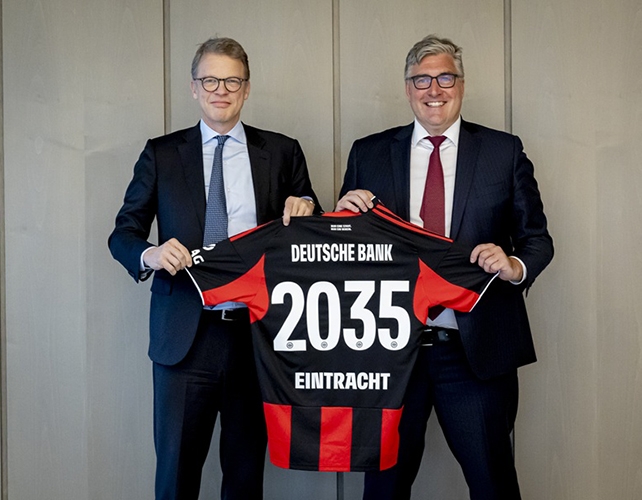
Eintracht Frankfurt and Deutsche Bank are continuing their long-term collaboration. Ahead of schedule, they are extending the agreement for Deutsche Bank Park by eight years until 2035 and are broadening its scope. The new agreement now runs for the same duration as the existing stadium lease agreement with the City of Frankfurt.
By extending their partnership, the football club and the bank are sending a clear signal of continuity and reliability. By acting early, they are creating planning certainty and a strong foundation to sustainably develop the most comprehensive cooperation in Eintracht Frankfurt’s history over the coming years. Both parties have agreed to keep the financial terms confidential.
“Our partnership with Deutsche Bank is special in many ways; it stands for trust, foresight and shared values,” says Axel Hellmann, CEO of Eintracht Frankfurt Fußball AG. “It forms a central foundation for our strategic development – economically, infrastructurally and with regard to our ambitions in national and international competition. The early extension is a strong commitment to the region, to Frankfurt and to the close connection between two strong brands. It has far-reaching significance and is crucial for Eintracht’s long-term strategy.”
Two strong brands with regional roots and global reach
Eintracht Frankfurt and Deutsche Bank are two of the defining institutions of the Rhine-Main region and possess significant national and international relevance. Both embody the economic, social and cultural importance of Frankfurt as a financial centre.
The partnership connects two complementary forces. As a Bundesliga football club, Eintracht Frankfurt offers exceptional media reach, a deep emotional bond with fans and members, and a strong sense of regional identity. As Germany’s leading bank, Deutsche Bank enhances the partnership with global financial expertise and its influential role in business and society. This alliance creates mutual value and reinforces the leadership position of both partners in their respective fields.
“Eintracht Frankfurt is an exceptional club with international ambitions, regional strength and a clear stance – that’s an excellent fit for us,” says Christian Sewing, CEO of Deutsche Bank. “We are proud to maintain the naming rights to Deutsche Bank Park in the future. The partnership with Eintracht goes far beyond classic sponsorship: it is an expression of our long-term commitment to Frankfurt and to the people connected with this region. By renewing our agreement, we are also underscoring our commitment to the values that also define sport: performance, fair play and cohesion.”
Clear commitment to Frankfurt
Frankfurt’s Mayor Mike Josef welcomed the agreement, saying: “The partnership between Deutsche Bank and Eintracht Frankfurt clearly demonstrates both partners’ commitment to Frankfurt as a location. It is by no means a given that two globally renowned institutions with roots in Frankfurt should cooperate so closely and reliably for many years – making it all the more commendable. Deutsche Bank is setting an exemplary standard here, especially at a time when Germany, as a business and sports location, urgently needs such clear and lasting signals.
Deutsche Bank Park has gained international recognition in recent years. It was established with the ambition of transforming the sports venue into a meeting place for all citizens, and this has been successfully achieved: through high-class events, concerts by world stars, thrilling sporting events, and diverse opportunities for sports activities, such as the climbing forest.
Deutsche Bank Park is now the most significant event venue in Hesse, not only during Eintracht’s home matches, where the stadium’s appeal is most visible and tangible, but also far beyond,” Mike Josef concludes.
A partnership with real depth
A central component of the collaboration is Deutsche Bank’s role as the “Official Banking Partner” of Eintracht Frankfurt. The club already uses the bank’s products, services and expertise in key financial and service areas – from payment processes to advisory services. Deutsche Bank plays a leading role within the financial partner portfolio. Together, both partners intend to deepen their collaboration, further develop solutions, optimise processes and explore new approaches – with the goal of creating tangible added value for the club, its organisation and the fans.
One particularly tangible result of the collaboration is “mainpay”, the integrated payment system in Eintracht’s “mainaqila” app. Mainpay stands for modern, secure and fan-friendly payments – and will soon be even more deeply integrated into the stadium and event experience with further added values. Furthermore, the parties intend to introduce additional attractive financial products for the club’s members and fans.
Beyond classic banking services, the partnership will also become even more visible in the club’s sporting activities in the future. The Deutsche Bank will feature on the sleeves of the training and warm-up kit for the men’s and women’s professional teams, the U21 and – from the upcoming season – also the club’s youth academy. This will bring Deutsche Bank even closer to the core sporting business and anchors the brand in daily training operations – particularly for the women’s and men’s teams training at Deutsche Bank Park.
Deutsche Bank Park: a meeting place with a vision
Deutsche Bank Park will remain the cornerstone of joint activities in the future. The goal is to consistently develop the area into a modern, multifunctional event and meeting place – beyond match operations and with added value for the greater Rhine-Main region.
This approach is already being implemented – as the past years of partnership show: the new climbing forest on the stadium grounds combines sport and nature and is well suited to family outings. There is also a nature and adventure trail with several stations for environmental education, as well as a fitness trail. Recurring formats like the Easter egg hunt around Deutsche Bank Park also underscore the ambition to establish the location as a place for experiences beyond match days.
The partners are continuously developing service and digital approaches in stadium operations – with the aim of simplifying processes, reducing waiting times and significantly elevating the visitor experience. One of the things that will support this ambition is the flagship project to expand cashless options for food and beverages at the ground with a frictionless kiosk designed to offer fans an even faster, smoother and completely cashless shopping experience. Another project aims at establishing an annual financial education event for schoolchildren from Frankfurt and the surrounding area.
With this long-term partnership, visitors to Deutsche Bank Park can look forward to a wide range of new experiences and developments – in the stadium, throughout the surrounding area, and beyond.
Deutsche Bank achieves positive ESG rating results in 2025
Deutsche Bank achieved notable progress in its environmental, social and governance (ESG) ratings in 2025. With the four leading rating agencies the bank was able to either significantly improve its results or strengthen its already high rating with an increased total score.
CDP: For the first time, Deutsche Bank received the top score A/Leadership and was included in the organization’s A List.
S&P CSA: The score rose from 67 to 72 points out of a possible 100 – placing Deutsche Bank among the leading companies worldwide in this rating.
MSCI: The bank’s AA rating (AAA representing the highest rating) was reaffirmed with an increased total score compared to the previous assessment.
Sustainalytics: The risk score improved from 24.8 (Medium Risk) to 9.0 (Negligible Risk), with 0.0 representing the best possible score.
Deutsche Bank also continues to be listed in two significant indices: Dow Jones Best-in-Class World and Dow Jones Best-in-Class Europe. These indices contain, according to their methodology, companies that achieve the highest ESG ratings within their respective sectors globally and in Europe.
Deutsche Bank reports record profit before tax of € 7.7 billion in the first nine months of 2025
Nine-month profit before tax of € 7.7 billion, up 64% over the first nine months of 2024; up 36% if adjusted for Postbank litigation impacts
Net profit rose 76% to € 5.6 billion
All four businesses delivered double-digit year-on-year profit growth and post-tax return on average tangible shareholders’ equity (RoTE1) above 10%
Nine-month 2025 key ratios in line with full-year targets
RoTE1 of 10.9%, consistent with 2025 target of above 10%
Cost/income ratio of 63.0%, in line with 2025 target of below 65%
Nine-month revenue growth supports full-year 2025 ambition
Net revenues grew 7% year on year to € 24.4 billion, in line with full-year ambition of around € 32 billion
Net inflows of € 66 billion across the Private Bank and Asset Management
Nine-month costs in line with 2025 guidance, reflecting lower nonoperating costs
Noninterest expenses down 8% year on year to € 15.4 billion
Adjusted costs1 flat year on year at € 15.2 billion
Strong capital generation supports growth and distributions to shareholders
Common Equity Tier 1 (CET1) capital ratio rose to 14.5%, from 14.2% in the previous quarter and 13.8% in the prior year quarter
2025 capital distributions of € 2.3 billion, up by approximately 50% over 2024, after completion of second share repurchase program
Nine-month provision for credit losses of € 1.3 billion, down 7% year on year
Record third-quarter 2025 profit before tax of € 2.4 billion, up 8% year on year; up 34% if adjusted for Postbank litigation provision release in prior year quarter
Net profit up 9% to € 1.8 billion
RoTE1 of 10.7% and a cost/income ratio of 64.4%
Net revenues rose 7% year on year to € 8.0 billion
Noninterest expenses of € 5.2 billion, up 9% year on year, reflecting non-recurrence of Postbank litigation release in prior year quarter
Adjusted costs of € 5.0 billion, flat year on year
Provision for credit losses down 16% year on year to € 417 million
We delivered record profits in both the third quarter and first nine months of 2025, demonstrating the value to clients and shareholders of our Global Hausbank in a fast-changing environment. We are on track to deliver on our 2025 financial targets and, having increased shareholder distributions by 50% in each of the last three years, we are on course to return over € 8 billion to shareholders from 2022 to 2026. We have built firm foundations for the next phase of our strategy journey.
Christian Sewing Chief, Executive Officer
Deutsche Bank today announced profit before tax of € 7.7 billion for the first nine months of 2025, up 64% compared to the first nine months of 2024. If adjusted for the impacts of the Postbank takeover litigation provision in both periods, profit before tax was up 36% year on year. Profit growth reflected year on year revenue growth of 7%, together with an 8% year on year reduction in noninterest expenses, driven largely by significantly lower nonoperating expenses due to the non-recurrence of the aforementioned Postbank litigation impact. Adjusted costs, which exclude nonoperating items, were € 15.2 billion, essentially flat in line with guidance. Nine-month net revenues, at € 24.4 billion, were in line with full-year 2025 guidance of around € 32 billion; nine-month noninterest expenses, at € 15.4 billion, were also in line with full-year guidance of around € 20.8 billion.
Deutsche Bank’s target ratios improved significantly compared to the first nine months of 2024 and were in line with the bank’s 2025 targets. Post-tax return on average tangible shareholders’ equity (RoTE)1 was 10.9%, up from 6.0% in the prior year period and in line with the bank’s 2025 target of above 10%. Post-tax return on average shareholders’ equity (RoE)1 was 9.8%, up from 5.4% in the prior year period. The cost/income ratio improved to 63.0%, down from 73.2% in the prior year period, and in line with the bank’s full-year 2025 target of below 65%. Nine-month diluted earnings per share were € 2.35, nearly double the figure of € 1.22 in the prior year period.
Double-digit profit growth and RoTE1 above 10% in all four businesses
In the first nine months of 2025, Deutsche Bank’s businesses contributed to Group profitability and target ratios as follows:
Corporate Bank: profit before tax of € 2.0 billion, up 16% year on year, with RoTE1 of 16.0%, RoE1 of 14.7%, and a cost/income ratio of 62%
Investment Bank: profit before tax up 18% year on year to € 3.3 billion, with RoTE1 of 12.5%, RoE1 of 12.0%, and a cost/income ratio of 55%
Private Bank: profit before tax of € 1.8 billion, up 71% year on year, with RoTE1 of 10.5%, RoE1 of 10.2%, including record quarterly RoTE1 of 12.6% in the third quarter, and a cost/income ratio of 70%
Asset Management: profit before tax up 48% year on year to € 666 million, with RoTE1 of 25.4%, RoE1 of 11.4%, and a cost/income ratio of 61%
In the third quarter of 2025, profit before tax was € 2.4 billion, a record for a third quarter and up 8% over the third quarter of 2024. Excluding the positive impact of around € 440 million from the partial release of Postbank-related litigation provision in the prior year quarter, profit before tax would have been up by 34% year on year. This development reflected:
Net revenues up 7% year on year to € 8.0 billion
Noninterest expenses of € 5.2 billion, up 9% year on year, reflecting the non-recurrence of the Postbank-related provision release which positively impacted nonoperating costs in the prior year quarter
Adjusted costs, which exclude litigation and other nonoperating items, were flat year on year at € 5.0 billion
Provision for credit losses down 16% year on year to € 417 million
Post-tax profit was € 1.8 billion in the quarter, up 9% over the prior year quarter. Both of the bank’s key ratios were in line with 2025 targets, with a post-tax RoTE1 of 10.7%, RoE1 of 9.6%, and a cost/income ratio of 64.4%.
James von Moltke, Chief Financial Officer, added: “Revenue momentum from our well-diversified businesses combined with ongoing cost discipline have delivered strong organic capital generation and a return on tangible equity above 10% in all three quarters of 2025 to date. All four businesses are progressing on their strategic plans, and we have continued to deliver successfully on a wide range of execution milestones and control improvements this year.”
Continued delivery of the Global Hausbank strategy
Deutsche Bank continued to accelerate execution on all dimensions of its Global Hausbank strategy during the first nine months of 2025. Progress included:
Revenue growth: the bank’s compound annual revenue growth rate since 2021 over the last twelve months was 6.0% at the end of the third quarter of 2025, in the middle of the bank’s raised target range of between 5.5% and 6.5%. Assets under management across the Private Bank and Asset Management rose by € 140 billion in the last twelve months, driven in part by net inflows of € 66 billion in the first nine months of 2025.
Operational efficiency: Deutsche Bank made further progress toward completing its € 2.5 billion operational efficiency program during the third quarter of 2025. Measures include optimization of the bank’s platform in Germany and workforce reduction, particularly in non-client facing roles. At the end of the third quarter, cumulative savings either realized or expected from completed efficiency measures grew to € 2.4 billion, approximately 95% of the program’s expected total savings, including approximately € 2.3 billion in realized savings to date, as the bank reported cost savings from restructuring and other workforce reduction measures in prior periods, hiring discipline and internal mobility.
Capital efficiency: cumulative RWA equivalent benefits from capital efficiency measures had already reached € 30 billion, the high end of the bank’s year-end 2025 target range of € 25-30 billion, by the end of the second quarter. The bank continues to pursue opportunities for further RWA benefits in the fourth quarter of 2025.
Revenues: 7% year on year growth puts revenues in line with 2025 goals
In both the third quarter and first nine months of 2025, Group revenues grew 7%. Revenue development in the bank’s businesses was as follows:
Corporate Bank:
Third-quarter net revenues were € 1.8 billion, 1% lower year on year as growth in net commission and fee income was more than offset by margin normalization and foreign exchange movements. Corporate Treasury Services revenues were € 1.0 billion, up 2% year on year, as interest hedging, higher business volumes and growth in net commission and fee income partly offset lower deposit margins. Institutional Client Services revenues were € 462 million, 5% lower year on year, driven by lower deposit volumes and lower deposit margins in Institutional Cash Management. Business Banking revenues were € 308 million, down 8% year on year, driven by continued normalization of deposit margins. Deutsche Bank was named Best Trade Finance Bank in the FINANCE Banken-Survey 2025.
Nine-month net revenues were € 5.6 billion, down 1% year on year. Corporate Treasury Services were € 3.2 billion, up 1% year on year, while Institutional Client Services were € 1.5 billion, down 1%, and Business Banking revenues were down 8% to € 945 million.
Investment Bank:
Third-quarter net revenues were € 3.0 billion, up 18% over the third quarter of 2024, driven by a strong quarter for Fixed Income & Currencies (FIC) combined with an improved Origination & Advisory (O&A) performance. FIC revenues were up 19% to € 2.5 billion, driven by broad-based growth across businesses. FIC ex-Financing revenues were € 1.6 billion, up 21%, driven by growth in Rates and Foreign Exchange and in Credit Trading following strong levels of market activity. During the quarter Deutsche Bank was named World’s Best FX Bank in this year’s Euromoney FX Awards. Financing revenues grew 14% year on year to € 870 million, reflecting higher net interest income and strong deal execution. O&A revenues improved 27% year on year to € 502 million, led by a 34% rise in Debt Origination revenues which partly reflected a recovery in Leveraged Finance markets since the second quarter of 2025. Advisory revenues were essentially flat, while Equity Origination increased 57%.
Nine-month net revenues were up 11% year on year to € 9.0 billion. FIC revenues were up 15% year on year to € 7.6 billion, while O&A revenues were down 7% to € 1.4 billion.
Private Bank:
Third-quarter net revenues were € 2.4 billion, up 4% year on year. Net interest income was up 9% to € 1.6 billion and net commission and fee income remained essentially flat year on year at € 725 million. Revenues in Personal Banking rose 4% year on year at € 1.3 billion, driven by growth in investment products and deposit revenues. In Wealth Management & Private Banking, revenues also grew 4% year on year to € 1.1 billion, predominantly driven by growth in investment product revenues. Assets under management were € 675 billion, reflecting € 13 billion of net inflows and € 16 billion in positive market development.
Nine-month net revenues were € 7.2 billion, up 3% year on year. Revenues in Personal Banking were up 1% year on year to € 3.9 billion, while revenues in Wealth Management & Private Banking rose 5% to € 3.3 billion. Assets under management, at € 675 billion, grew by € 40 billion during the first nine months of 2025, driven primarily by net inflows of € 25 billion.
Asset Management:
Third-quarter net revenues were € 734 million, up 11% year on year. Management fees grew by 5% to € 655 million, reflecting higher average assets under management, predominantly in Passive products. Performance and Transaction fees were significantly higher at € 50 million, mainly driven by performance fees from Alternative Infrastructure and higher real estate transaction fees, and Other Revenues of € 29 million were slightly higher than the prior year period. Assets under management were € 1,054 billion at the end of the quarter, an increase of € 44 billion over the previous quarter and up € 91 billion since the end of the third quarter of 2024, resulting from positive market performance and third-quarter net inflows of € 12 billion, driven predominantly by further € 10 billion inflows in Passive products in line with strategy.
Nine-month net revenues were up 13% year on year to € 2.2 billion. This reflected 5% growth in management fees to € 1.9 billion, a more-than-threefold rise in Performance and Transaction fees to € 145 million and a 74% increase in Other revenues to € 120 million. Assets under management, at € 1,054 billion, increased by € 43 billion during the first nine months of 2025, driven predominantly by net inflows of € 40 billion.
Costs in line with full-year 2025 outlook as nonoperating costs normalize
Noninterest expenses were € 15.4 billion in the first nine months of 2025, down 8% from the prior year period and in line with the bank’s full-year 2025 outlook of approximately € 20.8 billion. The year-on-year development included a substantial reduction in nonoperating costs as expected, primarily reflecting the non-recurrence of the aforementioned Postbank-related litigation provision in the prior year period.
Nonoperating costs were € 194 million in the first nine months of 2025, down 88% from the prior year period which included approximately € 900 million in net provisions for Postbank-related litigation, while nonoperating costs in the first nine months of 2025 benefited from provision releases related primarily to Postbank. Restructuring and Severance expenses were € 166 million in the first nine months of 2025, down 32% year on year.
Adjusted costs1 were € 15.2 billion in the first nine months of 2025, flat year on year and in line with guidance. The workforce was 90,330 full-time equivalents (FTEs) at the end of the period, essentially unchanged from the first nine months of 2024 and up from 89,426 the end of the second quarter of 2025; the third-quarter increase included 889 graduates who joined the bank in July.
In the third quarter, noninterest expenses were € 5.2 billion, up 9% year on year. This increase predominantly reflected the non-recurrence of the aforementioned release of Postbank litigation provision in the prior year quarter. Adjusted costs were € 5.0 billion, in line with quarterly guidance and flat year on year.
Credit provisions reflect macroeconomic uncertainties
Provision for credit losses was € 417 million in the third quarter, or 35 basis points (bps) of average loans, down 16% from the prior year quarter and down 1% relative to the second quarter of 2025. Provision for non-performing (Stage 3) loans was € 357 million, up from € 300 million in the previous quarter, driven largely by the non-recurrence of a model update in the previous quarter, but down 26% from € 482 million in the prior year quarter. Provision for performing (Stage 1 and 2) loans was € 60 million, down from € 123 million in the previous quarter but remained materially higher than the prior year quarter, largely reflecting model updates.
In the first nine months, provision for credit losses was € 1.3 billion, or 37 bps of average loans, down 7% year on year. Provision for non-performing (Stage 3) loans was € 1.0 billion, down 28% from € 1.4 billion the prior year period, while provision for performing (Stage 1 and 2) loans was € 313 million, materially higher year on year, reflecting model updates and changes in the macro-economic environment. In line with guidance, the bank expects provision for credit losses in the second half of 2025 to be lower than in the first half year.
Solid capital ratio supports distributions to shareholders and business growth
The Common Equity Tier 1 (CET1) capital ratio was 14.5% at the end of the third quarter, up from 14.2% in the previous quarter. The quarter-on-quarter development reflected strong organic capital generation through retained earnings, net of deductions for Additional Tier 1 (AT1) coupons, dividends and share repurchases.
The bank recently announced the completion of its € 250 million share repurchase program launched on September 17, 2025. Together with the bank’s already-completed € 750 million share repurchase program launched in April 2025, total share repurchases thereby reached € 1.0 billion in the year. Total capital distributions in 2025, including the 2024 dividend paid in May 2025, thus reached € 2.3 billion, an increase of approximately 50% over 2024.
The Leverage ratio was 4.6% at the end of the third quarter, down slightly from 4.7% in the second quarter. The positive impact of capital generation was materially offset by the previously-announced call of a $ 1.25 billion AT1 capital instrument in September 2025. Leverage exposure was € 1,300 billion at the end of the third quarter, up from € 1,276 billion in the previous quarter and € 1,284 billion at the end of the prior year quarter.
The Liquidity Coverage Ratio was 140% at the end of the third quarter, up from 136% at the end of the second quarter of 2025, above the regulatory requirement of 100% and representing a surplus of € 67 billion. High Quality Liquid Assets were € 234 billion at the end of the quarter, up from € 232 billion at the end of the previous quarter. The Net Stable Funding Ratio was 119%, down slightly from the end of the previous quarter, within the bank’s target range of 115-120% and representing a surplus of € 101 billion.
Customer deposits were € 663 billion in the third quarter, up from € 653 billion in the second quarter and compared to € 650 billion in the third quarter of 2024.
Sustainable Finance: volumes2 reach € 440 billion since 2020
Sustainable Financing and ESG investment volumes ex-DWS2 were € 23 billion in the quarter, bringing the cumulative total since January 1, 2020 to € 440 billion, up from € 417 billion at the end of the second quarter of 2025.
In the third quarter of 2025, Deutsche Bank’s businesses contributed as follows:
Corporate Bank: € 3 billion in sustainable financing, raising the Corporate Bank’s cumulative total since January 1, 2020, to € 84 billion.
Investment Bank: € 18 billion in sustainable financing, capital market issuance and market making, for a cumulative total of € 271 billion since January 1, 2020.
Private Bank: € 2 billion growth in ESG assets under management and new client lending, and a cumulative total of € 76 billion since January 1, 2020.
During the third quarter of 2025, notable transactions included:
Supporting Battery Energy Storage System (BESS) projects globally, including the financing of Fidra Energy’s GBP 594 million UK-based BESS, powering 785,000 homes annually and providing a AU$ 300 million multi-currency facility to Akaysha Energy, enabling BESS development across Australia, the U.S., Japan and Germany.
Serving as the Sole Lead Arranger and Underwriter for the € 600 million senior secured financing provided to EcoDataCenter, a Swedish digital infrastructure provider. The funds will support continued growth and advancement by facilitating the expansion of the Falun and Borlänge data centers. EcoDataCenter earned a Platinum EcoVadis rating in August 2024, which places them among the top 1% of companies globally, showcasing commitment to sustainability.
Acting as Joint Lead Manager on Caixa Geral de Depósitos’ € 500 million Green senior preferred notes. Net proceeds from the issuance will be allocated to refinancing green eligible projects under its ICMA-aligned Sustainable Funding Framework, where Deutsche Bank acted as Sole ESG Structuring Coordinator.
Deutsche Bank achieved significant improvements in its ESG ratings in the quarter. The bank’s S&P Corporate Sustainability Assessment (CSA) score increasing from 67 to 72 out of 100 and its Sustainalytics’ ESG Risk Rating score improving from 24.8 to 9.0. The bank won 11 Euromoney Awards for Excellence, including “Best Bank for Corporate Responsibility” in Germany and India and “Asia’s Best Bank for Diversity and Inclusion.”
Group results at a glance
1 For a description of this and other non-GAAP financial measures, see ‘Use of non-GAAP financial measures’ on pp 15-21 of the third quarter 2025 Financial Data Supplement and “Non-GAAP financial measures” on pp. 57-62 of the Earnings Report, as of September 30, 2025, respectively
2 The Corporate Bank, the Investment Bank, the Private Bank and Asset Management
3 At period-end
ESG Classification
Deutsche Bank defined the bank’s sustainable financing and ESG investment activities in the “Sustainable Financing Framework” and “Deutsche Bank ESG Investments Framework” which are available at investor-relations.db.com. Given the cumulative definition of the bank’s target, in cases where validation against the Framework cannot be completed before the end of the reporting quarter, volumes are reported upon completion of the validation in subsequent quarters. In Asset Management, for details on ESG product classification of DWS, please refer to the section “Our Responsibility – Sustainable Action – Our Product Suite” in DWS Annual Report 2024.
Further details on third quarter performance in Deutsche Bank’s businesses are available in the Earnings Report of September 30, 2025.
Deutsche Bank: Αύξηση 7% στα κέρδη το γ΄ τρίμηνο, ξεπερνώντας τις προσδοκίες
Αυξημένα κατά 7% εμφανίστηκαν τα κέρδη γ΄ τριμήνου της Deutsche Bank, αψηφώντας τις εκτιμήσεις για πτώση, μετά τη σημαντική αύξηση εσόδων του τμήματος επενδυτικής τραπεζικής.
Η Deutsche Bank κατέγραψε καθαρά κέρδ ύψους 1,56 δισ. ευρώ στο γ’ τρίμηνο, έναντι κερδών 1,46 δισ. ευρώ ένα χρόνο νωρίτερα και υψηλότερα από τις προβλέψεις των αναλυτών για κέρδη περίπου 1,34 δισ. ευρώ.
“Είμαστε σε καλό δρόμο για να επιτύχουμε τους οικονομικούς μας στόχους για το 2025” δήλωσε ο Διευθύνων Σύμβουλος της γερμανικής τράπεζας Christian Sewing, ο οποίος έχει καταβάλει προσπάθειες προκειμένου να σταθεροποιήσει μία από τις σημαντικότερες τράπεζες παγκοσμίως.
Το τμήμα επενδυτικής τραπεζικής της Deutsche Bank, παρέμεινε η μεγαλύτερη πηγή εσόδων στο γ’ τρίμηνο, με αύξηση εσόδων 18%, ξεπερνώντας τις προσδοκίες για αύξηση 10,8%.
Deutsche Bank launches private markets fund for private clients in collaboration with DWS and Partners Group
This new fund makes private equity, private credit, infrastructure and real estate accessible to a broad range of qualified private clients
Partners Group will be strategic partner and portfolio manager of the bank’s first evergreen private markets fund
The fund provides a diversified offering across direct, co-investments, evergreen, primary and secondary opportunities and will invest in Partners Group-led solutions as well as in opportunities of other private markets managers
Deutsche Bank will launch a new private markets fund in collaboration with DWS and Partners Group, available for subscription in the third quarter of 2025. It will be accessible exclusively to the bank’s qualified private clients, focused on clients in the European Economic Area (EEA) and Switzerland, with a low minimum investment. Clients can access the new offering via their advisory relationship.
The fund will be offered in an evergreen format under the European Long-Term Investment Fund (ELTIF) 2.0 regulation. This format aims to provide private clients with simplified access to private markets by offering more flexibility than traditional closed-ended private markets solutions, and thus may cater more towards private clients, due to its regular entry and exit options under normal market conditions and subject to an initial holding period and notice period.
Partners Group, one of the largest firms in the global private markets industry, will be the strategic partner and portfolio manager of the new fund. Having launched one of the private markets industry’s first evergreen funds in 2001 and the first private markets ELTIF in 2017, Partners Group is a global innovator in portfolio solutions as well as a leading private markets investment manager. DWS, Deutsche Bank’s asset management arm, acts as Alternative Investment Fund Manager (AIFM). The fund is aimed at providing access to a well-diversified portfolio across regions, financing stages and asset classes, including private equity, private credit, infrastructure and real estate. The fund offers diversification across direct, co-investments, evergreen, primary and secondary opportunities and will invest in Partners Group-led solutions as well as in opportunities of other private markets managers.
Claudio de Sanctis, member of the Management Board and Head of the Private Bank at Deutsche Bank, said: “In recent years, we have continuously expanded our investment offering for our clients. Private markets offer potential for long-term value creation and stability in client portfolios. With Partners Group as portfolio manager, clients will benefit from the deep expertise of the market leader in the evergreen area.”
Steffen Meister, Executive Chairman of Partners Group, said: “We are very pleased to have been selected as the exclusive partner for Deutsche Bank’s evergreen private markets solution. We look forward to working with Deutsche Bank and DWS in making institutional-quality private markets investments available to their private clients. Combining our transformational investing approach and comprehensive portfolio management capabilities with Deutsche Bank’s reach will allow us to further advance the access to premier private market investments and create true value for investors.”
Stefan Hoops, CEO of DWS, said: “This collaboration aligns closely with our broader strategy to offer clients a gateway to Europe by tapping into unlocked potential in the region – which is precisely what this new investment solution is designed to do. By combining our companies’ distribution capabilities, private markets expertise, investment track record and product knowledge, we will together provide greater access to private markets and empower investors to further diversify their portfolios across several Alternative asset classes for the first time.”
Eurobank S.A. concludes an agreement for a €200 million tap issue of its €500 million Fixed Rate Senior Preferred Instruments due 2028
“Eurobank Ergasias Services and Holdings S.A.” (Eurobank Holdings) announces that its subsidiary “Eurobank S.A.” (the “Bank” or “Eurobank”), as a result of firm interest from institutional investors in the €500 million Fixed Rate Senior Preferred Instruments due 2028 issued by Eurobank originally on 07 July 2025 (ISIN: XS3110850347) (the “Existing Instruments”), has successfully concluded an agreement with Deutsche Bank and BNP Paribas, to proceed to a tap issue of an aggregate principal amount of €200 million, through private placement, on the Existing Instruments (the “New Instruments” and, together with the Existing Instruments, the “Instruments”). The issue price of the New Instruments is 99.817%, implying a yield of 2.978%.
The New Instruments shall be consolidated and form a single series with the Existing Instruments, in accordance with the conditions of issue. Settlement of the issuance of the New Instruments will take place on 26 September 2025. The Instruments will be listed on the Luxembourg Stock Exchange’s Euro MTF market.
The proceeds from the Instruments will support Eurobank Group’s strategy to ensure ongoing compliance with its Minimum Required Eligible Liabilities (MREL) requirement and will be used for Eurobank’s general funding purposes.
For further information, please contact Investor Relations at investor_relations@eurobankholdings.gr.
Συμφωνία Eurobank με Deutsche Bank και BNP Paribas για πρόσθετη έκδοση ομολόγου 200 εκατ. ευρώ
Η Eurobank ανακοίνωσε ότι ως αποτέλεσμα του σταθερού ενδιαφέροντος θεσμικών επενδυτών για το ομόλογο σταθερού τοκομεριδίου υψηλής εξοφλητικής προτεραιότητας ύψους 500 εκατ. ευρώ με λήξη το 2028 που εξέδωσε αρχικά στις 07 Ιουλίου 2025 κατέληξε επιτυχώς σε συμφωνία με τις Deutsche Bank και BNP Paribas, να προβεί σε πρόσθετη έκδοση συνολικού ονομαστικού ποσού ύψους 200 εκατομμυρίων ευρώ, με ιδιωτική τοποθέτηση, επί των Υφιστάμενων Τίτλων
Η τιμή έκδοσης των Νέων Τίτλων είναι 99,817%, που συνεπάγεται απόδοση 2,978%. Οι Νέοι Τίτλοι θα ενοποιηθούν και θα αποτελούν μία σειρά έκδοσης με τους Υφιστάμενους Τίτλους, σύμφωνα με τους όρους της έκδοσης. Ο διακανονισμός της έκδοσης των Νέων Τίτλων θα πραγματοποιηθεί στις 26 Σεπτεμβρίου 2025. Οι Τίτλοι θα είναι εισηγμένοι στην αγορά Euro MTF του Χρηματιστηρίου του Λουξεμβούργου.
Τα κεφάλαια που θα αντληθούν από τους Τίτλους θα συνεισφέρουν στην κάλυψη των υποχρεώσεων του Ομίλου της Eurobank όσον αφορά στην Ελάχιστη Απαίτηση Ιδίων Κεφαλαίων και Επιλέξιμων Υποχρεώσεων (Minimum Required Eligible Liabilities – MREL) και θα διατεθούν για επιχειρηματικούς σκοπούς της Eurobank.
Deutsche Bank appoints Lisa McGeough as Head of the Americas Region
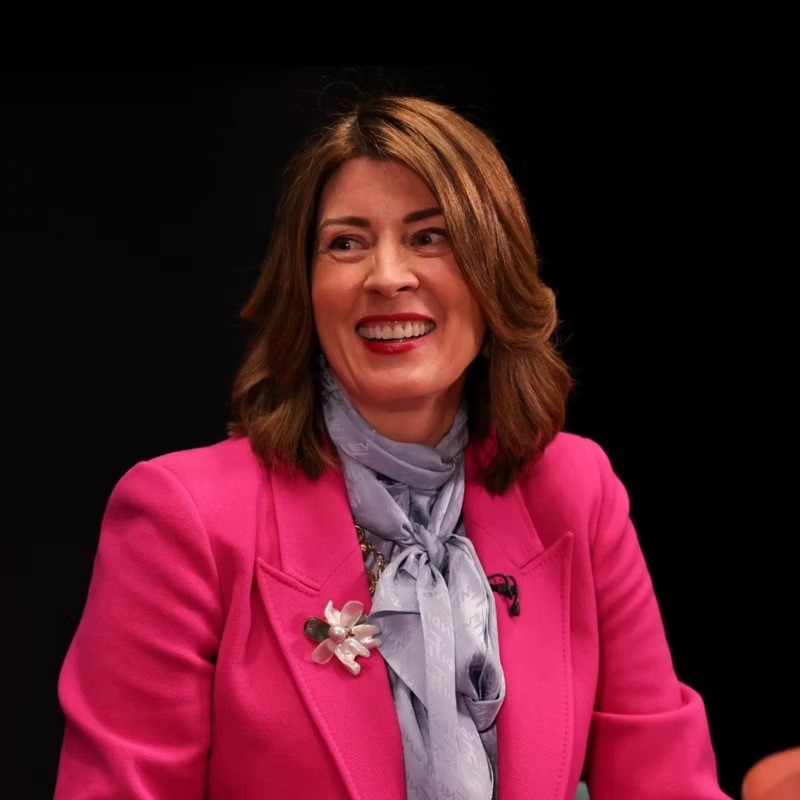
“The Americas region is an important growth driver for Deutsche Bank, and Lisa’s extensive commercial experience in both the United States and Europe will allow us to more closely integrate regional management with the regional business divisions,” said Campelli. “We’re looking forward to Lisa joining Deutsche Bank; her deep client and stakeholder network on both sides of the Atlantic will play right into our global Hausbank strategy.”
Paul Maley has served as interim Head of the Americas Region and CEO of DBUSA since Stefan Simon left the bank in May, and will continue to serve in this capacity until McGeough joins the bank in early 2026.
“My colleagues on the DBUSA Board of Directors and I look forward to working closely with Lisa,” said Michael Heaney, Chairman of the DBUSA Board of Directors. “Her experience and background are going to be key for the continued, sustainable growth of our Americas franchise.”
“It’s a true honor to take on responsibility for one of Deutsche Bank’s most important markets at such a pivotal time,” said McGeough. “The Americas business has incredible momentum, and I look forward to working with colleagues across the region to turn that momentum into sustainable, long-term growth for our clients, our people and the franchise.”
McGeough has more than thirty-five years of experience at the highest levels of finance, most recently as President, Chief Executive Officer and Head of Banking for HSBC US with responsibility for all businesses in the US, including Corporate and Institutional Banking coverage.
Prior to this role she served as Co-Head of Global Banking Coverage for HSBC Holdings plc, after joining from Wells Fargo where she served in various senior roles in New York and London including Executive Vice President and Head of International, Co-Head of Corporate & Investment Banking, Head of both the Financial Institutions and Industrials groups, and CEO of Wells Fargo Securities International Limited.
Αναβαθμίζει τις τιμές – στόχους για τις ελληνικές τράπεζες η Deutsche Bank
Ξεπέρασαν και πάλι τις εκτιμήσεις για το β’ τρίμηνο του 2025 οι ελληνικές τράπεζες (συμπεριλαμβανομένης της Τράπεζας Κύπρου στην παρούσα έκθεση), υπερβαίνοντας τις θετικές τάσεις που παρατηρήθηκαν το προηγούμενο τρίμηνο, αναφέρει σε έκθεση που έδωσε σήμερα στη δημοσιότητα η Deutsche Bank στην οποία δίνει υψηλότερες τιμές στόχους για όλες τις τράπεζες.
Τα σημαντικότερα σημεία, αναφέρει η τράπεζα, περιλαμβάνουν τον ισχυρό δανεισμό, τις προμήθειες και τη βελτίωση στο guidance για το κόστος κινδύνου, προσθέτει. Ως αποτέλεσμα, η Deutsche Bank εξακολουθεί να πιστεύει ότι οι ελληνικές τράπεζες θα συνεχίζουν να ξεχωρίζουν στην Ευρώπη σε όρους βελτίωσης των τάσεων και – αν και οι αγορές το έχουν αναγνωρίσει αυτό μέσω μιας σημαντικής επαναξιολόγησης – ενδεχομένως αυτό να μην αντικατοπτρίζει ακόμη πλήρως τη δημιουργία αξίας το επόμενο διάστημα (επίσης σε όρους καλύτερων αποδόσεων κεφαλαίου, καθώς υπάρχει ακόμη σημαντικό περιθώριο για να βελτιωθούν οι διανομές).
Ειδικότερα, στην έκθεση της η Deutsche Bank:
•Για την Alpha Bank διατηρεί σύσταση “Buy” και αναθεωρεί ανοδικά την τιμή-στόχο στα 3,85 ευρώ από 3,35 ευρώ προηγουμένως
•Για την Eurobank διατηρεί σύσταση “Buy” και αναθεωρεί ανοδικά την τιμή-στόχο στα 3,85 ευρώ από 3,60 ευρώ προηγουμένως
•Για την Εθνική υποβαθμίζει τη σύσταση σε “Hold” και αναθεωρεί ανοδικά την τιμή-στόχο στα 13,40 ευρώ από 11,85 ευρώ προηγουμένως
•Για την Πειραιώς διατηρεί σύσταση “Buy” και αναθεωρεί ανοδικά την τιμή-στόχο στα 7,70 ευρώ από 6,65 ευρώ προηγουμένως
•Τέλος για την Τράπεζα Κύπρου διατηρεί σύσταση “Buy” και αναθεωρεί ανοδικά την τιμή-στόχο στα 8,70 ευρώ από 7,35 ευρώ προηγουμένως
Σταδιακά ανάκαμψη στα ΝΙΙ
Αν και τα καθαρά έσοδα από τόκους (NII) συνεχίζουν να γνωρίζουν κάποια πίεση από τα χαμηλότερα επιτόκια, περιμένουμε ο ρυθμός της ομαλοποίησης να επιταχυνθεί λόγω της υποχώρησης του αντίκτυπου από την ανατιμολόγηση δανείων, τα χαμηλότερα κόστη χρηματοδότησης, τη συμβολή από τη διαχείριση χαρτοφυλακίων τίτλων και -πιο σημαντικά- από την ανάπτυξη των όγκων.
Η επέκταση του δανεισμού το β’ τρίμηνο ήταν πάνω από 10% σε ετήσια βάση ( περίπου 15% για την Alpha και την Πειραιώς) οδηγώντας σε ενισχυτικό φαινόμενο στα NII με την δανειοδοτική δραστηριότητα πιθανώς να παραμένει κοντά σε υψηλά μονοψήφια επίπεδα για τα επόμενα τρία χρόνια, όπως εκτιμά.
Ως αποτέλεσμα τα NII αναμένεται να αρχίσουν να ανακάμπτουν διαδοχικά το β’ εξάμηνο του 2025, με ετήσια ανάπτυξη να καταγράφεται το 2026 και περαιτέρω επιτάχυνση μέχρι το 2027. Αυτό φέρνει τις ελληνικές τράπεζες να ξεχωρίζουν μεταξύ των υπόλοιπων τραπεζών στην Ευρώπη, οδηγώντας στη θετικά μας στάση, προσθέτει η Deutsche Bank.
Δεδομένου του συνδυασμού της πολύ ισχυρής αύξησης των χορηγήσεων και των σχετικά λογικών πολλαπλασιαστών σε σχέση με τις ευρωπαϊκές τράπεζες (μέσος όρος P/E για το 2026 περίπου 8-10x και P/TBV περίπου 1,0x-1,3x για RoTEs 12-14% – χαμηλό λόγω του ισχυρού πλεονάζοντος κεφαλαίου), η Deutsche Bank πιστεύει ότι οι ελληνικές τράπεζες βρίσκονται μεταξύ των καλύτερων θέσεων στην Ευρώπη για μεγαλύτερη αναβαθμολόγηση.
Σημειώνει πάντως ότι αυτό – με οδηγό κυρίως της απαράμιλλη ανάπτυξη και τις υψηλές δυνατότητες κεφαλαιακών αποδόσεων – έχει εν μέρει ενσωματωθεί στις τιμές των μετοχών. Ως αποτέλεσμα, προσθέτει, υποβαθμίζουμε την Εθνική Τράπεζα σε Hold παρά την εντυπωσιακή επιχειρηματική της απόδοση. Η προτίμησή μας εξακολουθεί να είναι η Eurobank, δεδομένης της δομικής της ισχύος και του πιθανού περιθωρίου που βλέπουμε να ξεπερνά τις προσδοκίες. Επίσης, προτιμούμε την Alpha Bank καθώς πιστεύουμε ότι συνεχίζει να προσφέρει καλή αξία παρά την αναπροσαρμογή, ενώ αναγνωρίζουμε τις βελτιώσεις της Πειραιώς. Επιπλέον, η Τράπεζα Κύπρου συνεχίζει να καταγράφει εξαιρετικά αποτελέσματα και επιχειρηματική απόδοση, σημειώνει η Deutsche Bank.