
Port Of Prince Rupert Delivers Another Record Year Amid Covid-19 Pandemic
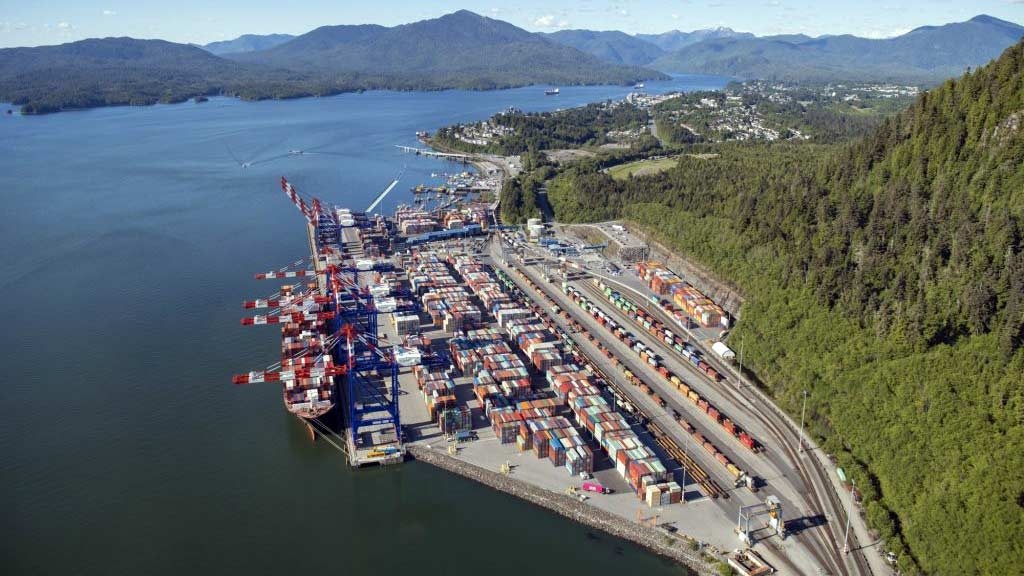
The Prince Rupert Port Authority (PRPA) announced today it has set another record for annual cargo volumes. Despite unprecedented challenges brought on by the pandemic, 32.4 million tonnes of cargo moved through the Port of Prince Rupert in 2020, nine percent more than in 2019.
“In a year marred by uncertainty, the Port of Prince Rupert has facilitated increased trade in support of Canada’s economic health through the pandemic enabling over $50 billion in international trade. Thanks to the diversification of our cargoes, and the commitment and determination to maintain a safe working environment through the pandemic by our Port partners and the men and women working in the gateway industry in northern British Columbia, the Port of Prince Rupert’s operations have remained resilient,” said Shaun Stevenson, President and CEO, Prince Rupert Port Authority. “Weathering the storms triggered by the Covid-19 pandemic, our Port has handily proven its resiliency, efficiency, and reliability as a key strategic trade gateway for Canada.”
Essential port operations provided important economic stability for the region in 2020. Port operations provided the foundation for $1.5 billion of economic activity, over 6,200 direct and indirect jobs related to moving trade through the northern BC corridor, and contributed nearly $12 million to local municipal government tax revenue.
The Port’s highest total volume to date was led by a rise in exports of coal, propane, and wood pellets. Ridley Terminal saw a year-over-year increase of 26 percent, driven by demand for thermal coal. AltaGas’ Ridley Island Propane Export Terminal marked its first full year of operation in May 2020 and ended the year with 1,159,207 tonnes loaded onto 27 vessels bound for Asia. Pinnacle Renewable Energy’s Westview Terminal had a record year, exporting 1,474,301 tonnes of wood pellets, an increase of 33 percent over 2019. Factory shutdowns in Asia and locked down economies in North America caused a 19 percent drop in container traffic in the second quarter. However, volumes rebounded and DP World’s Fairview Container Terminal finished a mere six percent down with 1,141,390 TEUs moving through the Port for the year, attributed mostly to a decline in the volume of empty containers being shipped through Prince Rupert back to Asia.
While cargo volumes grew in 2020, passenger volumes dropped off significantly, with the cancellation of the summer cruise season and BC Ferries experiencing a steep decline in ridership. The Prince Rupert Port Authority continues to work closely with the cruise industry and local stakeholders to determine the best way to welcome back passengers when Transport Canada allows international travel and removes the no sail order, which restricts cruise vessels from calling on Canadian ports.
The obstacles presented by the pandemic have not hindered progress on several key projects aimed at sustainably growing and diversifying the Port complex. Construction crews are nearing completion of the Fairview-Ridley Connector Corridor, a 5-kilometre private haul road that will reroute container trucks away from city streets and signficantly reduce truck emissions; DP World gained regulatory approval for the southern expansion of Fairview Container Terminal that will support a future capacity of 1.8 million TEUs; Vopak Pacific Canada is expected to make a final investment decision on a new liquid bulk storage facility and marine berth on Ridley Island later this year; and the environmental assessment process began for the proposed Ridley Island Export Logistics Platform, a project that will support large-scale export transloading, maximizing value to Canadian exporters.
“We continue to advance the development of critical infrastructure and expansion projects that support the resilience of the gateway operations, and the growth and diversification of cargo handling capabilities and capacities at the Port Prince Rupert,” said Stevenson. “By expanding trade enabling infrastructure, we will not only support our local economy, but will be poised to offer Canadian industries a competitive edge as the global economy rebounds from the effects of the pandemic.”
Everest Re Group Announces Estimated First Quarter 2020 Impact From The Covid-19 Pandemic
Everest Re Group, Ltd. (“Everest” or the “Company”) announced today the estimated impact from the Covid-19 pandemic (“Pandemic”) on its first quarter 2020 results. Everest is providing details in advance of its full quarterly earnings to be released on May 6, 2020.
“As the situation surrounding the Covid-19 pandemic continues to evolve, our thoughts are with everyone who has been impacted around the globe. Everest remains committed to supporting our clients, communities, and trading partners. These are unprecedented times, and our first priority is the safety of our employees, business partners, other stakeholders and their families. Our entire organization has been working remotely, continuing to serve our customers with the same high level of service that they have come to expect. Our capital position remains a source of strength, with high quality invested assets, significant liquidity, low financial leverage, and a low operating expense ratio. Our diversified global platform with its broad mix of products, distribution and geography is resilient,” said Everest President & CEO Juan C. Andrade.
For the first quarter of 2020, Everest expects to report the following:
1. A combined ratio below 100% for the consolidated reinsurance and insurance operations.
Included in the above combined ratio is an incurred but not reported (“IBNR”) provision for an estimate of $150 million in pre-tax net first party losses for expected claims related to the Pandemic. The majority of the losses are expected to come from our Reinsurance Segment. This estimate is consistent with our philosophy of recognizing and reacting to expected losses on a timely basis. As a result, this IBNR estimate is being recognized in the current quarter. Pandemic losses will be tracked separately and as an ongoing event.
2. Net investment income of $148 million for the first quarter of 2020.
Everest notes that net investment income from limited partnerships is generally subject to a reporting lag averaging one quarter. As such, the results from these investments during the first quarter of 2020 will be reported in the second quarter 2020 net investment income. Our balance sheet, including our investment portfolio, is well-diversified, with a focus on high quality fixed income investments. Since the start of the economic crisis, Everest has further repositioned our portfolio, moving up in fixed income credit quality and reducing equity exposure.
Risks and Uncertainties
There are significant uncertainties surrounding the ultimate number of claims and scope of loss resulting from the Pandemic. The Company’s estimates are based on best available information obtained to date from a review of relevant in-force contracts with potential exposure and estimates of reinsurance recoverables, and also from the Company’s clients and brokers. Given the uncertain and evolving nature of the Pandemic, actual ultimate losses from these events may vary materially from these current estimates. Everest anticipates this Pandemic could have a meaningful impact on revenue, as well as net and operating income in future quarters as a result of reinsurance and insurance claims due to the Pandemic and resulting macro-economic market conditions.
This news release contains forward-looking statements within the meaning of the U.S. federal securities laws. We intend these forward-looking statements to be covered by the safe harbor provisions for forward-looking statements in the U.S. Federal securities laws. These statements involve risks and uncertainties that could cause actual results to differ materially from those contained in forward-looking statements made on behalf of the Company. These risks and uncertainties include the impact of general economic conditions and conditions affecting the insurance and reinsurance industry, the adequacy of our reserves, our ability to assess underwriting risk, trends in rates for property and casualty insurance and reinsurance, competition, investment market fluctuations, trends in insured and paid losses, catastrophes, pandemic, regulatory and legal uncertainties and other factors described in our latest Annual Report on Form 10-K. The Company undertakes no obligation to publicly update or revise any forward-looking statements, whether as a result of new information, future events or otherwise.