
Italy’s UnipolSai Stays on Profit Track Despite Coronavirus Resurgence
Consolidated net profit of €701m compared to €576m at 30 September 2019 (+21.6%)
Direct insurance income of €8.6bn (-13.7%)
Non-life business: €5.5bn (-3.6%)
Life business: €3.1bn (-27.2%)
Combined ratio net of reinsurance 86.0%, an improvement on the figure of 94.1% recorded as at 30 September 2019
Individual solvency ratio of 284%
The Board of Directors of UnipolSai Assicurazioni S.p.A., which met yesterday under the chairmanship of Carlo Cimbri, approved the consolidated results as at 30 September 2020.
Read the Press Release
Commerzbank reports stable customer business and strong capital ratio in spite of corona
Underlying revenues in Q3 at €2.1bn (Q3 2019: €2.2bn)
Operating expenses continued to fall to €1.52bn (Q3 2019: €1.56bn) despite IT investments
Risk result at €-272m (Q3 2019: €-114m) includes impact of €181m from coronavirus effects – low NPE ratio of 0.9 % reflects ongoing good quality of loan book
Operating profit at €168m (Q3 2019: €449m) due to risk result
Net result at €-69m (Q3 2019: €297m) driven by booked restructuring charge of €201m following progress in transformation of the Bank
Common Equity Tier 1 ratio slightly elevated to strong 13.5% – capital buffer to regulatory requirements increased further
For the third quarter 2020, Commerzbank reported a stable customer business in spite of the coronavirus crisis and made significant progress in transforming the Bank. Thanks to strong net commission income, underlying revenues remained almost stable. The operating result was €168 million. This reflects the further risk provisioning as a consequence of the coronavirus pandemic. The Bank has continued to bring down operating costs. It has laid the foundation for further cost reductions with the launch of further programmes for the necessary headcount reduction and the closure of about 200 branches. In the third quarter, the Bank booked a restructuring charge of €201 million for these items, which brought the net result to minus €69 million. Nevertheless, the Common Equity Tier 1 ratio improved to a strong 13.5% at the end of September 2020 and continued to be clearly above all regulatory requirements.
Good progress was made in business development. The Bank benefited from a high level of securities trading activities in the Private and Small-Business Customers segment and continued to grow the customer base. The completed merger with comdirect a few days ago will enable Commerzbank to combine the services of one of the most advanced online banks in Germany with personal advisory capability at local level and achieve targeted synergies. In the Corporate Clients segment, the Bank sustained its leading position in debt capital market business and acted, among other things, as joint lead manager for the issuance of the inaugural Green Bond of the Federal Republic of Germany. The Bank took further steps on sustainability. It very successfully issued its second own Green Bond and expanded its offering of more sustainable investments with the new mutual fund Klimavest. Furthermore, Commerzbank has been one of the official supporters of the Task Force on Climate-related Financial Disclosures (TCFD) since the beginning of September 2020. The Bank will thus take into account climate risks in managing its loan portfolio and will make those climate risks transparent in future.
“In spite of the challenging environment, we continue to be at the side of our customers, and we are making progress towards becoming a more sustainable bank. The successful merger with comdirect has enabled us to take an important step towards becoming more profitable and at the same time even better for our customers,” commented Martin Zielke, Chairman of the Board of Managing Directors of Commerzbank. “By combining comdirect and Commerzbank under one roof, we are bundling the strengths of the two banks and providing our customers with an outstanding digital offering, coupled with personal advisory capability and a presence at local level.”
Group revenues amounted to €2,033 million (Q3 2019: €2,182 million) in the third quarter. In addition to exceptional items and valuation effects, the year-on-year decrease was due to a further addition of €71 million to the legal provisions for foreign currency loans at mBank. This was counteracted positively by the growth of more than 6% in net commission income, primarily thanks to a strong securities business. Once again, CommerzVentures, the Banks’s venture capital fund, made a positive contribution, this time of €43 million.
Although the Bank continued to invest in IT and the digitalisation of its business model, operating expenses came down year-on-year to €1,521 million (Q3 2019: €1,559 million). This was driven by strict cost management, less business travel and the ongoing headcount reduction. However, the lower operating costs contrasted with the almost 20% increase in compulsory contributions, which amounted to €72 million.
The risk result of minus €272 million (Q3 2019: minus €114 million) was again driven by the coronavirus crisis. The coronavirus effects amounted to €181 million, of which €70 million were booked as a top-level adjustment for expected future credit losses. Overall, the quality of the loan book remained high with the ratio of non-performing exposures continuing to be low at 0.9%.
The operating profit fell to €168 million (Q3 2019: €449 million) as a result of exceptional items and the risk result. The pre-provision result was €440 million (Q3 2019: €563 million). The pre-tax profit amounted to minus €43 million (Q3 2019: €441 million). This reflects the restructuring charge amounting to €201 million booked in the third quarter. The net result attributable to Commerzbank shareholders and investors in additional equity components was minus €69 million (Q3 2019: €297 million).
The Common Equity Tier 1 ratio (CET 1 ratio) rose slightly to 13.5% (end of June 2020: 13.4%). The Bank benefited from lower risk-weighted assets. As a result of the successful issuance of a further AT1 bond in September, the Bank was able to reduce the regulatory requirements for Common Equity Tier 1 (“MDA threshold”) to currently around 9.8%, the buffer at the end of the third quarter was around 370 basis points. Over the medium term, the Bank intends to maintain a distance of at least around 200 basis points through the cycle.
“We have a strong capital position and a healthy risk profile. This represents a good basis for future impacts arising from the coronavirus crisis and for the further realignment of the Bank,” said Bettina Orlopp, Chief Financial Officer of Commerzbank. “We are continuing to work strategically on costs. We have paved the way for further cost savings through the agreed branch closures and the new programmes for headcount reduction.”
Development of the segments
The Private and Small-Business Customers (PSBC) segment continued to grow in terms of customers and assets in the third quarter of this year. The increased usage of digital channels supported the segment’s acquisition of around 82,000 net new customers. The Bank has already gained around 327,000 net new customers since the beginning of the year. From the end of June to the end of September, the loan volume rose by around €2 billion to €110 billion. The main contributor to this increase was mortgage lending. The lending volume rose to €84 billion on the back of a strong new business, a year-on-year increase of 7%. The volume of consumer loans reflected the general consumer caution in the context of the coronavirus crisis and amounted to €3.9 billion. During the third quarter, the securities volume grew by over €7 billion, with net inflows contributing €2 billion. Contributions to securities savings plans increased by more than 50% in the first nine months of this year compared to the previous year. This included many customers investing in securities for the first time. In the first nine month of 2020, the number of digital securities transactions almost doubled compared to the year before. The new brokerage function in the Commerzbank mobile app, started in July, has also contributed to the success of the securities business.
In the ongoing challenging negative interest rate environment, the underlying revenues for the segment amounted to €1,164 million (Q3 2019: €1,234 million) in the third quarter. Weaker net interest income contrasted with the increased net commission income as a result of a significantly higher level of customer activities. Lower revenues from modelled deposits in Germany and cuts of the Polish interest rate were factors contributing to the lower net interest income. Excluding the further addition of €71 million to legal risk provision for foreign currency loans at mBank, the segment’s underlying revenues remained stable. Operating costs at €872 million were slightly up year-on-year (Q3 2019: €867 million). At the end of the third quarter, the risk result of minus €130 million was significantly higher year-on-year as a result of the coronavirus pandemic (Q3 2019: minus €87 million). Overall, the operating result for the segment decreased to €83 million (Q3 2019: €313 million). The segment achieved an underlying pre-provision result of €224 million (Q3 2019: €316 million).
The Corporate Clients segment generated underlying revenues of €806 million (Q3 2019: €831 million) thanks to an overall stable customer business. The International Corporates division shows stable revenues from loan business and benefited from a positive capital markets business with, among other things, a higher contribution from debt capital market issuances. The reduced revenues year-on-year in the Mittelstand and Institutionals divisions reflect the impact of the coronavirus pandemic on the economy. Around the end of the quarter, international trade started to gather pace again, and the Bank saw first indications of recovery in the trade finance business which will normally be reflected in the revenues with some delay. Revenues in the business with the German Mittelstand increased compared with the previous quarter. One of the factors driving this was higher demand for currency hedges from customers. Loan volumes in business with Mittelstand and International Corporates fell by around €6 billion to €89 billion compared to the previous quarter. This reflects the reduced level of loan drawings after the peak in March as well as selective new business with a focus on existing customers and RWA efficiency.
Overall, the Corporate Clients segment generated an operating profit of €74 million. The reduction in costs to €590 million (Q3 2019: €602 million) had a positive impact. The risk result of the segment was minus €120 million (Q3 2019: minus €30 million) owing to the impact of the coronavirus crisis. However, the operating profit excluding the risk result and adjusted for exceptional items was almost stable with €212 million (Q3 2019: €221 million).
In the Others and Consolidation segment Commerzbank reported an operating profit of €12 million (Q3 2019: minus €12 million) in the third quarter. The positive impact of CommerzVentures more than offset negative valuation effects from inter alia exchange rate fluctuations.
Outlook
Commerzbank expects largely stable customer revenues for the Private and Small-Business Customers segment in 2020. For Corporate Clients, the Bank expects a stronger impact from the coronavirus. The Bank continues its cost management and targets a cost base including IT investments slightly below the level of 2019. At the moment, the Bank continues to expect a risk result between minus €1.3 billion and minus €1.5 billion for 2020, however subject to the further development of the coronavirus pandemic. In light of the expected risk result and booked restructuring charge, the Bank anticipates a negative net result for the year. The Bank now expects at least 13% for the Common Equity Tier 1 ratio at the end of the year.
Giggling Squid secures £5m funding from Barclays through the Coronavirus Business Interruption Loan Scheme (CBILS) to help through current crisis
The country’s leading Thai restaurant group has completed a £5 million loan by accessing the CBIL scheme through Barclays.
With 35 sites across the Midlands and Southern England, Giggling Squid had been performing extremely well going into the crisis, despite the well-publicised headwinds effecting the casual dining sector.
The Barclays loan will cover liquidity needs and ensure the ongoing viability of the business through the pandemic, safeguarding almost 1,000 jobs. As the UK transitions out of lockdown, the funding will enable the business to kick start its operations and ensure it is well placed to avail itself of the opportunity that the new normal will present.
Andrew Laurillard, CEO and Co-founder of Giggling Squid, said: “When the Government mandated Lockdown, we saw our revenues fall from a positive like for like level to zero over 9 days at the end of March 2020. The business urgently needed liquidity to survive the crisis. Barclays could not have been more helpful in supporting us through this awful situation.
“We expect to survive and thrive once the restrictions lift and this is entirely due to the extraordinary assistance of the account team and the bank as a whole, in helping us access the Government aid to the fullest extent.”
Mike Saul, Head of Hospitality & Leisure at Barclays, commented: “Barclays is absolutely committed to supporting all businesses through these uncertain times and we understand the challenges they face. We are working closely with clients like Giggling Squid to provide the vital funding they need to help them come out strongly the other side and we look forward to seeing their restaurants open and operating again.”
Barclays launches CLBIL scheme to support large Corporate Banking clients impacted by Coronavirus in the UK
Barclays is extending its support to businesses not covered by the Coronavirus Business Interruption Loan scheme, and not eligible for support under the COVID-19 Corporate Finance Facility, through the launch of the Coronavirus Large Business Interruption Loan scheme.
Backed by a UK Government guarantee, Barclays will provide lending of up to £50 million for firms with a turnover of over £250 million, and of up to £25 million for businesses with turnover from £45 million up to £250 million in order to help support them through issues associated with COVID-19. The type of lending available includes term loans and revolving credit facilities of up to 3 years (subject to credit approval), with a minimum facility term of 3 months.
Tasnim Ghiawadwala, Head of Barclays UK Corporate Banking, said:
“Barclays is absolutely committed to supporting all businesses through this incredibly challenging period. This welcome new scheme will enable us to provide vital funding to those businesses not currently eligible for the Coronavirus Business Interruption Loan scheme or the COVID-19 Corporate Finance Facility, but who contribute hugely to the UK economy.”
Existing Support for Corporate Banking Customers
Barclays Corporate Banking is strongly positioned to support UK business as they tackle the challenges posed by COVID-19. In addition to offering clients access to all three of the Government business support schemes:
o Our network of Relationship Directors remains in close working contact with clients and have been assisting them with the individual challenges they face such as working capital, liquidity, supply chains, and FX, to provide the appropriate support.
o Through this network, we are aiding short term cash flow pressures with measures such as capital repayment holidays, temporary increases to overdrafts and extending existing trade facilities.
o We are also running weekly COVID-19 support calls throughout this period, which clients can dial-in to in order to discuss economic impacts, what we are seeing and expect to see in the FX and commodity markets, and supply chain impacts and options.
Egypt’s Suez Canal shipping traffic unaffected by coronavirus

Traffic in Egypt’s Suez Canal has so far been unaffected by the spread of the coronavirus, the chief of its authority said on Wednesday, citing a 4.6% increase year-on-year in the number of ships passing through.The canal is the fastest shipping route between Europe and Asia and one of the Egyptian government’s main sources of foreign currency.
The container shipping industry, a bellwether for international trade, has been blown off course by the new virus, which brought parts of China to a standstill before spreading around the world, leading container lines to re-route cargoes and reduce calls to Chinese ports.
However, the number of ships passing through the canal in the first quarter of 2020 increased by 8.4% compared with the same period a year prior, Osama Rabie said.
Suez Canal revenues increased to $458.2 million in February compared with $433.9 million during the same month last year.
Source: Reuters (Reporting by Momen Saeed Atallah; Writing by Nadine Awadalla; Editing by Alex Richardson)
ECB extends review of its monetary policy strategy until mid-2021
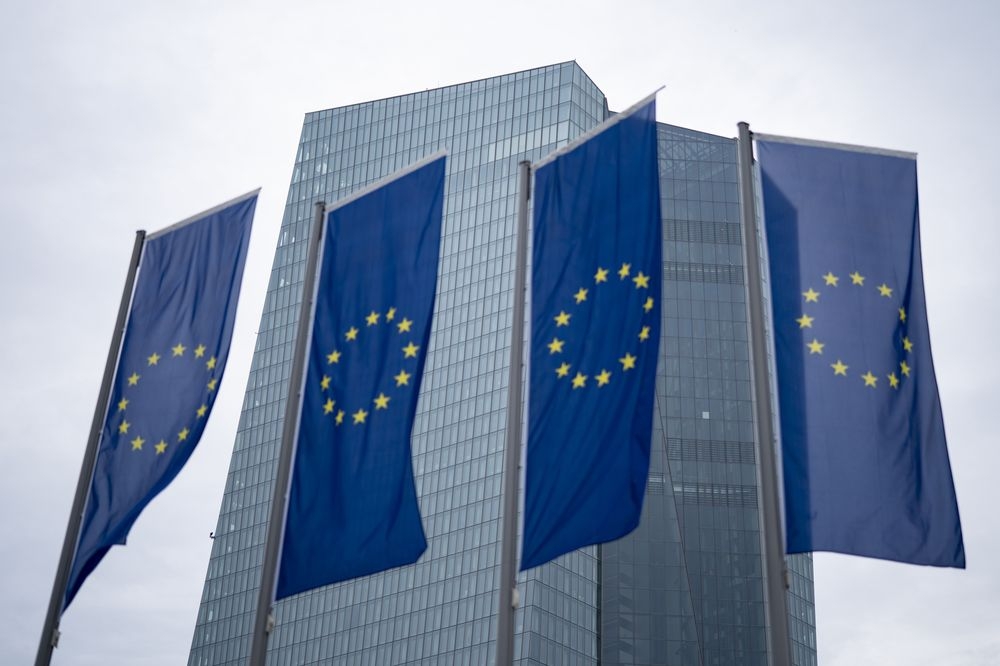
The Governing Council of the European Central Bank (ECB) has decided to extend the timeline for the review of its monetary policy strategy. In the current situation, the decision-making bodies and staff of the ECB and the national central banks of the Eurosystem are focusing all their efforts on addressing the challenges posed by the coronavirus pandemic. The conclusion of the strategy review will therefore be postponed from the end of 2020 to mid-2021.
Owing to the health measures in place across the European Union, including lockdowns of public spaces and rules prohibiting gatherings in several euro area countries, the listening events of the ECB and the Eurosystem’s national central banks – originally planned for the first half of 2020 – are now intended to take place during the second half of 2020. The annual ECB Forum on Central Banking in Sintra has been postponed to 10-12 November 2020.
The ECB continues to invite euro area citizens to submit their written proposals and comments about the ECB’s monetary policy strategy, in their euro area language, via the dedicated online ECB Listens Portal. The deadline for submissions has been moved to the end of August 2020.
ING provides update on dividend in the context of the coronavirus pandemic
ING is fully committed to helping our customers and supporting society in coping with the coronavirus pandemic. In many countries we are working with the local industry and governments to provide businesses and individuals the necessary financial flexibility while ensuring we continue to play the vital role banks have in society, providing key banking services through our network.
In that context, ING announced today it will follow the recommendations made by the European Central Bank to European banks on 27 March 2020 regarding dividend distributions. ING is well capitalised, above regulatory requirements, but in line with the ECB’s recommendations, it will suspend any payment of dividends on its ordinary shares until at least 1 October 2020. At the Annual General Meeting scheduled for 28 April 2020, the proposal to pay a final 2019 dividend (agenda item 3B) will not be put up for a vote and will be removed from the agenda. In addition, ING does not expect to make an interim-dividend payment from 2020 earnings and will review any further dividend announcements after 1 October 2020.
Ralph Hamers, CEO of ING said: “These are extraordinary times for all of us. ING is taking all necessary steps to ensure the wellbeing of our employees and the continued support of our customers. I am proud of the efforts of our employees across various countries who have provided assistance to thousands of customers. While we are well capitalised and funded, and strive to provide our shareholders an attractive return, we think it is prudent to follow the ECB’s recommendations for all European banks regarding dividend payments, enabling us even greater flexibility to support our customers and society in this crisis and work together with governments and regulators towards a recovery.”
As reported, ING has scheduled its Annual General Meeting for Tuesday 28 April 2020.
Coronavirus impact on Cyprus shipping “unavoidable”
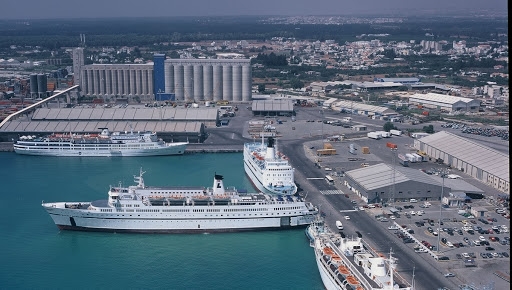
The financial impact of the coronavirus pandemic on Cyprus shipping is unavoidable, Deputy Minister of Shipping Natasa Pilides said.
“I believe the impact will be unavoidable both on the Cypriot economy and on Cyprus shipping through the financial results of the shipping companies which unfortunately will be affected,” Pilides told CNA.The shipping and ship management industry in Cyprus is estimated to generate around 7% of the island’s GDP.
Noting that shipping will continue operating, the Deputy Minister added: “we hope that we will overcome the crisis and we will recover.”
Pilides cautioned that “we cannot know the extent of the impact as we cannot forecast how long the crisis will last.”
She said, so far, there have been no isolation of Cypriot-flagged ships but some delays in deliveries and in crew changes due to the measures to prevent the spread of coronavirus.
“Shipments of goods are continuing,” Pilides said.
The Deputy Ministry has suspended physical contact as part of preventive measures against the spread of the disease but also in a bid to facilitate shipping.
Pilides pointed out the shipping industry was one of the first sectors affected by the coronavirus outbreak as world trade is taking place mainly with countries in Asia.
“Ships could not approach ports, ships from various destinations could not be accepted, seafarers were quarantined, crew changes could not be carried out and ship deliveries could not be made as shipyards suspended operations.”
Moreover, she said that the cruise sector will be affected the most and will bear longer-term damage compared with commercial shipping.
Source: Financial Mirror
ABN AMRO extends support measures for businesses affected by coronavirus
Last week ABN AMRO announced that, for Commercial Banking clients with a credit facility of up to 2.5 million euros, payment of principal and interest will be deferred for six months.
Today ABN AMRO is extending this measure to Commercial Banking clients with a credit facility with a principal and/or a limit of up to 50 million euros.
Principal and interest payments will not be collected from these clients from April through September. They will be allowed to make these payments at a later date. Any client that does not need to defer payment is required to inform the bank by 31 March 2020 at the latest. Payment will not be deferred for these clients.
Breathing space
Daphne de Kluis, CEO of Commercial Banking: “The deferral measure gives clients more scope in their liquidity position. And by automatically implementing it, we can make these arrangements quickly for a large group of businesses. We saw last week that this works well and gives clients peace of mind. We have therefore decided to raise the limit to 50 million euros. This will give larger Commercial Banking clients breathing space too.”
Large government support package
ABN AMRO’s measures are in addition to a large package of measures offered by the Dutch government. Businesses can apply for additional government-guaranteed loans from their banks, including under the SME credit guarantee scheme. Other parts of the government support package also offer businesses extra liquidity.
Many questions
Many businesses are eager to make use of support and deferral measures, and many have questions or are applying for a loan under the SME credit guarantee scheme. As a result, they may have to wait. Priority will be given to clients who are being immediately affected and/or hit hard financially.
No impact? Inform the bank
Deferral of interest and principal payments is explicitly intended for businesses that need support due to the impact of coronavirus. Deferral of payment will be implemented automatically for Commercial Banking clients with a credit facility with a principal and/or limit of up to 50 million euros. ABN AMRO is doing this to offer fast support to a large group of businesses. Clients in this category who do not need this support are required to inform the bank of this by 31 March 2020 at the latest. If they do not do so, payment will be automatically deferred. Details of the measure for credit facilities of up to 2.5 million euros are available on our website; this measure will now also apply to Commercial Banking clients with a credit facility with a principal and/or limit of up to 50 million euros. The website also describes the scope of the measure, and how and when payment must be made at a later date. Businesses that do not need support can inform the bank of this on our website.
Commercial Banking clients
Commercial Banking clients are companies with annual turnover of up to 250 million euros. From today, the deferral measure will apply to all Commercial Banking clients with a credit facility with a principal and/or limit of up to 50 million euros, with the exception of a number of specific types of financing, such as commercial finance, leveraged finance for professional investors, club deals and syndicated loans with several financers, and financing for commercial real estate in excess of 2.5 million euros. However, real estate clients with a credit facility of between 2.5 million euros and 50 million euros that lease property to hard-hit sectors are eligible for deferral.
Loans managed by the Recovery team of the Financial Restructuring & Recovery department are not in scope. This also applies to loans linked to interest rate derivatives. Clients with interest rate derivatives can contact the bank to discuss their options.
Above 50 million euros
Where possible customised arrangements will be offered to Commercial Banking clients with a credit facility in excess of 50 million euros. This is also the case for large corporate clients served by Corporate & Institutional Banking (annual turnover in excess of 250 million euros).
Commercial Banking’s total loan portfolio was 42.6 billion euros at year-end 2019. Around 40% of this loan volume concerns clients in scope of the new measure. The impact of the coronavirus on the economy, on our clients and on the quality of our loan portfolio is currently uncertain.
Poland: Solid EIB Group activity in 2019 paves the way for continued support this year, as the economy struggles with coronavirus
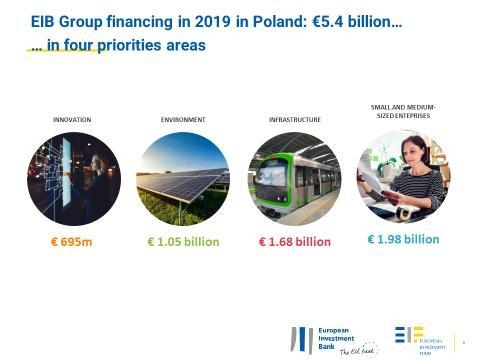
– The European Investment Bank Group’s financing amounted to €5.4 billion last year, driven by investments in infrastructure and environment and showing increasing support for small and medium-sized businesses
– In the first months of 2020, the EIB has signed new loans for renewable energy and sustainable transport projects, supporting Poland in its climate transition
– In light of the COVID-19 emergency, the EIB Group is ready to intensify its support for the Polish and European economy
With €5.4 billion of overall financing 2019 was a strong year for the European Investment Bank (EIB) Group in Poland. The Group’s activity was 13 % higher than in the previous year and in line with the trend of the past five years. Loans granted to public and private counterparts by the EIB amounted to €4.3 billion, while the European Investment Fund (EIF) provided €1.1 billion in guarantees and equity investments to small and medium-sized businesses and mid-caps.
Poland was the fifth biggest recipient of EIB Group financing among EU countries, after Italy, Spain, France and Germany. This financing represents more than 1% of Poland’s GDP, making the country the second largest beneficiary among countries with a population above 10 million after Greece. This shows the impact of the EU bank’s operations.
In the first few months of 2020, new operations were signed in renewable energy production, with a €60 million loan to Pomerania Wind Farm (a subsidiary of the Lithuanian Ignitis group), and in sustainable transport. A €480 million loan to LG Chem for the construction of electric-vehicle batteries in Wroclaw was announced today.
“Last year, the level of activity of the EIB Group in Poland was once again significant. The EU bank financed important projects in all sectors of the economy, with a particular focus on infrastructure and environment, and with record volumes of loans and guarantees to small and medium-sized businesses. We take these positive results as a motivation to continue to support the Polish economy as it faces the daunting task of fighting the coronavirus crisis,” said EIB Vice-President Teresa Czerwińska, who is in charge of operations in Poland following her appointment to the EIB Management Committee on 1 March. Teresa Czerwińska added: “We will work tirelessly with all our public and private partners in Poland, so that we continue to finance projects that help the Polish economy to be more resilient to shocks and more prosperous in the longer term. The EIB stands ready to further support SMEs, who are the most vulnerable economic actors in times of social and economic lockdown. The package announced last week of up to €40 billion for European SMEs is a first step in our commitment. We will do everything we can to combine national and European efforts and I trust that by working together we will overcome the coronavirus crisis, in Poland as well as in Europe.”
“2019 was another year of very good cooperation between Poland and the EIB Group,” said the Minister of Finance, Tadeusz Kościński. “This is confirmed by figures, with €5.4 billion of financing provided to Polish enterprises, national and local government bodies. This ranks Poland 5th among EU countries. EIB Group financing supported, among others, railway upgrade projects, renewable energy, access to finance for SMEs, scientific research programs and hospitals modernization projects. Last year, the role of Poland as the Bank’s shareholder also increased. We strengthen our contribution to the management of the Bank. I hope and I am confident that the Bank will continue its support, including its commitment to tackle the challenge of COVID-19 today. ”
2019 results overview Infrastructure and environment
Projects related to infrastructure needs attracted €1.68 billion, while projects with a direct climate action and environment component received €1.05 billion of financing. Taking all projects in aggregate, climate action accounted for 31% of the EIB Group’s financing, in line with the Group’s global level.
In many cases, EIB support improves the country’s infrastructure, while at the same time facilitating the transition to a more climate-friendly environment. For example:
– Railways attracted the biggest part of EIB loans for transport projects in Poland in 2019 (€738 million), more than roads (€617 million). In particular, the EIB financed the modernisation of 195 km of PLK railway lines between Poznan and Szczecin (E59), as part of the Baltic-Adriatic corridor upgrade.
– Cleaner energy projects also received solid backing. The EIB supported the upgrade of municipal heating networks in Bydgoszcz, Lublin and Opole, to make them more energy efficient, and signed a €64 million loan to finance the construction by PGE of three onshore windfarms on the Baltic coast for a combined capacity of 97 MW.
Small and medium-sized business
A combination of EIB credit lines (for approximately €1 billion) as well as EIF guarantees and equity investments (for approximately €1.1 billion) provided a record amount of around €2 billion in fresh financing to Polish SMEs and mid-caps. The EIB Group lends to SMEs mainly via partnerships with Polish banks, leasing companies and other financial institutions. It lends to those financial intermediaries who, in turn, on-lend to their clients with attractive rates and maturities, making access to finance easier for small business. Part of those loan agreements, with partners including mBank and BNP Paribas Polska, will support dedicated energy efficiency programmes carried out by SMEs.
The EIB also financed SMEs directly. The bank signed a €50 million loan with the diary company Mlekpol to upgrade its production and storage facilities. The operation was backed by EFSI.
Innovation, research, health
Projects with a strong innovation component received €695 million. Around €480 million were invested in science, supporting the early-stage research and applied R&D projects of national science and research centres in Krakow and Warsaw, and the education and research programmes of the Polish Academy of Science. A €45 million loan was signed with the specialty chemicals company PCC Rokita for its modernisation programme, including a new Centre for Innovation. The EIB also signed a €30 million loan with Mabion, the first biotech company in Poland to receive EIB backing.
University hospitals in Gdansk and Lublin received a €91 million loan for the modernisation and extension of their facilities, via an agreement with the Ministry of Finance. This operation followed two direct loans signed in 2018 with university hospitals in Warsaw and Poznan, showing the readiness of the EIB to support the healthcare sector in Poland.
European Fund for Strategic Investments (EFSI):
Poland also ranks fifth among EU countries in terms of loans received under the European Fund for Strategic Investments (EFSI), which is the financial pillar of the “Juncker Plan”. This plan, launched by the European Commission and the EIB in 2015, helps attract public and private investments into projects by taking on a higher risk than is usual for EIB lending activity. As of 31 December 2019, there were 73 approved EFSI transactions in Poland amounting to €3.9 billion. They were expected to mobilise €21 billion of total investments.