
Commerzbank doubles operating result to 1.3 billion euros in the first six months of the year
Revenues in the second quarter increased to €2.4bn (Q2 2021: €1.9bn) based on strong customer business and rising interest rates
Operating costs on track despite growing inflationary pressure – cost-income ratio in Q2 improved significantly to 65% (Q2 2021: 94%)
Risk result of minus €106m (Q2 2021: minus €87m) reflects low number of defaults – TLA of €564m available for future challenges
Operating result in Q2 increased to €746m (Q2 2021: €32m) – net result further improved to €470m (Q2 2021: minus €527m)
CET 1 ratio increased to 13.7% – outlook confirmed
Commerzbank has continued its upwards trend in the first six months of 2022 and has more than doubled its operating result. Thanks to a strong customer business and rising interest rates, revenues significantly increased. The Bank reduced its operating costs as planned despite growing inflationary pressure and has been able to more than compensate for the significant increase in compulsory contributions. The low risk result reflects the high quality of the loan book. In total, the Bank generated a net profit of €768 million in the first six months of the year compared with a loss in the first six months of 2021. With its high portfolio quality, the comfortable capital base and the available top level adjustments (TLA) of €564 million the Bank is well equipped for future economic challenges. Commerzbank has confirmed its profit outlook for the year.
“In the first six months, we have increased our revenues in both segments above our expectations and more than doubled our operating profit. The strong development of our result is clear testimony to the effectiveness of our Strategy 2024 also in a phase of low economic growth,” said Manfred Knof, Chief Executive Officer of Commerzbank. “We have succeeded in enhancing the resilience of Commerzbank during a very difficult period.”
Commerzbank has also consistently progressed with its strategic initiatives. By the end of the year, the Bank intends to have largely contracted the necessary personnel reduction of 10,000 gross full-time equivalents. As of the end of June, the reduction of 7,700 positions has already been locked in. In the optimisation of its branch network, as targeted in the Strategy 2024, Commerzbank had already reached its goal of 450 locations in Germany by the end of June. In line with this, the set-up of the advisory centres is progressing at full speed. Having already introduced 3 pilot locations, the other locations will begin operating from mid-September onwards. The objective is to advise around 8 million private and small business customers from these centers by the end of the year.
The Bank is making good progress on its path to becoming the digital advisory bank for Germany. Its financial analysis service that is already widely used in the banking app, has been further enhanced and integrated into the Bank’s online banking offering. Moreover, the service “Financial Compass” was rolled out in the banking app. Customers can use it to keep track of their financial situation and receive individual recommendations.
The Bank is on schedule in the development of the “Mittelstandsbank Direkt” for corporate clients. Since the second quarter, 3,000 clients are already being served here. A further 3,000 clients will follow over the course of the year. With “Mittelstandsbank Direkt”, Commerzbank creates the first true direct bank for corporate clients in Germany. There has also been excellent progress in the simplification of the trading platform: the Bank has already decommissioned 56 of the 78 targeted applications.
Commerzbank is also stepping up the pace when it comes to sustainability. It presented a new ESG framework, which defines concrete targets for sustainable portfolio management. The Bank has already set clear CO2 reduction targets for half of the credit volume until the year 2030, above all for CO2-intensive industries such as energy generation. In June, the Bank also issued its third green bond with a volume of €500 million.
Strong customer business testimony to operational strength of Commerzbank
In the second quarter, Commerzbank increased its revenues by 30% to €2,422 million (Q2 2021: €1,862 million) thanks to strong customer business and rising interest rates. Driven by significant interest rate hikes in Poland and the rise in long-term interest rates in Germany, net interest income increased by 26% to €1,478 million (Q2 2021: €1,173 million). Compared to an already strong result in the previous year, the Bank also improved net commission income by a further 5% to €896 million (Q2 2021: €852 million). This was above all supported by high volumes in payment transactions in the Corporate Clients segment as well as by a high level of transaction business at mBank.
In the first six months, revenues increased by around 20% to €5,216 million (H1 2021: €4,353 million). As already announced, Commerzbank expects a revenue burden in the third quarter due to new legislation in Poland allowing private borrowers “credit holidays” for mortgage loans.
With minus €106 million (Q2 2021: minus €87 million), the risk result in the second quarter was in line with expectations. The ratio of non-performing loans remained low at 0.8%. With €27 million, the basic loan loss provisions were also at a low level. In addition, there were charges of €228 million in connection with the Russia-Ukraine war, which were covered to a large extent by the existing top level adjustment (TLA). As of the end of June, the Bank has a total of €564 million TLA available for potential further direct effects from the Russia-Ukraine war, as well as for secondary effects such as the interruption of supply chains or high energy prices. Driven by provisioning effects in connection to Russia booked in the first quarter, the risk result was at minus €570 million after the first six months (H1 2021: minus €235 million). Since the beginning of the Russian invasion of Ukraine, the Bank has reduced its Russian net exposure by around 45% to net €1.02 billion by mid-July.
The Bank is on track with its cost-reduction programmes. In the second quarter, the operating costs declined by more than 16% to €1,425 million (Q2 2021: €1,704 million). This particularly reflects personnel reductions and savings from the optimised branch network. In addition, there was a negative one-off effect in the previous year. The reductions were again offset by higher compulsory contributions, which more than tripled to €144 million (Q2 2021: €39 million), above all due to new charges in Poland. Total expenses decreased by 10% to €1,570 million (Q2 2021: €1,743 million). Therefore, the cost-income ratio in the second quarter was 65% (Q2 2021: 94%). Total expenses in the first six months declined by 5.4% to €3,356 million (H1 2021: €3,548 million).
All in all, the operating result increased considerably in the second quarter to €746 million (Q2 2021: €32 million); in the first six months the operating result was €1,289 million (H1 2021: €570 million). The result for the quarter after taxes and minority interests amounted to €470 million (Q2 2021: minus €527 million). After six months the Bank has generated a net profit of €768 million (H1 2021: minus €394 million).
The Common Equity Tier 1 ratio (CET 1 ratio) as of 30 June increased to 13.7% (Q1 2022: 13.5%). This already includes a deferral for the planned dividend payment of 30% of the net profit. Furthermore, the ratio already reflects an increase in the credit RWA due to an anticipated effect of model adjustments. The buffer to the current regulatory requirement (MDA threshold) of 9.4% was about 430 basis points at the end of June.
“With our comfortable capital base and our conservative risk provisioning we are well equipped for upcoming challenges. Thanks to the strong development of our operating business and the progress in costs we continue to expect a net result of more than 1 billion euros for the year 2022. This, however, assumes that there will be no material additional provisions for the Swiss franc loan portfolio at mBank and no severe deterioration in the general development of the economy. In this respect, natural gas supplies to the German economy remain a major source of uncertainty,” said Bettina Orlopp, Chief Financial Officer of Commerzbank.
Development of the segments
Despite its deep transformation, the Private and Small-Business Customers (PSBC) segment increased its revenues in Germany in the second quarter to €1,141 million (Q2 2021: €872 million). Thereby, the segment benefitted from the rise in long-term interest rates, pricing of deposits and positive market value adjustments because of benefits from early mortgage repayments. The loss of around 89,000 net customers was again significantly lower than expected. The net inflow in the securities business was €2.5 billion. However, total volume of securities declined by €22 billion to €188 billion as a result of market developments in the second quarter. The credit volume slightly increased to more than €123 billion. All in all, the Private and Small-Business Customers segment increased its operating result in Germany to €377 million (Q2 2021: €99 million) in the second quarter.
Revenues at mBank increased by 56% to €402 million (Q2 2021: €257 million) in the second quarter. A major contribution came from the 123% increase in net interest income, while net commission income also improved by 14%. This contrasted with major charges: the politically agreed new Institutional Protection Scheme in Poland had a negative impact of €83 million on the compulsory contributions. Furthermore, the booking of additional provisions for Swiss franc loans burdened revenues by €40 million. For the third quarter, mBank expects additional charges of €210 to €290 million for “credit holidays” and of around €30 million for the extension of a support fund for distressed borrowers. In the second quarter, mBank contributed a total of €103 million (Q2 2021: €40 million) to the operating result of Commerzbank.
The Corporate Clients segment increased its revenues by almost 15% to €882 million (Q2 2021: €768 million). This was mainly due to strong transaction and capital market business in all business divisions, while the loans business contributed stable revenues despite the strategic concentration on capital-efficient business. In total, the segment improved its operating result by nearly 35% to €325 million (Q2 2021: €241 million).
Outlook
Commerzbank confirms its outlook for the year 2022 based on the assumptions that there will not be a severe deterioration of the economic environment, for instance due to a natural gas shortage, and that there will be no material additional provisions for the Swiss franc loan portfolio at mBank. All in all, the Bank expects higher revenues this year despite the expected burdens from Poland.
This growth will be driven by significantly higher underlying net interest income thanks to rising interest rates while underlying net commission income is expected to be at the level of last year. Commerzbank sticks to its operational cost reduction target, but now anticipates total costs of €6.4 billion as a result of the higher compulsory contributions in Poland of approximately €100 million. This should be more than offset by a stronger increase in revenues. The risk result is expected to be about minus €700 million based on the assumption of using the TLA. All in all, the Bank continues to anticipate a net profit of more than €1 billion and a CET 1 ratio of more than 13% at the end of the year. It intends to propose a dividend for the 2022 financial year with a pay-out ratio of 30% based on the net result after deduction of the AT1 coupon payments.
Commerzbank expects revenue burden in Poland
Negative one-off effect of €210m to €290m expected at mBank in third quarter due to legislation on “credit holidays” for private mortgages
Operating result of Commerzbank to be impacted by corresponding amount
Bettina Orlopp: “Thanks to the continued good development of our operating business, we still expect a net result of more than €1 billion for the financial year. This is under the condition that there will be no further significant deterioration in the economic environment, for example due to further shortages in the gas supply.”
Commerzbank still expects a net result of more than €1 billion for the financial year 2022 despite an expected revenue burden at its Polish subsidiary mBank. This outlook is under the condition that there will be no further significant deterioration in the economic environment and that no material additional provisions for the Swiss Franc loan portfolio at mBank will be necessary.
mBank had previously announced that, in the third quarter of 2022, it expects to book negative revenues in the range of PLN 1.0 to PLN 1.4 billion (currently approximately €210 million to €290 million) as a result of possible deferrals of interest and repayment of private real estate financing (“credit holidays”) introduced by new legislation. Commerzbank’s third quarter operating result is expected to be burdened by a corresponding amount, which will be booked as negative revenues predominantly in “Other net income from financial instruments”.
The new legislation in Poland allows private borrowers to skip monthly payments for current mortgages loans up to eight times by the end of 2023. mBank expects that 60% to 80% of currently assumed eligible borrowers will make use of this option. Commerzbank will consider legal action against this unusual measure, which is granted to all borrowers regardless of their financial position.
The “credit holidays” are part of the measures taken by the Polish Government to respond to the consequences of high inflation and rising interest rates. The Polish National Bank had recently raised the key interest rate to 6.50%. In the second quarter, Commerzbank already expects additional compulsory contributions of around €83 million at mBank for the Institutional Protection Scheme.
“mBank is one of Europe’s most modern banks and a growth engine for our Group. Unfortunately, the new legislation in Poland causes considerable one-off burdens. However, thanks to the continued good development of our operating business, we still expect a net result of more than €1 billion for the financial year. This is under the condition that there will be no further significant deterioration in the economic environment, for example due to further shortages in the gas supply,” said Bettina Orlopp, Chief Financial Officer of Commerzbank.
Supervisory Board appoints Sabine Mlnarsky as Chief Human Resources Officer of Commerzbank

At its meeting yesterday, the Supervisory Board of Commerzbank appointed Sabine Mlnarsky to the Board of Managing Directors of the Bank with effect from 1 January 2023. She will assume responsibility for the Group Human Resources division. As Chief Human Resources Officer and Labour Relations Director she is succeeding Sabine Schmittroth, who, in line with her personal life planning, is leaving Commerzbank when her contract expires at the end of 2022.
Sabine Mlnarsky has more than two decades of experience in the field of human resources and is joining Commerzbank from Austria’s Erste Group Bank AG. At the central institution of the Austrian savings bank sector, the 47-year-old lawyer has headed the human resources area since 2016. She thus returned to the company where she had embarked on her career in HR management in 2001, before she was responsible for human resources at the Lufthansa subsidiary Austrian Airlines in the years 2013 to 2016.
The Chairman of the Supervisory Board of Commerzbank, Helmut Gottschalk, said of her appointment to the Board of Managing Directors: “We are pleased that with Ms Mlnarsky we have acquired a manager who is both experienced and dynamic, someone who is not only highly familiar with our industry, but who has also demonstrated her extensive abilities in periods of transition. She will bring fresh impetus to the human resources work at Commerzbank while developing new prospects for working in the Bank and reinforce the sense of optimism in the company and enhance the image of Commerzbank as an employer. At the same time, the Supervisory Board would like to thank Ms Schmittroth for her services to the company in various functions over the course of nearly four decades and wishes her all the very best in the next phase of her life.”
At today’s meeting, Chief Risk Officer Marcus Chromik also informed the Supervisory Board that he intends to fulfil his management contract, which runs until the end of 2023, but, in line with his personal life planning, will not accept a possible offer of an extension to his contract. On this, the Chairman of the Supervisory Board Helmut Gottschalk said: “We respect the decision on the part of Mr Chromik, which he has been considering for a long time now. After then 14 years in the Bank and 8 years as a member of the Board of Managing Directors, he would like to start a new chapter in his professional life. The sense of mutual appreciation is great, and we look forward to the remaining collaboration. By informing the Supervisory Board at this early stage, we now have clarity and planning security for an orderly transition in this important function.”
Commerzbank sets ambitious targets for CO2 reduction in its customer portfolio by 2030
– Focus on CO2-intensive sectors such as power generation and housing- New ESG framework presented by Commerzbank- Goal for 2022: Sustainable product volume of more than €200 bn- Financing volume for renewable energies to be doubled to €10 bn by 2025.- Knof: “The sustainable transformation of the economy cannot be stopped.”
Commerzbank has set concrete CO2 reduction targets for half of its lending volume granted to private and corporate clients to be achieved by 2030. The Bank will initially focus on CO2-intensive sectors when managing climate risk. For example, by 2030 a reduction target of at least 73% is set for the energy production sector and a reduction of at least 57% for the significantly larger mortgage portfolio. Achieving these targets is an important interim step for the Bank in reducing the CO2 emissions of its entire lending and investment portfolio to net zero by 2050 at the latest.
The specific targets for sustainable portfolio management can be found in Commerzbank’s new ESG framework. This framework clearly states all the key cornerstones of its sustainability strategy and hence makes its concept of sustainability transparent to all stakeholders. The document will continue to be updated.
“We want to accompany our clients in their sustainable transformation in the best possible way. This means that our clients know what they can expect from us – but also that they understand what we expect from them,” said Manfred Knof, CEO of Commerzbank, at the Bank’s second Sustainability Dialogue event.
“The sustainable transformation of the economy cannot be stopped. It’s true that we’re currently experiencing a setback due to soaring energy prices, inflation, supply chain bottlenecks and a restart of coal-fired power plants,” continued Knof. “In the medium term, however, the war will significantly accelerate the energy transformation. It has given us yet another reason to quickly reduce our dependency on fossil fuels and their suppliers. Commerzbank is very aware of the important role it plays in the energy transition. Our goal is to channel around €300 bn into sustainable products by 2025.”
Framework discloses Commerzbank’s understanding of sustainability
In particular, the new ESG framework at Commerzbank governs which products are considered sustainable. Amongst others, it describes the criteria for sustainable lending and the reduction targets for CO2-intensive sectors. Social criteria are also taken into account and the criteria for exclusions are defined. One example is the guideline for fossil fuels. The Bank expects its clients who generate 20% or more of their revenue or power production from coal to present a coal exit plan by 2025. Through this guideline, Commerzbank is helping to accelerate the coal phase-out by 2030.
“Our ESG framework provides our stakeholders with the greatest possible transparency. We’re creating a Bank-wide standard, which will provide guidance for the stringent management of all ESG products, processes and activities,” said Bettina Storck, Head of Group Sustainability Management. The ESG framework focuses on Commerzbank’s core business, the customer and product portfolio. In this regard, the Bank distinguishes between Sustainable Finance and Transformation Finance.
Sustainable Finance represents the share of the portfolio which is already classified as sustainable. By 2025, Commerzbank will mobilise at least €300 bn euros for sustainable products, a threefold increase from 2020. Transformation Finance includes financing projects which fail to fulfil the requirements of Sustainable Finance, but which, as normal financing transactions, can foster the transformation of borrowers towards sustainability.
With SBTi, portfolios are steered towards net zero
Commerzbank has set concrete CO2 reduction targets for half of the lending volume granted to private and corporate clients. For this, the Bank uses the requirements set by the Science-based Target Initiative (SBTi) and will initially focus on seven CO2-intensive sectors such as power generation, commercial and private real estate and automotive manufacturing as well as iron and steel, cement and aviation. “The better we support our clients in reducing their emissions, the faster we will move towards net zero,” said Chief Risk Officer Marcus Chromik. “Achieving the reduction targets for 2030 is an important stage for us en route to becoming a net zero bank by 2050 at the latest.” Commerzbank has set itself the goal of establishing clear CO2 reduction targets for 70% of its lending volume granted by autumn 2022.
Commerzbank advises and accompanies corporate clients in their green transformation
In the Corporate Clients segment, Commerzbank has set itself the aim of developing solutions that enable its clients to significantly reduce their CO2 emissions. This also includes direct access to energy transition projects. In June, Commerzbank, together with RWE, signed a memorandum of understanding to build an offshore wind farm with an output of around 1 gigawatt and to start operations by 2030 at the latest. As part of this, Commerzbank will be setting up a ‘Green Mittelstand Fund’, which will provide large medium sized companies with access to green electricity from offshore wind turbines. The fund will, for the first time, provide these companies with the opportunity to secure long-term purchase agreements for green electricity. This kind of participation is currently reserved for large industrial companies only. The construction of the offshore wind farm is subject to the prerequisite that RWE’s bid for the project is accepted following the invitation to tender in 2023.
ESG loans reward corporate clients who meet targets early with interest rate cuts
The Bank intends to double its credit exposure in renewable energies to €10 bn by 2025. The Bank also expects significant growth in sustainable bonds and sustainability-linked loans. Since the beginning of this year, Commerzbank has offered a bilateral loan, in which sustainability targets and timelines are defined between the company and Commerzbank. “If the borrower fails to meet the targets, the rate will be raised until the agreed targets are met. However, the interest rate can, of course, fall if the borrower reaches its ESG targets earlier than agreed. This creates a financial incentive to operate sustainably,” said Knof. “We want to offer our clients the products they need to meet their sustainable financing and investment needs. We are committed to this.”
CO2 reduction target for banking operations met at an early stage due to fewer business trips
Commerzbank is also pursuing ambitious reduction plans in its own banking operations, which are expected to be net zero by 2040. For this the Bank uses efficient facility management and artificial intelligence. By the end of 2021, CO2 emissions had already fallen by 40% compared to 2018. However, the decline is largely due to the pandemic and the lack of business travel. For this reason, Commerzbank expects to see a temporary increase in emissions and stands by its interim target of reducing greenhouse gas emissions by 30% by 2025.
German Offshore electricity for medium-sized industrial companies
– Commerzbank and RWE sign Memorandum of Understanding- Planned construction of joint offshore wind farm with a capacity of around 1 gigawatt- ‘Green Mittelstand Fund’ to give medium-sized enterprises access to green electricity production- German Wind Energy at Sea act: Tender conditions need to be improved to make them more attractive
The idea is as innovative as it is reasonable: RWE and Commerzbank plan to create a ‘Green Mittelstand Fund’ to give medium-sized industrial companies in Germany access to green electricity generated by offshore wind plants. The two companies have signed a Memorandum of Understanding (MoU) to this effect.
The new fund will offer these companies for the first time the opportunity to secure green electricity through long-term power purchase agreements (PPAs). Up to now, it has mainly been large industrial customers who have been able to sign such long-term power purchase agreements with large-scale green electricity projects. The medium-sized companies are offered two options as part of this fund: On the one hand, they can participate directly in the planned offshore wind farm with equity. On the other hand, they can secure long-term green electricity via a PPA and thus achieve their decarbonisation targets. Both options can also be combined.
The planned wind farm is to have an installed capacity of around one gigawatt (GW). The companies want to apply for a seabed for the wind farm within the framework of future tenders, in accordance with the planned amendment to the German Wind Energy at Sea act. These auctions are expected to take place in 2023. RWE plans to hold 51 percent of the shares in the wind farm, the remaining 49 percent are to be offered to interested medium-sized companies by Commerzbank via the ‘Green Mittelstand Fund’. RWE will develop, build and operate the wind farm.
The company will commit to making the power generated there available to medium-sized companies. Commerzbank, on its part, plans to make green electricity directly available to its customers from the German ‘Mittelstand’, i.e. medium-sized companies. On the one hand, this is to take place via individual financing and credit solutions for the equity investments of medium-sized companies in the offshore wind farm. On the other hand, the concept offers the possibility to purchase green electricity from the wind farm via PPAs starting with a tranche corresponding to a capacity of 5 megawatts – tailored to the electricity needs of medium-sized companies.
“The ‘Mittelstand’ is what makes the German economy a success. With this innovative solution, we want to give these companies in particular access to green electricity production from offshore wind turbines and thus contribute to financing the energy transition in Germany”, explains Michael Kotzbauer, Member of the Board of Managing Directors, Corporate Clients at Commerzbank. “What is particularly attractive here is that our concept also offers investment opportunities in offshore wind that meet the electricity demand of medium-sized industrial companies.”
German Wind Energy at Sea act to be ammended to enable real transformation
Germany needs enormous amounts of green electricity to be climate neutral by 2045. The amendment to the German Wind Energy at Sea act therefore provides expansion targets to be increased and seabed for offshore wind to be brought forward to at least 70 GW by 2045. In order to take advantage of industrial policy-related opportunities and make Germany a top location for investment in renewable energies, speed is required, as well as a clear focus on supporting the economy in switching to climate-friendly production. To this end, the majority of green electricity from offshore wind must find its way into industry and the medium-sized enterprises of the German ‘Mittelstand’.
Ulf Kerstin, Chief Commercial Officer Offshore Wind of RWE, emphasises: “Green electricity at competitive prices is the pledge of a sustainable industrial nation with a strong tradition of the ‘Mittelstand’. Our concept opens up great opportunities for this because it can support companies and the energy transition. However, the amendment to the legislation should be modified in such a way that it really does give a boost to the transformation of Germany as an industrial location because electricity from offshore can be offered at competitive prices.”
One prerequisite for this is to dispense with the negative bidding component, which the current draft law provides for, when designing the bidding conditions for offshore wind turbines on so-called non-pre-surveyed areas. This bid component would make green electricity unnecessarily more expensive for German companies, which are already facing record high energy prices. There is also a need for improvements in the criteria for the award procedure. They should be chosen in such a way that they allow differentiation between the bids and at the same time serve the overriding goal of providing green electrictiy in a smart and system-serving way.
Commerzbank: Preliminary operating result for the first quarter above expectations – outlook for the 2022 financial year confirmed
Double-digit growth in revenues to €2.8bn (Q1 2021: €2.5bn) more than compensates for increase in risk result to minus €464m (Q1 2021: minus €149m)
Preliminary operating result at €544m (Q1 2021: €538m) – net result of €284m expected (Q1 2021: €133m)
Manfred Knof: “We have made a good start to the new financial year. Thanks to strong customer business we have improved our operating result although the economic consequences of the Russian war against Ukraine have impacted on our risk result.”
On the basis of preliminary figures, Commerzbank has increased its operating result in the first quarter 2022 slightly to €544 million (Q1 2021: €538 million) which significantly exceeds analyst consensus of €282 million. Revenues improved thanks to strong customer business in all operating areas by 12% to €2,795 million (Q1 2021: €2,492 million). Net interest income rose by 12% to €1,401 million (Q1 2021: €1,254 million) which primarily reflects higher revenues at mBank as a consequence of the rises in the Polish interest rates. Net commission income increased by a further 2% to €972 million (Q1 2021: €951 million), following on from a strong result in the previous year.
With the double-digit growth in revenues, Commerzbank more than compensated for the charges as a consequence of the Russian war against Ukraine. The risk result in the first quarter is to be minus €464 million (Q1 2021: minus €149 million). This increase results from provisioning effects of about half a billion euros in connection with the war in Ukraine. In total, the Bank has now formed top level adjustments (TLA) of €713 million as additional provisions.
All in all, the preliminary net result in the first quarter after taxes and minority interests amounted to €284 million. In the first quarter of 2021 this figure was €133 million.
Commerzbank continues to expect a net result of more than €1 billion for the 2022 financial year and confirms all its other 2022 financial targets. This is also true for the risk result, which is still expected to be less than €700 million in 2022 taking into account the top level adjustments which have been formed. The outlook is based on the assumptions that there will be no substantial increase in the provisions for the Swiss francs loan portfolio of mBank and that the economic effects of the Russia-Ukraine war remain contained.
“We have made a good start to the new financial year. Thanks to strong customer business we have increased our operating result although the economic consequences of the Russian war against Ukraine have impacted on our risk result. We are sticking by our targets for the year as a whole,” said Manfred Knof, Chief Executive Officer of Commerzbank.
The figures stated in this press release are preliminary. Commerzbank will publish its final figures for the first quarter 2022 on 12 May 2022.
Successful Commerzbank subsidiary strengthens focus on sustainable transformation
Innovation unit and early-stage investor main incubator becomes neosfer
neosfer sharpens business model: focus on linking digitization and sustainability
As neosfer GmbH, the innovation unit and early-stage investor of Commerzbank AG will henceforth focus even more on the digital and sustainable transformation of the economy and the bank. With a new brand concept, the company underscores the change, combines competencies in the areas of digitalization and sustainability, and keeps its entry into new business areas open. The name “neosfer” is international and highlights the development from a pure incubator to a diversified business model. Derived from new, transfer and sphere, it describes the exploration of new areas and the transfer of digital and sustainable know-how into the bank and thus into the economy. In this way, the Commerzbank subsidiary is sharpening its business model and actively responding to the ongoing changes in the market and in society.
Customer demand in the B2B and B2C sectors is no longer just growing for digital solutions, but above all for sustainable solutions. In response, transformation must be driven in both directions. Kai Werner, Managing Director of neosfer, explained: “Digitalization and sustainability are undoubtedly the key drivers of our current times. As neosfer, we are convinced that the two trends cannot be viewed separately from each other but are closely linked and must therefore always be considered simultaneously”. To this end, neosfer investigates future technologies that are relevant to business and society, invests in innovative ideas and develops sustainable and digital solutions.
Through investments in technology-driven and sustainable startups, neosfer brings innovations to Commerzbank and to its customers. The portfolio already includes several companies with a focus on sustainability. Successful startup examples include Dabbel, Squake, Global Changer and Grover. The latter recently achieved Unicorn status (market valuation of over $1 billion). In addition, neosfer develops its own prototypes and venture building projects and is always in exchange with network partners.”We believe in adding value through collaboration – be it with startups, network partners or customers – in order to identify and jointly tackle the best possible solutions,” says Matthias Lais, Founder of main incubator and Managing Director of neosfer. “Technology is not an end in itself for us, but always a tool to generate real customer value.” With the first edition of the Impact Festival last year, the company set an important milestone, linking startups from the ESG sector with established companies and investors to accelerate sustainable transformation. They want to build on that success this year as neosfer GmbH: Impact Festival 2022 will take place on October 5 and 6, 2022 in Offenbach am Main.
As one of the first innovation units and early-stage investors on the market, main incubator has already been part of the Commerzbank Group since 2013. Since its foundation, the company has successfully brought many innovations to the bank and thus actively contributes to the establishment and expansion of the bank’s digital transformation. With the rebranding and the deliberate expansion to sustainability, neosfer is scaling its model in line with the strategy of Commerzbank AG.
Επενδυτής των Deutsche Bank και Commerzbank πούλησε ποσοστό 1,75 δισ. ευρώ και «χαντάκωσε» τις μετοχές
Επενδυτής των Deutsche Bank και Commerzbank που δεν κατονομάζεται, πούλησε ποσοστό αξίας 1,75 δισ. ευρώ που κατείχε στις γερμανικές τράπεζες, «χαντακώνοντας» τις μετοχές και των δύο τραπεζών.
Η μετοχή της Deutsche Bank διαπραγματευόταν 10% χαμηλότερα στα 10,70 ευρώ, ενώ η μικρότερη ανταγωνιστική της υποχωρούσε 9,1%.
Η Morgan Stanley, η οποία οργάνωσε την πώληση, δήλωσε πως ο επενδυτής είχε πουλήσει 116 εκατ. μετοχές της Deutsche Bank στην τιμή των 10,98 ευρώ η κάθε μία και 72,5 εκατ. μετοχές της Commerzbank στα 6,55 ευρώ η κάθε μία.
Αυτό αντιστοιχεί σε ποσοστό 5,6% στην Deutsche και 5,8% της Commerzbank.
Σημειώνεται ότι νωρίτερα φέτος η Cerberus, επενδυτής της Deutsche Bank, πούλησε ένα μέρος των μετοχών που κατέχει στην Deutsche Bank και στην Commerzbank μετά από χρόνια απογοητευτικών επιδόσεων της μετοχής.
«Παραμένουμε σίγουροι για τη στρατηγική μας», ανέφερε η Deutsche Bank.
«Η πώληση ενός χαρτοφυλακίου μετοχών δεν αλλάζει τη στρατηγική μας. Το επιχειρηματικό μοντέλο της τράπεζας και η διαχείριση κινδύνου της, έχουν αποδείξει την αξία τους σε δύσκολες στιγμές», ανέφερε η Commerzbank.
Commerzbank raises targets for 2024
Revenues to increase to €9.1bn and operating result to €3bn in 2024 – additional growth with potential rise in Euro interest rates
Cost target for 2024 at €5.4bn
Potential capital payout to shareholders of €3bn to €5bn
Target for return on tangible equity (RoTE) for 2024 more than 7%
Volume of sustainable financial products to increase to €207bn in 2022
Third fund issued by CommerzVentures – volume of €300m
Manfred Knof: “In view of the positive expectations, we aim to return more capital to our shareholders than previously planned.”
Regarding the war in Ukraine and Commerzbank’s exposure in Russia:Commerzbank is deeply concerned about Russia’s attack on a sovereign European country and feels for the people in Ukraine.It is closely monitoring further developments in Russia and Ukraine and will continuously adapt its business strategy and risk assessment to the current situation.Commerzbank’s exposure in Russia and Ukraine is manageable and has already been significantly reduced in the past. At €1.3bn, the Russian net exposure corresponds to around 0.4% of Commerzbank’s total exposure. On top of this exposure, the Bank has around €0.6bn Russia related exposure which consists mostly of pre-export financing of commodities. The net exposure in Ukraine is less than €0.1bn. The Bank is complying fully with political decisions and sanctions.Commerzbank employs around 135 people in Russia, where it mainly supports German SMEs and international companies with relations to Germany. Commerzbank has one employee in Ukraine.So far, the Bank has not factored in any impact of the volatile situation to its financial planning.
At its Capital Markets Day on Tuesday, Commerzbank announced improved medium-term financial targets associated with its “Strategy 2024”. In view of the expected positive development in its customer business and the rising interest rates in Poland, the Bank has increased its revenue target for the 2024 financial year by around €400 million to €9.1 billion. In 2024, the Bank aims for an operating result of €3 billion; it had initially planned for an increase to €2.7 billion. With this, Commerzbank sees the potential to return more capital to its shareholders than previously planned. In total, the Bank intends to distribute €3 billion to €5 billion to shareholders through dividends and potential share buybacks until the 2024 financial year. For 2024, the Bank now expects a return on tangible equity of more than 7% for 2024.
“The good progress of our transformation and our strong customer business provide us with a tailwind. In view of the positive expectations for the coming years, we aim to return more capital to our shareholders than previously planned. We intend to offer our investors attractive returns and to distribute capital in a reliable manner. This is a cornerstone of our strategy,” said Manfred Knof, Chief Executive Officer of Commerzbank.
The total revenues of about €9.1 billion now expected for the 2024 financial year are €600 million higher than the figure for 2021. At the presentation of its “Strategy 2024” one year ago, the Bank had expected revenues of €8.7 billion for 2024. The increased target is mainly due to additional revenues at mBank as a consequence of growth and the higher interest rates in Poland. For its Private and Small-Business Customers segment in Germany and its Corporate Clients segment, the Bank plans for further moderate growth. Possible interest rate hikes by the European Central Bank are not included in the revenue expectations. If rate increases occur, substantial additional revenues would be possible.
The higher revenues at mBank in Poland are offset to some extent by additional costs from inflation. Consequently, Commerzbank has slightly adapted its cost target for 2024 , from €5.3 billion to €5.4 billion. In the 2021 financial year, the costs at the Group were €6.7 billion. As the increased cost target will be more than compensated by higher revenues, Commerzbank now expects a cost income ratio of 60% for 2024; the previous target was 61%. The new target for the operating result is €3 billion in 2024 which is €300 million more than previously planned. In 2021, the Bank generated an operating result of almost €1.2 billion.
“We expect to continue with the positive momentum seen last year and are lifting our targets for 2024. We now expect higher revenues as well as a higher operating result than we aimed for at the beginning of our ‘Strategy 2024’. As the effects of possible increases of Euro interest rates are not included in our targets, we see further upside potential,” said Bettina Orlopp, Chief Financial Officer.
With its “Strategy 2024”, Commerzbank is developing into the digital advisory bank for Germany, which stands for customer-centricity, digitalisation, sustainability, and profitability. On the path to achieving this goal, it will reach further milestones in 2022. From autumn onwards, the central advisory centres are scheduled to start operations at all 12 planned locations and customers will gain access to personal advice at these sites. The optimisation of the branch network will be concluded by the Bank, with the number of branches reduced by around a further 100 to reach the target size of 450. The personal service for premium customers with high advisory needs will be further expanded by offering new products in asset and wealth management. “We are aligning our resources to areas relevant to our customers and are united in our aim to positively surprise customers with our products and services – digitally and personally,” said Thomas Schaufler, Member of the Board of Managing Directors responsible for the Private and Small-Business Customers segment. “A clear customer focus will be key to reaching our profitability goals.”
The Bank has also set clear targets for efficiency gains in its Corporate Clients segment. It confirms its goal of reducing its proportion of business with low RWA efficiency to 22% by 2024. In 2021, it had already reduced the proportion more strongly than planned by 5 percentage points to 29%. In addition, the Bank will continually expand its digital product offering through to 2024.This year, Commerzbank will enlarge its direct bank offering for further corporate clients, introduce the new coverage model for its SME clients, and continue with the streamlining of its international network. The objective is to have closed 10 of the 15 locations scheduled for closure by the end of the year. “We are and will remain the Bank for Germany’s Mittelstand and are deeply rooted in the German regions. We are also the leading financier of Germany’s foreign trade and are located internationally where our clients need us,” said Michael Kotzbauer, Member of the Board of Managing Directors responsible for the Business Segment Corporate Clients. “We are a highly innovative, strategic partner for our clients and will actively accompany them into the future.”
Further potential for the financial performance of the Bank is provided by CommerzVentures. As of 1 April 2022, Commerzbank will launch its third venture capital fund since 2014. This fund will have a volume of €300 million which means it is €50 million larger by volume than the first two funds together. In past years, CommerzVentures has made positive contributions to the revenues of the Bank. The investment focus of the third fund will once again be on companies from the fintech and insurtech environment. Newly included will be start-ups focussing on crypto-technology and decentralised finance, on blockchain-based decentralised applications for the financial sector, as well as technology companies at the interface between financial services and sustainability solutions known as “climate fintechs”.
The Bank intends to further accelerate the pace when it comes to sustainability. The volume of sustainable financial products is to increase to €207 billion in 2022, after it had risen to €194 billion in 2021. The commitment is to channel €300 billion into sustainable products by 2025. The core element of the sustainability strategy is the net-zero target. By 2050 CO2 emissions of the entire loan and investment portfolio are to be reduced to net zero. The management of the CO2 intensity is currently being launched with using the methodology of the “science-based targets initiative”. Commerzbank has begun to set ambitious targets to reduce the CO2 footprint of its customer portfolios and is the first German bank to do so. It has already determined targets for two CO2-intensive industries by 2030: the emissions related to the electricity generation loan portfolio will be reduced by more than 75% and those of the automotive manufacturers portfolio by more than 45%. A further milestone will be reached in the third quarter of 2022 when the Bank will set concrete reduction targets for all the relevant industries in its loan and investment portfolios.
Sabine Schmittroth to leave Commerzbank at the end of the year
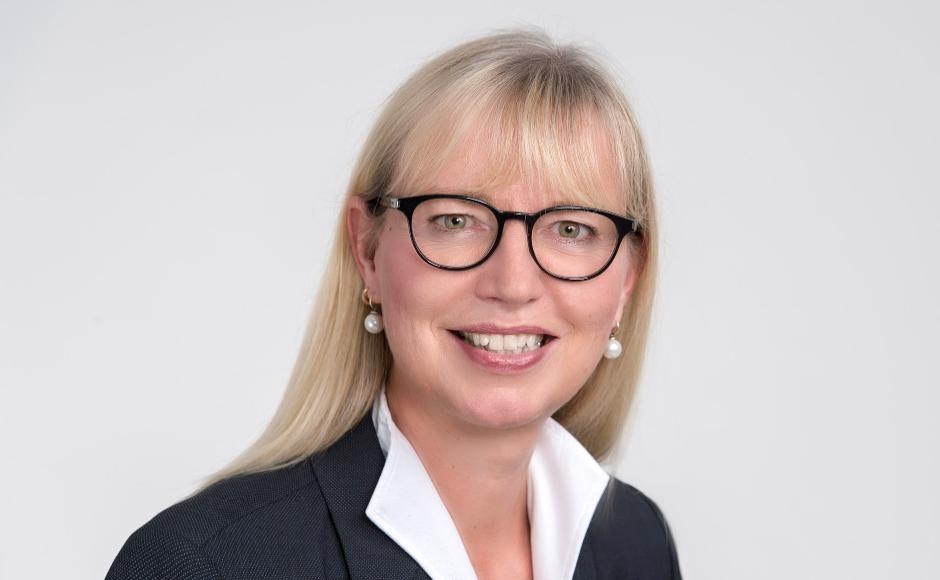
Sabine Schmittroth, Member of the Board of Managing Directors with responsibility for Human Resources and Labour Relations Director of Commerzbank, has decided in accordance with her personal life planning, to step down with the expiry of her contract at the end of this year. In acknowledging Sabine Schmittroth’s decision, the Supervisory Board and Board of Managing Directors have expressed their regret. The Supervisory Board will start the search for a successor in the near future.
“Since last autumn I have gradually formed the resolution, after 38 years with Commerzbank, to enter a new phase of my life. This is the right moment. By the end of this year, most aspects of the personnel transformation will be underway. When a tough job reduction programme comes to an end, it is by no means unusual for the responsible board member to seek new professional opportunities. I am now stepping aside to allow the Bank to place the responsibility for my division in new hands. Until then, however – as before – I will be fully committed to perform my task in the interests of Commerzbank and its employees,” said Sabine Schmittroth.
Helmut Gottschalk, the Chairman of the Supervisory Board of Commerzbank, said: “Sabine Schmittroth’s invaluable achievements on behalf of Commerzbank are undeniable. She has made essential contributions to the excellent progress in our transformation into a digital advisory bank for Germany. We owe her our respect and gratitude above all for her impressive success in filling the dual role as Board member with responsibility for HR and the Private and Small Business Customers Segment for over a year. We greatly appreciate Sabine Schmittroth’s decision to remain fully committed to her role as Board member responsible for HR until the end of this year, thus ensuring a smooth succession.”
CEO Manfred Knof said: “I fully respect Sabine Schmittroth’s decision. All of us on the Board of Managing Directors have worked very well with her. We owe a great deal of the credit for the success of our talks with the employee representative bodies over the past year to her. We’re delighted that Sabine Schmittroth, with her enthusiasm and desire to make a difference, will remain part of the Board of Managing Directors until the end of this year.”
Sabine Schmittroth has been a member of the Board of Managing Directors of Commerzbank AG since January 2020 and is currently responsible for Human Resources. From October 2020 until November 2021 she was also responsible for the Private and Small Business Customer Segment. After joining Dresdner Bank in 1984 – following stints in customer advisory services and the HR department – she held various management positions in the private customer business from 1999 onward, most recently as the director of the Frankfurt sales region. In 2009, she became management spokesperson of Commerz Direktservice GmbH and was appointed Director of Sales Management Branch Banking in 2011. From 2015 to 2019 Sabine Schmittroth served as Member of the Divisional Board of Private and Small Business Customers with Commerzbank AG.
Since March 2021, Sabine Schmittroth has also served as the chairwoman of AGV Banken, the Employers’ Association of the German Banking Industry, which she joined in January 2020.