
ING gives update on climate action approach, accelerates efforts in client engagement

ING published its annual Climate Progress Update 2024. The update shows how we engage with our clients to help them in the transition to a low-carbon economy. It also includes our progress on steering the most carbon-intensive sectors in our loan portfolio towards global climate goals – our ‘Terra’ approach. As a bank, the most impactful way for us to contribute to the transition is through financing: working with clients on their transitions to net zero while financing the technologies and solutions needed for a sustainable future. And because the global transition needs to include everyone, we’re also finding new ways to enable people to stay a step ahead on climate change.“I am proud to see our climate approach keep on developing every year,” said Steven van Rijswijk, CEO of ING. “In the past year, we’ve taken several important steps to sharpen the way we engage with clients on their transition towards net-zero. We assessed the sustainability disclosures of around 2,000 of our largest clients with an online tool we’ve developed. This gives us the foundation for more data-informed discussions with our clients about their progress and how we can support them in their transition and drive down their emissions. The urgency of climate change is becoming more evident all the time and ING wants to play a leading role in accelerating the global transition to a low-carbon economy. We all have a part to play, and we can all make the difference for present and future generations if we work together towards the same goals.”For the assessment of the disclosures of around 2,000 wholesale banking clients we used specially developed tooling called ESG.X. We intend to make this tooling externally available to help accelerate the efforts of our peers and clients. As of 2026, after two years of disclosure assessments and more strategic engagement with our clients, we’ll have a more robust understanding of how they’re progressing. Based on that, we will continue with business as usual or, for those that are unable or unwilling to progress, apply stricter conditions on a case by case basis or we will consider ceasing financing them altogether.In the Progress Update we also announced new steps in our policy for energy financing. We will stop all new general financing to so-called pure-play upstream oil & gas companies that continue to develop new oil & gas fields. This policy is applicable with immediate effect. In addition, guided by the IEA World Energy Outlook 2023, we’ve decided to stop providing new financing for new LNG export terminals after 2025.We’ve also expanded the scope of our Terra approach to the aluminium and dairy sectors, bringing the total number of sectors in scope to twelve. Eight sectors are (almost) on track to meet climate goals on time, with two sectors behind schedule and two can’t yet be assessed because a new methodology is used.To successfully fight climate change, action is needed at all levels of society. That’s why advocacy and collaboration are such big parts of our approach. We’re very clear about what we believe governments and policymakers need to do in order for society to meet climate goals. We will continue this advocacy work, playing an active role in climate standard-setting and directing our resources to where our contribution will have the most impact.The Climate Progress Update 2024 is available to download here.Society is transitioning to a low-carbon economy. So are our clients, and so is ING. We finance a lot of sustainable activities, but we still finance more that’s not. See how we’re progressing on our climate approach.
EIB President Hoyer: We stand ready to support Greece and other countries affected by fires
High temperatures have helped set vast areas of Greece, Italy and the Southern Mediterranean region on fire. Thousands of people have seen their homes and businesses burn to the ground and dozens of people across the region have lost their lives. Even Athens, the cradle of European civilization has been threatened. Fires on the island of Evia and in the Peloponnese are continuing. The Evia fire is now the single biggest wildfire ever recorded in Greece. In Italy, firefighters said they battled more than 500 blazes overnight in Calabria and Sicily.
Today the European Investment Bank stands in solidarity with the victims of these horrific disasters in Greece and elsewhere in Southern Europe, and is working to lend its support for the affected.
In Europe’s neighbourhood, forests in Turkey, Russia and Algeria are also ablaze. Across the Atlantic wildfires are devastating large parts of California. The effects of a hotter climate are clear, apparent and deadly.
But what is most terrifying about this is the prospect of worse yet to come. As the Intergovernmental Panel on Climate Change made clear this week, global temperatures are likely to rise by 1.5°C above pre-industrial levels by 2040. At this level, heatwaves, such as the one we are experiencing now are likely to become more frequent and severe. This is the best-case scenario.
While we are at the mercy of the weather in the short term, the long-term fate of our climate is in our hands. The burning in Southern Europe and the floods last month further North show the vital importance of adapting our infrastructure and societies for the changes ahead. The EU has committed to achieving carbon neutrality by 2050 and it’s time other countries and regions did the same. Last year, the European Investment Bank set out its Climate Bank Roadmap, a plan to increase our investment in climate and environmental sustainability to 50% of our annual lending by 2025. This is part of our commitment, as the EU’s climate bank, to mobilise €1 trillion of climate and environmental sustainability investment by the end of the decade.
We stand ready to support Greece and other countries and their people affected by these extreme climate events.
Poland: EIB and BNP Paribas Leasing Services join forces to support small and mid-sized companies and invest in climate action
European Investment Bank and BNP Paribas Leasing Services sign €200 million loan that aims to facilitate financing for small and mid-sized companies in Poland.
The loan will support the lending activities of BNP Paribas Leasing Services, which has committed to earmarking a minimum of 20% of its EIB-backed portfolio to climate action.
The large majority of the financing is expected to benefit Polish cohesion regions, thereby strengthening the social and economic foundations of less well-off regions in the European Union.
The European Investment Bank (EIB) and BNP Paribas Leasing Services, a subsidiary of BNP Paribas Bank Polska, have signed a loan agreement of €200 million to back lending to small and mid-sized businesses (SMEs and midCaps) in Poland. The operation builds on the EIB’s successful track record in supporting companies of this size through loans to financial partner institutions. It addresses a clear gap on the Polish market: according to an EIB poll, 12% of companies in the country find it hard to get external financing. In addition, every fifth smaller business in Poland was rejected when applying for a bank loan in 2020. The EU average is significantly lower.
The large majority of BNP Paribas Leasing Services’ new lending will go to cohesion regions, thus helping to reduce disparities in Europe. In addition, some 20% of the EIB financing will contribute to the fight against climate change. Possible green investments include the financing of photovoltaic installations, electric and hybrid vehicles, heating pumps and charging stations for electric vehicles. These investments will contribute to Poland’s objective to reduce greenhouse gas emissions and will help achieve the target set in its Energy Policy until 2040.
“Poland has a large and diversified economy that is relatively resilient to economic shocks,” said EIB Vice-President Teresa Czerwińska, who is in charge of operations in Poland. “Still, 16 of its 17 districts are qualified as cohesion with comparatively low gross domestic product per capita. Building a more climate-friendly economy also requires significant investments. EIB funding to BNP Paribas Leasing Services will encourage a green approach and enhance access to finance for local small and medium companies on better terms, such as reduced interest rates and longer maturities.”
Rafał Piskorski, Director General of BNP Paribas Leasing Solutions, said: “The Polish leasing market is recovering very fast after COVID-19 lockdowns froze many investments in 2020. We are very happy to be able to distribute EIB funding to our customers, as it will encourage them to invest even more and create the foundations for much-needed economic growth. We are happy to contribute to green finance, which is a very important factor to make our economy more sustainable and socially responsible.”
The operation will be structured as a loan to BNP Paribas Leasing Services under a parent guarantee of BNP Paribas Bank Polska. It will be complemented by collateral in the form of EIB bonds. This is the first time that EIB bonds will be used as financial collateral. This design can provide EIB financial partners with a valuable alternative to classic collateral, which might thus be used for other funding operations.
Bulgaria: EIB and ProCredit Bank Bulgaria expand support to small and medium-sized businesses and foster climate action
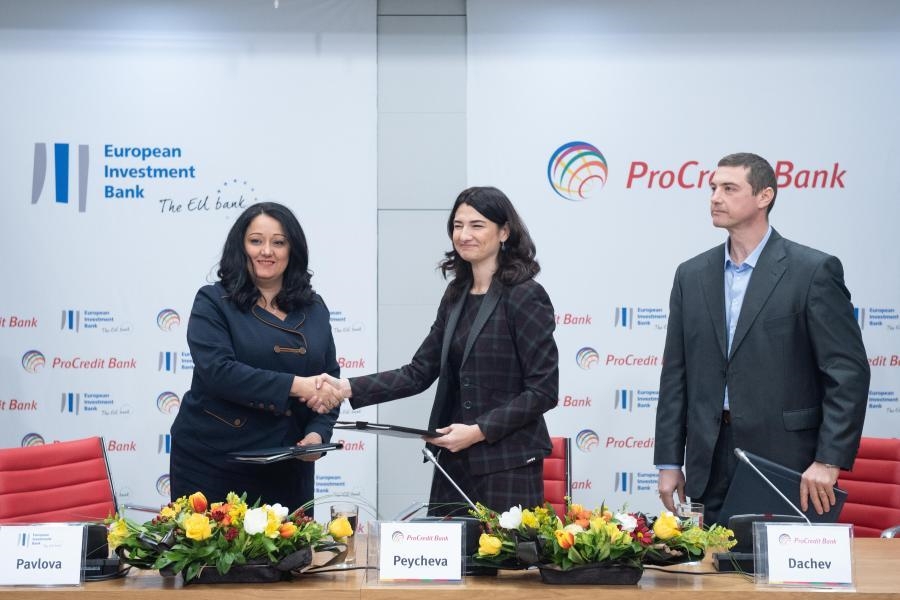
– This EUR 15m loan is the third EIB operation with ProCredit in Bulgaria
– 40% of the loan is dedicated to projects with a climate action component
The European Investment Bank (EIB) lends EUR 15m to ProCredit Bank Bulgaria to co-finance small and medium-scale investments in the country. 40% of the intermediated loans are dedicated to renewable energy, energy efficiency, low carbon transport and waste management projects.
Thanks to the EIB loan, Bulgarian companies with fewer than 3 000 employees will benefit from better access to long-term financing provided at favourable terms.
“Support to cohesion regions and the fight against climate change are strategic priorities of the EU bank,” said EIB Vice-President Lilyana Pavlova. She continued: “The EIB, in cooperation with our well-established partner ProCredit Bank, will sustain employment in Bulgaria, strengthen the competitiveness of the private sector and support the fight against climate change. Our joint efforts will stimulate sustainable growth and investments in Bulgaria, fostering economic convergence, increasing the number of qualified jobs and ultimately improving the living conditions of European citizens.”
“ProCredit Bank is a pioneer in offering specialised green and energy efficiency loans, including financing for renewable energy generation, and has devoted significant efforts to encouraging investments of this kind. By doing this we have accumulated in-house expertise and experience, and have positioned ourselves as the bank of choice for green loans – among both businesses and providers of funds. The signing of today’s contract reflects the shared principles and goals of both institutions, as well as our joint commitment to promoting growth and employment by supporting small and medium-sized enterprises”, said Reni Peycheva, Member of the Management Board and Executive Director of ProCredit Bank (Bulgaria).
This is the third operation since the start of the EIB’s cooperation with ProCredit Bank in 2011. The EIB has already provided two intermediated loans to the bank, thereby helping to finance small and mid-sized businesses in Bulgaria.
Spain: Climate action – EIB provides financing to Grupo Ruiz to renew its fleet with more modern and less polluting buses
– The EU bank will provide EUR 27.5m to put 32 electric and 141 compressed natural gas buses on the road
– The agreement will help improve public transport quality and cut polluting emissions in Madrid, Majorca, Badajoz, Toledo, Salamanca and Murcia
– The project is supported by the Investment Plan for Europe
The European Investment Bank (EIB) is set to finance the modernisation of Grupo Ruiz’s bus fleet by facilitating EUR 27.5 million for the introduction of 173 safer, less polluting and more modern vehicles. EIB Vice-President Emma Navarro and Grupo Ruiz CEO Gregorio Ruiz signed the agreement today in Madrid. This project is supported by the European Fund for Strategic Investments (EFSI), the main pillar of the Investment Plan for Europe.
The EIB support will enable Grupo Ruiz to replace more polluting diesel buses with 32 electric and 141 compressed natural gas alternatives. The new vehicles will provide public transport services in Madrid, Majorca, Badajoz, Toledo, Salamanca and Murcia, covering both urban and intercity lines. They will enter service over the next two years and will help to improve air quality in these cities. Grupo Ruiz’s EIB-financed investments include the construction of three new electric charging stations in Badajoz, Alcudia and Palma de Mallorca.
Since 2016, the EU bank and the European Commission have been implementing a joint initiative dedicated to financing cleaner transport (the Cleaner Transport Facility). It has been helping many Spanish cities to swap their older, more polluting diesel vehicles for new hybrid, electric or latest generation compressed natural gas replacements. The agreement signed today is the fifth to be financed by the EIB in Spain under this initiative, for which it has provided almost EUR 230m.
The project is being supported by the Investment Plan for Europe, whose guarantee makes it possible for the EIB to provide financing on favourable terms to support investments whose structure or nature means that they contribute to boosting economic growth and employment. In this case, the EIB-financed investments will facilitate the creation of 360 jobs during the project’s implementation phase.
During the signing ceremony in Madrid, EIB Vice-President Emma Navarro, who is responsible for the Bank’s climate action and operations in Spain, said: “Supporting sustainable public transport that cuts polluting emissions is among the EIB’s key priorities. As the EU climate bank, we are determined to dedicate more resources to supporting investments promoting climate action while also generating economic growth and jobs. This project is a good example of this, and also shows the positive impact of EIB financing on people’s lives, helping to improve air quality in our cities.”
European Commissioner for the Economy, Paolo Gentiloni, said: “Making the European transport sector more sustainable is a key component of the European Green Deal. By supporting Grupo Ruiz’s efforts to cut its bus fleet’s emissions, the Investment Plan for Europe continues to show its environmental credentials. I hope we will see an increasing number of companies replacing their polluting vehicles for cleaner alternatives in the near future, taking advantage of EU financial support.”
Grupo Ruiz CEO Gregorio Ruiz said the following at the signing ceremony: “We are very aware of our responsibility in one of the big challenges of this century: working together to protect the environment. Mobility sector players have a key role in this, which is why we are committed to continuing to promote far more sustainable transport; a journey that we already began over 25 years ago with our first natural gas-powered buses. The agreement between the EIB and Grupo Ruiz shows how important it is to join forces to achieve this goal.”
Bill Gates and EIB President Hoyer agree to accelerate support for human development and climate action
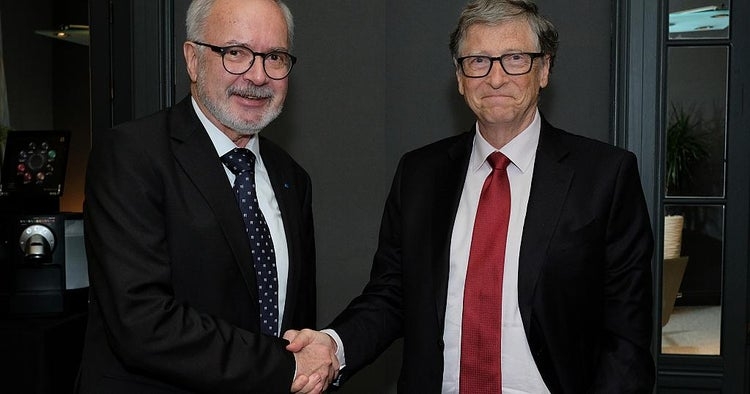
– Cooperation across Africa improving health diagnostics to transform healthcare
– Partnership to tackle investment barriers holding back research to prevent and treat malaria
– EUR 100m Breakthrough Energy Ventures-Europe fund backing clean energy technology
Meeting in Brussels earlier today Bill Gates, Co-chair of the Bill & Melinda Gates Foundation and Chairman of Breakthrough Energy Ventures, and European Investment Bank President Werner Hoyer highlighted the benefits of close cooperation between philanthropy and public finance to invest in sustainable development and climate action. They also welcomed progress on new joint initiatives to improve health and support energy innovation.
“Whether you’re talking about improving outcomes in global health and development or tackling climate change, the tools we have today aren’t enough to solve the challenges we face. It is great to see the European Investment Bank growing its engagement with philanthropic organizations and the private sector, including the Gates Foundation and Breakthrough Energy Ventures, to accelerate progress in these areas. These partnerships will help increase investment in human capital, reduce global inequality and lay the groundwork for sustainable prosperity,” said Bill Gates.
“The European Investment Bank welcomes the opportunity to work with the Gates Foundation to combine our respective development, climate and financial expertise. Cooperation between the EU Bank and the Bill & Melinda Gates Foundation will enhance access to reliable medical testing across Africa and increase research into curing malaria, and the partnership with Breakthrough Energy Ventures will accelerate deployment of new technology to replace fossil-intensive energy generation. We look forward to increasing our partnership supporting innovative technologies for climate action and tackling infectious diseases, and expanding the scope of our joint engagement in the years ahead.” said Werner Hoyer, President of the European Investment Bank.
Bill Gates and President Hoyer discussed three new financing initiatives that address inequality, contribute to sustainable development and support climate action; discussions with European finance ministers to increase EIB support for development finance; and the EIB’s plans to double financing for climate action and environmental sustainability.
Improving health diagnostics across Africa
Unreliable medical testing and limited access to health diagnostics pose a significant challenge to improving health outcomes in Africa.
The Bill & Melinda Gates Foundation and the European Investment Bank are joint partners in the African Health Diagnostics Platform, a new initiative dedicated to making quality diagnostic services accessible to low-income communities in sub-Saharan Africa. The European Commission under the External Investment Plan supports the platform. The African Health Diagnostics Platform is expected to be rolled out in Ethiopia, Ghana and Rwanda by early 2020, with other countries anticipated to follow.
Scaling up malaria research and development
In addition, President Hoyer and Mr. Gates discussed their mutual interest in scaling up scientific research on new tools to prevent and treat malaria. Progress against this disease is held back by limited commercial investment, increasing resistance to some treatments available today, and the impact of global warming on mosquito populations and behaviour among other causes.
The European Investment Bank is currently leading the establishment of a new fund intended to finance companies leading development of new malaria tools, in which the Bill & Melinda Gates Foundation has expressed its intent to participate.
The new EU Malaria Fund is expected to be operational by the end of 2019.
Increasing clean energy innovation to fight climate change
Investment to scale up adoption of new energy technology is essential to reduce carbon emissions.
Earlier this year Breakthrough Energy Ventures and the European Investment Bank launched the EUR 100 million Breakthrough Energy Ventures-Europe fund intended to support companies developing innovative energy technology that can be used for clean transport, agriculture, industry, buildings and electricity.