
Halifax and Bank of Scotland awarded ‘Mental Health Accessible’ accreditation
The Money and Mental Health Policy Institute has awarded Halifax and Bank of Scotland its ‘Mental Health Accessible’ accreditation for businesses.
They are two of the first three organisations to receive this accolade, following the accreditation of Lloyds Bank in 2020.
This follows a comprehensive assessment by Money and Mental Health of how accessible Halifax and Bank of Scotland’s services are for customers with mental health problems, and where improvements could be made.
In response to feedback from Money and Mental Health, Halifax and Bank of Scotland have taken important steps to make their services easier to use for vulnerable customers.
The two banks have been awarded an “Essentials” rating, the first of three levels which firms can achieve in the Mental Health Accessible programme, and have committed to taking further action.
Money and Mental Health’s Mental Health Accessible programme supports essential services providers – such as banks, energy or broadband suppliers and water companies – to better understand and address the challenges that customers with mental health problems face using their services.
Money and Mental Health created the programme after publishing research which shows that more than half of people with mental health problems face serious difficulties using the phone to carry out essential admin, and four in ten have severe ‘admin anxiety’ — leaving them unable to effectively use essential services.
These problems also have a huge psychological toll — with more than one in five (22%) people with a recent mental health problem saying that they have had a panic attack as a result of dealing with an essential services provider.
Today, Money and Mental Health has announced that Halifax and Bank of Scotland have become only the second firms to receive the Mental Health Accessible accreditation, after Lloyds Bank received the first accreditation in 2020.
Halifax and Bank of Scotland received the accreditation following an in-depth evaluation by Money and Mental Health of how accessible their services are for customers with mental health problems.
Based on recommendations from Money and Mental Health, both banks have taken significant steps to ensure their services are more accessible and supportive for vulnerable customers. These include:
Supporting customers to know what to expect when they contact the bank with money worries, by including more online information and guidance.
Offering colleagues a specialist tool, so they can signpost customers to external organisations who can help them with financial and mental health problems.
Making their communications to customers with debt problems more empathetic.
Giving customers a range of ways to manage their accounts such as telephone, webchat, email and letter, to provide greater choice and flexibility. This will particularly help customers who struggle to use some communications channels.
Offering customers a “Trusted Person Cards”, through which they can allow a third party to withdraw cash and make purchases on their behalf in a secure way.
In recognition of these steps, Money and Mental Health has awarded Halifax and Bank of Scotland an “Essentials” rating, the first of three progressively more demanding levels which firms can achieve when taking part in the Mental Health Accessible programme.
It has also given Halifax and Bank of Scotland an action plan to help them make further improvements — for example, making it easier for colleagues to support customers with mental health conditions by providing them with additional tools and information.
Money and Mental Health has also renewed Lloyds Bank’s “Essentials” accreditation (awarded in 2020) for another year, to reflect the bank’s continued commitment to improving the accessibility of its services.
Now Money and Mental Health is calling on more essential services providers to join the Mental Health Accessible programme, and to take steps to make their services easier to use for customers with poor mental health.
Helen Undy, Chief Executive of the Money and Mental Health Policy Institute, said:
“Dealing with essential services providers can be difficult for anyone. But for the 12 million people across the UK experiencing mental health problems, it can feel like an impossible task. This leaves people effectively locked out of services which are critical for everyday life, and can create serious distress for people who are already struggling.
“We’re delighted that Halifax and Bank of Scotland have recognised the barriers that people can sometimes face, and taken serious steps to address them through the Mental Health Accessible programme. It’s a big achievement to receive the “Essentials” level of our accreditation — but now we want to work with both banks to make further improvements that will ease the strain for vulnerable customers using their services.
“We’re also urging other businesses to work with us to ensure their services are as accessible as possible. With more people facing financial worries as the furlough scheme ends, and rates of depression having increased during the pandemic, it’s more important than ever that everyone can access the services that we all rely on.”
Fiona Cannon, Group Sustainable Business Director for Lloyds Banking Group, said:
“As we continue to play our part in helping Britain recover it is important that we continue our work to be a more inclusive organisation. The Mental Health Accessible accreditation demonstrates our continued commitment to raising mental health awareness and has enabled us to drive improvements that better support all our customers.”
Scottish business confidence continues to climb as restrictions ease
Bank of Scotland’s Business Barometer for May 2021 shows:
Scottish business confidence rose by six points in May to 15% – the highest level since February 2020
Firms’ optimism in the economy grew by six points to 19%
Overall UK business confidence increased for fourth month in a row as hiring intentions reach highest level since February 2020
Business confidence in Scotland rose six points during May to 15%, the highest reading since February 2020, according to the latest Business Barometer from Bank of Scotland Commercial Banking.
Companies in Scotland reported higher confidence in their own business prospects month-on-month, up five points at 10%. When taken alongside their optimism in the economy, up six points to 19%, this gives a headline confidence reading of 15%.
The Business Barometer questions 1,200 businesses monthly and provides early signals about UK economic trends both regionally and nationwide.
When it comes to jobs, a net balance of 8% of businesses in Scotland expect to increase staff levels over the next year, up 17 points on last month and the first net-positive reading in fifteen months.
Overall UK business confidence rose four points in May to 33%, a fourth consecutive month of growth. The reading comes after non-essential retail and hospitality firms reopened their doors to customers. Businesses reported an increase in optimism about their own trading prospects, up two points month-on-month to 28% and their confidence in the economy grew by six points to 38%.
Firms’ hiring intentions also rebounded to pre-pandemic levels with 14% of UK businesses expecting to make new hires in the next 12 months, the highest reading since February 2020.
All UK regions reported a net positive confidence reading in May, with almost all areas recording an increase in confidence. Yorkshire and the Humber was the most positive region (up 12 points to 44%) followed by the South West (up 12 points to 42%) and the West Midlands (up 10 points to 41%). Wales reported the biggest month-on-month increase (up 18 points to 27%). Three regions reported small dips in confidence but remained in positive territory: London (down eight points to 24%), the North East (down 11 points to 26%) and North West (down five points to 38%).
Fraser Sime, regional director at Bank of Scotland Commercial Banking, said: “With lockdown restrictions easing further in May, Scotland’s hospitality and tourism sectors were able to join non-essential retail in reopening their doors, a move which has helped to boost confidence across the country.
“Encouragingly, for the first time this year, businesses are looking to hire staff. This is a clear indicator that we are moving in the right direction with firms more optimistic about the coming months.
“We’ll continue to stand by Scottish businesses as they work towards what we all hope will be a busy summer.”
From a sector perspective, manufacturing reported the sharpest increase in business confidence (up thirteen points to 53%). Construction confidence was up seven points to 35%, and retail gained five points to a four-year high of 44% with the easing of lockdown measures leading to hopes of stronger business conditions. Wider services confidence posted a more modest rise of one point to 26%.
Paul Gordon, Managing Director for SME and Mid Corporates, Lloyds Bank Commercial Banking, said: “The UK’s regions and nations continue to report positive business confidence in recent months, which is a welcome change from where we were at this time last year. Wales, in particular, has shown a significant improvement in outlook, reporting the sharpest increase in confidence this month. In the sectors, manufacturing continues to outperform, reflecting strong domestic demand, while retail once again reported stronger confidence as restrictions ease across the UK. We have reason to be optimistic that this upbeat outlook will continue in the months ahead and we’ll remain by the side of businesses on their road to recovery.”
Hann-Ju Ho, Senior Economist, Lloyds Bank Commercial Banking, said: “A fourth consecutive monthly increase in business confidence, and the highest in three years, leaves us hopeful for the UK’s economic recovery. The increase in confidence was buoyed by a further easing of lockdown restrictions and a rise in optimism about the wider economy. While we need to wait and see how the months ahead will unfold, the recent rise in positive outlook is an encouraging sign that firms are emerging from the COVID-19 crisis with renewed resilience and vigour.”
Bank of Scotland unveils new £50 polymer note design
New £50 polymer note features much-loved mythical Kelpies, reflecting their place in Scottish folklore.
Catherine Topley, CEO of Scottish Canals, says the note ‘pays homage’ to the canals’ transformation
Sought after AA pre-fix notes will be auctioned in summer for Mental Health UK
Images available on requestbusiness confidence surged to its highest level since February 2020.
Bank of Scotland has yesterday unveiled the design of its new polymer £50 note which will enter circulation on the 1st of July 2021.
Keen-eyed note holders will first notice the change in colour from traditional green to red. Evolving the existing “Bridge Series”, a new image of the world’s first and only rotating boat lift, the Falkirk Wheel, will be visible on the reverse.
For the first time, the famous Falkirk structure will be joined by an image of the shape-shifting water spirits, The Kelpies. The two 300-tonne horses’ heads have been added to the £50 note in celebration of the contribution of horses to the history of Scotland. Furthermore, a new UV feature depicts a horse pulling a canal barge, one of the ways horses shaped the geographical layout of the Falkirk area.
Bank of Scotland’s new £50 notes feature the poem ‘Steam Barge’, by William Muir. It was written after he saw the newly-invented steam boat passing through Scotland’s Grand Canal.
The front of the new note portrays the Scottish novelist and poet Sir Walter Scott, alongside the image of The Mound in Edinburgh, as the current £50 note does today.
The note has important security features which include an anti-counterfeit ‘window effect’ – transparent windows within The Mound frontage and a transparent vertical stripe – on the front of the note. Inside the vertical stripe is a holographic foil strip which displays the ‘Prosperity’ statue on top of The Mound, the bank’s logo, and ’£50.’ The foil also displays a ‘Northern Lights’ effect, with stars and colours resembling the phenomena appearing, when the note is tilted.
In addition, as with the £10 and £20 polymer notes, the £50 note will have a tactile emboss feature, to aid the visually impaired.
Philip Grant, Chairman of the Scottish Executive Committee, Bank of Scotland, said: “Bank of Scotland has issued bank notes showcasing our country’s rich history for more than 320 years. Our new £50 note, with its images of the majestic Kelpies, the Falkirk Wheel and a poem by William Muir, celebrates the greatness of Scottish culture and engineering achievement. I am very proud to be a signatory on the note, in my role as Treasurer of Bank of Scotland.”
Catherine Topley, CEO of Scottish Canals, said: “I am delighted one of Scottish Canals’ most iconic attractions will be showcased on the Bank of Scotland’s new £50 note. This decision by the Bank of Scotland pays homage to Scottish Canals’ transformation in central Scotland over the last 20 years. From abandoned backwaters, to Scotland’s most vibrant city-to-city and sea-to-sea canal corridor, with our incredible destinations The Falkirk Wheel and The Kelpies at the heart of the canal renaissance. The note also complements the appearance of The Falkirk Wheel in the United Kingdom’s passports, recognising its significance to the nation’s infrastructure.”
On June 30th, Bank of Scotland will auction 92 notes containing the most sought after serial numbers, those with the AA pre-fix. A further two notes will be auctioned with the offer for a personalised serial number. All proceeds will be going to Mental Health UK.
Bank of Scotland new £20 notes worth £112,590 to Mental Health UK
• Special edition notes sold at auction to generous bidders• All money raised will support 14 – 18 year olds’ mental health resilience.
Bank of Scotland has raised £112,590 for Mental Health UK after auctioning off valuable versions of its upcoming £20 Polymer bank note.
A total of 92 notes that contain desired serial numbers were up for grabs at the auction run by SPINKS in London on the 12th February, with every single one being snapped up by attendees.
In addition, bidders could get their hands on 50 commemorative notes.These notes feature the Queensferry Crossing on the reverse, as well as the most sought after serial numbers with the AA pre-fix. Only these 50 notes will ever be printed with the AA pre-fix on the commemoratve design.
Thanks to the generous public for their bids, a fantastic £112,590 has been raised for Bank of Scotland’s charity of the year, Mental Health UK.
Brian Dow, Chief Executive of Mental Health UK, said: “At Mental Health UK we know there is a growing need for support for young people. That’s why, with funding from Bank of Scotland and the rest of Lloyds Banking Group, we created Bloom – the largest UK-wide programme for 14-18 year olds – which focuses on supporting young people’s mental health resilience. With this support we can expand the reach to over half a million young people, equipping them with the tools and knowledge needed to support their mental health now and in the future.”
Tara Foley, Managing Director, Bank of Scotland said: “Thank you to everyone who bought one of these very special £20 polymer bank notes. Not only do they now own a piece of history, they have also put money towards a cause which is very close to our hearts at Bank of Scotland.”
£20 Polymer Note Reflecting the new notes due into circulation later this month, the 50 special edition Queensferry Crossing notes are printed with a unique serial number, commencing with AA. The front of the note features the portrait of the Scottish novelist and poet, Sir Walter Scott, alongside the image of The Mound in Edinburgh. The distinctive red Forth Bridge remains on the reverse, which was listed as a World Heritage Site by UNESCO, in July 2015.
One of the key security features of Bank of Scotland’s polymer notes is the anti-counterfeit ‘window effect’ which can be found in the windows of The Mound which appear on the note. The £20 polymer note features a holographic depth stripe, and the top of the foil includes a ‘Northern Lights’ effect when tilted. In addition, the clouds adjacent to Victory will move left to right when tilted east to west.
Mental Health UK Through the partnership with Mental Health UK our aim is to raise a further £4 million by the end of 2021 to expand ‘Bloom’ – a UK-wide programme delivered in schools and colleges which supports young people’s mental health resilience. Bloom aims to reach half a million young people, teaching them skills and techniques that will help them with challenges such as exam pressure, relationships and bullying. The partnership also continues to fund the Mental Health and Money Advice service. An advice service helping thousands of people in the UK every year who are experiencing difficulties with both their mental health and money.
Bank of Scotland opens state-of-the-art Argyle Street branch following multi-million pound refit
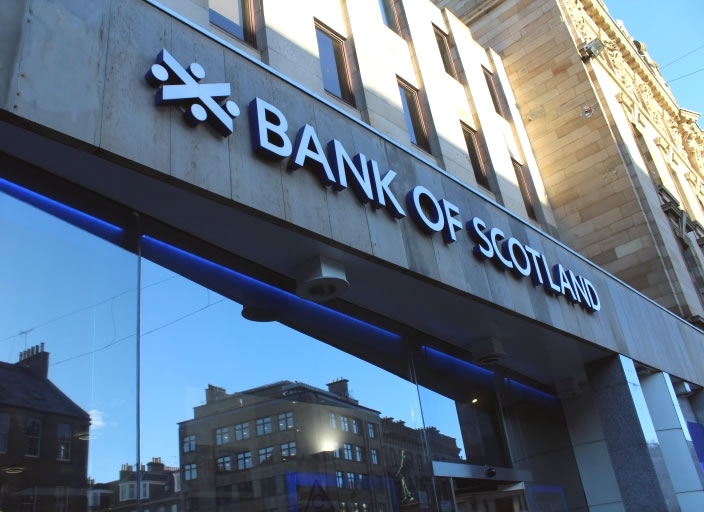
A state-of-the-art ‘flagship’ Bank of Scotland branch has opened in Glasgow after the bank transformed its existing premises on Argyle Street.
Designed to meet the changing needs of high street customers and act as a testing ground for the future of banking in Scotland, the new flagship branch brings together a host of new services, designed to create a very different high street banking experience for both personal and business customers.
New features and services include:
The first Bank of Scotland branch to have a dedicated business hub with a ‘Business Connector’ employed to give local start-up businesses specialist support, alongside a professional space in which small business owners can work and network with other entrepreneurs.
A new home buying service to help customers with all aspects of purchasing a property, with expert colleagues on hand at all times, available without appointment, and using the latest interactive digital tools.
Quality food and barista crafted coffee available in-branch thanks to a partnership with local social enterprise Social Bite, providing a warm, informal space for customers and visitors to chat, meet, work and learn.
Regular events run in partnership with companies including Google and Microsoft to share expertise on topics such as home buying and digital skills for children.
Extended opening hours with the branch open seven days a week, and until 7pm on week nights, providing customers with more flexibility to visit at a time which suits them.
Tara Foley, Manager Director at Bank of Scotland, said: “It’s exciting to finally open the doors to our new state-of-the-art flagship branch in Glasgow. While new technology is rapidly changing the way many people do their day to day banking, support and guidance from our colleagues remains crucial for the big or unexpected moments in our customers’ lives, such as buying a home, having children, or dealing with a bereavement.
“That’s why we’ve created a different kind of bank branch. This will offer the services that we know customers want in a modern and flexible environment, combining the latest in interactive digital technology with the trusted personal service provided by our expert colleagues.”
Need to know
Bank of Scotland has the biggest branch network of any bank in Scotland, with nearly 200 branches along with a mobile branch network serving over 100 locations.
Argyle Street is one of the country’s busiest branches with over 50,000 customers coming through the doors each month. It’s also one of the largest, at 14,000 square foot spread over three floors, and is situated on the corner of Argyle Street and St Enoch’s Square, just a stone’s through from Central Station.The bank’s connection with Argyle Street goes back more than 100 years. Glasgow-based Union Bank of Scotland (which merged with Bank of Scotland in 1955) opened a branch at 174 Argyle Street in 1880.Bank of Scotland is proud to be partnering with the local social enterprise Social Bite: on a mission to end homelessness in Scotland. Social Bite runs cafes throughout Scotland, providing food and accommodation, and recruiting people struggling with homelessness to work in their cafes and kitchen. We will offer customers the opportunity to buy a drink or meal for someone who is struggling with homelessness through the pay it forward scheme. All profits made in the cafe will go towards Social Bite to support their great work.
About Social Bite
Bank of Scotland is proud to be partnering with the local social enterprise Social Bite for the in-branch cafe. Social Bite runs cafes and food delivery throughout Scotland. All profits and funds raised from individual donations support their mission to end homelessness in Scotland. Every year they give away over 140,000 items of food and drinks from their cafes in Edinburgh, Glasgow and Aberdeen.
Customers will be able to ‘Pay it Forward’ and buy a hot drink for hot meal for someone experiencing homelessness in Scotland. All profits made in the cafe will go towards Social Bite to support their great work.
Money raised at their Sleep in the Park events helped to build the Social Bite Village and start Housing First Scotland which means providing someone affected by homelessness with a permanent home and extensive wraparound support.
Additionally, the Social Bite Academy provides supported employment or volunteering to people affected by homelessness and/or with other complex needs. One in three of their social enterprise staff have a background of homelessness.
Bank of Scotland to transform Argyle Street branch as part of multi-million pound Glasgow investment
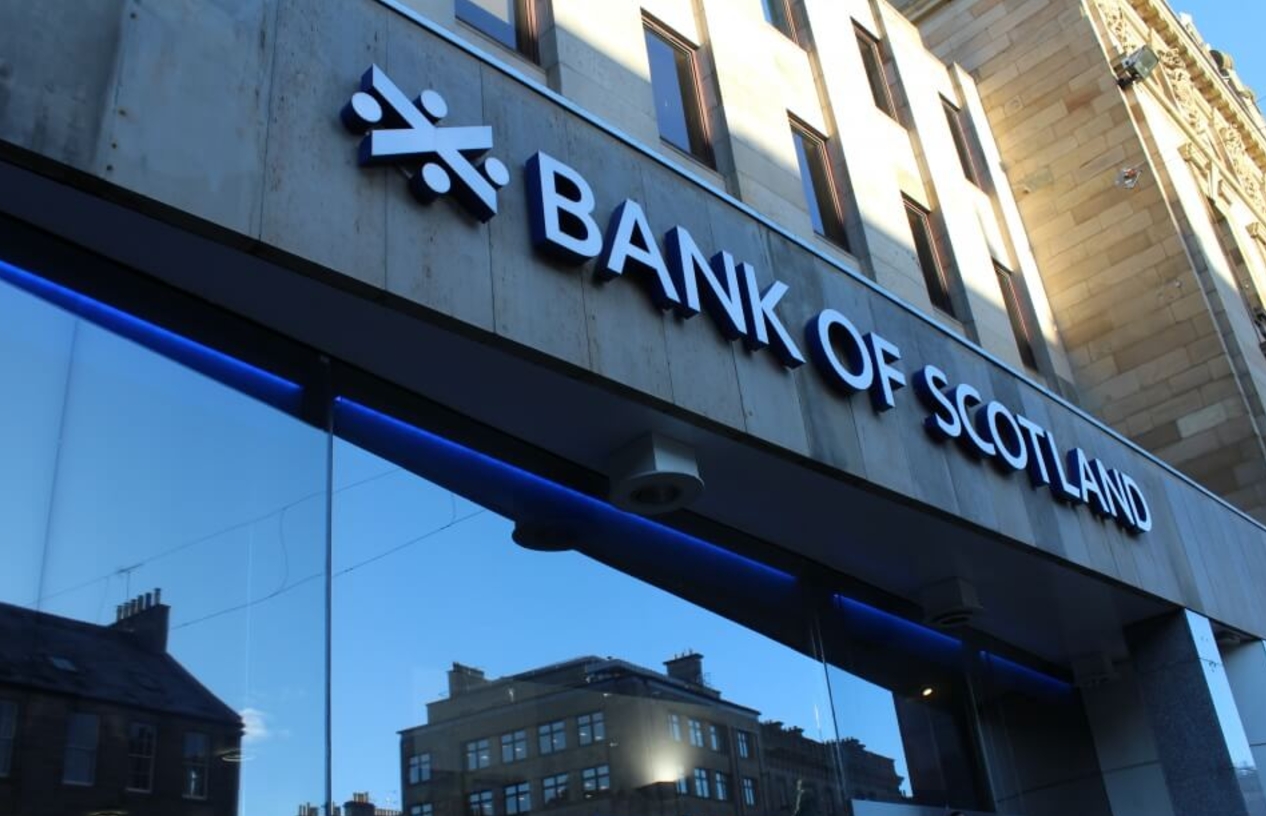
A state-of-the-art ‘flagship’ Bank of Scotland branch is set to open in Glasgow later this year after the bank announced plans to transform its existing premises on Argyle Street.
Designed to meet the changing needs of high street customers and act as a testing ground for the future of banking in Scotland, the branch will be closed from today (20 September) for around three months as it undergoes the multi-million pound refit.
The branch is set to reopen in December and will bring together a host of new services, designed to create a very different high street banking experience for both personal and business customers.
It will also offer extended opening hours and feature a coffee shop to provide a warm, informal space for customers and visitors to chat, meet, work and learn.
“New technology is rapidly changing the way many people choose to do their day to day banking. However, support and guidance from our branch colleagues remains crucial for the big or unexpected moments in our customers’ lives, such as buying a home, having children, or dealing with a bereavement. “That’s why we’re creating a different kind of bank branch. This will offer the services that we know our customers want in a modern and flexible environment, combining the latest in interactive digital technology with the trusted personal service provided by our expert colleagues.” – Tara Foley, Manager Director at Bank of Scotland
Bank of Scotland’s branch in Glasgow’s Sauchiehall Street will also have its facilities upgraded as part of the investment plan; while the bank’s branch in Renfrew is also being modernised.