
BNP Paribas announces the final signing of the agreements designating the bank as exclusive partner for Stellantis’ captive in Germany, Austria, and the UK
Following final agreement by all relevant regulatory and antitrust authorities, the two groups announce their partnership is now operational for all customers and dealers.The Group – via its subsidiary BNP Paribas Personal Finance – is now the exclusive partner for Stellantis’ captive for financing activities, serving all its brands across three strategic markets: Germany, Austria, and the UK. These account for approximately 40% of all new vehicle registrations in Europe.
At a stroke, BNP Paribas Personal Finance almost doubles its assets in Germany and the UK; its outstandings increase by approximately €6 billion (currently €10 billion), with significant potential for growth, thus consolidating its position as European leader in personal financing.BNP Paribas, via BNP Paribas Personal Finance, increases and diversifies its exposure to all Stellantis brands to offer high-quality financing experience to customers, dealers across all makes.For BNP Paribas Personal Finance, this partnership is a major milestone on its strategic objective to have 50% of its outstanding loans related to mobility by 2025.One of the key ambitions shared by all parties in this partnership is to accompany customers in their energy transition, leading the way to a more sustainable mobility.Thierry Laborde, Chief Operating Officer of BNP Paribas declared: “We are delighted to reach a new step in the collaboration initiated with Stellantis in 2017. We look forward to bringing our diversified expertise in financing and developing mobility across Europe to Stellantis, supporting them in meeting their clients’ needs.”Charlotte Dennery, CEO of BNP Paribas Personal Finance, added: “This partnership is key for our ambitions, strengthening BNP Paribas Personal Finance’s presence across the United Kingdom, Germany and Austria, key countries for our development strategy.”
Austria: EIB and UniCredit Bank Austria enable companies to invest in renewable energy and energy efficiency
The EU bank is providing UniCredit Bank Austria with a framework loan of up to €92 million.The long-term loan supports Austria’s goal of generating 100% of electricity from renewables by 2030.The European Investment Bank (EIB) and UniCredit Bank Austria will support investments in small and medium-sized renewable energy and energy efficiency projects in Austria. The EIB will make a framework loan of up to €92 million available to the Austrian bank, which will then create a credit portfolio of up to €200 million for financing clean energy projects.
The demand for renewable energy and energy efficiency projects is high: the Austrian government aims to generate 100% of electricity from wind, solar and hydropower by 2030. Decentralised photovoltaic systems are expected to play a significant role, including a 100 000 solar roofs programme. Hydropower, along with pumped storage and wind farms, are also part of the government’s programme.
These ambitious government goals have created a high demand for new, climate-friendly energy projects in Austria. This has caused a certain lack of competitively priced long-term financing sources being available for smaller and medium-sized renewable energy and energy efficiency projects.
The EIB aims to fill this market gap together with partner banks and other financial intermediaries. To this end, last year the EU bank provided a climate action programme loan to Austria. The framework loan for UniCredit Bank Austria announced today is the first sub-operation within this EIB programme.
UniCredit Bank Austria has a solid record in financing for renewable energy and energy efficiency in Western Europe with a sizeable pipeline of initiatives in Austria.
EIB Vice-President Thomas Östros said: “We are very pleased to cooperate with UniCredit Bank Austria to get renewable energy and energy efficiency projects up and running. Austria already benefits from one of Europe’s most developed and efficient green energy markets with a strong record of successful climate action investments as well as an important pipeline of new projects expected in the coming years. The EIB will remain a strong and reliable partner in developing these sectors in Austria and supporting Europe’s transition to a fossil-free future.”
Dieter Hengl, member of the Management Board of UniCredit Bank Austria responsible for Corporates, said: “Climate protection and sustainability have long been major strategic topics for our bank. The financial sector as a whole has a central role to play in the transition to a low-carbon economy. Channelling money flows into sustainable, climate-friendly industries, activities and initiatives is the key joint challenge of the future. I am very pleased that we are the first bank in Austria to have signed the climate action facility loan with the EIB. Together with the EIB, we are helping companies to become sustainable and climate-friendly and can thus enable our customers to invest in these important issues at particularly advantageous conditions.”
UniCredit Bank Austria is one of the leading and best capitalised major banks in Austria and part of UniCredit, a pan-European commercial bank with a unique service offering in Italy, Germany, and Central and Eastern Europe. Digitalisation and our commitment to ESG principles are key enablers for our service. They help us deliver excellence to our stakeholders and create a sustainable future for our clients, our communities and our people.
Barclays appoints Sven Baumann as Head of Investment Banking, Germany, Austria, Switzerland
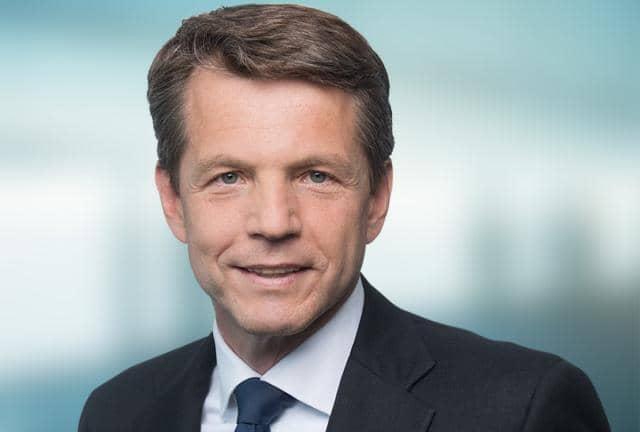
Barclays Investment Bank announced the appointment of Sven Baumann as Head of Investment Banking for Germany, Austria and Switzerland (DACH).
Mr Baumann will provide leadership and strategic direction for Barclays’ Investment Banking business in the DACH region, working closely with Ingrid Hengster, who joined the bank as Country CEO for Germany this week.
Mr Baumann joins Barclays from Citigroup where he has spent the past seven years. Most recently he has been leading their investment banking franchise in Germany and was also responsible for coverage of a wide set of clients including financial sponsors, technology, healthcare and consumer clients across the DACH region. Before Citi, Mr Baumann was at Bank of America Merrill Lynch for three years where he was a Managing Director focused on advising private equity firms on European investments, in particular investments in German-speaking Europe. Prior to that, he spent 10 years at Deutsche Bank where he joined as an Associate and worked his way up the ranks to Managing Director, holding a number of M&A and coverage roles.
Pier Luigi Colizzi, Head of Investment Banking, Continental Europe, and Co-Head of M&A, EMEA, commented: “As the largest market in Continental Europe, Germany represents significant opportunity for Barclays. Sven’s extensive investment banking experience coupled with his strong local market knowledge will generate great value for our clients.”
Ingrid Hengster commented: “Sven’s appointment further advances our investment plan in Germany and I look forward to working with him to accelerate the growth of our Investment Banking business here and across the DACH region.”
Mr Baumann’s appointment follows the hire of Ingrid Hengster, and Anthony Samengo-Turner, Head of M&A for DACH who joined the platform last year. When Mr Baumann joins Barclays in April, he will be based in Frankfurt and will report to Pier Luigi Colizzi.
Austria: EIB supports new green education campus in Vienna
The new campuses will provide additional education sites for 1 730 children in the growing Austrian capital
The new educational buildings will offer excellent energy performance and help to mitigate climate change
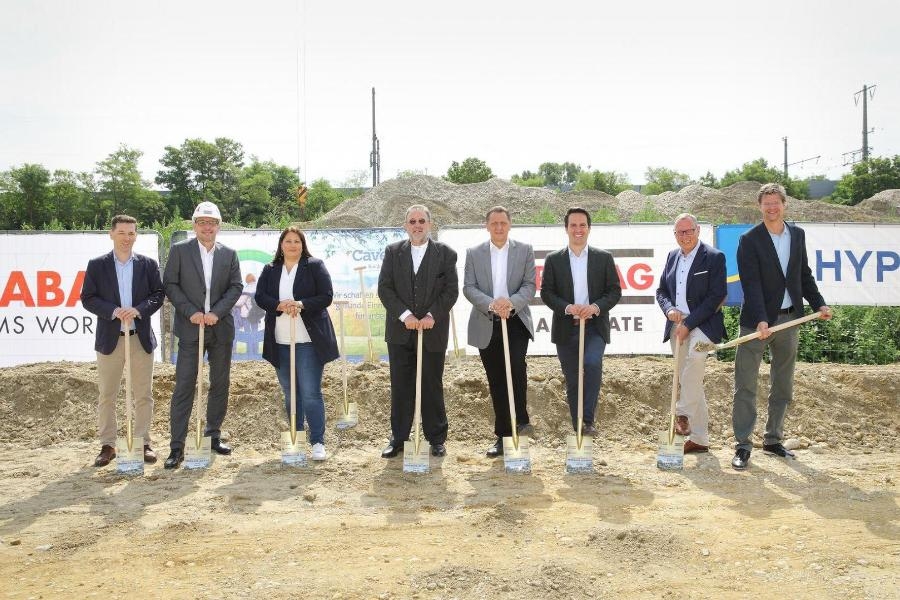
The European Investment Bank (EIB), the city of Vienna and a business consortium have started building two new green education campuses for 1 730 children. The Austrian capital is facing strong population growth and therefore needs new schools urgently.
The ground-breaking ceremony on July 19 is the starting point for the third project of the BIENE educational infrastructure programme (BildungsEinrichtungen-Neubauprogramm in German) that the EIB supports, backed by the European Fund for Strategic Investments (EFSI)
The new education buildings in Vienna’s Rappachgasse and Landgutstrasse will offer excellent energy performance – 44% lower than the Nearly Zero Energy Building standard for Rappachgasse and as much as 51% lower for Landgutstrasse. The project is therefore in line with the EIB`s climate action goals.
The architectural and the teaching concept of the education campuses will enable new and innovative forms of learning: the campuses combine nursery, kindergarten, primary, lower secondary and special-needs education plus leisure activities in one location.
The project is a public-private partnership. The German Landesbank Helaba acts as co-financer for a company held by a consortium of HYPO NOE, STRABAG Real Estate and Caverion Österreich, the winners of the public tender for the project.
“Education is key for sustainable growth, competitiveness and social inclusion in Europe. The EIB is proud to promote a project that supports social and environmental policy goals and green education buildings,” said EIB Vice-President Thomas Östros. “Thanks to the positive social impact of this project, it also qualifies for the EIB’s sustainability awareness bonds.”
Sustainability awareness bonds are allocated only to environmental and social projects making a substantial contribution to EU sustainability objectives. In 2018, the EIB was the first issuer to align documentation with EU legislation on sustainable finance.
About the Investment Plan for Europe
The Investment Plan for Europe is one of the European Union’s top priorities to boost investment and to create jobs and growth by making smarter use of existing and new financial resources. Through guarantees from the European Fund for Strategic Investments (EFSI), the EIB Group is able to take on a higher share of project risk, encouraging private finance providers to participate in projects. The projects and agreements approved for financing under EFSI so far are expected to mobilise €546.5 billion in investments and support about 1.4 million startups and small and medium-sized enterprises across all EU Member States.
Photo: ©Michael Sazel/STRABAG
Austria: Powertrain developer AVL receives EIB top-up financing of €50 million

€50 million in EIB financing backs the research and development (R&D) programme of AVL, a leading Austrian engineering company in the automotive sector
The loan comes on top of a 2017 financing to support AVL’s R&D in electrified powertrains and autonomous driving
The operation benefits from a guarantee under the European Fund for Strategic Investments (EFSI), the financial pillar of the Investment Plan for Europe
The European Investment Bank (EIB) is providing a €50 million loan to AVL List GmbH (AVL). The Austrian company specialises in the development of innovative powertrain systems for global automotive and transport industries. The EIB financing comes on top of a €70 million loan signed in December 2017 to support AVL’s electric drive-related activities, including selected R&D projects for hybrid and fully electric powertrains, as well as advanced driver assistance systems for connected and autonomous vehicles. The original loan and the top-up were possible thanks to the European Fund for Strategic Investments (EFSI). EFSI is the main pillar of the Investment Plan for Europe, under which the EIB Group and the European Commission are working together as strategic partners to boost the competitiveness of the European economy.
“Electric powertrains are one way to reach zero-emission mobility, and mobility is key when it comes to reaching the European climate targets,” said Andrew McDowell, EIB Vice-President responsible for activities in Austria. “As the EU bank, we support pioneering technological champions who help shape our future with high quality, cost-effective and sustainable technology. Our top-up loan to AVL will enable them to build this kind of cutting-edge technology. It will pave the way for more customer and environmentally friendly vehicles, which is all the more important given that many companies have put their R&D investments on hold due to the current economic uncertainty.”
Yorck Schmidt, Chief Financial Officer of AVL, explained: “The loan granted by the EIB is testimony to the very successful ongoing partnership between AVL and the EIB since 2007. AVL will use the funds provided to support its in-house research for the development of electric powertrains (hybrid and full hybrid), fuel cell systems and automated vehicles (ADAS/AD), as well as for the development of related measuring and testing systems and simulation technologies. This EIB financing represents a major contribution to AVL’s ongoing efforts to develop highly creative, advanced and customer-specific powertrain system solutions that, among other things, serve the goal of achieving significant reductions in CO2 emissions for cleaner vehicles.”
Austria: Investment Plan for Europe – EIB finances wind farms of Windkraft Simonsfeld
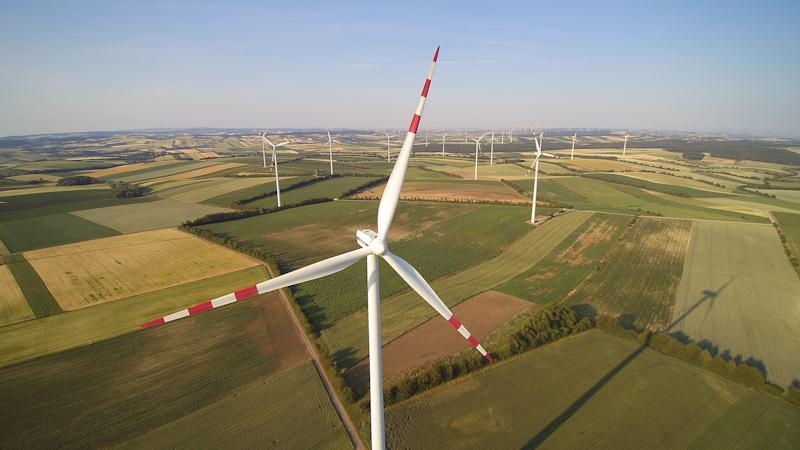
EU climate bank advances €63 million
Bulk of financing backed by Juncker Plan guarantee
Erste Bank financing new windparks with an amount of €22 million
The European Investment Bank (EIB) is providing €63 million of finance for the construction and operation of two new wind farms in Austria (Prinzendorf III and Powi V) of Windkraft Simonsfeld with a total capacity of approximately 43.6 MW. The facilities will be operated by a project company belonging to Windkraft Simonsfeld AG, which has been successfully running wind farms in Austria and Bulgaria since the end of the 1990s. The overall capacity of the wind farms operated by Windkraft Simonsfeld currently amounts to 202.5 MW.
The bulk of the EIB financing (€40.9 million) will go directly to Windkraft Simonsfeld. These funds are backed by a guarantee from the European Fund for Strategic Investments (EFSI), the central pillar of the Investment Plan for Europe (the Juncker Plan). Under this plan, the EIB and the European Commission are working together as strategic partners to boost the competitiveness of the European economy. The remaining loan amount of €22.1 million will be provided by Erste Bank and guaranteed by the EIB. Windkraft Simonsfeld will put €21 million of its own funds into financing the wind farms.
This is the second time that the company benefits from the Investment Plan for Europe’s support. In January 2018, a €48 million financial agreement to build three new wind farms with Windkraft Simonsfeld in Austria was made possible under EFSI.
The EIB Vice-President responsible for operations in Austria, Andrew McDowell, said: “The promotion of sustainable, competitive and secure sources of energy is a key policy objective and, as the EU climate bank, a priority sector for EIB financing. We are therefore very pleased to be able to promote the development of renewable energies in Austria in close cooperation with our trusted partner, Windkraft Simonsfeld. The Prinzendorf III and Powi V wind farms are testament to Austria’s commitment to the renewable energy transition.”
Paolo Gentiloni, European Commissioner for the Economy, said: “Investing in renewable energies is crucial to meet the goals of the European Green Deal and to reach climate neutrality by 2050. This new EU support for Windkraft Simonsfeld will help to make two new wind farms a reality, bringing clean energy to thousands more households in Austria.”
“As the EU climate bank, the EIB is firmly committed to the Paris climate targets and the continued development of renewable and sustainable energy sources. When selecting our partners, we also take environmental and ethical considerations into account under the principle of green financing, which is why we have once again opted for EIB financing, as we did two years ago. We are pleased to have a partner that shares our commitment to the renewable energy transition and to the fight against catastrophic climate change,” said Alexander Hochauer, Commercial Manager of Windkraft Simonsfeld AG.
Willi Cernko, Member oft he Management Board Erste Bank: “Financing renewable energy sources is definitely one of our strategic core areas. This is particularly important to us because in the next few years sustainable energy generation in Europe will be one of the biggest issues where we are happy to be available as a financing partner to help push this effort forward.”