
Albania: EIB provides a €2 million technical assistance grant to support affordable housing in Tirana
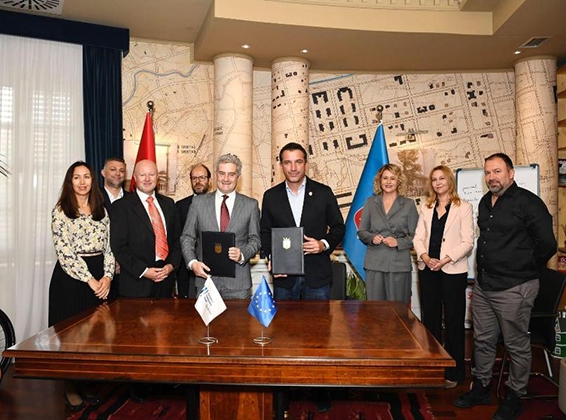
The EIB Global is supporting an affordable housing development that will help accommodate 6 500 people in Tirana.
This is the first EIB affordable housing project in the Western Balkans and the third project with the city of Tirana.
As the EU climate bank, the EIB aims to help the country increase resilience to climate change, in line with European energy efficiency standards.
The European Investment Bank (EIB), the EU bank, will provide a €2 million technical assistance grant for the preparation of an affordable housing project in Tirana. The grant will strengthen the municipality’s capacities and develop the necessary documentation in line with EU standards and EIB climate and environmental targets. The Bank will support the municipality in its effort to provide improved and energy efficient accommodation for the most vulnerable residents of Tirana. The project concerns the construction of new buildings and ancillary infrastructure over an area of 86 600 m2 to host nearly 6 500 people and about 1 600 low and middle-income households.
The EIB Global grant will make it possible to provide technical assistance for the preparation of an affordable social housing project, incorporating far-reaching positive social, environmental, climate and economic impact for residents of Albania’s capital. The grant comes under the EIB’s Economic Resilience Initiative, aiming to mobilise finance to support growth, job creation, vital infrastructure projects and social cohesion in the Western Balkans.
EIB Vice-President Lilyana Pavlova, responsible for the Western Balkans, said: “The European Investment Bank is glad to further support Tirana’s municipality in addressing city’s urban development needs in a socially inclusive and energy efficient way. The grant signed today under our new branch EIB Global is a further proof of our dedication to contribute to sustainable growth of Albania, alignment with EU standards and adaptation to climate change”.
Mayor of Tirana Erion Veliaj said: “We have signed a EUR 2 million grant, which will help us assess the municipality’s needs for social housing, the resources we will have to dedicate and execution plan for the upcoming years, as steps we need to undertake to ensure Tirana’s growth. After two years of talks and negotiations, I thank you sincerely for choosing Tirana.”
Ambassador Christiane Hohmann, Head of EU Delegation to Albania, said: “The EU, via its bank, the European Investment Bank (EIB) will be improving social housing in Tirana by investing in energy-efficient accommodation for the most vulnerable. This is another step forward, ensuring that Tirana’s urban development adopts to climate change and generates sustainable growth as the capital moves closer to EU standards in terms of social inclusion and energy efficiency.”
The Bank is already working with the Municipality of Tirana on the modernisation of its water distribution network and the urban redevelopment of Lana riverfront, including the reorganisation of streets and associated infrastructure on both banks of the river. The city is also benefiting from technical assistance under the City Climate Finance Gap Fund that will help Tirana improve energy efficiency and resilience to climate change.
Albania: EIB provides €80 million loan for milestone investments in water distribution of the capital city
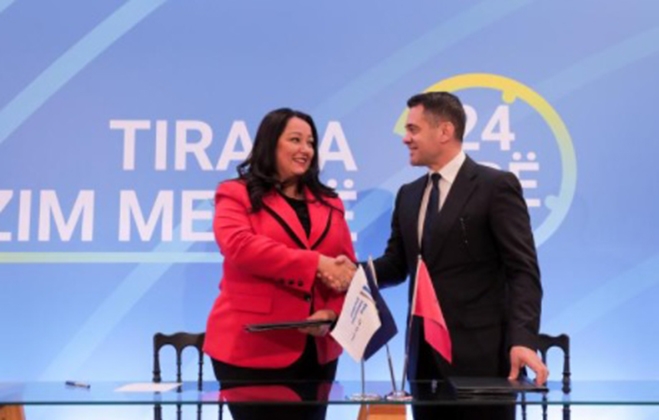
As part of Team Europe support, the project will ensure continuous access to drinking water to over 800,000 people in the Municipality of Tirana and help improve the appearance and functionality of the capital
This is the largest EIB project signed to date with the Government of Albania and the 2nd EIB project for Tirana
New loan facilitated thanks to the European Union’s guarantee will help Albania build modern water supply system and increase economic resilience to climate change
The European Investment Bank (EIB), bank of the European Union, will invest €80 million to improve water distribution system in the Municipality of Tirana, enabling continuous availability of drinking water for over 800,000 people and reduction of water losses. Provided under Team Europe’s support, this investment will modernize water management efficiency, improve water supply security and contribute to better health and environmental conditions in the capital, which is to increase resilience to climate changes and promote economic growth.
The project will modernise the existing distribution network and provide continuous, reliable, long-term water supply service in the city, with the Guri I Bardhe transmission line and the Tirana high-pressure water supply ring. It will also improve quality of the drinking water by eliminating the system of small personal reservoirs built on the roofs, which have high risk of water contamination. The investment comes under the EIB’s Economic Resilience Initiative, aiming to mobilise finance to support growth, job creation, vital infrastructure projects and social cohesion in the EU’s neighbouring regions.
EIB Vice-President Lilyana Pavlova, responsible for the Western Balkans, said: “Today, we are making an important step towards better living conditions for people of Tirana. We are glad to invest in safer and healthier future of Albania, at the same time contributing to faster recovery from devastating earthquake from 2019 and subsequent COVID-19 pandemic. I am proud of existing partnership with the Government of Albania and the City of Tirana, which allowed us to address challenges arising from fast-growing urbanisation and insufficient water distribution system. This project will enable security of water supply for all and bring the country closer to its environmental, urban development and climate action goals. Together with the Team Europe, we are ready to continue supporting faster social and economic development of Albania and look forward to developing new projects for the country.”
Ambassador Luigi Soreca, Head of EU Delegation to Albania, stated: “This new investment project is a major EU contribution to Albania’s efforts to improve the performance of its water services as well as to ensure continuous and safe water supply to Tirana’s inhabitants. Europe is here to assist Albanians for an improved quality of life, stronger public health and reduced energy costs as Tirana becomes more resilient and adapts to climate change. We are happy to be able to help Albania align progressively with EU standards.”
Deputy Prime Minister Arben Ahmetaj said: “This is a larger agreement of €144.5 million that guarantees on the one hand the modernisatuon of water supply infrastructure and on the other hand, uninterrupted 24-hour water supply for almost 1 million inhabitants of the city of Tirana. Over the last two years together with the EIB and the Municipality of Tirana we have undertaken a careful and detailed work to reach the finalisation of the project. I am happy that this project goes to one of the priority sectors of the Albanian Government, as part of a comprehensive reform and of our ambition to increase the quality of life of citizens, in this case by providing 24 hours of drinking water.”
Mayor of Tirana Erion Veliaj said: “We are like night and day in comparison to what we found previously: the water supply network resembled a colander, where water was regularly stolen, cars were washed with drinking water, and maize was watered with drinking water. Initially we had to recover the losses, have a more efficient enterprise, so that it would no longer be a militant parking lot, but an enterprise with a mission to serve. Now I can proudly say that the enterprise not only has the best performance in Albania, but today, it is an enterprise that has managed to pay back its loans itself, and now has more sound finances. However, we are still far from our ambition for Tirana to have water 24 hours a day, but this is our plan for 2024. Today, we have signed the largest loan in the history of Tirana’s water supply as a way to put our investment calendar in fifth gear. In the next 2-3 years, we anticipate opening a construction site to lay 45km of pipelines in Tirana, as well as providing a high-pressure supply ring, which will give us the opportunity to supply all units with the same amount of water, even the neighbourhoods of Tirana furthest away, especially the newer neighbourhoods and special areas such as “Astir”, “Fresku” and “Liqeni i Thatë”.
The bank has already worked with the Municipality of Tirana on its first urban redevelopment project in Albania for Lana riverfront in 2019, that help reduce the pollution in the Lana River and reorganise streets and urban space near both banks.
EBRD and Italy promote eco-tourism in Albania
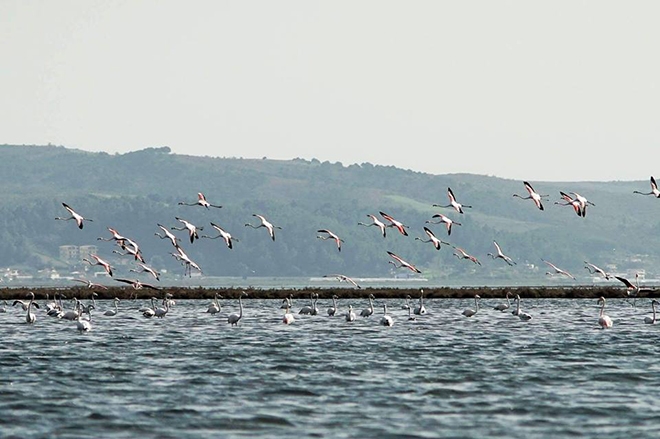
Ancient hillside fortresses, pristine beaches and unspoilt nature are just some of what Albania has to offer tourists.
The Albanian coastline features some 274 km of uninterrupted beaches, but there is so much more to explore. The Velipoja-Shëngjin area, for instance, boasts numerous cultural heritage sites, from tumulus tombs to medieval fortifications. The Castle of Lezha bears traces of Illyrian, Roman, Byzantine and Ottoman architecture, with a spectacular view of the Drini Valley and Shëngjin beach from 322 meters above sea level. The list goes on.
Tourism also offers many opportunities for locals: from restaurants and cafés to excursions, souvenir shops and recreational activities, such as cycling, hiking and horse-riding.
In the Velipoja-Shëngjin area, in particular, many people make a living from the tourism sector. Aurora Zylai is a birdwatching guide. Her job is her passion and, like many others, she believes that it is vital to develop tourism sustainably on this stretch of the Albanian coast.
“We need a combination of proper infrastructure, including safer roads, and knowledge on how to protect our environment,” Aurora says. “For example, we need to raise awareness of the need to conserve our unique birds and other wildlife, to recycle plastics and other materials as much as possible, and to provide signage and guidance for visitors in protected areas.”
An array of rare bird species, such as the little seagull and the sea swallow, as well as endangered species, such as the white-headed duck and the slender-billed curlew, live in the unique 44 km2 complex wetland ecosystem of the Kune-Vain and Vilun lagoons. If local roads are close or poorly maintained, traffic can disturb them, Aurora says.
The EBRD is supporting sustainable tourism in the area. A US$ 50 million investment will upgrade a number of regional and local roads, including the road between Velipoja and Shëngjin, and provide easier access. At the same time, the Bank is raising awareness of the benefits of ecotourism and encouraging the local community to protect the environment. This component of the project is supported by Italy through the Central European Initiative (CEI) Fund.
Alfred Marku is a chef in a local restaurant. Tourism has boosted employment opportunities and economic development, he says. At the same time, however, he stresses the need to keep the region’s unique character. “To develop tourism sustainably here, we have to protect our traditions, culture, environment and nature,” he says.
This is why the EBRD has explored new ways of promoting good environmental and conservation practices, especially when it comes to sensitive habitats and wildlife. Focus-group discussions, for example, have helped to establish new means of engagement and training and public-awareness activities.
Furthermore, a number of new measures will keep the local community and tourists safe ‒ pedestrians, cyclists and drivers alike. They include, for example, a new cycle line, which will make give tourists greater mobility and promote green transport. Sustainable urban mobility plans for Shёngjin and Velipoja, meanwhile, will increase everyone’s safety and contribute significantly to the quality of life of inhabitants and tourists. Lastly, the project will help to promote equal opportunities for both women and men in the tourism sector.
“The coast is a fantastic place to spend our holidays,” says visitor Iris Sakej. “We can do many different activities: we can go hiking on Renci Mountain or we can spend the afternoon at the beach swimming, canoeing or paddle-boarding, not forgetting bird watching.”
There are, indeed, many ways to explore the area. The EBRD is working closely with the Albanian Development Fund and other stakeholders to improve the local infrastructure and develop tourism sustainably, so that it benefits not only tourists, but also residents.
Our work will thus provide a long-term solution to preserving the country’s unique environment, while making its natural beauty accessible to tourists from Albania and around the globe.
Source: EBRD
Albania: EIB and Albanian Development Fund prepare Northern Albania’s regional investment programme
– Cooperation agreement between the bank of the European Union and the Albanian national development agency
– EUR 200,000 signed with ADF under the Economic Resilience Initiative (ERI), part of an approved EUR 3m technical assistance package
– Aim is to tap the growth potential of Northern Albania and the Adriatic coastline with a focus on environmental issues and sustainable tourism development
The European Investment Bank (EIB) and the Albanian Development Fund (ADF) have signed a EUR 200,000 cooperation agreement concerning technical assistance with the preparation of a regional investment programme in the North of Albania. This is the first step in a wider approved technical assistance programme worth up to EUR 3m to be implemented in partnership with ADF in support of the region. ADF is a national agency with 25 years’ experience in local infrastructure investment throughout Albania. It is an important partner of the EIB and has significant expertise in translating national policies into investment programmes.
The technical assistance, financed by the EIB through the Economic Resilience Initiative (ERI), concerns an area encompassing the Adriatic coastline between Shengjin and Velipoje, the shores of Lake Shkodra, the River Buna and the Koplik gateway to the Albanian Alps, and includes parts of the territories of the municipalities of Shkodra, Lezha, and Malësi e Madhe.
As part of this cooperation, the EIB will assist ADF in defining the Coastline Gate of Alps integrated tourism and urban upgrading strategy, and in evaluating the area’s natural assets and potential, as well as addressing environmental issues. This will enable the preparation of a mid and long-term capital investment plan that will complement the existing Master Plan of the Alps by improving accessibility, environmental quality and local amenities.
This partnership illustrates the EIB’s support to the Albanian authorities for sustainable development that synthesises existing plans and sectors and prioritises strategic investments.“By helping devise a public infrastructure investment programme based upon the regional tourism potential and an in-depth analysis of existing infrastructure gaps the Bank will contribute to realising the untapped growth potential of northern Albania”, said Alessandro Bragonzi, EIB representative for Albania, Kosovo*, and North Macedonia.
“ADF in its role as regional development agency through this initiative aims to provide a strategic vision for sustainable development of the gate of Alps area that synthesizes existing plans, sectorial strategies and prior or recent strategic investments. Albanian Development Fund sees in EIB an important partner from whom has received continuous support, since many years, in achieving its mission, in support to Albanian Government goals and objectives. Through this initiative, we intend to build a comprehensive programme of investments that will respond to territorial needs and potentials, through an integrated approach of interventions, improving the attractiveness of this area, boost economic generation potential, invest in people and services as well as improve public services”, said Dritan Agolli ADF Executive Director.
*This designation is without prejudice to positions on status, and is in line with UNSCR 1244 and the ICJ Opinion on the Kosovo Independence Declaration