
EuroDry Ltd. Reports Results for the Quarter Ended March 31, 2021 and Announces Agreement to Acquire M/V Blessed Luck, a 2004-Japanese Built Panamax Bulker
EuroDry Ltd., an owner and operator of drybulk vessels and provider of seaborne transportation for drybulk cargoes, announced its results for the three-month period ended March 31, 2021 and an agreement to acquire M/V Blessed Luck, a 76,704 dwt drybulk vessel built in Japan.
First Quarter 2021 Highlights:
Total net revenues of $8.6 million; net income of $0.9 million; net income attributable to common shareholders (after a $0.3 million dividend on Series B Preferred Shares and a $0.1 million preferred deemed dividend arising out of the net redemption of approximately $3 million of Series B Preferred Shares in the first quarter of 2021) of $0.4 million or $0.19 earnings per share basic and diluted. Adjusted net income attributable to common shareholders1 for the period was $1.3 million or $0.55 earnings per share basic and diluted.
Adjusted EBITDA1 was $4.0 million.
An average of 7.0 vessels were owned and operated during the first quarter of 2021 earning an average time charter equivalent rate of $14,924 per day.
The Company declared a dividend of $0.3 million on its Series B Preferred Shares. The dividend will be paid in cash.
1Adjusted EBITDA, Adjusted net income/(loss) and Adjusted earnings/(loss) per share are not recognized measurements under US GAAP (GAAP) and should not be used in isolation or as a substitute for EuroDry’s financial results presented in accordance with GAAP. Refer to a subsequent section of the Press Release for the definitions and reconciliation of these measurements to the most directly comparable financial measures calculated and presented in accordance with GAAP.
M/V Blessed Luck Acquisition
The Company also announced that it has agreed to acquire M/V Blessed Luck, a 76,704 dwt drybulk vessel built in 2004 in Japan, for $12.12 million. The vessel is majority owned by a third party and has been managed by Eurobulk Ltd., also the manager of three of the Company’s vessels. The vessel is expected to be delivered to the Company within May 2021. The acquisition will be financed partly by a short term sellers’ credit of $5 million and an one year bridge loan of $6 million provided by an entity affiliated with the Company’s Chief Executive Officer with the remaining funds coming from the Company; both the sellers’ credit and short term loan carry an annual interest of 8%. In parallel, the Company is in the process of arranging a bank loan with the acquired vessel as collateral, expected to be finalized within approximately three months, which will provide sufficient funds to repay the sellers’ credit and, possibly, part of the bridge loan. At the same time, the Company entered into a charter agreement for the vessel for a period between a minimum of 11 months and a maximum of 13 months at a rate of $19,500/day which will commence upon delivery of the vessel and contribute about $4 million of EBITDA during the minimum period of the charter.
Aristides Pittas, Chairman and CEO of EuroDry commented:“In stark contrast to a year ago, it has been a very positive 2021 so far with drybulk rates rebounding significantly as a result of solid trade growth and limited supply growth. The latter, especially, is constrained by short and medium term factors: in the short term, by inefficiencies in the vessel-port transportation system that resulted from COVID-19 effects and required protocols and, in the medium term, by the lowest orderbook in the last 20+ years. We believe that the market is likely to remain strong for the next couple of years provided that demand for transportation of drybulk cargoes – which is generally linked to economic activity – will maintain at least a historically average growth rate; it is noteworthy that the IMF, amongst others, predicts that economic activity will rebound above historical average levels as the world recovers from the COVID-19 pandemic.
In such a positive environment, our main strategy is to try to expand our fleet in a risk efficient way despite our limited funds available for investment. Thus, we acquired M/V Blessed Luck, a 2004-built vessel, with a combination of seller and affiliate bridge loans to complement our cluster of medium age Japanese-built Panamax-size vessels alongside our cluster of own-built newbuildings. The acquisition of M/V Blessed Luck will increase our fleet to eight units and is expected to contribute to a proportional increase in our EBITDA. At the present market rate levels, we are to accumulate funds that will provide us with several investment or expansion options or shareholder reward models. We, further, believe that the strong drybulk markets enhance the value of our public listing as a consolidation platform and we continuously investigate opportunities to take advantage of it.”
Tasos Aslidis, Chief Financial Officer of EuroDry commented:“Our net revenues for the first quarter of 2021 were higher by 69.3% as compared to the first quarter of 2020. This was the result of higher average charter rates by 89.3% earned during the quarter as compared to the first quarter of 2020 and 38.7% higher when compared to the fourth quarter of 2020.
Total daily vessel operating expenses, including management fees, general and administrative expenses, but excluding drydocking costs, increased by approximately 8.5% during the first quarter of 2021 compared to the same quarter of last year. This increase is mainly due to increased crewing costs in 2021 compared to 2020, resulting from difficulties in crew rotation due to COVID-19 related restrictions.
Adjusted EBITDA during the first quarter of 2021 was $4.0 million compared to $0.6 million achieved for the first quarter of last year. As of March 31, 2021, our outstanding debt (excluding the unamortized loan fees) was $56.0 million versus restricted and unrestricted cash of approximately $6.2 million.”
First Quarter 2021 Results:For the first quarter of 2021, the Company reported total net revenues of $8.6 million representing a 69.3% increase over total net revenues of $5.1 million during the first quarter of 2020, which was the result of the higher time charter rates our vessels earned during the first quarter of 2021. The Company reported net income for the period of $0.9 million and net income attributable to common shareholders of $0.4 million, as compared to a net loss and a net loss attributable to common shareholders of $2.3 million and $2.6 million, respectively, for the same period of 2020. For the first quarter of 2021, a gain on bunkers resulted in positive voyage expenses of $0.3 million for the period as compared to voyage expenses of $0.4 million in the same period of 2020. Depreciation expenses for the first quarter of 2021 were $1.7 million compared to $1.6 million for the same period of 2020. Vessel operating expenses were $3.1 million for the first quarter of 2021 compared to $2.8 million in the same period of 2020, mainly due to increased crewing costs in the first quarter of 2021 compared to the corresponding period in 2020, resulting from difficulties in crew rotation due to COVID-19 related restrictions. Management fees and general and administrative expenses remained unchanged at $0.5 million and $0.6 million, respectively, for the first quarter of 2021 as compared to the same period of last year.
Interest and other financing costs for the first quarter of 2021 amounted to $0.6 million, slightly decreased as compared to $0.7 million for the same period of 2020. Interest during the first quarter of 2021 was lower due to lower average debt during the period and the decreased Libor rates of our loans during the period as compared to the same period of last year. For the three months ended March 31, 2021, the Company recognized a $1.6 million loss on derivatives, comprised of $0.7 million realized loss and $1.1 million unrealized loss of forward freight agreements and $0.2 million gain on three interest rate swaps as compared to a loss on interest rate swaps of $0.3 million for the same period of 2020.
On average, 7.0 vessels were owned and operated during the first quarter of 2021 earning an average time charter equivalent rate of $14,924 per day compared to 7.0 vessels in the same period of 2020 earning on average $7,885 per day.
Adjusted EBITDA for the first quarter of 2021 was $4.0 million compared to $0.6 million achieved during the first quarter of 2020.
Basic and diluted earnings per share attributable to common shareholders for the first quarter of 2021 was $0.19 calculated on 2,291,471 basic and 2,320,577 diluted weighted average number of shares outstanding, compared to basic and diluted loss per share of $1.17 for the first quarter of 2020, calculated on 2,267,375 basic and diluted weighted average number of shares outstanding.
Excluding the effect on the earnings attributable to common shareholders for the quarter of the unrealized loss on derivatives, the adjusted earnings attributable to common shareholders for the quarter ended March 31, 2021 would have been $0.55 per share basic and diluted, compared to an adjusted loss of $0.91 per share basic and diluted for the quarter ended March 31, 2020, after excluding the effect of the unrealized loss on derivatives and the loss on write-down of inventory. Usually, security analysts do not include the above items in their published estimates of earnings per share.
View Full Report
Aon signs agreement to sell the firm’s retirement and investment business in Germany to Lane Clark & Peacock LLP (LCP)
Aon plc (NYSE: AON), a leading global professional services firm providing a broad range of risk, retirement and health solutions, announced the firm has signed a definitive agreement to sell its pensions consulting, pension insurance broking, pensions administration and investment consulting business in Germany to Lane Clark & Peacock LLP (LCP).
The agreement resolves questions raised by the European Commission with respect to the markets in which these businesses are active. Aon and Willis Towers Watson continue to work toward obtaining additional regulatory approval in all relevant jurisdictions, including the United States, where regulators are conducting an independent review of the proposed combination.
“This agreement demonstrates further momentum on the path to close our proposed combination with Willis Towers Watson,” said Greg Case, Aon’s CEO. “We recognize the significant contributions these colleagues have made on behalf of our clients during their time with Aon. LCP shares with us a culture of innovation and excellence and we know these colleagues have a positive future at LCP.”
LCP is the leading independent, owner-managed pensions, investment and insurance consultancy in the UK and Ireland. The acquisition builds on a period of growth for LCP, which posted record income of £126.5 million during FY 2019-2020, an increase of 10.1 percent driven by success across a wide range of sectors. With a significant market share in Germany, the acquisition gives LCP a leading market position in this important market for pensions consulting and related services.
“A key part of LCP’s strategy is diversifying the business into different markets with long-term growth potential,” said Aaron Punwani, LCP’s CEO. “The German pensions consulting market is the third largest in the world, after the U.S. and the UK, which makes it a natural place for LCP to achieve a leading position, mirroring what we have achieved in the UK in recent years.”
Punwani added, “We see a meeting of minds with the knowledgeable and dynamic people who lead the business in Germany. We are truly excited about welcoming this fantastic team as part of LCP and achieving great things together for the benefit of our people and our clients.”
The retirement and investment business LCP will acquire includes 350 colleagues across five offices in Germany and will be rebranded as LCP upon close of the transaction. The transaction with LCP is contingent on the completion of the pending Aon and Willis Towers Watson combination, as well as other customary closing conditions.
NextFuel signs agreement with Taaleri

NextFuel AB and Taaleri Plc have signed an agreement giving Taaleri the right to license NextFuel’s new torrefaction technology in their planned biocoal project in Joensuu, Finland, and in other future projects.
“We are pleased that Taaleri has chosen NextFuel as their technology partner, and we look forward to working closely together with them during this project. The agreement is a major milestone on our roadmap to get companies all over the world to use our superior technology to make a profitable clean successor to fossil fuels”, says CEO in NextFuel AB, Stefano Romano.
NextFuel’s new torrefaction technology makes it possible to produce a clean copy of coal in less than 30 minutes. The new fuel can be produced from a large variety of abundant biomass raw materials, including forestry residues, elephant grass, bagasse and other types of fast growing energy crops, that can be grown on marginal land not suitable for food production. The energy content is similar to coal (22-28 GJ/t), and the briquettes can be used directly in existing energy infrastructure, making it possible to fast and inexpensively phase out coal with a clean alternative. This new fuel is carbon neutral, and can even be carbon negative, depending on the type of crop used and local conditions. NextFuel’s business plan is to license this technology to companies all over the world.
Taaleri announced last December that they were preparing to build its first biocoal plant in Joensuu, Finland, on Savon Voima Oyj’s power and heat plant site. Taaleri Plc also plans to build more biocoal plants in the future, likely in Europe and North America.
It is estimated that the biocoal plant will commence operations in 2022. Joensuun Biohiili Oy will build and operate the plant and NextFuel AB will provide the process technology for the plant. The companies have also agreed for an option for possible future projects. NextFuel will receive a licensing fee per tonne produced, and has also been given the opportunity to co-invest and take equity positions in this and other possible future Taaleri projects.
– By utilizing NextFuel’s torrefaction technology, we believe this gives us a clear competitive edge in the biomass industry, this agreement will strengthen our project even further, says Taaleri Plc CEO, Robin Lindahl.
NBG reaches an agreement with CVC Capital Partners’ Fund VII regarding Ethniki Insurance
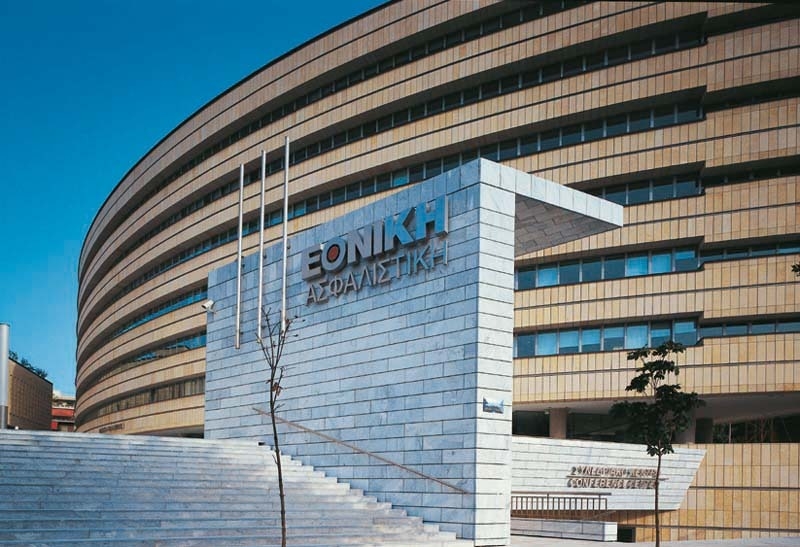
National Bank of Greece (“NBG”) announces that it has entered into a definitive agreement for the divestment of 90.01% of Ethniki Insurance (“Ethniki”) to CVC Capital Partners’ Fund VII.
The equivalent nominal consideration corresponding to 100% of Ethniki would be €505m, including an “earn-out” payment of up to €120mn, which will be subject to meeting agreed upon performance targets for the bancassurance channel of NBG by 2026. The transaction includes a 15-year Bancassurance partnership.
The transaction is capital accretive for NBG (c. 60 bps in the Total Capital Ratio as of 31.12.2020). The closing is subject to standard conditions precedent, the approval by the antitrust and regulatory authorities and the approval of an Extraordinary General Meeting of NBG shareholders. The consent of the Hellenic Financial Stability Fund was granted, as stipulated in the Relationship Framework Agreement.
The successful completion of this transaction will allow NBG to fulfill the commitment made under the Restructuring Plan agreed between the Hellenic Republic and the EC following the receipt of State Aid by NBG in 2012.
CVC Capital Partners (“CVC”) is a private equity and investment advisory firm with offices throughout Europe, Asia and the US. Funds managed or advised by CVC (“CVC Funds”) are invested in over 90 companies worldwide, employing more than 450,000 people. CVC Funds have significant experience of investing in insurance and also have extensive experience in Greece, having invested more than €750m since 2017.
Morgan Stanley & Co. International plc and Goldman Sachs Bank Europe SE acted as financial advisors to NBG, Freshfields Bruckhaus Deringer LLP and Karatzas & Partners as international and local external legal counsels and EY as actuarial and accounting advisor. In addition, the BoD of NBG received an independent valuation opinion from UBS Europe SE regarding the fairness of the transaction and legal advice from Skadden Arps Slate Meagher & Flom and Greek law professors.
Seanergy Maritime Holdings Corp. Announces Agreement to Acquire an Additional Capesize Vessel
Seanergy Maritime Holdings Corp. announced that it has entered into a definitive agreement with an unaffiliated third party to purchase a Capesize vessel (the “Vessel”).
The Vessel was built in 2006 at a reputable shipyard in Japan, has a cargo-carrying capacity of approximately 177,000 deadweight tons (“dwt”) and shall be renamed M/V Tradership. The Vessel is expected to be delivered towards the end of the first quarter or early in the second quarter of 2021, subject to the satisfaction of certain customary closing conditions. Following her delivery, the size of the Company’s fleet will increase to 12 Capesize vessels with an aggregate cargo capacity of approximately 2,103,042 dwt.
The special survey and ballast water system installation for the Vessel were completed recently by the current owner and therefore the Company does not anticipate incurring any off-hire or significant capital expenditure for this Vessel at least for the next two years. The gross purchase price of $17 million is expected to be funded with cash on hand.
Stamatis Tsantanis, the Company’s Chairman & Chief Executive Officer, stated:
“We are pleased to announce another timely acquisition of a high quality Capesize vessel built by a first-class shipyard in Japan. The addition of the M/V Tradership to our fleet is further increasing our operating leverage as a leading pure-play Capesize company.
The Vessel is expected to be delivered to us promptly, during a greatly improved Capesize market. The average of the 5 time-charter routes of the Baltic Capesize is currently about 60% higher than the same period average for the last 5 years, while the Capesize forward freight contracts (“FFA”) for the second half of 2021 are trading at above $19,400 per day. Based on these FFA rates, the incremental net revenue from this acquisition may exceed $5 million for the remainder of the year assuming delivery at the end of the first quarter of 2021.
Seanergy is well placed to benefit from the substantial improvement of the market with its entire fleet currently employed under spot charters or long-term index-linked time charters, directly tied to the Capesize index.
We strongly believe that our segment represents the best fundamentals in the dry bulk industry. We will continue to actively pursue accretive growth transactions aiming to improve shareholder returns for the years to come.”
Company Fleet upon Vessel’s delivery:
Safe Bulkers, Inc. Entered into an Agreement for the Acquisition of a Post-Panamax Class Dry-bulk Japanese Vessel with Delivery in the 3rd quarter of 2022
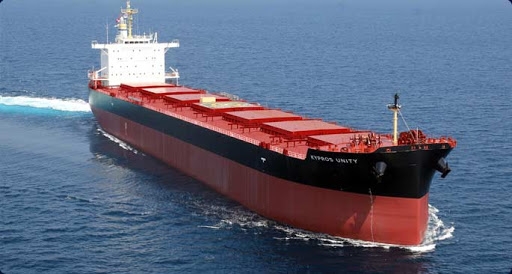
Safe Bulkers, Inc., an international provider of marine drybulk transportation services, announced today that it has entered into an agreement for the acquisition of a Japanese-built, dry-bulk, Post-Panamax class, 87,000 dwt, newbuild vessel at an attractive price with a scheduled delivery within the third quarter of 2022. The vessel is designed to meet the latest requirements of Energy Efficiency Design Index related to Green House Gas, GHG emissions, ‘EEDI, Phase 3’. It will also comply with the latest NOx emissions regulation, NOx-Tier III.
In parallel, the Company has entered into an agreement for a new term loan facility of up to 60% post-delivery financing of this acquisition, an increase of the commitment under the existing revolving credit facility from $20 million to $30 million and the extension of its maturity date, initially scheduled to expire in 2022, by up to 2 years under the same pre-existing financial covenants. The financing transaction was evaluated and approved by the Board of Directors of the Company, excluding an independent member of the Board of the Company, who serves as the Chief Executive Officer of the financial institution that is the lender in the transaction.
Presently, the Company’s liquidity stands at $167.5 million including cash and cash equivalents, restricted cash and funds available under sale and lease back agreement, new term loan agreement and the revolving credit facility. Our aggregate remaining capital expenditure requirements for the acquisition of this newbuild and the newbuild contracted for in October 2020 are $51.8 million.
Dr. Loukas Barmparis, President of the Company commented: “We continue to invest in technologically advanced vessels complying with the latest environmental regulations in an effort to renew our fleet. The Company’s capital expenditure requirements for the purchase of this newbuild are being financed through the new financial agreements. Safe Bulkers maintains a strong financial position with liquidity exceeding $167 million, that provides us with the required financial flexibility, and a previously announced at the market equity offering, that may be utilized at stock prices levels and at times that the Company deems to be appropriate.”
Speedcast Reaches Agreement with Inmarsat to Sell Primary Maritime Customer Contracts
Speedcast International Limited and Inmarsat today announced that they have reached agreement on the sale of Speedcast’s primary Fleet Xpress, FleetBroadband and Fleet One service contracts to Inmarsat. The agreement marks another significant step for Speedcast as it looks to emerge from its Chapter 11 proceedings announced earlier this year, and is subject to approval by the U.S. courts overseeing the company’s financial restructuring.
Through the agreement, the Speedcast customers that are transferred to Inmarsat will be assured of continuing access to Inmarsat’s market-leading connectivity services. The agreement covers both Speedcast’s L-band maritime contracts in which Inmarsat serves as the primary connectivity onboard, as well as the full Inmarsat Fleet Xpress portfolio from Speedcast.
Ronald Spithout, President, Inmarsat Maritime, said: “Our first priority is to ensure that these transitioning Speedcast customers can continue to access Inmarsat’s reliable global maritime connectivity services and our growing range of value-added services now and into the future. With Inmarsat’s ongoing, fully-funded technology roadmap, these customers will benefit from the next-generation of Ka-band and L-band satellites that we are launching over the next few years. These will provide both additional capacity and capabilities to the network. Among the seven new satellites scheduled for launch in the next few years will be the first ever High Throughput Satellites (HTS) dedicated to the Arctic region.”
Andre Eerland, Vice President, Commercial Maritime at Speedcast said: “This agreement enables Speedcast to further strengthen our focus in the commercial maritime sector, delivering our leading global VSAT services, together with global L-band back-up capabilities. We pride ourselves on providing a flexible, high quality service that meets market demands and addresses the challenges of maritime connectivity. Taking this step allows us to consolidate our core connectivity services, which are scalable across all market needs, while remaining at the forefront of the maritime industry.”
Speedcast will continue to deliver managed services to its commercial maritime sector clients with primary VSAT and other non-Inmarsat mobile satellite services (MSS) onboard, and will maintain its Inmarsat Distribution Partner status to deliver existing MSS back-up services, with no impact to customer operations or support. Speedcast will also continue to deliver Inmarsat Land MSS services to its enterprise customers as part of the company’s land portfolio, with enterprise clients and sites unaffected by this agreement.
Inmarsat will take on management of the transitioned Inmarsat Maritime contracts, as well as the 24/7 operations and support for customers through its network operations and customer support centers. Customers will continue to receive the highest quality of service, with the deal including a fully supported handover to ensure a seamless transition.
Performance Shipping Inc. Announces Agreement To Acquire Fifth Aframax Tanker
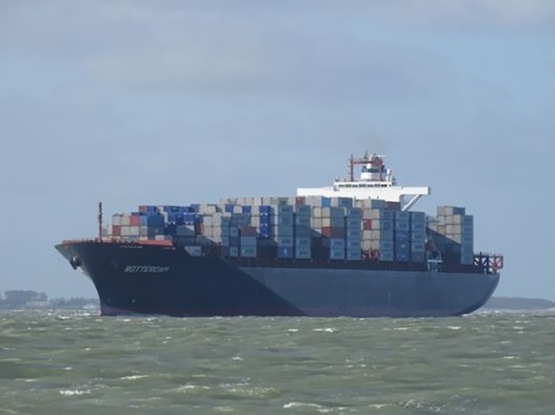
Performance Shipping Inc., a global shipping company specializing in the ownership of tankers, announced that it has signed, through a separate wholly-owned subsidiary, a Memorandum of Agreement to purchase the M/T Kalamas, a 105,400 dwt Aframax tanker vessel built in 2011 by Sumitomo Heavy Industries Marine & Engineering Co. Ltd, Japan, from an unaffiliated third party seller for a total purchase price of US$22.0 million. The vessel, the Company’s fifth Aframax tanker, is expected to be delivered between November 15 and December 22, 2020, and will be renamed M/T P. Yanbu.
Upon delivery of the M/T Kalamas, the cargo-carrying capacity of the Company’s fleet will have increased by 23.9% to approximately 546,094 deadweight tons (dwt). The M/T Kalamas was built to high specification and has been retrofitted with a ballast water treatment system (BWTS), in compliance with the Ballast Water Management (BWM) Convention. The vessel completed its docking survey in July 2020 and its special survey in October 2020. As a result, the Company does not expect to incur any capital expenditures on the vessel until January 2026.
The aforementioned acquisition will be financed with US$13.2 million cash on hand and US$8.8 million from the recently announced term loan facility with Piraeus Bank S.A.
Following the incurrence of the US$8.8 million loan in connection with this acquisition and the partial refinancing of the Nordea facility, total debt at year end 2020 will be US$58.1 million. Quarterly principal installments for total debt starting in 2021 will be approximately US$2.1 million.
Commenting on the agreement, Mr. Andreas Michalopoulos, the Company’s Chief Executive Officer, stated:
“The acquisition of our fifth Aframax tanker is an important milestone for our Company; it marks the completion of the first internally financed growth phase, consistent with our corporate strategy and policies announced a mere three weeks ago. The acquisition will, among other things, reduce our indicative estimated daily cashflow breakeven rate by about US$3,000 to about US$16,000 per vessel per day, thereby meaningfully enhancing our ability to pay dividends to our shareholders pursuant to our variable dividend policy. It also marks our commitment to become a premier tanker vessel owning company. Following the delivery of the vessel and starting in 2021, we look forward to patiently and consistently executing our commercial and financial strategy for the benefit of our shareholders.”
EXMAR Announces Settlement Agreement With YPF
EXMAR has reached a settlement agreement with YPF S.A. over the dispute under the TANGO FLNG Agreements (as announced on 25 June 2020), effective as of today.
A settlement amount of USD 150 million will be paid by YPF to EXMAR in consideration of the early termination of the agreements and withdrawing the arbitration proceedings. A first instalment of USD 22 million has been remitted today. The balance of USD 128 million is payable in 18 monthly instalments backed by adequate financial security.
The loan agreement with Bank of China and Deutsche Bank with respect to the TANGO FLNG foresees a replenishment of the Debt Service Reserve Account for an amount up to USD 40 million. The specific modalities are currently being discussed with the lenders.
EXMAR’s FLNG, a floating liquefaction unit with a production capacity of approximately 0.5 million tons per annum of Liquefied Natural Gas, is now available for other projects. The FLNG’s immediate availability, proven track record and operational experience are the right elements to rapidly unlock new markets for gas exports. Commercial leads for new employment are actively pursued.
VesselMan Signs Agreement with BOURBON Offshore
VesselMan has signed a long-term agreement for the provision of cloud-based project management software with BOURBON. BURBON is a leading marine service provider in the offshore oil and gas industry, operating in 44 countries with a modern and standardized fleet of 458 vessels. The agreement follows a six-month trial and review.
“The digitization of the docking operations will help our engineers and superintendents to optimize costs, capitalize experience and gain efficiency and reliability all over the docking process. This long term partnership with Vesselman and Bourbon is finally a great added value for vessel owners, as the high level of docking expertise of Bourbon will be ‘smartly’ more accessible” said Raphael Briere, Managing Director of Bourbon Black Sea, the maintenance and docking expert entity of BOURBON group.
Glenn Edvardsen, CEO of VesselMan, emphasized the value VesselMan added to Bourbon. He also noted the importance from VesselMan´s side to be working closely with their clients and that the solution is tailored-made to their needs and priorities.
“We are really pleased to have had the opportunity to show the value we can add to a company of BOURBON’s stature. The core value with a cloud-based solution is simplicity. Data stored in the cloud is easily accessible from all around the world, all that is needed to access a project’s information and progress status is an Internet connection. Working closely with our partners allows us to offer a tailored software concept that is built based on their individual needs and priorities. This provides clients with access to new, more efficient technology solutions, which are characterized by their ease of use and operational relevance.